ORLANDO, Fla. — Security lines at Orlando International Airport moved swiftly Tuesday, with TSA wait times averaging under 20 minutes across most checkpoints as the busy 2026 spring break season wound down, airport officials and real-time trackers reported.
Orlando International Airport
As of midday April 7, official displays on the airport’s website showed general security waits of 0-2 minutes at Gates 1-59, Gates 70-129 and the C gates area, though these figures can fluctuate rapidly with passenger volume. Third-party monitors like Takeoff Timer and airlineairport.com placed typical waits between 10-20 minutes during standard hours, rising toward 20-30 minutes in peak morning and afternoon rushes.
The Greater Orlando Aviation Authority advises travelers to arrive at the airport three hours before domestic flights and reach the security checkpoint at least two hours prior to departure. That buffer provides ample cushion even on busier days at one of the nation’s busiest tourist gateways.
Orlando International, known by its code MCO, handled record passenger numbers during the six-week spring break window that concluded around April 7. Officials projected more than 600,000 travelers on some peak weekends in March, with daily counts exceeding 200,000 on the busiest days. Despite the surge, security waits remained manageable compared to past holiday peaks, thanks in part to expanded TSA staffing, technology upgrades and voluntary reservation tools.
MCO features multiple security checkpoints serving its North and South terminals and various gate areas. Travelers bound for Gates 1-59 often encounter slightly longer lines during morning departures, while those heading to Gates 70-129 or the C concourse frequently report shorter waits. TSA PreCheck lanes consistently cut times to near zero for enrolled passengers, who remove shoes, belts and laptops less frequently.
Advertisement
The airport promotes its free MCO Reserve system, allowing passengers without PreCheck or CLEAR to book a specific security time slot in advance via the MCO app or website. Officials say the tool helps spread out crowds and reduces stress during high-volume periods. The MCO mobile app also delivers live checkpoint updates, flight status and navigation assistance throughout the sprawling facility.
Real-time data from sites such as flightqueue.com, ifly.com and takeofftimer.com showed short waits early Tuesday, with some checkpoints reporting under 10 minutes even as afternoon departures built. Hourly forecasts suggested potential increases to 18-21 minutes in the evening window before tapering overnight. Early morning slots from 5-7 a.m. typically offer the shortest lines at 10-15 minutes, while 7-9 a.m. and 3-6 p.m. see the longest at 20-45 minutes on busier days.
TSA PreCheck enrollment continues to grow at MCO, providing faster screening for millions of frequent travelers. CLEAR biometric lanes offer another expedited option at the entrance to security for those who subscribe. Families, military members and individuals needing assistance can access dedicated lanes where available.
Travelers shared mixed but generally positive experiences on social media and forums in recent weeks. Many reported 15-25 minute waits even during late March peaks, crediting efficient staffing and new lane configurations. Others advised downloading the MyTSA app, which crowd-sources wait times from passengers already at the airport.
Advertisement
The Transportation Security Administration emphasizes that wait times remain fluid and subject to sudden changes based on flight schedules, weather disruptions or staffing levels. A partial government shutdown earlier in 2026 raised concerns about potential delays at Florida airports, but MCO officials reported no major operational impacts, with TSA PreCheck and Global Entry remaining fully active.
Orlando’s tourism-driven traffic creates unique patterns. International arrivals, particularly from Latin America and Europe, add volume to customs and border processes after security, while domestic leisure travelers dominate departure lines. The airport’s two-terminal design with airside shuttles means passengers must factor in time to reach their gates after clearing security.
Experts recommend several strategies to minimize delays at MCO:
Enroll in TSA PreCheck or CLEAR for faster processing.
Use the MCO Reserve tool to book a security slot.
Pack liquids in a single quart-size bag and remove laptops and large electronics early.
Wear slip-on shoes and avoid bulky belts or jewelry.
Check the official flymco.com/security page or app immediately before heading to the checkpoint.
Consider off-peak flights when possible.
During the height of spring break, some mornings saw waits approach 30-40 minutes at busier checkpoints, prompting the airport to urge extra arrival time. Post-holiday Tuesday traffic appeared lighter, with many families returning home and business travel resuming a steadier pace.
The airport has invested heavily in technology, including advanced imaging systems and automated screening lanes that allow passengers to leave more items in carry-on bags. These upgrades have helped keep average waits competitive with other major hubs despite MCO’s high volume.
Advertisement
For those connecting through Orlando or arriving on early flights, late-night and overnight security lines often dip below 10 minutes, offering smoother experiences for red-eye travelers.
Parking and ground transportation also factor into planning. MCO offers on-site garages, economy lots and rideshare options, but heavy days can mean longer walks or waits for shuttles. Officials suggest checking the MCO app for real-time parking availability.
As summer travel planning begins, MCO anticipates another busy season with continued growth in both domestic and international routes. Airlines have added flights to meet demand from theme park visitors, beachgoers and convention attendees.
Travelers with questions about prohibited items or screening procedures can consult the TSA website or MyTSA app, which includes a “What Can I Bring?” tool. Remember the 3-1-1 liquids rule: containers of 3.4 ounces or less in a single quart bag.
Advertisement
While waits at Orlando International remain shorter than nightmare scenarios seen at some congested hubs, preparation remains key. Checking multiple sources — the airport website, MyTSA app and third-party trackers — gives the clearest picture before leaving for the airport.
Airport spokesperson Angela Starke has repeatedly stressed proactive planning. “We want every traveler to have a smooth experience at MCO,” she said in earlier statements during peak periods. “Arriving early, using available tools and following TSA guidelines helps everyone move through security faster.”
On this Tuesday in early April, with spring break crowds thinning, most passengers cleared security without significant hassle. Still, the message from MCO remains consistent: better to build in extra time than risk missing a flight.
For the latest updates, visit flymco.com/security or download the MCO and MyTSA apps. Real-time conditions can shift quickly, especially as afternoon departures increase or if weather affects regional flights.
Advertisement
Whether heading to a business meeting, family vacation or returning home, knowing current Orlando International Airport TSA wait times helps turn potential stress into a seamless start to the journey.
Mumbai: HSBC has initiated coverage on JSW Steel and Jindal Stainless with Buy ratings, and on Jindal Steel and Power with a Hold, citing a multi-year demand upcycle driven by infrastructure and urbanisation.
Agencies
keeps a buy on tata steel
It has also reiterated a Buy on Tata Steel, underscoring strong balance sheets, import protection and margin expansion as key sector tailwinds. The price targets on JSW Steel, Tata Steel and Jindal Stainless imply an upside of 13-19% from Tuesday’s closing prices.
Ahead of DTX in Manchester Dan Giannasi, detective inspector at the North West Cyber Resilience Centre, talks about cyber resilience
Dan Giannasi, detective inspector at the North West Cyber Resilience Centre(Image: DTX)
It’s Manchester Tech Week this week, with the Digital Transformation Expo (DTX) and the Unified Communications Expo (UTX) running today and tomorrow at Manchester Central. Ahead of DTX, Dan Giannasi, Detective Inspector at the North West Cyber Resilience Centre, tells BusinessLive why he believes cyber resilience needs to be tackled at a local level.
Tell us about your role at the North West Cyber Resilience Centre
I’m a police officer seconded to the North West Cyber Resilience Centre. My background is in serious crime, and having led responses to cyberattacks against diverse organisations, I’ve seen firsthand the devastating human and financial impact. That’s why my role is so important, raising awareness and helping businesses defend themselves will reduce the risk and impact of cybercrime before it happens. At the CRC, I lead a dedicated team focused on building local partnerships and supporting small organisations, ensuring they have the tools to stay resilient.
Why do you believe cybersecurity needs to be tackled at a local level?
Advertisement
Cybersecurity can feel like an abstract, global threat, but the impact is always felt locally, on our high streets and in our regional supply chains. Working locally means we can build partnerships and engage with business communities across the region to reach a wide range of organisations and provide support. We can break down the ‘it won’t happen to me’ barrier by using regional examples to show that these threats aren’t just hitting big global companies, they are hitting businesses right here in the North West.
Can you tell us about your speaking session at DTX Manchester?
The panel discussion brings together a variety of perspectives on cybersecurity and focuses on sharing responsibility for cyber across an organisation. It’s crucial that cybersecurity is seen as a business enabler that is considered across all functions for it to be effective. We’ll be discussing how to make it a business priority despite increasing limitations on resources and funding. Hopefully the audience will learn about the importance of considering cyber security in all aspects of an organisation, and get actionable strategies to help them identify and respond to their biggest threats.
What are your top five tips for organisations today to help them improve their cyber resilience?
Advertisement
Master the basics – implement MFA (Multi-Factor Authentication) and use unique, complex passwords. These are the simplest but most effective barriers to entry.
Build a ‘no-blame’ culture – train your team to spot phishing, but more importantly, ensure they feel safe reporting a mistake. Speed of reporting is your best defense.
Update regularly – criminals target ‘known vulnerabilities.’ Updating software and hardware regularly closes the door before criminals can walk through it.
Secure your supply chain – you are only as secure as the weakest link in your network. Encourage, or require, good cyber hygiene from your suppliers and customers.
Advertisement
Aim for Cyber Essentials – this government-backed certification isn’t just a badge; it’s a framework that ensures you have the fundamental controls in place.
Dan Giannasi is detective inspector at the North West Cyber Resilience Centre. He is set to speak on the DTX Main Stage on Thursday 30th April, taking part in a panel discussion around ‘Shared responsibility, singular success: Building a unified front against cyber risk’.
The Stock Exchange of Thailand (SET) has launched a public consultation on proposed revisions to its listing rules, aiming to attract New Economy companies, foreign firms, SMEs, and startups. The initiative reflects SET’s vision of positioning Thailand’s capital market as a “Trusted Gateway to Inclusive Opportunities,” while enhancing competitiveness and investor confidence.
Under the proposed changes, New Economy companies would benefit from lower market capitalization thresholds and reduced revenue track record requirements. Firms promoted by the Board of Investment (BOI) and Eastern Economic Corridor (EEC) would gain access to a special track, while foreign companies would no longer need to demonstrate direct economic contributions to Thailand, such as local manufacturing bases. Secondary listing criteria would also be streamlined for firms from unrecognized jurisdictions, aligning them with those from SEC-recognized countries.
The consultation further addresses shareholder lock-up rules, with silent period requirements being harmonized with international standards. Strategic shareholders would be required to maintain a minimum stake post-IPO, while unprofitable firms in New Economy and infrastructure sectors would see their silent period shortened from three times to twice that of profitable companies.
SET is inviting public feedback until May 8, 2026, through its website and consultation form. The exchange emphasized that the revisions are designed to balance investor protection with market accessibility, ensuring Thailand remains an attractive hub for innovative and globally competitive enterprises.
Good evening, everyone, joining us from North America, and a pleasant good morning to everyone joining from Australia. I’m Vince Ippolito, Executive Chairman of the Board of Botanix Pharmaceuticals Limited, and we’re pleased to present the Botanix quarterly activity report and 4C quarterly cash flow report for the period ending 31 March 2026.
And the company has come a long way since our highly successful commercial launch of Sofdra, and we’re pleased with the progress that we’ve made and believe that we’re well positioned for future growth, as you’re going to see from today’s presentation. And at the end of the presentation, we’ll have time for a few questions from the audience. So please type them into the Q&A section of the webinar here.
Now we have close to 300 people that have preregistered and joined us here for today. So we’re going to most likely be consolidating like questions when we ask them. And so hopefully, we’ll be able to hit your questions and the broad-based ones that you have from today’s presentation.
Advertisement
On the screen, I’m joined by our Chief Executive Officer, Dr. Howie McKibbon; and our U.S. Chief Financial Officer, Chris Lesovitz, who will take you through today’s presentation.
And with that, I’m going to turn the presentation over to Howie.
Howie McKibbon Chief Executive Officer
Advertisement
Yes. Thank you, Vince, and thank you all for joining today. So for the many new investors that we have on the call, we’ll give a brief corporate overview, and then we’ll get right into results and outline
Apple is close to unveiling iOS 27, and a new report has revealed some of its upcoming features for the Photos app, which will usher in additional artificial intelligence experiences.
Multiple Apple Intelligence-powered features will reportedly arrive in the Photos app in the next version of the Apple smartphone operating system, which would help users easily edit their photos.
Apple’s iOS 27 Is Adding New AI Features to Photos
Bloomberg reported that Apple will add a new section called “Apple Intelligence Tools” to the Photos app, which has three features to choose from.
First, there is a feature called “Extend,” which Bloomberg said will deliver a generative AI feature to create additional image content beyond its frame using Apple’s generative AI.
Advertisement
For example, users could take a close-up photo of an image and ask Apple Intelligence via the Photos app to give them a landscape view. The tool will fill in the space based on how large they want it by dragging the edges of the original photo.
Next, Bloomberg said that there will be a feature called “Enhance,” which can automatically tweak the photo with improvements to its quality, focusing on its color, lighting, and more.
Lastly, the third AI feature reportedly coming to the Photos app is the “Reframe” feature, which 9to5Mac said is set to allow users to shift the perspective on the image, which can be done on a spatial photo.
Apple Intelligence on Photos App
The report from Bloomberg also reveals that Apple is still struggling with the generative AI features on its iOS platform, including the Photos app. Current internal testing of these three features is reportedly not going as planned, particularly the Extend and Reframe tools.
Advertisement
Apple may delay or scale back these AI-powered features once iOS 27 arrives, and it would reportedly depend on the improvements or tweaks they make before launch.
Apple Intelligence previously launched via iOS 18 to deliver generative AI features to eligible devices, but it is known that Apple was greatly held back by it because of issues with the model’s development.
Back then, Apple Intelligence features like Image Playground on the Photos app and other Apple apps were delayed by the company for a long time before they made their way to public availability.
Good morning, everybody, and welcome to Westgold’s Q3 FY ’26 Quarterly Webinar. Your first speaker for today’s call is Wayne Bramwell, CEO and Managing Director. Over to you, Wayne.
Wayne Bramwell CEO, MD & Executive Director
Advertisement
Thank you, and hello, everyone. Welcome to Westgold’s March 2026 Quarterly Results Call. Joining me today is Aaron Rankine, our Chief Operating Officer; and Tommy Heng, our Chief Financial Officer. I’ll begin with a high-level overview of the quarter and the broader business context before handing to Aaron and Tommy to cover operations and financials in more detail. Then we’ll open up the line for Q&A. Let’s start with the highlights.
Slides 4 and 5 represent the Q3 numbers. Q3 delivered continued cash generation, solid production delivery and further balance sheet strength. Westgold produced 93,145 ounces of gold during the quarter at an all-in sustaining cost of $2,931 per ounce, excluding the ore purchase agreement. With the ore purchase agreement, all-in sustaining costs rose to $3,338 per ounce.
Importantly, the business delivered an underlying cash build of $285 million before growth capital, exploration spend and one-off items. This translated to a $202 million increase in treasury, closing the quarter with $856 million in cash, bullion and liquid investments. These outcomes reflect the business that is now starting to operate with scale, resilience and growing financial flexibility and importantly, do so while remaining unhedged and fully exposed to the gold price.
Now let’s turn to what’s driving that momentum, Slide #6, the waterfall. This slide highlights the momentum that has been building steadily across Westgold’s business. Year-to-date
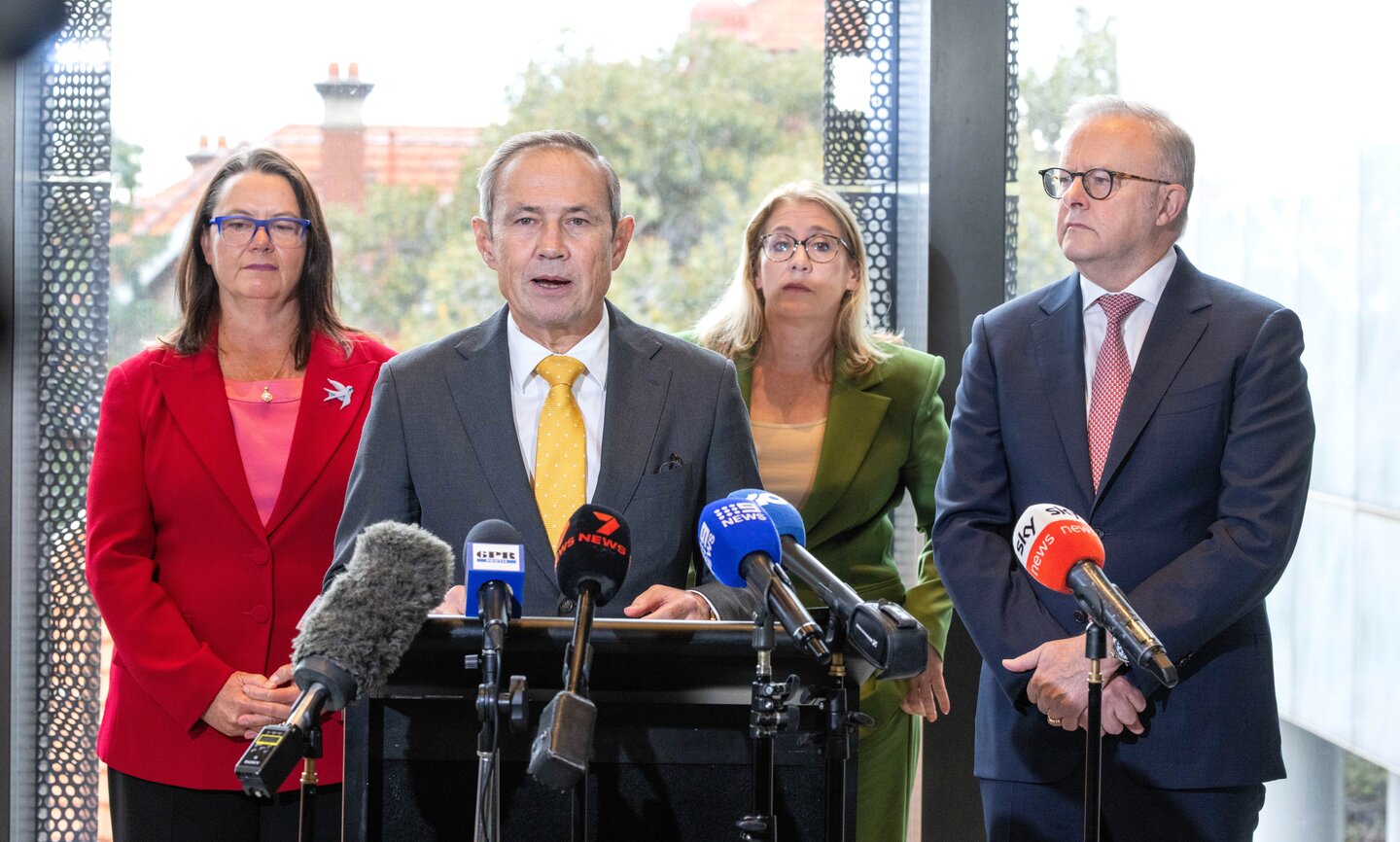
The state and federal governments will jointly fund major road infrastructure works near the Naval Base industrial gateway, near the planned Westport development.
The state and federal governments will jointly fund major road infrastructure works near the Naval Base industrial gateway, near the planned Westport development.
The pecking order of India’s top companies by market capitalisation has remained broadly stable at the top since September 30, 2024, even as there has been a steady reshuffle beneath the surface.
Reliance Industries has stayed unchallenged as the country’s most valuable company, despite wide swings in valuation. Just below, HDFC Bank moved ahead of Tata Consultancy Services to take the second position, signalling a broader rotation from technology towards financials.
Bharti Airtel has emerged as a clear gainer, climbing into the top tier and holding its ground through successive quarters, while Infosys has ceded ground in the rankings, reflecting the IT sector’s waning relative clout.
Agencies
ICICI Bank has remained broadly consistent, while State Bank of India has seen sharper swings even as it trends higher. Traditional defensives such as Hindustan Unilever and ITC have been largely stagnant in the market cap table.


















































You must be logged in to post a comment Login