With Bitcoin trading around A$100,000 to A$102,000 in early April 2026, Australian investors face a familiar dilemma: buy the dip in hopes of another bull run, sell to lock in gains after last year’s volatility, or simply hold through what many analysts call a transitional year in the cryptocurrency’s four-year cycle.
The world’s largest digital asset has recovered from post-halving corrections but remains well below the peaks above US$100,000 (roughly A$155,000) seen in late 2025. As of April 8, 2026, Bitcoin was changing hands near US$71,000–72,000, equivalent to approximately A$101,000–102,000 depending on exchange rates, according to real-time data from major platforms.
The question of whether Aussies should buy or sell has no simple answer. Australia’s crypto ownership hit a record 33% in early 2026 surveys, with Bitcoin still the dominant holding at 71% of investor portfolios. Yet regulatory scrutiny, bank payment blocks and macroeconomic uncertainty have made many cautious.
Current Market Snapshot
Bitcoin entered 2026 on a softer note after a strong 2025 rally fueled by U.S. policy shifts and institutional adoption. The asset has traded in a relatively narrow range in recent weeks, with technical indicators showing mixed signals. Short-term forecasts for April suggest possible movement toward US$72,000–75,000, while longer-term 2026 predictions vary wildly — from conservative targets around US$75,000–100,000 to bullish calls of US$150,000–230,000 by year-end.
Australian economists and analysts are divided. Some point to potential interest rate cuts from major central banks as liquidity-positive for risk assets like Bitcoin. Others warn that renewed inflation or tighter monetary policy could trigger another leg lower, especially if the post-halving cycle follows historical patterns of mid-cycle corrections.
Advertisement
Bullish Case: Institutional Momentum and Long-Term Adoption
Proponents of buying or holding argue Bitcoin has matured into a legitimate asset class. Growing pension fund exposure, potential U.S. strategic reserves and increasing corporate treasury adoption provide structural support absent in previous cycles.
Ripple CEO Brad Garlinghouse predicted Bitcoin could reach US$180,000 by the end of 2026, citing regulatory clarity and global momentum. Other forecasts from firms like Bernstein and Standard Chartered cluster around US$150,000, with some optimistic models seeing peaks near US$200,000–225,000 if adoption accelerates.
In Australia, 67% of crypto investors now view Bitcoin as a legitimate financial asset rather than pure speculation. Dollar-cost averaging (DCA) remains popular among retail investors, allowing gradual entry without trying to time the market perfectly. Supporters highlight Bitcoin’s fixed supply of 21 million coins and its role as a potential hedge against currency debasement or inflation.
For long-term holders — often called “HODLers” — selling now could mean missing out on the next leg up, especially if global liquidity improves later in 2026.
Advertisement
Bearish Risks: Volatility, Regulation and Macro Pressures
Skeptics urge caution or even selective selling. The four-year halving cycle suggests 2026 could feature a “bear leg” or consolidation period, with some analysts warning of possible dips toward US$50,000 in a worst-case scenario.
Australian banks continue to tighten restrictions on crypto-related payments, adding friction for everyday investors. The Australian Taxation Office treats Bitcoin as a capital gains tax asset, with the 50% CGT discount available only after 12 months of holding — a reminder that frequent trading carries tax consequences.
Broader risks include geopolitical tensions (such as the fragile U.S.-Iran ceasefire), fluctuating oil prices and potential shifts in U.S. Federal Reserve policy. If central banks drain liquidity or hike rates unexpectedly, risk assets like Bitcoin could face renewed pressure.
Younger investors and those with high exposure may benefit from trimming positions to rebalance portfolios, particularly if Bitcoin forms a significant portion of their net worth. Diversification into traditional assets or even other cryptocurrencies remains a common recommendation.
Advertisement
Australian Context: High Adoption, High Caution
Australia ranks among the world’s leading crypto-adopting nations, but local experts stress responsible investing. Financial planners typically recommend limiting crypto to 5% or less of a diversified portfolio for most retail investors — an amount one can afford to lose without derailing retirement or other goals.
Tax compliance is straightforward but essential. Every sale, swap or spend triggers a capital gains event. Tools like Koinly or CryptoTaxCalculator help automate reporting for those using Australian exchanges.
For those considering entry in 2026, strategies include:
Dollar-cost averaging: Regular small purchases to average out volatility.
Waiting for dips: Some analysts suggest better entry points if Bitcoin corrects further.
Long-term holding: Treating Bitcoin as a speculative satellite rather than a core holding.
Those already in profit may consider taking partial profits, especially if nearing financial goals that require liquidity.
Expert Opinions Vary Widely
Australia’s top economists offer no consensus. One noted that Bitcoin’s price often moves inversely with interest rates — lower rates tend to support risk assets, while tightening hurts them. Another emphasized that short-term prediction is nearly impossible, recommending investors focus on their risk tolerance and time horizon rather than chasing headlines.
Advertisement
Finder’s crypto panel in early 2026 showed 43% viewing current levels as a buy opportunity, 38% favoring hold and 19% leaning toward sell.
Ultimately, the decision hinges on individual circumstances. Bitcoin offers high-reward potential but comes with extreme volatility — prices can swing 10–20% in a single week.
Balanced Advice for Aussie Investors
Financial experts generally agree on a few principles for 2026:
Only invest what you can afford to lose completely.
Educate yourself on wallet security, exchange risks and tax obligations.
Consider regulated Australian platforms for better consumer protections.
View Bitcoin as a high-risk, high-reward addition to a broader portfolio, not a replacement for shares, property or superannuation.
As adoption grows and infrastructure matures, Bitcoin’s role in portfolios may evolve. Yet for most Australians, the prudent approach remains measured exposure combined with disciplined risk management.
Whether 2026 becomes another year of strong gains or a period of consolidation, the crypto market will likely remain unpredictable. Australians weighing buy, sell or hold decisions should consult licensed financial advisers and base choices on personal goals rather than market hype or fear.
Advertisement
The volatile nature of digital assets means no strategy guarantees success — but informed, patient investors have historically fared better than those chasing short-term momentum.
James Entwistle – Senior Director of Investor Relations Stephan Von Schuckmann – CEO & Director Andrew Lynch – CFO & Executive VP
Advertisement
Conference Call Participants
Ryan Choi Mark Delaney – Goldman Sachs Group, Inc., Research Division Christopher Glynn – Oppenheimer & Co. Inc., Research Division Joseph Giordano – TD Cowen, Research Division Guy Drummond Hardwick – Barclays Bank PLC, Research Division Jyhhaw Liu – Evercore ISI Institutional Equities, Research Division Joseph Spak – UBS Investment Bank, Research Division Konstandinos Tasoulis – Wells Fargo Securities, LLC, Research Division Luke Junk – Robert W. Baird & Co. Incorporated, Research Division Shreyas Patil – Wolfe Research, LLC
Advertisement
Presentation
Operator
Good afternoon, everyone, and welcome to the Sensata Technologies Q1 2026 Earnings Call. [Operator Instructions] Please also note, today’s event is being recorded. I would now like to turn the conference call over to Mr. James Entwistle, Senior Director of Investor Relations. Please go ahead.
Advertisement
James Entwistle Senior Director of Investor Relations
Thank you, operator, and good afternoon, everyone. I’m James Entwistle, Senior Director of Investor Relations for Sensata, and I’d like to welcome you to Sensata’s First Quarter 2026 Earnings Conference Call. Joining me on today’s call are Stephan Von Schuckmann, Sensata’s Chief Executive Officer; and Andrew Lynch, Sensata’s Chief Financial Officer. In addition to the financial results press release we issued earlier today, we will be referencing a slide presentation during today’s conference call. A PDF of this presentation can be downloaded from Sensata’s Investor Relations website. This conference call is being recorded, and we will post a replay on our Investor Relations website shortly after the conclusion of today’s call.
As we begin, I would like to reference Sensata’s Safe Harbor statement on Slide 2. During this conference call, we will make forward-looking statements regarding future
Mumbai: Easing in corporate borrowing costs mid-April, which encouraged a wave of bond issuance, appears to be reversing as concerns over a prolonged conflict in West Asia drive yields higher once again. Firming local yields have made issuers more cautious, with some scaling back planned bond sales after a brief period of frenetic activity.
Recent state-backed bond issuances show signs that borrowing costs may be beginning to edge higher again. SIDBI, which had planned to raise ‘6,000 crore through a three-year bond sale on Tuesday, mobilised only ‘3,025 crore at a yield of 7.61%. A week earlier, NABARD raised ‘4,250 crore against a planned ‘7,000 crore at 7.48% for a similar tenor.
Agencies
prolonged West Asia conflict casts a shadow
Taken together, the two issuances indicate that funding costs are starting to move higher, debt market participants said.
Corporate borrowing costs are rising again after a brief dip in mid-April, driven by concerns over the West Asia conflict impacting oil prices. Recent state-backed bond issuances saw lower-than-planned mobilizations, indicating increased caution among issuers and selective appetite in the debt market.
“We saw a pickup in bond issuances after mid-April as lower yields encouraged corporates to tap the market. But borrowing costs are beginning to inch up again over the past few days,” said Venkatakrishnan Srinivasan, managing partner at Rockfort Fincap, a debt advisory firm. “So, appetite remains selective, and many are finding it difficult to raise the full amount they had initially planned.” Yields on India’s 10-year benchmark paper slipped to around 6.86% by April 15 from as high as 7.13% early April. But they have steadily climbed again to around 6.98%, with little clarity on the direction of the West Asia war and its impact on oil prices.
Live Events
Mid-March, NABARD had raised ‘7,265 crores for 3-years at 7.44%, while REC raised ‘3,000 crores for 5-years at 7.19% The pickup in issuances mid-April also coincided with a period of ample surplus liquidity in the banking system, which boosted demand for fixed-income securities. This encouraged institutions such as banks and mutual funds to deploy funds into the debt market, and the resulting surge in demand helped compress yields, debt market participants said.
The reported exit of the UAE from the OPEC+ alliance has triggered fresh speculation over the long-term cohesion of the oil producers’ group, even though immediate market disruption remains limited. While the short-term impact on crude prices appears muted due to ongoing geopolitical tensions, analysts suggest the development could reshape global oil supply dynamics once stability returns.
Speaking to ET Now, market expert Peter Cardillo from Spartan Capital Securities described the development as a potentially significant turning point for the alliance’s future.
“First signs of a crack” in OPEC+ Commenting on the broader implications for the producer group, Cardillo noted that the development could signal deeper structural issues within OPEC+.“Well, it is a big deal in a sense that to me this raises the question whether or not OPEC plus is going to be around for much longer. It is the first signs of a crack and the UAE produces anywhere from 2.9 million to 3 million barrels a day and so it is among the 10 top oil producing nations. Now what does this mean? In the short run, obviously during the war it does not have much of an impact in terms of oil prices but once the war is over and, of course, the war will come to an end at one point or another, this just means that more production and it means more oil on the world markets and it means probably prices collapsing in a big way and so I think it is a big deal.”
Live Events
Cardillo highlighted that the UAE’s output levels make it a key player in global supply, and any shift in its alignment could gradually influence pricing trends, particularly once current geopolitical disruptions ease.Price floor concerns remain limited—for now When asked whether OPEC’s ability to maintain a price floor is weakening without the UAE’s participation, Cardillo downplayed immediate risks but pointed to longer-term uncertainty.“No, I do not think so, not in the short term, but obviously this also raises a question: who is next?”
Market implications: stability now, uncertainty ahead While oil markets continue to be driven largely by geopolitical developments and near-term supply constraints, the potential fragmentation of OPEC+ raises questions about how coordinated production policy will remain in the years ahead.
Advertisement
For now, traders appear to be focusing on immediate demand-supply dynamics. However, analysts suggest that if more members reconsider their participation, the long-standing influence of OPEC+ on global oil pricing could gradually weaken, opening the door to more volatile and market-driven pricing structures in the future.
Seeking Alpha’s transcripts team is responsible for the development of all of our transcript-related projects. We currently publish thousands of quarterly earnings calls per quarter on our site and are continuing to grow and expand our coverage. The purpose of this profile is to allow us to share with our readers new transcript-related developments. Thanks, SA Transcripts Team
Elon Musk made explosive claims during his testimony in a federal courtroom this week as his legal battle against OpenAI and CEO Sam Altman officially began.
Speaking before a jury in Oakland, Musk argued that his long-standing concerns about the safety of artificial intelligence motivated his involvement in OpenAI long before AI became mainstream.
Musk Claims Google Ignored AI Safety
The billionaire entrepreneur testified that he personally warned Barack Obama about the dangers of artificial intelligence during a private meeting in 2015.
JUST IN: Elon Musk says he tried to warn former President Obama about AI, but was not taken seriously because it was not smart enough yet.
According to Musk, AI was still largely ignored at the time, but he believed it could eventually become a major threat to humanity.
During his testimony, Musk also revealed details about the tensions he had with former Google CEO Larry Page.
The 54-year-old tycoon claimed Page labeled him a “speciest” because of his pro-human stance regarding AI development.
Furthermore, Musk explained that one reason he helped create OpenAI was to establish a counterbalance to Google’s growing dominance in AI. He accused Google of failing to prioritize AI safety during the early stages of rapid AI advancement.
Advertisement
The Tesla and SpaceX CEO also described efforts to recruit AI researcher Ilya Sutskever away from Google to help build OpenAI.
OpenAI Lawsuit Seeks More Than $100 Billion
The focus of the lawsuit is Musk’s accusation that OpenAI abandoned its original nonprofit mission.
As reported by Business Insider, Musk claims the company shifted toward private profit despite promises that artificial intelligence development would benefit humanity rather than corporate interests.
The lawsuit reportedly seeks more than $100 billion in damages and challenges OpenAI’s for-profit restructuring, which includes major backing from Microsoft.
Advertisement
Musk testified that he personally donated around $38 million to support OpenAI’s original mission when the organization launched in 2015.
AI Safety Debate Continues To Intensify
Musk compared AI to a highly intelligent child that can be uncontrollable without proper guidance and values.
He warned that unchecked AI development could create dangerous consequences once machines surpass human intelligence.
OpenAI strongly denied Musk’s accusations, describing the lawsuit as an attempt to disrupt competition within the rapidly expanding AI industry. The company called it a “legal ambush” in its own terms.
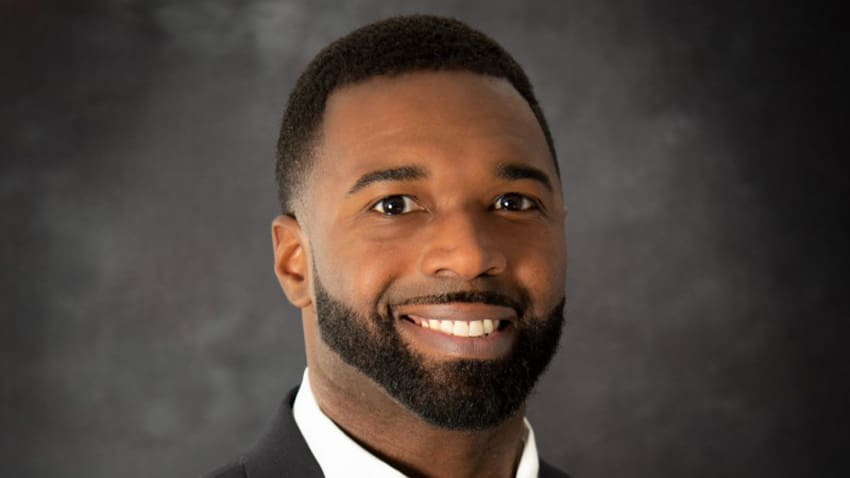
Wade Lyons is a security professional and business leader with nearly two decades of experience in public safety. He is the Chief Executive Officer of Black Onyx Investigations, a firm focused on background investigations, private security, and executive protection services.
He began his career in 2006 with the Austin Police Department. Over the next 17 years, he moved through a range of roles, including patrol, investigations, and strategic intelligence. He later became a Police Commander, where he led both operational units and the department’s training and recruiting division.
In that role, he oversaw programmes that supported more than 2,000 officers and civilian staff. He managed large teams, developed training systems, and helped modernise recruitment efforts. His work included improving hiring standards and expanding community engagement in the training process.
Wade Lyons is known for his structured approach to leadership. He focuses on clear processes, strong accountability, and practical decision-making. His experience reviewing critical incidents and leading large teams shaped how he approaches risk and performance.
In 2024, he moved into the private sector and founded Black Onyx Investigations. The firm supports organisations with hiring decisions, risk assessments, and security planning. His work now centres on helping clients reduce exposure and make informed decisions.
Advertisement
He holds a Master of Science in Criminal Justice and is completing an MBA. His background in law enforcement continues to influence his work in private security.
Q: You began your career in law enforcement. What drew you into that field?
I grew up in Houston and originally planned to go into medicine. During my final semester at Texas A&M, I did a ride-along with a police officer. That experience changed everything. I saw the impact officers could have on people in real time. I applied to the City of Austin shortly after graduating and started my career there.
Q: What were your early years in the Austin Police Department like?
I started in patrol, which is where you learn the job properly. You respond to thousands of calls and see every type of situation. It builds your judgement. I later moved into investigations and worked on cases involving violent crime and narcotics. That period taught me how to manage information, interview people, and build cases step by step.
Q: You later moved into leadership roles. How did that transition happen?
I was promoted through the ranks into supervisory and command roles. As a sergeant and lieutenant, I managed teams and handled operational planning. Eventually, I became a Police Commander. I led area operations and later the Training and Recruiting Division. That role involved managing over 100 personnel and supporting the development of more than 2,000 officers and staff.
Advertisement
Q: What stands out from your time leading training and recruiting?
We had to rethink how we trained officers. One example was moving away from long classroom sessions and introducing scenario-based training. I remember watching an officer go through a simulated call where communication made the difference between escalation and resolution. That moment reinforced how important realistic training is.
Q: Recruiting has been a major challenge for many departments. What did you learn from that experience?
Recruiting is not just about numbers. It is about selecting the right people. I reviewed many background investigations. One candidate had strong test results but showed a pattern of dishonesty in previous jobs. That disqualified him. You cannot train integrity. That lesson stayed with me.
Q: What led you to leave public service and start your own company?
After 17 years, I wanted to apply what I had learned in a different environment. I saw a gap in how organisations handle risk, especially in hiring and internal investigations. In 2024, I started Black Onyx Investigations to focus on those areas.
Q: What does your work look like now?
Most of our work involves background investigations and security consulting. We help organisations verify candidate information and assess potential risks. Each case follows a structured process. We define the scope, collect and verify information, and provide a clear report.
Advertisement
Q: How does your law enforcement background influence your business approach?
In policing, you work within strict procedures. You document everything and base decisions on evidence. I use the same approach in my business. Clients need clear, accurate information. That is what allows them to make informed decisions.
Q: What are the most common issues clients come to you with?
Hiring risk is a major one. Organisations want to know if a candidate’s background aligns with the role. We also see cases involving internal concerns, where companies need a structured review of a situation.
Q: Looking ahead, how do you see your work evolving?
I expect continued growth in private investigations and executive protection. Organisations are paying more attention to risk management. My focus is building systems that maintain quality as we expand.





















































You must be logged in to post a comment Login