
Business
Should Investors Be Worried About an AI Bubble? Here’s What History Says.


Financial history is filled with bubbles, going all the way back to the Tulip Bulb mania in the 17th century. There are entire books written about how investors frequently take good investment ideas and push them way too far. To think that artificial intelligence (AI) will somehow avoid the same fate is shortsighted. And the best evidence comes from the last technology-related bubble.
The internet changed the world, but Wall Street still crashed
At the turn of the century, Wall Street was enamored of internet stocks. Companies would simply append “.com” to their names to gain investor attention. And far too often it worked! The technology has, in fact, changed the world. But that doesn’t mean investors who bought into the emerging bubble at the time made out.
Missed AI’s “Act 1”? Act 2 Could Be 15x Bigger. Most investors think they missed the AI boat because they didn’t buy Nvidia in 2005. But according to our analysts, we’re only at the end of “Act 1″—the R&D phase. “Act 2” is the global rollout. Continue »

The S&P 500 index (SNPINDEX: ^GSPC) fell more than 45% after the bubble burst. The technology-heavy Nasdaq-100 lost more than 80% of its value. It was a brutal period for investors, and the downturn was clearly led by technology stocks. The very same stocks that inflated the bubble in the first place.
The poster child for the dot-com crash is Cisco (NASDAQ: CSCO). Its stock took roughly a quarter of a century to recover from its decline. The Nasdaq-100 “only” took around 15 years. But the problem wasn’t the technology. The problem, as it has always been, is investor emotions.

When Wall Street gets an idea in its teeth, it runs with it. Usually, it runs too far. Early investors make a lot of money, which leads more investors to jump into the space, fearing they are missing out on big gains. Eventually, emotionally driven investors push stock prices beyond what most would consider reasonable valuations. But people believe they can get out before the bubble bursts. Some do, but trees don’t grow to the sky.
At some point, it becomes clear that too much capital was wasted on projects that won’t produce the promised returns. Why? Because companies were indiscriminately throwing money at the technology because that’s what investors were demanding.
The signs of a bubble are here
Nvidia (NASDAQ: NVDA) is a well-run chipmaker with impressive technology. But it is subsidizing its customers in unique ways that are bolstering demand for its AI chips. Market watchers are already questioning these arrangements. History shows that spending on AI will likely be overdone, leading to supply outstripping demand and capital investment projects that don’t live up to expectations. When that happens, the bubble is likely to burst.

Quick Read
-
The week ending August 28 saw inflows of $110.49 million, surpassing the total of the previous three weeks combined.
-
Franklin Templeton’s fund was the only one to record positive inflows across all five trading sessions, meaning one issuer accounted for the entire sector’s single green day.
-
Solana’s ETFs are currently the only crypto ETF XRP still leads, and Solana has experienced 12 consecutive weeks of positive inflows while XRP’s cumulative inflows have barely budged.
-
Just released. Our analysts combed the entire stock market and named the ten best stocks to buy right now, and Coinbase didn’t make the cut. Enter your email to see the names that beat COIN. The report is free. Enter your email and see if any of your stocks made the cut.
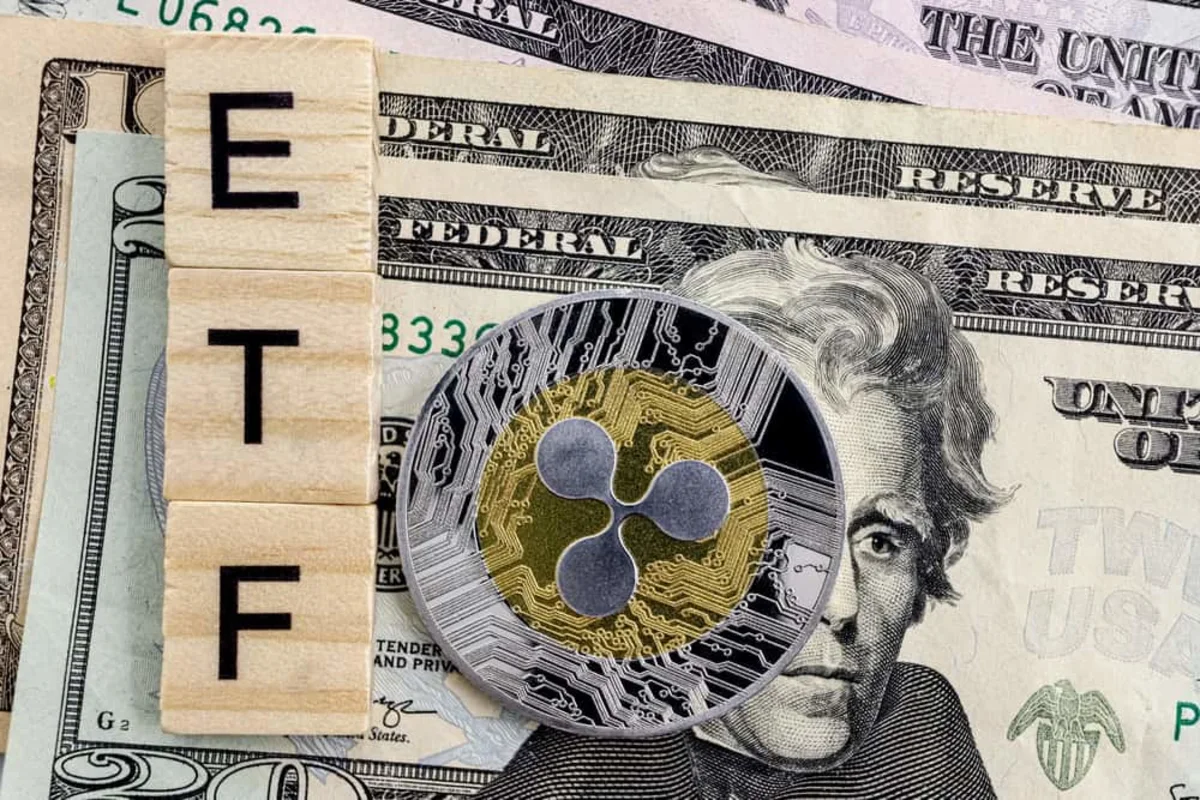
On September 18, 2026, XRP (CRYPTO:XRP) ETF inflows were stalled at a cumulative total of $1,710,373,047.51, according to SoSoValue data pulled on September 19. This leaves a gap of $290 million to reach the $2 billion mark.
The pace of closing this gap has declined over the past three weeks. So when will XRP ETF inflows surpass $2 billion, and what changes may be necessary for that to happen?

Two Macro Events Influenced XRP ETFs by $3.5 Million

As of September 11, the total cumulative inflow stood at $1,700,813,802.26. In the five trading sessions that followed, it increased by less than $10 million, coinciding with two significant macro events.
On September 15, the Senate rejected the CLARITY Act by a vote of 49 to 50, a bill that aimed to clarify how US regulators treat digital assets. On that day, XRP ETFs recorded no inflows at all. The following day, the Federal Reserve raised its target range by 25 basis points to an upper bound of 3.75% to 4.00%, leading to $3.5 million in inflows, mainly driven by Franklin Templeton.
Free Report, Just Released
Why Didn’t COIN Make The Top 10 List?
24/7 Wall St has helped investors make money for over two decades, and our top analysts just finished ranking the definitive Top 10 Stocks To Buy Now. Not the ten biggest companies. Not the ten everyone is arguing about. The ten best stocks to buy right now.
And COIN didn’t make the cut!
The report is free, and you can see why we think each stock is a top investment today.
Enter Your Email and See the Ten →
The rest of the week showed little activity. September 14 saw $11.26 million in inflows, the only day above $10 million. September 17 lost $5.15 million, and September 18 lost another $43,699, for a total inflow of just $9.57 million for the week and total net assets of $1.51 billion.



Persian Gulf states and Russia have invested tens of billions of dollars in refineries over the past decade to grab a bigger share of the global diesel market. Now, war in both regions has sent exports plunging, squeezing supplies of a fuel that powers much of the global economy.
Diesel prices are soaring—they eclipsed $6 a gallon in the U.S. for the first time last week and have kept climbing, hitting $6.45 on Friday. The surge has rattled governments and markets around the world that rely on diesel as the workhorse of their industry, transportation and agriculture. Shortages have appeared at gas stations in rural Brazil, in Libya and some African nations that can’t afford to import the fuel.
Copyright ©2026 Dow Jones & Company, Inc. All Rights Reserved. 87990cbe856818d5eddac44c7b1cdeb8
SpaceX Is Becoming An AI Giant

AI safety efforts will require more compute, not less: experts
Business
BlackBerry Q2 Earnings Preview: QNX's Diversification Sparks A Potential Rebound (Ratings Upgrade)
BlackBerry Q2 Earnings Preview: QNX's Diversification Sparks A Potential Rebound (Ratings Upgrade)
The Fed Is Setting Financials Up For Another 2022

Russia stocks lower at close of trade; MOEX Russia Index unchanged
Saul Centers: Attractive Even Amidst Higher Interest Rates (Upgrade)
BLOX: A Crypto Rebound Meets A Hawkish Fed
Business
MBB: Intermediate Duration Not Suitable At The Head Of Possible Rate Hiking Cycle (NASDAQ:MBB)


The Valkyrie Trading Society is a team of analysts sharing high conviction and obscure developed market ideas that are downside limited and likely to generate non-correlated and outsized returns in the context of the current economic environment and forces. They are long-only investors.They lead the investing group The Value Lab where they offer members a portfolio with real time updates, chat to answer questions 24/7, regular global market news reports, feedback on member stock ideas, new trades monthly, quarterly earnings write-ups, and daily macro opinions.
Analyst’s Disclosure: I/we have no stock, option or similar derivative position in any of the companies mentioned, and no plans to initiate any such positions within the next 72 hours. I wrote this article myself, and it expresses my own opinions. I am not receiving compensation for it (other than from Seeking Alpha). I have no business relationship with any company whose stock is mentioned in this article.
Seeking Alpha’s Disclosure: Past performance is no guarantee of future results. No recommendation or advice is being given as to whether any investment is suitable for a particular investor. Any views or opinions expressed above may not reflect those of Seeking Alpha as a whole. Seeking Alpha is not a licensed securities dealer, broker or US investment adviser or investment bank. Our analysts are third party authors that include both professional investors and individual investors who may not be licensed or certified by any institute or regulatory body.
Missing Lillia, 13, from Bolton found safe in Manchester after police search

Trey Songz & His Son Noah Make Rare Fashion Show Appearance

Apple Watch Series 12 and Ultra 4 weekend deals on Amazon




-

 Fashion1 day ago
Weekend Open Thread: Talbots – Corporette.com
-

 Tech6 days ago
The Latest Weird Thing to Play Doom Is the Mapped-Out Brain of a Fruit Fly
-

 Crypto World5 days ago
Kraken Lets xStocks Holders Earn Yield Through DeFi
-

 Crypto World5 days ago
Revolut Attackers Warn of Ongoing Daily Customer Data Leaks
-
 NewsBeat1 day ago
Trump says US has reached an agreement to take permanent control of Greenland’s security
-

 Crypto World4 days ago
What Is the Status of the U.S.-Iran Peace Talks? Here's What Both Sides Are Saying
-

 Crypto World3 days ago
US Charges Robinhood Engineers Over Crypto Listing Trades
-

 Crypto World5 days ago
Elon Musk Drops a Bombshell: Grok 5 Could Be the AGI Breakthrough
-
 Crypto World4 days ago
Robinhood engineers charged over $50K crypto scheme
-
 Crypto World6 days ago
New Tesla Roadster Uses SpaceX Tech. Will It Impact the Stock Price?
-

 Business7 days ago
Rivals Sam Altman and Elon Musk Rally Behind Dario Amodei’s Call for a Slowdown in AI Development
-
 NewsBeat5 days ago
‘Sick conspiracy’: Trump says only guardrails AI needs is ‘a strong and smart (High IQ!) president’ in all-caps rant
-
 Crypto World5 days ago
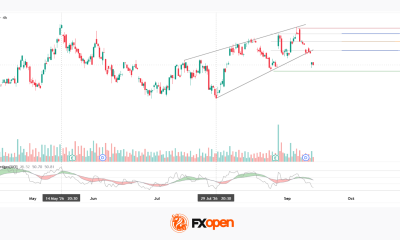
NVIDIA Analysis: Attempted Rising Wedge Breakout Amid Pressure on the AI Sector
-

 Crypto World23 hours ago
Bitcoin price breaks channel as RSI climbs to 63
-
Business5 days ago
SK Hynix ADRs Fall More Than 6% as Memory Rally Breaks on Fears of Slower AI Spending
-
 Crypto World5 days ago
DOJ Seeks to Seize $61M in Iran Oil Funds From Binance Accounts It Vouched For
-
Crypto World5 days ago
Can Circle’s Arc Repeat Robinhood Chain’s Meme Coin Boom?
-
 NewsBeat7 days ago
Last Night of the Proms pays moving tribute to Dolly Parton as Sheridan Smith wears a gold sequin jumpsuit in memory of the Queen of Country
-
 Crypto World6 days ago
3 Token Unlocks to Watch in the Third Week of September 2026
-
 Crypto World6 days ago
Goldman Sachs backs 25bp Fed hike after CPI
You must be logged in to post a comment Login