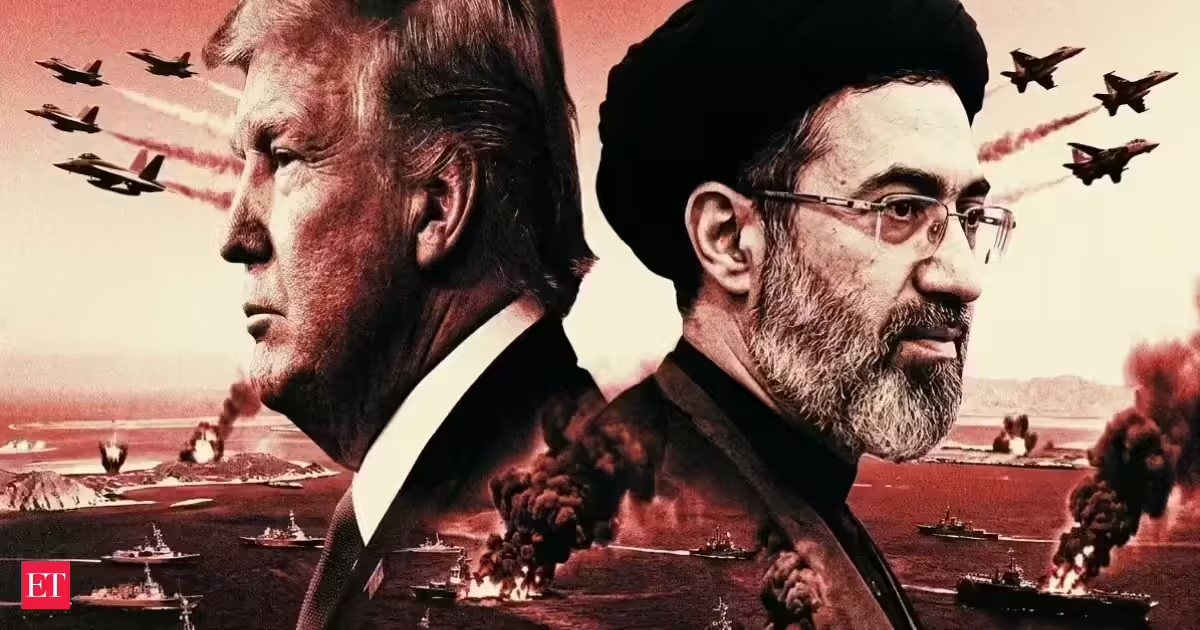
US and Iran digitally signed a 14-point Memorandum of Understanding (MoU) at France’s Palace of Versailles, a venue that has witnessed some of the most important diplomatic moments in modern history. The agreement aims to end hostilities between Washington and Tehran and sets a 60-day timeline for negotiations on a broader settlement.
The Versailles agreement includes commitments related to ending military operations, reopening the Strait of Hormuz, addressing Iran’s nuclear programme and beginning a process for sanctions relief and economic cooperation. The MoU also states that Iran will not pursue nuclear weapons.
The choice of Versailles as the venue has drawn attention because the palace is closely linked with another landmark agreement signed more than a century ago, the 1919 Treaty of Versailles, which formally ended World War I and later became one of the most debated peace settlements in history.
Why Versailles matters in world history
Located near Paris, the Palace of Versailles was once the centre of French royal power before becoming a symbol of diplomacy and international negotiations.
The palace has hosted several agreements that changed the course of global politics. But none is more famous than the Treaty of Versailles signed on June 28, 1919, between Germany and the Allied powers after the end of World War I.
The treaty officially ended the war but imposed strict conditions on Germany, including territorial losses, military restrictions and financial reparations. It also created the League of Nations, an early attempt to build a system to prevent future conflicts.
The Treaty of Versailles and the road to World War II
While the treaty was designed to prevent another major war, many historians argue that its harsh terms contributed to economic and political instability in Germany.The resentment created by the settlement was later exploited by Adolf Hitler and the Nazi Party, helping fuel the rise of extreme nationalism. These developments eventually contributed to the outbreak of World War II in 1939.
Because of this historical legacy, Versailles remains both a symbol of peace negotiations and a reminder of how post-war settlements can influence global politics for generations.
Other major agreements linked to Versailles
The palace has been associated with several other important treaties over the centuries. The Treaty of Versailles of 1757 strengthened the alliance between France and Austria during the Seven Years’ War, reshaping European power politics.
The Treaties of Versailles of 1783 formed part of the settlement after the American Revolutionary War and helped adjust the balance between European powers.
Another agreement signed at Versailles in 1871 followed the Franco-Prussian War and marked a major shift in European power after the emergence of the German Empire.
Iran US Deal
The memorandum of understanding signed by US and Iran is being viewed as an attempt to bring an end to a costly confrontation and restore stability in a region that has faced months of tensions. However, analysts caution that the agreement remains vulnerable, with several major issues still unresolved and the possibility of fresh clashes threatening the progress made so far.
The deal, reportedly facilitated partly through Pakistan’s diplomatic efforts, focuses on immediate confidence-building measures. Under the framework, Iran would allow commercial movement through the Strait of Hormuz, one of the world’s most important energy routes, while the United States would begin steps to withdraw naval pressure and ease restrictions.
What the Iran-US agreement includes
The proposed arrangement includes a phased easing of sanctions, the possible return of Iranian oil exports to international markets, and the release of some frozen Iranian financial assets. It also outlines a withdrawal of US forces operating around Iran within a specified period.
In return, Iran has committed to keeping the Strait of Hormuz open for commercial shipping for an initial period and has reiterated that it will not develop or acquire nuclear weapons. However, questions remain over long-term nuclear monitoring, enforcement mechanisms and how both sides will respond if either party believes the commitments are not being followed.
The agreement’s broad promise of removing sanctions has attracted attention because it appears to offer Tehran significant economic relief. Some analysts believe Washington’s willingness to make concessions reflects its desire to reduce its involvement in a prolonged regional conflict.
Strait of Hormuz holds the key
The reopening of the Strait of Hormuz has immediate global implications. The narrow waterway between Iran and Oman is a critical route for global oil and gas shipments, with a large share of the world’s energy supplies passing through it.
Any disruption in the region has the potential to affect fuel prices, shipping costs and inflation worldwide. The return of commercial vessels through the route has been seen as an early sign that markets may begin stabilising, though traders remain cautious.
The 60-day test
The biggest challenge for the agreement will be the next 60 days, during which Washington and Tehran are expected to negotiate a broader settlement.
Key questions remain unanswered, including how nuclear commitments will be verified, what guarantees will prevent a return to conflict and whether both sides can maintain political support for the deal at home.
Analysts describe the MoU as a starting point rather than a final peace agreement, with its success depending on whether both countries can convert the temporary measures into a lasting arrangement.
Israel’s role remains a major factor
A major uncertainty surrounding the agreement is Israel’s position. While the US and Iran have signed the framework, Israel has not joined the deal and has expressed concerns about Iran’s regional activities.
The agreement calls for an end to military operations across multiple fronts, including Lebanon. But continued Israeli actions against Iran-backed groups could create new tensions and risk triggering responses from Tehran or its allies.
The future of the deal may therefore depend not only on Washington and Tehran but also on whether other regional players accept the framework and avoid steps that could reopen hostilities.
A fragile path towards peace
The agreement has created an opening for diplomacy, but several risks remain. Military incidents, disagreements over sanctions, disputes around nuclear commitments or attacks involving regional allies could quickly derail the process.
The coming negotiations will determine whether the Versailles agreement becomes a historic turning point or another temporary pause in a long-running geopolitical conflict.
A historic venue for a modern geopolitical moment
The Iran-US agreement has now added another chapter to Versailles’ long diplomatic history. Supporters see it as a possible turning point between two long-time rivals, while critics have questioned whether the commitments will translate into a lasting settlement.
More than a century after the 1919 treaty, Versailles once again finds itself at the centre of a global diplomatic moment — carrying both the promise of peace and the lessons of history.












































You must be logged in to post a comment Login