Connect with us
DAPA Banner

Business

Small businesses sceptical over tariff refunds after US Supreme Court strikes down Trump’s trade levies

Published

on

US tariffs threaten to tip UK, Europe and Asia into recession, warn economists

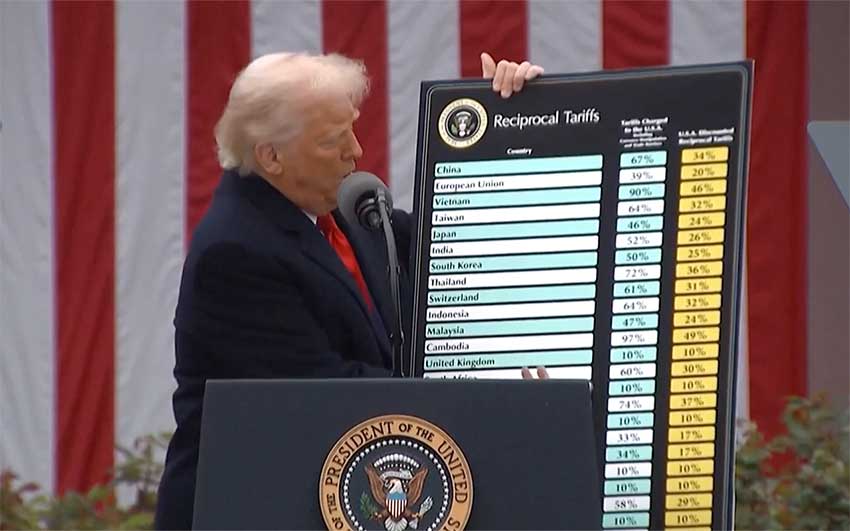
Small business owners across the United States have expressed scepticism that they will ever see refunds following the landmark ruling by the Supreme Court of the United States striking down large parts of Donald Trump’s sweeping tariff regime.

The court’s decision potentially unlocks as much as $175 billion (£137 billion) in repayments to companies that paid import duties under the controversial policy. However, many entrepreneurs say the legal and administrative complexity involved in claiming those refunds could make the process prohibitively difficult, particularly for smaller firms already strained by rising costs.

The tariffs, which targeted a wide range of imported goods under the former president’s “Liberation Day” trade policy, had sharply increased the cost of materials and products for businesses reliant on global supply chains.

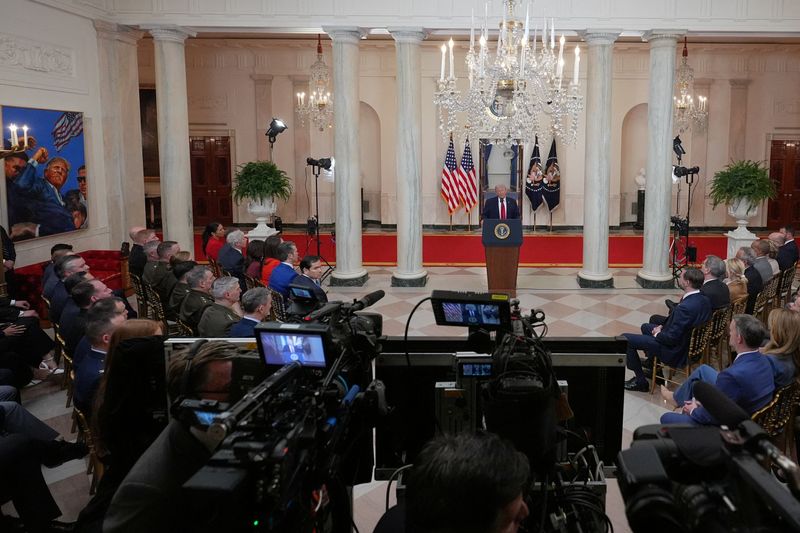
Although the ruling has opened the door to compensation claims, Trump himself acknowledged the issue could remain entangled in litigation “for the next five years”, leaving thousands of companies unsure whether pursuing refunds is even worthwhile.

For many small firms, the economic damage caused by the tariffs has already been felt in higher costs, squeezed margins and delayed investment plans.

Advertisement

Elizabeth Vitanza, who runs a lighting and home furnishings business in Los Angeles with her husband John Ballon, said the impact has been felt across nearly every brand they work with.

“All of the modern brands we carry have raised prices by at least 12 per cent over the past year,” she said. “None of this is pro-business or pro-American.”

When Trump won re-election in 2024, the couple attempted to protect their business by rushing through a large order with a Swedish partner in an effort to beat the incoming tariffs.

Despite the attempt, the shipment was still caught by the new duties.

Advertisement

“We ended up paying a five-figure tariff bill,” Ballon said. “Money we had earmarked to renovate the showroom and possibly increase staff salaries suddenly had to cover unexpected import taxes.”

The couple said the experience had forced them to rethink expansion plans.

“Why would anyone start a business right now?” Vitanza asked. “If I didn’t already have an established one, I wouldn’t.”

Across other sectors, similar stories have emerged of rising costs linked to tariffs on imported raw materials and components.

Advertisement

A furniture manufacturer in Texas said the policy had pushed up the price of imported lumber and specialist cabinet hardware that cannot be sourced domestically.

The company had little choice but to pass on the costs to customers.

“Those materials simply aren’t made in the United States,” the owner said, requesting anonymity. “If tariffs raise those costs, we either increase prices or absorb the loss.”

Outdoor equipment company Granite Gear, based in Minnesota, experienced a similar shock.

Advertisement

Manager Rob Coughlin said the company had faced near-constant uncertainty since the tariffs were introduced.

Before the policy was implemented, Granite Gear paid an 18 per cent import duty on certain goods. When the new tariffs were introduced, the rate surged to 46 per cent before later being reduced to 20 per cent following trade negotiations with Vietnam.

The rapid changes made pricing decisions almost impossible.

“We didn’t even know what our costs would be when products started shipping,” Coughlin said. “How do you go to retailers with a price list when you don’t know the tariffs you’ll be paying?”

Advertisement

Ultimately, the company raised prices between 10 and 20 per cent to offset the additional costs.

Unlike larger brands, Coughlin said smaller companies have far less negotiating power when dealing with retailers.

“Big companies can push back on price increases. Smaller brands like us just don’t have that leverage.”

For companies in niche sectors, the tariffs have also created major financial strain.

Advertisement

Dr Charlie Elrod, founder of a natural livestock health products company, said tariffs on Brazilian imports alone had increased costs by around $1 million over the past year.

For months the company tried to absorb the additional expense rather than pass it on to customers.

Eventually, however, it was forced to raise prices by 5 per cent.

“That helped a bit,” Elrod said, “but profitability has definitely fallen.”

Advertisement

Following the Supreme Court ruling, more than 1,000 companies have launched lawsuits seeking reimbursement for tariffs they argue were collected unlawfully.

In a related development, a US trade court judge recently ordered the federal government to begin processing billions of dollars in refunds to importers affected by the invalidated tariffs.

Yet the practical path to recovering that money remains unclear.

Many businesses say the complexity of filing claims, and the legal costs involved, may outweigh any potential repayment.

Advertisement

Vitanza said her company is carefully tracking tariff payments in the event they decide to file a claim.

“We’re keeping a spreadsheet so that one day we might have everything ready if we pursue reimbursement,” she said. “But we’re not counting on it.”

Howard Trenholme, who owns a bakery and café in Moab, Utah, said the legal complexity makes pursuing refunds unrealistic.

“As an end user buying through multiple suppliers, the process would be incredibly complicated,” he said. “The legal fees alone could wipe out any refund.”

Advertisement

Coughlin from Granite Gear reached a similar conclusion.

“When I compare the refund I might receive with the legal costs involved, it’s simply not worth the risk,” he said.

“I won’t be trying to claim anything. It would probably be a waste of time and money.”

Even with the court ruling, the legacy of the tariff policy continues to affect business planning across the country.

Advertisement

Companies that once relied on stable global supply chains now face a far more uncertain trade environment, with shifting duties and geopolitical tensions complicating long-term decisions.

For many small businesses, the experience has reinforced how vulnerable they are to abrupt changes in government trade policy.

While the Supreme Court decision theoretically opens the door to billions in repayments, entrepreneurs say the practical reality is that many of them may never see that money.

For firms already stretched by rising costs and economic uncertainty, the priority now is simply staying afloat — rather than fighting a potentially years-long legal battle to recover past losses.

Advertisement

Jamie Young

Jamie Young

Jamie is Senior Reporter at Business Matters, bringing over a decade of experience in UK SME business reporting.
Jamie holds a degree in Business Administration and regularly participates in industry conferences and workshops.

When not reporting on the latest business developments, Jamie is passionate about mentoring up-and-coming journalists and entrepreneurs to inspire the next generation of business leaders.

Advertisement
Continue Reading
Click to comment

You must be logged in to post a comment Login

Leave a Reply

Business

Five EU nations push for energy windfall tax amid 70% gas price spike – Reuters

Published

on


Five EU nations push for energy windfall tax amid 70% gas price spike – Reuters

Continue Reading

Business

InvestingPro’s Fair Value spotted Sana Biotech overvaluation early

Published

on


InvestingPro’s Fair Value spotted Sana Biotech overvaluation early

Continue Reading

Business

AdaptHealth delivers 64% return after Fair Value identified opportunity

Published

on


AdaptHealth delivers 64% return after Fair Value identified opportunity

Continue Reading

Business

Reform UK launches podcast to bypass media and reach voters directly

Published

on

Nigel Farage invests £215,000 in bitcoin firm chaired by Kwasi Kwarteng

Reform UK is venturing into podcasting with a weekly show that will offer listeners behind-the-scenes access to Nigel Farage and senior figures within the party, marking the first time a British political party has produced its own audio programme.

The first episode, due out on Saturday, will feature footage from Reform’s campaign trail ahead of the local elections, including exchanges with both supporters and detractors. Subsequent instalments will follow Farage’s campaigning efforts in Wales and Scotland while covering major policy announcements in depth. The show will be available on Spotify and Apple, though the party has confirmed there are no plans to appoint a regular presenter.

The move represents a significant escalation in Reform’s broader digital media strategy, which has already seen the party invest tens of thousands of pounds in an in-house television studio. Farage commands a social media following of nearly 7.3 million across X, Facebook, TikTok, Instagram and YouTube, a figure that exceeds the combined followings of Sir Keir Starmer, Kemi Badenoch, Sir Ed Davey and Green Party leader Zack Polanski.

That digital dominance has translated into tangible political momentum. Reform now leads the national polls and has become the most popular party among Generation Z men, according to research by JL Partners for the think tank Onward. The party’s sharp use of TikTok has been widely credited as a driving force behind its surge in support among younger voters.

The podcast launch also underscores a growing tension between political parties and traditional broadcast media. Farage already hosts a primetime programme on GB News, a channel that has faced repeated scrutiny from Ofcom over its use of politicians as presenters. Culture Secretary Lisa Nandy has argued that Farage’s show is undermining public trust in news broadcasting.

Advertisement

Reform’s digital success has not gone unnoticed by its rivals. The Prime Minister joined both TikTok and Substack late last year, while Labour has enlisted FourOneOne, a digital marketing agency backed by Silicon Valley investors including LinkedIn founder Reid Hoffman, to mount a campaign targeting Reform on TikTok. The party has further strengthened its online presence following Robert Jenrick’s defection from the Conservatives, with the former shadow justice secretary having built a considerable profile through attention-grabbing social media content.

Farage said the podcast would bring listeners closer to the party’s operations in a way that no other political organisation has attempted, describing it as offering access to every aspect of Reform’s activities.


Amy Ingham

Amy is a newly qualified journalist specialising in business journalism at Business Matters with responsibility for news content for what is now the UK’s largest print and online source of current business news.

Advertisement

Continue Reading

Business

OpenAI Stargate UK data centre delayed in blow to Starmer’s AI growth strategy

Published

on

OpenAI Stargate UK data centre delayed in blow to Starmer's AI growth strategy

OpenAI’s much-trumpeted plans to build a major data centre in the north-east of England have ground to a halt, dealing a significant blow to Sir Keir Starmer’s strategy of placing artificial intelligence at the centre of Britain’s economic growth.

The maker of ChatGPT announced last September that it would bring its Stargate programme, a global data centre initiative originally valued at $500bn (£378bn), to British shores through a partnership with Nscale, the UK-based data centre operator. The initial plan envisaged housing approximately 8,000 Nvidia AI processors at Cobalt Park on Tyneside during the first quarter of 2026. That deadline has now passed without a spade in the ground, and OpenAI has declined to offer a revised timetable.

The reasons behind the delay remain unclear, though commercial negotiations between the parties are understood to be continuing. Both OpenAI and Nscale refused to comment on the state of play.

The Stargate concept was first unveiled by Sam Altman, OpenAI’s chief executive, at a White House press conference in January 2025 alongside Donald Trump. Altman subsequently pledged to extend the programme internationally, with the UK earmarked as a key location. In a government press release at the time, he described Stargate UK as part of a “shared vision” to expand opportunity through the right infrastructure.

The project was enthusiastically embraced by ministers, who have sought to position Britain as a global leader in AI. OpenAI further signalled its commitment to the UK by appointing George Osborne, the former Conservative chancellor, to spearhead its international expansion.

Advertisement

Yet the Tyneside setback is far from an isolated case. In the United States, negotiations over Stargate’s broader rollout have proceeded sluggishly, with key backer SoftBank among those yet to finalise terms. A planned expansion of a major site in Texas, being developed with the American data giant Oracle, was quietly shelved earlier this year.

The wider industry is grappling with similar headaches. Technology groups have collectively committed to spending hundreds of billions of dollars on data centres to satisfy surging demand for AI applications, but delivery is proving far harder than the headline figures suggest. Research by Sightline Climate indicates that up to half of all large-scale data centre projects are now running behind schedule, hampered by planning difficulties and constraints on energy supply.

Nscale, valued at $15bn and counting Sir Nick Clegg, the former deputy prime minister, among its board members, has itself been forced to push back timelines on a separate development in Loughton, Essex, as Business Matters reported last week.

Critics have been quick to seize on the lack of progress. Tom Hegarty, a spokesman for Foxglove, the campaign group that has raised concerns about the environmental impact of the data centre boom, said the Stargate UK project amounts to little more than a press release issued eight months ago.

Advertisement

The government maintained that it remains focused on fostering the right conditions for investment. A spokesman said ministers are continuing to work with OpenAI and other leading AI firms to strengthen the UK’s computing capacity. Whether that reassurance will be enough to quieten growing scepticism about the pace of delivery is another matter entirely.


Amy Ingham

Amy is a newly qualified journalist specialising in business journalism at Business Matters with responsibility for news content for what is now the UK’s largest print and online source of current business news.

Advertisement
Continue Reading

Business

Trump weighs broader cabinet shake-up as Iran war pressure grows

Published

on

Trump weighs broader cabinet shake-up as Iran war pressure grows


Trump weighs broader cabinet shake-up as Iran war pressure grows

Continue Reading

Business

US Presses Intense Search for Missing Serviceman as Iran Urges Public Hunt for ‘Enemy Pilot’

Published

on

F-15E Strike Eagle

The U.S. military pressed ahead Saturday with a high-stakes search-and-rescue operation for a missing American airman after Iran shot down a U.S. F-15E Strike Eagle fighter jet on Friday, while Iranian state media urged citizens in rugged southwestern provinces to hunt for the “enemy pilot” and hand him over alive in exchange for a “precious prize.”

F-15E Strike Eagle
F-15E Strike Eagle

The incident marked the first confirmed loss of a U.S. manned aircraft over Iranian territory since the conflict between the United States and Iran escalated nearly six weeks ago. One of the two crew members aboard the two-seat F-15E was rescued by U.S. special forces in a daring operation, but the status of the second service member — believed to be the weapons systems officer — remained unknown as of early Saturday, U.S. officials told lawmakers and reporters.

Iranian forces also claimed to have struck a second U.S. aircraft, an A-10 Thunderbolt II ground-attack plane near the Strait of Hormuz, though its pilot was reported rescued. U.S. officials confirmed two aircraft were hit in separate incidents Friday but provided limited details, citing operational security during the ongoing search.

The downing occurred in Kohgiluyeh and Boyer-Ahmad province, a mountainous and sparsely populated area in southwestern Iran near the border with Iraq. Iranian state television affiliates broadcast images of what appeared to be aircraft wreckage and debris, while a local channel in the province aired an urgent appeal to residents.

“If you capture the enemy pilot or pilots alive and hand them over to the police, you will receive a precious prize,” an anchor declared on air Friday, according to multiple reports. An on-screen crawl earlier urged viewers to “shoot them if you see them,” referring to circulating footage of U.S. aircraft. It was the first time Iranian media publicly mobilized civilians in the search for a downed U.S. airman.

Advertisement

U.S. Central Command and the Pentagon have not released the identities of the crew members, citing family privacy and security concerns. The rescued crew member was undergoing medical evaluation, sources said. Search efforts involved combat search-and-rescue teams, helicopters and supporting aircraft, with reports that two Black Hawk helicopters involved in the operation came under enemy fire but safely exited Iranian airspace.

The episode comes amid broader U.S. and Israeli airstrikes targeting Iranian military infrastructure, nuclear sites and missile capabilities as part of what the Trump administration has described as efforts to degrade Tehran’s ability to threaten the region. President Donald Trump has warned of continued pressure but has not detailed specific responses to the aircraft losses.

Pentagon officials notified the House Armed Services Committee that the status of the second service member from the F-15E was unknown. The notification underscored the gravity of the situation, as the war — now in its sixth week — has already resulted in American casualties, with earlier reports citing at least 15 U.S. troops killed and hundreds wounded in related regional actions.

Iranian parliamentary speaker Mohammad Bagher Ghalibaf mocked the U.S. on social media, writing that the American campaign had shifted from ambitions of “regime change” to pleas of “Hey! Can anyone find our pilots?” Iranian military officials claimed the downing demonstrated strengthened air defenses despite weeks of strikes.

Advertisement

Military experts noted the challenges of combat search and rescue (CSAR) in hostile territory. Retired pilots and analysts described how downed aviators are trained in survival, evasion, resistance and escape (SERE) techniques, including hiding in rugged terrain, signaling for help and avoiding capture. The southwestern Iranian landscape — with its mountains, valleys and limited infrastructure — could complicate both U.S. recovery efforts and Iranian searches.

Retired Air Force officers emphasized that time is critical. Crew members carry survival kits, radios and signaling devices, but exposure to elements, injury from ejection and pursuit by enemy forces heighten risks. In past conflicts, such as the 1991 Gulf War or operations in Afghanistan, CSAR missions have sometimes involved ground teams inserting deep behind lines, supported by overhead cover from fighter jets and drones.

U.S. forces have conducted numerous airstrikes across Iran since the conflict intensified in late February or early March 2026. Iranian claims of downing U.S. or allied aircraft have circulated frequently but were often unverified or disproven. Friday’s events appeared to mark the first substantiated loss inside Iranian borders, raising questions about air defense effectiveness and the evolving risk to U.S. pilots.

The missing airman’s potential capture could hand Iran a significant propaganda victory, with fears he might be paraded publicly or used as leverage in any future negotiations. Iranian Revolutionary Guard Corps elements and local militias were reported active in the search area, alongside civilians responding to the media appeal.

Advertisement

White House officials have downplayed immediate escalation risks while stressing the priority of recovering the service member. Trump, in recent remarks, indicated the incident would not derail broader objectives but declined to outline specific retaliatory steps.

The broader conflict has disrupted shipping through the Strait of Hormuz, strained global oil markets and drawn international concern over civilian impacts. Humanitarian groups have reported difficulties accessing affected areas, while regional allies monitor developments closely.

For U.S. military families and service members, the news revives painful memories of past captivity cases, such as the 1980 Iran hostage crisis or downed pilots in Vietnam. Support networks and counseling resources have been activated as details remain scarce.

As Saturday progressed, U.S. search operations continued without public confirmation of the missing airman’s location or condition. Analysts warned that involving civilians in military hunts could lead to unintended confrontations or endanger non-combatants.

Advertisement

The F-15E Strike Eagle is a versatile fighter-bomber known for its speed, range and precision-strike capabilities. Its loss, even if isolated, highlights the persistent dangers of operating over defended airspace despite U.S. technological advantages in stealth and electronic warfare.

Iran has long invested in layered air defenses, including Russian-supplied systems and indigenous developments. While U.S. and Israeli strikes have targeted many radar and missile sites, some capabilities evidently remain operational.

Pentagon spokespeople have emphasized that aircraft losses are an inherent risk in combat but vowed to adapt tactics. “We have specially trained rescue units who will be combing that area,” one retired general told media, noting the speed and coordination required for successful extractions.

As the search stretched into a second day, families of U.S. service members awaited updates with growing anxiety. The incident has fueled debate in Washington about the scope and duration of operations against Iran, with some lawmakers calling for clearer exit strategies and others urging sustained pressure.

Advertisement

International reactions varied. Allies expressed concern for the missing personnel, while some nations criticized the escalation. The United Nations and humanitarian organizations called for de-escalation and protection of all parties.

For now, the focus remains on the rugged terrain of southwestern Iran, where American and Iranian search parties race against time and each other. The outcome could influence the trajectory of a conflict that has already reshaped regional security dynamics.

U.S. officials continue to monitor developments closely, with rescue teams supported by intelligence assets and air cover. Whether the missing serviceman is located safely, captured or remains unaccounted for will likely shape the next phase of this volatile chapter in U.S.-Iran relations.

Advertisement
Continue Reading

Business

Are you looking for the best mutual funds for SIPs in April? Here is help for conservative investors

Published

on

The Economic Times

ETMutualFunds outlines ready-made SIP portfolios for conservative investors across three investment brackets. The allocation blends large-cap and hybrid funds to balance risk and returns. Selected using in-house criteria like rolling returns and downside risk, these portfolios aim to simplify fund selection for investors seeking stable, long-term wealth creation.

Continue Reading

Business

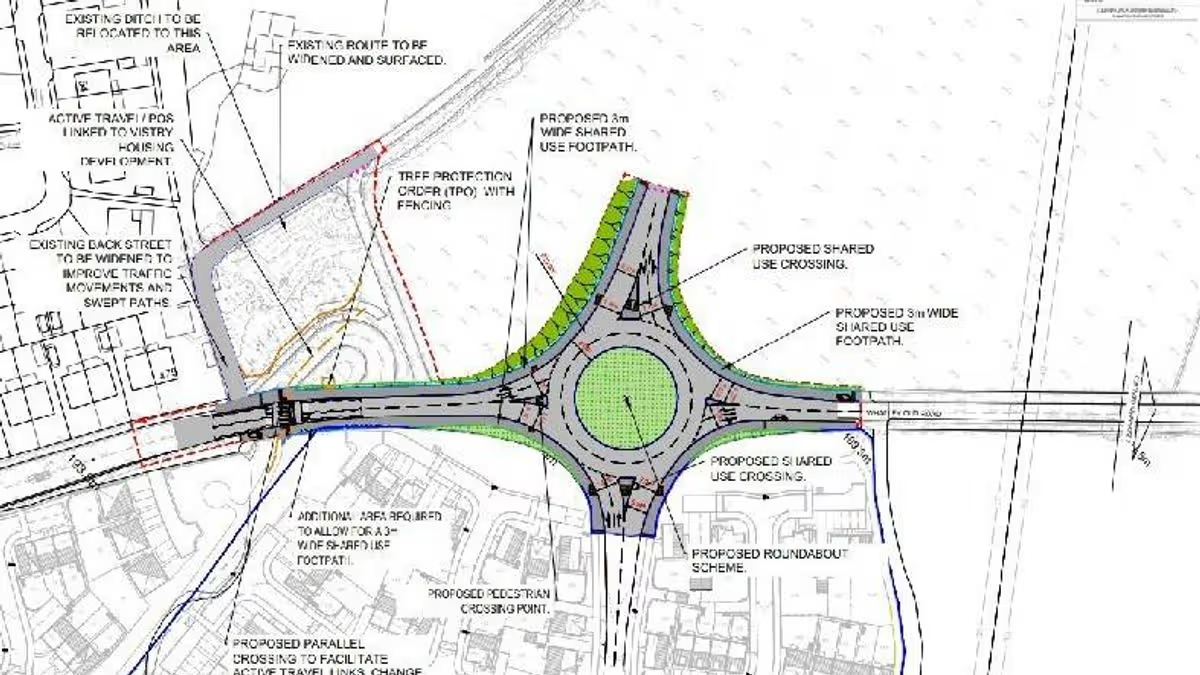
Roundabout contractor appointed for key road gateway

Published

on

Business Live

£2m Blackburn project will take seven months to complete

The plan for the new roundabout at Whalley Old Road, Blackburn.

The plan for the new roundabout at Whalley Old Road, Blackburn(Image: Local Democracy Reporting Service)

The project to build a new four-arm roundabout in a busy gateway road in Blackburn has taken a major step forward.

Advertisement

Senior councillors have been asked to approve the appointment of the main contractor for the scheme due to start in May when they meet on Thursday next week (April 9).

Blackburn with Darwen Council’s executive board has been recommended to approve Farnworth civil engineering firm George Cox & Sons Ltd to manage the highway works.

A report from the authority’s growth boss Cllr Quesir Mahmood also reveals that the original cost of £1.75million for the project had now increased to £2m but that the initial estimate of eight months to complete it has now been reduced to seven.

The scheme, which will realign Whalley Old Road, was granted planning permission in February,

Advertisement

It will still need a lengthy closure causing major traffic disruption, as the roundabout is installed for new housing developments.

The roundabout will serve the controversial Sunnybower Meadow housing estate of 165 new homes currently being built by Vistry Partnerships/Bovis Homes, and pave the way for a proposed 1,250-home development in north-east Blackburn built on 241 acres of land off Brownhill Drive over 20 years.

Cllr Mahmood’s report says: “The board is recommended to approve the appointment of George Cox & Sons Ltd as Preferred Bidder for the highway works following a competitive tender process.

“It notes the contractor will commence mobilisation in May 2026 following confirmation of appointment with works planned to commence over the summer with a seven-month construction programme aiming for all works to be complete by December 2026.

Advertisement

“It approves a total project budget of £2,000,000 to cover construction, fees, surveys and contingency and notes this includes £201,000 costs incurred to date,

“It notes the council has £1,500,000 allocated funding within the capital programme with an additional £119,200 provided by Bovis Homes under a Section 106 Agreement.

“The funding provided by Bovis Homes is equivalent to the cost of the entrance works which are omitted from their scheme to prevent abortive work due to the proposed roundabout works now providing a combined entrance for the two sites.

“It approves the addition of a further £130,800 to the capital budget funded by S106 contributions and the reallocation of £250,000 capital funding from the north-east Blackburn capital budget.

Advertisement

“The use of a roundabout at this location is also more in keeping with the semi-rural nature of Whalley Old Road and once completed will mark the transition between the rural and urban environments and provide a gateway entrance to both sites.

“Roundabouts allow traffic to flow more continuously, reducing queues and delays compared with priority junctions.

“Vehicles also approach and circulate roundabouts at lower speeds, which also reduces the likelihood of collisions.”

“To facilitate pedestrian crossings, splitter islands are included on each arm of the roundabout.”

Advertisement

To find all the planning applications, traffic diversions, road layout changes, alcohol licence applications and more in your community, visit the Public Notices Portal.

Continue Reading

Business

Sitting On $1.69B In Cash: Why UiPath Stock Is Too Cheap To Ignore (NYSE:PATH)

Published

on

Sitting On $1.69B In Cash: Why UiPath Stock Is Too Cheap To Ignore (NYSE:PATH)

This article was written by

Julian Lin is a financial analyst. He finds undervalued companies with secular growth that appreciate over time. His approach is to look for companies with strong balance sheets and management teams in sectors with long growth runways.
Julian is the leader of the investing group Best Of Breed Growth Stocks where he only shares positions in stocks which have a large probability of delivering large alpha relative to the S&P 500. He also combines growth-oriented principles with strict valuation hurdles to add an additional layer to the conventional margin of safety. Features include: exclusive access to Julian’s highest conviction picks, full stock research reports, real-time trade alerts, macro market analysis, individual industry reports, a filtered watchlist, and community chat with access to Julian 24/7. Learn more.

Analyst’s Disclosure: I/we have a beneficial long position in the shares of PATH either through stock ownership, options, or other derivatives. I wrote this article myself, and it expresses my own opinions. I am not receiving compensation for it (other than from Seeking Alpha). I have no business relationship with any company whose stock is mentioned in this article.

Seeking Alpha’s Disclosure: Past performance is no guarantee of future results. No recommendation or advice is being given as to whether any investment is suitable for a particular investor. Any views or opinions expressed above may not reflect those of Seeking Alpha as a whole. Seeking Alpha is not a licensed securities dealer, broker or US investment adviser or investment bank. Our analysts are third party authors that include both professional investors and individual investors who may not be licensed or certified by any institute or regulatory body.

Advertisement
Continue Reading

Trending

Copyright © 2025