

Business
SoFi Technologies (SOFI) Stock Climbs 2.1% to $14.85 as Q4 Results Show Record Revenue

SoFi Technologies Inc. (NASDAQ: SOFI) shares rose 2.1% on Monday, February 23, 2026, closing at $14.85 after trading in a range of $14.52 to $15.12. The gain came as investors digested the fintech company’s strong fourth-quarter 2025 results reported earlier in February and looked ahead to continued member and product growth in 2026.
SoFi’s market capitalization stood at approximately $15.8 billion at Monday’s close, reflecting a recovery from lows near $6 in mid-2025. The stock has surged more than 140% over the past 12 months and is up roughly 35% year-to-date in 2026, driven by accelerating profitability, diversification beyond lending, and optimism around the company’s “one-stop-shop” digital banking platform.
The latest catalyst was SoFi’s Q4 and full-year 2025 earnings release on January 27, 2026. The company reported record quarterly revenue of $734 million (up 48% year-over-year) and full-year revenue of $2.55 billion (up 44%). Adjusted net revenue reached $760 million in Q4, while adjusted EBITDA hit $210 million (up 141%) and the company generated GAAP net income of $332 million for the year — its first full year of profitability.
Member growth remained robust, with 10.9 million total members at year-end (up 34% year-over-year) and 8.1 million products (up 44%). Average revenue per active member rose to $92, reflecting cross-selling success across lending, financial services, and technology platforms. The company added 560,000 new members in Q4 alone, the strongest quarterly addition on record.
CEO Anthony Noto highlighted diversification as a key driver. Non-lending segments — including SoFi Money (checking/savings), Invest, Credit Card, and Galileo technology platform — now account for more than 40% of adjusted net revenue, up from less than 20% two years ago. Galileo processed $208 billion in annualized payment volume in Q4, up 60%, while SoFi Invest assets under management reached $28 billion.
The company also showcased strength in personal loans and student loan refinancing, with originations totaling $5.9 billion in Q4 (up 62%). SoFi maintained strong credit performance, with personal loan delinquencies and charge-offs remaining below industry averages despite a higher-rate environment.
Guidance for 2026 calls for full-year adjusted net revenue of $3.235 billion to $3.310 billion (27-30% growth), adjusted EBITDA of $875 million to $895 million, and GAAP net income of $320 million to $340 million. Management reiterated its long-term target of $10 billion+ in adjusted net revenue and 50%+ EBITDA margins by 2030, with a path to consistent GAAP profitability.
Analyst reaction was largely positive. Consensus rating is Moderate Buy, with an average 12-month price target around $16.50-$18.00 (implying 11-21% upside from current levels). Recent updates include Keefe, Bruyette & Woods raising its target to $18 from $15 (Outperform), while Piper Sandler maintained Overweight at $20, citing durable member growth and margin expansion. A few firms, including Barclays, hold Equal-Weight ratings with targets near $14, expressing caution over competitive pressures in lending and potential regulatory risks.
SoFi’s valuation trades at a forward price-to-sales multiple of about 4.8x 2026 estimates, considered reasonable for a high-growth fintech with improving profitability. The company maintains a strong balance sheet with more than $2.5 billion in liquidity and no significant near-term debt maturities.
Key growth drivers include:
– Continued member and product expansion through cross-selling (average products per member rising toward 1.0).
– Scaling of non-lending segments, particularly Galileo (serving fintech partners) and SoFi Invest.
– Potential new product launches in banking, insurance, and wealth management.
– International expansion, with early traction in Canada and plans for further markets.
Challenges remain. Interest rate sensitivity in lending, competition from traditional banks and other fintechs (Block, Affirm, Upstart), and regulatory scrutiny of student loan refinancing and crypto offerings could weigh on performance. Macroeconomic factors, including new tariffs implemented February 24, 2026, may indirectly affect consumer spending and borrowing demand.
Looking forward, the next major update is Q1 2026 earnings, expected late April or early May. Investors will watch for continued member adds, margin trends, and any new initiatives announced at investor days or conferences.
SoFi has transitioned from a student loan refinancing specialist to a full-service digital financial platform, with profitability now in sight. The stock’s recent strength reflects growing confidence in the company’s ability to execute its long-term vision, though volatility persists in a competitive and rate-sensitive environment.


Shares opened higher in Japan, South Korea and Australia, helping the MSCI Asia Pacific Index extend its advance to a third day. A rebound in the battered software stocks drove the Nasdaq 100 up 1.1%, while the S&P 500 also advanced, ahead of the key earnings from Nvidia Corp. on Wednesday. Advanced Micro Devices Inc.’s deal with Meta Platforms Inc. also boosted sentiment.
A Bloomberg gauge of the dollar was steady ahead of President Donald Trump’s State of the Union address late in Washington Tuesday. Treasuries were a touch lower with the yield on the benchmark 10-year rising almost one basis point to 4.04%. Gold pared some losses from the prior session, while Bitcoin headed for its worst month since crypto’s collapse of June 2022.
The disruptive potential of artificial intelligence has roiled stocks across sectors for weeks in what’s become known as the AI scare trade. Tuesday’s rebound followed comments from Anthropic PBC, which said it plans to build partnerships — easing concerns that its Claude chatbot technology will integrate with, rather than displace, existing businesses.
“This ‘we’re here to help, not hurt’ message from Anthropic is helping to trigger a fairly healthy rebound rally in software,” said Adam Crisafulli at Vital Knowledge.

Before Tuesday’s recovery, investors had been skittish for weeks on AI-related selloffs targeting a range of industries such as software, insurance brokerage, wealth management and cybersecurity, among others.
Earlier this week, concerns over tariffs and geopolitics coupled with a report by Citrini Research and worries about the potential disruption caused by another tool from Anthropic were enough to send the stock market careening.While US stocks have been volatile, Asian markets have outperformed their global peers and largely avoided the tech volatility. The standout gainer was South Korea, which advanced as much as 1.2% to a record on Wednesday.
South Korea’s Kospi Index has gained about 43% this year and is the world’s best-performing stock market.
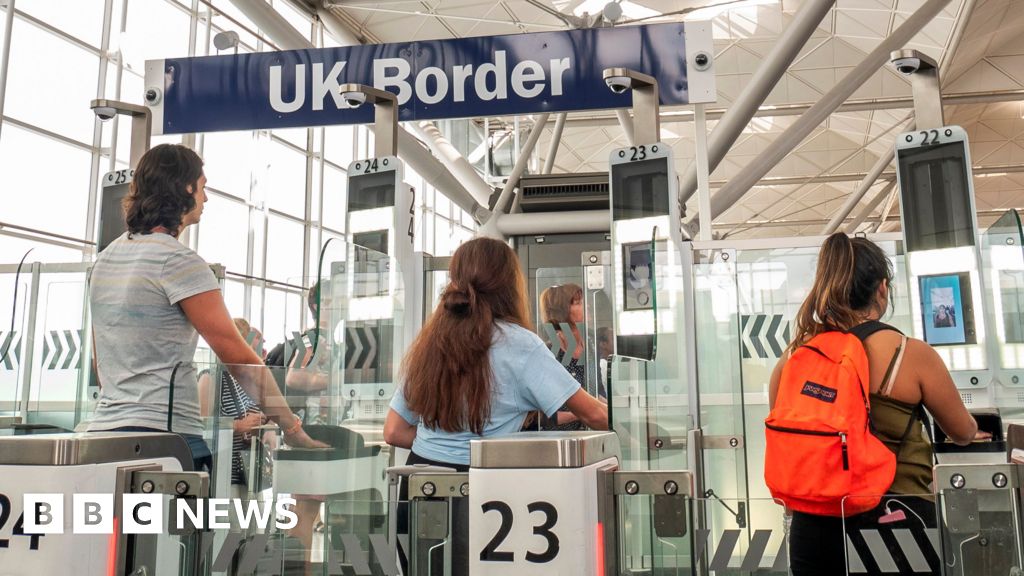
From 25 February, a new system will come into force which will affect many people, including British dual nationals.


Prime Minister Anthony Albanese is “all good” following a reported bomb threat that forced him to evacuate his official Canberra residence.
Albanese Comments on Security Threat
The prime minister took to social media to share an update following the “alleged security incident,” which authorities responded to at around 6 p.m. yesterday, according to 9News.
The social media post features Albanese’s dog, Toto, along with a caption that reads, “Toto on alert but all good.”
Albanese went on to thank the Australian Federal Police (AFP) for their “ongoing work and professionalism.”
You can view the full post below.
What Happened?
According to The Guardian, Albanese had to be evacuated from the residence over what the report claims to be a threat involving explosives.
Albanese was able to return to the residence after a search was completed at around 9 p.m.
“A thorough search of a protection establishment was undertaken and nothing suspicious was located,” a statement on the incident said. “There is no current threat to the community or public safety.”
Finance Minister Katy Gallagher had also confirmed that a security incident had taken place at the official residence in Canberra.
“Very troubling circumstances,” Gallagher said in an interview with ABC TV. “From our point of view, and [as] the prime minister has been saying months, we need to take temperature down.”
“We’ve seen in other countries there is political violence and threats against politicians, but here in Australia, we’re lucky able to get around and mix with the community and operate safely,” the finance minister added. “But this is just another reminder that there are threats out there and where there are threats, the police will take them seriously.”

MOUNTAIN VIEW, Calif. — Alphabet Inc., the parent company of Google, saw its shares close at $311.69 on Monday, February 23, 2026, down 1.02% from the previous session but remaining resilient in a volatile tech sector. The stock has traded in a range of roughly $302 to $344 so far in 2026, reflecting investor confidence in the company’s AI investments despite broader market pressures from tariffs and economic uncertainty.

Alphabet’s Class C shares (GOOG) and Class A shares (GOOGL) have gained more than 75% over the past 52 weeks, driven by strong performance in core businesses like Search, YouTube, and Google Cloud. The company’s market capitalization stands at approximately $3.77 trillion, making it one of the world’s most valuable firms. Recent analyst upgrades and earnings momentum continue to support the stock, even as capital expenditure forecasts raise questions about near-term profitability.
The latest catalyst came February 23 when Wells Fargo upgraded Alphabet from Equal-Weight to Overweight, raising its 12-month price target to $387 from $353. Analyst Ken Gawrelski cited Alphabet’s aggressive AI infrastructure expansion — from 15 gigawatts to 35 gigawatts by 2028 — as a key driver, positioning the company to outpace rivals in compute capacity. The upgrade implies about 22-24% upside from current levels, with Wall Street consensus around $338-340 per share.
Alphabet’s fourth-quarter 2025 earnings, reported February 4, 2026, beat expectations with revenue of $113.83 billion (up 18% year-over-year) and earnings per share of $2.82 (versus $2.59 expected). Google Services grew 14% to $95.9 billion, led by Search and YouTube, while Google Cloud surged 48% to $17.7 billion, driven by enterprise AI demand. Annual revenue topped $400 billion for the first time, a milestone shared with peers like Apple and Amazon.
Management guided capital expenditures for 2026 at $175 billion to $185 billion — potentially doubling prior levels — to fuel AI data centers, servers, and networking. CEO Sundar Pichai highlighted momentum in Gemini models, with the Gemini App reaching over 750 million monthly active users and first-party models processing more than 10 billion tokens per minute via API. YouTube crossed $60 billion in annual revenue across ads and subscriptions, underscoring diversified growth.
Despite the positive earnings, shares have pulled back about 7% month-to-date amid concerns over AI spending sustainability. Investor Michael Burry questioned the scale of hyperscaler capex in a February 21 X post, estimating significant depreciation impacts and potential free cash flow declines for companies like Alphabet. Some analysts project Alphabet’s free cash flow could drop sharply in 2026 as investments ramp up, though others view the spending as essential to maintain AI leadership against Microsoft, Amazon, and Meta.
Institutional activity remains robust. Stevens Capital Management increased its stake by 401% in Q3 2025, while major funds like Norges Bank, JPMorgan, and Vanguard adjusted positions. Insider sales occurred, including CAO Amie Thuener O’Toole disposing of shares in early February, but overall ownership stays strong.
The stock’s valuation trades at a forward P/E around 22-24, considered reasonable given growth prospects. AI Overviews and AI Mode in Search are expanding usage, while Cloud’s $240 billion backlog signals sustained demand. Challenges include regulatory scrutiny, competition in AI, and macroeconomic factors like tariffs that could raise costs.
As Alphabet navigates 2026, its dual focus on core advertising strength and AI/cloud acceleration positions it well. The next earnings report is expected in late April, with analysts forecasting EPS around $2.67 for Q1 2026.
With upgrades and AI tailwinds, Alphabet remains a cornerstone of tech portfolios, balancing short-term caution with long-term optimism.
Business
EML Payments Limited 2026 Q2 – Results – Earnings Call Presentation (OTCMKTS:EMCHF) 2026-02-24


Seeking Alpha’s transcripts team is responsible for the development of all of our transcript-related projects. We currently publish thousands of quarterly earnings calls per quarter on our site and are continuing to grow and expand our coverage. The purpose of this profile is to allow us to share with our readers new transcript-related developments. Thanks, SA Transcripts Team

Thailand has officially entered a state of technical deflation, marked by ten straight months of declining inflation rates.
Key Takeaways on Thailand’s Technical Deflation
- Definition & Context
- Thailand has entered technical deflation, defined as a sustained decline in prices for more than six months.
- Inflation has been negative for 10 consecutive months, averaging -0.13% in 2025.
- Economic Risks
- Deflation often signals weak demand: households consume less, businesses cut investments, and margins shrink.
- Thailand’s growth slowed to 2.4% in 2025, raising concerns about a deflationary spiral similar to Japan’s post-1990 stagnation.
- Deflation can cause consumers and businesses to delay spending and investment, worsening recessionary pressures.
- Nuances in Thailand’s Case
- Household consumption remains weak but still positive.
- The Bank of Thailand emphasizes that underlying inflation (excluding energy) is still positive, framing this as “negative inflation” rather than full deflation.
- Authorities expect recovery through tourism rebound and household consumption growth.
The statistics of the kingdom have shown for 10 months inflation results lower than the experts’ statistical forecasts (these being on average negative for the whole of 2025 with -0.13% annual average) according to Thanavath Phonvichai (the associate professor and president of the University of the Thai Chamber of Commerce and chairman of the Economic and Trade Forecast Center) in technical deflation.
Although the growth forecasts for 2026 suggest a simultaneous recovery in inflation, it appears to show no signs of slowing down, which could have adverse effects on the Thai economy.
If Europe and the world are much more aware of the dangers of inflation, the opposite phenomenon remains rare since Covid and the recent global geopolitical crises are rather synonymous with rising raw material costs.
Price deflation is a general and long-lasting corollary, often indicative of a marked weakening in demand and economic activity. It reflects a deep slowdown: households consume less, businesses reduce their investments and margins contract.
The Thai case, however, appears more nuanced. The growth and consumption of households in the kingdom are certainly at half-mast but appear positive. Experts define a «technical deflation» as a lasting decrease in prices for more than 6 months due, according to Phonvichai, to the general decrease in fuel costs and agricultural prices.
Government measures also pushed global prices down, the consumer price index (CPI) dropped by -0.66% at the beginning of 2026 compared to the same month last year, more than expected.
Nevertheless, Bank of Thailand reassures and talks more about negative inflation, highlighting that the figures for underlying inflation (excluding energy costs) remain positive. Under the vigilance of the kingdom’s economic institutions, the financial system remains. More than a classic deflationary episode, Thailand would go through a cyclical adjustment, prelude to an upturn due to the increase in household consumption and the recovery of tourism, planned by those same authorities.
The possibility of a return to deflation cannot be ruled out, says Thanavath Phonvichai. Indeed, the weak growth that the country is experiencing (2.4% in 2025) may, if monetary and budgetary policies to restart the kingdom’s growth can degenerate into a deflationary spiral.
A scenario feared by the economic authorities of the country of smiles, given the consequences it had on Japan after the crash of 1990. Deflation indeed pushes consumers and all economic actors to wait: they postpone their investments in anticipation of lower prices, demand collapses, companies suffer revenue losses, cut jobs creating a loop in which the economy sinks into a deeper recession.
This scenario also concerns and worries the Chinese neighbor, which has been observing a slowdown in its dynamic real estate sector and household consumption since 2023.
Other People are Reading
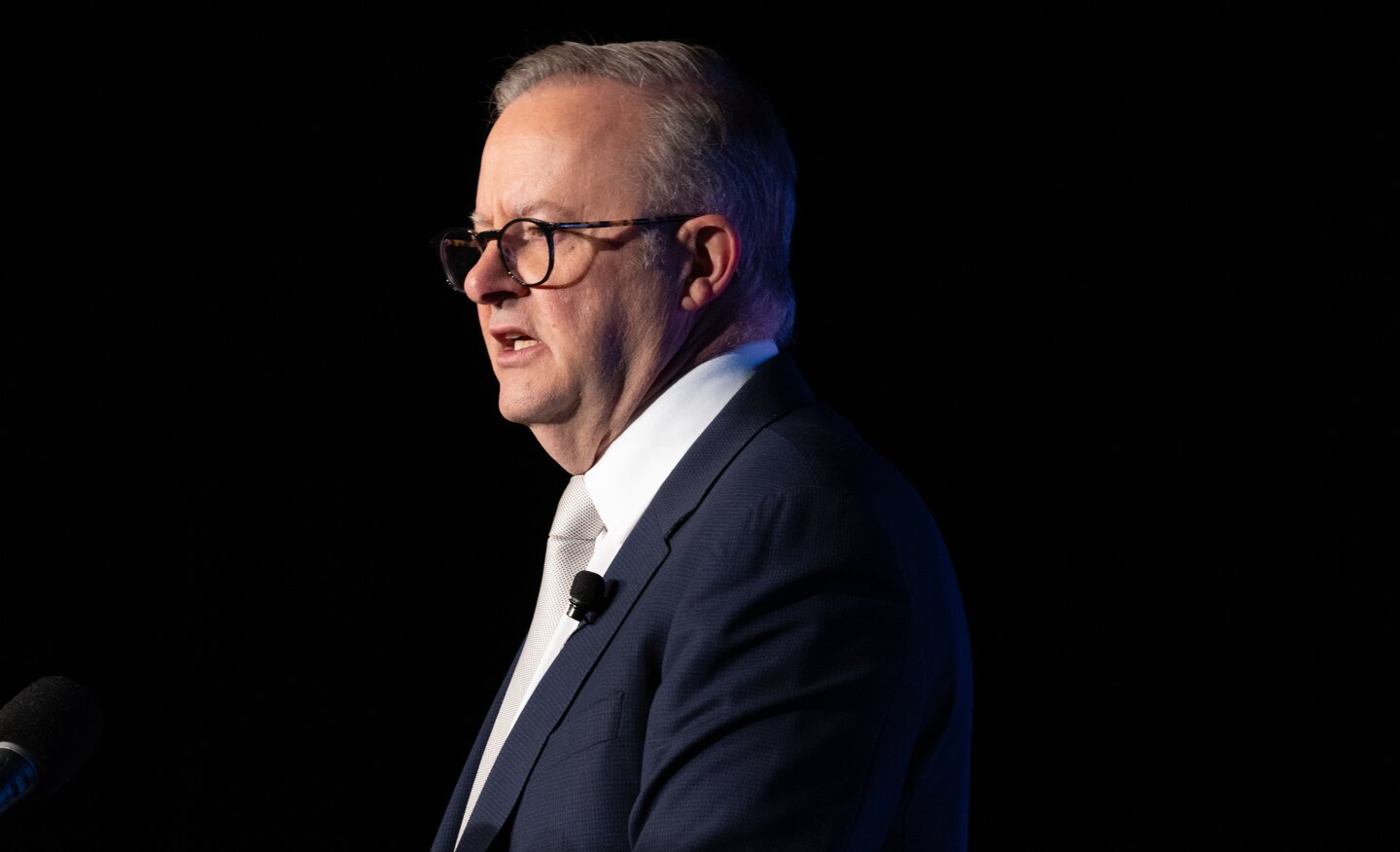
Prime Minister Anthony Albanese has been evacuated from his official Canberra residence following an alleged security incident.

But, for many of them, the upgrade remains elusive.
Prime Database’s data on companies that have moved from the SME platform to the mainboard in the past decade shows this migration has slowed down in the past five years.
The number of companies making this transition fell from the peak of 65 in 2021 to 62 companies in 2022 and to 38 in 2023. The count slipped further to 14 in 2024 and dropped to just three in 2025.
Between 2015 and 2025, of the 1,420 companies listed on the SME platforms of BSE and NSE, 336 – about 24% – eventually migrated to the mainboard.
 Agencies
a bar too high? Tighter rules set by NSE, BSE said to have stalled migration; Of 1,420 cos listed on SME platforms during 2015-2025, only 336 could move up
Bankers said the shift of SME companies to the mainboard has slowed because of tighter rules. Both BSE and NSE have substantially raised the bar in recent years for SMEs seeking to migrate.
“The revised ‘quality-control’ measures by exchanges have effectively filtered out smaller players, leading to the observed decline in migration volume while aiming to protect the long-term integrity of the mainboard,” said Abhishek Sharma, Director, GYR Capital, an investment banker for SMEs. Effective January 2024, the minimum listing tenure required for SME companies to become eligible for mainboard migration increased from two years to three years.
“Consequently, this change is expected to impact migration trends for the transition period from SME to mainboard,” said Radha Kirthivasan, Head Listing & SME, BSE.
“Of the 693 companies currently listed on the BSE SME platform, 199 have migrated to the Mainboard, out of the eligible pool of approximately 410 companies, implying an effective migration rate of 50%.” In August 2025, BSE introduced another set of norms requiring an average market capitalisation of Rs 100 crore over six months (up from Rs 25 crore), average EBITDA of Rs 15 crore over three years with a minimum of Rs 10 crore annually, and at least 1,000 public shareholders — four times the earlier threshold of 250.
Migration is not automatic. Companies must proactively apply to the exchanges and meet not only financial thresholds but also extensive compliance checks, including cooling-off periods after surveillance actions, clean records on SCORES (Sebi’s investor grievance platform), and certifications from credit rating agencies on the utilisation of IPO proceeds. “In light of the maturing of the market, in March 2024, among other criteria, the minimum number of shareholders for companies desiring to migrate to the Main Board is set to 500, with a view to ensuring sustained liquidity and aligning the nature to a public limited company with a diversified shareholder base,” an NSE spokesperson said in an email to ET.
NSE’s May 2025 criteria are similarly demanding: paid-up capital of Rs 10 crore, average market cap of Rs 100 crore, revenue above Rs 100 crore in the last financial year, and net worth of Rs 75 crore. Companies must also maintain at least 20% promoter holding, with promoters not selling more than 50% of their listing-day holdings.
“The objective of regulators and exchanges to make criteria stringent is to ensure that SME companies of suitable size which are financially sound, matured, transparent and well governed move on to the main board and also to prevent companies from using SME platform as a short cut to gain easy access to the mainboard without genuinely meeting it’s standards,” said Uday Patil, Executive Director-Investment Banking, PL Capital, adding that stringent migration norms act as a quality filter. A few SME graduates have delivered strong returns post migration.
Manorama Industries launched its IPO on September 21, 2018, raising Rs 60.79 crore, and moved to the main board on July 20, 2021. Since then, the stock has delivered 295% returns as of February 24, 2026. Zota Health Care came out with its IPO on April 27, 2017, mobilising Rs 55.5 crore, and transitioned to the main board on August 19, 2019.
Post migration, the stock has surged 511%. Sarveshwar Foods opened its IPO on March 5, 2018, with an issue size of `52.2 crore, and shifted to the main board on December 8, 2022. Since then, the stock has gained 44%. Still, performance at the SME listing stage remains uneven. Out of 134 SME companies listed in the past year, only 30 delivered gains, while the rest generated negative returns.
Several companies did manage the transition in earlier years. MMP Industries Ltd launched its IPO on March 28, 2018, raising Rs 80.37 crore, and migrated to the main board in January 2020. Sirca Paints India opened its IPO in May 2018 with an issue size of Rs 74 crore, and moved to the main board in July 2019.
Operator
Good afternoon. I’ll be your conference operator today. [Operator Instructions] Before we begin, I’d like to remind everyone that today’s call may contain forward-looking statements within the meaning of the federal securities laws, including, but not limited to, statements about BridgeBio’s future operating and financial performance, business plans and prospects and strategy.
These statements are based on current expectations and assumptions that are subject to risks and uncertainties, which could cause actual results to differ materially from those expressed or implied in these forward-looking statements. For a discussion of these risks and uncertainties, please refer to the disclosure in today’s earnings release and BridgeBio’s periodic reports and SEC filings.
All statements made here are based on information available to BridgeBio as of today, and the company undertakes no obligation to update any forward-looking statements made during this call, except as required by law. With that completed, BridgeBio, you may begin your conference.
Chinmay Shukla
Senior Vice President of Strategic Finance
Good afternoon, everyone, and thank you for joining BridgeBio Pharma’s Fourth Quarter 2025 Earnings Call. My name is Chinmay Shukla. I’m the Senior Vice President of Strategic Finance at BridgeBio. With me today are Neil Kumar, our CEO, who will provide opening remarks and discuss overall corporate performance; Matt Outten, our Chief Commercial Officer, who will provide more details about

Simply searching for a good online casino in New Zealand quickly reveals the scope of the problem. There are just too many of them, and at some point, it becomes harder to find the right one.
Most brands bet on the same game providers and often choose similar interfaces. So which one is the best online casino in New Zealand? A lot of people used to pick their site just by comparing the bonuses – the larger the bonus, the better the brand – and it made sense, at least to some extent. Bonuses increase perceived value and reduce upfront financial exposure, but is that all there is to it? Casinos compare themselves and match bonuses, so players are increasingly betting on transaction speed and reliability to tip the scales. Perhaps surprisingly, fast payments are becoming more than a simple convenience and a mark of trustworthiness for the best NZ platforms. In a way, it’s a clash between real features and flashy marketing. More and more expert players are opting for these quick-payout casinos not only because they guarantee they can put their earnings in their pockets as soon as possible, but also because it proves the brand is reliable and transparent.
Leveraging Brand Heritage: The Case of Lucky Nugget Casino NZ
One of the casinos that has increased traffic thanks to this is Lucky Nugget casino NZ. It has great bonuses and a large selection of games, but what made the difference for them was reliability and convenience. This casino was founded in 1998, and being around for almost 30 years without any trouble makes it trustworthy. But NZ market visibility is built on something more than age. Quick, reliable payments are key to the success of established casino brands. Not only do they make it easier to top up the balance and start playing right away, but they also give you the flexibility to withdraw funds to a bank account and use them elsewhere. Players want to be completely certain that the money they earn is truly theirs, and there’s no better way to do this than to send it back through modern payment gateways.
Speed as a Differentiator: The Rise of the Fastest Paying Online Casino
Back in May 2023, bank transfers in New Zealand began being processed on weekends as well. We can send a transfer on Saturday, and it will arrive the same day. Everyone surely got used to this rather quickly, and it would feel very odd if we had to go back to the old schedule. The promise of ‘getting the money now’ is very powerful, and that’s why the fastest paying online casino often gets the lead. When picking a fast pay online casino, people want a service where they can really feel the money is in their hands. That win on Gonzo’s Quest that really boosted an account balance can be transferred to a bank account almost immediately through a casino quick payout, and if you can do that, you don’t want anything else. Speed matters a lot, and it’s essential for a casino’s success.
Infrastructure Wars: Who Offers Real Casino Instant Withdrawal?
Now that they know they can get it, users want casino instant withdrawal more than ever. And casinos work really hard to make that happen. It’s often a silent process behind the scenes, automating verifications in line with regulatory standards, closing deals with top payment providers, and ensuring everything runs like clockwork to guarantee an online casino instant payout goes through seamlessly. Of course, no platform is going to advertise its services as ‘slow’ or ‘unreliable’. At first glance, many offshore online casinos look like instant withdrawal options, but word-of-mouth makes the real difference. Over time, user reviews confirm if a casino actually processes payments instantly, reliably, and commission-free. This is what makes a brand truly stand out and gain an edge over its competition.
Defining Standards for the Quickest Payout Casino
Just as we got used to same-day bank transfers, often credited almost instantly, casino standards have improved as well. Users often had to wait 2-3 days for their earnings to land in their bank accounts, but the quickest payout casino can get them in an hour or less. As mentioned earlier, brands don’t just need to automate to skip manual verification on their end – they also need to pass payout reviews to demonstrate speed and reliability. A fast payout online casino in New Zealand can’t rely solely on international payment platforms like Revolut or Payoneer. These may be convenient, but they can also be slow. Establishing organic alliances with payment methods offering local currency support makes the difference, especially when the back-end is fine-tuned to provide immediate liquidity.
SEO Strategies: Targeting Fast Payout Casinos NZ Queries
But providing the best online casino NZ fast withdrawal isn’t enough to make a casino succeed, especially if it’s not yet well-known. We opened this article by highlighting the problem: there are just too many online casinos. Finding the right one isn’t easy, especially when making a quick search on Google only to find hundreds of them. Even the best platform may pass unnoticed if its SEO strategy isn’t top-notch. User reviews and word-of-mouth are powerful tools, but they come after users have found the platform. This is why fast payout casinos NZ also invest heavily in a proven SEO strategy that increases their visibility and allows users to find them. And for this, marketing alone is not enough. Even the best SEO strategy fails if the brand’s back-end falls short. The better a casino’s payment system, the more mentions it gets online and the higher it ranks.
Content Strategy: Promoting Online Pokies Fast Withdrawal Features
Quick payments depend on a fine-tuned back end, reliable payment providers, and local payment partners, but games also play a role. For many, everything begins with online pokies fast withdrawal systems, because that’s where the earnings start. Think about it. Let’s say you hit a prize of $10,000 playing Mega Moolah, and you want to see it shining in your bank account as soon as possible. What if the winnings are held for manual verification for three days? Fast withdrawals need fast payout slots because they depend on the loop ‘Play > Win > Cash Out’. It all starts with the games themselves. If a brand uses slots that require manual verification for almost every prize, a process that often takes place abroad with very limited schedules, you can forget about cashing out quickly. Players truly value it when prizes are awarded instantly to their casino balance, so the wheel keeps spinning.
The Gold Standard: Marketing the Same Day Payout Online Casino
Casinos make the difference when they give the players what they want. If they do, they will boost their traffic, online mentions, user reviews, and Google ranking. ‘Same day’ is the new standard for payments and a key requirement for online visibility, simply because that’s what people need – an online casino with instant withdrawal that allows them to play, win, and see their money in the bank, all within a few hours. Playing at a same day payout online casino is not only convenient but also very reassuring. Nobody wants to wait a week to see if their favourite slot validates their winnings, and then another five days to have their earnings safely deposited into their bank account. The whole process is exhausting and very stressful. What if my winnings are not granted? What if the transfer gets lost in translation? Speed means reliability, while anything else simply raises doubts.
Trust Metrics and User Retention via Payment Speed
Would you keep your money in a bank that makes you doubtful? Probably not. Trust is essential in any financial transaction, which is hard to build. When you always know where the money is – without manual verifications, days of uncertainty or ‘transfer limbo’ – there is transparency, and there is trust. Play, win, earn, simple as that – that’s the winning formula for users, but also for a brand. Add thousands of players enjoying instant payouts, and you get a solid user base that trusts the casino and shares their experiences online. Trustpilot reviews often mention payment speed as one of the main perks of an instant payout casino NZ. It’s what keeps players coming back. Once players find a good iGaming platform, great bonuses, and seamless payments, they have no reason to leave.
Comparative Analysis: Speed vs. Bonus Size
That brings us back to the beginning. Are users still choosing their favourite platforms for the bonuses, or are they leaning more towards payment speed? Both approaches coexist, and casinos must choose one of them to attract their target audience. It can be seen that the best NZ online casinos cater more to experienced players. Newbies fall for flashy bonuses first, and gradually learn to value the best payout online casino NZ.
| Feature | Fast Payout Brand Strategy | High Bonus Brand Strategy |
| Primary Selling Point | Liquidity / Trust | Free Play / Leverage |
| Target Audience | Experienced / High Rollers | Casual / Newcomers |
| Verification Speed | Automated (Minutes) | Manual (24-48 Hours) |
| Wagering Requirements | Usually Lower | Usually Higher |
| Customer Retention | High | Medium / Low |
| Risk Profile | Low | High |
| Marketing Message | ‘Get winnings instantly’ | ‘Double the first deposit’ |
A key factor makes ‘Fast Payout’ casinos the ideal choice for expert users, who quickly turn away from ‘High Bonus’ platforms. Money in hand. Bonus-focused casinos often offer irresistible promotions that are highly catchy and seem almost guaranteed to attract deposits that are doubled or tripled, regular free spins, and weekly cashbacks. But how accessible are these bonuses really, and what are the chances of taking those earnings home?
Players shifting from ‘High Bonus’ to ‘Fast Payout’ platforms tell us that those chances are very low, and those bonuses often appear more attractive than they are in practice. Surely they comply with their Terms and Conditions to the letter, but your actual chances are probably much lower than you think. And if earnings – big or small – are constantly vetted or face too many ‘safeguards’, things get even worse. By contrast, the message of fast payout casinos is simple: Your winnings, your money.
Practical Utility: How Players Identify the Best Online Casino Fast Payout Sites
It is clear that choosing the best online casino with fast payouts is the experts’ choice, but how do you find the right one? Marketing can feel deceiving when there are so many casinos out there trying to reach new users, but there are strategies players can follow to make sure they pick the right place.
We mentioned earlier that online comments and reviews on Trustpilot and other platforms are often strong indicators of trustworthiness. Realising how the main payment operators work is often a plus. Some e-wallets are faster than others, and casinos often showcase their payment processors at the bottom of their homepages.
The best online casino with fast withdrawals will display the logos of quick and reliable e-wallets and cryptocurrencies, showing that at least that part of the work is covered. If the payment method is trustworthy and the platform is as well, the equation is complete.
Transparency is key, and top sites will quickly let visitors know which payment methods are available and how quickly they are processed. And then there’s the other half. Do the slots verify the payments and release the prizes promptly? Is the platform’s back-end automated enough to process and transfer payments in a matter of hours? User reviews will help you choose the best online casino.

Report: TE Zach Ertz (ACL) eyes 14th NFL season

Wynn Resorts confirms employee data breach after extortion threat

OCN… Owning The Mistake#memes #crypto #cryptocurrency #cryptonews #meme #newsnation #crimeboss


-

 Video5 days ago
XRP News: XRP Just Entered a New Phase (Almost Nobody Noticed)
-

 Fashion4 days ago
Weekend Open Thread: Boden – Corporette.com
-

 Politics3 days ago
Baftas 2026: Awards Nominations, Presenters And Performers
-

 Entertainment7 days ago
Kunal Nayyar’s Secret Acts Of Kindness Sparks Online Discussion
-

 Sports1 day ago
Women’s college basketball rankings: Iowa reenters top 10, Auriemma makes history
-

 Politics1 day ago
Nick Reiner Enters Plea In Deaths Of Parents Rob And Michele
-

 Tech7 days ago
Retro Rover: LT6502 Laptop Packs 8-Bit Power On The Go
-
 Sports6 days ago
Clearing the boundary, crossing into history: J&K end 67-year wait, enter maiden Ranji Trophy final | Cricket News
-

 Business3 days ago
Mattel’s American Girl brand turns 40, dolls enter a new era
-

 Crypto World18 hours ago
XRP price enters “dead zone” as Binance leverage hits lows
-

 Business2 days ago
Law enforcement kills armed man seeking to enter Trump’s Mar-a-Lago resort, officials say
-

 Entertainment6 days ago
Dolores Catania Blasts Rob Rausch For Turning On ‘Housewives’ On ‘Traitors’
-

 Business7 days ago
Tesla avoids California suspension after ending ‘autopilot’ marketing
-

 Tech2 days ago
Anthropic-Backed Group Enters NY-12 AI PAC Fight
-
 NewsBeat2 days ago
‘Hourly’ method from gastroenterologist ‘helps reduce air travel bloating’
-

 NewsBeat2 days ago
Armed man killed after entering secure perimeter of Mar-a-Lago, Secret Service says
-

 Politics2 days ago
Maine has a long track record of electing moderates. Enter Graham Platner.
-

 Crypto World6 days ago
WLFI Crypto Surges Toward $0.12 as Whale Buys $2.75M Before Trump-Linked Forum
-

 Tech8 hours ago
Unsurprisingly, Apple's board gets what it wants in 2026 shareholder meeting
-
 NewsBeat3 hours ago
Police latest as search for missing woman enters day nine