
Business
Software Selloff Extends to Loan Market

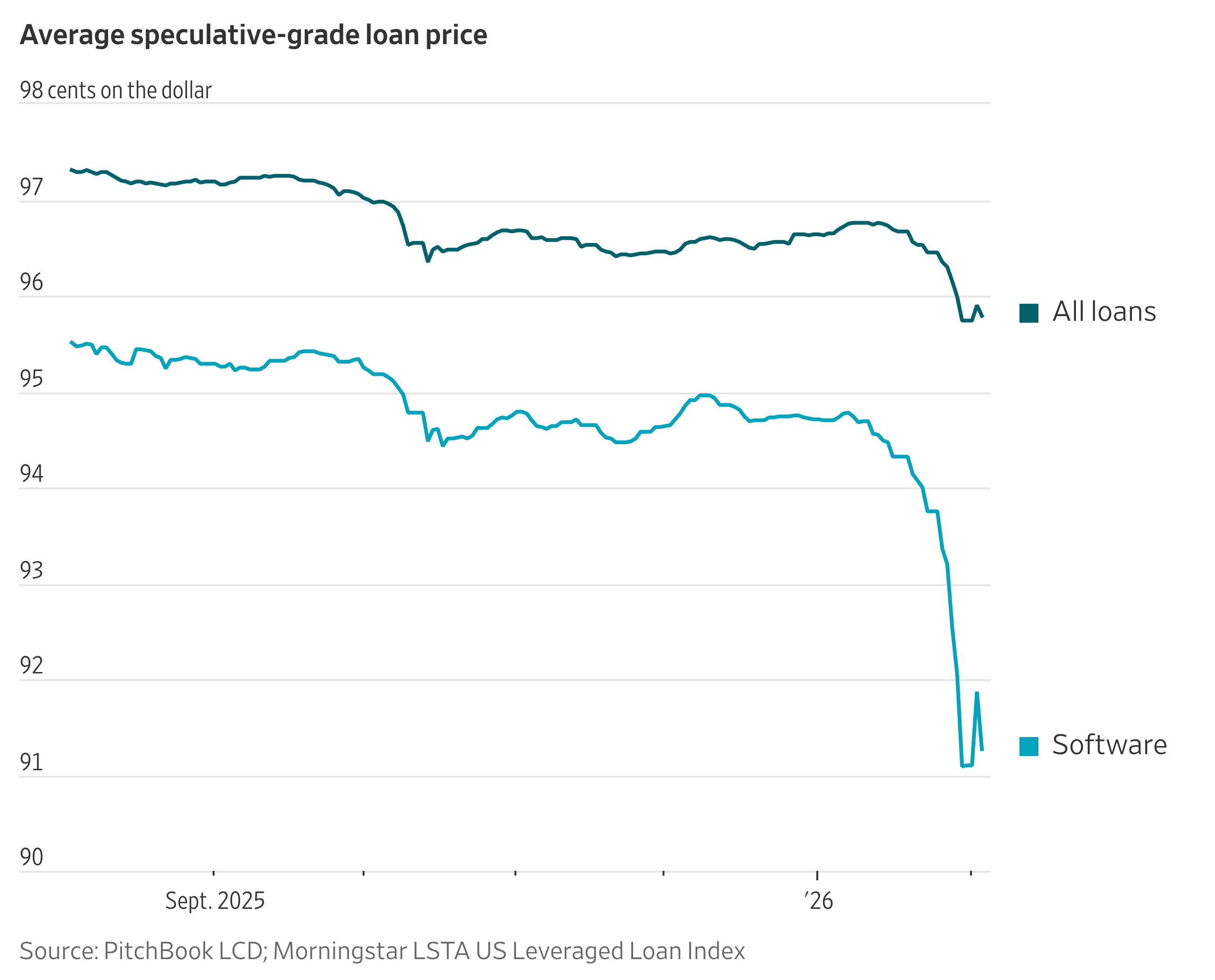
As of Tuesday, the average price of software company loans was 91.27 cents on the dollar, down from 94.71 cents at the end of last year.
At the end of January, the extra yield, or spread, that investors demand to hold software loans over a benchmark short-term interest rate had jumped to 5.95 percentage points from 4.78 percentage points at the end of December.
Some $25 billion of software loans were trading at distressed levels–below 80 cents on the dollar–at the end of January, up from $11 billion a month earlier. That accounted for nearly a third of all distressed loans.


syahrir maulana/iStock via Getty Images

Dear Partners,
The first quarter of 2026 gave investors plenty to worry about. Rising tensions in the Middle East pushed oil prices higher, inflation concerns resurfaced, and the long-anticipated pivot to lower interest rates continues to be postponed. Markets, never short on imagination, have begun spinning familiar narratives: that expensive money punishes growth, that AI’s promises may exceed its near-term returns, and that the safer bet lies in energy, cyclicals, and businesses whose cash flows arrive sooner rather than later. There is also a growing fear that AI itself may disrupt entire categories of existing software businesses — rendering yesterday’s winners obsolete overnight.
We will not pretend these concerns are frivolous. They are not. When the cost of capital rises, the arithmetic of investing genuinely changes — a dollar earned a decade from now is worth less today than it was in a world of cheap money. That is not opinion; it is math. And we have always believed in taking math seriously.
But here is what we have also learned, after watching markets swing from greed to panic across many cycles: the headlines that feel most urgent are rarely the ones that determine long-term outcomes. The businesses that compound wealth over decades do so not because they were spared from difficult environments, but because they were built to endure them. We have spent the past decade building a portfolio of exactly that kind.
None of what we are seeing today is new. Different costumes, same play.
Performance in Context
During the first quarter, Rowan Street declined 19.8%, compared to a 4.3% decline for the S&P 500. That is not a result we enjoy reporting. At the same time, it reflects the more concentrated approach we take and is not unusual for portfolios built around a smaller number of high-conviction investments.
We invest in a focused group of businesses that we believe can compound value at attractive rates over long periods of time. In the short term, their stock prices can be more volatile—particularly in environments like the one we are experiencing today, where interest rates are higher and investor focus has shifted toward businesses with nearer-term cash flows.
Rowan Street is designed for long-term compounding, not for minimizing short-term volatility or closely tracking a benchmark. As a result, returns can differ meaningfully from year to year.
We have seen this before.
In early 2022, we went through a similar period where stock prices declined sharply, even as the underlying businesses continued to perform well. At the time, we wrote that the portfolio was, in many ways, in one of the strongest positions in our history despite the decline in stock prices.
That did not feel obvious at the time. What followed was a period where business performance ultimately reasserted itself. The fund returned +102.6% (net) in 2023, +56.6% in 2024, and +11.1% in 2025.
As Benjamin Graham observed:
“In the short run, the market is a voting machine, but in the long run, it is a weighing machine.”
A Post-Quarter Update
We are writing this letter in mid-April, approximately two weeks after quarter-end. Since March 31, markets have moved sharply — and our portfolio has recovered approximately half of the first quarter decline. Based on our internal estimates as of April 17, year-to-date performance stands at approximately -10%, compared to the official quarter-end figure of -19.8%. We note that this mid-month figure is an internal estimate only, has not been verified by our fund administrator, and reflects only a partial month.
We share this not to suggest the difficult period is behind us — it may not be. We share it because it illustrates precisely the point we are making throughout this letter. The fundamentals of the businesses we own have not changed. Their competitive positions, earnings power, and long-term prospects remain intact, in our view. What changed was the price multiple. This is what long-term ownership of exceptional businesses actually looks like. Price and value diverge. Sometimes dramatically. The investors who benefit are those with the temperament to remain focused on the underlying businesses, not the day-to-day movements of their stock prices.
Volatility is the Price of Admission
The table below shows the annual returns of our largest holdings by portfolio weight as of March 31, 2026 and illustrates a simple reality of long-term investing: even exceptional businesses experience significant volatility. We have included an April 17 column to reflect the meaningful recovery in our portfolio since quarter-end, as discussed in the Performance section above. The figures reflect annual stock price returns and do not represent Rowan Street Capital fund performance or returns achieved by the fund on these positions.
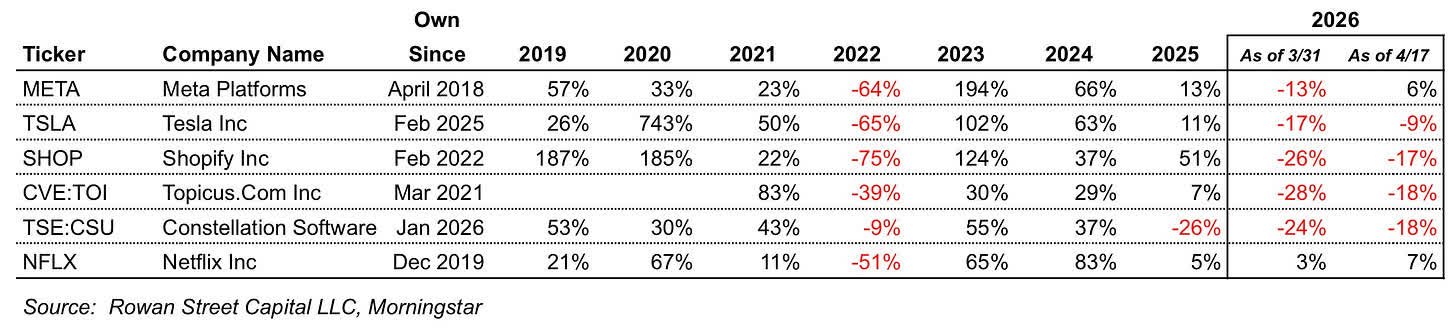
The April 17 column tells its own story — and it is the same story this letter is built around. This is what long-term ownership actually looks like in practice. Not a smooth upward line — but a recurring series of gains, losses, and tests of conviction. Drawdowns of 30%, 50%, even 75% are not unusual. They are a recurring feature of owning exceptional businesses — not anomalies.
Everyone describes themselves as a long-term investor. Very few are willing to endure what that actually looks like. Volatility is the price of admission.
The charts that follow bring this pattern to life across three of our largest holdings — Meta Platforms, Tesla, and Shopify. Different businesses, different drawdowns, same lesson.
Meta Platforms (META)
Meta has delivered a cumulative return of approximately 1,300% since its IPO, or about 21% annually. The path to those returns, however, has been anything but smooth.
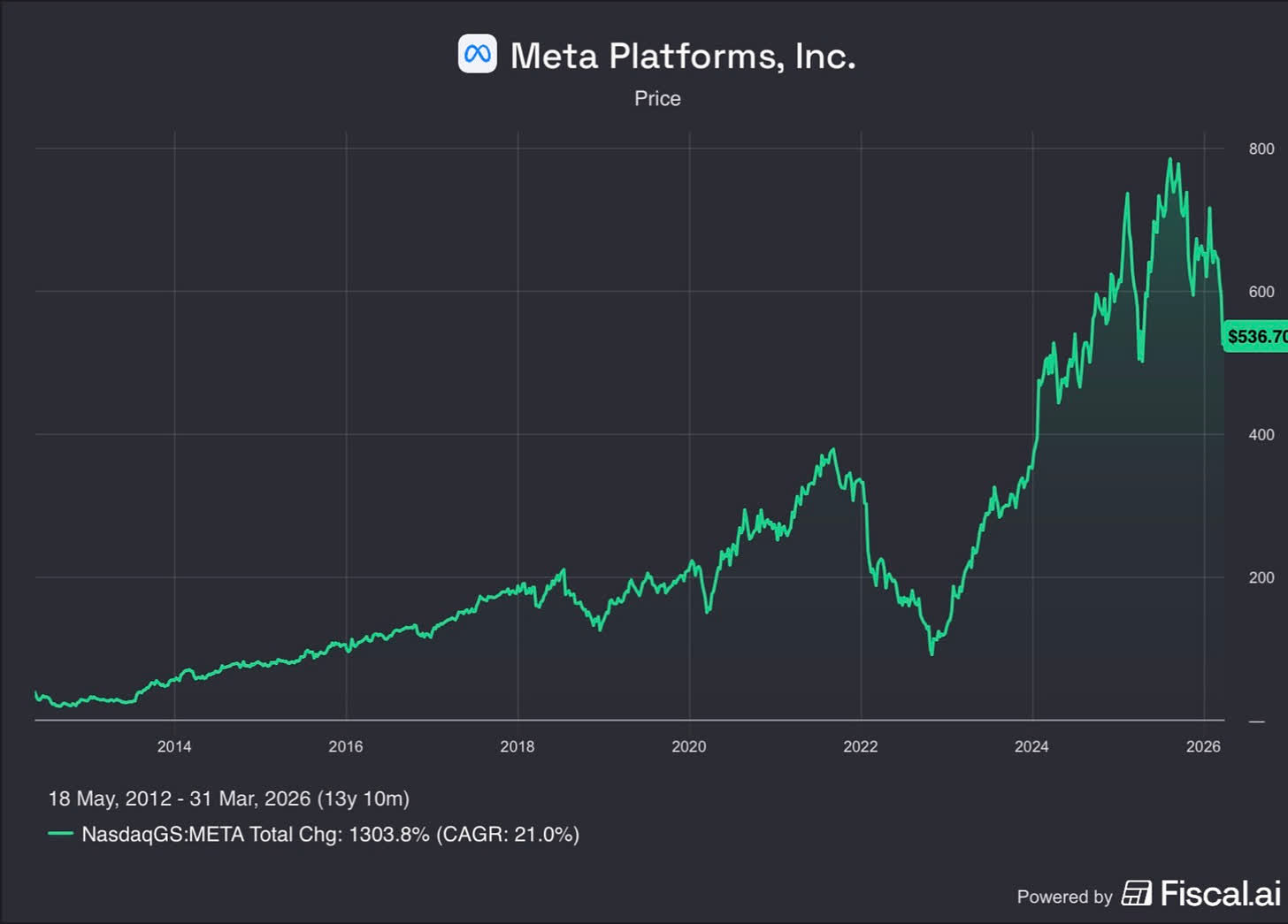
Over the past decade, the stock has experienced numerous drawdowns of 30% or more, several declines of 50% or more, and, most notably, a decline of nearly 80% in 2022.
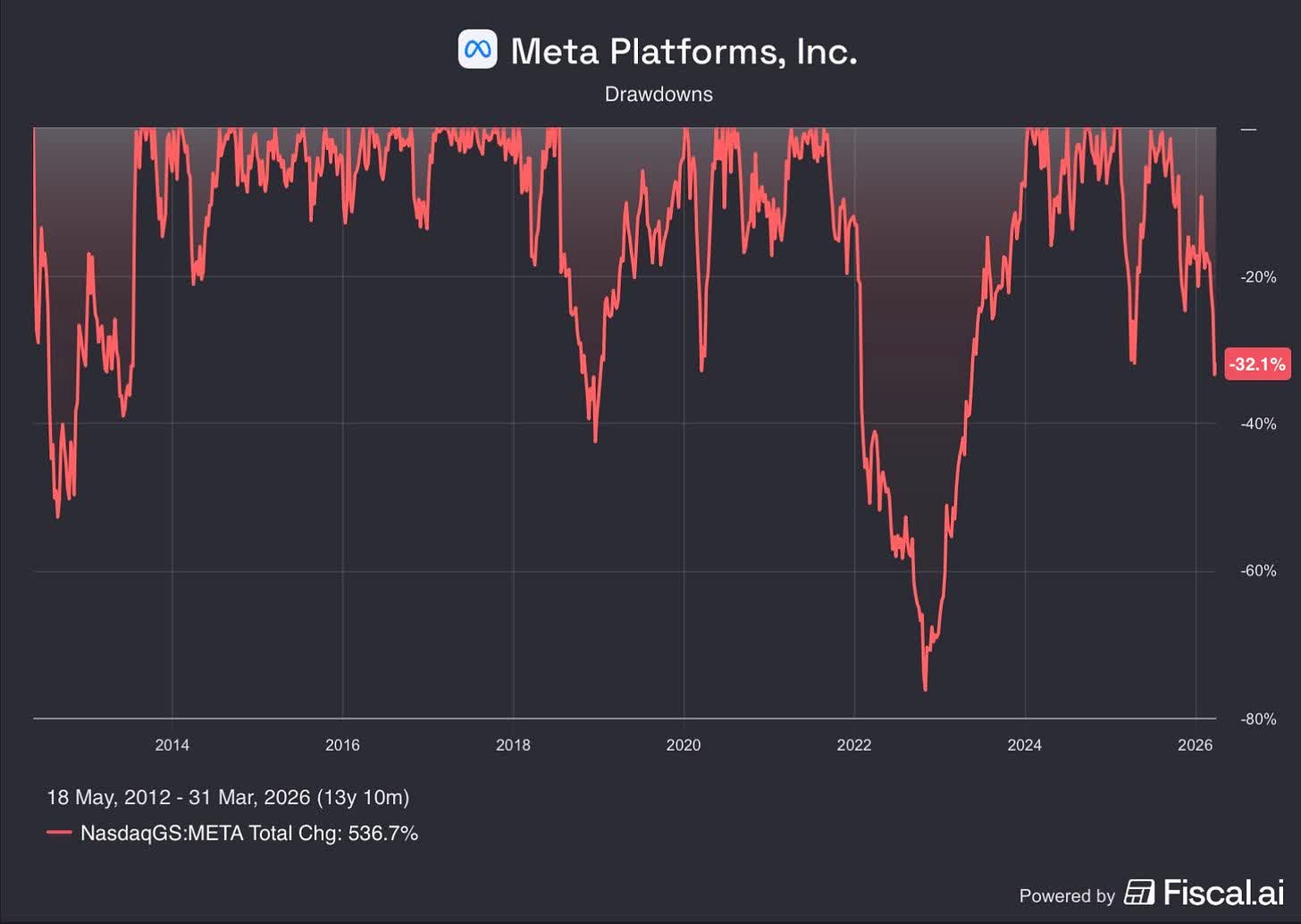
These periods were not isolated events — they were a recurring feature of owning this business. And yet for those who remained focused on the underlying fundamentals, the long-term outcome has been exceptional.
We believe today represents one of the most compelling opportunities in Meta we have seen since 2022. Please read our full analysis below — including our views on the AI spending debate, the recent legal setbacks, and why we believe the market may be repeating a familiar mistake.
Tesla (TSLA)
Tesla provides an even more striking example—not just of volatility, but of how disproportionate long-term outcomes can be relative to the experience along the way.
Since its IPO in 2010, the stock has delivered a cumulative return of approximately 22,000%, or about 41% annually. Looking at that result today, the path can appear almost inevitable. In reality, it was anything but.
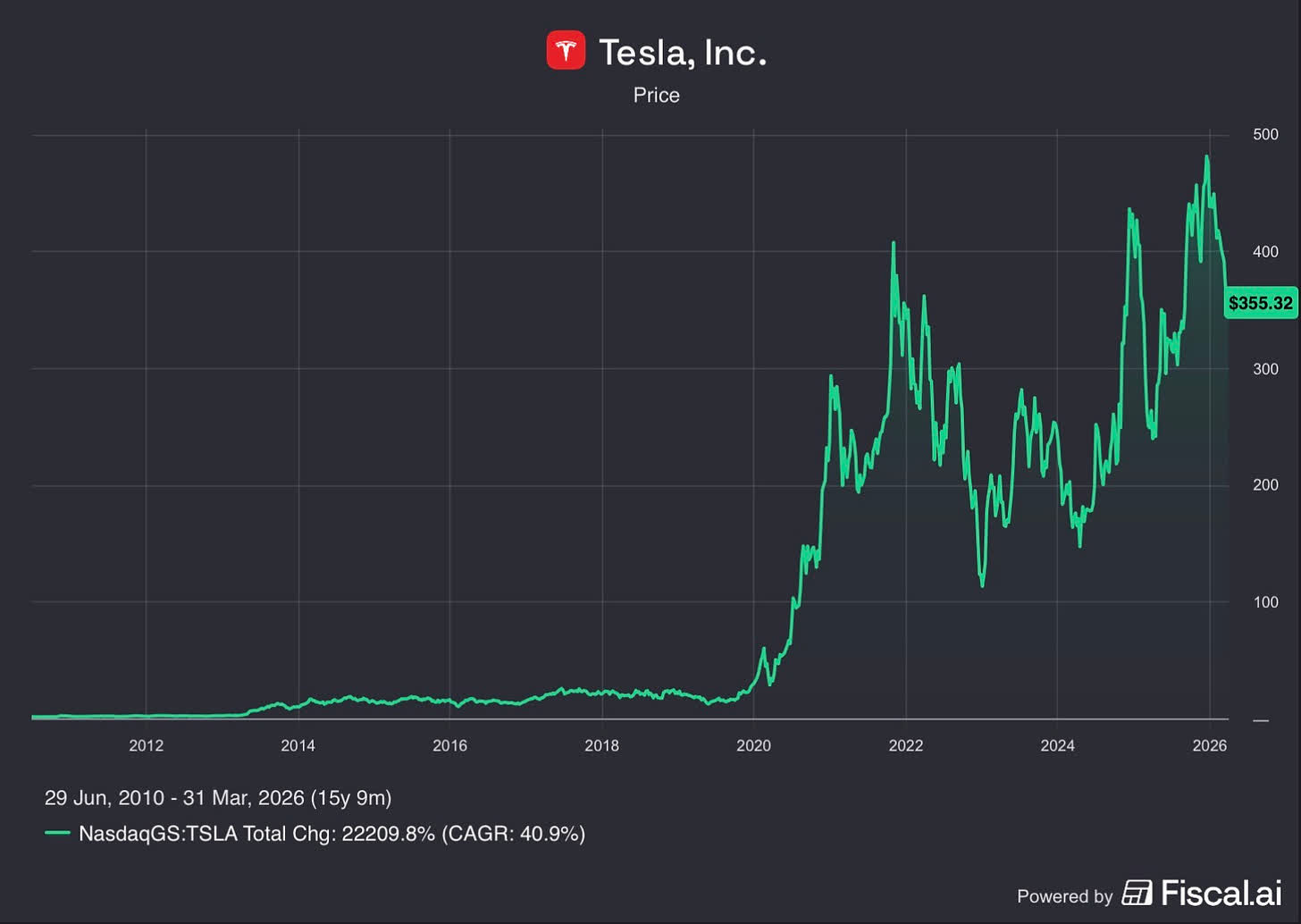
There were multiple periods along the way where the stock declined sharply—on numerous occasions by more than 50%, and once by over 70%—often accompanied by shifting narratives around the business. At different points, the concerns ranged from questions about the company’s survival, to valuation, to increasing competition, founder behavior and execution risk.
Each of those moments felt uncertain in real time. And yet, for investors who were able to remain focused on the long-term trajectory of the business, the outcome has been extraordinary.
The biggest winners rarely feel comfortable to own.
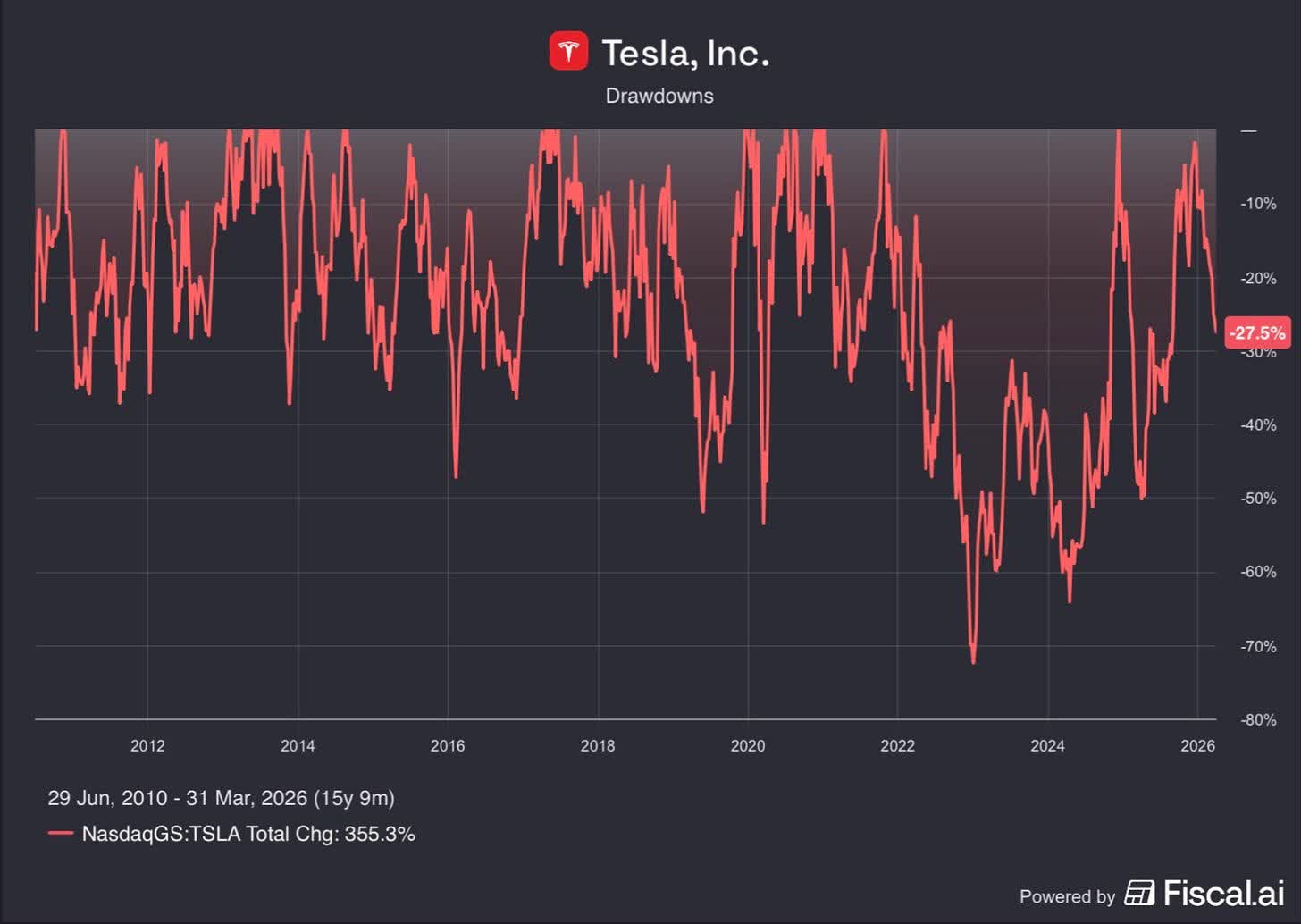
While Tesla has demonstrated this pattern over many years, our ownership of the business is still relatively recent.
We outlined our investment thesis in detail in our Q3 2025 letter, and our view remains unchanged. From here, our role is not to predict short-term movements, but to remain disciplined and allow the long-term economics of the business to play out.
Shopify (SHOP)
Shopify has been an exceptional business over time, compounding at over 40% annually since its IPO.
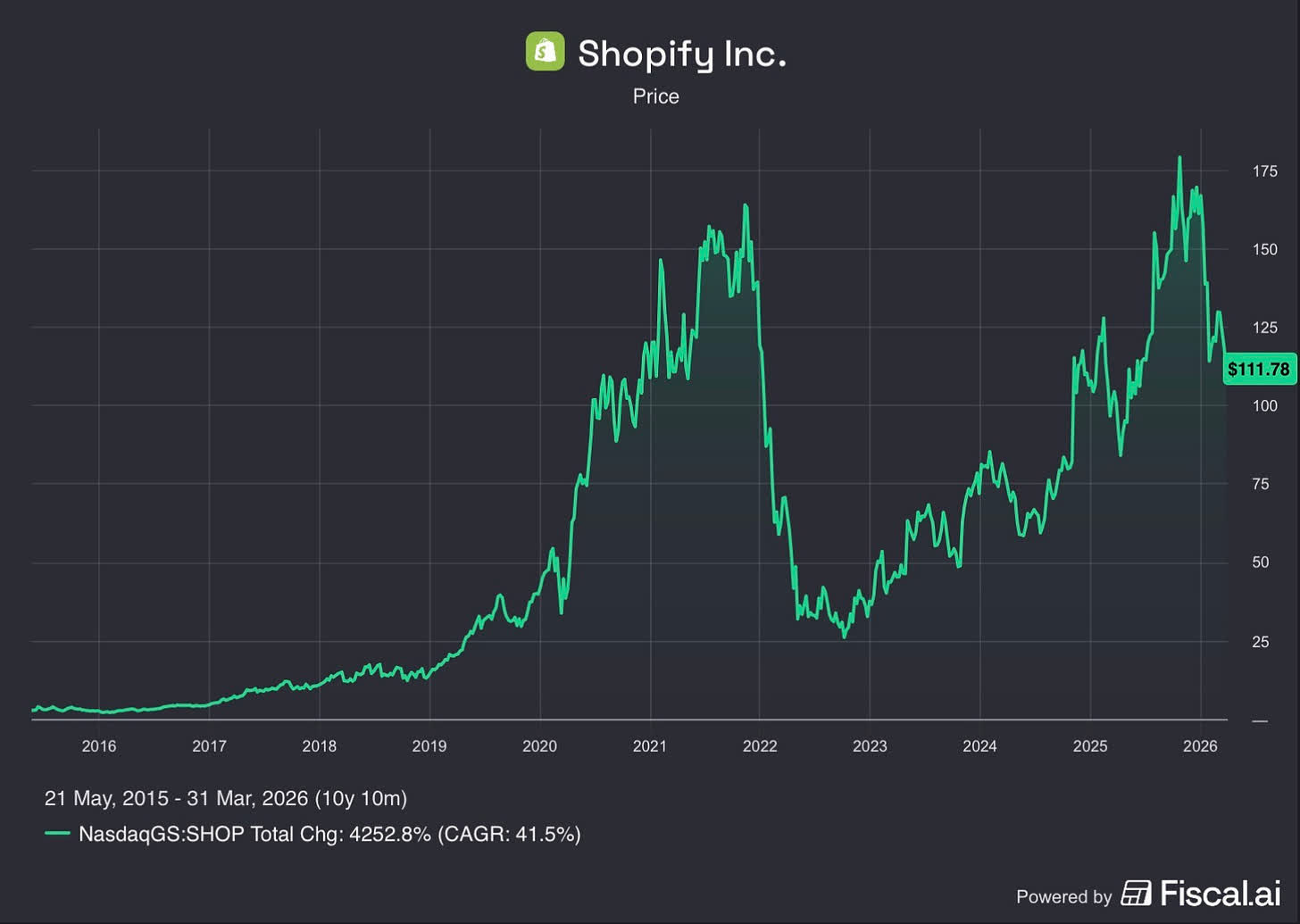
The path to those returns, however, has been far from smooth, including several sharp drawdowns and a decline of more than 80% in 2022.
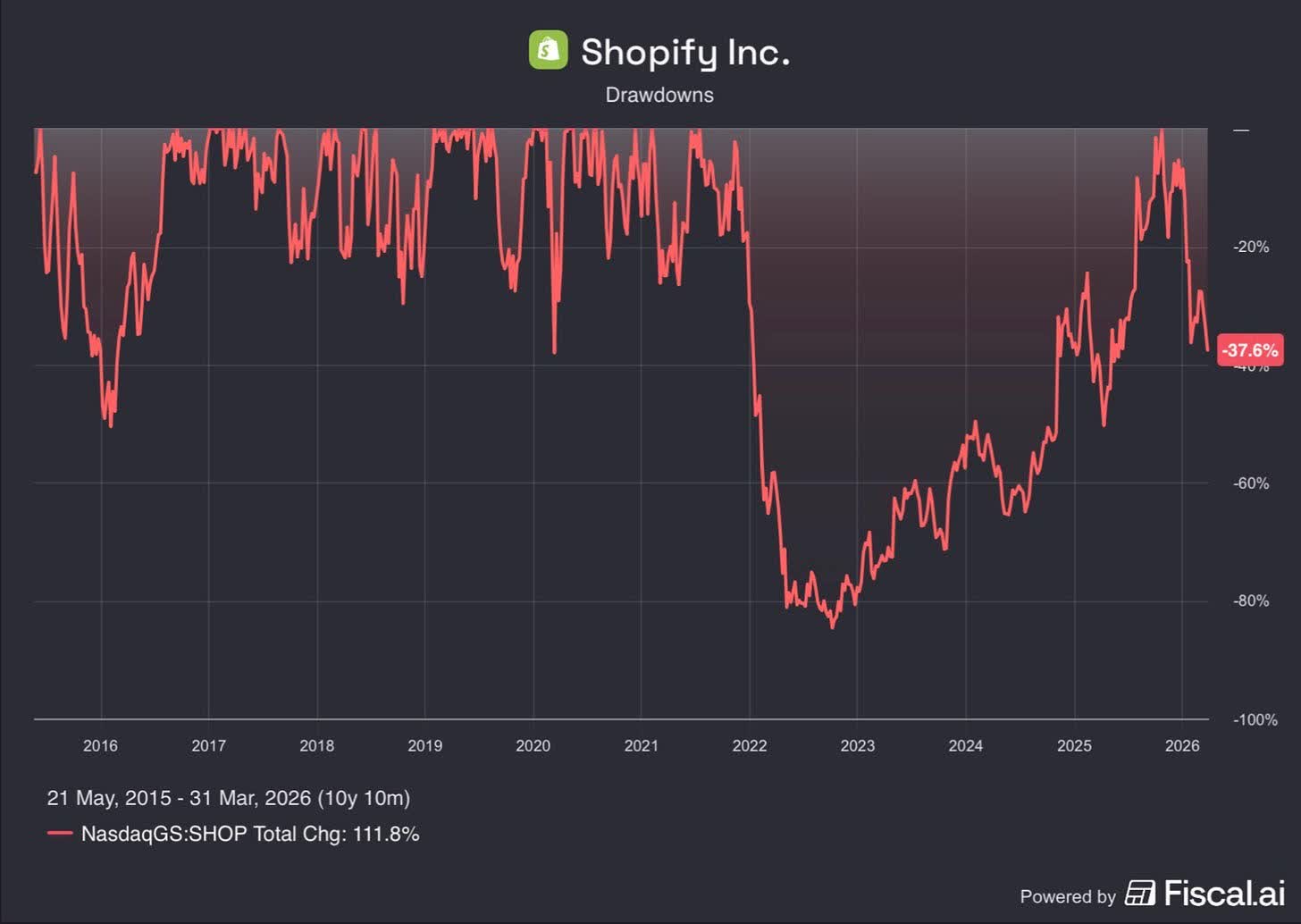
We experienced this firsthand. After initiating our position in early 2022, the stock declined by an additional ~50%. We believed the drawdown reflected multiple compression, not fundamental deterioration. The business continued to grow revenues, expand its merchant ecosystem, and strengthen its competitive position. The price was broken. The company was not.
It did not feel good. The best opportunities rarely do.
What followed was a long and uncomfortable period of patience before payoff. The stock rebounded 124% in 2023 — and yet we were still underwater on our investment. It was not until 2024 — when Shopify generated over $1 billion in operating profit for the first time and the stock gained another 37% — that we finally got our capital back and began generating real returns. The stock then rose 51% in 2025, making it our best performer of the year.
Three years of patience. Three years of watching the business execute while the stock tested our conviction repeatedly.
More recently the stock has again declined meaningfully — down 26% at quarter-end, though it has since recovered to approximately -17% as of mid-April. There is nothing unusual about that. It is the same pattern, playing out again.
Shopify is a clear example of why patience — especially through periods of valuation compression — is often required before fundamentals are fully reflected in stock prices. In our experience, the returns in businesses like Shopify are earned by those willing to endure periods when stock prices and business performance temporarily move in opposite directions.
Underlying Business Performance
Despite the recent decline in stock prices, the underlying businesses we own continue to perform well. Based on current estimates, our portfolio companies are expected to grow revenues at approximately 18% annually and earnings at approximately 21% annually over the next several years. These figures represent a weighted average across a group of businesses operating in different industries and geographies.
In our experience, periods like this — when price and value diverge — have consistently provided the most attractive investment opportunities.
In our Q2 2025 letter, we wrote that our edge does not come from predicting short-term market movements, but from our willingness to own a concentrated group of high-quality businesses and remain focused on their long-term compounding potential.
That principle is far easier to articulate when markets are rising than when they are declining. Periods like the one we are experiencing today are when that discipline is tested — and, in our view, when it matters most.
Portfolio Update: Constellation Software
During the quarter, we initiated a position in Constellation Software (TSE: CSU) (CNSWF), funded by the sale of the remainder of our Spotify position. Constellation is one of the most exceptional capital allocation platforms in the public markets — a company that has compounded shareholder capital at approximately 28% annually since its 2006 IPO by systematically acquiring and operating mission-critical vertical market software businesses. The stock has recently declined approximately 50% from its highs, creating what we believe is a rare entry point into a business of this quality. For those interested in a detailed discussion of our investment thesis — including our views on the AI disruption narrative and the recent leadership transition — we have published a full write-up on our Substack.
The Opportunity Today
We want to be direct with our partners and with anyone considering investing alongside us for the first time.
We have been here before — not just as observers, but as participants with real stakes. In 2021-2022, when our portfolio declined sharply we remained focused on the underlying businesses and their long-term prospects. We wrote at the time that we believed the portfolio was in one of the strongest positions in its history. Few wanted to hear it. Even fewer wanted to invest. What followed was a cumulative net return of approximately +252% over the subsequent three-year period (2023–2025).
We are not promising a repeat. No honest investor can make that claim.
But here is what we can say with conviction: the businesses we own today are stronger than they were in 2022. Their competitive positions are deeper, their earnings power is greater, and their long-term opportunities are larger. In many ways, we believe this is the strongest and most focused portfolio we have built since our inception in 2015 — a small group of exceptional businesses that have each been tested through adversity and emerged with their competitive positions intact or strengthened.
And yet their stock prices have declined meaningfully from recent highs. In our view, the gap between what these businesses are worth and what the market is willing to pay for them today is as wide as it has been since that period.
We have invested a significant majority of our personal net worth alongside yours. We earn nothing unless our partners make money. That is not a marketing line — it is the structure we chose deliberately on day one, because we believe it is the only honest way to manage other people’s capital.
Periods like this are never comfortable. They were not comfortable in 2022, and they are not comfortable today. But in our eleven years of managing capital through euphoria and despair, one lesson has proven itself repeatedly: it is precisely in these moments — when prices are low, sentiment is poor, and patience feels unrewarded — that the most important long-term returns are made.
To our existing partners — thank you for your continued trust and patience. We have been here before, and we remain as convicted as ever in the businesses we own together. If your circumstances allow, we believe adding to your investment at current levels represents one of the more compelling opportunities we have seen since 2022.
To those considering investing alongside us for the first time — if this way of thinking resonates with you, we would welcome the opportunity to partner over the long term.
Best regards,
Alex and Joe
Editor’s Note: The summary bullets for this article were chosen by Seeking Alpha editors.

Whether the twin blows affecting growth and inflation seen in purchasing manager indexes after the first month of the Iran conflict intensified during month two will be a key focus.
The initial take for April in economies from Australia to the US will be published on Thursday. Among those covered by Bloomberg forecasts, indexes in Germany, France, the euro zone and the UK are all anticipated to show broad deterioration, while the American indicators are seen little changed.
Ultimately, the numbers may point to the degree that stagflation is lurking. That ominous term – evoking the noxious mix of surging prices and stalling growth of the 1970s – was cited by Chris Williamson, chief business economist at PMI-compiler S&P Global, when summing up risks highlighted by the overall global measure in March.
The survey numbers follow a week of bleak stock-taking in Washington, where finance chiefs were warned by the International Monetary Fund of a range of potential outcomes that included a near-recession for the world. Notwithstanding the current Middle East ceasefire, the damage to growth and inflation can’t be easily undone.

“Even if the war ends tomorrow, it would take quite some time for the recovery to kick in,” IMF Managing Director Kristalina Georgieva told Bloomberg Television. “The impact is already baked in.”
For all the gloom, multiple policymakers remain cautious about how to respond. European Central Bank chief economist Philip Lane described how he and his colleagues may treat reports such as the PMIs when they set interest rates later this month.”We will have a rich set of survey data,” Lane said in Washington. “Of course, the people who are answering those surveys are looking at the same world we are looking at.” And for now, not many will have a decisive idea about what’s going to happen, he added.
ECB officials will also get French business confidence on Thursday and Germany’s closely watched Ifo business climate gauge on Friday. Their Federal Reserve peers will see the University of Michigan’s sentiment index, also at the end of the week.


US security agency is using Anthropic’s Mythos despite blacklist, Axios reports

Revolution Medicines reports phase 1 data for lung cancer drug
QXO to acquire TopBuild for $17 billion in stock and cash deal

Iran rejects second round of talks, suspects possible U.S. attack – report
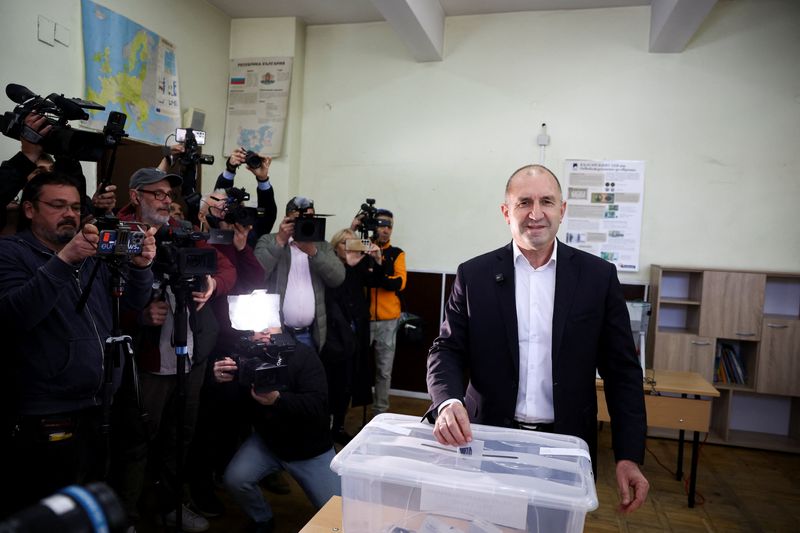

Bulgaria’s pro-Russian former president takes strong lead in election, exit polls show

LOS ANGELES — Hailey Bieber has firmly rejected online conspiracy theories suggesting she tips off photographers to capture her daily outings, calling the speculation “so icky” and rooted in a “very dark” mindset.

The 29-year-old Rhode beauty founder and model addressed the persistent rumor during a new cover interview with Interview Magazine, published April 14. While discussing her complicated relationship with fame and street-style photography, Bieber expressed discomfort with the invasive nature of paparazzi culture and directly pushed back against claims that she orchestrates her own sightings.
“I don’t think it’s gotten any better or any worse,” Bieber said of paparazzi behavior. “The spirit behind it is very dark and I don’t think it’s something that anybody asks for in this world, so I find it really funny when I’ll see people online being like, ‘She calls the paparazzi on herself every day.’ It’s so icky.”
Interviewer and longtime collaborator Marc Jacobs collaborator/interviewer (often noted in context) responded by clarifying for readers, “For the record, people, she’s not calling the paps,” to which Bieber simply replied, “No.”
The comments come amid ongoing scrutiny of Bieber’s highly visible life in Los Angeles. As the wife of pop superstar Justin Bieber and mother to their young son, she is frequently photographed running errands, driving her Yukon SUV, grabbing coffee or attending events. Social media users have long speculated that some of these moments appear too perfectly timed or styled to be coincidental, fueling theories that she or her team alerts photographers in advance for publicity.
Bieber acknowledged that being photographed has influenced her personal style, noting she now favors more minimal, tailored looks after seeing how certain outfits translate in candid images. Yet she drew a clear line between adapting to constant surveillance and actively inviting it.
Historically, paparazzi tactics have drawn widespread criticism, from aggressive pursuits that contributed to Princess Diana’s fatal 1997 car crash to more recent debates over privacy rights for celebrities and their families. Bieber referenced this darker legacy, saying the overall environment remains challenging despite changes in technology and public awareness.
The rumor has circulated for years but intensified as Bieber’s Rhode skincare and beauty line grew into a major success and as she balanced motherhood with public appearances. Online forums and TikTok videos have dissected everything from her casual outfits to the timing of sightings near high-traffic spots, with some users accusing her of staging moments for brand promotion or to maintain relevance.
Bieber has generally maintained a relatively composed public persona, often sharing glimpses of family life on Instagram while keeping many details private. She and Justin Bieber welcomed their first child in 2025, further heightening interest in their daily routines. The couple has faced intense media attention since their 2018 marriage, including past rumors involving Justin’s ex-girlfriend Selena Gomez that occasionally resurface in fan discussions.
In the Interview piece, Bieber also reflected on how criticism and online commentary affect her. She described looking for empowering angles in negative feedback and emphasized resilience in the face of constant judgment. The paparazzi discussion formed part of a broader conversation about navigating fame, beauty standards and authenticity in the digital age.
Her Rhode brand, known for minimalist packaging and viral products like the Peptide Lip Tint, has benefited from her stylish public image. Some critics argue that visibility helps drive sales, which may contribute to skepticism about her sightings. Bieber, however, has positioned Rhode as an extension of her personal values rather than a calculated image play.
Reactions to her comments poured in quickly across platforms. Many fans praised her for addressing the rumor head-on and defended her right to privacy, with comments like “Finally someone says it — the paparazzi culture is toxic” and “Hailey just wants to live her life in peace.” Others remained skeptical, continuing to share side-by-side comparisons of her outfits or questioning why certain locations attract photographers repeatedly.
Supporters pointed out the double standard faced by female celebrities, who are often scrutinized more harshly for perceived image management than their male counterparts. Bieber’s comments also resonated with broader conversations about consent, surveillance and the mental health toll of living under a microscope.
The timing of the interview coincides with heightened public interest in the Bieber family due to Justin’s recent Coachella 2026 performance. Hailey was spotted supporting her husband at the festival, where his set sparked divided opinions online. Some fans noted her presence amid ongoing discussions about the couple’s dynamic, though she has largely stayed out of direct commentary on his shows.
Paparazzi encounters remain a flashpoint for many stars. High-profile cases involving Taylor Swift, Beyoncé, the Kardashians and others have highlighted tensions between celebrity privacy and public demand for content. Legislation in some states has attempted to curb aggressive tactics, but enforcement varies and the rise of social media has created new avenues for images to spread instantly.
Bieber’s Rhode pop-up events and product launches have occasionally drawn crowds and photographers, adding fuel to speculation. Yet she has emphasized in past interviews that her focus remains on building a meaningful business and raising her family away from excessive spotlight.
Industry observers note that denying such rumors rarely ends the conversation entirely, as the allure of conspiracy theories persists in celebrity culture. Still, Bieber’s straightforward dismissal — delivered with a touch of humor — appeared to land well with many, shifting some narratives from suspicion to empathy.
As she continues expanding Rhode and managing family life, Bieber seems determined to set boundaries. Her comments serve as a reminder of the human cost behind glamorous street-style shots and the often-unseen emotional labor of constant visibility.
For now, Hailey Bieber has made her position clear: she does not call the paparazzi on herself, finds the accusation distasteful and wishes for a world where such invasive practices carry less “dark” energy. Whether the rumor fades or resurfaces remains to be seen, but her candid response has at least given fans and critics fresh insight into her perspective on one of fame’s most persistent irritants.
The full Interview Magazine feature delves deeper into Bieber’s views on beauty, motherhood, marriage and creativity, offering a nuanced portrait of a young woman navigating extraordinary circumstances with measured grace. In an era where every outing can become content, her refusal to play into the game stands out as a quiet act of resistance.
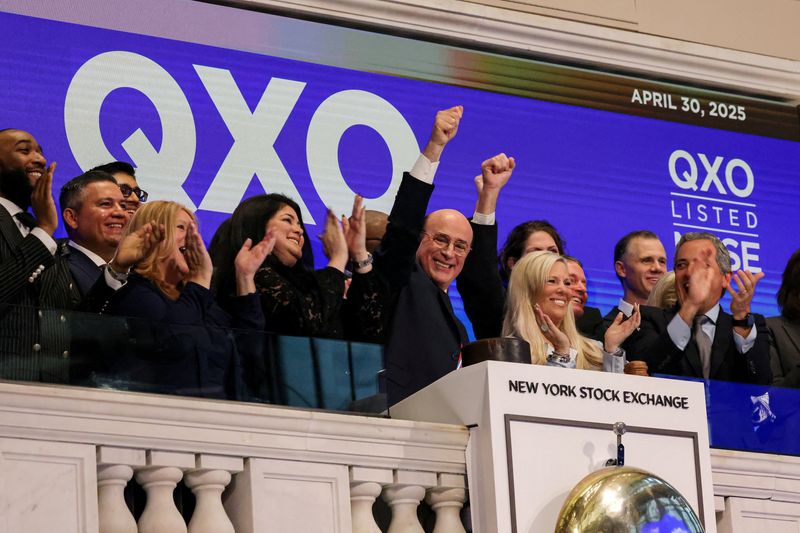

QXO to buy commercial roofing firm TopBuild for $17 billion
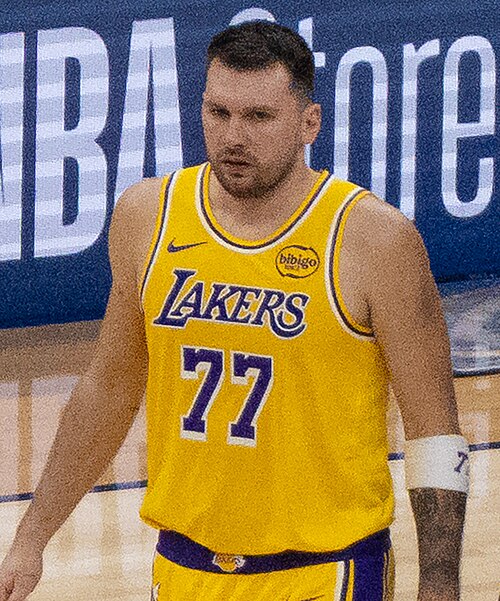
LOS ANGELES — Los Angeles Lakers superstar Luka Doncic remains sidelined with a Grade 2 left hamstring strain suffered April 2, but encouraging signs from specialized treatment in Europe have sparked cautious optimism that he could return to the court in early May — potentially during the NBA playoffs.

As of Sunday, April 19, Doncic has not resumed running and continues rehabilitation, with no firm return date set. Multiple reports point to a target around May 1, roughly four weeks after the non-contact injury occurred during a blowout loss to the Oklahoma City Thunder. That timeline would place his possible debut near the middle or end of the Lakers’ first-round series against the Houston Rockets, assuming Los Angeles advances.
The injury, confirmed by MRI as a Grade 2 strain involving partial tearing of muscle fibers, forced Doncic to miss the final games of the regular season. Lakers coach J.J. Redick has repeatedly described both Doncic and teammate Austin Reaves (Grade 2 oblique strain) as “out indefinitely,” offering few specifics on progress while emphasizing a cautious approach to avoid re-injury.
Doncic traveled to Spain shortly after the diagnosis for advanced regenerative treatments not widely available in the U.S., including consultations with medical staff linked to his former club Real Madrid. He was spotted in Madrid attending a EuroLeague game and reportedly received therapies aimed at accelerating healing, such as platelet-rich plasma injections or similar interventions. He returned to Los Angeles around April 17 and rejoined the team for further evaluation.
Insiders suggest the overseas trip could shave days or even a week off a standard recovery. While typical Grade 2 hamstring strains sideline NBA players for three to six weeks — with historical data showing an average of about 35 days and elevated re-injury risk — some optimism surrounds Doncic’s aggressive rehab protocol. One Lakers insider noted that Doncic has the shorter projected timetable between him and Reaves, raising the possibility he could return before his backcourt mate.
As of Sunday, Doncic is officially ruled out for Game 1 of the Lakers-Rockets series, which tips off this weekend. The team is preparing without its leading scorer, who averaged 33.5 points, 7.7 rebounds and 8.3 assists per game in 64 regular-season contests before the injury. LeBron James and supporting cast have shouldered heavier loads, but the absence of Doncic and Reaves has left Los Angeles shorthanded entering the postseason.
Medical experts note that Grade 2 strains require careful progression through phases: initial rest and inflammation control, followed by strength rebuilding, then sport-specific movements like running and cutting. Running remains “weeks away” according to some updates, a critical milestone before any on-court activity. Rushing the process risks turning a partial tear into a more serious issue, which could sideline Doncic for months.
The timing could hardly be worse for the Lakers, who secured a playoff berth but now face a tough Rockets squad without two key rotation pieces. If Los Angeles can navigate the early rounds, Doncic’s potential return in early May might provide a massive boost for deeper postseason contention. However, conservative management remains the priority; history with similar injuries shows high re-injury rates if players return too soon.
Doncic has dealt with lower-body issues in the past, though this marks one of his more significant setbacks in recent seasons. At 27, the Slovenian star remains in his prime, and his ability to generate offense at an elite level makes any timeline for his return a focal point for fans and analysts. His absence has also impacted award eligibility discussions, though he received an exception for missing games related to his daughter’s birth earlier in the season.
Social media and sports talk shows have buzzed with speculation. Some fans express frustration over the vague updates, while others praise the team’s measured approach and Doncic’s proactive steps in seeking cutting-edge care abroad. Clips of his emotional reaction immediately after the injury — leaving the court in visible discomfort — circulated widely, underscoring the stakes.
Reaves, meanwhile, faces a more predictable four-to-six-week timeline for his oblique injury, potentially pushing his return toward late April or early May as well, or even later if setbacks occur. The Lakers are essentially operating with a makeshift backcourt, relying on veterans and younger contributors to fill massive gaps in scoring and playmaking.
Looking ahead, the coming days will bring more clarity. Doncic is expected to undergo re-evaluation upon full integration with the team’s medical staff. Any progression to light running or on-court work would signal a meaningful step forward. Until then, the organization stresses patience, with Redick noting the star has been in “relatively good spirits” and attacking rehab diligently.
The broader NBA landscape adds context. Playoff intensity rises sharply, and hamstring injuries have derailed contenders in the past. For the Lakers, surviving the first round without Doncic would represent a significant achievement and set the stage for his potential hero’s return. A deeper run could hinge on his availability and conditioning upon comeback.
Beyond the immediate series, long-term concerns linger. Hamstring strains can linger or recur, particularly for players who rely on explosive movements like Doncic. The team and player will likely prioritize full health over rushing back, even if it means missing early games.
As April 19 unfolds with the playoffs underway, Lakers fans scan every practice report and insider note for positive signals. While running remains weeks away and no official clearance has come, the specialized treatment in Europe and Doncic’s reputation for resilience have injected hope that he could suit up sooner than a strict calendar might suggest — perhaps aligning with a critical playoff moment in early May.
For now, the focus stays on rehabilitation milestones rather than game minutes. The basketball world watches closely as one of the NBA’s most dynamic talents works toward reclaiming the court. Whether that happens in time to impact the 2026 postseason could define the Lakers’ year.

Blackley incident LIVE: Armed police barricade tower block in city street with forensics on scene

Manchester City beats Arsenal 2-1, reignites Premier League title race

Palantir posted a manifesto that reads like the ramblings of a comic book villain


-
 NewsBeat7 days ago
Pep Guardiola and Gary Neville agree over Arsenal title problem that benefits Man City
-

 Crypto World6 days ago
The SEC Conditionalises DeFi Platforms to Be Avoided for Broker Registration
-

 Fashion2 days ago
Weekend Open Thread: Theodora Dress
-

 Crypto World6 days ago
SEC Signals Exemption for Crypto Interfaces From Broker Registration
-

 News Videos4 days ago
Secure crypto trading starts with an FIU-registered
-

 Sports2 days ago
NWFL Suspends Two Players Over Post-Match Clash in Ado-Ekiti
-

 Crypto World6 days ago
SEC Proposes Certain Crypto Interfaces Don’t Need to Register as Brokers
-

 NewsBeat5 days ago
Trump and Pope Leo: Behind their disagreement over Iran war
-

 Business4 hours ago
Powerball Result April 18, 2026: No Jackpot Winner in Powerball Draw: $75 Million Rolls Over
-

 Politics2 days ago
Palestine barred from entering Canada for FIFA Congress
-

 Crypto World2 days ago
Russia Pushes Bill to Criminalize Unregistered Crypto Services
-

 Sports6 days ago
NWFL opens Pathway for new Clubs ahead of 2026 Season
-
 Entertainment6 days ago
Brand New Day’ Footage Reveals the Devastating Impact of ‘Now Way Home’
-
 Business3 days ago
Creo Medical agree sale of its manufacturing operation
-

 Politics9 hours ago
Zack Polanski demands ‘council homes not luxury flats for foreign investors’
-

 Crypto World6 days ago
Trump whales load up ahead of Mar-a-Lago luncheon.
-
 Crypto World7 days ago
Sei Network Enters Quiet Reset Phase as On-Chain Metrics Signal a Slowdown in 2026
-
Business6 days ago
Kering slides after Morgan Stanley downgrade, Gucci woes loom
-

 Tech6 days ago
Google adds E2E encryption to Gmail for iOS and Android enterprise users
-

 Tech6 days ago
Apple glasses won’t go brand shopping like Meta did with Ray-Ban and Oakley
You must be logged in to post a comment Login