Connect with us

Business

Solar Industries shares plunge 17% in 2 days. Why Jefferies, Nuvama still see up to 46% upside

Published

on

Solar Industries shares plunge 17% in 2 days. Why Jefferies, Nuvama still see up to 46% upside
Solar Industries shares fell another 4% on Wednesday to Rs 18,480 apiece on the NSE, extending their decline to more than 17% over two sessions as investors continued to digest the defence major’s Rs 12,951 crore acquisition of South Africa’s Omnia Holdings.

The stock had plunged nearly 14% on Tuesday following the announcement of the all-cash deal to acquire 100% of Omnia’s issued shares for $1.355 billion.

Despite the sharp selloff, Jefferies and Nuvama have advised investors to use the correction as an opportunity to add the stock, pointing to the potential benefits of the acquisition. The deal, Solar Industries’ largest overseas acquisition, is aimed at expanding its global commercial explosives and blasting solutions business, particularly across Africa’s mining markets.

The acquisition is expected to be completed in early to mid 2027, subject to customary conditions, including competition approvals under relevant jurisdiction. Upon successful completion of the transaction, Omnia will be delisted from the Johannesburg Stock Exchange and A2X Markets securities exchange.

Advertisement

Also read | Solar Industries shares crash 14% after acquisition of South Africa’s Omnia Holdings for Rs 12,951 crore

Jefferies on Solar Industries share price

Jefferies maintained its ‘Buy’ call for the shares of Solar Industries with a target price of Rs 28,160 apiece, implying more than 46% upside potential from the stock’s previous closing price of Rs 19,250 apiece. The international brokerage said the bulky acquisition could dilute the company’s FY28-29 EPS by 4-6%, and that for FY30 by 1% on normalised growth assumptions at Omnia. Defence share is likely to fall to 22-25% by FY30, as against 35-40% expected earlier.
However, Jefferies believes the correction offers a heightened opportunity to own a business with a 30% EPS CAGR potential and 25%+ ROE even considering the acquisition. Solar Industries saw its profits rise 10x in the last decade between market share gains globally in explosives, an acquisition in South Africa in 2024 and its foray in defence, the international brokerage noted, adding that management has a healthy track record on sound capital allocation and cash flow focus.“While share of defence on a consolidated basis will likely reduce, we believe that if the EPS CAGR and ROE profile of the consolidated entity remains at 30%+ and 25%+, respectively, any derating should be limited. Solar will likely move from a net cash entity to net debt:equity on consolidation of 1.2x in FY28, but this should quickly reduce to 0.5x by FY30 given strong cash flows,” Jefferies said.

Also read | Solar Industries to acquire South Africa’s Omnia for Rs 12,951 crore in biggest global expansion push

Nuvama on Solar Industries share price

Nuvama also has a ‘Buy’ call on the shares of Solar Industries with a target price of Rs 23,435 apiece, implying around 22% upside potential from the stock’s previous closing price. The brokerage said the acquisition will give Solar Industries enhanced control over Ammonium Nitrate sourcing, currently being externally procured, while expanding global reach.

Advertisement

Although its defence mix falls to 22% (post-deal) versus 27% of FY26 revenue, Nuvama views the debt-funded deal as pro-growth and self-financed.

Solar Industries share price

Solar Industries shares have dropped around 17% in one week and 7% in a month, but overall jumped more than 53% in 2026 so far. The stock has gained 27% in one year.

In the longer term, the shares of the explosives-maker have delivered explosive returns for its shareholders, rallying over 300% in three years and around 850% in five years. The company currently has a market capitalisation of around Rs 1.68 lakh crore.

Also read | Solar’s $1.3 bn bet is a turn for India’s defence-industrial complex

Advertisement

Disclaimer: This article has been written by Debaroti Adhikary, who is not a SEBI-registered Research Analyst or an Investment Adviser. Debaroti Adhikary and his/her ‘relative(s)’ (as defined under Section 2(77) of the Companies Act, 2013) do not hold any financial interest in the companies mentioned in this article as of the date of publication. The views/recommendations mentioned in this article, wherever applicable, are those of the respective SEBI-registered Research Analyst/brokerage and have been reproduced/reported with due attribution. They should not be construed as the views or recommendations of The Economic Times Digital or the journalist. Readers are advised to consider the original research report and make their investment decisions based on their own assessment. Brokerage disclaimers here.

Continue Reading
Click to comment

You must be logged in to post a comment Login

Leave a Reply

Business

Altman says world should trust AI firms

Published

on

Altman says world should trust AI firms

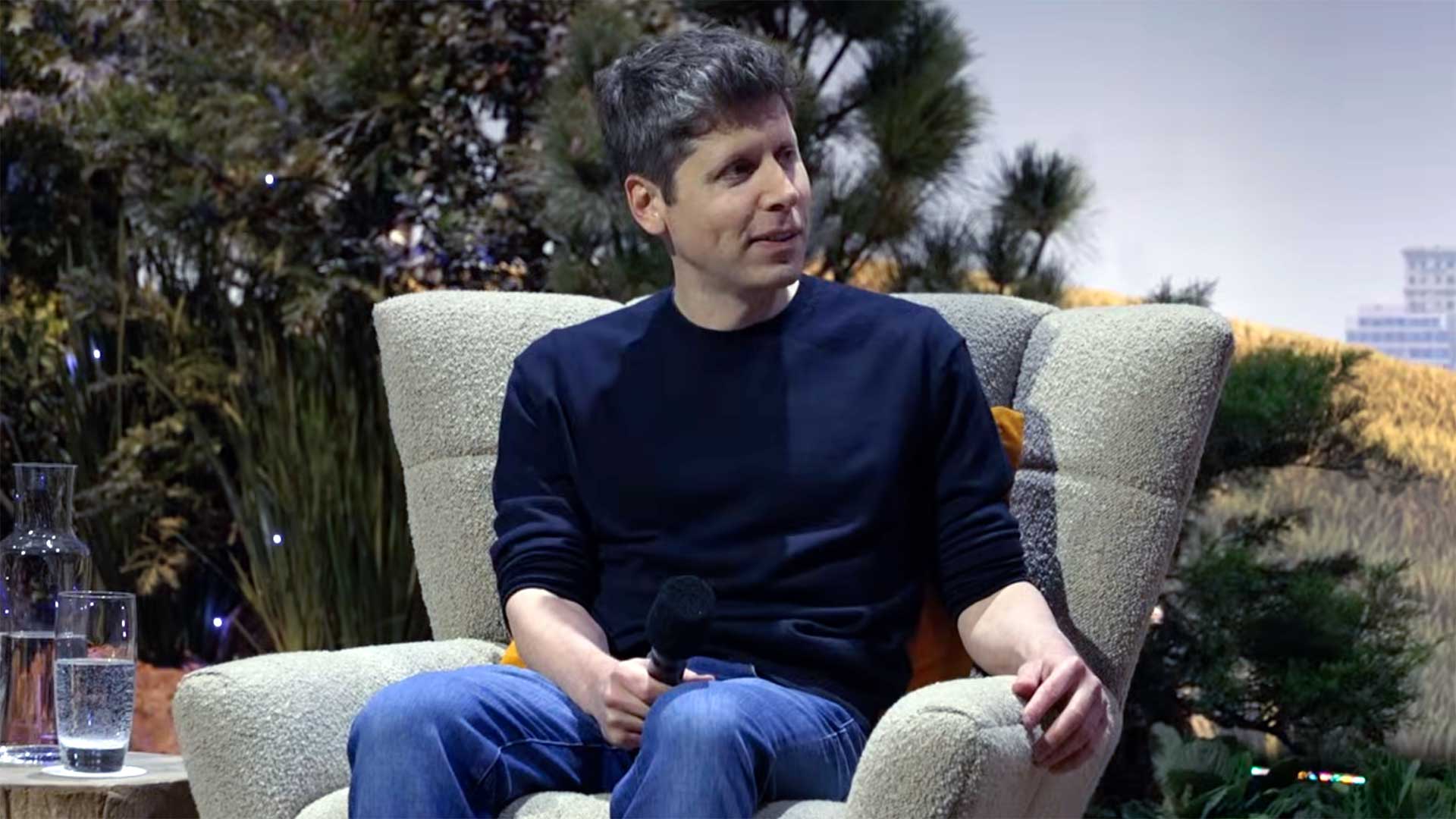
Sam Altman, chief executive of ChatGPT maker OpenAI, said yesterday that the public should trust AI companies to keep the technology safe, while accepting that people were right to be concerned about its risks.

“The world should trust that we are going to do the right thing because it’s the right thing and we feel the magnitude of this,” Altman said at Dreamforce, the annual gathering of Salesforce clients in San Francisco.

“It doesn’t take as much imagination as it used to for [us] to imagine how this could go wrong,” he said. “I think the world is right to be afraid of this.”

Free newsletters
Advertisement

The stories that matter to UK business, straight to your inbox.

Advertisement

Altman said AI companies were capable of regulating themselves. “We will get it right,” he said, adding that if firms could not keep “alignment and safety way ahead of capabilities” they would “slow down or stop”.

The remarks were his first public comments since a post went viral last week from a researcher who quit Anthropic, claiming AI could “kill all humans” by the end of the decade if left unchecked.

Industry leaders back self-regulation

Nvidia chief executive Jensen Huang, speaking at the same conference, said AI firms should decide whether new versions of the technology are released, rather than outside forces.

“We don’t need new laws or regulations,” he said, adding there should not be a “false choice” between the speed of innovation and the safety of AI products. Huang argued that safety is an “engineering problem” and that companies should “take a pause” if they lose confidence in a product.

Advertisement

After Altman’s comments, Meta chief executive Mark Zuckerberg wrote on X that every AI firm had the ability and the incentive “to take its own actions” towards safety.

“Any lab that doesn’t focus on alignment will fall behind,” he wrote. “Labs face significant liability if their models cause harm, so they have a strong incentive to prevent this as well.”

The recent warnings from inside the industry prompted Anthropic chief executive Dario Amodei to call for the pace of AI development to slow and for governments to regulate the sector. His call was applauded by Altman, Google DeepMind co-founder Demis Hassabis and Elon Musk.

Speaking at Dreamforce yesterday, Amodei said Anthropic was now in “a dialogue with the rest of the industry” about committing to better safety standards and checks on AI tools and development.

Advertisement

OpenAI executive Chris Lehane said last week that the company was working with other labs, including Anthropic and Google DeepMind, “to advance frontier AI standards, building a voluntary effort now, with or without government support.”

Critics question industry oversight

Critics say companies cannot be trusted to police themselves. Senator Bernie Sanders said decisions about AI had been left to “a handful of the richest people in the world”, while former White House strategist Steve Bannon said the public could not trust tech oligarchs to regulate themselves.

Jack Clark, an Anthropic co-founder and executive, told the BBC on Monday that leaving AI as a “totally unregulated industry” was “rolling dice with immense risks”.

Yoshua Bengio, one of the pioneers of modern AI, wrote on X that “ambitious efforts outside the for-profit sector” were needed to “avert the worst risks from AI”.

Advertisement

President Donald Trump has rejected calls for more guardrails, describing fears about AI safety as a “hoax” and saying the only guardrail needed was a “strong and smart” president.

New US legislation looks unlikely soon. In an interview with Axios published on 3 September, Altman said he had expected Congress to create a “basic framework” for advanced AI after his 2023 testimony, suggesting lawmakers had struggled to regulate without “slow[ing] down innovation”.

Congress returned from its summer break on Monday, but there is no consensus in either party on regulation, and the House is due to enter recess again at the end of this week ahead of the midterm elections in early November.

In the UK, Business Matters reported last week that Anthropic released its Claude Mythos 5.1 model without submitting it to the AI Security Institute for testing.

Advertisement
Cherry Martin
About the author

Cherry Martin

Cherry is Associate Editor of Business Matters with responsibility for planning and writing future features, interviews and more in-depth pieces for what is now the UK’s largest print and online source of current business news.

Advertisement

Continue Reading

Business

OpenAI Contractors Are Reading ChatGPT Users’ Private Prompts, New Report Finds

Published

on

OpenAI

OpenAI has hired hundreds of contractors to read a continuous stream of real ChatGPT users’ conversations as part of an internal effort to improve the chatbot’s responses, according to an investigation published by 404 Media, raising fresh privacy questions for a service used by more than 900 million people worldwide.

The report, based on leaked internal documents, training materials and real prompts reviewed by 404 Media, details an OpenAI initiative internally codenamed Project Lily. Under the program, contractors known as “prompt reviewers” read anonymized excerpts of real user conversations with ChatGPT, write a summary of what the user was attempting to accomplish, and then critique and rate multiple versions of the chatbot’s generated responses on a scale of one to seven.

According to the internal materials reviewed by 404 Media, the reviewers are working to steer ChatGPT toward specific behavioral targets, including training the chatbot to be less sycophantic, to use fewer emojis, to avoid excessive “AI-speak,” and to adopt more restrained, professional language. The report notes that OpenAI’s earlier GPT-4o model faced criticism for being overly sycophantic, a trait that multiple lawsuits have alleged contributed to several people’s suicides, underscoring why OpenAI has prioritized correcting that behavior in later training efforts.

Each conversation presented to reviewers is accompanied by what the documents describe as a “user memories summary,” an overview of the user’s past interactions with ChatGPT that can include personal context and, in some cases, location information, according to the report. OpenAI told 404 Media that conversations are first processed through what the company calls a Privacy Filter, a system designed to strip identifying details such as names, addresses, emails and phone numbers before prompts reach human reviewers. Even so, OpenAI itself acknowledged to 404 Media that the filter can miss what the company described as “uncommon identifying information or content with personal significance in context,” particularly in shorter conversations, meaning sensitive personal details can still reach the contractors reviewing the chats.

Advertisement

The privacy stakes are heightened by how many users engage with ChatGPT, according to the report, which notes that people frequently treat the chatbot as a therapist, a professional assistant or a digital confidant, sharing intimate personal details they may not realize could be read by another human being. The report also found that in a number of conversations reviewed, users explicitly asked ChatGPT to keep the contents of their exchange confidential, apparently unaware that a human contractor could ultimately review the same conversation as part of the model-improvement process.

Contractors working on Project Lily do not see ChatGPT usernames, according to the report, and OpenAI has said it works to strip personal information before prompts reach reviewers. Even so, when 404 Media asked OpenAI directly whether the company had ever explicitly disclosed to users that human contractors might review their prompts, OpenAI did not answer the question directly. According to the report, OpenAI’s public-facing website discusses human review primarily in the context of content that violates its terms of service or raises safety concerns, rather than as a routine part of ordinary model improvement. Following the story’s publication, OpenAI pointed 404 Media to a separate page on its site stating that humans may review content to “improve model performance.”

The setting governing whether a user’s conversations become eligible for this kind of review is turned on by default for OpenAI’s Free, Plus and Pro consumer subscription tiers, according to the report, while it remains off by default for Enterprise, Business and Education accounts. Users on eligible plans can disable the setting, described in OpenAI’s interface as allowing chat history to be used for model improvement, through the Data Controls section of their account settings. However, the report notes that opting out does not apply retroactively, meaning conversations a user had before changing the setting remain eligible for contractor review regardless of when the opt-out is applied.

The workers who review these prompts are recruited in part through a firm called Crossing Hurdles, with payment processed through Mercor, an AI-training company, according to the report. One contractor told 404 Media the work pays more than $50 an hour. The same contractor described the job itself as largely repetitive, saying that while reading the prompts can be amusing at times, the review guidelines shift frequently and have at times contradicted one another. Separately, Meta ended its working relationship with Mercor in April following a data breach involving the company, according to the report, though that incident was not connected to OpenAI’s use of the firm for Project Lily.

Advertisement

The investigation also found that OpenAI is not alone in relying on human review to refine its AI models. Anthropic confirmed to 404 Media that it likewise uses human review to improve the responses generated by its Claude chatbot, though the company said that practice applies specifically to users who have opted in through a dedicated setting labeled “Help improve our AI models,” a structurally different approach from OpenAI’s default-on setting for consumer ChatGPT accounts. Google has also disclosed that it operates a similar human review process for its own AI products, according to the report, doing so more directly and explicitly than OpenAI has to date.

The report’s authors noted that the human review process uncovered through Project Lily helps explain an aspect of AI development that receives comparatively little public attention: that large language models like ChatGPT do not improve solely through automated processes such as scraping internet data or algorithmic refinement, but also depend substantially on the ongoing, manual work of human contractors reading and evaluating real user conversations at scale, a process that inherently exposes at least some subset of sensitive user data to human eyes despite companies’ efforts to anonymize it beforehand.

Continue Reading

Business

J.D. Power report shows travelers are happier with U.S. airports

Published

on

J.D. Power report shows travelers are happier with U.S. airports

Travelers navigate security lines at Minneapolis-St. Paul International Airport Terminal 1 in Minneapolis, Minnesota, March 23, 2026.

Stephen Maturen | Getty Images

Despite a near record number of people flying in the U.S., it appears travelers are happier with the airports they find themselves moving through.

J.D. Power’s annual North America Airport Satisfaction Study, released Wednesday, reported that overall airport satisfaction increased significantly this year. Travelers gave higher ratings in part because of the newer gates and terminals many airports have opened in recent years, according to the study.

Advertisement

“Overall, travelers are happier with what they are seeing in most airports,” said Mike Taylor, managing director of travel, hospitality and retail at J.D. Power.

From New York’s John F. Kennedy Airport to Kansas City International to Pittsburgh International, airports large and small have opened or are building new facilities to accommodate more travelers. Often, the new terminals and gates are larger, with more light and upgraded amenities, and cost billions to build.

“You have to spend at least a billion to impress people,” Taylor said.

This is the third straight year the J.D. Power study has found an increase in airport satisfaction. The latest report is based on responses from more than 24,000 travelers.

Advertisement

Among the largest airports, which handle more than 33 million passengers annually, Minneapolis-Saint Paul International received the top score. For airports that serve between 10 million and 32.9 million flyers annually, Tampa International was ranked No. 1, while Charleston International in South Carolina was rated the best among medium airports, which see 4.5 million to 9.9 million passengers a year.

Read more CNBC airline news

Continue Reading

Business

Gathering Alpha Where Nobody Watches With SPE’s Preferred Stock (NYSE:SPE)

Published

on

tropical beach with coconut palm and a colorful hammock

This article was written by

Arbitrage Trader, aka Denislav Iliev has been day trading for 15+ years and leads a team of 40 analysts. They identify mispriced investments in fixed-income and closed-end funds based on simple-to-understand financial logic.
Denislav leads the investing group Trade With Beta, features of the service include: frequent picks for mispriced preferred stocks and baby bonds, weekly reviews of 1200+ equities, IPO previews, hedging strategies, an actively managed portfolio, and chat for discussion. Learn more.

Analyst’s Disclosure: I/we have a beneficial long position in the shares of SPE.PR.C either through stock ownership, options, or other derivatives. I wrote this article myself, and it expresses my own opinions. I am not receiving compensation for it (other than from Seeking Alpha). I have no business relationship with any company whose stock is mentioned in this article.

Seeking Alpha’s Disclosure: Past performance is no guarantee of future results. No recommendation or advice is being given as to whether any investment is suitable for a particular investor. Any views or opinions expressed above may not reflect those of Seeking Alpha as a whole. Seeking Alpha is not a licensed securities dealer, broker or US investment adviser or investment bank. Our analysts are third party authors that include both professional investors and individual investors who may not be licensed or certified by any institute or regulatory body.

Advertisement
Continue Reading

Business

WH Smith issues second profit warning as discounting and inflation squeeze margins

Published

on

WH Smith issues second profit warning as discounting and inflation squeeze margins

The convenience retailer has lowered its expectations amid ‘inflation headwinds’

A WH Smith store

A WH Smith store

WH Smith has trimmed its profit forecast for the second time, cautioning that aggressive discounting and “inflation headwinds” are weighing heavily on its finances.

Advertisement

The Swindon-headquartered convenience retailer had initially guided investors towards pre-tax profits of up to £105m for the year, before cutting that target to between £75m and £90m. On Wednesday, the group lowered its expectations further, to no more than £75m.

“This reflects lower trading profit margins driven by increased promotional activity, a reduction in brand marketing and inflation headwinds, offset by central cost reductions and lower interest costs,” the firm said.

WH Smith has struggled to build momentum in the wake of selling its 480 high street outlets to private equity firm Modella Capital.

The group has been left heavily dependent on its train station and airport stores, which it has flagged as particularly exposed to the downturn in tourism brought about by the Iran war, as reported by City AM.

Advertisement

The retailer’s anticipated £75m profit would represent a steep decline from last year’s £108m figure. Just months ago, the group raised £103m through an equity issue intended to strengthen its balance sheet and underpin its investment strategy.

WH Smith reported a modest uptick in sales during its fourth quarter, with summer trading nudging revenue growth from one to two per cent across the business.

In the UK, like-for-like revenue growth accelerated from two to four per cent in the fourth quarter, with the group’s hospital stores leading the charge, posting a like-for-like revenue increase of eight per cent.

WH Smith revealed it has refurbished its outlets at Heathrow, Liverpool, Belfast International and East Midlands airports in an effort to increase average basket sizes at these busy retail locations.

Advertisement

The group’s performance across North America has weighed on its overall growth in recent years. Like-for-like revenue in the region fell by three per cent in the fourth quarter.

The retailer’s like-for-like revenue at its North American airport stores declined by two per cent, hampered by reduced passenger numbers and “softer consumer demand”.

In June, WH Smith’s share price tumbled 16 per cent in a single day after the company cautioned that the downturn in consumer confidence and airport footfall caused by the Iran war was taking a toll on its sales.

The firm announced on Wednesday that it is making “good progress” towards its recovery plan. The group informed investors it is working to reduce costs, strengthen its cash management and drive sales in its more lucrative “travel essentials” range.

Advertisement

Analysts at RBC Capital Markets noted that WH Smith has delivered better-than-anticipated UK results, but is underperforming expectations in the North American market.

“We think WH Smith needs to rebuild credibility with the market, with scope for the rating to recover over time if WH Smith can reassure the market that its recent missteps won’t be repeated,” they said.

Shares in WH Smith opened largely unchanged in early trading, at 359p.

Advertisement
Continue Reading

Business

New tidal lagoon plans revealed for the Severn Estuary

Published

on

Business Live

The Cardiff Capital Region is providing funding to assess the viability of what is planned as the first in series of lagoons

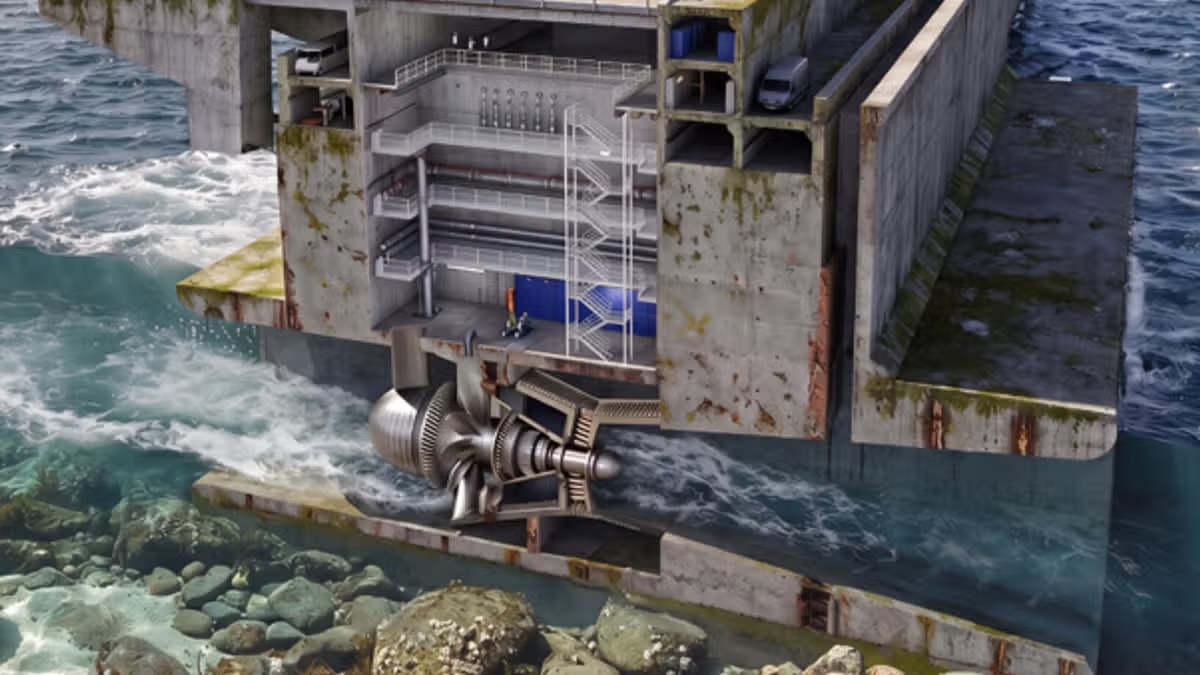
Plans for the first in a new generation of tidal lagoons in the Severn Estuary have been revealed by the Cardiff Capital Region.

The region, a statutory body made up of the ten local authorities of south-east Wales, will commit up to £6.4m over the next three years to undertake an extensive exploratory study, with a preferred location off the coast of Aberthaw in the Vale of Glamorgan.

The initial work will include environmental considerations, engineering design, modelling and commercial assessments.

Initial estimates suggest that the project could provide around 600 megawatts of predictable renewable electricity, which would be enough for around half a million homes.

It is being seen as the first in a series of lagoons in the estuary which could generate enough electricity to meet the needs of four million homes.

Advertisement

A lagoon at Aberthaw could generate around £3.5bn in economic value, supporting thousands of jobs and creating significant opportunities for businesses in its supply chain.

A first proof-of-concept tidal lagoon in the Severn Estuary, utilising one of the world’s highest tidal ranges, was recommended by an independent panel commissioned by the now-defunct cross-border Western Gateway Partnership.

Previous plans for lagoons in the Severn Estuary failed to materialise when the first proposed project, the Swansea Bay Tidal Lagoon scheme, failed to get subsidy backing from the then Conservative UK Government in 2018.

A more ambitious Severn barrage, which would generate more than 5% of the UK’s electricity needs, is not being proposed by the city region and was ruled out by the commission when it published its report last year.

Advertisement

Taking any lagoon project through the planning process would have a price tag of tens of millions of pounds, with a construction cost well north of £1bn. This would be beyond the reach of the city region. To be realised, it will require significant investment, potentially from other public and private sources, with a business model showing a return on investment over the long term.

If the project proceeds to the next phase, the UK Government’s £28bn National Wealth Fund could be a potential investor alongside institutional pension funds. The regulated asset base model could also be deployed, with upfront construction costs being partly funded through a contribution made via consumer energy bills.

The city region recently entered into a new partnership that has given it access to the National Wealth Fund’s investment knowledge, expertise and capital, to help develop and grow project pipelines, attract public and private finance, and deliver key infrastructure to support growth and create high-value jobs.

If progressed, initial estimates suggest the lagoon could provide around 600 megawatts of predictable renewable electricity – enough for around half a million homes – and operate for more than 120 years.

Advertisement

Chair of the Cardiff Capital Region and leader of Monmouthshire Council, Ann Brocklesby, said: “This represents a potentially game-changing moment for renewable energy generation in the UK. The Severn Estuary has one of the highest tidal ranges in the world, with the potential to generate predictable, homegrown renewable energy that complements existing wind and solar power.

“In a time when energy security has become increasingly essential, the ability to access reliable and cost-effective renewable energy to power a significant number of homes, while placing Wales at the forefront of innovation in such an important sector, makes this a generational opportunity. I am proud that the Cardiff Capital Region, along with our partners, is taking this exciting project forward.”

The next phase will use environmental and engineering co-design to determine the scale and configuration for a project, ensuring environmental, marine and ecological evidence helps shape its future development while maintaining commercial viability.

Cabinet Minister for Enterprise, Connectivity and Energy, Adam Price, said: “Our vision is for Wales to become a world leader in marine renewables. With the second-largest tidal range in the world, the Severn Estuary presents immense potential to deliver significant renewable energy generation and economic benefits for Wales.

Advertisement

“We will continue to work closely with partners to ensure we maximise the opportunities offered by this unique project as it progresses.

“This project will help us understand how tidal technology can contribute to the transition to clean power, tackle climate change and create good clean jobs in the future.”

Secretary of State for Wales, Stephen Kinnock, said:“Wales has a great track record of innovation and partnership, and Cardiff Capital Region is continuing to harness those strengths with projects that support economic growth, investment and clean energy. I look forward to following the development with great interest.”

The Cardiff Capital Region already owns a 500-acre site at Aberthaw, having acquired the former Aberthaw Power Station from energy giant RWE. It is planning to develop a green energy park at the site, which could also be utilised to support the building of any lagoon.

Advertisement

It is financing the early-stage lagoon work from its £1.2bn City Deal. The city region has adopted an evergreen strategy for most of its funding, with capital and interest payments to proejcts used to make further investments. Its financing contribution could see it taking an equity stake in the lagoon.

The commission set up by the Western Gateway Partnership, which recommended tidal energy in the Severn Estuary, was chaired by Dr Andrew Garrad.

He said: “The Severn Estuary has immense energy potential and the Commission concluded that there is a compelling case to use that potential. Equally, it must be done in the right way – with the unique and internationally important environment of the Estuary remaining at the heart of how the project is designed and developed.

“I am delighted to see Cardiff Capital Region taking forward the Commission’s recommendation for a commercial demonstration project. This investment is an important next step in building the evidence, working closely with environmental organisations, and demonstrating how tidal range can deliver large-scale, clean, economic energy while respecting the Severn’s exceptional natural environment.”

Advertisement

Helen Godwin, Mayor of the West of England Combined Authority (WECA), said: “The Severn Estuary is an extraordinary natural asset and now is the time to let our tides power new jobs and growth in both England and Wales. Building on the Commission’s recommendations, we have worked closely with Cardiff Capital Region to identify a key Welsh location as the right project to lead with, while ensuring the unique environment of our coast remains at the heart of plans.

“Today’s investment from our Welsh neighbours is exciting news for everyone and underlines again how the immense potential of tidal energy can unlock billions for our economy, create new jobs, skills opportunities, and supply chains across the West of England, Wales, and the UK. We will continue working with our partners to help realise this major national clean energy opportunity, here in the natural home of new green jobs.”

Continue Reading

Business

Mining rebound helps Australian shares creep higher

Published

on

Mining rebound helps Australian shares creep higher

Australian shares have overcome a shaky start to finish the session higher, led by a recovery in miners after an afternoon upswing in metals prices.

Continue Reading

Business

Double boost for UK automotive sector after announcements from Nissan and McLaren

Published

on

Business Live

Jobs will be created and safeguarded after news of significant investment from the two carmakers

Nissan is talking to Chery about making its cars at the Sunderland plant.

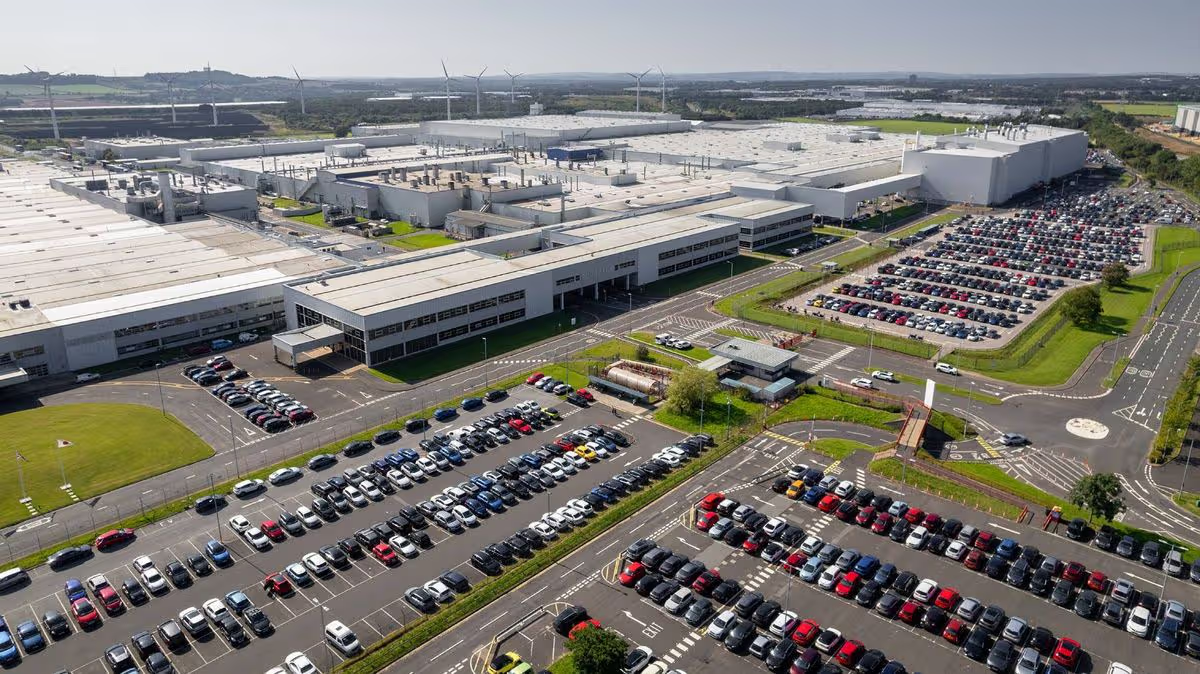
Nissan’s Sunderland plant.(Image: Nissan)

A double boost for the UK economy has arrived courtesy of two major announcements from the automotive industry.

Nissan has confirmed this morning that it will manufacture a new model at its Sunderland plant, with the decision to produce the Nissan Kicks on Wearside representing a £170m investment into the facility.

Advertisement

The news comes after a prolonged period of considerable uncertainty at the plant, which has seen job cuts and the closure of one of its production lines. Nissan has shuttered several factories across the globe as part of its cost-cutting drive following a difficult period, yet the North East facility is regarded as one of its strongest performers.

The Kicks will become the 10th model to roll off the production line at Nissan’s Sunderland plant, which is celebrating its 40th anniversary this year. The factory has now produced in excess of 12m vehicles since the first Nissan Bluebird was built there in 1986.

Adam Pennick, vice president of manufacturing at Nissan’s Sunderland plant, said: “I’m proud to welcome this new model allocation for Sunderland. It’s the perfect way to celebrate our 40th year as a world-class manufacturing site. We look forward to seeing Kicks e-POWER hybrid going down the production line with our electrified line up of Qashqai, Juke and LEAF.”

The announcement has been warmly received by Business Secretary Jonathan Reynolds, who was born and raised in Sunderland. He said: “The decision to build this new model in Sunderland is a huge vote of confidence in the UK’s manufacturing expertise and automotive future. I’m excited in what our partnership with industry can achieve so this Government delivers good growth, investment and skilled jobs in every postcode.”

Advertisement

Meanwhile, luxury carmaker McLaren has unveiled plans to pour £500m into the UK and generate 1,000 new roles. The company intends to expand its research and development facility in South Yorkshire, as well as opening a new factory in the UK as part of the investment. It estimates that around 1,000 positions could be created across South Yorkshire and Surrey by 2032.

Nick Collins, chief executive officer of McLaren Group Holdings and McLaren Automotive said: “This investment gives us the platform to grow, develop and build on what makes us distinctive, while investing in the people, technologies and products that will keep us competitive for decades to come.”

Prime Minister Andy Burnham gave the announcement a warm reception, saying: “Their investment will create high-quality apprenticeships, jobs and drive growth far beyond their factory gates. It is how you get skilled work, decent wages and pride back into a place. It’s this kind of partnership between Government and business that will help us reindustrialise communities and make every part of Britain better off.”

The Government is eager to present the investment as a triumph for Britain, which is navigating a precarious economic landscape, partly as a result of the global instability stemming from the ongoing conflicts in the Middle East and Ukraine.

Advertisement
Continue Reading

Business

Jeff Bezos Remains Florida’s Richest Person Yet Again as His Net Worth Jumps to $378 Billion, Forbes Says

Published

on

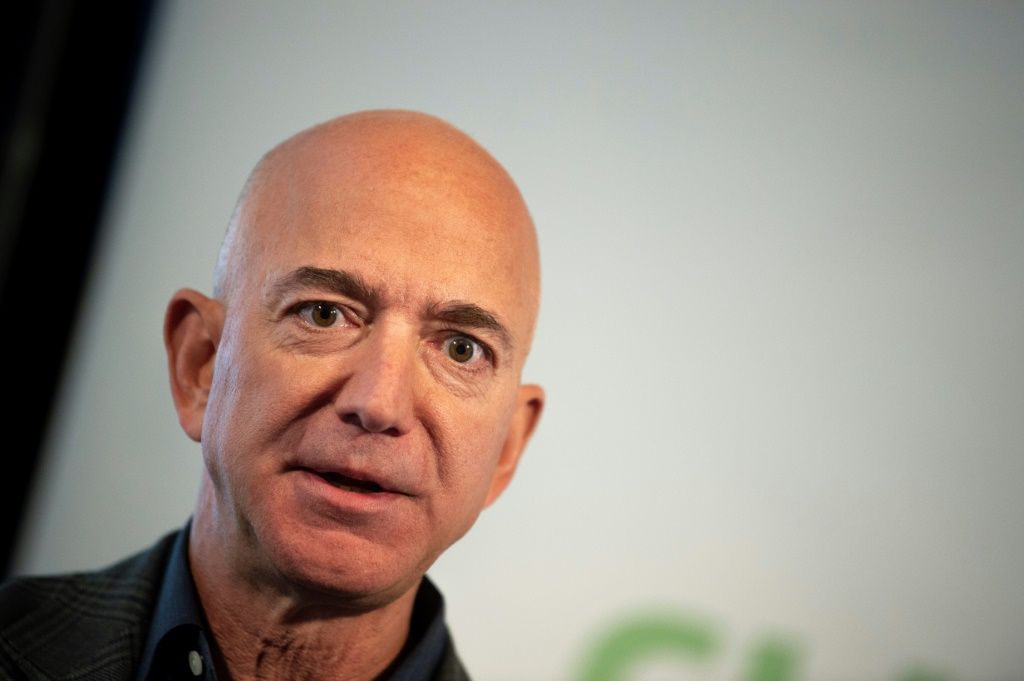
Amazon is helmed by the richest person in the world, Jeff Bezos

MIAMI — Amazon founder Jeff Bezos remains Florida’s wealthiest resident, according to Forbes’ newly updated ranking of the 400 richest people in America, with his fortune climbing to $378 billion this year even as he continues to sit behind Tesla and SpaceX chief executive Elon Musk atop the overall national list.

Forbes placed Bezos at No. 2 nationally on its annual list, unveiled this week, while Musk held the top spot for the fifth consecutive year. Bezos briefly reclaimed the title of the world’s wealthiest person on Monday, according to real-time wealth tracking, even as Forbes’ own annual snapshot, based on stock prices and exchange rates as of early September, kept him in second place behind Musk on the formal published ranking. Musk’s net worth on this year’s list reached $908 billion, the highest figure ever recorded in the Forbes 400’s history, giving him a lead over Bezos of more than $500 billion.

Bezos’ net worth has grown substantially over the past year. Last year, Forbes valued his fortune at $241 billion; this year’s updated figure of $378 billion represents an increase of well over $100 billion, reflecting continued strength in Amazon’s stock alongside gains tied to his other business interests.

Nearly three years have now passed since Bezos first announced plans to leave Seattle, the city long associated with Amazon’s headquarters, in favor of a new home in Florida. He announced the move in November 2023 on Instagram, saying at the time that he wanted to live closer to his parents, who had relocated back to Florida. Bezos has continued to maintain ties to the state’s business and civic landscape since making the move, including through his space exploration venture Blue Origin, which operates out of Cape Canaveral on Florida’s Space Coast.

Advertisement

Bezos was not the only notable Florida billionaire to appear prominently on this year’s Forbes list. Jacksonville Jaguars owner Shad Khan ranked as Florida’s No. 8 wealthiest resident, with a net worth of $16.5 billion, placing him at No. 70 on the overall national ranking of America’s richest individuals.

President Donald Trump also appeared among the billionaires included on this year’s Forbes 400, with a net worth of $7 billion, placing him among a group of 48 individuals on the list who share that same valuation, according to Forbes’ rankings.

This year’s Forbes 400 list overall reflected record levels of wealth concentration among America’s richest individuals. The 400 people included on the list are collectively worth $8 trillion, an increase of $1.4 trillion from the prior year’s total, according to Forbes. The minimum net worth required to qualify for inclusion also reached a new high this year, climbing to $4.4 billion, up $600 million from the previous year’s cutoff.

Forbes has compiled and published the list annually since it was first launched by Malcolm Forbes in 1982, using it as what the publication describes as the definitive ranking of the wealthiest individuals in the United States. This year marked the list’s 45th annual edition.

Advertisement

Bezos’ continued position as Florida’s richest resident underscores how significantly his relocation has reshaped the state’s own internal wealth rankings since his 2023 move. Florida has increasingly become a preferred destination for high-net-worth individuals relocating from other states in recent years, drawn in part by the state’s lack of a personal income tax, and Bezos’ continued residency in the state, combined with his rising net worth, has kept him firmly established at the top of Florida’s own list of resident billionaires for a second consecutive year.

Beyond his position on the Forbes list, Bezos has continued to expand his business interests since relocating to Florida. Blue Origin has remained active in the commercial space sector, competing alongside Musk’s SpaceX and other private space companies for both government and commercial launch contracts. Amazon, the company Bezos founded in 1994 and led as chief executive until stepping down from that role in 2021, has also continued to post strong financial results, a factor that has directly supported the growth in Bezos’ overall net worth reflected in this year’s Forbes ranking, given that a substantial portion of his fortune remains tied to his continued ownership stake in the company.

The gap between Bezos and Musk atop the national rankings has widened considerably over the past year, even as Bezos’ own fortune has grown substantially in absolute terms. That dynamic reflects the outsized scale of gains Musk has recorded across his various business ventures, including Tesla, SpaceX and his newer AI venture xAI, over the same period, a pace of wealth accumulation that has left even the world’s second-richest individual trailing by an increasingly large margin.

With Forbes’ list now published for the year, attention is likely to turn toward how the fortunes of both Bezos and Musk, along with the rest of the country’s wealthiest individuals, continue to evolve over the coming months, particularly given the substantial role that publicly traded stock holdings play in determining the rankings from one year to the next, leaving even the list’s most dominant figures subject to significant swings in net worth tied to broader market conditions.

Advertisement
Continue Reading

Business

Warsh’s Fed expected to hike rates 25bp as dot plot takes center stage

Published

on


Warsh’s Fed expected to hike rates 25bp as dot plot takes center stage

Continue Reading

Trending

Copyright © 2025