

Business
South Korea says can deter threats if US weapons redeployed to Middle East





In a circular issued on March 10, the exchange said the move follows directions from the Income Tax Department, which flagged instances where excess STT collected by some market intermediaries had not been remitted to the government account.
STT is a tax levied on transactions executed on recognised stock exchanges and is collected by brokers at the time of trading before being deposited with the government.
According to the circular, the Joint Commissioner of Income Tax, Range 7(1), wrote to the exchange on March 5, advising it to draw attention to the issue and seek details from members who may have retained excess STT.
Following the instruction, NSE has asked all members to furnish details of such excess STT collected and retained with them for FY24 and preceding years. These details must be submitted directly to the exchange.

The exchange has also instructed brokers to remit any excess STT collected along with interest calculated at 1% for every month of delay. The funds must be paid to NSE immediately, after which the exchange will deposit the amount into the government account.
Members have been asked to comply with the directive within seven days from the publication of the circular.Also read | Everyone selling IT stocks after record crash, but this Rs 1.3 lakh crore mutual fund doing the exact opposite
The communication is a continuation of an earlier circular issued on March 19, 2025, which dealt with excess STT retained by members for FY23 and earlier years.
STT forms an important part of the tax framework governing equity and derivatives trading in India. The levy is applied across a range of market transactions including equity delivery trades, intra-day equity trades and derivatives contracts.
While brokers are responsible for collecting the tax from investors at the time of trade execution, they are required to deposit the amount with the government through the exchange system. Any delay or discrepancy in remittance can attract penalties or interest liabilities under tax rules.
NSE said members seeking clarification on the circular can contact its taxation department.
(Disclaimer: Recommendations, suggestions, views and opinions given by the experts are their own. These do not represent the views of The Economic Times)
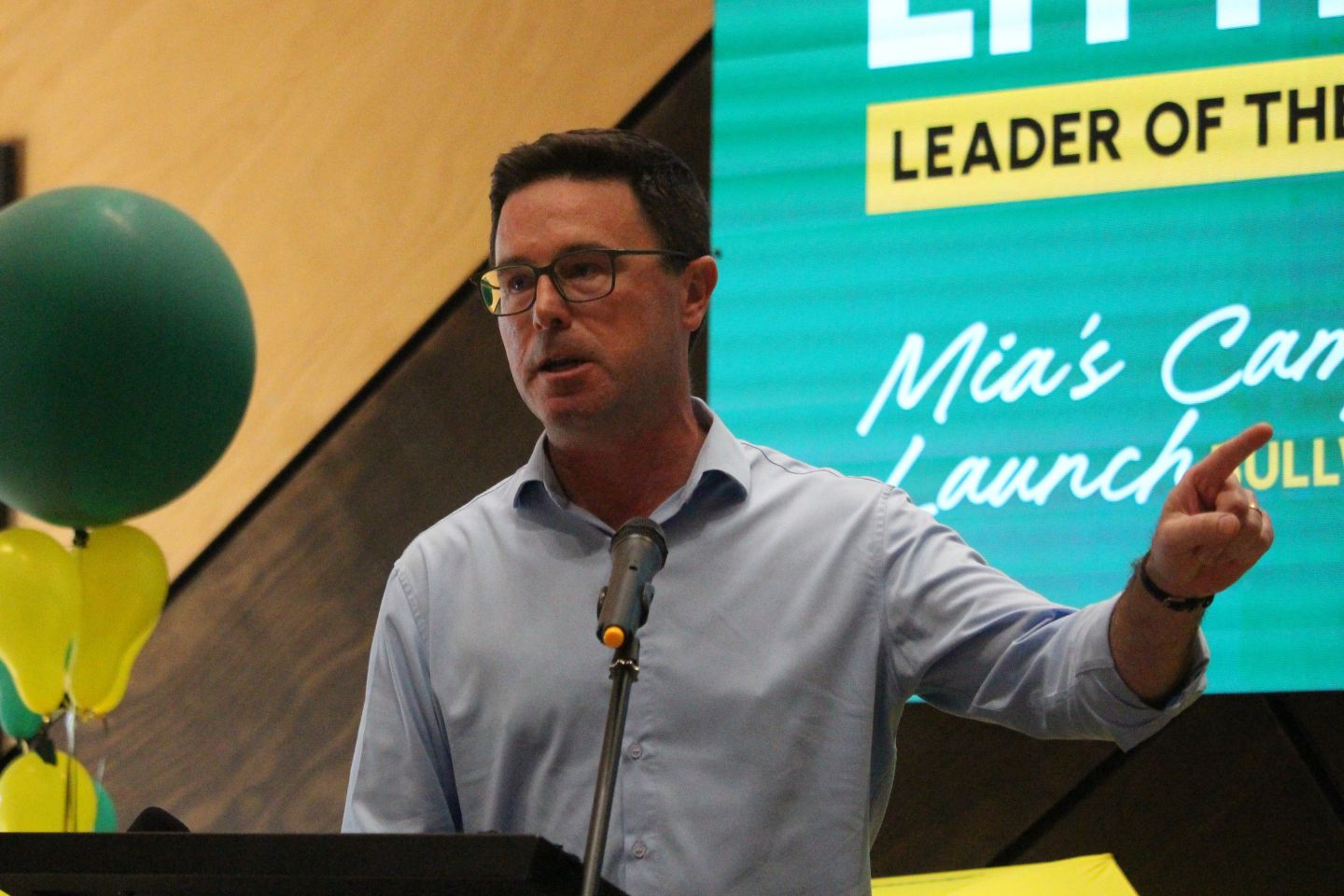
David Littleproud has announced his resignation as leader of The Nationals Party of Australia, saying he no longer has the energy to do the job.

The headquarters of the U.S. Food and Drug Administration in Silver Spring, Maryland, Nov. 4, 2009.
Jason Reed | Reuters
The Food and Drug Administration on Tuesday approved a decades-old prescription vitamin called leucovorin as the first treatment for a rare genetic disorder in certain adults and children.
The move comes months after the Trump administration touted leucovorin as a potential therapy for a broader group of patients with autism spectrum disorder symptoms. The claim sparked skepticism among some in the medical and research community, but fueled excitement among families, spiking prescriptions of the drug in the U.S.
One FDA official told reporters Monday that “we don’t have sufficient data to say that we could establish efficacy for autism more broadly” but said the agency is open to interest from companies in studying leucovorin in the autism population.
The medication, also referred to as folinic acid, is a synthetic form of vitamin B9 that has been used to treat the toxic side effects of chemotherapy. Just a handful of small trials have suggested that leucovorin could be effective as an off-label treatment for children with autism, and some families have reported that it helped their nonverbal kids develop more language and social skills.
FDA officials, who requested anonymity to discuss the decision, told reporters Monday that they started with a broad review of leucovorin as an autism treatment before narrowing its approval to a smaller population with cerebral folate deficiency, a rare genetic mutation that prevents folate – a key vitamin – from properly reaching the brain.
The condition shares overlapping features with autism, typically develops in young children under age 2 and can cause severe developmental delays, seizures, a lack of muscle control and other serious neurological complications.
The officials said the FDA found that using leucovorin in patients with that condition produced the “highest quality data” to support an expanded approval, which will apply to both generic versions of the drug and GSK’s old branded medication, Wellcovorin.
“That was the data where we saw the largest effect sizes,” one FDA official said on the call. “So we narrowed in on that population, just because we felt like that was the strongest both scientific rationale and also the largest treatment effects that could be used to then overcome some of the limitations in the data sources.”
The approval was based on a systematic review of published literature on the area, including patient case reports, but not a randomized controlled clinical trial. The same official acknowledged there can be biases with systematic reviews, but emphasized that the treatment effects were so large that they outweighed those concerns.
The FDA is encouraging existing manufacturers of leucovorin to increase production to match higher demand for the drug, the officials added. While GSK originally marketed the drug from 1983 until 1997, the company said in September that it has no plans to relaunch and manufacture the product itself.
In a release Tuesday, Dr. Tracy Beth Hoeg, acting director of the FDA’s Center for Drug Evaluation and Research, said the approval demonstrates the FDA’s commitment to “rapidly identifying effective treatments for ultra rare diseases while maintaining the same evidentiary standards for approval.”
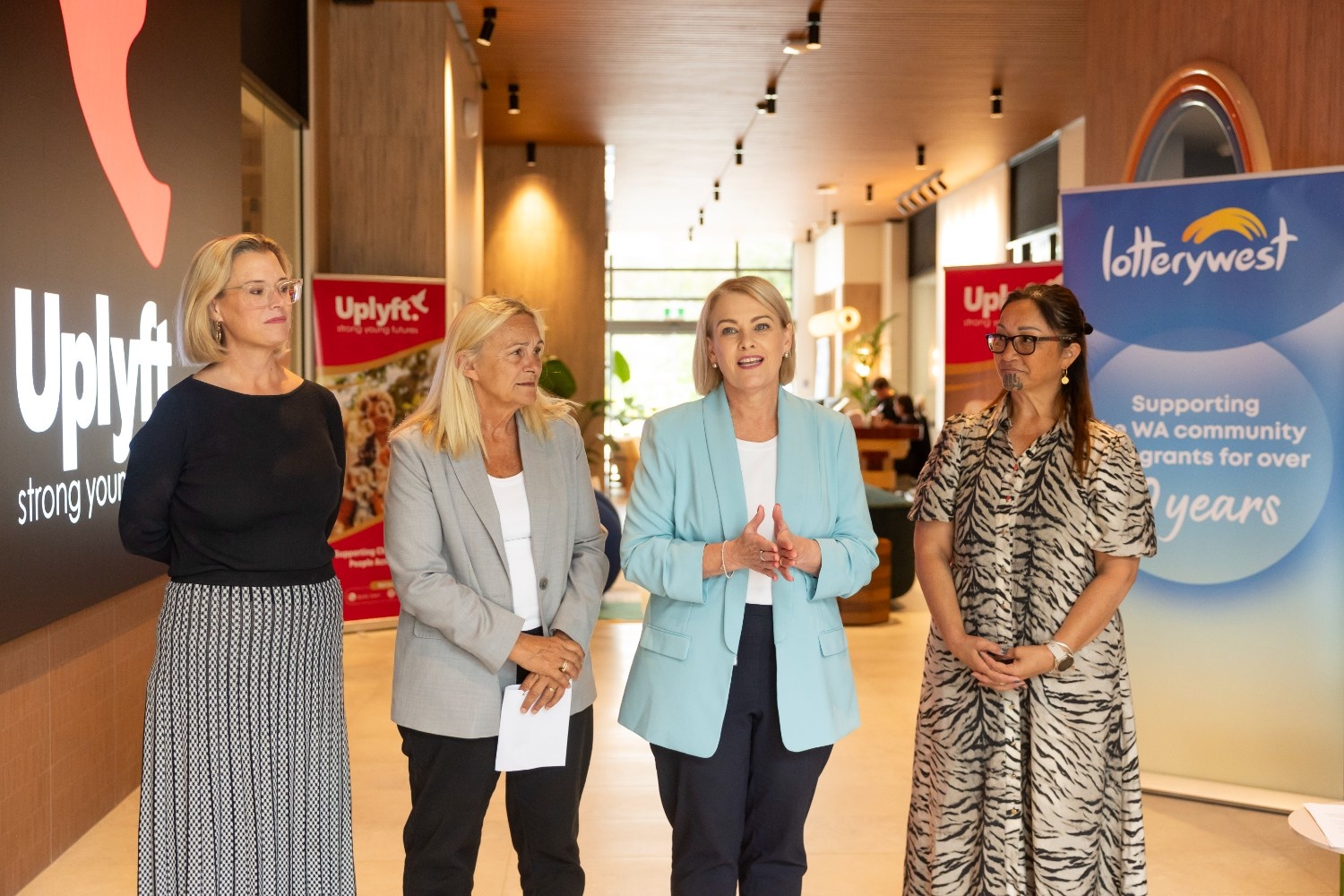
The children and young people services provider of more than 80 years announced its rebrand to Uplyft while opening the facility it purchased in 2024.
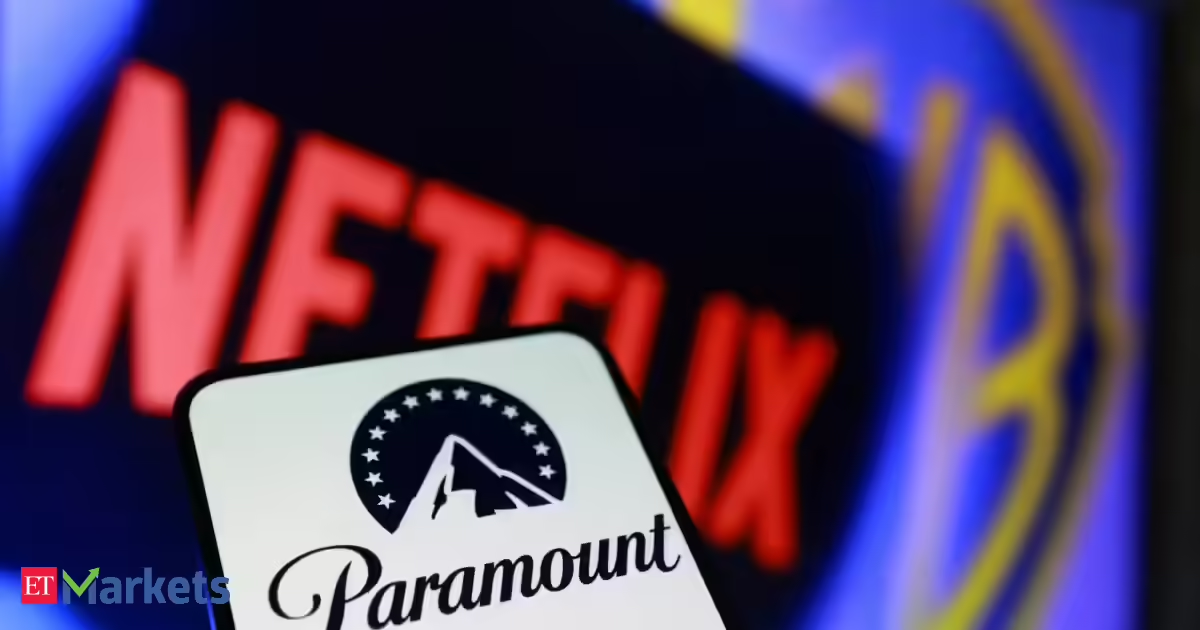
Trump bought more than $500,000 of Netflix’s bonds in two transactions on December 12 and December 16 and another more than $600,000 across two more trades on January 2 and 20, the disclosures show. The White House disclosed a range, rather than exact amounts, of between just over $1.1 million and $2.25 million.
The purchases came as the Republican president and his regulatory officials talked Netflix down in the press, calling into question whether the deal would withstand antitrust scrutiny and pressuring Netflix to fire board member Susan Rice, a onetime aide to Democratic former President Barack Obama.
It’s unclear whether he made or lost money on Netflix’s bonds, which paid an interest rate of 5.375% and are due in November 2029, since the filing doesn’t disclose if or when he sold the bonds.
Trump, like other U.S. presidents, is exempt from conflict-of-interest laws that prohibit other executive branch officials from investing in companies with business before the government. He is believed to have bought the bonds through a trust managed by his kids.
“President Trump’s assets are in a trust managed by his children,” said White House spokeswoman Anna Kelly. “There are no conflicts of interest.”
The deal, which would have left the combined company with about $85 billion in debt, immediately put pressure on Netflix’s bonds. They were trading at $1.03 and $1.04 on the dollar when he bought them on December 12 and 16 and at $1.04 and $1.03 on the dollar for his second round of purchases on January 2 and 20, according to data compiled by LSEG. They were recently trading at $1.04 on the dollar on February 26, the day before Netflix withdrew its bid for Warner Bros, but have since moved back to $1.03 on the dollar as of Friday.
Trump also purchased between $500,002 and $1 million in Warner Bros bonds in two trades on December 12 and December 16 that were trading at 91.75 cents and 92 cents on the dollar when they were purchased and are now worth 95 cents on every dollar. If he held on to those bonds, they would be in the money now.
Trump started calling into question the viability of the merger with Netflix days after it was announced on December 5, telling reporters the concentration of market power “could be a problem.”
Paramount, which is run by the son of Trump ally and Republican megadonor Larry Ellison, took its hostile takeover public on December 8, kicking off a bidding war between the two companies. Ellison personally guaranteed more than $40 billion, backed by his shares in Oracle, to help seal the deal.
Netflix bowed out of the bidding after Paramount came in with a winning $110 billion offer about two weeks ago. The Paramount transaction will be backed by $39 billion in new debt provided by Bank of America, Citigroup and Apollo, according to the companies’ Feb. 27 announcement.
The latest U.S. Office of Government Ethics disclosures, dated February 27, were posted online last week.
Trump, a real estate investor, has reported more than $1 billion in assets on prior forms. He maintains business interests spanning crypto, golf clubs and other licensing deals. Trump’s investments in companies that his administration oversees could raise ethical concerns.


I run my own boutique law firm, focusing on investment transactions and disputes. Trained at top U.S. law schools and leading Wall Street law firms, I write here primarily to sharpen my own thinking and to engage with my followers. I endeavor to respond to any substantive comments on my articles. My goal is to identify potential 5–10 baggers at the small- and mid-cap stage through careful fundamental analysis of businesses, financials, and valuations. I focus on early-commercial-stage life sciences companies, insurers, homebuilders, and select consumer-facing businesses. If an article of mine fails to make an intelligent 8th grader understand its thesis, I will skip that opportunity.
Analyst’s Disclosure: I/we have a beneficial long position in the shares of FND either through stock ownership, options, or other derivatives. I wrote this article myself, and it expresses my own opinions. I am not receiving compensation for it (other than from Seeking Alpha). I have no business relationship with any company whose stock is mentioned in this article.
Seeking Alpha’s Disclosure: Past performance is no guarantee of future results. No recommendation or advice is being given as to whether any investment is suitable for a particular investor. Any views or opinions expressed above may not reflect those of Seeking Alpha as a whole. Seeking Alpha is not a licensed securities dealer, broker or US investment adviser or investment bank. Our analysts are third party authors that include both professional investors and individual investors who may not be licensed or certified by any institute or regulatory body.
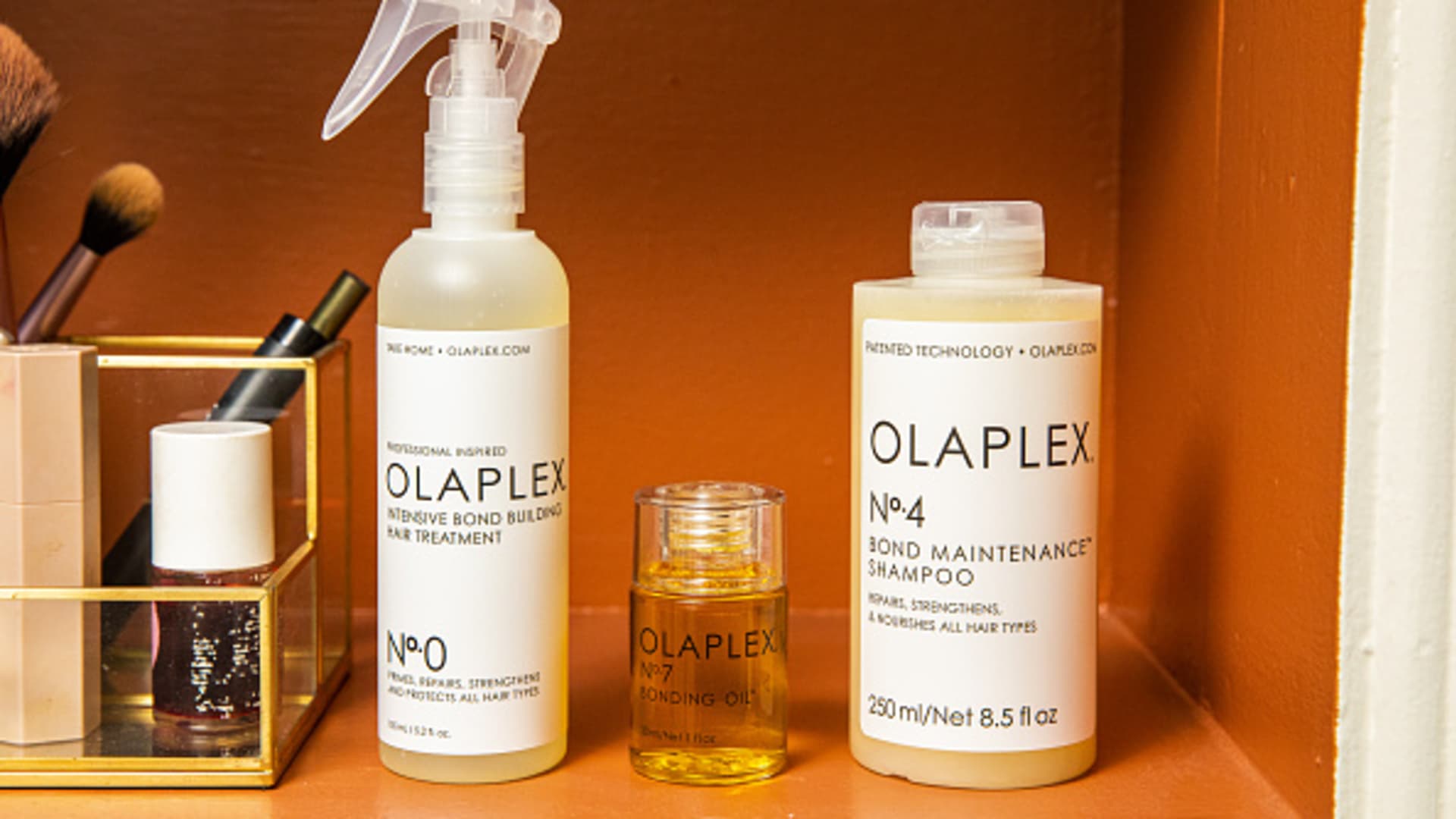

When prestige hair care brand Olaplex first debuted on the Nasdaq in late 2021, it surpassed pricing predictions and gained momentum fast.
The company opened at $25 per share, an increase from its initial public offering pricing estimates. It was part of a broader group of retailers that went public that year amid an IPO boom. Olaplex hit its all-time high just a few months after its public debut, reaching a price of $29.41 on Jan. 3, 2022.
But that run didn’t last long.
Since its IPO, Olaplex’s stock performance has plunged drastically, losing nearly 95% of its value. The S&P 500, meanwhile, has gained more than 50% over the same period. Now, the company is hoping to turn its performance around.
“We are encouraged by the momentum we are seeing as we work to build a business that lives up to our breakthrough science, and we look forward to the journey ahead,” CEO Amanda Baldwin told CNBC in an exclusive statement.
Olaplex declined to comment to CNBC beyond that statement.
The company has a range of products, sold directly to consumers and to professional salons, that use a bond-building technology to strengthen and restore hair.
Its stock began sinking due to weakened demand and regulatory challenges in 2022, but some of Olaplex’s main issues were borne out of an early 2023 lawsuit filed against the company that accused the brand of using harmful ingredients. It involved nearly 30 women who alleged that the products caused hair loss and hair damage, citing an ingredient called lilial.
The company aggressively denied those claims and said it had removed the lilial ingredient from all of its products, but consumers on social media continued to attack the brand, its formulations and the alleged side effects.
Though the case was dismissed later that year, the allegations left lasting damage on the brand’s reputation. Over the course of that year, its stock sank more than 50% – and it never recovered. Shares of Olaplex are now trading at less than $1.50, with a market cap of roughly $1 billion.
In fiscal year 2023, Olaplex said its net sales decreased 47.8% in the U.S. compared with the previous year, while its net income sank 74.8%.
In the meantime, the hair care industry added new players that fought for Olaplex’s falling market share. Companies like K18, Ouai and Redken have crowded the playing field, gaining popularity while Olaplex battled social media backlash.
In late 2023, Olaplex recruited Baldwin, the former CEO of beauty brand Supergoop, to helm the company and turn around its brand strategy.
At the time, Baldwin said she saw “tremendous opportunity” to help the brand by deepening engagement with its customer base, innovating new products and sharpening its press strategy.
“Olaplex stands apart as a category creator redefining what is possible through the combination of beauty and science,” Baldwin said in a statement in late 2023.
Late last month, the company launched a new product, a pre-shampoo treatment intended to revitalize hair that marked the company’s next foray into advancing its bond-building technology.
In its fourth-quarter earnings report last week, Olaplex reported a 4.3% increase in net sales compared with the fourth quarter of 2024, to $105.1 million. But for the full 2025 fiscal year, net sales increased just 0.1%. Shares of the company sank more than 20% after the report.
Reviving the brand
Olaplex didn’t always have so many challenges.
Celebrity hair stylist Tracey Cunningham has been with the brand since before it officially launched, first connecting with Olaplex founder Dean Christal in 2013 to begin testing products.
Cunningham, who specializes in hair coloring, said she began with testing the product on one red-haired client. By the end of the day, her opinion was clear.
“I called Dean Christal at the end of the day, and I said, ‘Dean, I just want to tell you something — you just gave hair colorists super powers. You are going to change the game with hair color,’” she said.
Cunningham began using Olaplex on practically all of her customers at her Los Angeles salon, finding that it strengthened the hair and held color well. Over the course of the evolution of the brand, she said she’s seen its technology and formula improve.
Still, not all consumers have had the same experience with the brand, and it remains unclear whether Olaplex will be able to bounce back from its fall from grace.
Analysts from JPMorgan Chase aren’t sure that Olaplex is reaching an inflection point. In a January note, the analysts wrote that they’re holding a bearish outlook for the brand.
“We believe the company will face a challenging few quarters ahead working off a significantly lower normalized base with sales performance in FY25,” they wrote. “The increased competition, generally stressed consumers and a challenging operating backdrop will likely remain significant headwinds over the next several months.”
A bottle of Olaplex N.4 Bond Maintenance Shampoo arranged in Denver, Colorado, US, on Thursday, Dec. 8, 2022.
David Williams | Bloomberg | Getty Images
But Olaplex is singing a different tune.
On a third-quarter earnings call in November, Baldwin said research conducted when she first joined the company indicated that the brand was seen by consumers as “effective, yet cold and clinical.”
“According to the latest brand health tracker, which we fielded at the end of the quarter versus a baseline taken before we relaunched the brand, Olaplex is now perceived as more approachable and alluring while retaining its core identity as a scientific and iconic brand,” she said.
Susan Anderson, an analyst at Canaccord Genuity Global Capital Markets who has covered Olaplex for nearly all of its public history, said stabilizing sales, product innovation and distance from the lawsuit fallout are showing encouraging signs for the company’s progress.
“The negatives are just getting much less,” Anderson told CNBC.
She noted that the company’s challenges have been compounded by negative perception and increasing competitors, but she believes customers have largely “moved beyond” the hair loss allegations.
And hair and scalp health continues to be a buzzy category within hair care, she added.
“It’s one of the hotter areas of beauty,” Anderson said. “We don’t really see that going away anytime soon, and I do think it presents opportunities for Olaplex to continue to roll out new products.”
In a December survey, Canaccord found that Olaplex was the top prestige hair brand for consumers ages 18 to 29.
There have been recent green shoots for the company, too. In January, reports that Olaplex attracted a takeover offer from Germany-based company Henkel sent the stock surging more than 30%.
Olaplex declined to respond to the report.
“I’ve always thought this is definitely a takeout candidate, the valuation is attractive here,” Anderson said. “Obviously, it’s still a great brand that has a loyal following, so I guess I was not surprised at all.”

Fabletics denim.
Courtesy: Fabletics
Athletic apparel maker Fabletics is launching its first denim collection, signaling the once hot athleisure category is starting to slow down, the company announced Tuesday.
The collection, launching online and in select stores on Thursday, will include 11 styles and seven washes across both women’s and men’s. Items will be priced between $79.95 and $174.95, depending on whether shoppers are members of Fabletics’ subscription program.
“We’ve had over a million of our customers tell us that if Fabletics offered denim, they’d be highly interested in it, and that’s really what got us started on our journey of expanding into the denim category,” Fabletics co-founder and CEO Adam Goldenberg told CNBC in an interview. “We do believe denim is on an upswing. We’ve seen that, you know, we started [looking into denim] over two years ago, so it’s the right time.”
Fabletics, which earned more than $1 billion in revenue last year, is expanding into denim as consumer preferences change. The “soft” type of dressing that became popular during the pandemic, featuring comfortable joggers, sports bras and hoodies, has fallen out of favor with some shoppers.
Instead, as hybrid work begins to fade, many consumers are choosing to dress back up again and are opting for denim over leggings as the casual staple that works both on the weekends and at the office.
Fabletics denim.
Courtesy: Fabletics
While the athleisure market is still expanding, that rate of growth has wobbled in North America, data from market intelligence company Euromonitor International show.
The sports apparel market is projected to grow 2.3% in North America in 2026 from 2025, down from 3.1% between 2023 and 2024. Meanwhile, the denim market is expected to grow 2.1% this year, up from 0.7% between 2023 and 2024.
Globally, the athleisure market grew 2% last year while the denim market grew 4%, according to separate figures from GlobalData.
“What we found coming out of the pandemic is like, comforts become king,” said Goldenberg. “So even now, as consumers are, I would say, dressing up more they’re still wanting to do it in a way that feels good and is more comfortable, right? And we heard that very loudly from our customers when we were developing denim.”
The U.S. has fallen in and out of love with denim for decades, which has plagued fashion and led major apparel companies like Levi Strauss, American Eagle and Gap to structure their businesses so they’re not as exposed to changing styles. Each company is a market leader in denim, but they also have their own athleisure brands, which shields them from shifts in fashion.

Changing trends have proven more difficult for niche players like Lululemon, which boomed during the pandemic and is now falling behind as denim reigns supreme again.
Lululemon has worked for several years to expand outside of its core yoga pant assortment into more lifestyle categories, including outerwear, T-shirts and made for work trousers, as fashion preferences shifted. The move has allowed Lululemon to increase its total addressable market, but some critics have said it’s alienated Lululemon’s core customers and contributed to a slowdown in growth in the retailer’s core Americas market.
Nike‘s former CEO John Donahoe grew the retailer into a roughly $50 billion brand by focusing on lifestyle and streetwear styles. While the strategy briefly led to growth, it ultimately contributed to a decline in market share because it distracted the company from its core, performance assortment. Now, Nike’s new CEO Elliott Hill is working to refocus the brand on sports to win back that core, athlete consumer.
Goldenberg disagreed that Lululemon’s challenges came from expanding into new categories and instead said Fabletics, along with up and coming private athleisure brands Alo Yoga and Vuori, are taking market share from incumbents. He also said Fabletics’ expansion isn’t coming at the expense of innovation in its core athleisure products, either.
“All these category expansions need to be ‘and’ and not ‘and or’ right?” said Goldenberg. “So we need to be doubling and tripling down on our innovation and activewear while we make sure that we’re launching denim in a way that, like, is truly the best product out there.”
He added that Fabletics has already proven it can successfully scale into new categories, which has helped the company get ahead of schedule two years into its five-year plan of doubling revenue and quadrupling profits. In 2020, it launched a men’s category, which is now more than a $300 million business, and its scrubs line, which has grown to $75 million in a little over two years.
Goldenberg said activewear is still Fabletics’ main priority, but category expansion will be critical in winning more sales from its current customers and acquiring new shoppers.
“I’ll give you scrubs as an example,” said Goldenberg. “We’re now bringing in thousands of new customers a month into the Fabletics family through them. First purchasing scrubs, but within 90 days, well over 50% of them have also purchased activewear.”
Business
Legend Biotech Corporation 2025 Q4 – Results – Earnings Call Presentation (NASDAQ:LEGN) 2026-03-10


Seeking Alpha’s transcripts team is responsible for the development of all of our transcript-related projects. We currently publish thousands of quarterly earnings calls per quarter on our site and are continuing to grow and expand our coverage. The purpose of this profile is to allow us to share with our readers new transcript-related developments. Thanks, SA Transcripts Team

The feature allows both women riders and drivers to be matched with other women for trips on the ride-sharing app.

The Dinosaurs: What Do Paleontologists Think Of Netflix’s Hit Series?

Doneraile commemorating the birth of steeplechasing

AI fake news detectors are not as good as you think


-
Business4 days ago
Form 8K Entergy Mississippi LLC For: 6 March
-

 Fashion4 days ago
Weekend Open Thread: Ann Taylor
-

 News Videos1 day ago
10th Algebra | Financial Planning | Question Bank Solution | Board Exam 2026
-

 Crypto World22 hours ago
Paradigm, a16z, Winklevoss Capital, Balaji Srinivasan among investors in ZODL
-

 Tech5 days ago
Bitwarden adds support for passkey login on Windows 11
-
 Sports5 days ago
499 runs and 34 sixes later, India beat England to enter T20 World Cup final | Cricket News
-

 Sports3 days ago
Three share 2-shot lead entering final round in Hong Kong
-

 Sports2 days ago
Braveheart Lakshya downs Lai in epic battle to enter All England Open final | Other Sports News
-

 Business7 days ago
Guthrie Disappearance Enters Fifth Week as Family Visits Memorial
-

 Politics4 days ago
Top Mamdani aide takes progressive project to the UK
-

 NewsBeat5 days ago
Piccadilly Circus just unveiled ‘London’s newest tourist attraction’ and it only costs 80p to enter
-

 Entertainment3 days ago
Hailey Bieber Poses For Sexy Selfies In New Luscious Lip Thirst Traps
-

 Business2 days ago
Search for Nancy Guthrie Enters 37th Day as FBI Probes Wi-Fi Jammer Theory
-
 NewsBeat13 hours ago
Pagazzi Lighting enters administration as 70 jobs lost and 11 stores close across Scotland
-

 Tech23 hours ago
Despite challenges, Ireland sixth in EU for board gender diversity
-

 Crypto World6 days ago
New Crypto Mutuum Finance (MUTM) Reports V1 Protocol Progress as Roadmap Enters Phase 3
-

 Tech5 days ago
ACIP To Discuss COVID ‘Vaccine Injuries’ Next Month, Despite That Not Being In Its Purview
-
Entertainment6 days ago
Harry Styles Has ‘Struggled’ to Discuss Liam Payne’s Death
-

 Business18 hours ago
Search Enters 39th Day with FBI Tip Line Developments and No Major Breakthroughs
-
 NewsBeat5 days ago
Good Morning Britain fans delighted as Welsh presenter returns to host ITV show