

Business
S&P/ASX 200 Index Rebounds Modestly to 8,379 in Sydney Trading on March 24, 2026


SYDNEY — The S&P/ASX 200 index rose 0.16% to close at 8,379.40 on Tuesday, March 24, 2026, clawing back some ground after a volatile start to the week as gains in mining and resources stocks offset weakness in financials and broader concerns over escalating tensions in the Middle East.

The benchmark opened at 8,365.90 — its previous close — and traded in a range between 8,365.90 and 8,504.60 before finishing the session up 13.50 points. Volume reached approximately 893 million shares. The modest rebound followed a 0.74% decline on Monday that left the index at 8,365.90, its lowest level in recent weeks amid persistent selling pressure.
The S&P/ASX 200, which tracks the 200 largest companies listed on the Australian Securities Exchange by float-adjusted market capitalization, has now fallen about 8.1% over the past month and sits roughly 9% below its all-time high of 9,202.90 reached in February 2026. Year-to-date in 2026, the index is down around 3.8%, though it remains up about 5.6% over the past 12 months.
Mining and resources shares led Tuesday’s gains, buoyed by a modest recovery in iron ore and other commodity prices. BHP Group rose about 3.4%, Rio Tinto advanced 3%, and Fortescue gained roughly 3.7%. The resources sector as a whole climbed more than 2% in early trading, providing a counterweight to declines in the heavily weighted financials sector, where Commonwealth Bank of Australia, Westpac and National Australia Bank each fell around 1%.
The rebound came against a backdrop of global uncertainty stemming from the ongoing crisis in the Strait of Hormuz and U.S.-Iran tensions. Washington delayed planned strikes on Iranian energy infrastructure by five days while citing diplomatic talks, though Tehran denied any negotiations and accused the U.S. of spreading misleading information. Any prolonged disruption to oil flows through the strait could ripple through energy markets and affect Australian resource exporters.
Domestically, Australian economic data released Tuesday showed mixed signals. The manufacturing PMI slipped to a five-month low of 50.1 in March, while the services PMI contracted for the first time since January 2024, registering 46.6 and raising concerns about slowing activity. The Reserve Bank of Australia’s recent rate hike continues to weigh on interest-rate-sensitive sectors such as real estate and consumer discretionary stocks.
The March 2026 quarterly rebalance of the S&P/ASX 200, effective from March 23, added three new constituents — Predictive Discovery Limited, SRG Global Limited and Vulcan Energy Resources Limited — while removing Catapult Sports Limited, DigiCo Infrastructure REIT and E Bos Group Limited. The changes had limited immediate impact on overall index performance but reflected ongoing shifts in Australia’s corporate landscape toward mining and industrial names.
Analysts remain divided on the near-term outlook. Some point to the index’s recent oversold conditions and attractive valuations in the resources sector as reasons for potential stabilization. Others warn that persistent geopolitical risks, combined with tighter monetary policy at home and uncertainty over U.S. Federal Reserve decisions, could keep pressure on equities.
The financials sector, which accounts for roughly one-third of the index’s weight, has been a notable underperformer in recent sessions as higher interest rates squeeze margins and dampen lending growth. In contrast, energy and materials stocks have shown resilience on commodity price swings, though they remain vulnerable to any escalation in global trade disruptions.
Broader market sentiment was also influenced by developments in major trading partners. China, Australia’s largest export market, continues to navigate its own economic challenges, while a newly sealed free-trade agreement between Australia and the European Union — finalized after nearly a decade of negotiations — offered a long-term positive for diversified trade ties.
The S&P/ASX 200’s performance this year stands in contrast to its strong finish to 2025, when it closed above 8,700. The pullback has been driven by a combination of profit-taking after February’s record levels, higher borrowing costs and external shocks, including Middle East conflicts that have rattled commodity and equity markets worldwide.
Technical analysts note the index has now tested support near 8,300-8,400 multiple times in March. A sustained break below that zone could open the door to further declines toward 8,000, while a convincing move above 8,500 might signal the start of a recovery toward 8,700-8,900 by mid-year.
For individual investors, the current environment highlights the importance of diversification. Heavy exposure to banks or miners can amplify volatility, while more balanced portfolios incorporating healthcare, technology and consumer staples have shown relative stability.
Looking ahead, investors will watch closely for the next round of corporate earnings, particularly from major miners and banks in coming weeks. Any signs of resilient commodity demand or easing inflation pressures could support a rebound. Conversely, fresh geopolitical escalations or weaker-than-expected Australian data could prolong the recent selling.
The S&P/ASX 200 remains Australia’s most widely followed equity benchmark, serving as the underlying for numerous exchange-traded funds, futures contracts and derivatives. Its movements influence superannuation funds, retail portfolios and corporate decision-making across the country.
As trading continues in Sydney on Tuesday afternoon, the modest gain reflected bargain hunting in beaten-down resource names rather than a broad shift in sentiment. With global markets still digesting developments in the Middle East and awaiting clarity on U.S. policy, Australian equities are likely to remain sensitive to external headlines in the days ahead.
The index’s journey through early 2026 underscores the challenges facing resource-heavy economies in an uncertain geopolitical climate. Whether Tuesday’s uptick marks the beginning of stabilization or merely a temporary pause in the sell-off will depend on commodity prices, domestic data and the trajectory of international tensions.

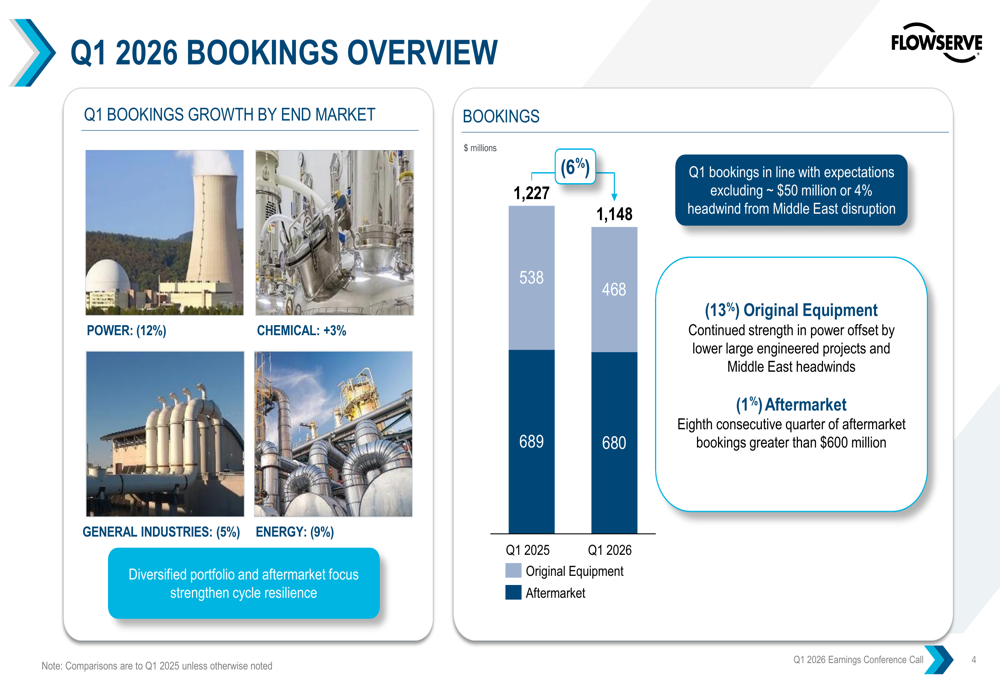
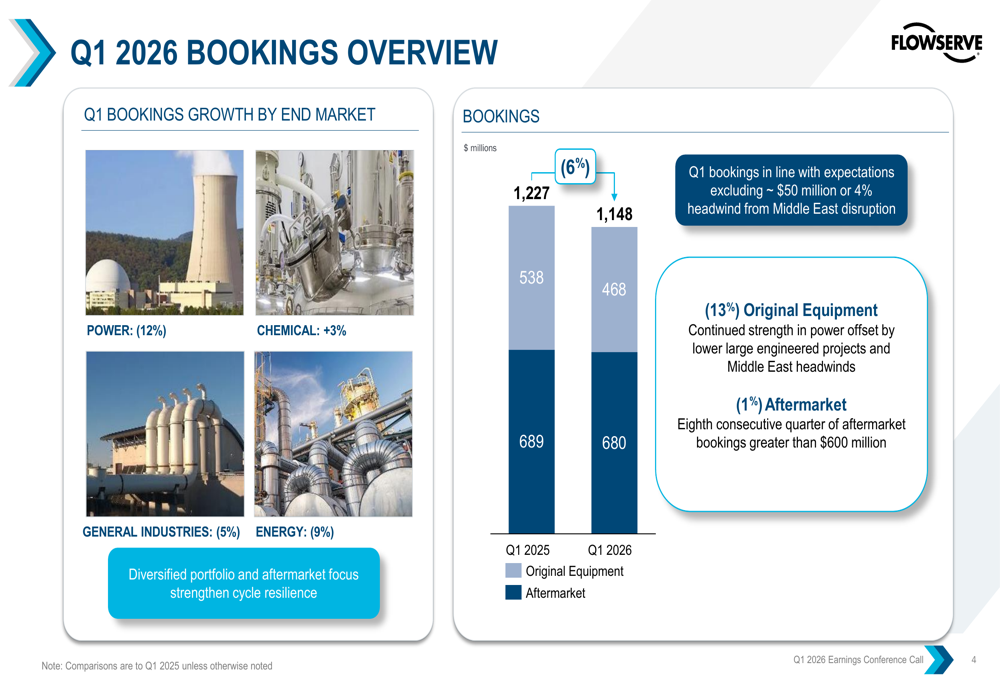
Flowserve Q1 2026 slides: margins expand despite Middle East headwinds
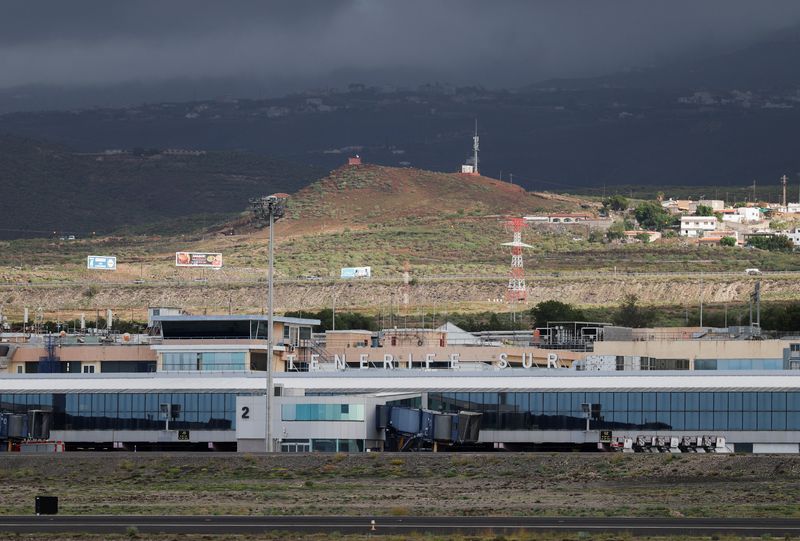

European states to send planes to evacuate citizens from hantavirus-hit cruise ship

Operator
Thank you for joining us, and welcome to the nLIGHT, Inc. First Quarter 2026 Earnings Call. [Operator Instructions]
I will now hand the conference over to John Marchetti, Vice President of Corporate Development and Head of Investor Relations. John, please go ahead.
John Marchetti
Vice President of Corporate Development & Investor Relations
Good afternoon, everyone. Thank you for joining us today to discuss nLIGHT’s first quarter 2026 Earnings Results. I’m John Marchetti, nLIGHT’s VP of Corporate Development and the Head of Investor Relations. With me on the call today are Scott Keeney, nLIGHTs Chairman and CEO; and Joe Corso, nLIGHT’s CFO.
Today’s discussion will contain forward-looking statements, including financial projections and plans for our business, some of which are beyond our control, including the risks and uncertainties described from time to time in our SEC filings. Our results may differ materially from those projected on today’s call, and we undertake no obligation to update publicly any forward-looking statement, except as required by law.
During the call, we will be discussing certain non-GAAP financial measures. We have provided reconciliations of these non-GAAP financial measures to the most directly comparable GAAP financial measures in our earnings release and in our earnings presentation, both of which can be found on the Investor Relations section of our

Earnings call transcript: Amgen Q1 2026 beats EPS forecast, stock dips
Earnings call transcript: LPL Financial Q1 2026 beats forecasts, stock dips
Business
Is Amazon Down Now? AWS Hit by Ongoing Outage as Data Center Issues Disrupt Shopping and Cloud Services
SEATTLE — Amazon.com and its cloud computing arm Amazon Web Services faced significant disruptions Thursday as a lingering data center overheating problem in Northern Virginia continued to affect customers, with many users reporting difficulties accessing the retail website, placing orders and using AWS-powered applications. While core shopping functionality has largely recovered for most users, the outage — now entering its second day — has highlighted the far-reaching impact of AWS when even a single region encounters technical difficulties.
The issues originated from elevated temperatures in a key US-East-1 data center, forcing Amazon to throttle certain services and prioritize recovery efforts. As of late Thursday, the company reported that recovery was progressing but acknowledged that full restoration could take several more hours. The outage has affected a wide range of services and third-party websites that rely on AWS infrastructure, including streaming platforms, financial apps and major online retailers.
Downdetector showed sustained spikes in user reports for both Amazon.com and AWS, with many customers complaining about slow loading times, failed checkouts and error messages when trying to access their accounts or complete purchases. While the main retail website has been partially operational, some features like personalized recommendations and rapid delivery options have been inconsistent.
Widespread Impact on Businesses and Consumers
The outage has ripple effects across the internet. Popular services hosted on AWS, including parts of Coinbase, FanDuel and various analytics platforms, experienced intermittent problems. Smaller e-commerce businesses that rely on Amazon’s infrastructure for hosting and payment processing reported lost sales and frustrated customers. For individual shoppers, the timing — during a busy pre-weekend period — added inconvenience as many tried to complete online orders.
Amazon has not released an official estimate of the financial impact, but analysts suggest the disruption could cost millions in lost revenue and damaged customer trust. This marks the latest in a series of high-profile cloud outages that have raised questions about over-reliance on single providers for critical internet infrastructure.
Amazon’s Response and Recovery Efforts
Amazon Web Services updated its Service Health Dashboard regularly, noting that engineers were working to restore normal cooling capacity and bring affected systems back online. The company emphasized that no customer data was compromised and that the issue was isolated to environmental factors within one facility. Customers with critical workloads were advised to use multi-region architectures or activate backup systems where available.
In a statement, an AWS spokesperson said, “We are making progress toward resolving the impaired instances and degraded volumes. We apologize for the inconvenience this has caused and appreciate our customers’ patience as we work to restore full service.” Service credits for affected accounts are expected, though formal details have not yet been announced.
Broader Context for Cloud Reliability
The incident underscores ongoing debates about cloud concentration risks. US-East-1 in Northern Virginia remains one of the most heavily used AWS regions globally, powering a significant portion of the internet’s infrastructure. While AWS offers multiple availability zones for redundancy, many customers still concentrate workloads in this popular region for latency and cost reasons.
Competitors Microsoft Azure and Google Cloud have used the opportunity to highlight their own multi-region capabilities, though all major providers have experienced similar regional outages in the past. The event may prompt more organizations to review their disaster recovery and business continuity plans, especially those running mission-critical applications.
Advice for Affected Users
For shoppers facing issues on Amazon.com:
- Try refreshing the page or using a different browser/device.
- Clear cache and cookies or attempt an incognito window.
- Check the Amazon app separately, as mobile and desktop experiences can vary.
- Use alternative retailers temporarily if urgent purchases are needed.
- Monitor the official AWS Health Dashboard for updates.
Business customers using AWS services should activate failover protocols, monitor dashboards closely and document any business impact for potential compensation claims.
Long-Term Implications
As Amazon works toward full restoration, attention will turn to any post-incident review and potential infrastructure improvements. The company has a strong track record of learning from such events to enhance overall resilience. However, repeated high-profile outages could push some enterprise customers toward multi-cloud strategies or increased investment in on-premises backups.
For individual consumers, the outage serves as a reminder of how central Amazon has become to daily life — from shopping and streaming to cloud services that power countless websites and apps. While disruptions are relatively rare given the scale of AWS operations, even brief outages can cause significant inconvenience in our increasingly digital world.
As of Thursday evening, partial functionality had returned for most users, though some lingering issues persisted in specific services. Amazon is expected to provide a more detailed update once systems fully stabilize. In the meantime, customers are advised to remain patient and use alternative options where necessary.
The Amazon outage, while disruptive, highlights both the platform’s massive popularity and the challenges of maintaining perfect uptime at global scale. As demand for cloud services and online shopping continues to grow, reliability will remain a critical factor determining which providers earn long-term customer loyalty.
Operator
Good morning, ladies and gentlemen, and welcome to the Genco Shipping & Trading Limited First Quarter 2026 Earnings Conference Call and Presentation. Before we begin, please note that there will be a slide presentation accompanying today’s conference call. That presentation can be obtained from Genco’s website at www.gencoshipping.com.
To inform everyone, today’s conference is being recorded and is now being webcast at the company’s website, www.gencoshipping.com [Operator Instructions]. A webcast replay will also be available via link provided in today’s press release as well as on the company’s website.
At this time, I will now turn the conference over to the company. Please go ahead.
Peter Allen
Chief Financial Officer
Good morning. Before we begin our presentation, I note that in this conference call, we will be making certain forward-looking statements pursuant to the safe harbor provisions of the Private Securities Litigation Reform Act of 1995. Such forward-looking statements use words such as anticipate, budget, estimate, expect, project, intend, plan, believe and other words in terms of similar meaning in connection with the discussion of potential future events, circumstances or future operating or financial performance.
These forward-looking statements are based on management’s current expectations and observations. For a discussion of factors that could cause results to differ, please see the company’s press release that was issued yesterday, the materials relating to this call posted


UK deploys warship to Middle East with eye on potential Hormuz mission

For seven years, Barry Honig’s name was dragged through the mud by short sellers who called the companies he backed frauds, scams, and stock schemes.
The media repeated those claims without question. Now the U.S. government has confirmed what Honig always said: it was a coordinated lie.
What Is a ‘Short-and-Distort’ Scheme?
Most people have heard of ‘pump and dump’ — where someone hypes a stock to drive the price up, then sells. A ‘short-and-distort’ is the opposite. Short sellers bet that a stock will fall, then deliberately spread false negative information to make that happen. It’s illegal. And it’s exactly what the SEC and DOJ found was happening.
What Exactly Did the Government Find?
In June 2024, the SEC charged Anson Funds Management — a $2.9 billion hedge fund — with running a secret scheme from 2018 to 2023. Here’s how it worked, in plain terms:
- Anson would quietly ‘short’ a company’s stock — meaning they placed bets that the stock would fall.
- They then paid Andrew Left of Citron Research to publish false, alarming reports about those same companies.
- Left would blast these reports out to hundreds of thousands of followers on Twitter, CNBC, and his website — calling companies ‘fraud,’ ‘scam,’ or ‘dead.’
- Investors panicked, sold their shares, the stock crashed, and Anson collected its profits.
- To hide the payments to Left, Anson funneled the money through a third party called Falcon Research, using fake invoices for ‘research services’ that were never actually performed.
PolarityTE: A Real Company Destroyed by Lies
One of the targets was PolarityTE — a biotech company that had developed SkinTE, a revolutionary product that used a patient’s own skin to heal wounds. Barry Honig and his family entities were the second-largest shareholders, owning nearly 10% of the company.
In June 2018, Citron Research published a report with a headline screaming ‘FRAUD’ in all capitals. The report claimed PolarityTE’s patent was dead — that the USPTO had permanently rejected it and the company had hidden the news.
Both claims were false.
A USPTO ‘final rejection’ is a technical term — it’s a step in the process, not the end of the road. Applicants who continue forward receive a patent roughly 70% of the time. PolarityTE did exactly that, and in February 2021, the USPTO granted the patent. The company was never hiding anything — the patent process simply wasn’t over.
The false narrative about PolarityTE’s patents was demonstrably false — demonstrated by the USPTO allowing its patent, and the class action lawsuit ultimately was dismissed. — Honig v. Anson Funds, First Amended Complaint
But the damage was already done. The stock crashed over 40% on the day of the first attack. Institutional investors fled. PolarityTE lost its financing, declared bankruptcy in 2023, and its shares went to zero. Honig and his family lost millions.
7 Years of Fake News — Now Confirmed
For years, Barry Honig’s name appeared in articles that treated short-seller reports as gospel truth. Those reports called him a ‘stock promoter’ for ‘failed companies’ — language Citron used to smear anyone connected to its targets. The media amplified the attacks without checking whether the underlying claims were true.
As the new lawsuit filed in May 2026 states, the defendants ‘made false and disparaging statements about PolarityTE and Plaintiffs’ business… with knowledge that they were false or with no reasonable grounds for believing them to be true.’
Honig’s RIOT Blockchain investment — another Citron target — was cleared by the SEC in 2020. RIOT Platforms today is worth billions. MARA Holdings, another company Honig helped build, is also a multi-billion dollar enterprise. The ‘frauds’ turned out to be real companies.
Now It’s Left Who Faces Justice
In July 2024, the Department of Justice indicted Andrew Left on 19 criminal counts — including securities fraud and lying to federal investigators. He faces up to 365 years in prison. His trial is currently scheduled for 2026.
The indictment describes the scheme in detail, including a ‘Hedge Fund A’ that secretly paid Left through a third-party intermediary — matching precisely what the SEC found about Anson Funds.
Ryan Choi, Left’s partner who executed trades at Citron Capital, settled with the SEC and paid over $1.8 million. Anson itself paid $2.25 million in penalties. Hindenburg Research — another short seller connected to the broader network — shut down while investigations were ongoing.
The Bottom Line
Barry Honig didn’t need to wait for a trial to be vindicated. The SEC already confirmed the scheme was real. The DOJ already confirmed PolarityTE was a named target. The patent was already granted. The class action lawsuit was already dismissed.
What took seven years wasn’t the truth — it was the government catching up to it.
The Andrew Left trial may finally put a face and a prison sentence on what was done. But the record is already clear: Barry Honig was the victim of a coordinated, government-confirmed fake news campaign — and the perpetrators are now the ones facing accountability.

Buying a used car can look simple at first, but what you cannot see in plain sight often matters the most.
A vehicle may appear clean, well-maintained, and fairly priced, yet still carry a hidden past that affects its safety, value, and insurance cost. One of the most important things every buyer should understand is whether the car has ever been declared a write-off.
This is where proper vehicle history awareness becomes essential. Services from The Auto Experts help buyers and sellers understand a car’s background clearly so decisions are based on facts rather than assumptions. A quick check can reveal whether a vehicle has been involved in serious damage, repaired, or returned to the road after being classified as a total loss.
Understanding write-off status is not just about avoiding bad deals. It is about protecting your money and ensuring the vehicle you choose is safe to drive.
What Does DVLA Car Written Off Status Really Mean?
When a vehicle is described as a dvla car written off, it means an insurance company has decided the repair costs are higher than the vehicle’s market value. In many cases, insurers classify the car as a total loss because repairing it is no longer financially practical.
However, not every write-off involves severe damage. Some vehicles may have experienced structural issues after a major accident, while others may only have minor cosmetic or non-structural damage. Insurance companies use different categories to identify the severity of the damage and whether the vehicle can safely return to the road after repairs.
For used car buyers, this can create a major challenge. A repaired write-off may look perfectly fine from the outside, making it difficult to identify hidden history through a simple inspection alone. Without checking the vehicle’s records properly, buyers may unknowingly pay full market value for a car with a significant accident history.
That is why completing a proper vehicle history check before purchasing any used car is so important. Reviewing an insurance write off check through The Auto Experts can help buyers confirm whether a car has previously been declared a write-off and understand the type of damage recorded against it. This gives greater confidence when making a purchase decision and helps avoid unexpected risks later.
Why a Write Off Check Is Essential for Used Car Buyers
A write off check is one of the most important steps in the used car buying process because it reveals details that are not always visible during a physical inspection. A car might look well repaired, freshly painted, or even recently serviced, but its past could include serious damage that affects long-term reliability.
For example, a vehicle that has been involved in a major accident may have had structural repairs that are not immediately obvious. Even if the car drives normally, hidden issues can surface later in the form of alignment problems, electrical faults, or reduced safety performance.
This is why relying only on appearance or seller claims is risky. A proper vehicle history check helps you understand the real background of the car, including whether it has been repaired after significant damage or declared a total loss at any point.
The Auto Experts platform is designed to make this process simple and transparent, giving buyers access to reliable vehicle history insights that support smarter decisions. Instead of guessing, you get clear information that helps you avoid unnecessary risk.
You can also explore more about vehicle background checks and ownership insights directly at The Auto Experts.
This helps you stay informed not just about write-offs but also other important vehicle history factors that affect value and safety.
Why Write-Off History Matters More Than Ever in Today’s Market
The used car market has become increasingly competitive, and prices continue to fluctuate. In this environment, buyers are often under pressure to make quick decisions. Unfortunately, this also increases the chances of missing important history details.
A vehicle that has been previously declared a write-off may still be legally roadworthy after repair, but its value will almost always be lower than a similar car with a clean history. Without proper verification, buyers risk paying full price for a vehicle that should be valued significantly lower.
This is where understanding both dvla car written off status and complete vehicle history becomes critical. It helps buyers negotiate better prices and avoid unexpected repair costs later.
Sellers are not always required to highlight every detail, especially in private sales, which makes independent checks even more important. Having access to accurate historical data ensures transparency and builds trust between buyers and sellers.
Platforms like The Auto Experts play an important role in making this information accessible in a simple format. Instead of dealing with complicated records or unclear reports, buyers get a clear picture of what the vehicle has been through.
Final Thoughts
A used car purchase should always be based on clarity, not assumptions. Understanding whether a vehicle has been through a write-off situation can significantly impact your decision, both financially and in terms of safety.
A proper write off check helps you avoid hidden risks, while a detailed vehicle history check ensures you are aware of any serious past incidents. Combined with reliable vehicle history insights from The Auto Experts, you gain confidence in every purchase you make.
Before committing to any used car, always take a moment to understand its background. A few minutes of checking can save you from long-term issues and unexpected costs.
FAQs
- What does a DVLA car written off status indicate?
It means the vehicle was previously declared a total loss by an insurer due to damage that was too expensive to repair. - Can a written-off car be driven again?
Yes, some write-off categories allow cars to be repaired and returned to the road, but they may still have reduced value and risk factors. - Why is a write off check important before buying a used car?
It helps reveal hidden accident history, ensures fair pricing, and protects you from buying a vehicle with serious past damage.

Cryptocurrency Spotlight for Beginners: A Clear Step into Crypto
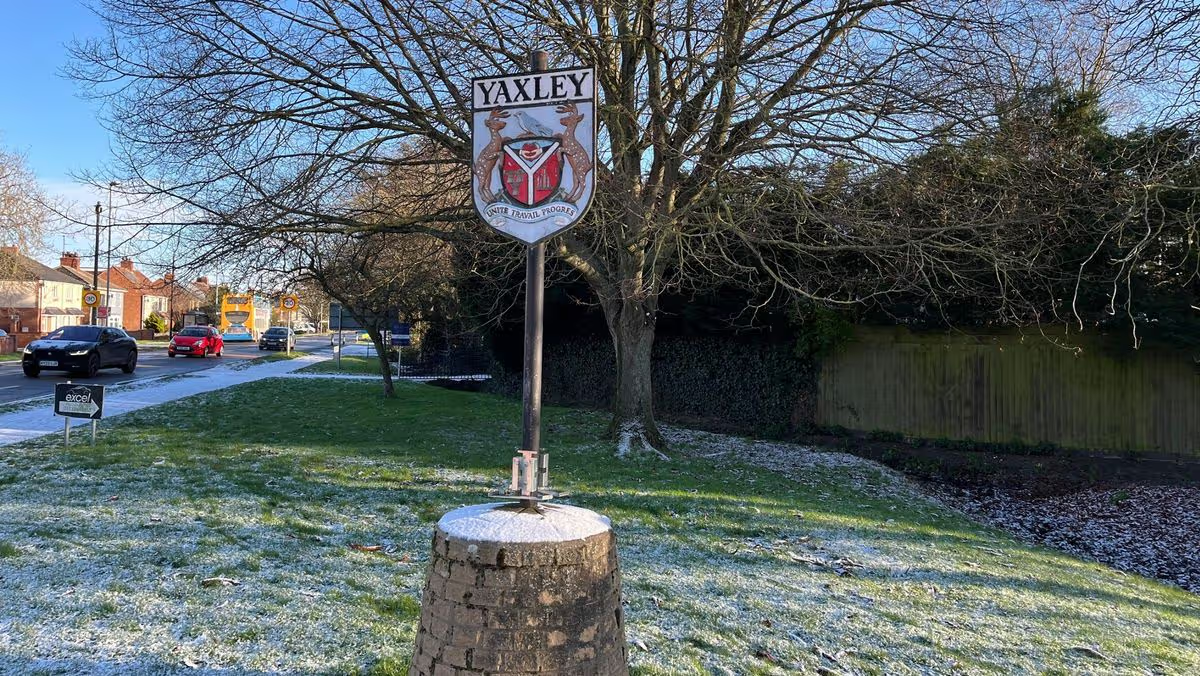
‘Concerns’ about anti-social behaviour in Cambridgeshire village

Flowserve Q1 2026 slides: margins expand despite Middle East headwinds

Manchester United reach agreement with Casemiro over contract clause amid transfer speculation

US brings back mandatory military draft registration

Steven Gerrard disagrees with Gary Neville over ‘shock’ Chelsea and Arsenal claim | Football


-
 Crypto World1 day ago
HarrisX Poll Found 52% of Registered Voters Support the CLARITY Act
-

 NewsBeat6 days ago
Channel 5 – All Creatures Great and Small series 7 new post
-

 Crypto World2 days ago
Upbit adds B3 Korean won pair as Base token gains Korea access
-

 Tech5 days ago
Image AI models now drive app growth, beating chatbot upgrades
-

 News Videos6 days ago
AP Dhillon – Old Money (Official Audio)
-
 NewsBeat2 days ago
NCP car park operator enters administration putting 340 UK sites at risk of closure
-

 Fashion22 hours ago
Weekend Open Thread: Marianne Dress
-
Entertainment7 days ago
New Netflix Movies in May 2026 — My Top 3 Picks to Stream
-

 Sports7 days ago
Five killed in Texas plane crash identified as Amarillo pickleball players
-
 Crypto World7 days ago
Pi Network Mandates Protocol 23 Upgrade for All Mainnet Nodes Before May 15 Deadline
-
Entertainment7 days ago
Anna Nicole Smith’s Daughter Attends 2026 Kentucky Derby
-

 Crypto World7 days ago
Bitcoin mining equities rise in 2026 as BTC lags behind
-

 Entertainment7 days ago
Melissa Joan Hart and More Stars Attend 2026 Kentucky Derby
-
Entertainment7 days ago
Venus Williams’ Best Met Gala Looks Over the Years
-

 Business6 days ago
Luka Doncic Injury Update: Doncic’s Hamstring Recovery Slows Lakers’ Hopes Against Thunder: Can He Run Yet?
-
 Business3 hours ago
Ignore market noise, India’s long-term story intact, say D-Street bulls Ramesh Damani and Sunil Singhania
-
 Entertainment7 days ago
Netflix’s 10-Part Miniseries Based on a True Story Is a Perfect Weekend Binge
-
Entertainment6 days ago
“Storage Wars” star Darrell Sheets' ex-wife breaks silence on his death
-

 Sports6 days ago
Is Man United v Liverpool on TV? Channel, streaming and how to watch Premier League fixture
-

 Business7 days ago
Kuwait International Airport Resumes Operations After Closure as Regional Tensions Ease in 2026
You must be logged in to post a comment Login