

Business
SPAC and New Issue ETF (SPCK) Rises 0.72% as Investors Hunt Fresh IPO and Merger Plays in 2026

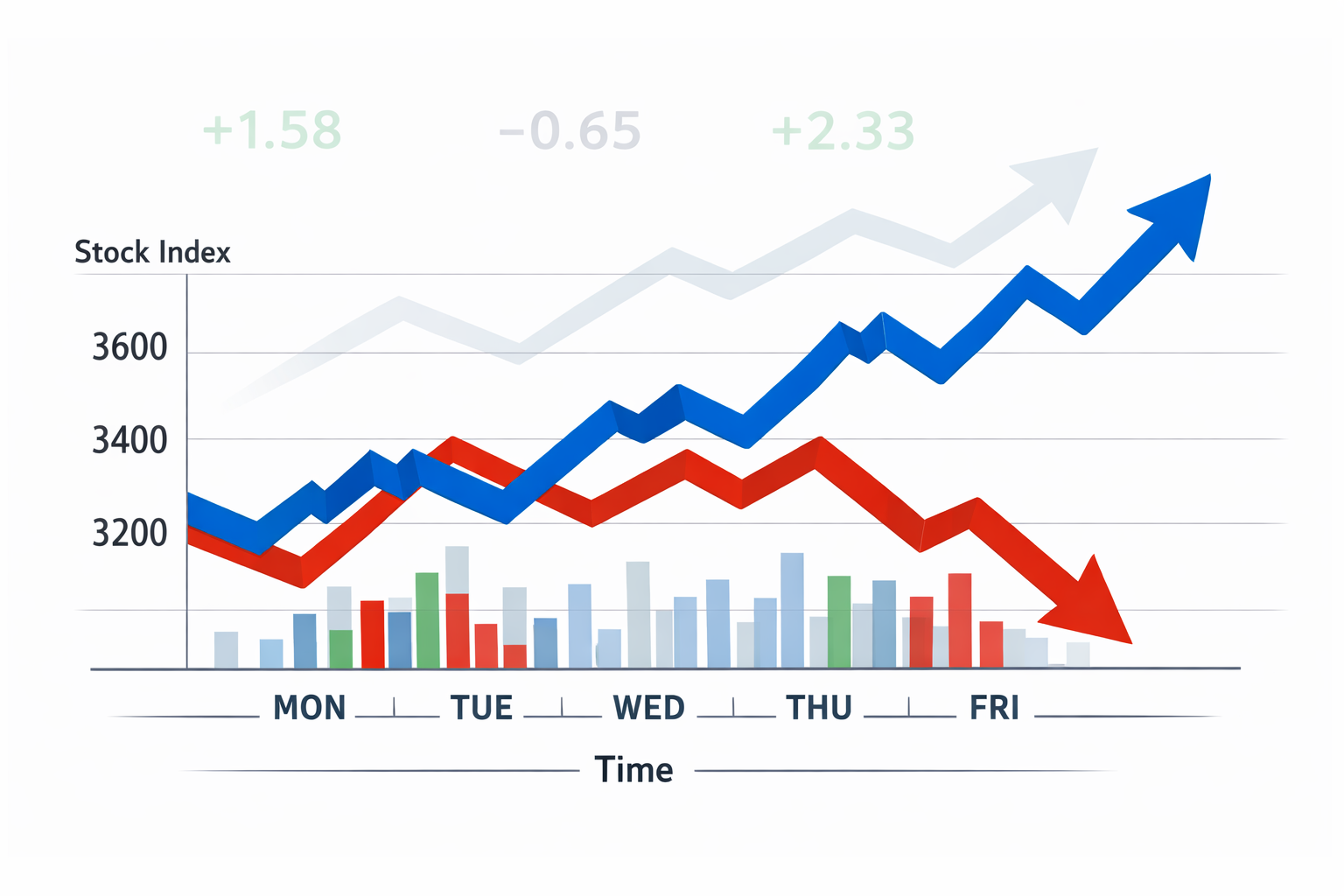
NEW YORK — The SPAC and New Issue ETF (NASDAQ: SPCK) gained 0.72% on Wednesday morning, climbing to $22.49 as renewed investor interest in special purpose acquisition companies and upcoming initial public offerings lifted sentiment around the specialized fund.
The ETF, which provides targeted exposure to SPACs, pre-IPO companies and newly listed stocks, has attracted attention in 2026 as the market for new issues shows signs of thawing after several years of subdued activity. Trading volume remained solid in morning sessions, reflecting selective buying in a segment that has lagged broader market gains for much of the past two years.
The SPAC and New Issue ETF aims to capture opportunities in companies going public through traditional IPOs or mergers with blank-check companies. Its portfolio typically includes a mix of pre-de-SPAC targets, recent listings and special purpose vehicles still seeking acquisitions. With many high-profile companies choosing to go public in recent quarters, the ETF has offered investors a diversified way to participate in this resurgence without picking individual names.
Market participants pointed to several factors supporting the ETF’s modest advance. Improving macroeconomic conditions, stabilizing interest rates and stronger corporate confidence have encouraged more companies to explore public listings. Investment banks have reported increased IPO pipeline activity, particularly in technology, healthcare and clean energy sectors.
The broader SPAC market has evolved significantly since its peak frenzy in 2020-2021. Many earlier deals faced challenges with performance and regulatory scrutiny, leading to a sharp decline in new formations. However, 2026 has seen a more disciplined approach, with sponsors focusing on stronger targets and clearer paths to value creation. This maturation has helped restore some investor confidence.
Analysts note that SPCK benefits from exposure to both completed mergers and companies in the pre-listing phase. The ETF’s structure allows it to hold positions across various stages of the new issue lifecycle, providing a balanced approach to a historically volatile segment. Its year-to-date performance has been positive but trails major indices, reflecting the cautious return of capital to the space.
Wednesday’s gain came amid a broader rotation in small and mid-cap stocks, where many newly public companies reside. The Russell 2000’s solid performance earlier in the week provided a supportive backdrop for names with recent listings or pending mergers. Investors appear to be positioning for potential catalysts such as major IPOs expected in the second half of 2026.
The ETF holds a diverse basket of holdings, including stakes in companies that have gone public through SPAC mergers in sectors ranging from electric vehicles and biotechnology to fintech and software. Performance has been driven by several successful de-SPAC transactions that delivered strong post-merger results, though others have struggled with integration challenges and market conditions.
Fund managers have emphasized disciplined selection criteria, focusing on companies with proven business models, strong management teams and realistic growth projections. This approach contrasts with the more speculative nature of earlier SPAC waves and has helped the ETF avoid some of the sharp drawdowns seen in the broader sector.
Regulatory developments continue shaping the landscape. The Securities and Exchange Commission has maintained stricter disclosure requirements for SPACs and new listings, aiming to protect investors while allowing viable companies access to public markets. These rules have contributed to higher quality deals reaching the market in 2026.
Institutional interest in the ETF has grown steadily. Pension funds, hedge funds and retail investors seeking exposure to emerging growth stories have increased allocations. The product’s relatively low expense ratio and diversified holdings make it an accessible entry point compared to direct investments in individual SPACs or pre-IPO shares.
Challenges remain for the new issue market. Valuation discipline is critical, as many recent listings have experienced post-debut volatility. Companies must demonstrate sustainable growth and clear competitive advantages to maintain investor support after the initial hype fades. The SPCK ETF attempts to mitigate single-name risk through broad exposure across multiple deals and stages.
Looking ahead, several major IPOs and SPAC transactions are anticipated in coming months. Technology infrastructure, artificial intelligence applications and renewable energy companies are expected to feature prominently. The ETF is well-positioned to capture upside from these potential debuts while maintaining exposure to already-listed former SPACs showing operational progress.
Market strategists suggest the current environment favors selective participation in new issues. With interest rates potentially peaking and economic growth holding steady, conditions appear more supportive for growth-oriented companies seeking public capital. However, caution remains regarding overall market volatility and sector-specific risks.
The SPAC and New Issue ETF has carved out a specialized niche in the investment landscape. By focusing on companies at various stages of going public, it offers a unique risk-reward profile that appeals to investors comfortable with higher volatility in pursuit of potentially outsized returns from emerging leaders.
Performance data shows the ETF has experienced periods of strong gains during active IPO windows, followed by consolidation when deal flow slows. Its 2026 results reflect a gradual recovery in the new issue market rather than the explosive moves seen in previous cycles.
For financial advisors, the ETF provides a convenient tool for clients seeking targeted exposure to IPOs and SPACs without the operational complexities of direct investing. Its daily liquidity and transparent holdings make it suitable for both tactical allocations and longer-term thematic portfolios.
As the trading day continued Wednesday, the SPCK ETF maintained its gains, trading around $22.49. The modest advance reflects measured optimism rather than exuberance, consistent with the more disciplined nature of today’s new issue market.
Broader market context supports cautious participation. Strong corporate earnings in certain growth sectors and steady economic indicators have encouraged companies to move forward with listing plans. Investment bankers report healthier pipelines compared to 2024 and early 2025.
The evolution of SPAC structures, including better alignment of sponsor incentives and longer timelines for deal completion, has improved outcomes for investors. These changes have helped rebuild credibility in the mechanism as a viable path to public markets for quality companies.
Looking further into 2026, analysts expect continued moderate deal flow. Technology and healthcare are likely to lead activity, while consumer and industrial sectors may see selective opportunities. The SPCK ETF’s flexible mandate positions it to adapt across these varying themes.
Investors should approach the segment with realistic expectations. While attractive opportunities exist, not all new issues deliver strong long-term performance. Thorough due diligence and diversified exposure remain essential for success in this space.
The SPAC and New Issue ETF continues to serve as an important vehicle for capturing the excitement and potential of companies entering public markets. Wednesday’s positive performance adds to a constructive tone for the product as market conditions gradually improve for new listings and mergers.
As summer approaches, focus will shift toward upcoming earnings from recently listed companies and potential new filings. These developments will likely influence the ETF’s trajectory in the second half of 2026.
For now, the 0.72% gain to $22.49 reflects steady interest in a segment that has shown renewed vitality. The SPAC and New Issue ETF remains a specialized but increasingly relevant option for investors seeking exposure to the next generation of public companies.



Argentina cabinet chief resigns after corruption allegations


US, Mexico inaugurate sterile fly plant in Chiapas in cross-border screwworm fight

Bangladesh secures $1.1 billion World Bank package to cushion Middle East shock


Trump says he will nominate Lance Schroyer as ICE director

Australia to double fines as child social media ban struggles to curb usage

The Tourism Authority of Thailand highlights the “Pay Like a Local” initiative, enhancing cross-border QR payments for tourists. This collaboration involves banks and payment partners, promoting convenience for international visitors.
Introduction to “Pay Like a Local”
Bangkok, 26 June 2026 – The Tourism Authority of Thailand (TAT) is emphasizing the country’s readiness for Cross-Border QR Payment in tourism under the “Pay Like a Local” initiative. This program aims to integrate merchant adoption with traveler awareness, facilitating digital payments for international visitors and presenting new opportunities for Thai businesses. It is a collaborative effort led by the Bank of Thailand, featuring eight notable banks and payment partners such as Alipay and WeChat Pay. The goal is to enhance the ease of QR payments at key tourist attractions across Thailand, with a focus on East Asian markets.
Enhancing the Tourism Experience
Mrs. Sirigesanong Trirattanasongpol, TAT Executive Director for the East Asia Region, highlighted the significance of adapting to changing traveler behavior in regions where mobile payments are prevalent. The Cross-Border QR Payment system is crucial for improving the visitor experience, allowing travelers to use familiar payment methods seamlessly. The initiative supports users from numerous countries, including China and South Korea, reducing cash reliance while providing secure transactions. It positions Thailand as a modern global destination catering to digital-savvy tourists.
Engaging Merchants and Expanding Services
To introduce this initiative effectively, a Merchant Activation Roadshow is underway at Asiatique The Riverfront in Bangkok. This event engages local businesses in embracing QR payments, offering insights, consultations, and registration opportunities. Participating merchants can benefit from promotions and learn about system integration. This follows a successful pilot in Udon Thani aimed at preparing local operators for an expected influx of Chinese tourists. TAT continues to promote broader adoption, aligning with Thailand’s vision of a cutting-edge tourism industry.
Source : TAT highlights Thailand’s “Pay Like a Local” Cross-Border QR Payment readiness
Other People are Reading


Cricket-Houston’s cricket boom aims to follow in soccer’s footsteps

ECB’s Schnabel says inflation risks remain despite easing energy prices

FOX Business host Charles Payne discusses the market shift driven by artificial intelligence on Making Money.
A Nobel Prize-winning economist has warned that persistent predictions of artificial intelligence destroying the job market could become a self-fulfilling prophecy.
Robert Shiller, who shared the 2013 Nobel Prize in economics for his work on asset prices, wrote a guest essay on Monday in The New York Times that argued the panic over AI is not a new sociological phenomenon.
In fact, he wrote, humans have been worried that new technology could replace them since the days of Aristotle, who envisioned a self-powered loom and a lyre that could play music without someone plucking the strings.
And in the 19th century, a group of English textile workers — who later became known as Luddites — intentionally destroyed machines they believed would put them out of a job.
ROBERT SHILLER: PEOPLE AREN’T AS IMPRESSED BY HOMES ANYMORE

Professor Robert J. Shiller wins Nobel Prize in economic sciences during an awards ceremony on Dec. 10, 2013, in Stockholm, Sweden. (Pascal Le Segretain / Getty Images)
Shiller fears that similar anxieties inherent within us are rearing their head once again.
He cited a Quinnipiac poll from March, which found that 70% of people believe AI will reduce the number of jobs. Additionally, only 16% of Americans believe AI will have a positive impact on society over the next two decades, according to a Pew Research survey conducted in June.
“Like many others, I believe AI could lower employment. But unlike most, I don’t necessarily blame the technology itself. Instead, I worry about the potency of the fear it is generating,” Shiller wrote.
“Our brains are wired to respond to stories. Narratives floating in a population can affect individuals’ economic decisions,” he continued. “When millions of people make millions and millions of decisions based upon negative expectations, there is a risk that fear can actually help birth the reality.”
THE AI REVOLUTION THREATENS OFFICE JOBS, BUT REVIVES DEMAND FOR SKILLED TRADES

Robert Shiller attends the 2019 Forbes 30 Under 30 Summit at Detroit Masonic Temple on Oct. 29, 2019, in Detroit, Michigan. (Taylor Hill / Getty Images)
Much of the negative media coverage around AI centers on speculation over how much it will impact jobs and the economy.
In late May, Anthropic CEO Dario Amodei told Axios that in the next one to five years, AI could eliminate half of all entry-level white-collar jobs and spike unemployment to as much as 20%. He later expressed uncertainty over the exact timeline.
The current unemployment rate is 4.3%, up from 4% at the beginning of President Donald Trump’s term in January 2025.
AI IS TOP REASON FOR US JOB CUTS FOR THIRD STRAIGHT MONTH
“While the job market has slowed for a host of reasons, there are reports that fear of an AI apocalypse is worsening the freeze and contributing to record lows in consumer sentiment,” Shiller argued.

A CloudHQ data center in Ashburn, Virginia, on May 31, 2026. (Lexi Critchett/Bloomberg / Getty Images)
Shiller implied that tech leaders like Amodei, who promote doom-and-gloom scenarios their own companies could help realize, are being somewhat short-sighted and should be reined in to prevent an economic recession.
CLICK HERE TO DOWNLOAD THE FOX NEWS APP
“Perhaps the best we can do is to appeal directly to the leaders of Silicon Valley who have been promoting these negative narratives with such vigor,” Shiller wrote.
He continued: “Surely the resulting media attention highlighting how dangerously powerful your AI model is may help you sell more wares, but it may be far harder to do so in a period of recession. Try not to forget the critical lessons taught by our past.”
Business
Amazon Prime Day offers a glimpse into U.S. consumer as shoppers navigate with pinched wallets


Amazon Prime Day offers a glimpse into U.S. consumer as shoppers navigate with pinched wallets

Meghan McCain Reacts to Pete Buttegieg CPS Investigation

England player ratings as Marcus Rashford struggles despite victory over Panama | Football

Fidelity Says Bitcoin Security Holds Up Despite Post-Halving Miner Pay Cuts


-
 Sports4 days ago
Two goals and an assist by sheer aura: Cristiano Ronaldo just entered the World Cup chat
-

 Tech5 days ago
Microsoft accidentally kills epic Outlook email threads
-

 Fashion1 day ago
Weekend Open Thread: Staud – Corporette.com
-

 Politics2 days ago
The House | Manchesterism won’t survive the painful trade-offs unless it gets citizens on board
-

 Politics2 days ago
Potential 2028er World Cup attendee leaderboard
-

 Business2 days ago
Asia stock markets slide as tech shares slump
-

 Tech2 days ago
A Look At A Gaggle Of Transputer Boards
-
Crypto World4 days ago
Bitcoin (BTC) Dips Below $62K, Ethereum (ETH) Plunges 6% Daily: Market Watch
-

 Crypto World4 days ago
Securitize Wraps Roubini's SEC-Registered ETF as Dubai VARA Digital Security
-
 Crypto World2 days ago
Dell (DELL) Shares Tumble Over 5% Following Analyst Downgrade to Hold
-
Business4 days ago
Entergy settles forward sale agreements, raises $672 million in cash proceeds
-

 Sports1 day ago
FIH Pro League: India defeat Pakistan 7-1, register biggest win of campaign | Other Sports News
-

 Crypto World18 hours ago
Kraken's xStocks Opens Bending Spoons IPO Registration to EEA Retail
-

 Crypto World1 day ago
RTX holders must register wallets before token distribution begins
-
 Crypto World1 day ago
Hyperliquid Named on Singapore MAS Investor Alert Register
-

 Sports2 days ago
India vs Bangladesh LIVE Score, Women’s T20 World Cup: Bangladesh Opt To Bat; India Enter ‘Do-Or-Die’ Stage As Semi-Final Race Heats Up
-
 Tech6 days ago
Signal’s Meredith Whittaker says AI chatbots ‘are not your friends’ and calls Copilot agents a backdoor
-
Crypto World2 days ago
The DATA Foundation Launches to Tackle AI’s Multi-Billion Dollar Training Data Bottleneck
-

 Crypto World2 days ago
Strategy (MSTR) has a 10-month cash runway for dividends, but retail investors are losing faith
-
 Crypto World2 days ago
AAVE price tests 9-month trendline after 17% rebound as breakout hopes build
You must be logged in to post a comment Login