Business
SpaceX Starship launches on first orbital test flight with Starlink

SpaceX’s massive Starship rocket blasted off from Texas Sunday morning on its most ambitious test flight yet, beginning what the company intended as a roughly 10-hour mission aimed at sending the spacecraft around Earth six times. (@SpaceX via X)
SpaceX’s massive Starship rocket blasted off from Texas Monday morning on its most ambitious test flight yet, beginning a roughly 10-hour mission aimed at sending the spacecraft around Earth six times.
Minutes into the uncrewed spacecraft’s ascent, the rocket lost one of its engines, throwing into question whether the test flight would abandon its goal of reaching orbit for the first time. After several tense minutes, flight controllers decided the spacecraft was “go” for orbit and continued with the mission.
Starship successfully completed an orbital burn with just a single Raptor engine to reach the Earth’s orbit about 26 minutes after liftoff.
SPACEX UNVEILS $100B LOUISIANA LAUNCH SITE EXPECTED TO CREATE THOUSANDS OF JOBS

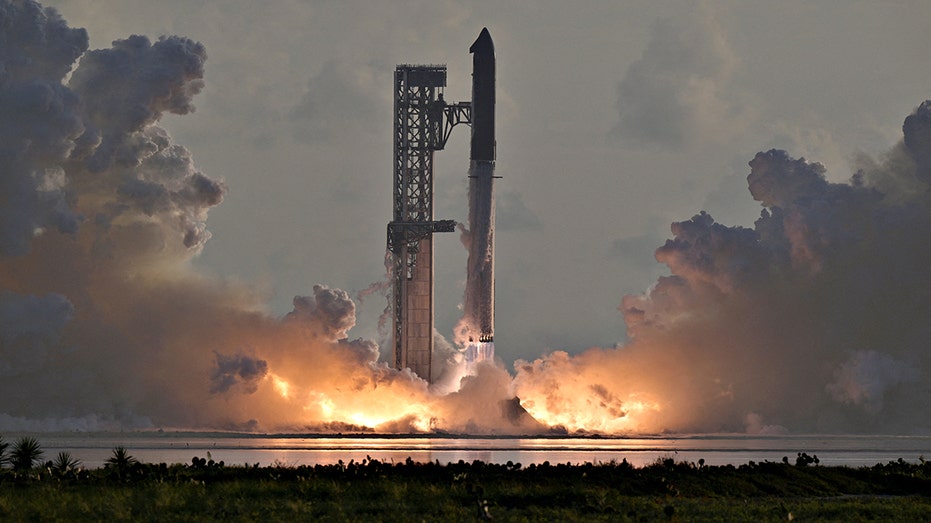
The SpaceX Starship and Super Heavy v3 Booster lift off on its 14th test flight from the SpaceX launch complex in Starbase, Texas, Sept. 28, 2026. The mission is expected to send the vehicle into orbit for the first time and deploy 26 Starlink V3 sat (REUTERS/Steve Nesius / Reuters Photos)
“Starship is orbital,” Mission Control announced as people cheered the milestone.
| Ticker | Security | Last | Change | Change % |
|---|---|---|---|---|
| XAIW | HARBOR ETF TRUST SPACEXAI LAB ECOSYSTEM ETF | 25.50 | +0.29 | +1.15% |
WATCH: SPACEX BOOSTER SPLASHES DOWN OFF TEXAS COAST:
SpaceX engineers erupted in cheers as a Starship booster splashed down off the coast of Starbase, Texas, Monday after a simulated landing burn.
The launch marks Starship’s 14th test flight and its first attempt to reach orbit, a major step beyond previous suborbital missions that ended with splashdowns about an hour after liftoff.
The spacecraft is also expected to deploy 26 Starlink satellites before splashing down in the Pacific Ocean west of Chile.
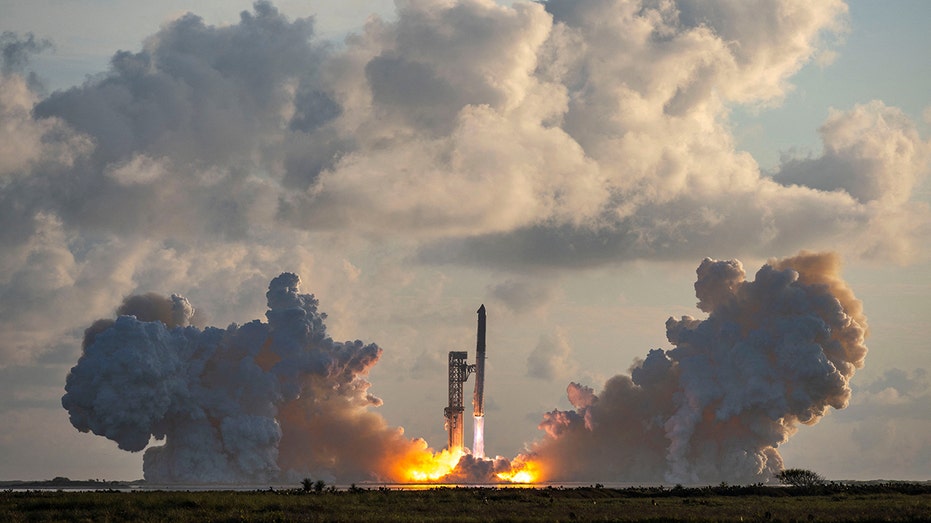
The SpaceX Starship and Super Heavy v3 Booster lift off on its 14h test flight from the SpaceX launch complex in Starbase, Texas, Sept. 28, 2026. The mission is expected to send the vehicle into orbit for the first time and deploy 26 Starlink V3 sate (REUTERS/Steve Nesius / Reuters Photos)
All Starship flights so far have been uncrewed, but NASA is looking to use a future version of the spacecraft as a lunar lander for astronauts.
The longer-term goal is even more ambitious: a large fleet of Starships capable of carrying humans to Mars.
You must be logged in to post a comment Login