Connect with us
DAPA Banner
DAPA Coin
DAPA
COIN PAYMENT ASSET
PRIVACY · BLOCKDAG · HOMOMORPHIC ENCRYPTION · RUST
ElGamal Encrypted MINE DAPA
🚫 GENESIS SOLD OUT
DAPAPAY COMING

Business

Spain Stun World Cup Favorites France 2-0 in Arlington to Reach Final, Set Up Clash With England or Argentina

Published

on

LeBron James #23 of the Los Angeles Lakers talks with a teammate during a game against the Chicago Bulls at the United Center on March 12, 2019 in Chicago, Illinois.

ARLINGTON, Texas — Spain booked their place in Sunday’s World Cup final after dismantling France 2-0 on Tuesday, ending the tournament run of the pretournament favorites and reaching their first championship match since winning the title in 2010.

In a semifinal billed as a coin-flip matchup between two European heavyweights, Spain dominated for most of the contest and more than deserved the victory. Forward Mikel Oyarzabal put manager Luis de la Fuente’s side ahead in the 20th minute from the penalty spot after France left back Lucas Digne was penalized for inadvertently kicking Lamine Yamal in the box. It was one of several errors that marred a dismal first-half performance from France.

Didier Deschamps, who will step down as France’s coach after the tournament, absorbed another blow 10 minutes later when Arsenal center back William Saliba was forced off with a back injury and replaced by Maxence Lacroix.

France, winners in 2018 and runners-up in 2022, showed brief signs of life after halftime, but any momentum was erased by Spain’s second goal. Right back Pedro Porro combined on a give-and-go with midfielder Dani Olmo before calmly slotting a finish past goalkeeper Mike Maignan.

Advertisement

For all of France’s attacking talent, the team finished with an expected-goals total of just 0.3. Spain, the reigning European champions, advanced to face either England or Argentina, who meet Wednesday in the tournament’s second semifinal in Atlanta.

A Team Effort Undoes the Favorites

Spain’s approach relied on technical ability across the lineup to neutralize France’s strengths, according to ESPN senior writer Gabriele Marcotti, who noted the team’s ability to keep possession for long stretches and immediately hunt to win the ball back blunted France’s buildup play. Central midfielders Adrien Rabiot and Aurélien Tchouaméni were outmanned by Spain’s midfield and received little help from a back line built around defenders not known for their ability on the ball, Marcotti wrote. Saliba’s injury replacement, Lacroix, compounded the issue.

That press, Marcotti wrote, robbed France of the long ball over the top that its speed-based forwards — Bradley Barcola, Ousmane Dembélé and Kylian Mbappé — rely on. Deschamps tried adjustments, dropping Michael Olise deeper before halftime and then substituting Manu Koné for Rabiot to add passing composure, without success.

Advertisement

Spain’s Path to the Final

Spain’s win secured their first World Cup final appearance since 2010, when they lifted the trophy. Waiting in New Jersey will be either England, whom Spain defeated to win Euro 2024, or Argentina, a matchup that would revive a fixture that was originally scheduled as the 2025 Finalissima before being canceled amid the Iran war and scheduling conflicts tied to the inaugural FIFA Club World Cup, according to Marcotti. Spain and Argentina last met in a March 2018 friendly — a 6-1 Spain win that Lionel Messi missed through injury.

If Spain face England, it will not be a straight repeat of the Euro 2024 final, as manager Thomas Tuchel has altered the squad he inherited from predecessor Gareth Southgate.

France’s Attack Goes Silent

Advertisement

ESPN’s Julien Laurens described France’s vaunted front four of Mbappé, Olise, Barcola and Dembélé as going from “Fantastic Four” to invisible in the biggest match of the tournament. Deschamps, typically a conservative and defensive-minded coach, had adjusted his approach throughout the tournament to accommodate the group’s talent — a strategy that worked until Tuesday.

Olise appeared uncharacteristically nervous and was stifled by Spain midfielder Rodri, according to Laurens, eventually retreating to the right wing for stretches of the match. Dembélé, the reigning Ballon d’Or winner, struggled similarly, managing only two late shots on target as his most meaningful contribution — echoing his early substitution in the 2022 World Cup final. Mbappé had France’s most notable moments but was often isolated, forced to create chances largely on his own. Barcola, meanwhile, was hampered by a late lineup change; Deschamps had reportedly favored Désiré Doué to start on the left before reversing course on the morning of the match, leaving France without the space to use Barcola’s pace effectively.

Defense Carries Spain

Spain entered the match having allowed just one goal through their first six games, and their back line delivered again under pressure from France’s attack. Goalkeeper Unai Simón was required to make only three saves, most of them routine, according to ESPN writer Bill Connelly.

Advertisement

With left back Marc Cucurella pushing frequently into attacking areas, the defensive burden fell to Rodri, Fabián Ruiz, Porro and center backs Aymeric Laporte and Pau Cubarsí. That group combined to win 25 of 34 individual duels — 74% — and made 44 defensive interventions, per Connelly’s analysis. Mbappé, dominant through the tournament’s first six matches, won just two of 11 duel attempts and managed only three shots worth a combined 0.08 expected goals. France attempted just 10 shots from 152 touches in the attacking third over the full match.

Spain weathered a late push from France, conceding possession and daring Les Bleus to break down a low defensive block — a tactical puzzle France had struggled to solve throughout the tournament. Spain again proved equal to the task, extending their shutout streak to six of seven matches heading into the final.

Redemption for Rodri and Porro

The victory offered a measure of redemption for two Spanish players who endured difficult club seasons. Rodri played just 21 league matches in 2025-26 while recovering from a serious knee injury suffered in September 2024, and Porro was part of a Tottenham Hotspur side that narrowly avoided relegation from the Premier League. Both were central to Tuesday’s win — Rodri anchoring Spain’s midfield press in the first half, and Porro helping contain France’s wide attackers before scoring the decisive second goal.

Advertisement

Should Spain complete the tournament with a win Sunday, both players could add World Cup winners’ medals to resurgent campaigns on the international stage.

Continue Reading
Click to comment

You must be logged in to post a comment Login

Leave a Reply

Business

(VIDEO) AL Pitchers Shut Down NL 4-0 in Philadelphia as Bellinger Wins MVP and Caminero Escapes Scary Injury

Published

on

Cody Bellinger LA Dodgers

PHILADELPHIA — The American League’s pitching staff overwhelmed the National League lineup Tuesday night, shutting out the NL 4-0 in the 2026 MLB All-Star Game at Citizens Bank Park and delivering the AL its 11th win in the last 13 seasons.

It marked the American League’s first shutout victory in the Midsummer Classic since 2013, a dominant showing from a pitching staff that entered the night with a far less impressive résumé at the team level. The American League had only five clubs with a winning record at the break, compared with nine in the National League, but none of that mattered once the first pitch was thrown.

AL Pitching Overpowers NL Stars

Advertisement

The National League lineup, missing Shohei Ohtani after he withdrew from the competition to manage a knee issue, still featured enough star power to suggest fireworks were possible. Instead, the AL pitching staff shut the door almost entirely, striking out 15 NL batters and allowing just two hits — both singles — until Otto Lopez added a third with a single off Tampa Bay reliever Bryan Baker, who had entered to replace Aroldis Chapman with two outs in the ninth. Sal Stewart grounded out to end the game and seal the NL’s offensive struggles.

The tone was set early, when Dylan Cease struck out three batters in the first inning. From there, each of the next nine AL pitchers who took the mound struck out at least one batter, with Michael Wacha, Joe Ryan and Cade Smith each recording multiple strikeouts. Juan Soto, Pete Crow-Armstrong and Lopez were the only National League players to reach base with a hit all night.

A Rough Night for the Home Crowd

The result capped a difficult stretch for Philadelphia fans, who had packed Citizens Bank Park a night earlier for the Home Run Derby. Kyle Schwarber had electrified the crowd with 11 home runs in the final round, appearing poised to claim the derby title in front of his home fans, only for the Cardinals’ Jordan Walker to silence the ballpark and steal the win amid a chorus of boos.

Advertisement

Tuesday’s All-Star Game offered no redemption. The Phillies led all clubs with six representatives on the All-Star roster and had ace Cristopher Sánchez on the mound to start the game, a start made possible after Milwaukee’s Jacob Misiorowski withdrew from the event. Sánchez became the first Phillies pitcher to start an All-Star Game since Roy Halladay in 2011, but the honor came with a rough outcome: the American League scored three runs in the first inning against him on three singles and two walks, setting the tone early.

Philadelphia’s other All-Stars fared little better at the plate. Schwarber, Bryce Harper and Brandon Marsh combined to go hitless on the night. Phillies reliever Jesús Luzardo did provide a bright spot for the home crowd, tossing a scoreless inning in relief.

Rays Star Avoids Disaster After Scary Hit-by-Pitch

Tampa Bay third baseman Junior Caminero entered All-Star week as one of the sport’s hottest hitters, having launched 13 home runs over his final 19 games before the break. He was considered a favorite in the Home Run Derby but was eliminated before advancing out of the second round on Monday.

Advertisement

The following night brought a far more serious scare. In the top of the third inning, Cardinals reliever Riley O’Brien fired a 97.6 mph sinker up and in that struck Caminero on the left hand. The Rays third baseman dropped immediately and remained on the ground for several moments before eventually standing and walking straight to the tunnel.

X-rays on Caminero’s hand came back negative, easing concerns about his availability going forward. Caminero told reporters afterward that he expects to be fine, welcome news for a Rays team currently holding off the New York Yankees atop the American League East standings as the second half begins.

Bellinger, Rice Power Yankees Offense in MVP Performance

The Yankees, playing without an injured Aaron Judge, have struggled to generate offense in recent weeks. Dating back to June 20, the team ranked 28th in the majors in runs scored and 29th in OPS heading into the break.

Advertisement

None of that carried over into their All-Star performance. Cody Bellinger delivered the game’s first breakthrough with a hard-hit grounder up the middle that plated two runs in the first inning off Sánchez. One batter later, Ben Rice followed with a nearly identical single to drive in another run, giving the AL its early cushion.

Bellinger entered the break red hot, going 7-for-16 with two doubles over his final four games of the first half, continuing a resurgent season that has made him one of the best offseason additions in baseball. His performance in the All-Star Game earned him MVP honors for the contest.

Rice, meanwhile, has quietly built one of the more productive seasons in the American League, ranking second in MLB in slugging percentage and third in OPS this year despite a modest .279 batting average. His RBI single in the first inning capped a triumphant first All-Star Game appearance and helped set the tone for a night the American League controlled from start to finish.

With the win, the American League extended its recent stranglehold on the Midsummer Classic, a rare bright spot for a league that, at least by record, entered the break trailing its National League counterparts across the sport.

Advertisement
Continue Reading

Business

GenusPlus wins $55 million Rio Millstream contract

Published

on

GenusPlus wins $55 million Rio Millstream contract

Energy infrastructure specialist GenusPlus Group will deliver a 220kV upgrade to Rio Tinto‘s Millstream substation after being awarded a $55 million master construction contract.

The works will begin immediately and are expected to be completed in min-2028, and follow on from GenusPlus being awarded a similar master construction agreement in March of this year, for the construction of Rio Tinto‘s electrical instrumentation and controls.

The March contract, which will run for three years, covers Rio Tinto‘s iron ore Pilbara projects and includes construction, brownfield expansion, and end-of-life replacement across the company’s Pilbara operations.

Speaking after the award of the company’s latest contract, Genus Managing Director David Riches said the contract extended a long-running relationship between the two companies.

Advertisement

“We are delighted to secure the 220kV Millstream Substation contract and continue to build on our long and successful relationship with Rio Tinto,” he said.

“We look forward to completing the works safely and on time. This contract award is important as we convert our strong tender pipeline into order book heading into FY27.”

The contract also comes hot off the heels of the company’s $400 million move to buy out Brisbane-based MPC Kinetic, in a move which gave the company east coast gas exposure.

That deal will give Genus access to the onshore gas sector in Queensland, where MPK is a leading provider of gas gathering and well maintenance services, along with other pipeline and renewable projects.

Advertisement

Genus has agreed to pay $325 million up front, and a further $25 million six months after the deal is done, and earn-out consideration worth up to $50 million – subject to earnings targets.

Advertisement
Continue Reading

Business

ECB’s Kocher sees currently no second-round effects from Iran war, but bank is ready to act

Published

on


ECB’s Kocher sees currently no second-round effects from Iran war, but bank is ready to act

Continue Reading

Business

China’s Massive Travel Rebound: Why the Industry Is Scrambling to Keep Up

Published

on

China's Massive Travel Rebound: Why the Industry Is Scrambling to Keep Up

Start with the good news, because there is plenty of it. Roughly two in five Chinese travel professionals expect demand for their business to grow over the next two to three years, and nearly half see luxury leisure travel as the standout growth segment

China’s outbound tourism market is roaring back. Official forecasts point to between 165 million and 175 million trips abroad by Chinese citizens in 2026, a volume that approaches or surpasses the pre-pandemic peak, while some industry estimates run even higher once domestic and short-haul day trips are included. Outbound spending is projected to climb well past the USD 180 billion mark this year, with analysts at Future Market Insights forecasting the market to more than double to USD 459 billion by 2036 on a 9.6 percent annual growth rate.

The scale of the rebound has been reinforced by policy. China’s visa-free entry scheme, now covering citizens from 45 countries and running through the end of 2026, has removed friction for both inbound and outbound travel, while Beijing is set to host its first China Outbound and Inbound Travel Market exhibition in October, bringing together tourism boards, airlines and tour operators from more than 50 countries.

Zoom out across the wider region, and more than one in four industry professionals name China as one of the single biggest growth opportunities, not just for outbound travelers heading abroad, but for inbound visitors arriving on Chinese soil. 

Advertisement

The readiness gap behind the growth story

A new industry survey from Expedia Group, covering 1,250 travel professionals in Australia, China, India, Japan and Thailand, gives that optimism real numbers to lean on. Roughly two in five Chinese travel professionals expect demand for their business to grow over the next two to three years, and nearly half point to luxury leisure travel as the standout growth segment. Across the wider region, more than one in four industry professionals name China as one of the biggest growth opportunities, not only for outbound travellers but for inbound visitors arriving on Chinese soil.

The same survey suggests the industry itself is not entirely ready for the demand it is forecasting. Chinese travel professionals identify three forces reshaping traveller expectations: a preference for in-language, localized experiences, a growing insistence on flexible change and cancellation terms, and a rising demand for sustainable travel options. Layered on top is a technology shift, with nearly six in ten respondents saying AI-powered tools and nontraditional booking platforms have grown significantly more important over the past two to three years.

What the report captures well, and what deserves more attention than it’s getting, is how much traveler expectations have shifted underneath the industry’s feet. Chinese travel professionals point to three forces reshaping demand: a hunger for in-language, localized experiences; a growing insistence on flexible change and cancellation terms; and a rising preference for sustainable travel options. None of these are niche concerns anymore. They are becoming baseline expectations, and businesses that treat them as optional extras rather than core product features are going to lose ground.

Respondents also point to their own limitations. A lack of localized content is cited as a major constraint, and many say it remains difficult to gain visibility across search engines and AI-driven platforms, the very channels increasingly used to research and book trips. A similar gap shows up around AI adoption itself: 79 percent of respondents say they already use AI tools, and 97 percent plan to, yet that near-universal adoption sits alongside an admission that many businesses have not unlocked the technology’s full potential. Aileen Chan, Expedia Group’s vice-president of sales for Asia-Pacific, framed the challenge for Chinese travel businesses as one of matching rising demand with the right localized content, flexible terms, payment options and technological support across every market they touch.

Advertisement

That readiness gap, more than the headline growth numbers, is the backdrop against which Thailand’s own struggle to capture its share of the Chinese travel boom should be read.

The paradox for Thailand

For a market this large, one might expect Thailand, long the default Southeast Asian destination for Chinese travellers, to be riding the wave. Instead, the country is a case study in how quickly a tourism relationship can fray even as the underlying demand pool expands.

The Association of Thai Travel Agents cut its 2026 forecast for Chinese arrivals from 9 million to 7 million in early June, citing a combination of safety concerns and rising travel costs linked to Middle East-driven oil prices. ATTA president Thanapol Cheewarattanaporn said safety perception had become the single biggest obstacle in the Chinese market, directly shaping travellers’ booking decisions.

The roots of that perception trace back to the kidnapping of a Chinese actor lured into a scam-centre operation in Myanmar via Thailand, an incident that triggered a sharp drop in Chinese bookings when it surfaced and has continued to shadow the market since. Reports of subsequent ransom cases and disappearances involving Chinese nationals have kept the story alive on Chinese social media, even though isolated incidents do not necessarily reflect the broader safety picture for ordinary tourists.

Advertisement

The numbers tell the story of a market that fell hard and has only partially recovered. Chinese arrivals to Thailand dropped from roughly 6.73 million in 2024 to about 4.47 million in 2025, a decline of some 34 percent that helped drag Thailand to its first annual fall in total visitor numbers in a decade outside the pandemic years. As of early July 2026, China had reclaimed its position as Thailand’s top source market on a cumulative basis, but at a scale far below the earlier peak, and Thailand has not recovered the roughly one-third of Chinese visitors it lost.

A crowded field of rivals

China’s outbound boom has not gone to waste, it has simply gone elsewhere. Japan overtook Thailand as the top Lunar New Year destination for Chinese travellers, helped by a weaker yen, expanded flight capacity and eased visa rules, with Chinese arrivals to Japan forecast to rise by a third to around 9.3 million. Vietnam has drawn on proximity, a favourable exchange rate and simplified visa policies to become, by some measures, ASEAN’s top destination for mainland Chinese tourists, with arrivals up more than 100 percent year on year at one point. Malaysia has been the most direct beneficiary within the region, overtaking Thailand as its largest single source market and now targeting 7 million Chinese visitors of its own in 2026 through visa-free entry, expanded routes into smaller Chinese cities, and marketing pushes on Douyin, Weibo and RedNote.

The competitive pressure is compounded by a shift in how Chinese travellers plan trips. Independent travellers, rather than tour groups, now make up roughly half of China’s outbound market, researching destinations on platforms such as Xiaohongshu rather than booking through traditional agencies. That shift rewards destinations with strong social-media visibility and flexible, experience-led products built around content tourism, gastronomy and wellness travel, and punishes those still associated with mass group tourism or negative headlines.

How Thailand’s industry is responding

Faced with a shrinking share of a growing market, Thai operators and regulators are trying several levers at once. The Civil Aviation Authority of Thailand is negotiating a one-year relaxation of slot usage rules with Chinese counterparts, which would let Thai airlines temporarily redeploy aircraft to other markets to offset weaker Chinese demand. ATTA has taken its promotional roadshows to Xinjiang and Gansu provinces, betting that cities such as Urumqi and Lanzhou carry less exposure to the negative coverage concentrated in southern China’s major urban centres.

Advertisement

The Tourism Authority of Thailand, meanwhile, has leaned into messaging rather than blanket safety assurances. TAT’s regional director for East Asia marketing has argued that Chinese travellers want honest reassurance rather than claims that Thailand is entirely risk-free, and the authority has planned a “Nihao Month” campaign alongside city-to-city promotional tie-ups timed around the anniversary of Thailand-China diplomatic relations. TAT has also revised its full-year target to a range of 30 to 34 million total foreign arrivals, with Chinese numbers expected to land close to 2024 levels rather than fully recovering to the pre-safety-crisis peak.

Underlying all of this is a product question as much as a marketing one. Thai tourism operators are being pushed to move beyond the traditional group-tour, shopping-and-photo-op model toward the categories Chinese travellers increasingly favour: content and set-jetting tourism tied to film and social media, gastronomy, medical and wellness travel, and deeper cultural immersion in cities like Chiang Mai rather than one-off check-in stops.

What would it take to close the gap

Aileen Chan, Expedia Group’s vice-president of sales for Asia-Pacific, put her finger on the actual challenge facing the industry: the opportunity for Chinese travel businesses isn’t simply to capture rising demand, but to meet travelers with the right localized content, flexible terms, payment options, and technological support across every market they touch. That is a far more demanding mandate than “grow the top line,” and it requires investment in content, platforms, and AI literacy that many operators, by their own admission, don’t yet have.

Thailand’s underlying advantages, established flight networks, hospitality infrastructure and decades of brand recognition in China, have not disappeared. What has changed is that Chinese travellers now have more credible alternatives and more information at their fingertips before they book. Closing the gap will likely depend less on any single marketing campaign than on whether Thailand can produce a sustained run of good news to offset the scam-centre and safety headlines that have dominated Chinese coverage since 2025, while Japan, Vietnam and Malaysia continue investing in the same travellers Thailand is trying to win back.

Advertisement

Continue Reading

Business

IGO divests Nova nickel operation

Published

on

IGO divests Nova nickel operation

IGO has struck a deal to divest its winding-down Nova nickel operation to Global Lithium Resources, which plans to retrofit the plant to process lithium from its nearby project.

Continue Reading

Business

West Coast total assets reach $160m

Published

on

West Coast total assets reach $160m

The West Coast Eagles continue to be one of Australia’s wealthiest national sporting organisations, with the club’s total assets now sitting at $160.1 million.

Continue Reading

Business

Texas launches investigates LinkedIn over claims of ‘ghost jobs’

Published

on

Texas launches investigates LinkedIn over claims of 'ghost jobs'

Texas has launched an investigation into LinkedIn over allegations the company allegedly advertised and profited from fake or misleading job listings known as “ghost jobs,” the attorney general’s office announced Tuesday.

The investigation centers on claims that job seekers who paid for LinkedIn Premium subscriptions may have been presented with listings that were not legitimate hiring opportunities, according to the attorney general’s office.

Advertisement

The attorney general’s office describes a “ghost job” as a listing that either does not correspond to an actual open position or is posted despite an employer having no immediate intention of filling the role, according to the attorney general’s office.

According to the attorney general’s office, LinkedIn does not disclose that some listings may not represent active hiring opportunities, leading some consumers to pay for Premium subscriptions based on allegedly misleading representations about the platform’s job marketplace.

META EMPLOYEES SUE ON ALLEGATIONS COMPANY USED AI TO TARGET WORKERS ON MEDICAL, PARENTAL LEAVE FOR LAYOFFS

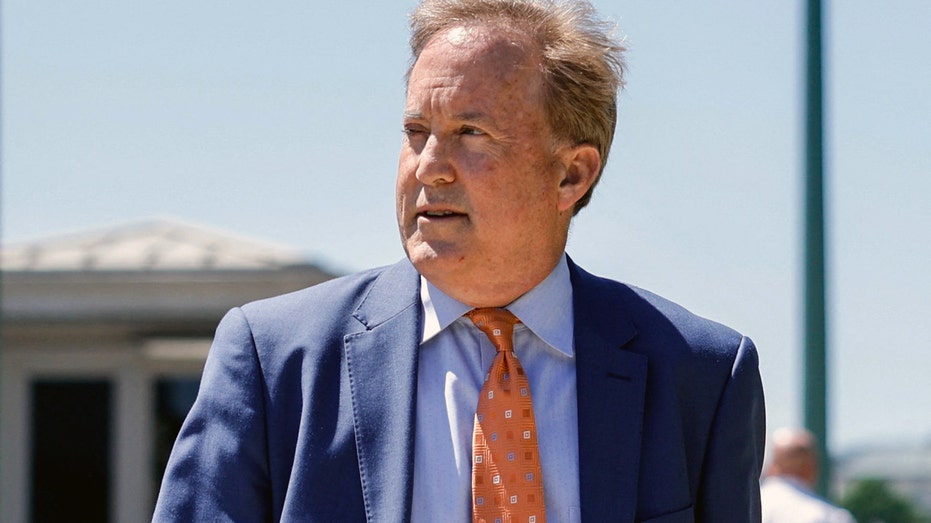
Texas Attorney General Ken Paxton

Texas Attorney General Ken Paxton announced an investigation into LinkedIn over allegations involving “ghost jobs” advertised on the platform. (Reuters)

Texas officials said LinkedIn Premium Career and Premium Business subscriptions cost about $39.99 and $69.99 per month, respectively.

Advertisement

“I will use every resource available to my office to help job-seeking Texans find and secure real employment opportunities,” Texas Attorney General Ken Paxton said in a statement.

“LinkedIn has a duty to provide the services it advertises and ensure that consumers paying for Premium subscriptions are receiving access to legitimate job postings,” he continued. “I am investigating whether LinkedIn has misled Texans by promoting and profiting from ‘ghost jobs’ while marketing itself as a trusted platform for finding employment.”

Paxton said his office has issued a Civil Investigative Demand seeking documents, data and internal communications related to LinkedIn’s advertising, marketing, verification practices and representations about its Premium subscription services and job listings.

IBM SENDS ‘SHOCKWAVE’ THROUGH TECH INDUSTRY WITH AI WARNING

Advertisement
LinkedIn logo on smartphone

Texas is investigating LinkedIn over allegations that some job seekers paid for Premium subscriptions while encountering alleged “ghost jobs.” (Jonathan Raa/NurPhoto via Getty Images / Getty Images)

In response to the investigation, LinkedIn defended its job marketplace, saying listings on the platform are required to be authentic and accurately represented.

“LinkedIn’s goal is to help jobseekers find their next role, and our policies require that jobs posted be authentic and accurately represented,” a LinkedIn spokesperson told FOX Business. “For many jobs posted on LinkedIn, we also display the company’s response time and whether they’re currently reviewing candidates, which helps jobseekers know if it is a current, active job opportunity.”

“We actively enforce our policies and continually invest in new features like verifications for jobs, recruiters and company pages to help LinkedIn members identify more trusted opportunities,” the spokesperson added.

GET FOX BUSINESS ON THE GO BY CLICKING HERE

Advertisement
LinkedIn logo

LinkedIn defended its job marketplace after Texas launched an investigation into allegations involving fake or misleading job listings. (Photo Illustration by Pavlo Gonchar/SOPA Images/LightRocket via Getty Images / Getty Images)

The attorney general’s investigation has not resulted in formal charges or a lawsuit.

Continue Reading

Business

Tata Elxsi shares slide 6% after weak Q1 results. Why Motilal Oswal sees 16% downside from current levels?

Published

on

Tata Elxsi shares slide 6% after weak Q1 results. Why Motilal Oswal sees 16% downside from current levels?
Shares of Tata Elxsi slipped 6% to their day’s low of Rs 3,474 on the BSE on Wednesday after it reported a net profit of Rs 170.6 crore for the quarter ended June 30, 2026, marking a growth of 18.2% year-on-year (YoY). Revenue from operations rose 14.5% YoY and 2.8% sequentially to Rs. 1,021.1 crore.

The company’s profit before tax (PBT) stood at Rs. 232.5 crore during the quarter, up 18.4% from a year ago, with a PBT margin of 21.9%.

Operating performance also remained strong, with EBITDA rising 15.7% year-on-year to Rs. 216 crore. The company reported an EBITDA margin of 21.2%, while its net profit margin came in at 16.1% for the quarter.

What are analysts saying?

Motilal Oswal has maintained its Sell rating on Tata Elxsi with a target price of Rs. 3,100, implying a downside of around 16% from current levels.The brokerage said the company’s June quarter performance does little to alter its broader growth outlook. Revenue grew 1.3% quarter-on-quarter in constant currency, broadly in line with expectations, but the growth was largely driven by the Media & Communications segment. The larger Transportation business, which contributes around 55% of revenue, along with Healthcare, continued to remain weak.

Advertisement

Motilal Oswal believes a meaningful recovery in Tata Elxsi’s growth will depend on an improvement in the Transportation segment, where client spending, particularly across Europe, remains cautious.
The brokerage also highlighted that margins were significantly below expectations. Tata Elxsi’s EBIT margin contracted to 19%, missing its estimate of 21.5%.
Choice Institutional Equities has downgraded Tata Elxsi to Sell and cut its target price to Rs. 3,150 from Rs. 3,650, after lowering its FY27 and FY28 earnings estimates by 2.7% and 6.0%, respectively.
The brokerage said Tata Elxsi’s Q1FY27 performance was weaker than expected, with margins hurt by higher project costs and continued strategic investments despite healthy growth in the Transportation and Media & Communications segments.

While the company’s management continues to target high single-digit revenue growth in FY27, backed by a healthy large-deal pipeline and an expected recovery in the Healthcare business, Choice Institutional Equities remains more cautious. It cited continued weakness in the European automotive market and delays in healthcare order conversions as key risks.

The brokerage also noted that Tata Elxsi is accelerating investments in AI capabilities, platforms and talent to strengthen its domain-plus-AI offering. While these investments are expected to improve the company’s long-term growth prospects and competitiveness, they are likely to keep margins under pressure in the near term.

Tata Elxsi Q1 management commentary

Tata Elxsi said its Healthcare and Life Sciences business grew 1.7% quarter-on-quarter despite a subdued demand environment in the healthcare industry. The company said it is investing in an AI-first, design-led and regulatory-aware engineering approach for the segment, while partnering with leading global AI companies. During the quarter, it launched ViTEL, a GenAI-powered material intelligence platform, and AnaTEL, an AI-native software development platform for the medtech and healthcare industry.

The company said it remains well positioned to address customers’ strategic priorities across its focus verticals, including connected, intelligent and software-defined products, digital transformation, AI-led efficiencies, customer experience and engineering modernisation.

Advertisement

Tata Elxsi added that it remains focused on delivering sustainable growth by deepening relationships with key customers, pursuing long-term strategic deals, adding marquee clients and maintaining its industry-leading margins.

(Disclaimer: Recommendations, suggestions, views and opinions given by the experts are their own. These do not represent the views of The Economic Times)

Continue Reading

Business

Nuvoco Vistas shares soar 10% after strong Q1. Why Nomura, Choice see up to 47% upside?

Published

on

Nuvoco Vistas shares soar 10% after strong Q1. Why Nomura, Choice see up to 47% upside?
Shares of building materials company Nuvoco Vistas soared 10% to Rs 375 on the BSE on Wednesday after a host of brokerages issued bullish calls on the counter following a robust set of figures in the first quarter of FY27.

The company reported a 20% increase in net profit to Rs 160 crore in the first quarter of FY27 and a 9% growth in revenue to Rs 3,129 crore.

The company said 5% year-on-year volume growth reflects resilient execution despite a challenging operating environment. Further, sustained cost discipline and operational efficiencies supported 7% YoY EBITDA growth, marking the company’s strongest first-quarter EBITDA performance to date.

Nuvoco said underlying cement demand improved during the June quarter, although demand remained temporarily subdued in some states due to election-related factors. The company noted that central government capital expenditure rose 13% year-on-year in Q1 FY27, up to May 2026, while ongoing infrastructure and housing projects continued to support demand.

Advertisement

Also read: Nuvoco Vistas starts Limla Cement Plant, strengthens footprint in Western India

What are experts saying?

Choice Institutional Equities has retained its ‘Buy’ rating on Nuvoco Vistas and revised its target price to Rs 500 (47% upside) per share. The brokerage remains positive on the company, citing resilient pricing, disciplined cost management and a strong capacity-led growth pipeline. While it expects Q2 FY27 cost inflation of around Rs 100 per tonne, lower than its earlier estimate of Rs 200 per tonne, it believes ongoing fuel optimisation, higher alternative fuel (AFR) usage and stable cement prices should help cushion margin pressures.


It also expects the early commissioning of the 2 MTPA Surat grinding unit to support long-term growth by expanding the company’s presence in western India. Choice estimates Nuvoco’s EBITDA will grow at a CAGR of 8.8% over FY26-FY29 and believes the stock offers an attractive valuation with scope for a gradual re-rating.
Nomura has maintained a ‘Buy’ rating on Nuvoco Vistas with a target price of Rs 400 (17% upside). The brokerage said the company’s Q1 FY27 EBITDA of Rs 570 crore exceeded both its estimates and the Bloomberg consensus by 22% and 16%, respectively, driven by stronger-than-expected realisations.
Read more:
Cement firms do well amid strain, but face capacity test
Unitary EBITDA stood at Rs 1,072 per tonne, rising over Rs 90 per tonne sequentially and coming in 23% above Nomura’s estimate. Grey cement volumes grew 4% year-on-year to 5.3 million tonnes, broadly in line with expectations, while blended realisations improved 7% quarter-on-quarter and were 4% higher than the brokerage’s forecast, supported by better pricing across key markets.

Nuvoco Vistas Q1 commentary

“The geopolitical uncertainty that has persisted over recent quarters has tested supply chains and cost structures across the industry. Our teams have managed this well, maintaining strong cost discipline while preserving operational performance.”

“Going forward, we remain watchful of evolving geopolitical developments and will continue to pursue prudent procurement, cost optimisation and ongoing improvements in supply chain efficiency,” the company said.

Advertisement

(Disclaimer: Recommendations, suggestions, views and opinions given by the experts are their own. These do not represent the views of The Economic Times)

Continue Reading

Business

Plans for old Dorset nuclear site could curb jobs growth, warns innovation park

Published

on

Business Live

The Nuclear Decommissioning Agency is proposing to restore Winfrith to natural heathland

A generic close-up view of nuclear reactor buildings bathed in golden light

A generic picture of nuclear reactor buildings(Image: Sean Twomey)

The restoration of Dorset’s Winfrith nuclear site to heathland looks set to face opposition from a neighbouring innovation park keen to utilise at least a portion of the land for job creation.

Advertisement

A masterplan for the former nuclear facility is currently being proposed by the Nuclear Decommissioning Agency – with a 15-20 year outlook.

Its present plans indicate the entire former nuclear site, including 21 hectares adjoining Dorset Innovation Park, would be returned to natural heathland.

Nick Webster, head of growth and economic regeneration at Dorset Council, informed an innovation park shareholders committee on Tuesday the heathland restoration proposal was “an issue” for the park, though a definitive ruling remained some considerable way off.

There is an estimated 8-10 years anticipated for the remaining nuclear site decommissioning, with heathland restoration, should it proceed, to follow afterwards.

Advertisement

He noted the masterplan was currently open for comment and Dorset Council would need to consider its position on the heathland restoration proposal, potentially arguing that not all of the site should be converted to heathland.

The same gathering was informed the Innovation Park had received £466,000 more in retained business rates than anticipated – yielding £976,000 against the projected £510,000.

Council finance portfolio holder Cllr Simon Clifford welcomed the figures – while simultaneously calling for an investigation into why the gap between actual returns and initial estimates had proved so substantial.

Mr Webster said the additional funding would bolster the Innovation Park’s long-term viability and provide greater investment capacity for projects than originally forecast.

Advertisement

The park, while operating as an independent entity, is owned by Dorset Council, which has ambitious plans to generate approximately 800 jobs through site development, effectively doubling the current workforce distributed across roughly 40 businesses – with particular emphasis on defence, advanced engineering, research and green energy.

The facility houses BattleLab, a Nato-accredited testing and evaluation facility operated with the Ministry of Defence.

Current proposals include establishing 300 new jobs by 2031 – though the original target was 2029, according to the council’s corporate plan.

The location is Dorset’s sole Enterprise Zone, which confers benefits including the ability to retain 100 per cent of business rate growth generated by the site.

Advertisement
Continue Reading

Trending

Copyright © 2025