Stadler Rail AG (SRAIF) Q4 2025 Press Conference Call March 18, 2026 5:00 AM EDT
Company Participants
Marc Meschenmoser – Head of Corporate Communications & Public Relations Markus Bernsteiner – Group CEO & Member of the Group Executive Board Raphael Widmer – Group CFO & Member of the Group Executive Board
Conference Call Participants
Advertisement
Michael Foeth – Vontobel Holding AG Simon Jetzinger Johannes Brinkmann Patrick Rafaisz – UBS Investment Bank, Research Division Akash Gupta – JPMorgan Chase & Co, Research Division Vivek Midha – Citigroup Inc., Research Division William Mackie – Kepler Cheuvreux, Research Division
Presentation
Marc Meschenmoser Head of Corporate Communications & Public Relations
Advertisement
[Foreign Language] Ladies and gentlemen, esteemed members of the media and analysts, I warmly welcome you to today’s Stadler Rail Financial Results Press Conference. On behalf of Stadler, I would like to welcome Group CEO, Markus Bernsteiner; and Group CFO, Raphael Widmer.
They will both present the results for 2025 financial year and an outlook for the current year and beyond. Afterwards, the Group CEO and CFO will, of course, be available to answer individual questions. My name is Marc Meschenmoser, Head of Group Communications. I look forward to guiding you through this event. [Foreign Language]
[Interpreted] I now pass the floor to Stadler Group CEO, Markus Bernsteiner.
Advertisement
Markus Bernsteiner Group CEO & Member of the Group Executive Board
[Interpreted] Thank you very much esteemed media representatives, analysts. I would also like to warmly welcome you to the presentation of 2025 end year results. Before I present our figures to you, I’d like to give you an overview of our past financial year. In light of the framework conditions, we are very satisfied with the development of 2025. As you will see later, the relevant key figures go in the right direction. We can confirm guidance. And furthermore, in 2026, we expect further drove major growth regarding revenue and EBIT. Over these past few years, we invested
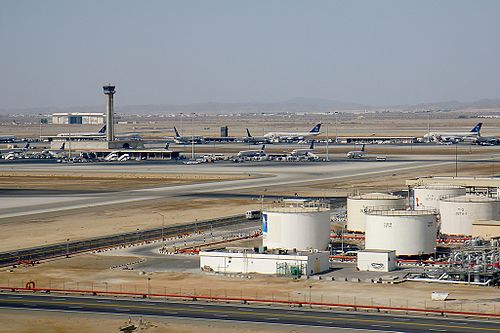
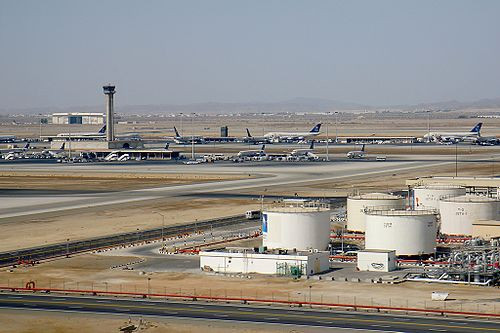
JEDDAH — King Abdulaziz International Airport (JED/OEJN), Saudi Arabia’s busiest gateway and a major hub for Hajj and Umrah pilgrims, continues to operate with scheduled commercial flights on March 21, 2026, despite ongoing regional security challenges stemming from the escalating conflict involving Iran, the United States and Israel.
King Abdulaziz International Airport
Live flight tracking data from multiple sources, including the official airport website (kaia.sa), Flightradar24, FlightAware and Trip.com, confirm active arrivals and departures throughout the day. As of early morning local time (GMT+3), departures include long-haul services such as Saudia SV 976 to Hong Kong scheduled for 06:00, Flyadeal FAD 9118 to Abuja at 05:00 and Flynas XY 697 to Bishkek at 05:00. Arrivals feature routes from Nairobi (Saudia SV 948), Karachi (Airblue ABQ 170) and Berlin (Flynas XY 644), with many flights listed as on time or experiencing only minor delays.
The airport’s official flights page shows hundreds of scheduled operations, with real-time updates indicating low overall impact — around 2% disruption on recent days according to Wego tracking. FlightAware and FlightStats report dozens of arrivals and departures in the early hours, including international carriers like Turkish Airlines codeshares and regional low-cost operators. No blanket closure has been announced by the General Authority of Civil Aviation (GACA) or Jeddah Airports Company, which manages the facility.
A travel alert posted on the KAIA website urges passengers to “check directly with their airlines for the latest flight updates before leaving for the airport” due to “current developments.” The advisory highlights potential adjustments from regional events but stops short of any suspension notice. Sustainability and service pages remain active, promoting parking bookings and passenger rights information.
The airport has handled increased traffic in recent weeks as Saudi Arabia positions itself as a key transit hub amid widespread disruptions elsewhere in the Gulf. Reports from Asharq Al-Awsat and other outlets note a surge in rerouted flights using Saudi airspace and airports after closures or severe restrictions in Dubai, Doha, Abu Dhabi and other neighboring hubs. Saudi carriers like Saudia and Flynas have maintained core domestic and select international routes while extending suspensions to certain conflict-adjacent destinations through late March.
Advertisement
Earlier in the month, temporary measures affected operations. Saudia and others canceled or postponed flights to cities like Dubai, Doha, Bahrain, Kuwait and Amman amid initial airspace safety assessments following missile exchanges and drone threats. By mid-March, however, major Saudi airports — including Jeddah, Riyadh (RUH) and Dammam (DMM) — returned to largely normal schedules, facilitating repatriation charters and commercial services. GACA reported handling over 120 flights from regional carriers between late February and mid-March to support continuity.
Unlike Kuwait International Airport, which faces prolonged closure due to reported infrastructure damage from drone incidents, Jeddah’s King Abdulaziz has avoided direct impacts. No confirmed strikes or significant damage have been reported at JED, though heightened security includes enhanced radar monitoring and coordination with military authorities. Passenger volumes remain robust, with the airport previously setting records for throughput and continuing to serve as a vital link for pilgrims and business travelers.
Delays do occur sporadically — FlightEra notes average departure delays around 44 minutes and arrivals at 76 minutes in recent periods, with low cancellation rates (4-5%). Weather conditions in Jeddah remain favorable, with scattered clouds, mild winds and good visibility contributing to smooth operations.
For travelers, the situation requires vigilance. Airlines recommend confirming status via official apps or websites, as dynamic routing and overflight permissions can lead to last-minute changes. Saudia, the primary operator at JED, has emphasized safety-first adjustments, while low-cost carriers like Flynas and Flyadeal maintain extensive domestic networks.
Advertisement
The broader Middle East aviation landscape remains volatile. Airspace over Iran, Iraq, Syria and parts of the Gulf faces intermittent restrictions, forcing longer routings over Saudi territory or the Arabian Sea. This has increased fuel costs and flight times but allowed Jeddah to absorb overflow traffic.
As the conflict enters its third week, no escalation has directly threatened Jeddah’s operations. Authorities continue emergency coordination, with focus on stranded passengers and logistical support. International advisories from the U.S. State Department and others urge caution in the region but do not prohibit travel to Saudi Arabia outright.
Passengers planning to use King Abdulaziz International Airport today or in coming days should monitor real-time sources: the KAIA flights portal, airline apps and trackers like Flightradar24. With hundreds of flights proceeding, the airport stands open and functional, serving as a stable anchor in an otherwise disrupted regional network.
Fourteen stocks from the BSE SmallCap index declined continuously over five trading sessions ending March 20, with losses of up to 23%. Despite the Sensex remaining largely flat, sharp volatility during the period highlights continued pressure in broader markets, particularly in smallcap stocks witnessing sustained selling across consecutive sessions.
Indian markets witnessed a broad-based sell-off amid escalating Middle East tensions and rising crude oil prices. Several stocks, including IDBI Bank and SpiceJet, declined sharply during the week. Geopolitical risks, inflation concerns, and regulatory developments weighed on investor sentiment, dragging multiple sectors lower despite selective resilience in parts of the market.
Amid rising geopolitical tensions and market volatility, investors are reassessing sectoral allocations. Mutual fund experts suggest focusing on domestic cyclicals, financials, and defensives like pharma, while remaining cautious on IT, metals, and oil and gas. They also highlight valuation risks and stress the importance of resilient businesses in uncertain conditions.
Global financial markets are expected to remain influenced by the ongoing conflict in West Asia, with risk aversion likely to persist amid rising uncertainty, according to a report by ICICI Bank.
The report said that “markets are expected to continue to get shaped by the ongoing conflict in the Middle East that has so far not shown signs of de-escalating,” adding that “risk aversion is expected to remain in place.”
According to the report, prior to the conflict, the base-case scenario assumed that “the tariff pass through would start to fade and that would push US inflation gradually lower and labour markets would remain weak that could open scope for a 50bps cumulative cut over 2H2026.”
However, the report cautioned that “the outlook could get shaped by the ongoing conflict and in particular whether there is a structural pick-up in crude prices,” which the Federal Open Market Committee (FOMC) may need to consider in its projections.
Advertisement
It added that “there are risks of the FOMC possibly back-loading easing, although it is too early to call at the current juncture,” with the outlook depending on “the duration of the Middle East conflict and permanent impact it has on oil prices.”
Live Events
The report highlighted that the FOMC maintained status quo on policy rates while “explicitly acknowledged the build-up of uncertainty in the outlook from the ongoing conflict in the Middle East” and also recognised weakness in the labour market. Despite the geopolitical challenges, the report noted that the FOMC raised its GDP growth projections and also revised inflation forecasts upward, with “the 2 per cent target expected to be achieved by 2028.”However, there was no change in policy rate guidance, with “the median of members expected 25bps cut in 2026 and 25bps cut in 2027.”
The report added that FOMC Chair Jerome Powell “emphasized that the central bank will maintain a data-dependent response” and highlighted that “considerable uncertainty persists about the impact of the conflict on the outlook on the economy.”
It also warned that “higher energy prices and pass-through of the same into consumer prices implies risk of a possible delay” in rate cuts if oil prices remain elevated.
For markets, the report said the FOMC meeting was “largely a non-event,” but added that “the conflict in the Middle East is likely to drive price action ensuring that risk aversion remains dominant,” with US yields expected to drift higher and the global dollar likely to remain supported. (ANI)
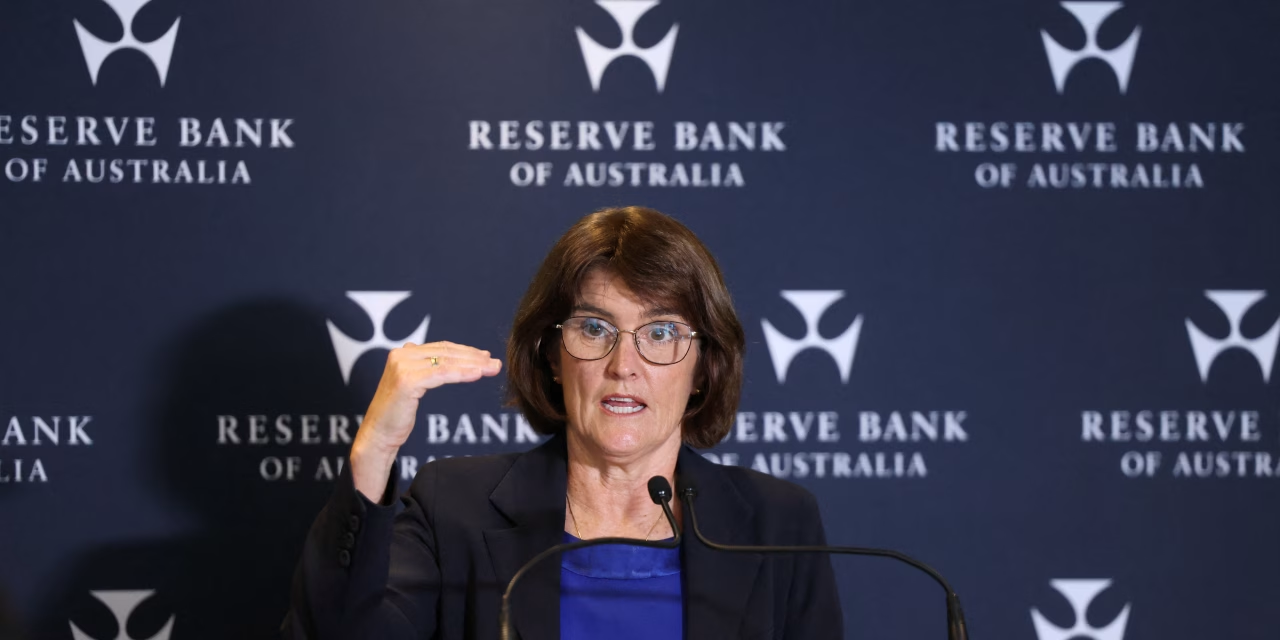
SYDNEY—Split decisions on interest rates are common among global central banks. What sets the Reserve Bank of Australia apart from counterparts including the Federal Reserve and Bank of Japan is that it doesn’t attach names to individual votes.
That was brought into focus this week when the RBA decided to raise interest rates by 25 basis points to 4.10%, with five of its board members outvoting four other officials.
















































You must be logged in to post a comment Login