
Business
Starbucks Stock Plunges Nearly 4% as Investors Question Pace of Turnaround Amid Persistent Challenges

. (NASDAQ: SBUX) shares tumbled more than 3.8% on Thursday, closing near $87.74 after shedding about $3.49, as Wall Street weighed ongoing concerns over labor costs, store redesign expenses and the speed of CEO Brian Niccol’s “Back to Starbucks” recovery plan in a volatile market environment.
The coffee giant’s stock opened around $90.72 and swung between roughly $87.08 and $90.95 before settling lower on elevated volume. The decline extended recent pressure on the shares, which have traded well below the 52-week high of $104.82 reached earlier in the cycle while remaining above the 52-week low near $75.50. Market capitalization hovered around $100 billion.
Analysts attributed the drop to a combination of broader market caution tied to geopolitical tensions and energy prices, alongside company-specific worries. Recent downgrades, including from RBC Capital to Sector Perform citing labor investments, have added to sentiment challenges even as the company reports signs of improving customer traffic.
Turnaround Progress Shows Early Wins but Faces Scrutiny
Under Niccol, who joined in late 2024 after leading Chipotle, Starbucks has pursued an aggressive “Back to Starbucks” strategy aimed at restoring its identity as a welcoming “third place” rather than an efficient order-fulfillment machine. The plan includes staffing more baristas, simplifying menus, reintroducing condiment bars, adding personal touches like handwritten messages on cups, and renovating stores with warmer wood finishes, plants and additional seating — with a goal of restoring more than 100,000 seats by the end of 2026.
Fiscal first-quarter 2026 results, reported in late January, delivered encouraging signals. Global comparable-store sales rose 4%, driven by a 3% increase in transactions rather than price hikes. In the critical U.S. market, comparable sales also climbed 4% with positive traffic growth for the first time in nearly two years — a key milestone after prolonged softness. China delivered 7% comparable sales growth, supported by product innovation and delivery channels.
Revenue for the quarter reached approximately $9.9 billion, beating estimates, though adjusted earnings per share slightly missed forecasts amid investments in labor and operations. Niccol has described the turnaround as “ahead of schedule” while acknowledging it remains in early stages, with the company shifting toward offense and innovation in fiscal 2026.
At the company’s January investor day, executives reaffirmed ambitions to reclaim pre-pandemic operating margins around 15% by fiscal 2028 through disciplined cost management, menu innovation and international expansion. Plans include thousands of new stores globally while focusing on hospitality upgrades.
Headwinds Persist Despite Momentum
Investors appear wary of near-term margin pressures. Additional staffing to improve service has weighed on profitability, and store renovation costs — estimated at around $100,000 per location for many refreshes — could strain finances in the short term. Labor issues, including union negotiations, continue to draw analyst attention.
Competition has intensified. Rivals such as Dutch Bros and smaller players like Blank Street have gained ground with lower prices and convenient formats, while value-seeking consumers react to years of price increases at Starbucks. In China, despite recent gains, the company completed a sale of a majority stake in its operations to Boyu Capital in a deal valuing the business at about $4 billion, allowing greater focus on the U.S. core while unlocking capital.
Broader economic factors added pressure Thursday. Surging oil prices amid U.S.-Iran tensions raise concerns about consumer spending on discretionary items like premium coffee drinks. Higher energy and commodity costs could further squeeze margins or force pricing adjustments that risk alienating traffic-sensitive customers.
Starbucks has responded with value-oriented moves, including a reimagined loyalty program, protein-focused beverages and personalized energy drinks to appeal to health-conscious and younger demographics. New advertising campaigns emphasize the “magic of coffee” and hospitality, though some analysts question whether redesigns will sufficiently attract Gen Z traffic.
Analyst Views Mixed as Valuation Remains Elevated
Wall Street’s consensus rating hovers near Buy or Moderate Buy, with an average 12-month price target around $100 to $101, implying roughly 14-15% upside from recent levels. Optimists point to traffic stabilization, China momentum prior to the stake sale, and long-term growth potential from store expansion and innovation. Bears highlight high valuation — trading at elevated forward multiples — and uncertainty around sustained margin recovery.
Recent analyst actions reflect caution. RBC Capital downgraded the stock citing balanced risk/reward and labor investments, while Wolfe Research assumed coverage with a Peer Perform rating. Guggenheim raised its price target modestly, but others like DA Davidson initiated with Neutral amid limited margin visibility.
Technically, the stock has faced resistance near $100 and support levels around $85-$87 in recent sessions. A break below recent lows could test further downside if macroeconomic pressures intensify, while positive same-store sales trends in upcoming quarters could spark a rebound.
Strategic Shifts and Long-Term Outlook
Niccol has been candid about past missteps, noting the company had “run like a manufacturing facility” focused on speed and volume at the expense of customer experience. The pivot emphasizes craft beverages, linger-friendly environments and community connection — hallmarks of Starbucks’ original success under founder Howard Schultz.
Key initiatives include menu simplification to reduce complexity for baristas, free refills to encourage longer visits, and investments in digital tools that enhance rather than replace in-store hospitality. The company also eyes growth in premium food pairings and functional beverages to broaden appeal.
Internationally, after the China restructuring, Starbucks aims to maintain a strong presence while pursuing opportunities in other high-growth markets. Domestically, the focus remains on revitalizing existing stores before aggressive new openings.
For investors, Starbucks offers a dividend yield around 2.7%, providing some income support amid volatility. Share repurchases and capital returns remain part of the financial framework, though near-term cash deployment prioritizes the turnaround.
Broader Retail and Consumer Context
Starbucks’ performance serves as a barometer for consumer discretionary spending. Positive U.S. traffic trends suggest some resilience among rewards members and occasional visitors, but sustained recovery depends on broader economic conditions, including employment, wage growth and inflation trends influenced by energy prices.
The stock’s recent pullback occurs against a backdrop of choppy equity markets, where high-valuation consumer stocks face scrutiny. Compared with peers like McDonald’s or Chipotle, Starbucks grapples with unique challenges from its premium positioning and labor-intensive operations.
As trading continues, all eyes will turn to the next quarterly update for further evidence of transaction growth, margin stabilization and progress on store renovations. Management has expressed confidence in the path forward but cautioned that the full benefits of investments will unfold over multiple quarters.
Starbucks Corp., founded in 1971 and now operating thousands of locations worldwide, remains one of the most recognizable brands in retail. Its ability to reclaim cultural relevance as a daily destination while navigating cost pressures and competition will define whether the current momentum translates into durable shareholder value.
Longer-term bulls see potential for the stock to re-rate higher if Niccol delivers on hospitality improvements and innovation without sacrificing profitability. Skeptics warn that elevated expectations and external risks could prolong the stock’s consolidation phase.

Iran Has Distracted From the Mag 7 Woes. Why the Slump Is a Good Thing for Stock Markets.
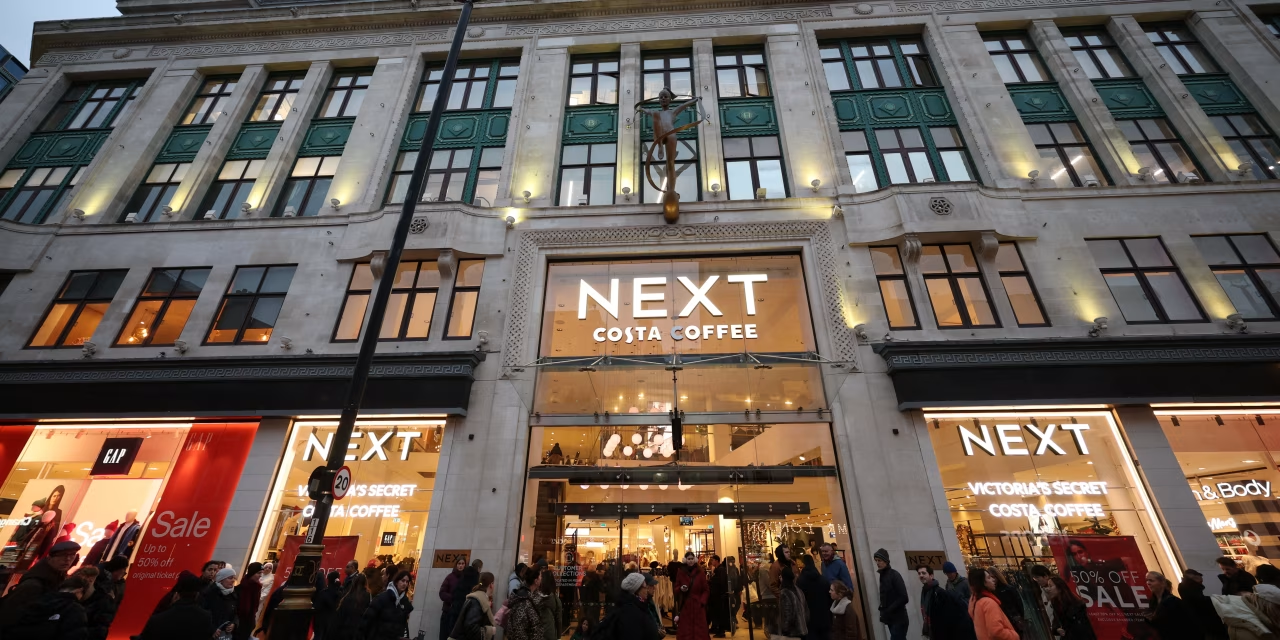
Shares in Next PLC NXT -1.71%decrease; red down pointing triangle jumped after the U.K. clothing retailer maintained its fiscal-year sales-growth expectations, despite warning that the Iran war could affect costs, prices and consumer demand.
The group said Thursday it had accounted for 15 million pounds ($20 million) in additional costs—including fuel and air freight—tied to the Middle East conflict. The costs didn’t affect Next’s guidance since they have been offset by savings, it said.
Copyright ©2026 Dow Jones & Company, Inc. All Rights Reserved. 87990cbe856818d5eddac44c7b1cdeb8
The Big Money Show panel discusses the alarming new analysis showing Social Security and Medicare racing toward insolvency and warns that retirees face steep benefit cuts unless Washington acts fast.
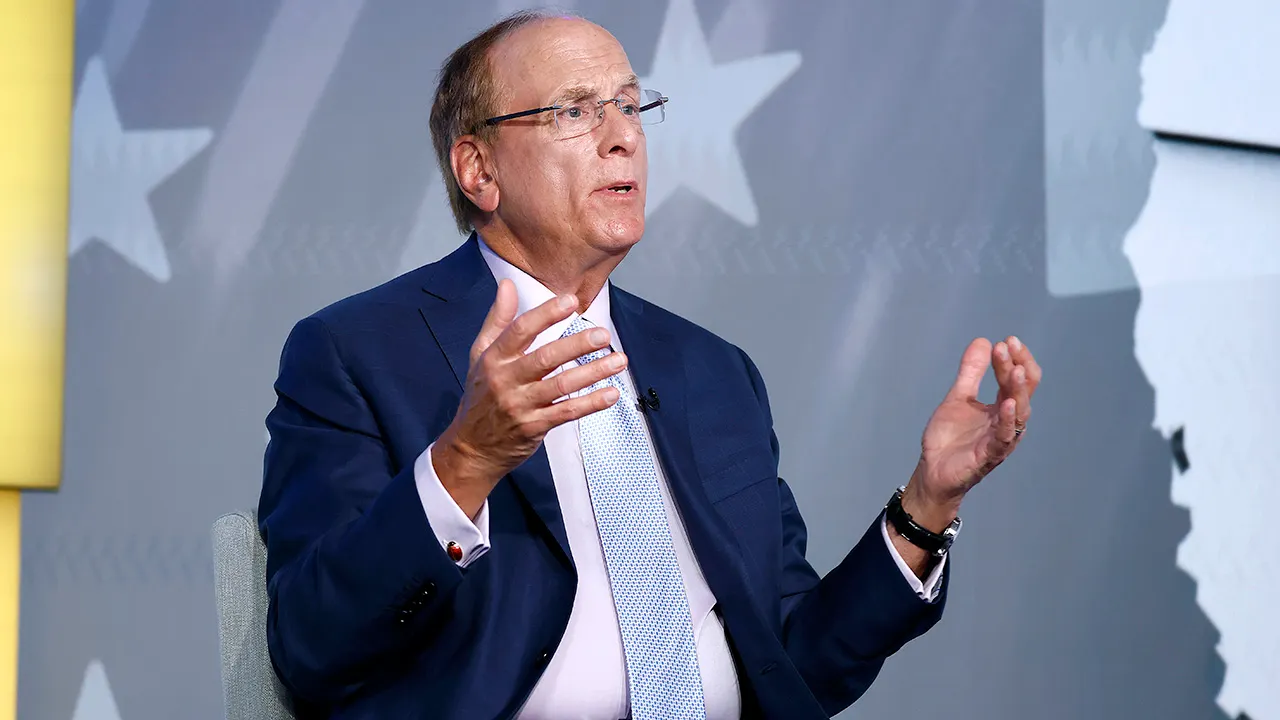
BlackRock CEO Larry Fink discussed possible Social Security reforms that would allow more Americans to benefit from the growth in the stock market while also ensuring the program is strengthened so it can survive to serve future generations.
Fink’s recently released annual chairman’s letter touched on how Social Security is “one of the most effective poverty-prevention programs in history” and that while it provides stability, it “doesn’t allow most Americans to build wealth in a way that grows their country.”
“Today, the system operates largely on a pay-as-you-go basis. Payroll taxes are used to pay current retirees, and the Social Security trust fund is invested primarily in U.S. Treasury bonds. In effect, workers lend money to the government and receive defined benefits in return.”
“The structure, designed as a social insurance program, emphasizes stability and predictability. What it doesn’t do is let people grow their benefits along with the broader economy. The question is whether the Social Security system could allow both,” Fink said.
NEW PROPOSAL WOULD CAP SOCIAL SECURITY BENEFITS AT $100K FOR WEALTHY COUPLES
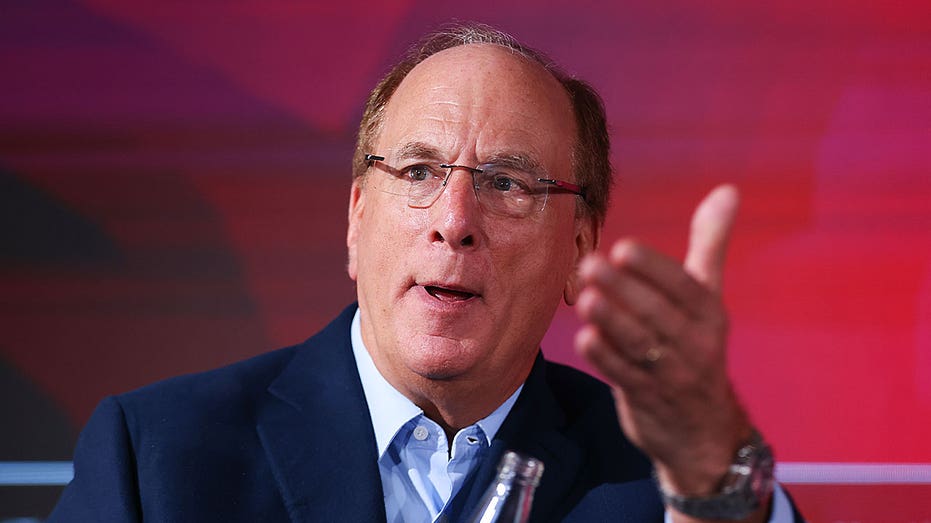
BlackRock CEO Larry Fink said that Americans need to discuss ways to reform Social Security ahead of its insolvency. (Hollie Adams/Bloomberg via Getty Images)
He said that this could be accomplished by asking whether a portion of the system could be invested “carefully, broadly, and over decades” like other long-term pension systems.
“This would not mean privatizing Social Security or putting it all into the stock market,” Fink wrote. “It would mean introducing a measure of diversification, similar in principle to the federal Thrift Savings Plan, which manages retirement savings for millions of federal employees.”
“The goal would be to strengthen the system over time while preserving its core guarantees,” he added.
SOCIAL SECURITY’S MAIN TRUST FUND FACES DEPLETION IN 2032, TRIGGERING BENEFIT CUTS

Social Security’s main trust fund is on a path to insolvency in less than a decade, when benefits would be automatically cut to match payroll tax revenue. (Getty Images/iStock)
Fink noted a bipartisan proposal from Sens. Bill Cassidy, R-La., and Tim Kaine, D-Va., that would create a new investment fund that operates parallel to the existing trust fund rather than replacing it while investing in a diversified mix of stocks and bonds to generate higher returns.
The proposal would require an initial investment of about $1.5 trillion and would be given 75 years to grow, and during that period the Treasury would continue covering Social Security benefits.
Once the fund matures, it would repay the Treasury and then supplement payroll taxes going forward to help close the gap between what the Social Security system takes in and what it pays out – while no one on Social Security or nearing retirement would see a change to their benefits.
Fink also noted that about six million Americans who are employed by state and local governments don’t currently contribute to Social Security and instead rely on public pension systems that invest in diversified portfolios.
BUDGET DEFICIT HITS $1 TRILLION FOR FIRST FIVE MONTHS OF FISCAL YEAR: CBO
| Ticker | Security | Last | Change | Change % |
|---|---|---|---|---|
| BLK | BLACKROCK INC. | 933.66 | -34.51 | -3.56% |
Other examples of alternative pension systems can be found overseas, with Australia’s superannuation system representing an approach that invests retirement contributions in the financial markets. Fink said that a “similar, carefully structured approach could be considered to strengthen Social Security.”
“I understand why any talk of changing Social Security makes people uneasy. Social Security is a core promise, and people rightly believe it should be honored. But under the current system, doing nothing could very well break that promise,” he said.
“Current projections show the trust fund won’t be able to pay full benefits by 2033. Many young Americans doubt they’ll ever fully see theirs,” he explained. “Addressing that gap will likely require multiple solutions. But thoughtful, long-term investing could be one of them.”
GET FOX BUSINESS ON THE GO BY CLICKING HERE
An analysis by the nonpartisan Committee for a Responsible Federal Budget (CRFB) noted that when Social Security’s main trust fund reaches insolvency – which is projected to occur in 2032 – federal law requires benefits be cut to match revenue from payroll taxes, which would amount to a roughly 24% cut for beneficiaries.
Fink noted that his chairman’s letter two years ago was focused on rethinking retirement and generated criticism for suggesting that Social Security was in need of reforms. He acknowledged that the latest letter may do the same, but said it’s a conversation that needs to be had.
“In my 50 years in finance, if there’s one thing I’ve learned, it’s that the problems we don’t talk about are the ones that should worry us most. And that’s exactly why we need the conversation now – because the cost of waiting is only getting higher,” he said.

Form 13D/A Venus Concept For: 27 March

JHVEPhoto/iStock Editorial via Getty Images

QuantumScape’s (QS) recent board appointment may prove more important than the headline suggests.
According to the company’s March 5 announcement, QuantumScape added Ross Niebergall to its board, an executive with deep ties across the defense industrial


Trump tells farmers that tractor companies should lower prices

Goyal also met his Chinese counterpart Wang Wentao.
This was their first in-person meeting since the US Supreme Court on February 20 struck down reciprocal tariffs imposed under the International Emergency Economic Powers Act (IEEPA).
The US subsequently imposed a 10% tariff on all countries for 150 days from February 24.
“Had a very productive discussion with @USTradeRep Jamieson Greer on the sidelines of the WTO Ministerial Conference. Exchanged views on the #WTOMC14 agenda, next steps in the India-US BTA negotiations and explored ways to further deepen our economic cooperation and bilateral trade ties,” Goyal said on X.

The two sides had announced a trade deal on February 2, with a target to sign it by March. In a joint statement on February 7, the US withdrew a 25% penal tariff on India for buying Russian oil, with the remaining 25% tariffs to be reduced to 18%.
Goyal discussed bilateral trade issues with his Chinese counterpart. “Met Mr. Wang Wentao, Minister of Commerce of China, on the sidelines of the #WTOMC14. Exchanged views on the MC-14 agenda and discussed bilateral trade matters,” Goyal said in a social media post.The meeting comes as India’s trade deficit with China crossed $100 billion during the first 11 months of the current fiscal year.

She ruled out any plan to impose a lockdown amid the West Asia conflict and urged political leaders to avoid spreading rumours and fear. “Going forward, we will continue to ramp up our efforts in mobilising additional non-tax revenues, and our government will remain on its toes to carefully manage the country’s fiscal position,” she said while replying to a discussion on the Finance Bill in the Rajya Sabha. The House later passed the Finance Bill by voice vote, returning it to the Lok Sabha and completing the budget process for the fiscal year beginning April 1.
Sitharaman said retail fuel prices have remained unchanged despite global crude prices rising from $70 to $122 a barrel within a month. “We are making sure that people of India don’t suffer,” she said, adding that the government’s broader strategy is to shield citizens while sustaining growth.
The government on Friday cut excise duty on petrol by Rs 10 per litre and reduced diesel duty to zero, while imposing export taxes on refiners to ensure domestic availability. The minister said the government is actively responding to the evolving situation and that Friday’s duty cuts are aimed at preventing the global price surge from feeding into domestic inflation and volatility. The duty cuts will lead to a revenue loss of about ₹7,000 crore, she said. Sitharaman said the move was necessary as oil marketing companies were incurring losses of about ₹24 per litre on petrol and ₹13 per litre on diesel.
New GDP series
On criticism of the new GDP series, Sitharaman said “these are routine exercises” and have been undertaken nine times since Independence. She said the new series, based on more than 300 data sources and 1,400 variables, integrates GST data, digital financial flows and labour surveys to improve accuracy and real-time tracking of economic activity.

TUCSON, Ariz. — The search for Nancy Guthrie, the 84-year-old mother of NBC “Today” show co-anchor Savannah Guthrie, stretched into its 55th day Friday with authorities reporting no significant breakthroughs and her whereabouts remaining unknown more than seven weeks after she vanished from her home in the Catalina Foothills suburb of Tucson.

Guthrie was last seen alive on the evening of Jan. 31 when a family member dropped her off at her residence, according to the Pima County Sheriff’s Department. She failed to appear the next day, Feb. 1, at a friend’s house for a virtual church service, prompting family members to report her missing around noon.
Investigators believe the deeply religious widow was abducted from her bed in the late night or early morning hours. Security camera footage from her property captured a masked, armed individual approaching the home around 2 a.m., and her pacemaker app disconnected from her phone at approximately 2:28 a.m. A doorbell camera reportedly went offline shortly before.
Pima County Sheriff Chris Nanos has described the case as an apparent abduction, saying it appeared someone took Guthrie against her will. No arrests have been made, and law enforcement has not publicly identified any suspects. Family members, including Savannah Guthrie and her siblings, have been cleared of any involvement.
Investigation Yields Clues but Few Answers
The FBI and local authorities have poured significant resources into the case, conducting extensive searches of the surrounding desert areas with drones, helicopters, cadaver dogs and volunteer teams. Hundreds of agents have followed up on more than 3,000 tips, though officials say many have not panned out.
Evidence collected includes biological material and DNA found at Guthrie’s home, which is undergoing forensic analysis, including genetic genealogy testing. Gloves discovered near the property were traced to a local restaurant employee but yielded no immediate breakthrough. A mysterious vehicle captured on a neighbor’s Ring camera is also under review.
Reports of possible ransom demands, including notes sent to media outlets and Bitcoin requests, have surfaced, but authorities have not confirmed their authenticity or provided details. An internet outage in the area on the night of the disappearance has also drawn scrutiny.
Sheriff Nanos has said investigators are “definitely closer” to identifying a suspect or suspects as they shift from broad public appeals to more focused forensic work, but he cautioned that progress can be slow in such cases.
The case has drawn intense national and international attention, largely because of Savannah Guthrie’s high-profile role on the “Today” show. In her first public interview since the disappearance, Savannah told NBC’s Hoda Kotb that the ordeal has been “unbearable” agony for the family. She expressed sorrow, wondering aloud if her fame might have made her mother a target.
“I just want to say I’m so sorry, mommy,” Savannah said in emotional remarks.
Family Offers Massive Reward, Issues New Plea
On Feb. 24, the Guthrie family announced a $1 million private reward for information leading to Nancy’s safe return, supplementing the FBI’s existing $100,000 reward. The announcement generated a surge of new tips.
Last weekend, the family renewed its public appeal, urging Tucson residents and others to review home security footage, text messages, notes or any memories from the period between Jan. 31 and Feb. 2. “No detail is too small,” they said in a statement.
Savannah Guthrie is scheduled to return to the “Today” show on April 6, describing it as her “purpose right now” while the search continues. Hoda Kotb has been filling in during her absence.
Nancy Guthrie, a widow whose husband Charles died in 1988, was known as a devoted mother and grandmother who lived a quiet life in the affluent Catalina Foothills neighborhood. She had three children, including Savannah, and maintained strong ties to her church community.
Case Highlights Challenges in Missing Persons Investigations
Experts have noted that Guthrie’s disappearance stands out for several reasons: the advanced age of the victim, the apparent targeted home invasion in a relatively safe suburb, and the lack of immediate motive. Abductions of elderly individuals are statistically rare compared with other demographics.
The intense media coverage has spotlighted the broader issue of missing persons cases in the United States, where thousands vanish each year, many without the resources or attention afforded to high-profile cases. Some advocates have referred to a “Nancy Guthrie Effect,” suggesting the publicity has helped renew focus on other unsolved disappearances.
Mental health professionals say the prolonged uncertainty inflicts deep trauma on families, compounding grief with constant “what if” scenarios. The Guthrie family has spoken about the emotional roller coaster of hope mixed with despair.
What Lies Ahead
As the investigation enters its eighth week, authorities continue to treat the case as active and ongoing. Searches have scaled back in some areas, with cadaver dog efforts paused, but forensic work and tip follow-ups persist.
No leading theory has been publicly confirmed, and officials stress they are exploring all possibilities, including foul play tied to ransom or other motives.
President Donald Trump previously commented on the case, stating that anyone responsible would face “the most severe” penalties if Guthrie is found harmed.
For the Guthrie family and investigators alike, the priority remains bringing Nancy home safely or providing answers. Tips can be submitted to the Pima County Sheriff’s Department or the FBI.
The disappearance has transformed a quiet residential street into a focal point of national curiosity, with yellow ribbons tied to trees as symbols of hope and support.
Neighbors have reported increased vigilance, and some have questioned whether the case points to vulnerabilities in home security even in upscale areas.
As days turn into weeks without resolution, the Guthrie family’s public pleas underscore a simple message: someone may hold the key to finding Nancy, whether through overlooked footage, a suspicious vehicle sighting or a seemingly minor recollection.
Law enforcement officials urge anyone with information, no matter how insignificant it may seem, to come forward immediately.
The case remains a stark reminder of the fragility of safety and the enduring pain of not knowing.
Nvidia Won't Be Dead Money For Much Longer

Tiger Woods involved in another car crash ahead of Masters

Why $20,000 a month is not financial freedom

Tesco F&F launches ‘effortlessly chic’ trousers in time for spring


-
 Crypto World7 days ago
NIO (NIO) Stock Plunges 6.5% as Shelf Registration Sparks Dilution Worries
-
 NewsBeat2 days ago
Manchester United reach agreement with Casemiro over contract clause amid transfer speculation
-

 Crypto World6 days ago
Best Crypto to Buy Now: Strategy Just Spent $1.57 Billion on Bitcoin During Fear While Early Investors Quietly Enter Pepeto for 150x Potential
-

 Crypto World6 days ago
Bitcoin Price News: Bhutan Sells $72 Million in BTC Under Fiscal Pressure, but the Smart Money Entering Pepeto Sees What the Market Does Not
-

 News Videos2 days ago
Parliament publishes latest register of MPs’ financial interests
-

 Sports4 days ago
Remo Stars and Kano Pillars Strengthen Survival Hopes in NPFL
-

 Sports4 days ago
Gary Kirsten Accuses Pakistan Cricket Board Of ‘Interference’, Mohsin Naqvi Responds
-

 Business5 days ago
No Winner in March 21 Drawing as Prize Rolls to $133 Million for Next
-

 Tech5 days ago
Give Your Phone a Huge (and Free) Upgrade by Switching to Another Keyboard
-

 Tech5 days ago
AI enters the chat: New Seattle dating app relies on tech to facilitate meaningful human connections
-

 News Videos4 days ago
Ch 9 Financial Management Part 1 | Detailed One Shot | Class 12 Business Studies Boards 2026
-
Business7 days ago
Columbia Sportswear enters $500 million credit agreement with JPMorgan Chase
-

 Tech6 days ago
Today’s NYT Connections Hints, Answers for March 22 #1015
-

 Business24 hours ago
Instagram, YouTube Found Responsible for Teen’s Mental Health Struggle in Historic Ruling
-

 Business5 days ago
Will Duke Basketball Win It All? Duke Basketball Enters Second Round as Third Favorite to Claim NCAA Title
-

 Sports5 days ago
2026 Kentucky Derby horses, odds, futures, preview, date: Expert who hit 12 Derby-Oaks Doubles enters picks
-
 NewsBeat5 days ago
Update on Wisbech river crash as search for teenage boy enters fifth day
-
 Entertainment4 days ago
Cynthia Bailey Dishes on ‘RHOA’ Season 17, Discusses Kandi
-
 NewsBeat2 days ago
Tesco is selling new Cadbury Dairy Milk bar and people can’t wait to try it
-

 Tech4 days ago
Samsung will soon let you control smart home devices from your car’s dashboard
You must be logged in to post a comment Login