



Connect with us

Business

States’ consolidated fiscal deficit widens 0.3 pc to 3.3 per cent in FY25: RBI

Published

on

States' consolidated fiscal deficit widens 0.3 pc to 3.3 per cent in FY25: RBI
Mumbai: States’ consolidated fiscal deficit has widened to 3.3 per cent of GDP in FY25 after remaining at 3 per cent for the three previous fiscals, the Reserve Bank said on Friday.

The central bank said it analysed the budgets presented by all the states for the fiscal year, and attributed the widening of the key number to higher borrowing by states under the central government’s 50-year interest-free loans in the ‘Special Assistance to States for Capital Investment’.

Accessing money under the central government scheme is over and above the normal net borrowing ceiling of the states, the RBI noted.

The thrust on capital expenditure was sustained as capital expenditure remained steady at 2.7 per cent of GDP in 2023-24 and 2024-25 and is budgeted at 3.2 per cent of GDP in 2025-26, it said.

The consolidated outstanding liabilities of states remained elevated in the post-pandemic period, with a budget estimate of 29.2 per cent of GDP at March-end 2026, the RBI said in its study of state finances.

Advertisement


The report also found some influence of demographics, and particularly the age of the population, on state finances, noting that Indian states are at different stages of demographic transition.
Youthful states have a wider window of opportunity due to an expanding working-age population and stronger revenue mobilisation, which can be harnessed through higher investment in human capital, while the ageing states face a narrowing window.In the case of ageing states, there are fiscal pressures arising from shrinking tax bases and rising committed expenditure, which call for higher revenue capacity and reforms in healthcare, pensions and workforce policies, the RBI said.

The intermediate states need to balance growth priorities with early preparation for ageing, it said.

Continue Reading
Click to comment

Leave a Reply

Your email address will not be published. Required fields are marked *

Business

Wedbush raises Arvinas stock price target to $11 on pipeline progress

Published

on


Wedbush raises Arvinas stock price target to $11 on pipeline progress

Continue Reading

Business

True Citrus debuts functional drink mix collection

Published

on

True Citrus debuts functional drink mix collection

The collection offers three varieties of functional drink mixes. 

Continue Reading

Business

Apartments could be created at historic city centre Miller Arcade in Preston

Published

on

Business Live

Vacant upper floor could be brought back to use

Miller Arcade in Preston.

Miller Arcade in Preston(Image: Google)

Dozens of apartments could be created within Preston’s Miller Arcade as part of a major redevelopment of the historic city shopping precinct.

Advertisement

Plans have been unveiled which would see the vacant upper floors of the 19th-century premises brought back into use after years of standing empty.

A total of 46 properties are proposed across the top three storeys of the Grade II-listed building – bound by Church Street, Lancaster Road, Birley Street and the Flag Market – along with communal facilities for residents.

If the blueprint is approved, the retail units on the ground floor of the arcade – which became the first indoor shopping area in the city when it opened in 1899 – would continue to trade as normal.

The conversion proposal – by Darwen-based Icon Heritage Limited – comes 11 years after a similar vision put forward by a different company was given the nod by city planners. That scheme, unlike the current one, also featured a new restaurant and a roof garden – but was ultimately never delivered.

Advertisement

The plans now on the table are for 24 one-bed, 18 two-bed and four ‘studio’ flats whose occupiers would have shared access to a cinema, gym, library, workspace, meeting room, kitchen and lounge. Access would come via an existing doorway on Lancaster Road, beneath the existing gold-plated ‘Miller House’ sign.

The much-loved landmark is renowned for its Victorian Baroque architecture and was modelled on the larger Burlington Arcade in London.

The floors now earmarked for apartments once housed hotels, a Turkish Baths, a wine lodge and, most recently, offices.

According to documents lodged with Preston City Council, the only external alterations that would be required by the proposed conversion would be repairs to the building’s fabric and the refurbishment of its windows – which would also be upgraded with ‘secondary glazing’ to help block out noise and retain heat.

Advertisement

The necessary internal reconfiguration will take “a sensitive design approach that prioritises the retention of existing architectural features…which are considered heritage assets”, a planning statement explains.

It adds: “Introducing residential spaces into the building brings a new life – and the new use will help bring Miller Arcade back to becoming [of] even greater importance in Preston.”

The applicant sought advice from the city council before submitting their plans and was advised that the principle of the proposal was “wholly acceptable”.

To find all the planning applications, traffic diversions, road layout changes, alcohol licence applications and more in your community, visit the Public Notices Portal.

Advertisement
Continue Reading

Business

Supreme Court’s tariff decision clouds trade outlook

Published

on

Supreme Court’s tariff decision clouds trade outlook

Some say it may not significantly change the trajectory of the trade war.

Continue Reading

Business

PNC CEO Demchak sells $11.5 million in stock

Published

on


PNC CEO Demchak sells $11.5 million in stock

Continue Reading

Business

Ford recalls over 450,000 vehicles in US, including 412K Explorer SUVs

Published

on

Ford recalls over 450,000 vehicles in US, including 412K Explorer SUVs

Ford is recalling more than 450,000 vehicles in the U.S. in two separate actions over safety issues that federal regulators say could increase the risk of a crash.

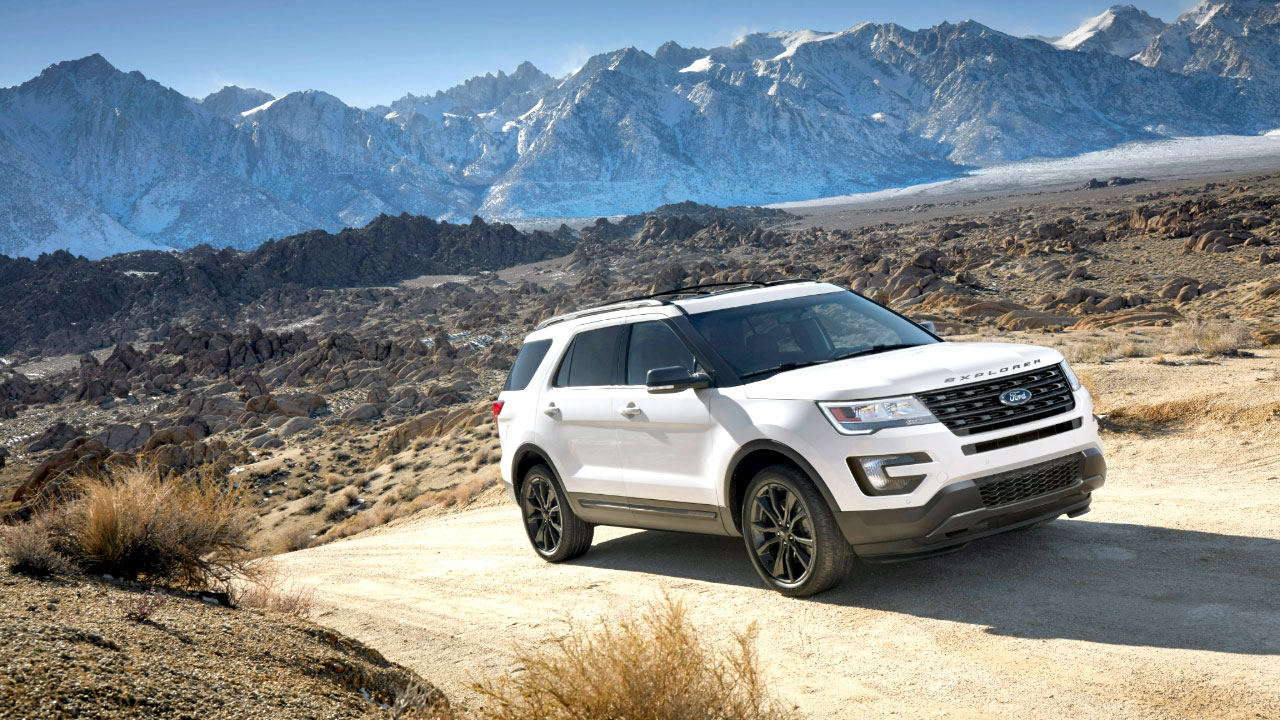
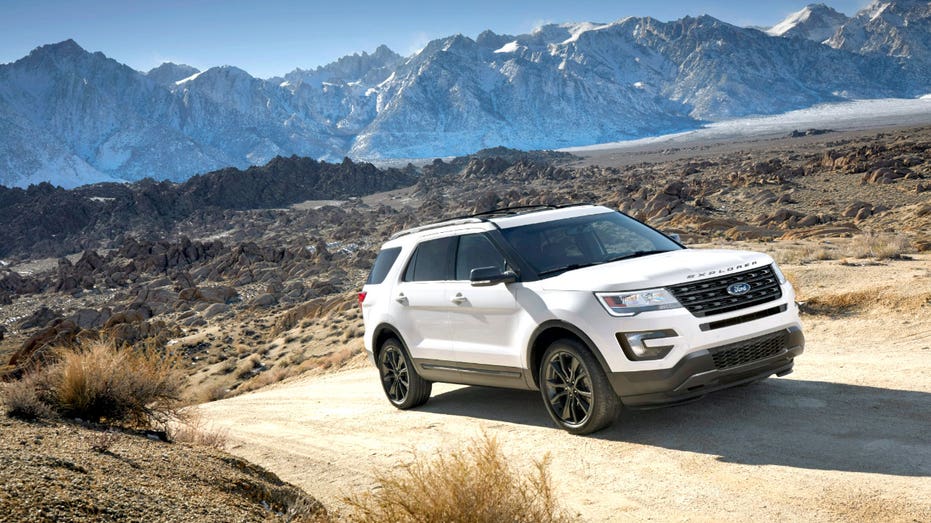
The largest recall covers 412,774 model year 2017-2019 Ford Explorer SUVs due to a rear suspension toe link that can fracture, potentially affecting steering control.

Advertisement

Toe links help maintain rear wheel alignment. If one breaks, it can cause changes in vehicle handling and raise the risk of a crash, according to the National Highway Traffic Safety Administration.

VOLVO RECALLS OVER 40,000 ELECTRIC SUVS WORLDWIDE OVER BATTERY FIRE CONCERNS

Ford Explorer driving on a dirt road.

A 2017 Ford Explorer equipped with the XLT Sport Appearance Package. (Ford Motor Co.)

NHTSA said dealers will replace the rear suspension toe links with a revised, stronger design, free of charge for affected vehicles.

Ford told FOX Business that it is not aware of any injuries related to this issue.

Advertisement

The automaker said notification to dealers is expected to begin on Feb. 25, and owner notification letters are expected to be mailed starting March 9.

ford logo

Ford sign at a dealership in Richmond, California, June 21, 2024. (David Paul Morris/Bloomberg via Getty Images)

In a separate action, Ford is also recalling 40,655 vehicles to address battery failures and brake pedal defects, which regulators said could increase crash risk.

Ford logo

A Ford logo is seen against the backdrop of a city skyline. (Jeff Kowalsky/Bloomberg via Getty Images)

The latest recalls follow a record year for the automaker. In 2025, Ford issued 103 safety recalls, surpassing its previous annual high with months still remaining in the calendar year, according to a Kelley Blue Book report previously cited by FOX Business.

CLICK HERE TO GET FOX BUSINESS ON THE GO

Advertisement

Ford has said its recall activity reflects efforts to identify and fix potential defects quickly and that it has expanded its team of safety and technical experts in recent years to improve quality and compliance.

Reuters contributed to this report. 

Continue Reading

Business

Meta Platforms (META) Stock Dips on Heavy AI Capex Outlook Despite Strong Earnings

Published

on

Stock Market

Meta Platforms Inc.’s stock has pulled back in February 2026, trading around $636 to $639 after shedding about 2-3% in recent sessions amid investor concerns over the company’s massive $115 billion to $135 billion capital expenditure guidance for the year, even as core advertising revenue surges and new AI infrastructure deals signal long-term momentum.

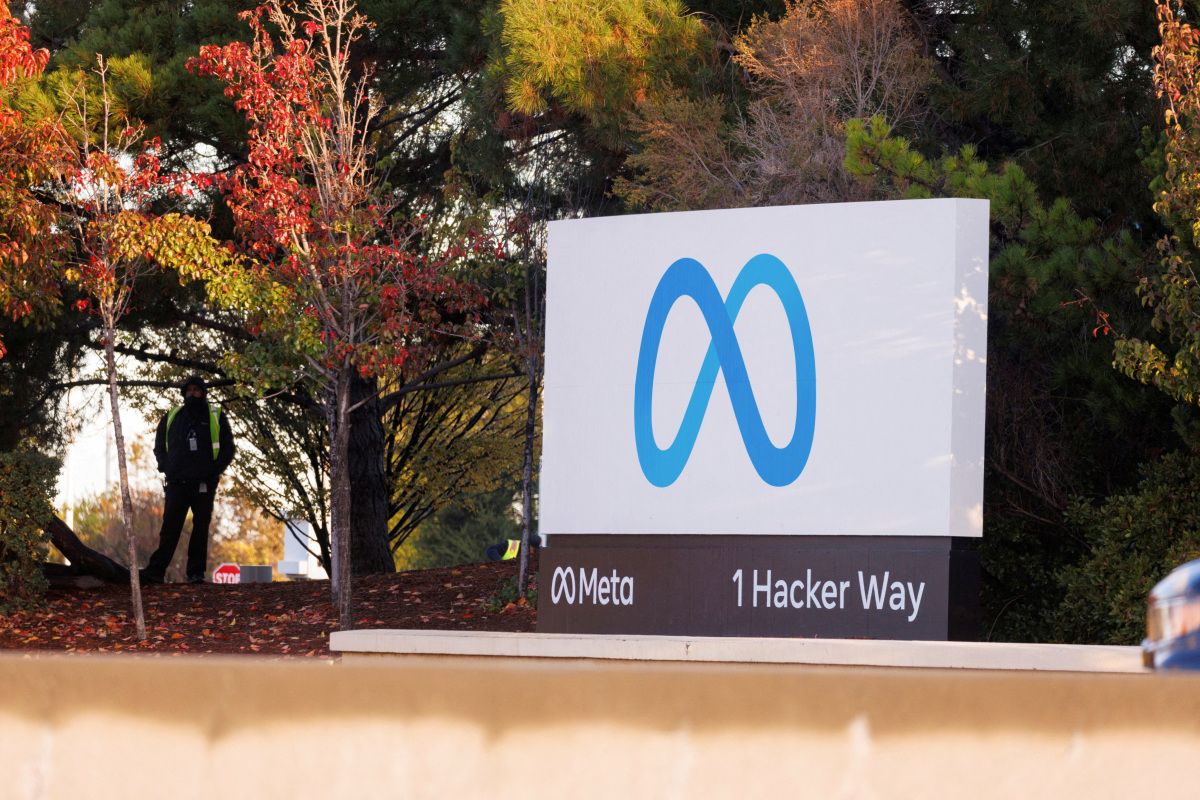
Headquarters of Facebook parent company Meta Platforms Inc in Mountain View
Meta Platforms

As of February 24, 2026, Meta (NASDAQ: META) closed at approximately $636.07, down modestly from recent highs near $655-$660 earlier in the month. The shares have retreated from an all-time peak of around $788-$796 in mid-2025, reflecting a roughly 18-20% decline from that level. Year-to-date performance remains positive but tempered by volatility tied to AI spending fears and broader market dynamics.

The pressure intensified following Meta’s blockbuster Q4 and full-year 2025 earnings released January 28, 2026. The company reported record revenue of $59.89 billion for the quarter, up 24% year-over-year (23% on constant currency), surpassing analyst expectations. Full-year revenue reached $200.97 billion, a 22% increase from 2024. Diluted earnings per share hit $8.88 in Q4, beating estimates, while full-year net income stood at $60.46 billion despite a one-time tax impact from legislative changes.

Advertising, the core driver, delivered $58.14 billion in Q4, up significantly, fueled by 18% growth in ad impressions and 6% higher average price per ad. Family of Apps revenue climbed 25% to $58.94 billion, with daily active people averaging 3.58 billion in December 2025, up 7% year-over-year. Reality Labs, encompassing metaverse and wearables, posted $955 million in revenue but a $6.02 billion operating loss in Q4, though management indicated losses would peak in 2026 before declining.

Meta guided aggressively on investments, forecasting 2026 capex of $115 billion to $135 billion—roughly double 2025’s $72.22 billion—to build out AI infrastructure, data centers, and compute capacity. CEO Mark Zuckerberg emphasized advancing “personal superintelligence” through agentic AI models that personalize feeds, ads, commerce, and messaging. The spending aims to close the gap in generative AI capabilities, with internal AI tools already flattening teams and boosting productivity.

Advertisement

A major validation arrived February 24, 2026, when Meta announced a multi-year, multi-generation partnership with Advanced Micro Devices Inc. to deploy up to 6 gigawatts of AMD Instinct GPUs starting in the second half of 2026. The deal, powered by custom MI450-based chips and Helios rack-scale architecture, represents “double-digit billions” per gigawatt and includes Meta gaining warrants for up to 160 million AMD shares. Shipments for the initial gigawatt begin soon, diversifying Meta beyond Nvidia dominance while supporting next-gen AI workloads.

The AMD pact sparked gains in AMD shares but offered mixed relief for Meta investors wary of execution risks and margin pressure from elevated spending. Free cash flow remains robust at $43.59 billion for 2025, with operating cash flow near $116 billion and cash reserves of $81.59 billion, providing flexibility for dividends, buybacks, and investments.

Meta continues pushing AI across products. Llama models advance open-source efforts, while Ray-Ban Meta smart glasses see explosive demand—sales tripled in recent periods, with waitlists extending into 2026 and international rollout paused due to supply constraints. Updates include enhanced Meta AI features like live translation and detailed visual responses. The company teases further wearables, including a potential smartwatch launch in 2026.

Wall Street leans bullish despite near-term headwinds. Consensus among 43-49 analysts rates Meta a Moderate to Strong Buy, with average 12-month price targets ranging from $835 to $864, implying 31-36% upside from current levels. High targets reach $1,144, low ends around $605-$700. Recent updates include Wells Fargo raising to $856 and others maintaining overweight stances, citing advertising resilience, AI monetization potential, and strong cash generation.

Advertisement

Critics highlight risks: heavy capex could compress margins if AI returns lag, competition from OpenAI, Google, and others intensifies, and regulatory pressures persist. Yet proponents argue Meta’s scale—over 3.5 billion users—and proven ad efficiency position it to capture AI-driven growth. Billionaire investor Bill Ackman recently disclosed a stake, calling the stock undervalued compared to peers.

The next catalyst arrives with Q1 2026 earnings in late April, where updates on capex deployment, AI traction, and guidance revisions will be scrutinized. Positive signs of monetization from agentic features and wearables could fuel a rebound; delays might prolong volatility.

Meta stands at a transformative juncture. Its advertising dominance and user base provide a sturdy foundation, while aggressive AI bets—including partnerships, open models, and wearables—aim to secure future leadership. Investors betting on execution see current levels as an attractive entry amid the AI infrastructure buildout.

Advertisement
Continue Reading

Business

Ford Motor Company (F) Stock Holds Steady Near $14 Amid EV Pivot, Strong 2026 Guidance Offsets Q4 Miss

Published

on

Stock Market

Ford Motor Co.’s stock has traded in a narrow range around $13.60 to $14.00 in late February 2026, reflecting investor focus on the automaker’s improved profitability outlook for the year despite a disappointing fourth-quarter earnings miss and ongoing challenges in its electric vehicle segment.

A logo of Ford is pictured on a car at the 86th International Motor Show in Geneva, Switzerland, March 1, 2016.
A logo of Ford

As of February 23, 2026, Ford (NYSE: F) closed at $13.64, down 2.64% on the day amid broader market pressures, with shares hovering near the upper end of its recent trading band. The stock has shown resilience year-to-date, climbing modestly from late-2025 levels, supported by a 49% gain over the prior 12 months driven by the company’s strategic shift toward hybrids and away from aggressive EV expansion. The 52-week high stands at $14.50, while the low is around $8.44.

The recent dip followed a February 10 earnings report where Ford posted mixed results for Q4 and full-year 2025. The company reported adjusted earnings per share of $0.13 for the quarter, beating some low expectations but missing consensus forecasts of around $0.19. Revenue came in at approximately $45.89 billion for Q4, above estimates, though full-year adjusted EBIT landed at $6.8 billion—near the company’s guided range but below some analyst projections.

Special items weighed heavily, including a massive $19.5 billion writedown tied to restructuring its Model e EV unit, supplier disruptions from a Novelis plant fire impacting aluminum supply for F-Series trucks, and tariff-related costs. These factors contributed to a reported net loss for the quarter and year. Ford Model e posted a $4.8 billion operating loss in 2025, an improvement from prior years but still significant. EV sales declined 14% annually and plunged 52% in Q4 following the loss of federal tax credits.

Investors, however, latched onto Ford’s forward-looking guidance, which painted a brighter picture for 2026. The company projected adjusted EBIT of $8 billion to $10 billion—up from $6.8 billion in 2025—with adjusted free cash flow expected at $5 billion to $6 billion. Capital expenditures are forecasted at $9.5 billion to $10.5 billion, including investments in a new Ford Energy business for battery storage systems. Ford Pro, the commercial vehicles segment, is targeted for $6.5 billion to $7.5 billion in EBIT, while Model e anticipates another $4 billion to $4.5 billion loss but with improvements in Gen 1 products.

Advertisement

Management highlighted a “hybrid-first” strategy to align with customer demand. Hybrids set records in 2025, with U.S. sales exceeding 228,000 units—a 22% increase—and models like the F-150 hybrid maintaining dominance as America’s top-selling full-size hybrid pickup. Ford expects hybrids to play a central role in reaching approximately 50% of global volume from hybrids, extended-range EVs, and full EVs by 2030, up from 17% in 2025. The company plans to offer hybrid options across its North American lineup and introduce affordable EVs on a new Universal EV Platform, with a midsize electric pickup targeted for 2027.

Ford Blue, encompassing ICE and hybrid vehicles, generated $3 billion in operating profit in 2025 despite margin compression. Executives emphasized prioritizing high-demand, profitable products like Maverick hybrids and premium F-150 trims, including V-8, Lariat, and Raptor variants.

Broader initiatives include affordability measures such as entry-level trims for Explorer and Bronco, extended financing, and targeted incentives for former Escape owners following the model’s discontinuation. Ford also plans five new vehicles under $40,000 by decade’s end to address market challenges.

Analysts remain cautiously optimistic, with a consensus “Hold” rating from 15-17 firms. Average 12-month price targets range from $13.02 to $13.09, implying modest downside or flat performance from current levels, though some targets reach $16.00. Bullish views cite hybrid momentum, cost discipline, and potential margin expansion toward an 8% adjusted EBIT target by 2029. Critics point to execution risks in EV restructuring, potential sales softness from limited 2026 launches, and industry headwinds like affordability pressures and flat U.S. volumes.

Advertisement

Recent developments include a dividend declaration of 15 cents per share for Q1 2026, payable March 2 to shareholders of record February 13. Insider activity featured gifts of Class B shares from a voting trust, while the company showcased its UEV platform for efficiency in electric commercial vehicles.

Ford’s trajectory reflects a pragmatic reset in a transitional auto market. With hybrids driving near-term profits and EVs repositioned for longer-term viability, the Dearborn-based automaker aims to balance innovation with financial discipline. Investors will watch Q1 results in late April for updates on hybrid ramp-up, EV cost reductions, and any guidance tweaks amid evolving trade policies and consumer trends.

As legacy automakers navigate electrification, Ford’s hybrid emphasis and profitability focus position it to weather near-term volatility while building toward sustained gains.

Advertisement
Continue Reading

Business

Novo Nordisk cuts Ozempic, Wegovy prices up to 50% starting in 2027

Published

on

Novo Nordisk cuts Ozempic, Wegovy prices up to 50% starting in 2027

Novo Nordisk on Tuesday announced plans to cut the list price of its popular diabetes and weight-loss drugs Ozempic and Wegovy by as much as 50% in the U.S. next year.

The Danish drugmaker indicated the price cuts will be effective on Jan. 1, 2027, and the timing will coincide with new, lower prices for Ozempic and Wegovy under Medicare plans for older Americans.

Advertisement

The company’s announcement indicated the list price for various doses of its Ozempic and Wegovy medicines will be lowered to $675, which represents a 50% price cut for Wegovy and 35% for Ozempic from the current level. The price cuts also apply to Wegovy and Rybelsus pills.

“Lowering the list price of Wegovy and Ozempic is the best approach to address the unprecedented opportunity to help more than 100 million people living with obesity and over 35 million people with type 2 diabetes in the United States,” said Jamey Millar, executive VP of U.S. operations for Novo Nordisk.

NOVO NORDISK EXECUTIVE REPORTS HIGH INTEREST FOR ONCE-DAILY, ORAL WEIGHT-LOSS PILL

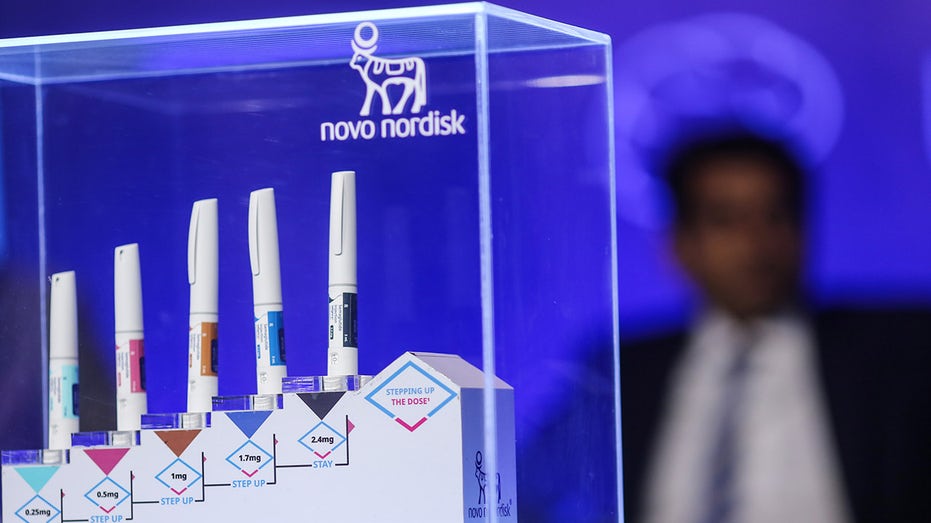
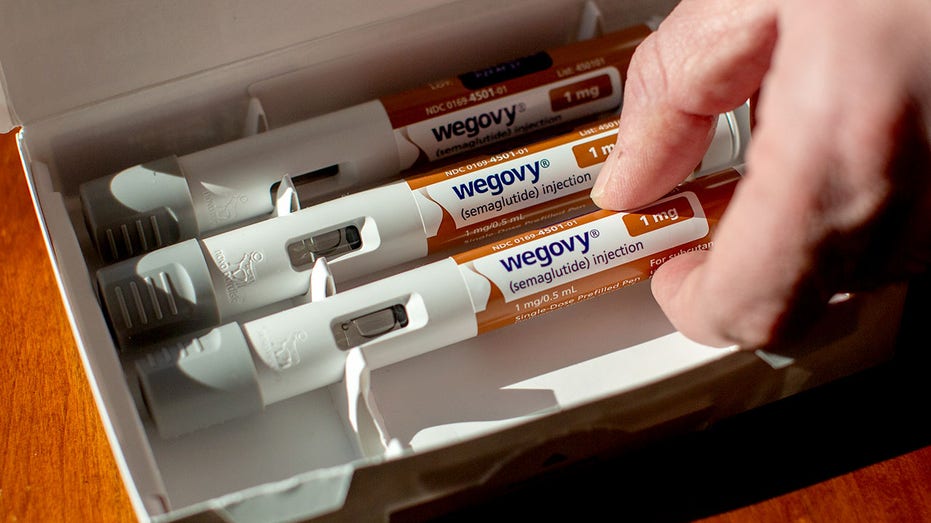
Injection pens for the weight-loss treatment Wegovy.

Novo Nordisk announced it will cut Wegovy and Ozempic list prices by up to 50% starting next year. (Dhiraj Singh/Bloomberg via Getty Images)

“Our actions today answer that call and remove cost barriers so the value of Wegovy and Ozempic can be realized by more patients,” he explained. 

Advertisement

“The lower list price is intended to connect more people with our innovative medicines, specifically those whose out-of-pocket costs are linked to list price, such as individuals with high-deductible health plans or co-insurance benefit designs,” Millar added.

AIRLINES HAVE 580 MILLION REASONS TO LIKE GLP-1 WEIGHT-LOSS DRUGS, ANALYSIS FINDS

Ticker Security Last Change Change %
NVO NOVO NORDISK A/S 39.63 -7.79 -16.43%

Novo Nordisk’s GLP-1 drugs have semaglutide as the active ingredient, which has received FDA approval as a medicine for adults with obesity in the case of Wegovy, while Ozempic is approved for type 2 diabetes. 

Additionally, Ozempic injections are FDA-approved for type 2 diabetes and chronic kidney disease, while both Wegovy and Ozempic are approved for comorbid cardiovascular disease.

Advertisement

The pricing changes don’t impact direct-to-patient or self-pay prices for consumers.

COSTCO MEMBERS WILL SOON HAVE ACCESS TO WEIGHT-LOSS SHOTS AT A MAJOR DISCOUNT

Wegovy injection pens arranged in Waterbury, Vermont.

Wegovy and other GLP-1 drugs are being used for weight-loss as well as treating diabetes. (Shelby Knowles/Bloomberg via Getty Images)

The market for so-called GLP-1 drugs has become increasingly competitive and a shift to consumer-driven, cash-pay channels is making price points more sensitive. Novo Nordisk is selling Wegovy on its direct-to-consumer website for $349, which is about one-third of its official list price.

Both Novo Nordisk and a leading rival, Eli Lilly, signed deals with the U.S. government to cut prices this year and sell products through TrumpRx.gov – a website that directs consumers to the companies’ direct-to-consumer websites.

Advertisement

GET FOX BUSINESS ON THE GO BY CLICKING HERE

The two companies are facing competition from cheaper compounded versions of the drugs offered by telehealth platforms like Hims & Hers, which are permitted to make and sell the drugs in personalized doses or composition.

Reuters contributed to this report.

Advertisement
Continue Reading

Business

Tennant Company 2025 Q4 – Results – Earnings Call Presentation (NYSE:TNC) 2026-02-24

Published

on

OneWater Marine Inc. (ONEW) Q1 2026 Earnings Call Transcript

Q4: 2026-02-24 Earnings Summary

EPS of $0.48 misses by $1.22

 | Revenue of $291.60M (-11.34% Y/Y) misses by $28.85M

This article was written by

Seeking Alpha’s transcripts team is responsible for the development of all of our transcript-related projects. We currently publish thousands of quarterly earnings calls per quarter on our site and are continuing to grow and expand our coverage. The purpose of this profile is to allow us to share with our readers new transcript-related developments. Thanks, SA Transcripts Team

Advertisement
Continue Reading

Trending

Copyright © 2025