
Business
Stock Market Leadership Just Flipped. Now the Nasdaq Is on Top.

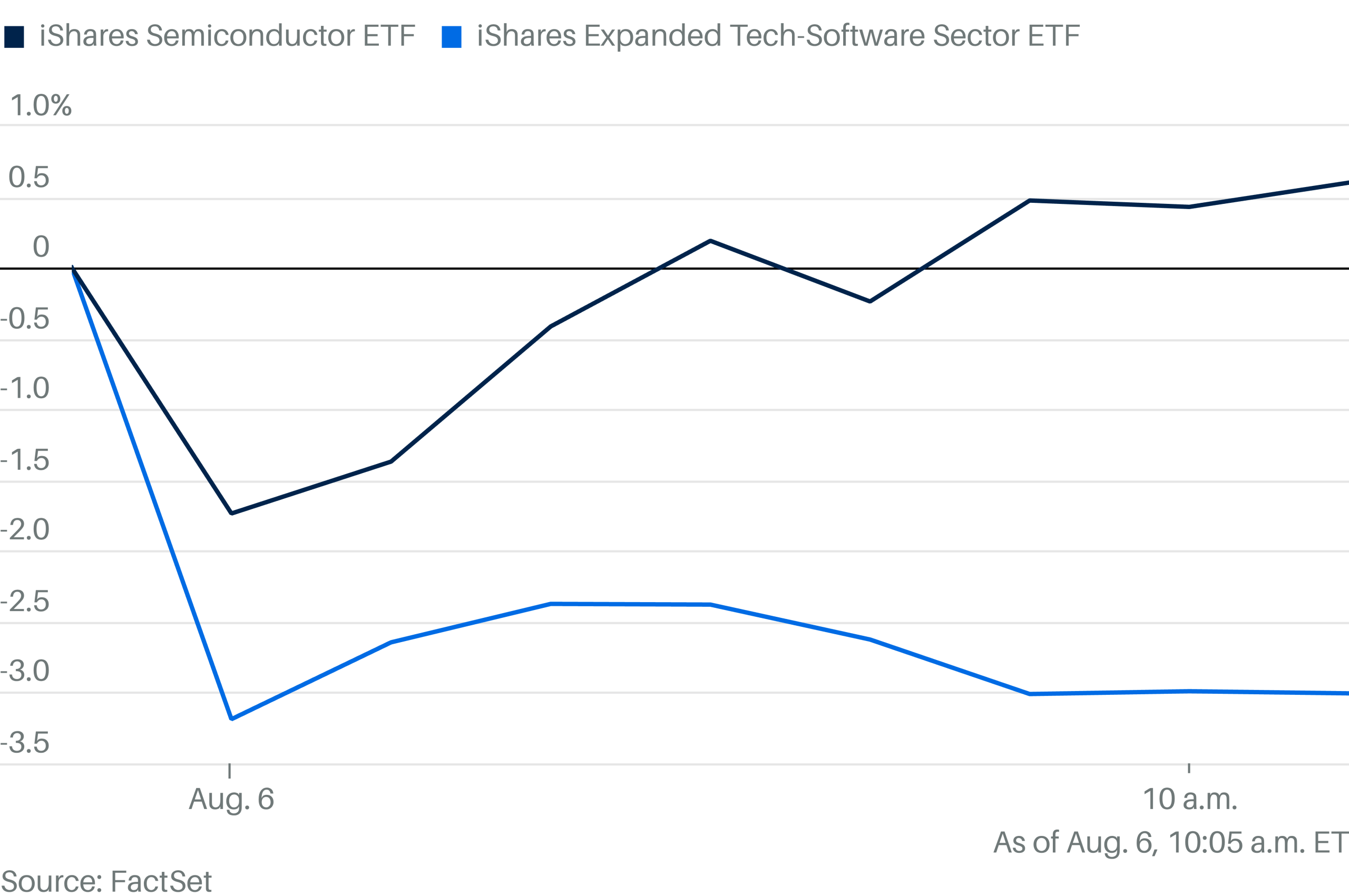
Stock market leadership just flipped.
The Nasdaq Composite rose 0.1% after opening lower. The Dow Jones Industrial Average, which was leading at the starting bell, was down 310 points, or 0.6%. The S&P 500 was down 0.1%.
Driving the Nasdaq’s move was a sharp turnaround in chip stocks; the iShares Semiconductor ETF rallied 1.8% after opening sharply lower. On the other hand, the iShares Expanded Tech-Software Sector ETF was still down 2.1%.


Tracking Ken Fisher's Fisher Asset Management Portfolio – Q2 2026 Update
Business
Scientists Use AI to Design 16 New Viruses That Kill Bacteria, Raising Biosecurity Concerns

Scientists at Stanford University and the Arc Institute have used artificial intelligence to design entirely new viruses capable of infecting and destroying bacteria, a scientific first that researchers say could open new paths for fighting drug-resistant infections while simultaneously reigniting debate over how quickly biotechnology is outpacing the safeguards meant to govern it.
The research, published this week in the journal Science, marks the first time scientists have used AI not simply to tweak existing viral genomes but to generate functional, previously unseen viruses from scratch, built entirely from patterns the AI learned by studying genetic sequences drawn from millions of organisms across the natural world.
Moving Beyond Copying Nature
For years, scientists have been able to synthesize viruses in the lab, typically to develop and test antiviral drugs and vaccines or to better understand how these microorganisms behave. That earlier work, however, relied almost entirely on replicating known pathogens or their existing variants. The new study represents a meaningful departure from that approach, using AI to generate genuinely novel genetic blueprints rather than working from a template drawn directly from nature.
The research team worked with bacteriophages, viruses that infect only bacteria and are increasingly viewed as a promising alternative to antibiotics in the fight against drug-resistant infections. Because bacteriophages have relatively small, comparatively simple genomes, they are easier to synthesize and manipulate under controlled laboratory conditions than viruses capable of infecting humans or other complex organisms.
How the AI Models Were Built
The viruses were generated using Evo 1 and Evo 2, foundational AI models developed specifically for computational biology applications. Both systems were trained on genetic sequences, rather than text, drawn from across all domains of life, allowing them to learn complex evolutionary patterns, including how genes are typically organized, which sequences tend to be conserved across species, and the underlying biological constraints that allow an organism to remain functional. According to researchers, the models were further trained specifically on genetic sequences from thousands of viruses belonging to the same broad family as Phi X-174, a well-studied bacteriophage capable of infecting the bacterium E. coli, while deliberately excluding any viral sequences capable of infecting humans, animals, plants or fungi from that additional training step.
Using Phi X-174 purely as a reference point, rather than a template to be copied, the AI models generated hundreds of thousands of candidate viral genomes engineered to retain the biological architecture necessary to recognize and infect E. coli, while differing considerably from any naturally occurring bacteriophage at the level of their actual genetic sequence.
From Hundreds of Thousands of Candidates to 16 Working Viruses
Researchers narrowed that enormous pool of AI-generated candidates down to roughly 300 genomes considered most likely to be functional, based on factors including gene organization and the presence of regulatory elements informed by the biology of Phi X-174. Each of those 300 candidate genomes was then physically synthesized, molecule by molecule, in the laboratory and introduced into E. coli bacteria to test whether it could actually produce a working virus.
Of those 300 synthesized genomes, only 16 gave rise to fully functional bacteriophages. Each of the 16 successful viruses featured previously unpublished genetic sequences, different genes, new regulatory elements, and in some cases entirely different genome sizes compared with anything found in nature. The viruses’ behavior also varied considerably from one another, with some infecting bacteria more quickly than others and differing in their overall ability to replicate.
Testing Against Drug-Resistant Bacteria
Beyond simply confirming that the AI-designed viruses could function, researchers also tested their ability to combat bacterial resistance directly, a key question given the viruses’ potential as an alternative to antibiotics. In that experiment, scientists exposed strains of E. coli that had already developed resistance to Phi X-174 to a mixture of the newly AI-designed phages alongside a comparison mixture of natural phages similar to Phi X-174. The AI-generated viruses were able to rapidly overcome the bacteria’s existing resistance and establish infection, a result the study’s authors said demonstrates what they described as a path toward AI-generated phage therapies capable of targeting rapidly evolving bacterial pathogens.
A Milestone With Two Very Different Implications
Researchers involved in the work say the approach could eventually support the development of highly personalized bacteriophage treatments capable of evolving nearly as quickly as the bacterial pathogens they are designed to fight, a potentially significant advance given the growing global public health threat posed by antibiotic-resistant infections.
At the same time, the achievement has renewed concern among biosecurity experts about the pace at which AI-driven genome design is advancing relative to the regulatory frameworks meant to govern it. While the viruses created in this specific study were deliberately restricted to targeting bacteria rather than humans, the underlying capability, using AI to design an entirely novel, functional virus from scratch, raises broader questions about how such tools might eventually be misused.
Moritz Hanke, a researcher at the Johns Hopkins Center for Health Security, warned about that dual-use risk directly, noting that a similar genome language model could in principle be asked to design something considerably more dangerous, such as an influenza genome modified to be more infectious or lethal. Speaking separately to The New York Times, Hanke said there remains what he described as a huge disconnect between the speed at which the underlying science and technology are advancing and the development of regulatory frameworks capable of keeping pace with it.
A Debate That Predates This Study
Concerns over AI’s potential role in biological weapons development are not new. A study published roughly three years ago by the Rand Corporation warned that even the AI systems available at that time had the capacity to help refine the planning and execution of attacks using biological weapons. Rand separately cautioned that the speed at which AI systems continue to evolve routinely outpaces governments’ ability to develop and implement effective regulatory oversight, a warning that has only grown more pointed as genome-design capabilities like those demonstrated in this new study have continued to advance.
With the research now published and drawing significant attention across both the scientific and biosecurity communities, calls are likely to grow for closer collaboration between AI developers, biologists, policymakers and regulators to establish clearer safeguards around genome language models before the technology advances further. In the meantime, the study’s authors have framed their work primarily as a proof of concept for AI-assisted phage therapy, even as the broader scientific community continues grappling with how to balance the technology’s genuine medical promise against the biosecurity risks it simultaneously introduces.

Landmark Bancorp director Mark Kohlrus buys $31,767 in company stock
Business
Louisiana Reports 5 Deaths From Flesh-Eating Bacteria in Seawater as Cases Surge Above Average This Summer

Louisiana health officials urged residents Thursday to take precautions following a sharp rise in severe infections tied to a dangerous flesh-eating bacterium found naturally in warm coastal waters, after the state confirmed at least five deaths so far this year.
The Louisiana Department of Health said the state has recorded nine total cases of Vibrio vulnificus in 2026, with all nine patients hospitalized and five of them ultimately dying from the infection. Over the same period across the past decade, Louisiana has averaged just seven cases and one death annually, meaning this year’s toll is already running well above the state’s historical norm even before the peak of the summer season concludes.
How This Year’s Cases Occurred
According to the Louisiana Department of Health, all nine cases reported this year were linked to wounds exposed to seawater, and every one of the affected patients had underlying health conditions at the time of infection. In a statement, the department explained that Vibrio bacteria occur naturally in warm coastal waters and are found in higher numbers between May and October, when water temperatures rise. Infection can occur when an open wound is exposed to brackish or salt water, or when a person eats raw or undercooked seafood, particularly oysters.
Vibrio infections can result in a range of illness, from general gastrointestinal illness and wound infections to more severe bloodstream infections, or sepsis. Health officials specifically warned that certain species, including Vibrio vulnificus, can cause severe and life-threatening infections, with some patients requiring intensive care or limb amputation. According to the department, about one in five people infected with Vibrio vulnificus dies, sometimes within just a day or two of first becoming ill.
A Pattern That Has Continued From Last Year
This year’s elevated case count follows a similarly severe year in 2025, when Louisiana recorded at least 26 Vibrio vulnificus cases and five fatalities, according to the state health department. That earlier surge included at least two deaths specifically linked to the consumption of raw or undercooked seafood, including one Florida resident who died after eating oysters harvested from Louisiana waters. Jennifer Armentor, the molluscan shellfish program administrator at the Louisiana Department of Health, described the situation during a meeting of the Louisiana Oyster Task Force at the time as, in her words, “just prolific right now,” underscoring how unusually active the infection season had become.
A Broader Regional Trend
Louisiana is not alone in seeing an uptick in severe Vibrio vulnificus cases this year. The Florida Department of Health has recorded two deaths from the bacteria so far in 2026, following a particularly severe stretch in recent years that included 19 deaths in 2024 and five more in 2025. Florida health officials have said the state saw notably higher infection rates following major storms, including Hurricane Helene in 2024, which brought extensive floodwater and standing water into coastal communities, conditions that can create additional opportunities for Vibrio exposure.
Experts have also pointed to rising ocean and coastal water temperatures tied to climate change as a factor contributing to the bacteria’s spread into new regions. Vibrio vulnificus was detected for the first time this spring in water samples taken from coastal areas of New York’s Long Island, a location well outside the bacteria’s traditional range in the warmer waters of the Gulf Coast and southeastern United States.
Understanding the Risk
Vibrio vulnificus is one of roughly a dozen Vibrio species capable of causing the broader illness known as vibriosis, but it is considered the most serious and potentially life-threatening of the group, according to the U.S. Centers for Disease Control and Prevention. The bacteria are most commonly contracted between May and October, when ocean water temperatures reach their warmest levels, and can enter the body either through an open wound exposed to seawater or through the consumption of raw or undercooked shellfish, particularly oysters.
Health officials have emphasized that people with certain preexisting health conditions face significantly elevated risk of severe illness or death if infected. Those at highest risk include individuals with liver disease, weakened immune systems, or other conditions that impair the body’s ability to fight off infection, a pattern consistent with this year’s Louisiana cases, in which every affected patient had an underlying health condition at the time of infection.
What Residents Are Being Advised to Do
The Louisiana Department of Health urged residents to seek medical care immediately if a wound exposed to brackish or salt water becomes red, swollen, painful, warm or discolored, and stressed the importance of specifically informing any treating health care provider about the wound’s water exposure, given how quickly Vibrio vulnificus infections can progress to a severe or life-threatening stage.
Beyond wound-related exposure, health officials also recommended a series of precautions aimed at reducing the risk of infection through seafood consumption. Recommendations included cooking seafood thoroughly rather than eating it raw or undercooked, wearing gloves when handling raw shellfish, and keeping raw seafood separated from cooked food to avoid cross-contamination. For those with open wounds, officials advised avoiding exposure to saltwater or brackish water altogether when possible, and, if entering the water cannot be avoided, covering the wound with a waterproof bandage and thoroughly washing it afterward.
A Season That Isn’t Over Yet
With Vibrio infections historically continuing through October as coastal water temperatures remain elevated, health officials in Louisiana have signaled that this year’s case and fatality totals could still climb further before the season’s typical seasonal decline begins later in the fall. Given that this year’s toll has already surpassed the state’s 10-year historical average with several weeks of peak risk still remaining, health officials are continuing to urge heightened caution among residents and visitors engaging in coastal water activities or preparing raw seafood throughout the remainder of the summer.

WASHINGTON — The U.S. Food and Drug Administration has approved the first messenger RNA-based vaccine for seasonal influenza, clearing Moderna’s mFLUSIVA for use in adults 50 years and older, the company announced this week.
The approval, granted Wednesday, marks a milestone for mRNA technology beyond its established use in COVID-19 vaccines. mFLUSIVA received traditional approval for adults ages 50 to 64 and accelerated approval for those 65 and older. Moderna has committed to a postmarketing study to confirm clinical benefit in the older age group.
“Flu remains a significant public health challenge, and mFLUSIVA provides an important new option for America’s seniors,” Moderna Chief Executive Officer Stéphane Bancel said in a statement. “This approval also reflects the ongoing potential of our mRNA platform to help address important public health challenges through continued scientific innovation.”
The decision followed a unanimous recommendation in June from the FDA’s Vaccines and Related Biological Products Advisory Committee. The panel concluded that the benefits of the vaccine outweighed its risks for adults 50 and older.
Approval for the 50-to-64 age group rests on results from a large Phase 3 trial that enrolled more than 40,000 adults across 11 countries. In that study, known as Fluent, mFLUSIVA demonstrated 26.6 percent relative vaccine efficacy compared with a licensed standard-dose influenza vaccine. Among participants 65 and older in the same trial, relative efficacy was 27.4 percent. Most adverse reactions were mild to moderate and temporary, including injection-site pain, fatigue and headache. Serious adverse event rates were similar between the mRNA vaccine and the comparator.
For adults 65 and older, the accelerated approval was supported by a separate Phase 3 study showing stronger antibody responses than a high-dose influenza vaccine. Confirmation of clinical effectiveness in this group will come from the required follow-up study.
Moderna said it expects supplies of mFLUSIVA to become available at select retailers in the coming weeks, in time for the 2026-2027 respiratory virus season. The vaccine will join the company’s existing U.S. portfolio, which includes Spikevax and mNEXSPIKE for COVID-19 and mRESVIA for respiratory syncytial virus.
Seasonal influenza continues to impose a substantial public health burden. The Centers for Disease Control and Prevention has estimated tens of thousands of deaths in the United States in recent severe seasons, with older adults facing the highest risk of serious complications, hospitalization and death. Traditional egg-based and recombinant vaccines have long been the mainstay of prevention, but their effectiveness can vary from year to year depending on how well the selected strains match circulating viruses.
mRNA technology offers potential advantages in manufacturing speed and adaptability. Traditional flu vaccine production often begins months in advance based on predictions of circulating strains. mRNA platforms can be updated more rapidly once a new strain is identified, a capability that public health experts have long sought for influenza.
The path to approval was not without complications. Earlier this year the FDA initially declined to review Moderna’s application, citing concerns about the trial design. The agency later reversed that decision and accepted the filing. The subsequent advisory committee review and final approval proceeded on the basis of the submitted clinical data.
mFLUSIVA is a trivalent vaccine targeting influenza A/H1N1, A/H3N2 and B/Victoria strains. It will compete in a crowded market that includes products from Sanofi, GSK, CSL Seqirus and AstraZeneca. Pricing details were not immediately disclosed.
For older adults, who often receive high-dose or adjuvanted formulations to compensate for age-related declines in immune response, the availability of an additional option with demonstrated relative efficacy and immunogenicity data is expected to expand choices for clinicians and patients. Public health authorities continue to recommend annual vaccination for this population as the most effective way to reduce severe disease.
The approval represents Moderna’s fourth product cleared by the FDA and the first mRNA influenza vaccine authorized in the United States. The company has pursued a broader pipeline of mRNA candidates targeting other infectious diseases and has highlighted the platform’s versatility in repeated communications with investors and regulators.
As the 2026-2027 season approaches, attention will turn to uptake among eligible adults, real-world effectiveness data and the results of the confirmatory study in those 65 and older. Health officials and clinicians will also monitor how the new vaccine fits into existing immunization recommendations and whether its manufacturing flexibility translates into improved strain matching in future seasons.
Influenza remains a leading cause of vaccine-preventable illness among older adults. The introduction of an mRNA-based option adds a new tool grounded in clinical evidence of superior relative performance against standard-dose vaccines in the studied population. Moderna has stated that supply will be available for the upcoming season, positioning the product for use alongside other authorized flu vaccines this fall and winter.
The regulatory clearance closes a multiyear development effort and underscores the continued evolution of vaccine platforms more than five years after mRNA technology first entered widespread use during the COVID-19 pandemic. For adults 50 and older, the decision provides a newly authorized choice backed by large-scale trial data and the endorsement of the FDA’s independent advisory committee.
Business
Global Partners LP Common Units 2026 Q2 – Results – Earnings Call Presentation (NYSE:GLP) 2026-08-07


Seeking Alpha’s transcripts team is responsible for the development of all of our transcript-related projects. We currently publish thousands of quarterly earnings calls per quarter on our site and are continuing to grow and expand our coverage. The purpose of this profile is to allow us to share with our readers new transcript-related developments. Thanks, SA Transcripts Team

Executive chair Christopher Adams buys $13,093 of Coastal Financial stock

Coastal Financial CEO Eric Sprink buys $444,500 in company stock

Myanmar’s military-backed leader Min Aung Hlaing made his first official visit to Thailand since the 2021 coup, marking a significant moment in his efforts to break diplomatic isolation. The visit, extensively covered by international media including AP News, BBC, Reuters, and Al Jazeera, represents a calculated push by the junta chief to gain political legitimacy on the international stage. Thailand’s willingness to host him with what several outlets described as a “red-carpet welcome” signals Bangkok’s broader strategy to reopen ASEAN engagement with Myanmar’s controversial government.
Thailand’s Strategic Engagement
Bangkok’s decision to warmly receive Min Aung Hlaing reflects Thailand’s calculated approach to regional diplomacy. According to reports, Thai officials view engagement—rather than continued isolation—as the more pragmatic path forward for addressing Myanmar’s ongoing crisis. This aligns with Thailand’s broader foreign policy initiatives, as the country has been actively pursuing multiple diplomatic and economic tracks, including efforts to seek wider US tariff relief in upcoming August talks.
The visit resulted in concrete bilateral agreements. Thailand and Myanmar signed key agreements on labour, water, and space cooperation, according to Thai government sources. Additionally, discussions covered border security matters, particularly relevant given that displacement along the Thailand-Myanmar border has reportedly approached four million people. The two nations also discussed the Dawei project, a significant infrastructure initiative aimed at strengthening connectivity between the two countries.
Domestic and International Backlash
Despite Thailand’s diplomatic overtures, the visit has sparked significant condemnation from human rights organizations and civil society groups. Amnesty International urged Thailand to prioritize human rights considerations in its talks with Myanmar’s leadership, reflecting broader concerns about legitimizing a government that seized power through a military coup.
Notably, Myanmar nationals residing in Thailand have publicly criticized their host country’s warm reception of the junta leader, highlighting the deep divisions this diplomatic gesture has created among affected populations. This criticism underscores the complex position Thailand occupies—balancing regional stability interests, economic cooperation, and humanitarian concerns simultaneously.
Economic and Trade Dimensions
Beyond the political optics, the visit carries substantive economic implications. Myanmar has expressed interest in targeting growth in trade with Thailand, suggesting both nations see economic cooperation as a pathway toward normalization. This economic dimension is particularly significant given Thailand’s role as a regional trade hub and its own economic priorities, including efforts to strengthen various trade relationships.
The labour cooperation agreement signed during this visit is particularly noteworthy, as Thailand has separately been working on a draft framework for hiring Myanmar workers, indicating the practical economic interdependence between the two nations despite the political controversy surrounding Myanmar’s government. Thailand has also taken steps to grant legal work rights to Myanmar refugees holding “pink cards,” further illustrating the multifaceted nature of the bilateral relationship that extends beyond high-level diplomatic optics.
ASEAN Context and Regional Implications
Thailand’s engagement with Min Aung Hlaing must be understood within the broader context of ASEAN’s approach to the Myanmar crisis. Thailand has reaffirmed its support for Myanmar’s full participation in ASEAN, positioning itself as an advocate for reintegrating Myanmar into regional diplomatic structures despite the international community’s continued concerns about the junta’s human rights record and democratic legitimacy.
This visit occurs against a backdrop of Thailand’s own significant diplomatic calendar, including the Prime Minister’s policy speech at ASEAN Headquarters and Thailand’s preparations to host 191 countries for the 2026 Annual Meetings of the International Monetary Fund and World Bank Group. These parallel diplomatic engagements suggest Thailand is positioning itself as a central node for regional and international diplomacy, with the Myanmar relationship serving as one component of a broader strategic vision.
Balancing Competing Interests
The coverage of this visit reveals the inherent tension in Thailand’s foreign policy approach. On one hand, pragmatic considerations—including border security, trade relationships, migrant labor needs, and regional stability—push Thailand toward engagement with Myanmar’s current government. On the other hand, human rights concerns and international pressure create reputational risks for Thailand in extending legitimacy to a regime that came to power through unconstitutional means.
Various news outlets have characterized this dynamic differently: while some frame Thailand’s actions as throwing Myanmar “a diplomatic lifeline,” others describe it more neutrally as part of a broader push to end Myanmar’s isolation. This divergence in framing reflects the genuinely contested nature of the appropriate international response to Myanmar’s post-coup government.
A pivotal moment in Myanmar’s post-coup diplomatic trajectory
Min Aung Hlaing’s visit to Thailand represents a pivotal moment in Myanmar’s post-coup diplomatic trajectory. While the junta leader achieved his apparent goal of securing a high-profile international engagement that lends an air of normalcy to his government, the visit simultaneously exposed the deep controversies surrounding any legitimization efforts. Thailand’s calculated engagement—balancing economic pragmatism, regional stability concerns, and mounting human rights criticism—illustrates the complex diplomatic tightrope that regional powers must walk when dealing with Myanmar’s contested leadership. The concrete agreements signed during this visit, spanning labor, security, and infrastructure cooperation, suggest that practical bilateral relations will likely continue deepening regardless of the ongoing legitimacy debates surrounding Myanmar’s government.
Source : Google News – Search
Other People are Reading
Business
AIxCrypto Holdings, Inc. 2026 Q2 – Results – Earnings Call Presentation (NASDAQ:AIXC) 2026-08-07
Seeking Alpha’s transcripts team is responsible for the development of all of our transcript-related projects. We currently publish thousands of quarterly earnings calls per quarter on our site and are continuing to grow and expand our coverage. The purpose of this profile is to allow us to share with our readers new transcript-related developments. Thanks, SA Transcripts Team

Christopher Nolan’s The Odyssey Passes $1 Billion at the Global Box Office

Police officer ‘seriously bitten’ during three nights of disorder in town

Tracking Ken Fisher's Fisher Asset Management Portfolio – Q2 2026 Update

Renter of Home in Anne Heche Crash Denies Settlement With Son

No Jackpot Winner as $257 Million Prize Rolls Over to $269 Million Monday Draw

Weekend Open Thread: Staud – Corporette.com

What you prefer 1000 Guyana or 2$ #shots #travel #nyc #money #guyana #usa #giveaway #like

Clarity Act Delayed (Shockingly Bitcoin Isn’t Crashing)

Financial Future: Hard Work, Grant Cormino & Success #sundaeconversation #kevinhart
-

 Politics5 days ago
Zack Polanski: an incitement to murder Nigel Farage?
-

 Crypto World6 days ago
MicroStrategy Post-Earnings CLARITY Act Push Could Add New Catalyst for Its Stock
-

 Crypto World7 days ago
XRP Ledger v3.3.0 brings five institutional features
-

 Crypto World6 days ago
Crypto PAC spending tops $2M in Michigan House race
-

 Business5 days ago
DTCR: Deleveraging And A Hedge Fund Collapse Point To A Possible AI Bottom
-

 Tech6 days ago
ESET tracks rise in malicious AI skills and adaptable malware
-

 Sports7 days ago
France Cricket implodes: letters hidden in a drawer and a board at war
-
Crypto World5 days ago
XRP Ledger urges node upgrade after manifest flood
-

 Crypto World7 days ago
Moneyflip CEO charged in $40K murder-for-hire plot
-

 News Videos6 days ago
Financial Crash Expert: The 90-Day Collapse Timeline They Are Desperately Hiding.
-

 Sports2 days ago
Jordan Coyle & Cordiamo take Laya Arena Stakes at RDS
-

 Fashion14 hours ago
Frugal Friday’s Workwear Report: Cap-Sleeve Pointelle Crewneck Sweater
-
 Crypto World4 days ago
US Tech Stocks See Largest 5-Week Inflow in History: Can Nasdaq Break Its Downtrend?
-
 NewsBeat6 days ago
Tourist plane on sightseeing flight in Peru crashes into a field, killing all 13 people on board
-

 NewsBeat7 days ago
Arsenal reach full agreement with Newcastle over Bruno Guimaraes transfer | Football
-
 Business2 days ago
US stocks: Dow closes at record on Mideast optimism; SpaceX, AMD drag Nasdaq
-

 Tech6 days ago
Page Not Found | WIRED
-
 NewsBeat6 days ago
Bikini-clad Jennifer Aniston, 57, kisses hypnotist boyfriend Jim Curtis as they enjoy a romantic getaway aboard a luxury yacht in Spain
-

 Politics2 days ago
Reform UK And Greens Sink To Lowest Favourability Ratings To Date
-

 Crypto World3 days ago
Polymarket targets $20 billion valuation as competition heats up in prediction market sector
You must be logged in to post a comment Login