





Connect with us

Business

Sun and Thousands of Solar Twins Rode Massive Galactic Migration Wave to Milky Way’s Suburbs, New Studies Find

Published

on

seismograph

Our sun, born 4.6 billion years ago near the crowded, chaotic heart of the Milky Way, did not make its journey to the galaxy’s calmer outer suburbs alone. A pair of new studies published March 12, 2026, in Astronomy and Astrophysics reveal that thousands of “solar twin” stars — stars with nearly identical mass, age and chemical composition to the sun — migrated outward alongside it in a coordinated stellar exodus spanning roughly 10,000 light-years.

An illustration of the Milky Way between 4 billion and
An illustration of the Milky Way between 4 billion and 6 billion years ago, when the “migration” of sunlike stars was taking place.
Image credit: NAOJ

Led by Daisuke Taniguchi of Tokyo Metropolitan University and Takuji Tsujimoto of the National Astronomical Observatory of Japan, the research draws on data from the European Space Agency’s Gaia space telescope, which has mapped positions, motions and compositions for billions of stars with unprecedented precision.

The team identified 6,594 solar twins in Gaia’s latest release, focusing on those matching the sun’s metallicity (a measure of elements heavier than helium) and age. Their orbital paths and chemical signatures point to a shared origin closer to the galactic center, followed by a synchronized outward drift that placed them in the sun’s current neighborhood — about 26,000 light-years from the Milky Way’s core.

Computer simulations had long suggested such a trek would be rare. Stars born in the dense inner regions face formidable barriers: intense radiation, frequent supernovae explosions and gravitational perturbations from the galaxy’s central bar and spiral arms. Models predicted only about 1 percent of stars from the sun’s presumed birthplace could reach the outer disk within 4.6 billion years without being destroyed or scattered.

Yet the Gaia data show thousands succeeded — far more than chance alone would allow. The researchers propose the explanation lies in a massive, galaxy-wide migration wave triggered by the formation and evolution of the Milky Way’s central bar roughly 4 to 6 billion years ago.

Advertisement

As the bar strengthened, it boosted star formation in the inner disk and launched large-scale radial migrations. Gravitational resonances — regions where orbital periods align with the bar’s rotation or spiral arms — funneled stars outward in groups rather than individually. The sun and its twins caught this wave, riding it to safer, less hazardous suburbs where cosmic rays and supernova blasts are less frequent.

This migration may help explain why Earth became habitable. The galactic center teems with dangers: gamma-ray bursts, black-hole activity and dense stellar crowds that could strip planetary atmospheres or trigger mass extinctions. By migrating outward just in time — before the solar system fully formed its planets — the sun escaped the worst risks, providing a stable environment for life to emerge.

Taniguchi told Live Science the pattern suggests “many solar twins of the same age migrated through the Milky Way around the same time as the sun, giving us new clues about when and how the sun moved from its birthplace to its current location.”

The studies build on decades of debate about the sun’s origins. Earlier work proposed the sun formed farther out or migrated via spiral-arm resonances, but the new evidence ties the movement to a specific galactic event: bar-driven migration.

Advertisement

Gaia’s third data release in 2022 and ongoing fourth-release updates have revolutionized stellar archaeology, allowing astronomers to rewind stellar orbits billions of years. By tracing chemical abundances — especially iron-peak elements forged in supernovae — researchers can fingerprint stars born in the same era and region.

The solar twins cluster in both kinematics (motion) and metallicity, supporting group migration over random drift. The wave likely peaked 4 to 6 billion years ago, coinciding with the sun’s youth and the Milky Way’s transition to a more stable barred-spiral structure.

Implications extend beyond our solar system. If many sun-like stars share this history, habitable zones may correlate with migration paths. Regions swept by such waves could host more life-friendly systems, as they escape inner-galaxy perils.

The findings also refine models of galactic evolution. The Milky Way’s bar, a peanut-shaped structure of older stars, drives radial mixing that reshapes the disk over cosmic time. Similar processes occur in other barred spirals, suggesting coordinated migrations are common.

Advertisement

No direct evidence links the migration to Earth’s habitability, but the timing aligns intriguingly. Planet formation took hundreds of millions of years after the sun’s birth; the outward journey may have positioned the nascent system in a quieter galactic suburb just as rocky worlds and oceans stabilized.

Future Gaia releases and upcoming telescopes like the Vera C. Rubin Observatory will test the hypothesis by mapping even fainter twins and refining orbital reconstructions.

For now, the studies paint a dynamic picture: the sun was not a solitary wanderer but part of a vast stellar caravan, carried by galactic forces to the peaceful outskirts where life could take root.

Astronomers say the work underscores how interconnected stellar lives are with their galaxy’s architecture — and how a timely migration may have been key to our existence.

Advertisement
Continue Reading
Click to comment

Leave a Reply

Your email address will not be published. Required fields are marked *

Business

New US trade probe targets EU, Canada, UK over forced labour

Published

on

New US trade probe targets EU, Canada, UK over forced labour

The US said it would examine whether countries are effectively blocking goods made with “forced labour”.

Continue Reading

Business

Starbucks Workers United union sends contract proposal to company

Published

on

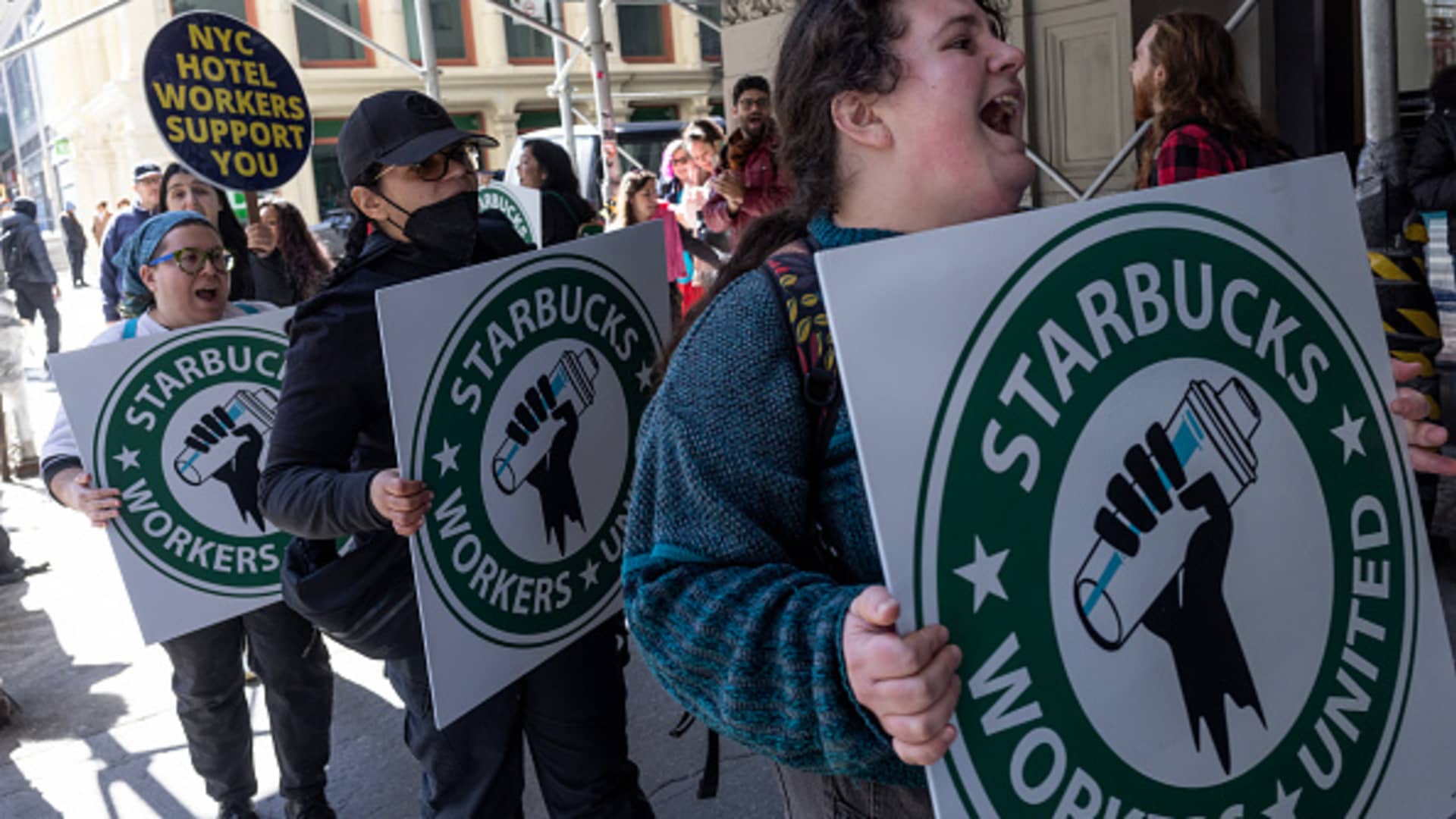
Starbucks Workers United union sends contract proposal to company

Starbucks union members and their supporters, including baristas who have just walked off the job, effectively closing a local branch, picket in front of the store, Feb. 28, 2025 in New York City. 

Andrew Lichtenstein | Corbis News | Getty Images

Starbucks Workers United presented the company with a comprehensive proposed contract last month, the union said on a call with investors on Friday, as baristas attempt to strike their first labor agreement with the coffee giant.

Advertisement

Here’s what baristas asked for in that proposal:

  • Protections for union baristas against discrimination, unjust firings and temporary or permanent store closures
  • Starting wage floor of $17 per hour, down from its prior proposal of $20 an hour but still above the company’s current starting wage of $15.25 to $16 an hour in 43 states
  • Annual raises of 4%
  • A process for baristas, management and union representatives to resolve workforce grievances
  • A dress code endorsed by the union
  • Requirement for at least three workers on the floor at all times and enforceable staffing and safety protections
  • A mandate to offer open hours to existing employees before hiring new baristas
  • Resolution of hundreds of outstanding unfair labor practice charges

The union said that Starbucks has not yet responded to the substance of the proposal.

The coffee giant told CNBC that it would like to restart talks with Workers United as soon as this month.

“Starbucks has proposed to resume in-person bargaining with Workers United on March 30 and to remain available for continued negotiations throughout April,” Starbucks spokesperson Jaci Anderson said in a statement.

Workers United represents about 6% of Starbucks’ company-owned locations in the U.S., according to regulatory filings.

Advertisement

The announcement comes months after bargaining talks between the two parties hit a wall. Starbucks and the union last held formal negotiations in December 2024. Several months later, the two parties met for mediation, but hundreds of barista delegates voted down the economic package proposed by the company in April.

Over the holiday season, baristas in more than 40 cities held an open-ended strike that stretched on for several weeks. The work stoppage led to dozens of temporary store closures for the coffee chain during its busiest time, although the company said it didn’t materially affect its business.

Starbucks’ strained relations with its baristas will also likely garner attention at its annual meeting for shareholders, held on March 25.

A group of investors led by union-affiliated SOC Investment Group is urging shareholders to vote against the reelection of directors Jørgen Vig Knudstorp and Beth Ford, citing their oversight roles tied to the company’s labor relations. Proxy advisory firm Glass Lewis has recommended voting against the reelection of Ford, chair of the nominating and corporate governance committee.

Advertisement

The prolonged battle between the company and its baristas poses a potential roadblock to Starbucks as it attempts a turnaround of its sluggish U.S. business. During the company’s holiday quarter, its store traffic rose for the first time in two years.

In Starbucks’ most recent annual filing, the company noted potential risks ahead, like further work stoppages or harm to its reputation and brand.

Choose CNBC as your preferred source on Google and never miss a moment from the most trusted name in business news.
Continue Reading

Business

U.K. stocks lower at close of trade; Investing.com United Kingdom 100 down 0.44%

Published

on


U.K. stocks lower at close of trade; Investing.com United Kingdom 100 down 0.44%

Continue Reading

Business

Blackstone is a major seller in January commercial real estate

Published

on

Blackstone BREIT is a major seller in January commercial real estate

Continue Reading

Business

illumin Holdings Inc. (ILLM:CA) Q4 2025 Earnings Call Transcript

Published

on

OneWater Marine Inc. (ONEW) Q1 2026 Earnings Call Transcript

Operator

Good morning, everyone. Before we begin the official remarks, I will read the cautionary note regarding forward-looking information. Certain information to be discussed during this call contains forward-looking statements within the meaning of applicable security laws, including, among others, statements concerning the company’s objectives, the company’s strategy to achieve those objectives as well as statements with respect to management’s beliefs, plans, estimates and intentions and similar statements concerning anticipated future events, results, circumstances, performance or expectations that are not historical facts.

Such forward-looking statements reflect management’s current beliefs and are based on information currently available to management and is subject to a number of significant risks and uncertainties that could cause actual results to differ materially from those anticipated. Please refer to the cautionary statement and the risk factors identified in our filings with SEDAR for a more detailed explanation of the inherent risks and uncertainties that could affect such forward-looking statements.

Following the presentation, we will conduct a Q&A session. I would now like to turn the conference call over to Simon Cairns, Chief Executive Officer.

Advertisement

Simon Cairns
Chief Executive Officer

Thank you, Steve, and good morning, everyone. Thank you for joining us for illumin’s Fourth Quarter and Full Year 2025 Earnings Call. 2025 was a year in which illumin repositioned the business and our platform towards AI-assisted decision-making and not just campaign spending. This marks a significant shift from how illumin has historically positioned itself and its brand.

Advertisement
Continue Reading

Business

Growth Leaders: 10 midcap stocks with stellar 50%+ YoY sales gains – Stellar Sales

Published

on

Growth Leaders: 10 midcap stocks with stellar 50%+ YoY sales gains - Stellar Sales

A significant rise in quarterly sales on a year-over-year (YoY) basis indicates strong business growth and increased demand. Among the NSE midcap segment (excluding banking and financial stocks), the top 10 companies recorded over 50% sales growth in the December 2025 quarter compared to the same period in 2024, according to turnover scan data from StockEdge.com.
This substantial increase in quarterly sales indicates strong business expansion and demand. This trend showcases a company’s capacity to attract and retain customers, suggesting potential for continued success. However, it is essential to evaluate the sustainability of this growth.

Continue Reading

Business

RBI net buys record $6.2 billion debt to shield bonds from war shockwaves

Published

on

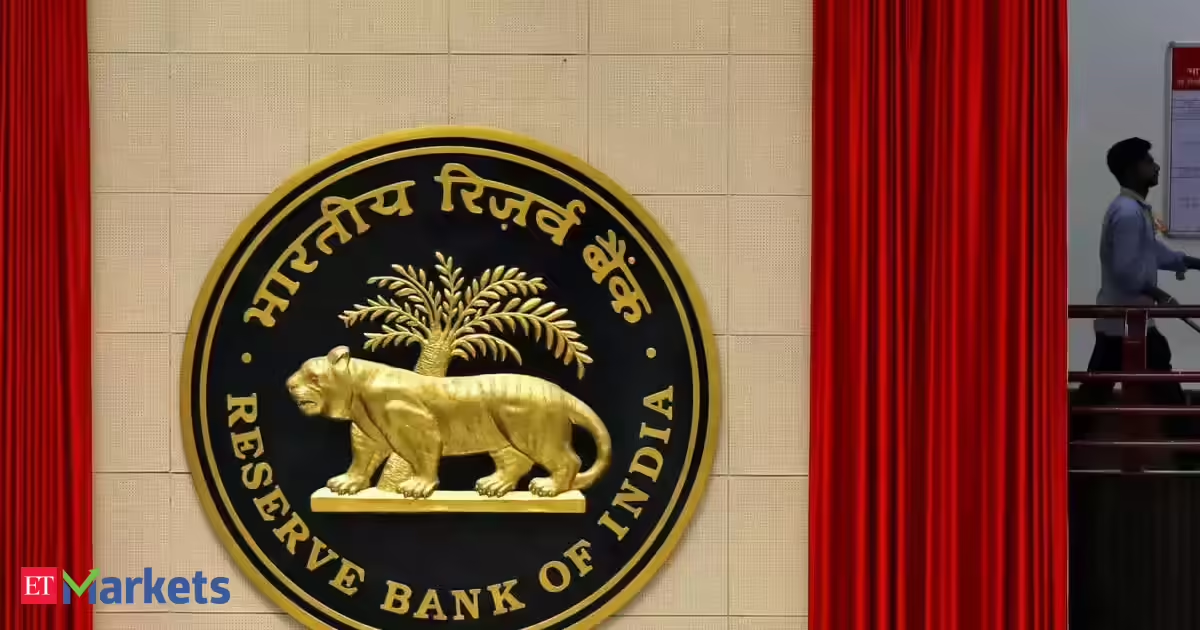
RBI net buys record $6.2 billion debt to shield bonds from war shockwaves
The Reserve Bank of India stepped up its government bond purchases from the secondary market to a record level in the week ended March 6, data showed on Friday, as the central bank tried to stabilize the market roiled by the Middle East war.

The ‌Reserve Bank ⁠of ⁠India net bought bonds worth 572.10 billion rupees ($6.20 billion) over the four ​trading sessions in the week, making it the third consecutive week of purchases. ​The settlement of the transactions takes place one day after the trade.

* Infusing liquidity is the main purpose of bond purchases, but ​they also impact yields

* RBI had bought ⁠bonds worth ‌99 billion rupees in the week ended February ​27 and ​28.15 billion rupees in the week ended February ⁠20

Advertisement

* RBI had bought bonds worth 173.95 billion ​rupees in January, 41.55 billion rupees in December ​and 272.80 billion rupees in November, taking aggregate secondary market purchase to 1.19 trillion rupees for the financial year


* “From a demand vs supply narrative, markets have remained well supported as RBI has continued to undertake on-screen as well as scheduled OMOs,” Basant ‌Bafna, head of fixed income at Mirae Asset Investment Managers (India)
* “With supply for the financial year having been ​completed, support from ​RBI has helped ⁠anchor yields.”* RBI has bought bonds worth a record 8.53 trillion rupees so far this year

* Total liquidity infusion, including other measures this fiscal is at 13.33 trillion rupees

* Traders say, the central bank was an active buyer in the secondary market in the current week, and also anticipate purchases to continue till the end of the financial year

($1 = 92.3320 Indian rupees)

Advertisement
Continue Reading

Business

Cardiff could become first part of Wales to introduce a visitor levy

Published

on

Business Live

A survey from Cardiff Council shows strong support for a visitor levy

WALES Elevated view of the Centre of Cardiff with Millennium stadium with the River Taff

Cardiff.(Image: Getty Images)

Cardiff could become the first place in Wales to charge visitors to stay in the city after a 12-week consultation showed most people in the city approved of a proposal to introduce a visitor levy.

The levy proposed by the council would see anyone staying in the Welsh capital for 31 nights or fewer, including in hotels, guesthouses, hostels, Airbnbs, campsites and temporary event accommodation pay a fee.

More than 1,500 people responded to the consultation from Cardiff Council that began on December 1, with the results showing support for the proposed levy, with 62% in favour, 33% opposed and 4% neutral.

If approved, the fee will be £1.30 per person per night for most accommodation types or 75p per person per night for campsites and shared rooms such as hostels.

Advertisement

READ MORE: Welsh Government invests £8m in deep water turbine platform firmREAD MORE: Explosive minutes of Ospreys meeting released for first time as WRU accused

Cardiff council’s cabinet will meet on Thursday to consider the recommendations contained in the report. It is estimated £3.5m will be raised annually through charging visitors to stay in Cardiff.

There will be exemptions for people under 18 staying on campsites or in shared rooms, people staying more than 31 nights in a single booking, and those in emergency or temporary accommodation arranged by the council.

While positive feedback was given by residents who believed that a modest charge could help support tourism in Cardiff, some respondents raised concerns.

Advertisement

Issues included the potential impact on visitor numbers, the risk of revenue being absorbed by administrative or unrelated budgets, and the additional burden on accommodation providers.

A statement from Cardiff council reads: “Across all the responses there was a strong call to ring-fence the income raised, with clear accountability, so the revenue from the levy is visibly reinvested to improve Cardiff as a tourist destination, as well as address any impacts of increased visitor numbers.

“The areas attracting the strongest support for investment include the promotion and marketing of the city, visitor infrastructure and making the city welcoming for visitors.

“The money raised, estimated at £3.5m each year, would be paid to the Welsh Revenue Authority which would then pass the levy on to local authorities. The funding would be used to support Cardiff’s visitor economy, with a new visitor levy partnership forum established to advise on how the funds would be used.”

Advertisement

Councillor Russell Goodway, Cardiff council’s cabinet member for investment and development, said: “The responses to the consultation on the proposed visitor levy are very helpful as they clearly set out what businesses and residents want us to focus on.

“If the proposal is approved by both cabinet and full council, a memorandum of understanding will be agreed and signed between Cardiff council and UKHospitality and a visitor levy partnership forum will be set up to advise on how the funds are used and help shape Cardiff’s tourism strategy.

“This income would bring additionality to the services and promotions we can provide, improving the experience for visitors and residents alike. The proposed charge, set out in legislation, is significantly lower than the typical charge seen across Europe.”


Advertisement
Continue Reading

Business

Invesco Rising Dividends Fund Q4 2025 Portfolio Activity

Published

on

Invesco Rising Dividends Fund Q4 2025 Portfolio Activity

Invesco is an independent investment management firm dedicated to delivering an investment experience that helps people get more out of life.Be the first to know! Sign up for Invesco US Blog and get expert investment views as they post.Disclosure for all Invesco US articles: Before investing, carefully read the prospectus and/or summary prospectus and carefully consider the investment objectives, risks, charges and expenses. The information provided is for educational purposes only and does not constitute a recommendation of the suitability of any investment strategy for a particular investor. Invesco does not provide tax advice. The tax information contained herein is general and is not exhaustive by nature. Federal and state tax laws are complex and constantly changing. Investors should always consult their own legal or tax professional for information concerning their individual situation. The opinions expressed are those of the authors, are based on current market conditions and are subject to change without notice. These opinions may differ from those of other Invesco investment professionals. NOT FDIC INSURED MAY LOSE VALUE NO BANK GUARANTEE All data provided by Invesco unless otherwise noted. Invesco Distributors, Inc. is the US distributor for Invesco Ltd.’s retail products and collective trust funds. Invesco Advisers, Inc. and other affiliated investment advisers mentioned provide investment advisory services and do not sell securities. Invesco Unit Investment Trusts are distributed by the sponsor, Invesco Capital Markets, Inc., and broker-dealers including Invesco Distributors, Inc. PowerShares® is a registered trademark of Invesco PowerShares Capital Management LLC (Invesco PowerShares). Each entity is an indirect, wholly owned subsidiary of Invesco Ltd. ©2015 Invesco Ltd. All rights reserved.

Continue Reading

Business

Why both partners need to be across a couple's money

Published

on

Why both partners need to be across a couple's money

Martin Lewis explains why both partners in a relationship need to know what financial products they hold.

Continue Reading

Trending

Copyright © 2025