
Business
Sun Pharma shares rally 4% as Q3 profit surges 16% YoY; co announces interim dividend


Sun Pharma reported a consolidated net profit of Rs 3,369 crore for Q3 FY26, up 16% from Rs 2,903 crore in the same quarter last year. Revenue from operations also grew 13% YoY to Rs 15,520 crore, compared with Rs 13,675 crore in Q3 FY25. The company’s EBITDA rose 23.4% year-on-year to Rs 4,948.4 crore, with margins improving to 31.9% from 29.3% previously, signalling better profitability and operational efficiency.
Sun Pharma dividend update
Sun Pharma announced an interim dividend of Rs 11 per equity share of Re 1 each for FY26. The record date for determining eligible shareholders is February 5, 2026, and the payout will be made on or before February 16.
Sun Pharma segment performance
US Formulations: Sales in the US stood at US$ 477 million, showing a small growth of 0.6%. Growth in innovative medicines offset a decline in generics, with the US contributing 27.5% of total consolidated sales.

India Formulations: Domestic sales rose 16.2% to Rs 49,986 million, contributing 32.3% to total sales. For the first nine months, India’s sales reached Rs 144,545 million, a 13.7% increase over the previous year.
Valuation Metrics
Sun Pharma’s P/E ratio is 36.49, Price/Sales ratio is 7.92, and Price/Book ratio is 5.26, reflecting investor expectations of strong growth.
Institutional Holdings
Foreign Institutional Investors (FIIs) reduced their stake from 16.55% to 16.12%, while mutual funds trimmed holdings from 12.41% to 12.09% in Q3 FY26. This points to cautious sentiment among large investors despite strong earnings.
Also read: MCX shares crash 15%, hit lower circuit amid deepening gold, silver rout
Technical Outlook
The 14-day RSI is 29.6, below the oversold threshold of 30, suggesting a potential rebound. However, the stock trades below 7 out of 8 key moving averages, except the short-term 5-day SMA, indicating some short-term weakness.
(Disclaimer: Recommendations, suggestions, views and opinions given by the experts are their own. These do not represent the views of The Economic Times)


Genco Shipping: Freight Rates Offer Hope, But The Cycle Isn't On Your Side


Writer | Investment Advisor | Economics Wonk | Top 5% on TipRanks | Long Signal, Short Noise | Author of The Macro Obsession, a weekly newsletter on current events and trends in finance, tech, and the real economy. My work focuses on my quest to uncover narrative trends before mainstream financial media, a process I’ve been describing as the hunt for information alpha. It is chart-heavy, macro-oriented, and data-driven.I invest across securities and asset classes. My focus has largely been on ETF investing, and I am known as a macro analyst, though I do cover stocks that I am personally trading or considering for my portfolio. These are typically technology and next-gen energy stocks or large caps with a juicy story.“Successful investing requires holding uncomfortably idiosyncratic positions.” — Howard Marks, paraphrasing David Swensen “History does not repeat, it instructs.” — Timothy Snyder, On Tyranny
Analyst’s Disclosure: I/we have a beneficial long position in the shares of MSFT either through stock ownership, options, or other derivatives. I wrote this article myself, and it expresses my own opinions. I am not receiving compensation for it (other than from Seeking Alpha). I have no business relationship with any company whose stock is mentioned in this article.
Seeking Alpha’s Disclosure: Past performance is no guarantee of future results. No recommendation or advice is being given as to whether any investment is suitable for a particular investor. Any views or opinions expressed above may not reflect those of Seeking Alpha as a whole. Seeking Alpha is not a licensed securities dealer, broker or US investment adviser or investment bank. Our analysts are third party authors that include both professional investors and individual investors who may not be licensed or certified by any institute or regulatory body.

Financial influencer Taylor Price joins ‘Varney & Co.’ to break down how shifting your mindset can help Americans grow wealth and achieve the American Dream.
The bipartisan leaders of Congress’ Joint Economic Committee are sounding the alarm about tax season scams that fraudsters may look to use on unsuspecting taxpayers as filing season winds down.
Taxpayers have until Wednesday, April 15, to file their 2025 tax return or request an extension, and scammers may take advantage of the approaching deadline to take advantage of taxpayers.
Scammers have victimized roughly one in four Americans with tax season scams, which have become increasingly common, particularly amid the rise of artificial intelligence (AI) and software that enables deepfakes.
JEC’s scam alert notes several tips for taxpayers to keep in mind when confronted with a potential scam. It warns taxpayers to beware of IRS impostor scams, which can be initiated by phone calls or via emails or texts using spoofed caller ID or addresses while purporting to be the IRS.
AVERAGE TAX REFUND UP NEARLY 11% FROM A YEAR AGO, IRS DATA SHOWS

Scammers are looking to exploit taxpayers during filing season. (iStock)
Taxpayers should be aware that the IRS almost always initiates outreach by mail and will never reach out on social media, as it only texts or emails in limited circumstances and doesn’t do so to demand immediate payment.
If they receive a suspicious message, taxpayers should refrain from scanning any QR codes or clicking on links as it could contain malware or refer them to a website designed to steal their information.
Outreach claiming to be from the IRS that is urgent or threatening, requests identifying information, or demands payment through nontraditional methods should be a red flag for taxpayers.
IRS REFUND TRACKER EXPLAINED: WHAT YOU NEED TO KNOW BEFORE THIS YEAR’S TAX FILING DEADLINE
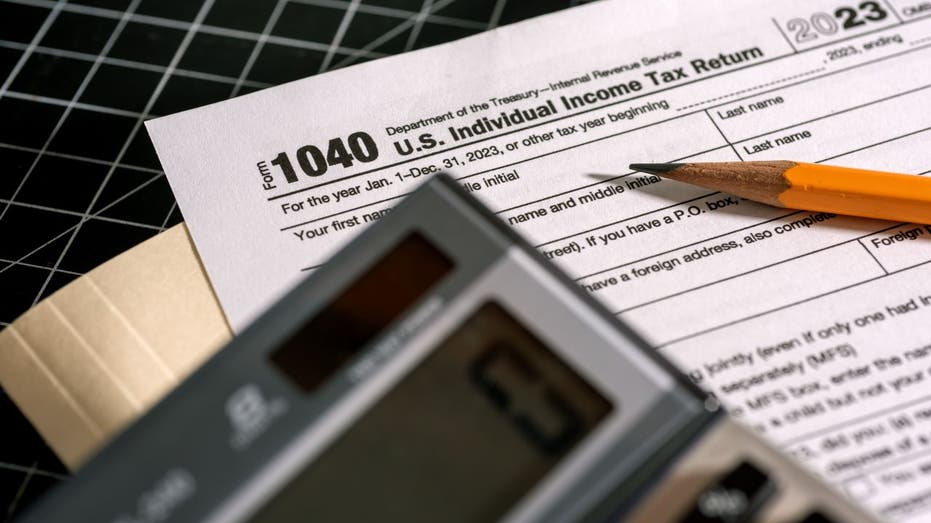
Taxpayers should verify communications purporting to be from the IRS if they have concerns about what they’re being asked to provide. (Michael Bocchieri/Getty Images)
When the IRS reaches out, it won’t threaten to call law enforcement, demand the taxpayer’s driver’s license or business license, request immediate payment through gift cards, wire transfers or crypto, or direct the taxpayer to a non-IRS website.
Taxpayers can verify communications that purport to be from the IRS by reaching out to the agency directly by calling the IRS help line at 800-829-1040 or creating an IRS account online to access up-to-date information on their tax records.
If they’re concerned about a website they’re on, they should confirm it’s actually the IRS website and not a sham website, which can be detected through suspicious signs like subtle misspellings or extra letters or words in the website’s URL.
IRS WARNS AMERICANS TO BEWARE OF DANGEROUS NEW SCAMS THIS TAX SEASON
The IRS generally initiates contact by mail, and won’t call or text demanding payment or personal information. (Jordan Vonderhaar/Bloomberg via Getty Images)
Third-party tax preparer scams are also something that taxpayers should be aware of when working with tax services or other non-IRS tax entities.
Taxpayers should be wary of tax preparers who demand high upfront fees or guarantee large refunds. They should also research unfamiliar companies through sites like the Better Business Bureau, or verify a preparer’s professionally required Preparer Tax Identification Number (PTIN) on the IRS website and avoid preparers who refuse to provide their PTIN.
Fraudsters may also seek to impersonate reputable tax preparation companies, so taxpayers should verify unexpected communications by calling the number on the company’s official website.
GET FOX BUSINESS ON THE GO BY CLICKING HERE
The scam alert was issued by the bicameral Joint Economic Committee, which includes leaders from both the House and Senate on both sides of the partisan aisle.
The panel is led by JEC Chairman Rep. David Schweikert, R-Ariz.; Ranking Member Sen. Maggie Hassan, D-N.H.,; Vice Chairman Sen. Eric Schmitt, R-Mo.; and Senior House Democrat Don Beyer of Virginia issued the warning to taxpayers on Thursday.

Perimeter Solutions: Appealing Business, Complicated Finances
Business
Tesla Model Y Tops China Auto Sales in March 2026 With 39,827 Registrations, Beating Cheaper EVs and Gas Cars

SHANGHAI — Tesla Inc.’s Model Y surged to the top of China’s passenger vehicle sales rankings in March 2026, registering 39,827 retail units and outpacing every electric vehicle, hybrid and internal combustion engine model in the world’s largest auto market, according to data cited by prominent EV analyst Sawyer Merritt.

The achievement marks a striking comeback for the premium electric SUV in a brutally competitive environment dominated by low-cost domestic brands. Priced between roughly 263,500 and 313,500 yuan (about $36,500 to $43,400), the Model Y stood alone among the top 10 as the only vehicle commanding a premium above 200,000 yuan, while many rivals — including the Geely Galaxy Xingyuan and BYD Yuan UP — sell for under 100,000 yuan.
The March retail registrations data, shared Friday on X by Merritt, underscore Tesla’s enduring brand strength and product appeal even as the broader Chinese new energy vehicle sector grapples with intense price wars, subsidy phase-outs and slowing overall demand. The Model Y’s performance beat out mass-market favorites across sedans, SUVs and MPVs, highlighting consumer preference for its combination of range, technology, safety features and over-the-air software updates.
NEWS: The Tesla Model Y was the top-selling passenger vehicle in China in March 2026, with 39,827 retail registrations, beating all EVs and ICE models. It outpaced competitors across sedans, SUVs, and MPVs.
It was also the only premium-priced model in the top ten, standing out…
— Sawyer Merritt (@SawyerMerritt) April 10, 2026
Tesla’s Shanghai Gigafactory, the company’s largest production hub, played a central role. Wholesale shipments from the plant — which include both domestic deliveries and exports — reached 85,670 vehicles in March, up 8.7% from a year earlier and a robust 46.2% rebound from February, according to the China Passenger Car Association. While exact Model Y breakdowns within wholesale figures are not public, analysts attribute much of the strength to sustained Model Y output paired with aggressive export growth.
Exports from Shanghai hit a quarterly record in the first three months of 2026, helping offset softer domestic retail trends earlier in the year. Q1 retail sales for Tesla in China fell about 16% year-over-year overall, but the March surge in Model Y registrations signals a potential inflection point as the refreshed Model Y lineup gains traction and seasonal factors ease.
The results come amid a challenging backdrop for the Chinese auto industry. A brutal price war has seen domestic EV makers slash prices aggressively to stimulate demand after the expiration of certain tax incentives. Brands like BYD, Geely and Xiaomi have flooded the market with affordable options, yet the Model Y’s premium positioning and superior ecosystem appear to have resonated with buyers willing to pay more for perceived quality, advanced driver assistance and brand prestige.
Commentators on social media noted the irony: despite cheaper alternatives boasting features like larger screens or massage seats, Chinese consumers continue to favor the Tesla for its software sophistication, build quality and long-term value. One analyst highlighted that “software, safety and brand ecosystem are still winning out over pure cost-cutting.”
Tesla has maintained a lean but highly efficient operation in China. The Shanghai factory has repeatedly demonstrated its ability to scale production rapidly and adapt to shifting export demands. In March alone, exports contributed significantly to the wholesale total, with some estimates suggesting Tesla shipped tens of thousands of vehicles overseas — a strategic move that keeps the plant running at high utilization even when domestic retail softens.
Globally, the Model Y continues its reign as the world’s best-selling passenger vehicle for the third consecutive year, with cumulative sales surpassing 4 million units by early 2026. Tesla itself highlighted the milestone on Chinese social media earlier this year, citing data from research firms including JATO Dynamics, Statista and Focus2Move.
In China specifically, the Model Y has shown remarkable resilience. February 2026 retail sales already showed strength with the SUV leading SUV rankings, and March’s broader market-topping performance extends that momentum. The vehicle’s success spans segments, appealing to urban families, tech enthusiasts and even ride-hailing fleets seeking reliable, low-operating-cost electric options.
Industry observers point to several factors behind the March surge. Tesla’s recent software updates, including enhanced Full Self-Driving capabilities tailored for Chinese roads, have boosted appeal. The company has also expanded its Supercharger network and service infrastructure, addressing range anxiety more effectively than many domestic newcomers. Additionally, the refreshed Model Y — sometimes referred to in local markets with extended-wheelbase variants — has helped refresh consumer interest.
Yet challenges remain. Tesla’s overall China retail sales for Q1 2026 trailed some expectations, with analysts noting a post-holiday slowdown and the impact of aggressive pricing by local competitors. Some reports indicate domestic retail registrations for Tesla vehicles dipped in the first two months before the March rebound. Exports have become a critical buffer, with shipments to Europe and other markets surging more than 160% in Q1 compared to the prior year.
The price premium narrative is particularly noteworthy. While many top-10 models in March sold for under 150,000 yuan, the Model Y’s higher sticker price did not deter buyers. Industry insiders attribute this to Tesla’s strong resale value, lower total cost of ownership over time due to minimal maintenance needs, and the intangible prestige associated with the brand. In a market where status still matters, owning a Tesla remains a statement.
Broader implications for the global EV industry are significant. China accounts for a massive share of worldwide electric vehicle demand, and Tesla’s ability to lead sales there despite intense local competition reinforces its technological edge. The Shanghai Gigafactory’s dual role as both a domestic powerhouse and export engine gives Tesla unique flexibility that pure-play Chinese manufacturers lack.
Looking ahead, analysts will watch April and May figures closely for signs of sustained momentum. Tesla has teased further updates to its China lineup, including potential localization of more features and continued integration of advanced AI capabilities. The company’s upcoming earnings report, expected later this month, will likely provide more color on China performance and global delivery trends.
For now, the March data offers a clear win for Tesla in one of its most strategically important markets. As the price war rages and new entrants flood showrooms with ever-cheaper options, the Model Y’s ability to claim the outright top spot underscores a powerful message: in China’s hyper-competitive auto landscape, quality, innovation and brand trust can still trump rock-bottom pricing.
The development also carries symbolic weight. Just weeks after broader Q1 wholesale figures showed Tesla holding its own against giants like BYD and Geely, the retail registration crown for the Model Y highlights consumer-level demand that goes beyond factory shipments. It suggests that even as the market matures and competition intensifies, Tesla’s formula continues to resonate with a significant segment of Chinese buyers.
As the EV transition accelerates worldwide, Tesla’s performance in China serves as a bellwether. With the Model Y once again proving its mettle against a sea of lower-priced alternatives, the company appears poised to maintain its leadership position in the premium segment while leveraging its massive Shanghai operation for both local and global growth.

ASML: GDP Fears Are Rising, But The Technology Edge Isn't Cracking

Humana adds healthcare investor Robert Field to board

Spot gold set for three-week win streak ahead of crucial U.S.-Iran peace talks
Business
Elon Musk Shares First Look Inside Tesla’s Nevada Semi Factory as Mass Production of Electric Trucks Ramps Up
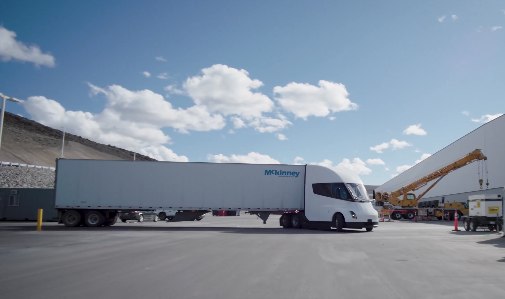
SPARKS, Nev. — Tesla Inc. is on the verge of high-volume production for its long-delayed electric Semi truck, with CEO Elon Musk on Friday spotlighting an exclusive inside look at the company’s massive new factory in Nevada as the assembly line comes to life.

Musk reposted a video tour by journalist and filmmaker Ashlee Vance, simply captioning it “Tesla Semi.” The roughly 10-minute clip, released hours earlier by Vance’s Core Memory crew, offers the public its most detailed view yet of the dedicated Semi factory in Sparks — located on Electric Avenue adjacent to Gigafactory Nevada — where thousands of all-electric Class 8 trucks are set to roll out in the coming months.
The timing is no coincidence. Tesla has been preparing for mass production of the Semi since limited pilot deliveries began in 2022 to early customers like PepsiCo. With the factory now in tooling and early assembly phases, executives say the first production units could begin rolling off the line within weeks, targeting an annual capacity of 50,000 trucks once fully ramped.
Vance’s tour, conducted with Dan Priestley — Tesla’s head of the Semi program — walks viewers through a facility that broke ground less than two years ago. Steel went up quickly, walls enclosed the space by March 2026, and the vast 1.7-million-square-foot building is already humming with activity. Parts of it look pristine and ready, while others remain a work in progress, Priestley notes, as the company applies lessons learned from Gigafactory Nevada and other plants.
“This is enormous and quite spectacular,” Vance said in earlier posts accompanying the footage. The tour highlights vertical integration: on-site stamping, injection molding from the neighboring battery plant, and a highly automated flow designed for efficiency.
Key steps shown include cab assembly, where complete truck cabs are lifted onto overhead carriers capable of handling sub-assemblies weighing more than 10,000 pounds. The “battery marriage” — a critical moment where three massive battery packs are fastened into the frame for the long-range variant — is performed with precision torque tools. The process blends manual and automated elements, with overhead carriers adjusting height for workers as components are added.
The Semi comes in two configurations. The standard-range model offers approximately 325 miles of range at a full 82,000-pound gross combination weight, with a curb weight under 20,000 pounds. The long-range version extends to about 500 miles but adds roughly 3,000 pounds, bringing curb weight to around 23,000 pounds. Both use a three-motor powertrain on the rear axles delivering up to 800 kilowatts of drive power and support 1.2-megawatt fast charging. Energy consumption is rated at about 1.7 kWh per mile.
Priestley emphasizes the economics. Diesel trucks, just 1% of vehicles on the road, consume 16-18% of fuel. Electric operation slashes costs per mile, cuts maintenance dramatically and eliminates emissions. Regenerative braking recovers energy on descents and in stop-and-go traffic, eliminating the need for engine braking or runaway truck ramps.
Vance and his crew also took a test drive. The experience is “effortless,” he reports. Torque is instant, the ride quiet and smooth. The redesigned cab features a forward-center seating position for better visibility, 10 exterior cameras and a glass cockpit. “You get really, really close to objects because you see into the front of the truck,” Priestley explains. Truckers have given mixed but largely positive feedback after extended demos, drawn by lower operating costs and reliability.
The factory’s final inspection station features a dramatic “light tunnel” of vertical blue LED bars — a Tesla signature touch that Priestley jokes should host employee weddings. Finished trucks emerge ready for Tesla’s expanding network of Semi-specific Megachargers, which can add up to 60% range in 30 minutes.
Tesla’s Semi journey began with a 2017 unveiling and an ambitious promise of 2019 production. Delays followed as the company scaled battery and vehicle manufacturing. Pilot units hit the road in 2022, logging real-world miles for fleets. Now, with the dedicated factory online, high-volume output is finally imminent. Musk confirmed earlier this year that volume production would start in 2026.
The stakes are high. Freight trucking accounts for a significant share of transportation emissions and fuel use. Tesla aims to disrupt that with zero-tailpipe-emission trucks that are cheaper to operate and maintain. When fully ramped, the Nevada plant could generate billions in revenue while helping fleets meet sustainability goals.
Industry watchers note the Semi’s potential to influence everything from logistics costs to energy demand. Major fleets have placed orders, and interest has grown as early users report strong performance hauling 80,000-pound loads over hundreds of miles.
Musk’s post quickly drew millions of views and enthusiastic replies praising the factory’s scale and the truck’s design. Some asked about autonomous features in the future, sleeper cabs or European availability. Others speculated on broader impacts, such as lower goods prices from self-driving trucks or expanded solar integration.
Tesla has not released an exact start date for customer deliveries beyond “2026,” but Priestley indicated the company is “right on the cusp of starting to produce first assemblies off these lines.” Hiring is underway, with reports of more than 1,000 new jobs tied to the ramp-up.
Environmental advocates hail the development as a step toward decarbonizing heavy transport, while skeptics question whether charging infrastructure and grid capacity can keep pace. Tesla is addressing the former with dedicated chargers and partnerships.
For now, the focus remains on the factory floor in Sparks. What began as a bold 2017 concept is becoming industrial reality — one battery pack, one cab and one torque-tightened bolt at a time.
The Semi’s success could accelerate Tesla’s shift beyond passenger cars into broader transportation and energy markets. With production scaling and real-world data accumulating, the electric truck is poised to test whether battery power can truly replace diesel on America’s highways.
As Musk’s simple post reverberated across X, the message was clear: the wait is nearly over. Thousands of electric Semis are coming, and the roads — and the planet — may never look the same.
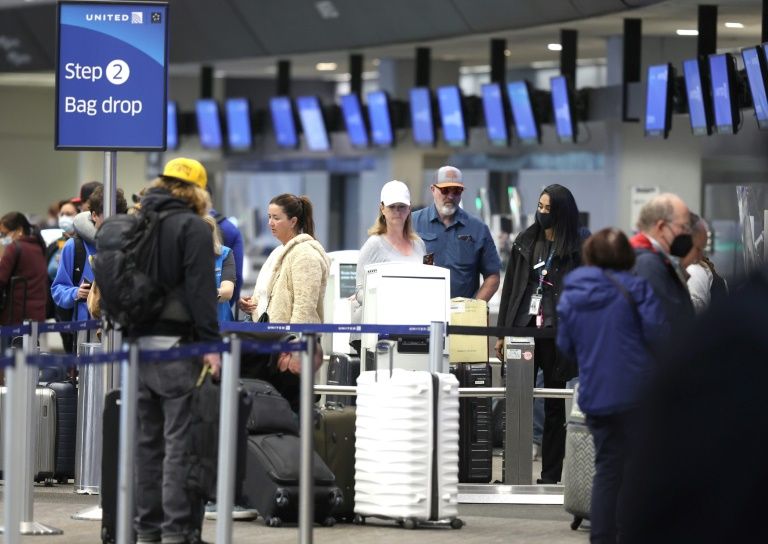
SAN FRANCISCO — Security lines at San Francisco International Airport moved steadily Saturday with average TSA wait times hovering between 15 and 25 minutes, offering a relatively smooth start to the weekend for thousands of passengers despite typical spring travel volume.
As of early Saturday morning, live estimates showed standard security screening at SFO averaging around 15 minutes, with some checkpoints reporting waits as low as 12 minutes during off-peak hours and peaking near 22 minutes earlier in the day. TSA PreCheck lanes continued to move faster, often under 10 minutes for eligible travelers.
SFO, one of the busiest airports on the West Coast, operates under the TSA’s Screening Partnership Program, using private contractors rather than federal TSA officers for passenger screening. This setup has helped the airport maintain relatively short lines compared to many U.S. hubs, even during busier periods. Airport officials note that average peak waits have stayed under 30 minutes in recent weeks.
Travelers arriving for morning domestic flights reported clearing checkpoints in Boarding Areas A, B, D, F and G without major issues. One checkpoint in Boarding Area F3 remained closed temporarily, potentially shifting some traffic to nearby lanes, but overall flow appeared normal according to real-time trackers.
The MyTSA app and third-party sites like takeofftimer.com showed hourly forecasts indicating waits could climb to 20-25 minutes between 10 a.m. and 2 p.m. as more flights depart. Evening hours typically see lighter lines, dropping below 15 minutes after 7 p.m.
“Arrive two hours before domestic flights and three hours for international,” SFO advises on its website, a standard recommendation echoed by airlines. With no major alerts posted for excessive delays, most passengers should have ample buffer if they follow that guidance.
SFO handles more than 50 million passengers annually, serving as a key hub for United Airlines and a gateway for transpacific routes. Security checkpoints are located in each terminal’s boarding areas, with six main screening points operating on varying schedules — some opening as early as 3:15 a.m. and closing after midnight.
United Airlines recently introduced a TSA wait time estimator in its mobile app for SFO and several other hubs, allowing passengers to check projected lines before leaving home or hotel. The feature draws on historical data and real-time inputs to help travelers time their arrival better.
Passengers with TSA PreCheck, CLEAR or Global Entry enjoy dedicated lanes that significantly cut wait times. PreCheck enrollment allows travelers to keep shoes, belts and light jackets on while using separate bins for laptops and liquids. Officials encourage eligible flyers to use these programs, which can shave 10 to 20 minutes off the process during busy times.
Spring travel season brings increased volume, but SFO has avoided the extreme multi-hour backups seen at some airports during past government funding issues. Because screening is contracted out, the airport was largely insulated from earlier federal staffing disruptions that affected other facilities.
Current conditions reflect a blend of factors: moderate Saturday traffic, stable staffing levels and efficient private screening operations. Real-time data from sources like airlineairport.com and onairparking.com consistently place average waits in the 10- to 30-minute range, with occasional spikes to 40 minutes during heavy surges.
For those without trusted traveler status, preparation remains key. TSA’s 3-1-1 liquids rule — 3.4-ounce or smaller containers in a single quart-size bag — helps speed screening. Removing laptops, large electronics and outer layers before reaching the belt also reduces secondary checks.
Travelers should check the official SFO website or MyTSA app for the latest checkpoint status. Factors like weather delays, flight schedule changes or sudden passenger rushes can still cause fluctuations even on otherwise quiet days.
SFO’s modern facilities include automated bin systems and advanced imaging technology at most lanes. The airport has invested in passenger flow improvements, including better signage and additional seating near checkpoints to ease congestion.
International travelers face additional steps. Those departing on long-haul flights should factor in potential extra time for document verification. The TSA ConfirmID process, used when identity needs further checking, averages 10-15 minutes but can extend longer depending on the case.
Airline staff and airport ambassadors are available to assist with questions about lanes, prohibited items or accessibility needs. Families with small children or travelers with disabilities can request expedited assistance.
Beyond security, SFO offers extensive dining, shopping and relaxation options post-screening. The airport’s terminals feature art installations, yoga rooms and quiet zones for those with layovers.
As Saturday progresses, expect waits to remain manageable unless a major event or weather system disrupts flights. No significant runway or capacity issues were reported for the day, though ongoing FAA rules have slightly reduced hourly arrivals at times.
Passengers flying out later in the weekend should monitor conditions closely. Sunday mornings often see heavier traffic as business and leisure travelers mix.
Experts recommend downloading the MyTSA app, which lets users report actual wait times and view crowd-sourced data alongside official estimates. It also provides item-specific guidance on what can and cannot pass through screening.
For those driving to SFO, real-time traffic on U.S. 101 and surrounding highways can add unexpected time. Parking and ground transportation options include BART, ride-shares and hotel shuttles, all of which should be booked or timed with security buffers in mind.
In recent months, SFO has maintained strong on-time performance relative to its size, aided by efficient security processing. The private screening model has drawn interest from other airports seeking similar reliability.
Travelers with questions about specific checkpoints can check the SFO passenger guide, which details hours for each location: Checkpoint A opens at 4:15 a.m., while others start earlier to accommodate red-eye and early morning departures.
Overall, conditions today at San Francisco International Airport point to a typical busy but not overwhelming security experience. With waits generally in the 15-25 minute range and expedited options available, most passengers who arrive with recommended lead time should clear screening comfortably and make their flights without stress.
As the day unfolds, conditions could shift with passenger volume. Staying informed through official channels remains the best strategy for a smooth journey through one of the nation’s most scenic — and strategically located — airports.

The Boys Goes All-In On Politics For Season 5, And Activates Super-Raunchy Mode

Reports of ‘suspicious items’ found as emergency crews rush to area

Genco Shipping: Freight Rates Offer Hope, But The Cycle Isn't On Your Side


-

 Business5 days ago
Three Gulf funds agree to back Paramount’s $81 billion takeover of Warner, WSJ reports
-

 Sports6 days ago
India men’s 4x400m and mixed 4x100m relay teams register big progress | Other Sports News
-

 Politics3 hours ago
US brings back mandatory military draft registration
-

 Business7 days ago
Expert Picks for Every Need
-

 Tech3 days ago
How Long Can You Drive With Expired Registration? What Florida Law Says
-

 Business5 days ago
No Jackpot Winner, Prize to Climb to $231 Million
-

 Fashion4 days ago
Massimo Dutti Offers Inspiration for Your Summer Mood Board
-
 Sports4 hours ago
Man United discover Nico Schlotterbeck transfer fee as defender reaches Dortmund agreement
-

 Fashion4 hours ago
Weekend Open Thread: Veronica Beard
-

 Fashion3 days ago
Let’s Discuss: DEI in 2026
-

 Crypto World2 days ago
Bitcoin recovers as US and Iran Agree a Ceasefire Deal
-

 Business6 days ago
Akebia Therapeutics, Inc. (AKBA) Discusses Pipeline Progress and Strategic Focus on Kidney Disease Treatments at R&D Day – Slideshow
-

 Crypto World1 day ago
Canary Capital Files SEC Registration for PEPE ETF
-

 Business10 hours ago
OpenAI Halts Stargate UK Data Centre Project Over Energy Costs and Copyright Row
-

 Business39 minutes ago
Tesla Model Y Tops China Auto Sales in March 2026 With 39,827 Registrations, Beating Cheaper EVs and Gas Cars
-

 Politics7 days ago
The UK should not pay a penny in slavery reparations
-

 NewsBeat7 days ago
Kemi Badenoch talks ‘spring cleaning’ Reform defections
-

 Tech5 days ago
Samsung just gave up on its own Messages app
-

 Tech5 days ago
Haier is betting big that your next TV purchase will be one of these
-

 Tech5 days ago
The Xiaomi 17 Ultra has some impressive add-ons that make snapping photos really fun
You must be logged in to post a comment Login