

Business
Tata Capital raises USD 400 million from a bond issue in the US


“Real money investors, including asset managers from Asia and Europe, dominated the demand for bonds, which were not open to US investors since it was a regulation S (Reg S) transaction,” said a person familiar with the issue.
ET had reported about the likely Tata Capital issue in its July 7 edition.
Tata Capital successfully raised $400 million by selling dollar bonds abroad. Asian and European asset managers dominated demand for these instruments. The bonds mature in 42 months and were priced tightly. This marks Tata Capital’s second overseas dollar bond sale. Fitch Ratings affirmed the company’s ratings at ‘BBB-‘ in February.
These instruments would mature in 42 months, marking only the second dollar bond sale for Tata Capital. The company generated a peak order book of $2.10 billion, people familiar with the issue said.
The bond was finally priced at 107 basis points above the three-year US treasury, much tighter than the company’s initial price guidance of 140 basis above the US bond. One basis point is 0.01 percentage point.

With the three-year US bond trading at 4.26%, the final coupon on the Tata Capital bond is likely to be around 5.33%. A Tata Capital spokesperson did not reply to an email seeking comment.
This bond issue is only the second overseas bond issue from the company after its debut in the international market in January 2025. The company had then raised an identical $400 million by selling dollar bonds maturing in three-and-a-half years to investors in Asia and Europe at a price of 92 basis points above the three-year US treasury.
HSBC, Standard Chartered and MUFG were the bankers to the issue. In February, Fitch Ratings had affirmed Tata Capital’s long-term foreign- and local-currency ratings at ‘BBB-‘ in line with India’s sovereign rating underpinned by expectation that its parent, Tata Sons would provide extraordinary support to the financing subsidiary in times of need.


The billionaire Irish brothers behind Stripe have teamed up with American private equity firm Advent International in a $53 billion-plus bid for PayPal, a deal that would put two of the payment platforms most relied upon by UK small businesses under the same roof.
Stripe and Advent have offered $60.50 a share for the New York-listed company, a premium of around 28 per cent to PayPal’s closing price on Tuesday, according to Reuters, which first reported the approach. The plan is for the pair to co-own the business rather than break it up.
PayPal had not responded to the bid at the time of writing. Advent declined to comment, while Stripe and PayPal did not immediately respond to requests for comment. PayPal shares jumped 16 per cent in premarket trading on news of the approach, and the offer is reported to be backed by around $50 billion in committed financing from banks.
For the hundreds of thousands of British firms that take payments through one or both platforms, this is more than Wall Street theatre. Stripe powers the checkout for much of the online economy, while PayPal remains a fixture at the tills of small e-commerce businesses, sole traders and side hustles across the UK. A combination would concentrate an enormous share of SME payment flows, and the fees that go with them, in far fewer hands.
Many small firms still find themselves weighing PayPal against Stripe and Square when choosing how to get paid online. Whether a tie-up would mean sharper pricing or less pressure to compete on fees is the question business owners will want answered long before any deal completes.
Stripe was founded in 2010 by Patrick and John Collison after the siblings moved to the US, and swiftly established itself as the most important payment system for the internet economy by making it far easier for businesses to transact online. The company, which has dual headquarters in San Francisco and Dublin, is now valued at $159 billion, making it the world’s most valuable privately owned fintech. Patrick, 37, is chief executive, while John, 35, serves as president.
PayPal’s story stretches back further. Set up in 1998 as Confinity by Peter Thiel and two others, it merged two years later with rival X.com, co-founded by Elon Musk, now the world’s richest person. An early pioneer of digital payments, its success made fortunes for both men.
But the business has come under sustained pressure from newer entrants, ranging from Apple and Google to buy-now-pay-later players such as Sweden’s Klarna, which has slashed jobs as AI reshapes its business.
The approach also lands amid a broader wave of consolidation in payments. In December, GoCardless agreed a £920 million sale to Dutch rival Mollie, creating a combined group serving more than 350,000 businesses across Europe.
If Stripe and Advent succeed, the disruptor that made its name unseating PayPal would end up owning it. For UK business owners, the sensible move now is to watch the fee schedules, not the share price.

Amy Ingham
Amy is a newly qualified journalist specialising in business journalism at Business Matters with responsibility for news content for what is now the UK’s largest print and online source of current business news.
Business
J&J Stock Slips Despite Earnings Beat as Company Raises Guidance Toward $100 Billion Sales Milestone Today

Shares of Johnson & Johnson fell 1.24% on Wednesday, trading at $250.70 as of 12:17 p.m. EDT, down $3.15 on the day, even after the healthcare giant reported second-quarter results that beat Wall Street expectations and raised its full-year guidance, underscoring how already-elevated investor expectations can outpace even strong quarterly performance.
Johnson & Johnson posted adjusted earnings per share of $2.90 for the quarter, ahead of the Wall Street consensus estimate of $2.85 and up 4.7% from the same period a year earlier. Revenue rose 6.6% year over year to $25.31 billion, surpassing analysts’ average estimate of approximately $25.05 billion, according to data from LSEG.
Strong Growth in Key Pharmaceutical Franchises
The company’s better-than-expected results were driven primarily by strong performance from its immunology drug Tremfya and cancer treatment Darzalex, both of which more than offset erosion from older products facing patent competition, along with a decline in sales from the heart pump business Johnson & Johnson acquired through its 2022 purchase of Abiomed.
Regional sales data showed particularly strong performance in the U.S. market, where sales reached $14.53 billion, up 7.3% from $13.54 billion a year earlier. International sales grew 5.7% on a reported basis to $10.78 billion, reflecting continued global demand across the company’s product portfolio.
A Historic Revenue Milestone Within Reach
Johnson & Johnson Chairman and Chief Executive Officer Joaquin Duato emphasized the significance of the quarter’s results in the context of the company’s broader trajectory toward a major revenue milestone.
“Johnson & Johnson delivered strong second-quarter results, demonstrating the power of our innovation, the depth of our portfolio and the momentum in our pipeline as we advance transformative treatments that address the world’s toughest health challenges,” Duato said. “With raised guidance and quarterly sales surpassing $25 billion, we are on track to meet our 2026 target of more than $100 billion in annual revenue for the first time in our Company’s 140-year history.”
Guidance Raised for the Full Year
Following the strong quarterly performance, Johnson & Johnson raised its full-year 2026 outlook. The company now expects annual sales of approximately $101.1 billion at the midpoint of its guidance range, up from a previous forecast of $100.8 billion. Johnson & Johnson also raised its adjusted earnings per share forecast for the full year to $11.68 at the midpoint of its updated guidance.
Net Earnings Show a More Mixed Picture
Despite the strong adjusted results, Johnson & Johnson’s reported net earnings told a somewhat more complex story. The company posted net earnings of $5.53 billion, or $2.27 per diluted share, essentially flat compared with $5.54 billion, or $2.29 per share, during the same period a year earlier. Adjusted net earnings, which exclude certain one-time items, increased 5.7% to $7.08 billion for the quarter.
Why the Stock Fell Despite the Beat
Johnson & Johnson’s stock decline despite beating both earnings and revenue estimates reflects a pattern common among stocks that have already priced in significant optimism ahead of earnings. Shares had climbed approximately 25.6% year-to-date heading into Wednesday’s report, outperforming broader healthcare sector benchmarks and reflecting strong investor confidence in the company’s pipeline and defensive positioning within a volatile broader market.
With options market participants having priced in an expected post-earnings move of roughly 3.65% in either direction, and the stock already trading at a forward earnings multiple of 21.17 times, exceeding both the broader sector average of 18.49 times and its own five-year historical average of 15.65 times, some investors appear to have used the largely in-line results as an opportunity to lock in gains following the stock’s strong run this year.
Analysts Had Grown Increasingly Bullish
Ahead of Wednesday’s report, several Wall Street analysts had raised their price targets on Johnson & Johnson, citing confidence in the company’s growth trajectory. RBC Capital analyst Shagun Singh Chadha raised her price target to $287 from $265 while maintaining an Outperform rating, pointing to consistent procedural volumes and robust demand across the company’s various business segments.
TD Cowen analyst Michael Nedelcovych moved even more aggressively, raising his price target to $300 from $250 alongside a Buy recommendation. Bank of America analyst Jason Gerberry also raised his price target, to $263 from $254, emphasizing what he described as sustainable growth catalysts within the company’s premium pharmaceutical franchises.
A Moderate Buy Consensus, With Some Caution
According to TipRanks data, the overall analyst consensus on Johnson & Johnson stands at a Moderate Buy, based on 11 Buy ratings and four Hold ratings, with an average price target of $273.21. That target implies meaningful additional upside from current trading levels, even after accounting for Wednesday’s pullback.
Not all analyst sentiment has been uniformly positive, however. Stifel analyst Rick Wise has maintained a Hold rating on the stock, even while raising his price target from $220 to $250 earlier this year, reflecting a more cautious overall stance despite acknowledging improving fundamentals.
Ongoing Challenges Remain
Despite the strong quarterly results, Johnson & Johnson continues to navigate several ongoing challenges. The company remains engaged in managing substantial legal liabilities tied to longstanding talc litigation, while upcoming patent cliffs for products including Opsumit and Simponi represent additional headwinds that could affect the company’s growth trajectory in future periods. Additionally, the company’s Stelara franchise continues facing pressure from biosimilar competition, a dynamic that has weighed on that specific product line even as other areas of the portfolio have shown strong growth.
What Comes Next
With Johnson & Johnson now firmly on track toward surpassing $100 billion in annual revenue for the first time in the company’s 140-year history, investors will be watching closely in the coming quarters to see whether the company’s raised guidance translates into sustained stock performance, or whether Wednesday’s muted reaction signals that the market has already priced in much of the near-term optimism surrounding the company’s pharmaceutical pipeline and broader growth trajectory heading into the second half of 2026.

Powers to nationalise the steel industry have been passed, clearing the way for British Steel to be brought under public ownership.
The House of Commons approved on Tuesday a number of amendments to the Steel Industry (Nationalisation) Bill made in the House of Lords.
It then received royal assent and is now law, Commons deputy speaker Judith Cummins told MPs on Wednesday.
Energy minister Chris McDonald said the government was “acting decisively and with a purpose in the national interest”.
He rejected criticism from shadow business secretary Andrew Griffith, who argued “nationalisation is a bad idea” and that the “real issue” for steel is Energy Secretary Ed Miliband’s “addiction to ruinously high energy prices”.
A spokesperson for the Department for Business and Trade said: The Steel Act gives us powers to nationalise steel companies where it’s necessary in the public interest, to protect a foundation industry that supports our critical national infrastructure, economy and defence.
“We’ve been clear that we’re strongly minded to use these powers in relation to British Steel.”
North Lincolnshire Council leader councillor Rob Waltham said it was “significantly important” for Scunthorpe and the surrounding area but said more still needed to be done to secure its long-term future.
“It’s really welcome news because it gives a certain future for steel-making in Scunthorpe,” he said.
“It’s a significant part of our local economy and British Steel is critically important to our nation’s infrastructure.
“You don’t build much without steel, you don’t deliver much without steel and, certainly, you don’t defend yourself without steel.
“Nationalisation is about securing the future of the steel industry as we see it now but the government will never have enough money to invest in what we will need to make sure we’ve got a sustainable steel industry going forward.”

Franklin Resources, Inc. [NYSE:BEN] is a global investment management organization with subsidiaries operating as Franklin Templeton and serving clients in over 150 countries. Franklin Templeton’s mission is to help clients achieve better outcomes through investment management expertise, wealth management and technology solutions. Through its specialist investment managers, the company offers specialization on a global scale, bringing extensive capabilities in fixed income, equity, alternatives and multi-asset solutions. With more than 1,300 investment professionals, and offices in major financial markets around the world, the California-based company has over 75 years of investment experience and over $1.4 trillion in assets under management as of June 30, 2023. For more information, please visit franklintempleton.com and follow us on LinkedIn, Twitter and Facebook.
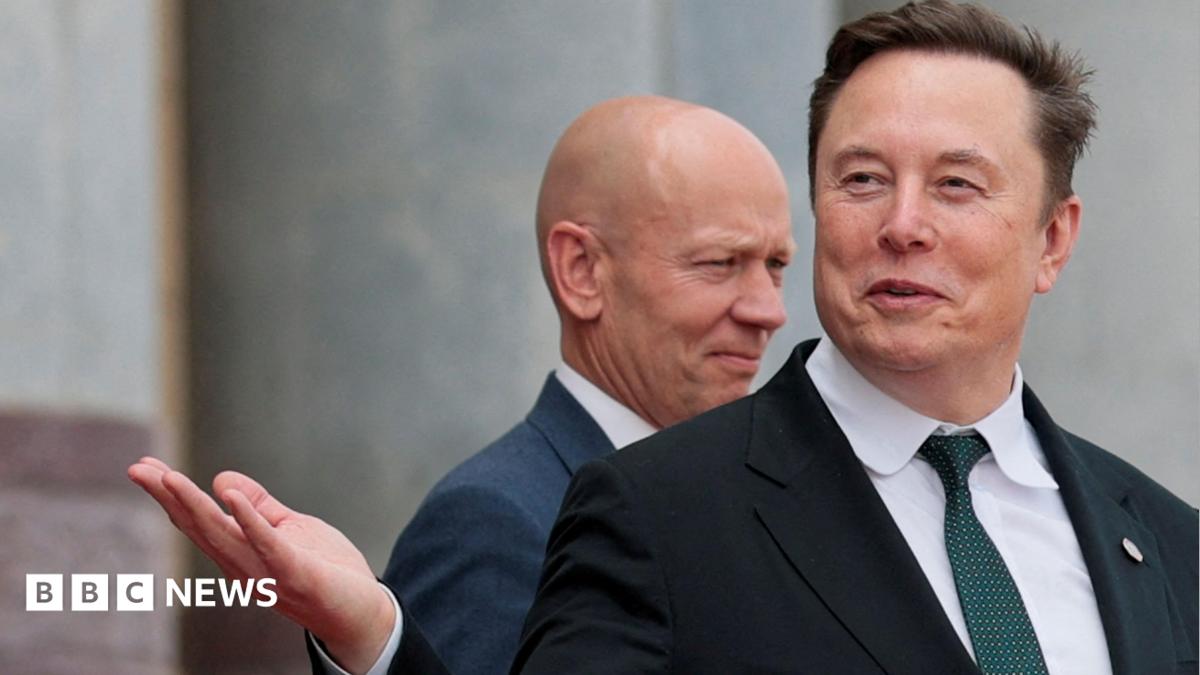
SpaceX’s share price has dropped below its stock market debut just over a month ago, falling sharply from a post-float peak.
The price for a single share in Elon Musk’s rocket, satellite and artificial intelligence (AI) company fell to $132.62 (£98.24) on Wednesday, below its initial listing of $135 in June.
SpaceX’s initial public offering (IPO) made Musk the world’s first trillionaire. Compared to its on-the-day high so far, the stock price is now down 41%.
If the price holds, or falls further, it will mean that those who purchased stock around the time of its flotation will stand to lose money on their investment.
Even amid a tumultuous few weeks for tech stocks, SpaceX has taken a particular hit.
Compared to a 0.2% fall on the wider Nasdaq index, where SpaceX’s shares are listed, the company’s stock price fell more than 2% on Wednesday.
SpaceX stock has been volatile since it began trading on the public stock market a little over one month ago.
After an initial investor frenzy that saw the company valued at more than Amazon and Microsoft, the price of its shares has drifted downward.
Initially, SpaceX was treated by investors as the first chance they had to invest in an AI company, according to what financial market analysts and experts recently told the BBC,
Earlier this year, SpaceX acquired Musk’s AI start-up xAI, recently renamed SpaceXAI, marking it’s first foray into an AI-focused business.
XAI is best known for the controversial chatbot Grok, but through that acquisition, SpaceX now leases data centre capacity to other tech companies.
The company’s main business is the manufacture and launch of rockets and telecommunications satellites called Starlink.
When Starlink said it was cutting prices in the Memphis, Tennessee area amid local concerns over a massive data centre project, SpaceX shares fell by 8%.
Steve Sosnick, chief market analyst at Interactive Brokers, told Reuters: “There hasn’t been anything that lately to remind people of some of the catalysts for why they bought SpaceX.”
SpaceX is expected to release in August its first public earnings report.
Sosnick added: “The fact that a stock has fallen a couple of dollars below its IPO price in itself is not a tragedy, but SpaceX is heavily watched and has an important role in investor psyche.”
SpaceX did not immediately respond to a request for comment.
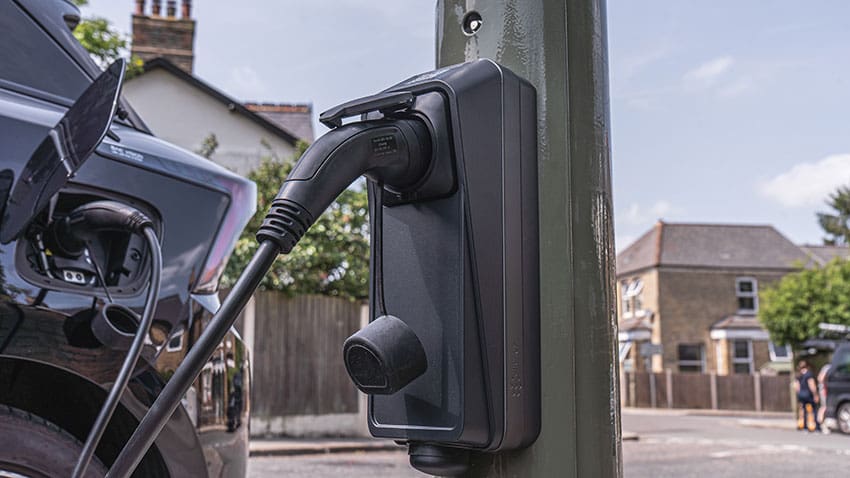
The humble lamp post is about to start paying its way. West Northamptonshire is to host one of the UK’s largest local on-street electric vehicle charging programmes, with more than 3,000 sockets, most of them fitted to existing lamp columns, due to start appearing on residential streets from mid 2026.
West Northamptonshire Council has appointed operator Char.gy to lead the rollout following a competitive procurement process. The programme is funded through the Government’s Local Electric Vehicle Infrastructure (LEVI) Fund and backed by substantial private investment, with competitive user tariffs promised.
The target market is clear: residents who rely on on-street parking and have no way of charging at home. That group includes a sizeable slice of the small business community, from sole traders running a van off the kerb to employees weighing up whether an electric company car is practical without a driveway.
For SME owners, charging access is often the deciding factor in whether electrifying a vehicle, or a whole fleet, stacks up. The rollout also lands amid a wider policy shift towards kerbside infrastructure, after ministers redirected £400 million towards on-street chargers in underserved areas, and as workplace charging becomes a benefit employees increasingly expect.
Aviation, Maritime and Decarbonisation Minister Keir Mather said: “Drivers in West Northamptonshire will soon have thousands more reasons to go electric, with over 3,000 new public charge points rolling out thanks to £2.85m of government funding.
“We know charging availability is one of the biggest barriers to switching, which is why we’re tackling it head on with over £600 million to rapidly expand the UK’s charging network so drivers can charge at home or on the go with confidence, wherever they are.”
The lamp column approach is the quietly clever part. By bolting chargers to existing council and parish infrastructure, the programme avoids the cost and disruption of digging up pavements, an approach the council says will keep the rollout cost-effective while supporting the area’s long-term sustainability ambitions.
Locations were selected through an evidence-based process prioritising residents without off-street parking, alongside sites suggested by residents themselves. Parish councils are being consulted to ensure the network is fair, accessible and sustainable.
Cllr Nigel Stansfield, Cabinet Member for Environment, Recycling and Waste at WNC, said: “This is a transformative investment in our area’s future. By delivering thousands of accessible, convenient and fairly priced on-street charging points, we are making it easier for residents to choose cleaner travel and invest in electric vehicles if they choose to.
“Working with Char.gy allows us to scale up quickly using existing infrastructure and ensure our communities are well-prepared for the increasing demand for electric vehicles.”
John Lewis, Char.gy’s chief executive, said the scheme would “make a real difference to people across West Northamptonshire who don’t have driveways or home chargers. By using lamp columns on residential streets, the Council is bringing charging closer to where people live, without major disruption to neighbourhoods.”
One caveat for those doing the sums: public charging still attracts 20 per cent VAT against 5 per cent for home charging, a gap currently the subject of a legal battle between HMRC and charge point operators that could yet reshape the economics of kerbside charging.
Residents and local businesses will be kept updated on installation timelines and site locations through WNC’s dedicated webpages and Char.gy’s website.

Jamie Young
Jamie Young is Senior Reporter at Business Matters, covering SME finance, employment law and Westminster policy since 2016. He has reported on every Budget and Autumn Statement since 2018, helped make sense of the ‘covid era’ and the bounce-back loan scheme from launch through the fraud investigations, and broke the magazine’s coverage of the 2024 late-payment reforms. He joined Business Matters straight from completing his BA in Administration from Exeter University and is NCTJ-qualified. Reach him at jyoung@cbmeg.co.uk


The seafood brand is making its retail debut with its frozen shrimp nuggets.

FOX Business’ Madison Alworth reports on New York’s statewide pause on large-scale AI data centers, with concerns about falling behind China in the AI arms race.
New York’s decision to pause the construction of large artificial intelligence data centers is drawing criticism from some lawmakers and energy officials, who argue the move could weaken the United States’ ability to compete in the global AI race while encouraging investment to move elsewhere.

New York Gov. Kathy Hochul’s AI data center pause is drawing criticism from lawmakers and industry leaders. (James Carbone/Newsday RM)
FOX Business’ Madison Alworth joined “Varney & Co.” host Stuart Varney to discuss New York’s first-in-the-nation pause on large artificial intelligence data centers, the debate over the state’s energy capacity and the broader concerns about U.S. competitiveness with China.
Maria Bartiromo and guests discuss New York Governor Kathy Hochul’s AI data center moratorium.
Critics argue that restricting new artificial intelligence infrastructure could have consequences beyond New York because demand for computing power continues to grow. Sen. John Fetterman, D-Pa., reacted on X to the state’s decision with a brief warning: “China wins.”
Gov. Kathy Hochul has defended the policy, arguing the state’s electric grid cannot currently support additional large-scale facilities.
“A giant data center, that one 50-megawatt center… consumes as much power as 50,000 homes… I’ve got an energy grid that is already overtaxed,” Hochul said.
Energy Secretary Chris Wright disputed that argument, saying large technology projects can help strengthen energy investment rather than strain it.
VistaShares CEO Adam Patti discusses how New York’s moratorium on large data centers underscores the need for major investments to modernize the nation’s aging power grid on ‘The Claman Countdown.’
“Gov. Hochul has it exactly backwards. Data centers are the greatest tool we have right now to stop the rise of electricity prices and ultimately to bring them back down,” Wright said, “It’s the Democrat green energy policies that have driven energy prices up in New York state.”
META EXPANDS LOUISIANA DATA CENTER IN $50B AI PUSH, BOOSTING RURAL COMMUNITY
The debate comes as states weigh how to balance rising electricity demand, artificial intelligence investment and long-term energy planning while competing to attract technology companies.

Booking, Alphabet, and 7 Other Stocks to Buy Ahead of Earnings
Business
Treasury Unveils New $1 Gold Coin Featuring Trump’s Face for America’s 250th Birthday, Sparking Debate
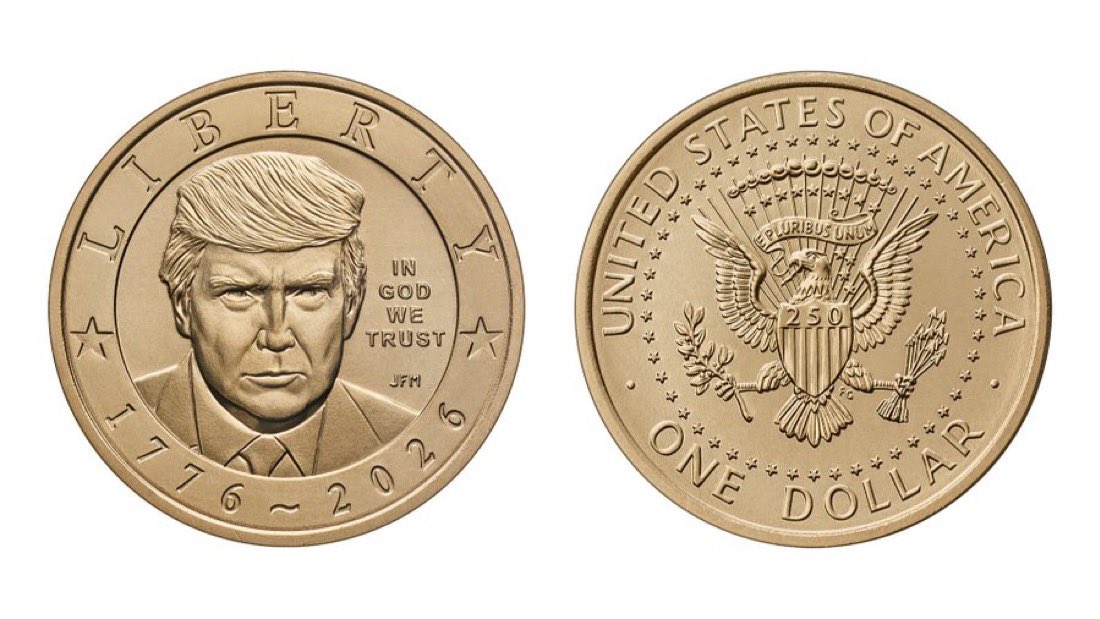
WASHINGTON — Treasury Secretary Scott Bessent unveiled new photos Wednesday of a proposed $1 gold-colored coin featuring President Donald Trump’s likeness, part of a broader effort to commemorate the United States’ 250th anniversary of independence, even as the design raises questions about longstanding federal restrictions on placing living presidents on U.S. currency.
Bessent shared the first-look images on social media platform X, describing the coin as a tribute to the nation’s founding principles.
“As America commemorates 250 years of independence, the @usmint will begin striking this new $1 gold coin to honor the enduring legacy of liberty and a lasting symbol of patriotism,” Bessent wrote. “Featuring President Trump, it celebrates the strength of American values, and the promise of a nation dedicated to preserving freedom for all.”
Coin Design and Production Details
The proposed coin features Trump’s image alongside the phrase “In God We Trust” and the dates “1776-2026” on the front. The reverse side reads “One Dollar.” Despite its gold-like finish, the coin is made from a non-precious metal composition rather than actual gold, according to Treasury officials.
The coins are being minted at the U.S. Mint facility in Philadelphia and are expected to become available to the public in the fall. The Commission of Fine Arts, the federal body responsible for reviewing the design of U.S. currency and coinage, granted the Mint approval to proceed with production in March.
A Legal Gray Area
The Trump administration‘s push to feature the sitting president’s likeness on circulating currency runs up against multiple existing federal restrictions. The Presidential $1 Coin Act of 2005 permits $1 coins honoring deceased presidents only, while the Circulating Collectible Coin Redesign Act of 2020 separately prohibits portraits of living people from appearing on the “tails” side of any coin. Federal law more broadly, dating back to an 1886 measure known as the Thayer Amendment, bars images of any living person from appearing on U.S. currency.
The Trump administration has argued that this particular coin sidesteps those restrictions by relying on a distinct 2020 law specifically authorizing commemorative designs tied to the nation’s 250th anniversary celebrations, a legal interpretation that has drawn scrutiny from congressional critics.
Democratic Lawmakers Push Back
Several Democratic lawmakers have moved to formally block the administration’s efforts to place Trump’s image on U.S. currency. Sens. Jeff Merkley of Oregon and Catherine Cortez Masto of Nevada introduced legislation, referred to as the “Change Corruption Act,” that would explicitly prohibit the likeness of any living or sitting president from appearing on U.S. currency of any kind.
Treasury Officials Defend the Design
Ahead of Wednesday’s formal unveiling, U.S. Treasurer Brandon Beach previously defended the decision to feature Trump on the coin in a statement obtained by the Associated Press in March.
“As we approach our 250th birthday, we are thrilled to prepare coins that represent the enduring spirit of our country and democracy, and there is no profile more emblematic for the front of such coins than that of our serving President, Donald J. Trump,” Beach said at the time.
Part of a Broader Currency Redesign Push
The $1 gold coin represents just one element of a broader effort by the Trump administration to reshape federal currency and other national symbols to feature the president more prominently. Bessent separately showed off a design earlier this week for a proposed $250 bill featuring Trump’s face, which he described as a preparatory measure the Treasury Department has taken in case Congress eventually passes legislation authorizing the sitting president’s image to appear on paper currency.
That preview of the $250 bill design followed a Washington Post report indicating the Treasury Department had pressured the Bureau of Engraving and Printing to produce mock-ups of the proposed note ahead of any formal congressional authorization.
New Passport Design Also Unveiled
Alongside the coin announcement, the administration also unveiled new limited-edition passports, dubbed “Patriot Passports,” created to mark the semiquincentennial celebration. A sample image shared by Trump depicted the president standing with his fists resting on the Resolute Desk, with the text of the Declaration of Independence displayed behind him. The passport’s second page includes a rendering of artist John Trumbull’s well-known painting depicting the signing of the Declaration of Independence.
Historical Precedent for Presidential Imagery
While federal law generally bars living presidents from appearing on U.S. currency, there is at least one notable historical precedent involving a sitting president’s image on commemorative coinage. Calvin Coolidge, the nation’s 30th president, issued a half-dollar coin in 1926 that included his own likeness alongside George Washington’s to commemorate America’s 150th anniversary, according to records maintained by the U.S. Mint.
Part of a Broader Pattern of Institutional Changes
Wednesday’s coin unveiling adds to a series of efforts by the Trump administration to leave a lasting imprint on federal institutions and symbols. Those efforts have included a push to add Trump’s name to the Kennedy Center’s facade, an initiative that has faced its own legal challenges. A federal judge ruled last month that Trump’s name must be removed from the performing arts center’s exterior, a decision the president has since appealed without success.
What Comes Next
With the coin’s production already underway in Philadelphia and its public release targeted for later this fall, the ongoing legal and political debate over whether featuring a sitting president’s likeness on U.S. currency violates existing federal restrictions is likely to continue playing out in Congress and potentially in the courts in the months ahead. Whether Merkley and Cortez Masto’s proposed legislation gains sufficient traction to formally block the coin’s release before it reaches circulation remains uncertain, given the current composition of Congress and the administration’s continued defense of its legal interpretation permitting the design under the 2020 semiquincentennial commemorative coin law.

350-Mile Boat Tow Puts Cybertruck Battery Range To The Test

Ulrika Jonsson, 58, looks unrecognisable as she switches up her trademark blonde locks for a series of dramatic wigs

Stripe and Advent bid $53bn for PayPal takeover


-

 Fashion6 days ago
Loro Piana Fall 2026 Enters Houston’s Art Scene
-

 Fashion5 days ago
Weekend Open Thread: Nutriplenish Leave-In Conditioner
-
 Sports6 days ago
2026 Genesis Scottish Open Thursday TV coverage: Round 1
-

 Sports5 days ago
Super Eagles star Moses Simon opens up on Liverpool transfer regret
-

 Tech6 days ago
Character.AI enters the microdrama arena with its own productions, but there’s a twist
-

 Politics7 hours ago
Young campaigners urge incoming PM to act on outdoor junk food ads
-

 News Videos23 hours ago
XRP BOMBSHELL… XRP OMBOARDED FOR TRANSACTIONS!!!
-

 Tech2 days ago
Get Your ESP32 Sunny Side Up With This Solar Dev Board
-

 Tech22 hours ago
Dark Secrets Emerge When Jailbreaking LLMs
-

 News Videos7 days ago
Crypto Just Entered Its Most Important 6-Month Candle (Could Decide Everything!)
-

 Tech6 days ago
Level Infinite Launches Gangstar Mirage City in India with Pre-Registrations
-
 NewsBeat6 days ago
Major update after Huntingdon train attack as man enters plea
-

 News Videos2 days ago
how to make coin bank box with cardboard #scienceproject #money #diy #shorts
-
 Tech2 days ago
Cloudflare Precursor Watches Your Mouse and Keyboard To Decide If You Are Human
-
 Entertainment2 hours ago
Disney’s Most Ambitious Failed Star Wars Attraction Is Coming to SDCC
-

 Tech7 days ago
Entra passkey enrollment vishing targets Microsoft 365 users
-

 Crypto World7 days ago
DeFi Dashboard Zapper to Shut Down After 7 Years
-
Crypto World1 day ago
Ripple, Coinbase, Circle Join Linux x402 Foundation to Help Shape AI Payments
-

 Crypto World7 days ago
Mark Cuban-Backed DeFi Dashboard Zapper Shuts Down After 7 Years
-

 Tech6 days ago
Claude’s New Reflect Dashboard Wants To Help You Log Off Of Claude
You must be logged in to post a comment Login