

Business
Taylor Hicks Opens Up on Life After ‘American Idol’ Win Nearly Two Decades Later: ‘Tougher Than It Seems’


Taylor Hicks became an overnight star when he won “American Idol” in 2006, but the singer says the years that followed his victory were far more difficult than fans watching at home might have assumed.
Nearly two decades after capturing America’s vote during the show’s fifth season, Hicks reflected on the realities of sudden fame in an exclusive interview with Fox News Digital, addressing what he described as the biggest misconception people hold about winning one of television’s most popular singing competitions. “It is a lot tougher than it seems,” Hicks said. “I think opportunity creates luck. But with a little faith and a little luck, you can accomplish your dreams.”
Hicks, now 49 and a native of Birmingham, Alabama, rose to fame as the leader of the “Soul Patrol,” a nickname fans gave his devoted fan base during his run on the show. In the years since his win, he has built a career spanning sold-out concerts, a Las Vegas residency, Broadway performances and television hosting work, establishing himself as one of the more enduring success stories to emerge from the “Idol” franchise’s early seasons.
Asked what advice he wished someone had given him before his life changed overnight, Hicks pointed to patience and faith as the lessons he would pass along to his younger self. “Well, 20 years is a long time to be in show business, but if I could look back and somebody would tell me some advice, I would probably say, ‘Be patient and trust in God,’” Hicks said.
Hicks credited his upbringing in Birmingham, along with values instilled by his parents, for helping him stay grounded as he navigated the entertainment industry’s highs and lows. “One trait that my parents taught me and my values is to stay grounded and make sure that you are nice to others,” Hicks said. “Karma’s a real thing, so be nice, be sweet and be happy.”
Before landing on “American Idol,” Hicks spent years performing locally, eventually auditioning for the show at age 29, a decision that immediately altered the course of his career. Reflecting on how the reality television talent-competition landscape has changed since his own audition, Hicks said today’s contestants face a far more crowded field than he did nearly 20 years ago. “Luckily for me, ‘American Idol’ was the only game in town,” Hicks previously told Fox News Digital. “I think the last talent show that was on television was ‘Star Search.’ And once ‘Idol’ became so successful, I think ‘America’s Got Talent,’ ‘So You Think You Can Dance.’ There’s all these entities that kind of popped up that you really have to compete for now. So I think it is tougher for contestants on shows like that, because they’re kind of spreading the love.”
Despite the challenges that came with sudden celebrity, Hicks said he remains grateful for the opportunities his “American Idol” victory opened up over the years. Looking back on the night he was crowned champion, he said there is one piece of advice he would give himself in that exact moment, knowing what he knows now about the unpredictable nature of a career in entertainment. “The first thing that I would tell myself right when I won ‘American Idol’ is enjoy the wave as much as you can because in this business, sooner or later, it’s going to crash, and you’ve got to catch another one,” Hicks said.
Beyond his reflections on fame and the music industry, Hicks also spoke about America’s history and the broader significance of the country’s ongoing 250th anniversary celebrations. As part of those festivities, Hicks performed “Nineteen,” a tribute song honoring young Americans who answered the call to serve following the September 11 terrorist attacks, a performance he said carried personal significance tied to the country’s larger story.
Speaking about the milestone anniversary, Hicks expressed pride in how far the country has come while emphasizing the importance of looking toward the future as well. “Well, I think we’ve come a long way as a country. From where we started, from our Founding Fathers to this point, this is an amazing time in history for our country and we all should be proud that we’ve made it to 250, and here’s to 250 more,” Hicks told Fox News Digital.
Hicks remains active on the road nearly two decades after his “American Idol” win, continuing to tour and perform across the country. He is scheduled to perform at the Flora-Bama Lounge on July 11, followed by an appearance in North Haven, Connecticut, where he will host the Connecticut Country Music Festival on August 1, keeping a steady touring schedule that has become a hallmark of his post-“Idol” career.
Hicks’ comments arrive amid a broader wave of reflection from past reality-competition winners about the realities of instant fame and the pressures that follow it. Country singer Gabby Barrett, another “American Idol” alum, has previously spoken publicly about the difficult path she took before the show changed her life, including a period during which she said she slept in her car while pursuing her music career. Hicks’ remarks add to that ongoing conversation among former contestants about the gap between the glossy image of reality television success and the more complicated reality many performers face once the cameras stop rolling and the spotlight begins to fade.
For Hicks, the throughline connecting his career, his faith and his outlook on the country’s milestone anniversary appears to be a consistent emphasis on gratitude paired with realism, a perspective he said has helped him sustain a two-decade career in an industry known for its unpredictability. As he continues touring nearly 20 years removed from his “Idol” win, Hicks’ reflections offer a rare, candid look at what life actually looks like on the other side of reality television stardom, long after the initial wave of fame has passed and a career must be built and rebuilt on its own terms.


The coffee chain is tapping artificial intelligence to develop in-house alternatives to systems by Microsoft and IBM that track inventory and manage equipment, Bloomberg News reported last week, after reviewing an internal presentation. According to the article, the Seattle-based company has been working for several years to replace Oracle’s point-of-sale system.
This will be disturbing news in Bengaluru and Hyderabad: Maintaining these very technologies for large multinationals like Starbucks is the bread and butter for the 6 million coders employed by India’s outsourcing industry.
The AI adoption craze is looming over what’s promising to be another lackluster earnings season for IT services exporters. Last week, Tata Consultancy Services Ltd., the biggest among them, reported 0.4% growth in revenue over the previous three months after stripping out currency fluctuations, the slowest expansion in a year. While the company has shed 3% of its workforce in the past year to about 594,000, the spending on third-party specialist contractors to bridge the firm’s own skills gaps ate into revenue. Net profit margin shrank.
At smaller rival HCL Technologies Ltd., sales in the three months to June slipped 0.5% quarter-on-quarter after holding exchange rates constant. The management kept its annual revenue growth guidance of 1% to 4% unchanged, but it still ended up shrinking its employee base by nearly 3,300 people — the sharpest contraction in close to two years. For HCL Tech, too, a rise in subcontractor costs mitigated the wage savings.

 Bloomberg
For 25 years, India’s software services firms have locked global corporate clients into lucrative contracts to implement and maintain packaged software. Before the arrival of AI tools, it wouldn’t have been cost-effective for a firm like Starbucks, whose business is beverage, to take an IBM system out of its shrink wrap and map it to every piece of kitchen equipment, maintenance schedules, and local technicians across a labyrinthine network of 40,000-plus stores globally. That’s the kind of stuff around which Indian IT vendors have built a $250 billion exports powerhouse.
Similarly, making sure that a multinational can safely add a new local payment method — or correctly reflect a discount or tax change — has been a lucrative annuity for Indian programmers. They specialize in testing for various scenarios that could make the cash registers go down even for a minute. Largely hidden from public view, they keep global supply chains working 24×7 by managing the data pipelines that sync third-party inventory tools with an enterprise’s own resource planning software.To be sure, these long-term, multimillion-dollar orders haven’t completely dried up. TCS shares jumped Monday after the company disclosed that it would be expanding the role it has played in managing the infrastructure and applications for ABB. The new mandate is to design and run the Zurich-based engineering giant’s network as a modern, AI-driven service. HCL Technologies recently won a 5.5-year, $1.14 billion contract to build an AI-driven operating model for a large European engineering and manufacturing conglomerate it didn’t name.
Still, the pricing of large outsourcing deals in the age of AI remains under a question mark. After all, clients will fully expect their suppliers to use fewer humans — and more AI — to keep their tech infrastructure running smoothly. Accordingly, they will pay them less than before.
As for customers embedding artificial intelligence in their own workflows, they’ll probably pay the upfront cost of gathering the unstructured data scattered around their firms and labeling everything correctly. But after a quarter or two, AI agents will use the cleaned-up data to write their own code. The annuity business will have a slow fade, with lumpy AI-related work helping to mask the decline for some time.
BloombergWorse, as clients like Starbucks open their own direct engineering hubs in places like Bengaluru and Nashville — using AI to let small, in-house teams do the work of large code-writing armies — the middleman’s markup becomes an obvious target for cost-cutters.
While the stock market is still giving a thumbs up to any order wins, the NSE IT Index finished June 10% lower than five years ago. Even during the worst of the Global Financial Crisis, pessimism didn’t run this deep. Maybe the gloom is overdone, and US clients will eventually curb their enthusiasm for AI. They may come to realize that even as their token budgets go through the roof, their corporate data and workflows are slipping out of their control and going to frontier AI labs.
However, it’s also possible that investors have read the tea leaves right, and it’s the outsourcing firms that are yet to wake up and smell the coffee.
Business
AI chip startups FuriosaAI, Nuvacore, d-Matrix pursue major funding rounds at higher valuations- The Information

AI chip startups FuriosaAI, Nuvacore, d-Matrix pursue major funding rounds at higher valuations- The Information

Higher diesel prices lifted unit costs across Rio Tinto’s expansive Pilbara operations, although the miner reported no material disruption to production across its core commodities.

Alcoa and its Japanese industry partners have approved development of a gallium production facility in WA’s South West after gaining support from the Australian and US governments.
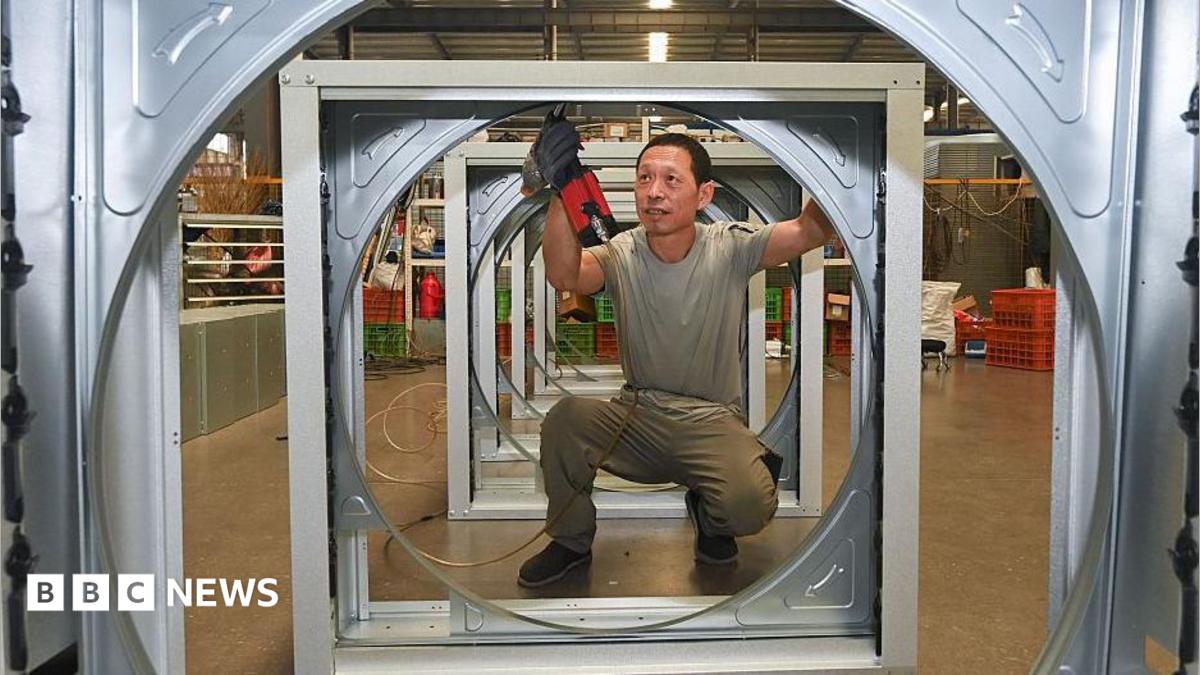
China’s economic growth slowed sharply between the start of April and end of June as weak demand domestically and the impact of the Iran war on oil prices overshadowed the country’s strong exports.
Official gross domestic product (GDP) figures showed that the world’s second largest economy grew in the second quarter of the year by 4.3%, below Beijing’s annual target.
The announcement comes a day after government data showed that China’s exports jumped by 27% in June compared to a year earlier.
In March, China cut the target to a range of 4.5%-5%, its lowest economic expansion goal since 1991 – a move some analysts say gives officials more flexibility in managing the economy.
The figures mark the first full quarter of GDP data since the start of the Iran war on 28 February and comes after a rise of 5% in the first quarter.
Separate data released on Wednesday highlighted the economic challenges Beijing is facing at home – including a long-running property market slump and weak consumer spending.
New home prices contracted again, although the 0.1% fall in June was at a slightly slower pace than the previous month.
But retail sales rose by 1% in June, improving from a 0.6% decrease in May.
Customs data for June, which was released on Tuesday, showed that China’s tech exports were boosted by soaring global demand for semiconductors to power artificial intelligence (AI) data centres.
Surging demand for Chinese electric vehicles (EVs) also gave a major boost to China’s exports – with monthly car exports topping one million for the first time.
Founder of Constellation Research Inc. Ray Wang discusses the volatile A.I. tech rally and Meta’s shifting compute strategy on ‘Making Money.’
A group of 26 Meta employees sued the tech giant over accusations that it used AI-powered software to choose people for mass layoffs, disproportionately targeting workers with disabilities or those who took medical, parental or family leave.
The lawsuit, filed in federal court in Oakland, California, on Monday, alleges that the company relied on factors such as internal AI systems, keystroke and activity-monitoring data, AI token-usage dashboards and algorithmically assisted performance rankings when making job cuts earlier this year.
Many of these factors “by design, cannot be accumulated by an employee who is on protected medical or family leave, or whose output is reduced by a disability,” the lawsuit reads, adding that the company did not factor in protected leave when taking employees’ scores into account and “did not pause the system for the individualized, leave- and accommodation-neutral review that the law requires.”
The plaintiffs are among the 8,000 employees, or about 10% of its workforce, who Meta said in May would be impacted by layoffs, and they were told their jobs would be eliminated starting July 22.
FOUR STATES SEEKING $1.4 TRILLION IN PENALTIES IN CHILD SOCIAL MEDIA ADDICTION TRIAL, META SAYS
A group of 26 Meta employees sued the tech giant alleging it used AI-powered software to choose people for mass layoffs. (David Paul Morris/Bloomberg via Getty Images / Getty Images)
They claim that Meta violated state and federal laws — including the Family and Medical Leave Act, the Americans with Disabilities Act, the Pregnancy Discrimination Act and the Pregnant Workers Fairness Act — that prohibit discrimination or retaliation against workers who take medical leave, have disabilities or are pregnant.
The workers also say the company failed to test its AI systems for bias, which they allege violated newly adopted laws in California and New York City.
The plaintiffs, who come from six states, including California and New York, as well as Washington, D.C., are seeking a preliminary ruling from the court to block Meta from completing the layoffs while they pursue their claims in private arbitration.
The employees argue that Meta’s agreements require employees to arbitrate workplace disputes individually, but do not apply to requests for temporary relief.
The plaintiffs are among the 8,000 employees, or about 10% of its workforce, that Meta said in May would be impacted by layoffs. (Photo Illustration by Onur Dogman/SOPA Images/LightRocket via Getty Images / Getty Images)
They said the lawsuit asks just to preserve the status quo and keep them employed pending arbitration.
“Once these terminations are finalized, the harm to Plaintiffs cannot be undone by money damages alone,” the lawsuit reads, citing the loss of employer-subsidized health coverage during pregnancy, postpartum recovery and active medical treatment.
Meta has pushed back on the allegations outlined in the lawsuit, saying that it does not use AI when determining who to cut from its workforce.
“These claims lack merit and are not based on facts. Workforce management and organizational decisions were and are made by people, not AI,” a Meta spokesperson told Fox Business.
META SHUTS DOWN AI TOOL AFTER BACKLASH OVER PUBLIC INSTAGRAM ACCOUNTS
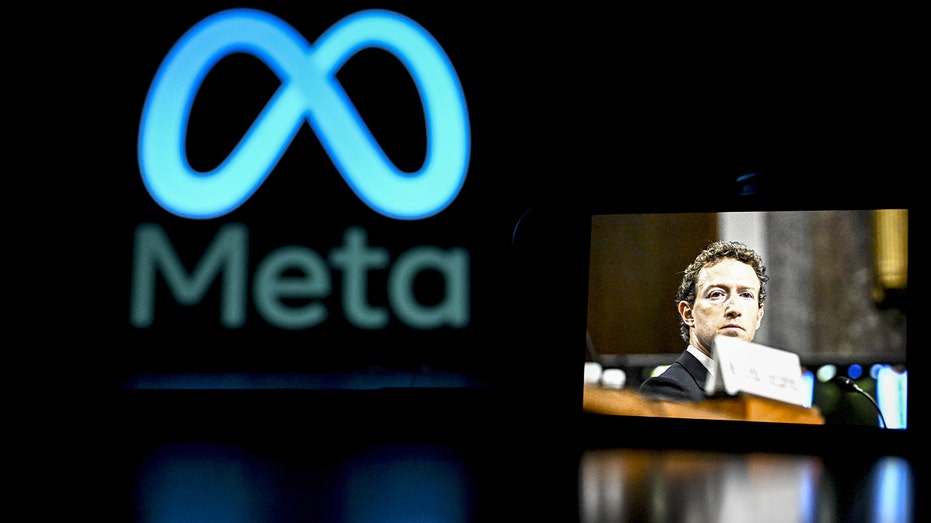
Meta said that it does not use AI when determining who to cut from its workforce. (Arda Kucukkaya/Anadolu via Getty Images / Getty Images)
GET FOX BUSINESS ON THE GO BY CLICKING HERE
About half of the plaintiffs had taken leave for caregiving or pregnancy-related reasons.
Eight employees are women who had taken maternity or pregnancy-related leave, four are men who had taken parental leave and one is a woman who had taken leave to take care of a family member and later bereavement leave.
The plaintiffs argued that Meta’s “algorithmically assisted selection process, by systematically recording such absences as reduced performance, falls more heavily on women than on men” because women disproportionately take pregnancy and caregiving leave.

China new home prices decline at slower pace in June

Loop Industries earnings missed by $0.02, revenue fell short of estimates

Taiwan’s premium mangoes wing their way to Europe for the first time

China Q2 GDP disappoints as sluggish domestic demand offsets exports boost

LaserPecker LX2 review: Specs, Features, Price

Middlesbrough FC to auction old stadium club crests to fans
You can’t spell chai latte without AI. That will hurt India


-

 Fashion6 days ago
Loro Piana Fall 2026 Enters Houston’s Art Scene
-

 Fashion4 days ago
Weekend Open Thread: Nutriplenish Leave-In Conditioner
-
 Sports5 days ago
2026 Genesis Scottish Open Thursday TV coverage: Round 1
-

 Sports5 days ago
Super Eagles star Moses Simon opens up on Liverpool transfer regret
-

 Tech6 days ago
Character.AI enters the microdrama arena with its own productions, but there’s a twist
-

 News Videos8 hours ago
XRP BOMBSHELL… XRP OMBOARDED FOR TRANSACTIONS!!!
-

 Tech22 hours ago
Get Your ESP32 Sunny Side Up With This Solar Dev Board
-

 Tech7 hours ago
Dark Secrets Emerge When Jailbreaking LLMs
-

 News Videos6 days ago
Crypto Just Entered Its Most Important 6-Month Candle (Could Decide Everything!)
-

 Business7 days ago
ASX 200 Slides Over 0.6% as Rare Earths and Lithium Stocks Tumble Amid Global Semiconductor Sell-Off Today
-
 NewsBeat6 days ago
Major update after Huntingdon train attack as man enters plea
-

 News Videos2 days ago
how to make coin bank box with cardboard #scienceproject #money #diy #shorts
-

 Business7 days ago
SpaceX Shares Slide Nearly 6% Amid Post-IPO Volatility and Starship Test Focus
-

 Sports7 days ago
39-year-old Djokovic wins five-hour thriller to enter Wimbledon semis | Other Sports News
-

 Tech6 days ago
Level Infinite Launches Gangstar Mirage City in India with Pre-Registrations
-
 Tech1 day ago
Cloudflare Precursor Watches Your Mouse and Keyboard To Decide If You Are Human
-

 Tech6 days ago
Entra passkey enrollment vishing targets Microsoft 365 users
-
 Crypto World6 days ago
DeFi Dashboard Zapper to Shut Down After 7 Years
-

 Business7 days ago
Maase Inc Shares Jump 16% as Speculative China-Based AI Pivot Stock Extends Its Volatile 2026 Rally Today
-

 Sports7 days ago
Tough task staring Gilas in the eyes entering second round of Qualifiers
You must be logged in to post a comment Login