




Connect with us
DAPA Banner

Business

Telix Pharmaceuticals Shares Jump 7% on FDA Nod for Brain Cancer Imaging Agent Amid Strong Revenue Momentum

Published

on

Ivanhoe Electric

MELBOURNE, Australia — Telix Pharmaceuticals Ltd. shares surged more than 7% Friday as the Australian radiopharmaceutical company received a key regulatory boost in the United States, highlighting its growing role in precision oncology diagnostics and therapeutics.

Telix Pharmaceuticals

Telix (ASX: TLX) stock climbed A$1.00, or 7.33%, to A$14.64 by the close of trading on the Australian Securities Exchange at 4:16 p.m. GMT+10. The move extended gains that have seen the stock rise about 31% over the past month, fueled by robust commercial performance and pipeline advancements in the fast-expanding field of targeted radiopharmaceuticals.

The rally was triggered by Telix’s announcement that the U.S. Food and Drug Administration accepted its resubmitted New Drug Application for TLX101-Px, known as Pixclara (18F-FET), an imaging agent designed to improve diagnosis and management of glioma, the most common form of primary brain cancer. The FDA set a Prescription Drug User Fee Act target action date of Sept. 11, 2026, for the potential approval.

Pixclara aims to address limitations of current imaging techniques by providing better visualization of brain tumors, potentially aiding more accurate treatment planning for patients facing this aggressive disease. Telix also filed a Marketing Authorization Application for the product, branded Pixlumi in Europe, advancing its global regulatory strategy for the asset.

“This acceptance marks another important milestone as we work to bring innovative radiopharmaceutical solutions to patients with high unmet needs,” Telix executives noted in recent communications, emphasizing the company’s dual focus on diagnostics and therapeutics.

Advertisement

Telix specializes in developing and commercializing targeted radiopharmaceuticals that combine radioactive isotopes with molecules designed to bind to specific cancer markers. Its portfolio includes approved imaging agents and late-stage therapeutic candidates for prostate, kidney, brain and other cancers.

The company’s flagship products — Illuccix and Gozellix, both gallium-68 PSMA-PET imaging agents for prostate cancer — drove much of its recent growth. These tools help clinicians detect and stage prostate cancer more precisely than traditional methods, guiding decisions on surgery, radiation and systemic therapies.

In its Q1 2026 business update released earlier this week, Telix reported unaudited group revenue of US$230 million, up 11% from the previous quarter and 24% year-over-year. Precision Medicine revenue, which includes Illuccix and Gozellix sales, reached US$186 million, a 16% sequential increase, reflecting strong U.S. dose volume growth and international expansion.

The company reaffirmed its full-year 2026 revenue guidance of US$950 million to US$970 million, implying continued double-digit growth following 2025’s robust performance. For the full year 2025, Telix posted revenue of approximately US$803.8 million, a 56% jump from the prior year, driven by higher Illuccix volumes and the successful U.S. launch of Gozellix after securing reimbursement.

Advertisement

Analysts have responded positively. Wedbush maintained an Outperform rating with a US$22 price target, while H.C. Wainwright reiterated a Buy rating at US$20. Consensus targets hover around US$21, suggesting significant upside from current levels on both ASX and Nasdaq listings. Some forecasts point to potential revenue approaching US$1.5 billion by 2028 if pipeline assets reach commercialization.

Beyond diagnostics, Telix is advancing a therapeutics pipeline that could transform its business model from primarily imaging-focused to a balanced diagnostics-and-therapy player. Its lead candidate, TLX591 (lutetium-177 rosopatamab tetraxetan), is in the ProstACT Global Phase 3 trial for PSMA-positive metastatic castration-resistant prostate cancer.

Part 1 of the study, a lead-in safety and dosimetry evaluation, recently met its objectives with no new safety signals observed, supporting progression to the randomized portion. The therapy uses a radio-antibody drug conjugate approach to deliver targeted radiation directly to cancer cells while sparing healthy tissue.

Additional candidates include TLX250 for kidney cancer and TLX101 for brain cancer therapeutics, part of a strategy to pair diagnostic imaging with companion therapies — often called “theranostics” — in a single integrated approach.

Advertisement

Telix has invested heavily in manufacturing and supply chain capabilities to support growth. It operates facilities in key markets and has pursued strategic acquisitions to secure isotope supply and expand production. Year-end 2025 cash stood at US$141.9 million after significant investments, with ongoing R&D guidance for 2026 set at US$200 million to US$240 million.

The radiopharmaceutical sector has attracted intense investor interest amid breakthroughs in targeted cancer treatments. Major players and newcomers alike are racing to develop agents that improve outcomes while reducing side effects compared to traditional chemotherapy or broad radiation.

Telix’s vertically integrated model — spanning development, manufacturing and commercialization — positions it to capture more value across the supply chain. The company has expanded internationally, with operations in the United States, Europe, Japan, Brazil and elsewhere, and continues seeking approvals in additional markets for Illuccix and Gozellix.

Recent corporate moves include board strengthening with new non-executive director appointments and routine securities filings, including issuance of shares upon conversion of unquoted securities and notifications regarding substantial holders.

Advertisement

Despite the momentum, challenges remain. Radiopharmaceutical production involves complex logistics due to short isotope half-lives, requiring sophisticated cold-chain and just-in-time manufacturing. Regulatory hurdles can delay launches, as seen with previous FDA requests for additional data on certain assets. Competition is intensifying from larger pharmaceutical companies and specialized biotech firms entering the space.

Gross margins have held steady around 53% in recent periods, though increased R&D and commercial infrastructure spending have pressured adjusted EBITDA, which came in at US$39.5 million for 2025. Management has signaled a focus on scaling efficiently while prioritizing late-stage pipeline acceleration.

Market watchers note that success in the upcoming PDUFA date for Pixclara, combined with ProstACT data readouts, could serve as major catalysts. Positive outcomes might accelerate adoption of Telix’s platform and support premium valuations typical of high-growth biotech names with approved products and robust pipelines.

Founded in Melbourne, Telix has grown rapidly since its early days, transitioning from a development-stage company to one with commercial revenues and global reach. It maintains dual listings on the ASX and Nasdaq, broadening its investor base.

Advertisement

Broader industry tailwinds include rising cancer incidence, improved awareness of PSMA-PET imaging benefits, and policy support for innovative oncology therapies. Governments and payers increasingly recognize the value of precise diagnostics in reducing unnecessary procedures and optimizing treatment.

Friday’s trading volume on the ASX was elevated as investors digested the FDA news alongside the solid Q1 performance. Technical charts show the stock breaking out from recent consolidation, though it remains below all-time highs reached during earlier enthusiasm phases.

As Telix prepares for potential Pixclara approval later this year and further clinical data, attention will turn to execution on revenue guidance, margin trends and pipeline milestones. Analysts will scrutinize any commentary on manufacturing scale-up and international launches during future updates.

For now, the combination of commercial traction in prostate cancer imaging and progress toward brain cancer diagnostics has reignited optimism around Telix’s theranostics platform. With the global radiopharmaceutical market projected to expand significantly, the company appears well-placed to benefit from the shift toward personalized, targeted cancer care.

Advertisement
Continue Reading
Click to comment

You must be logged in to post a comment Login

Leave a Reply

Business

STOXX 600 gains for a third week with focus on Middle East peace talks

Published

on

STOXX 600 gains for a third week with focus on Middle East peace talks


STOXX 600 gains for a third week with focus on Middle East peace talks

Continue Reading

Business

Unite Group PLC (UTGPF) Q1 2026 Sales/Trading Call Transcript

Published

on

OneWater Marine Inc. (ONEW) Q1 2026 Earnings Call Transcript

Joe Lister
CEO & Member of Board

Good morning, everybody, and thank you all for joining the call. Since we last spoke, we’ve taken action across a number of areas and encouraged to see signs of early progress. And today, we will be updating on current trading, taking you through progress with disposals and flagging the appointment of an adviser to accelerate the repositioning of our portfolio and updating on our Q1 valuations for USAF and LSAV. So starting with trading. Overall, we are trading in line with the guidance we shared in February. We’re currently 74% reserved for ’26, ’27 academic year against 76% at the same time last year. And these reservations are supportive of our rental growth guidance of the 2% to 3% range.

Direct-let sales are responding to our productivity. We’re currently tracking about 1 to 2 points above the direct-let market at this stage. And the market is competitive, but we are benefiting from our mid-market price points and our productivity on pricing. We’re keeping our powder dry on incentives at the moment, but we could see some more promotional activity later in the year, and we are having success at selling beds that have been handed back to us by universities.

Nominations are currently at 54%. We’ve continued to see lower-tier universities be more cautious in their approach and managing their financial exposure. It is fairly normal that we see ups and downs in nominations agreements at this stage, and we could see norms move further by plus or minus 1 to 2 points by the end of the cycle. On the positive side, high-tariff universities are

Advertisement
Continue Reading

Business

Stocks mixed as caution over Iran ceasefire offset by better than feared CPI data

Published

on


Stocks mixed as caution over Iran ceasefire offset by better than feared CPI data

Continue Reading

Business

Intel Stock Hits Fresh 52-Week High at $62.34 as AI Partnerships Fuel Turnaround Momentum

Published

on

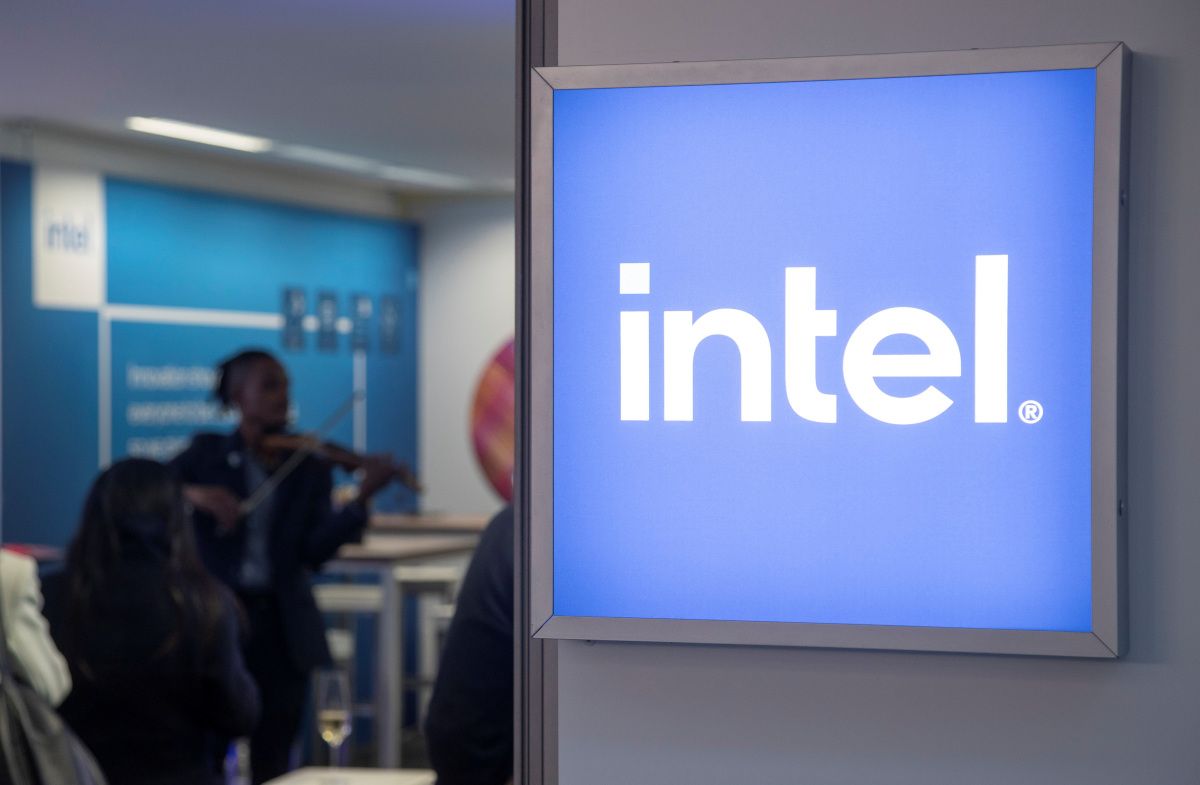
The Intel Corporation logo is seen  in Davos

SANTA CLARA, Calif. — Intel Corp. shares climbed to a new 52-week high Friday, trading at $62.34, up $0.62 or 1.00% midday on April 10, 2026, as investors bet on the chipmaker’s deepening role in artificial intelligence infrastructure and progress in its ambitious foundry turnaround.

The Intel Corporation logo is seen  in Davos
Intel Stock Hits Fresh 52-Week High at $62.34 as AI Partnerships Fuel Turnaround Momentum

The stock has surged more than 30% year-to-date and nearly 200% over the past 12 months, recovering from multi-year lows as new CEO Lip-Bu Tan’s strategy gains traction. Recent high-volume sessions, including an 11.4% jump on April 8 following analyst upgrades and partnership news, underscore growing Wall Street confidence in Intel’s ability to compete in the AI era.

Intel’s rally accelerated this week after the company expanded its collaboration with Google to advance AI infrastructure using Xeon CPUs and custom Infrastructure Processing Units. The deepened partnership aims to meet surging demand for efficient data center performance and energy savings in cloud and AI workloads.

Earlier in the week, Intel confirmed it would join Elon Musk’s Terafab project — a massive joint venture involving Tesla, SpaceX and xAI — to help design and manufacture advanced chips at scale. The move provides critical validation for Intel’s foundry business and its advanced packaging capabilities, sending shares up nearly 3% in one session.

Analysts have taken notice. Wells Fargo raised its price target on Intel from $45 to $55 while maintaining an equal-weight rating, contributing to the stock’s push toward five-year highs. Other firms, including KeyBanc, have issued bullish commentary, with some targets reaching $70 or higher. Consensus remains mixed, however, with an average around $42 to $61 depending on the source, reflecting ongoing debate about execution risks.

Advertisement

Intel is scheduled to report first-quarter 2026 financial results after the market closes on April 23, with a conference call to follow. Investors will scrutinize progress on margins, foundry customer wins and AI-related revenue. The company has already shown improvement in its balance sheet, including a $14.2 billion repurchase of a 49% stake in its Ireland Fab 34 facility from Apollo Global Management, restoring full ownership of the advanced manufacturing site.

The foundry business remains central to Intel’s long-term strategy. Under Tan’s leadership, the company is aggressively ramping its 18A process technology and pursuing external customers to challenge industry leader TSMC. Recent wins and partnerships signal that Intel’s manufacturing credibility is improving, though it still faces intense competition and high capital demands.

Intel’s client computing segment, long its core, is also evolving with the push toward AI PCs. New Core Ultra processors and collaborations such as the expanded tie-up with CrowdStrike for AI-optimized security are designed to drive an upgrade cycle in personal computers and laptops. The company continues to highlight its role in supplying host CPUs for NVIDIA’s DGX systems, maintaining relevance in the data center despite losing some ground to AMD.

Shares have shown remarkable resilience. After trading as low as the high teens in recent years, Intel hit intraday highs near $63 on April 10 amid heavy volume. The 52-week range now spans roughly $18 to more than $62, illustrating both the depth of the prior slump and the speed of the recovery.

Advertisement

Market observers point to several tailwinds. Global AI spending continues to climb, creating opportunities for Intel’s Xeon processors and custom silicon. U.S. government support for domestic semiconductor manufacturing, including potential CHIPS Act funding, adds another layer of optimism. Intel’s decision to buy back the Fab 34 stake demonstrates improved financial flexibility and confidence in its internal production roadmap.

Still, challenges persist. Intel has posted mixed results in recent quarters, with some periods showing revenue beats offset by cautious guidance. Gross margins have been under pressure amid heavy investment in new fabs and process technologies. The upcoming earnings report will be closely watched for signs that cost controls and foundry utilization are heading in the right direction.

Wall Street sentiment has shifted noticeably. Several analysts now see more upside than downside at current levels, citing Intel’s undervaluation relative to peers when factoring in its manufacturing assets and AI potential. However, bears warn that delays in process node execution or slower-than-expected customer adoption could stall the momentum.

Intel’s stock performance stands in contrast to broader semiconductor trends. While Nvidia continues to dominate headlines with its GPU leadership, Intel is carving out a niche in CPUs, custom AI accelerators and advanced packaging. Its ability to serve as both a designer and manufacturer gives it a differentiated position that some investors view as undervalued.

Advertisement

Looking ahead, Intel faces a pivotal year. Success in landing major foundry contracts, scaling 18A production and delivering on AI PC promises could sustain the rally. Failure to meet milestones might test investor patience, especially given the capital-intensive nature of the business.

For now, the market is rewarding signs of progress. Friday’s modest gain extended a multi-day winning streak, with the stock up more than 25% in the past week alone. Trading volume has been elevated, reflecting heightened interest from both institutional and retail investors.

Intel executives have emphasized a disciplined approach: invest in leading-edge technology, secure external foundry customers and improve operational efficiency. Recent appointments, including Aparna Bawa as executive vice president and chief legal and people officer, signal efforts to strengthen leadership as the company navigates its transformation.

As Intel prepares for its April 23 earnings, the narrative has shifted from survival to potential resurgence. The stock’s climb to $62.34 territory marks a psychological milestone, bringing it closer to levels not seen in years and reigniting optimism among long-suffering shareholders.

Advertisement

Whether this momentum can carry through earnings and into the second half of 2026 will depend on tangible results in the data center, foundry and client segments. For a company once synonymous with American semiconductor dominance, the current chapter represents a high-stakes bid to reclaim relevance in the AI-driven future.

Analysts and investors alike will continue parsing every partnership announcement, process node update and financial metric. In a sector where technological leadership can shift rapidly, Intel’s recent moves suggest it is no longer content to cede ground — and the market is taking notice.

Continue Reading

Business

EU airline industry warns of fuel shortages if Strait of Hormuz stays closed

Published

on

EU airline industry warns of fuel shortages if Strait of Hormuz stays closed

The trade body for European airports said if the Strait of Hormuz did not open in the next three weeks, there could be shortages.

Continue Reading

Business

Plans still of track for Wales’ first dedicated museum of contemporary art

Published

on

Business Live

It comes as the Artistic Museum of Contemporary Art will host its second pop-up exhibition in Wales.

Artist Shani Rhys James,

The not-for-profit Artistic Museum of Contemporary Art (AMOCA) will stage its second pop-up exhibition in Cardiff next week as it continues to search for a permanent home to showcase Welsh contemporary artists to the world.

Following the success of its inaugural exhibition in the Marble Hall at the Temple of Peace last summer, which exhibited work from 38 African and African diaspora artists, it is returning to the same venue for its second event. The exhibition, following a private viewing event, will run from April 15 to 18.

Advertisement

AMOCA Dialogues Wales: New Voices from the Museum Collection, will feature more than 40 female and non-binary international artists across painting, sculpture, and material experimentation. Artists featured will include Lynda Benglis, Ewa Juszkiewicz, Elizabeth Peyton, Issy Wood, and Wales-based artist of more than four decades, Shani Rhys James.

Rhys James was born in Melbourne in 1953 to an Australian mother and a Welsh father, moved to the UK as a child, studied at Loughborough and Saint Martin’s in London, and later settled in rural Powys with her husband and young family.

Over the decades, she has become widely regarded as one of Wales’s foremost painters, with major awards including the Gold Medal for Fine Art at the National Eisteddfod, the Jerwood Painting Prize, and an MBE in 2006. Her work is held in leading collections, including National Museum Cardiff.

She said: “I’m who I am, and I’m half Welsh… I chose my Welsh identity, really, by staying in Wales. I paint about mostly quite personal things… It’s a lot to do with feeling… the force of life.”

Advertisement

She is generous about Wales, but unsentimental. Asked about the Welsh art scene, she describes it as lively, exploratory, and often more interesting than outsiders realise. But she is equally clear about the structural problem: visibility. She added: “We don’t have enough press. We don’t have enough critical debate.” Or, more bluntly: We are a bit of a secret, quite frankly.”

Anders Hedlund.(Image: Dewi Tannatt-LLoyd)

AMOCA co-founder is Swedish-born philanthropist and entrepreneur Anders Hedlund. He said: “Shani Rhys James represents an essential part of that story – an artist whose work carries both local depth and universal resonance.”

.Alongside Mr Hedlund, its founding team is a collective of art lovers, curators, and professionals passionate about broadening access to contemporary art. Its privately funded collection includes over 1,000 museum-grade works by world-class contemporary artists.

It is still evaluating a number of property locations in Cardiff for a permanent home to showcase the work of contemporary Welsh artists, with discussions ongoing with Cardiff Council, the Welsh Government, Cardiff University, and private property landlords.

Advertisement

Mr Hedlund said: “Having worked on and built up a collection of art over the past 30 years, it is clear that Wales has some amazing contemporary artists, but sadly many don’t have the exposure that artists in the other home nations have. Auction houses in London often feature Scottish or Irish collections, but I have never seen a Welsh collection.

“That is why we are desperate to find a permanent home to create the first dedicated museum of contemporary art in Wales, and one that would attract visitors from around the world. The museum would promote the work of Welsh painters and artists, while also providing a platform to support young and up-and-coming artists.

“It would also include works from international artists. It is about securing the right building, but we remain confident that a suitable location, whether in the city centre or elsewhere in Cardiff, will be secured shortly. We are open to acquiring a building or renting one to serve our goal of putting Welsh contemporary art on the world stage.”

Mr Hedlund is best known for establishing the global stationery-to-Christmas-cracker venture IG Design Group, which has its UK manufacturing base in Ystrad Mynach.

Advertisement

He also established the Cardiff-based charitable-status school Tomorrow’s Generation, which provides intensive literacy support for children with dyslexia, a condition he himself has been diagnosed with.

Continue Reading

Business

Slideshow: Serving up sandwich innovation

Published

on

Slideshow: Serving up sandwich innovation

Operators experiment with handheld formats.

Continue Reading

Business

From LLMs to superintelligence, Vijay Kedia decodes AI stack for investors

Published

on

From LLMs to superintelligence, Vijay Kedia decodes AI stack for investors
Stock market bull Vijay Kedia has simplified the rapidly evolving role of artificial intelligence (AI) in investing, outlining how technology is moving from basic stock advice to potentially autonomous decision-making systems.

In a recent social media post on X, Kedia compared different layers of AI to stages of an investor’s journey. At the foundational level, large language models (LLMs) — such as tools like ChatGPT and Gemini, act like market experts, answering queries and offering insights on stocks but stopping short of execution.

The next stage, which he termed “agentic AI,” goes a step further by not only providing insights but also executing small trades independently. This is followed by “multi-agent” systems, where multiple AI programs collaborate—one identifying opportunities, another managing risk, and a third executing trades—mirroring a well-structured investment team.

Looking ahead, Kedia described the concept of Artificial General Intelligence (AGI) as a single, unified investor mind capable of researching, analysing, and allocating capital across markets without human intervention. Beyond that lies “superintelligence,” a stage where AI could potentially understand market cycles, trends, and opportunities at a level far superior to human capability.

Advertisement

Framing this evolution succinctly, Kedia highlighted the shift “from tips to trades to systems to wisdom,” underscoring how investing itself may transform alongside technological progress. He summed up the journey with a simple takeaway for investors: first learn, then earn, and ultimately evolve.


“A few days back I explained AI through building a house. Today, let me explain it through investing.

Image article boday

At the base, “LLM” , ( perplexityAI, chatgpt, gemini) , is like a market expert . We ask anything about stocks, and it gives us answers. ( they simply gives answers). Then comes “Agentic ” … it doesn’t just give answers , it executes small trades also , on its own. Then comes ” Multi-agent” .. a full team works together.. one finds opportunities, one manages risk, one executes trades. Then comes “AGI ” … One complete investor mind that can research, analyze, and invest across markets. And at the top is ” SI “. A Super Intelligent mind that understands trends, cycles, and opportunities far beyond human capability. From tips to trades to systems to wisdom to beyond human. First you learn ….. then you earn… then you evolve.” Complex ideas. Simple words.”,

Image article boday

,” Kedia said in the tweet.
Kedia is one of the most followed celebrity investors in the country, having a penchant for picking potential multibaggers. He began investing in the stock market at the age of 19 and started Kedia Securities in 1992, when he was 33.As per the latest corporate shareholdings data compiled by Trendlyne, Kedia publicly holds 18 stocks with a net worth of over Rs 1,118.6 crore.

(Disclaimer: The recommendations, suggestions, views, and opinions given by the experts are their own. These do not represent the views of The Economic Times.)

Continue Reading

Business

NSE rolls out nanosecond-level acknowledgement for market orders from April 11

Published

on

NSE rolls out nanosecond-level acknowledgement for market orders from April 11
Leading exchange NSE has introduced nanosecond-level order acknowledgement across all key trading segments, marking an upgrade in its trading infrastructure aimed at improving speed, transparency and execution certainty.

The feature, which will go live for cash and equity derivatives segments from April 11, ensures that every order sent to the exchange is acknowledged almost instantly — within nanoseconds — compared with the earlier response time of about 100 microseconds.

The upgrade is part of a broader system enhancement that has already been implemented in a phased manner across segments. Currency derivatives adopted the feature in July 2025, followed by commodity derivatives in December 2025, with the final rollout now covering capital markets and equity derivatives.

Under the new framework, traders receive immediate confirmation that their orders have reached the exchange system, even before final processing or execution status is communicated. This reduces uncertainty in the order lifecycle and allows market participants to track transactions in real time with greater precision.

Advertisement

The exchange said the enhancement has been built using a new encryption mechanism and includes a transition phase to allow brokers and members to migrate smoothly from the existing system without disrupting live trading.


The move positions NSE at the forefront of exchange technology globally. According to the exchange, there are currently no other markets claiming nanosecond-level response times for order acknowledgement, underscoring the scale of the upgrade.
Beyond speed, the change is expected to improve operational confidence for traders and institutions. Instant acknowledgement of orders enables faster decision-making, better risk management and clearer visibility into market activity, particularly in high-frequency trading environments.The development comes as exchanges globally continue to compete on latency, system reliability and execution quality. For NSE, which is already the world’s largest derivatives exchange by volume, the upgrade reinforces its focus on technology-led market infrastructure and maintaining competitive parity with global peers.

Continue Reading

Business

LandBridge Stock Jumps 6% on Permian Data Center Boom as 2GW Power Deal Sparks AI Infrastructure Hopes

Published

on

LandBridge Stock Jumps 6% on Permian Data Center Boom as

LandBridge Company LLC shares surged more than 6% in morning trading Friday, climbing to $68.05 as investors bet on the Permian Basin land owner’s growing role in powering the artificial intelligence data center explosion through strategic leasing deals and its vast surface acreage.

LandBridge Stock Jumps 6% on Permian Data Center Boom as
LandBridge Stock Jumps 6% on Permian Data Center Boom as 2GW Power Deal Sparks AI Infrastructure Hopes

The Houston-based company, listed on the NYSE as LB, added $4.02, or 6.28%, by 11:26 a.m. EDT. The move came amid renewed enthusiasm for infrastructure plays tied to surging electricity demand from hyperscalers, following LandBridge’s early April announcement of a major lease development agreement that could unlock gigawatt-scale data center development on its West Texas holdings.

LandBridge owns or manages more than 315,000 surface acres, primarily in the heart of the Delaware sub-basin of the Permian, one of the most active oil and gas regions in the United States. Unlike traditional mineral royalty owners, the company focuses on surface rights, generating high-margin revenue from easements, surface use royalties, resource sales including produced water, and other land-related fees that support energy and industrial development.

The latest catalyst was the April 2 announcement of a lease development agreement with PowerBridge LLC. The deal grants PowerBridge the option to lease up to approximately 3,400 acres in Reeves County, Texas, for the Alpha Digital Campus — a giga-scale data center project with up to 2 GW of initial co-located power generation. PowerBridge has already filed a Generation Interconnection Request and ordered long-lead equipment, with first power potentially online in 2027 and large-scale generation following in 2028, subject to regulatory approvals and commercial agreements.

“This agreement represents a catalyst for executing on the West Texas data center thesis,” LandBridge CEO Jason Long said in the release, highlighting the site’s proximity to the Waha natural gas hub, which offers strategic advantages for power generation. The project aligns with broader industry efforts to address power constraints for AI training clusters, where data centers require massive, reliable electricity supplies often co-located with generation assets.

Advertisement

The news built on earlier momentum. In February, following strong fourth-quarter and full-year 2025 results, LandBridge raised its quarterly dividend by 20% to $0.12 per share and authorized a $50 million share repurchase program. For fiscal 2025, the company reported revenue of $199.1 million, up 81% year-over-year, with adjusted EBITDA reaching $177.2 million. It guided for 2026 adjusted EBITDA between $205 million and $225 million, implying over 20% growth at the midpoint driven by continued surface activity and potential new infrastructure deals.

Q4 2025 revenue alone hit $56.8 million, a 56% increase from the prior year, with strong contributions from surface use royalties and easements. The business model is highly capital-efficient and asset-light, delivering adjusted EBITDA margins often exceeding 80-90% in recent periods because LandBridge collects fees without bearing drilling or heavy operating costs.

Analysts have responded positively to the data center pivot. Goldman Sachs raised its price target to $84 from $69 in March while maintaining a Buy rating, citing expectations for repeatable growth. Consensus targets hover around $76 to $78, with a generally Hold-to-Buy tilt across covering firms. Some forecasts point to earnings growth exceeding 100% in 2026 as new revenue streams materialize.

Beyond traditional oil and gas support, LandBridge has expanded into water management through its affiliate WaterBridge, which handles produced water volumes that reached millions of barrels per day in recent periods. Produced water royalties and sales provide recurring income less directly tied to commodity prices. The company has also explored solar, battery storage and other sustainable uses for its acreage.

Advertisement

The Permian data center narrative has gained traction as hyperscalers and power developers seek solutions to grid constraints and long interconnection queues. Texas’ independent grid and abundant natural gas resources make the region attractive for behind-the-meter or co-located power solutions. LandBridge’s holdings position it to benefit from land leases, easements and potential water supply for cooling — critical needs for large AI facilities.

Earlier partnerships, including discussions around gas-fired generation with players like NRG Energy, further illustrate the strategy. Management has described its acreage as a “perpetual call option” on growth opportunities in energy transition and digital infrastructure.

Financially, LandBridge maintains a solid position with low debt relative to cash flow. It closed a $500 million senior notes offering and established a new $275 million revolver in early 2026, enhancing liquidity for potential acquisitions or development support. Free cash flow for 2025 reached $122 million, supporting shareholder returns.

The company completed the acquisition of the 1918 Ranch, expected to add roughly $20 million to 2026 EBITDA. It also hosted an Investor Day in March, showcasing its macro outlook, valuation framework and growth pipeline across energy and digital infrastructure.

Advertisement

Challenges include execution risks on large projects, regulatory hurdles for power interconnections and data center entitlements, and commodity exposure in its legacy oil and gas royalties, though these represent a smaller portion of revenue. Gross margins remain exceptionally high due to the fee-based model, but scaling new initiatives will require careful capital allocation.

The stock has shown volatility typical of growth-oriented infrastructure names. It pulled back from earlier 2026 highs near $87 but has rebounded on data center news and broader AI sentiment. Friday’s trading volume appeared elevated as shares tested resistance levels following a recent dip.

Founded in 2021 by Five Point Infrastructure LLC, LandBridge went public in 2024 and has quickly established itself as a unique Permian play. With only a lean team of around 18 employees, it emphasizes active land management to maximize value from surface rights while fostering development that benefits operators and new industries.

Broader tailwinds include surging U.S. electricity demand from AI, manufacturing reshoring and electrification. Analysts project the data center power market to expand dramatically, creating opportunities for land owners who can offer scale, water access and proximity to fuel sources.

Advertisement

Q1 2026 earnings are expected around early May, where investors will seek updates on the PowerBridge project, water volumes, acquisition contributions and any additional M&A or leasing activity. Management has signaled a robust pipeline, including potential battery storage and further digital infrastructure deals.

As the AI infrastructure buildout accelerates, companies like LandBridge that control strategic acreage in energy-rich regions stand to benefit disproportionately. Its high-margin, recurring revenue profile combined with upside from transformative projects has drawn comparisons to other Permian royalty and land plays, though with a heavier emphasis on surface and non-traditional uses.

Friday’s rally reflected investor willingness to price in the long-term potential of data centers on Permian land, even as near-term revenue remains anchored in traditional energy support. With secured acreage, water resources and a track record of execution, LandBridge positions itself at the intersection of the energy transition and the digital economy.

Whether the Alpha Digital Campus and similar projects reach full scale will depend on power agreements, regulatory timelines and hyperscaler commitments. For now, the announcement has reignited excitement around LandBridge’s ability to monetize its land in novel, high-value ways.

Advertisement
Continue Reading

Trending

Copyright © 2025