
Business
The bright young future of Malta’s hospitality industry


Malta’s hospitality sector continues to be a beacon of opportunity and excellence, thanks in part to initiatives such as the YYY Malta Competition.
The prestigious event brings together the island’s most talented hospitality workers, including young chefs, waiters and mixologists, for a two-day competition that celebrates customer service and creativity in their relevant fields, ensuring these valuable skills don’t die out.
The most recent competition, held in January, attracted Malta’s most promising hospitality stars. The event kicked off with an industry networking day, attended by some of Malta’s most celebrated hospitality firms, mixing with competitors and judges. The competition itself was followed by an awards evening, where the winners were announced.
Lucy Paulusma won the Young Waiter award; Alessandro Raneri was crowned the Young Chef winner, and Ivelin Ivanov was named Young Mixologist winner. These young stars won a subsidised trip to London and the opportunity to compete in the global YYY competition.
Supporting Maltese talent and ensuring valued skills don’t die out.
The YYY Malta Competition. is a vital platform supporting young Maltese workers in a highly competitive and evolving industry. Malta’s hospitality sector remains one of the strongest in Europe, contributing significantly to the national economy, accounting for 15% of GDP and providing numerous career opportunities in leading restaurants and hotels.
Just before Christmas, the Deputy Prime Minister Dr Borg, visited hospitality professionals in St. Paul’s Bay and St. Julian’s, including the AX Odycy. 32,000 professionals worked across Malta’s 450 hotels over the Christmas period, welcoming people from across the world to the island over the festive period. The Abela administration’s objective of supporting the Maltese hospitality industry, which is still recovering from the pandemic, is an encouraging sign for an industry which so easily could have died out without government support. More broadly, a recent report showed that 96% of Maltese graduates found employment in 2023, ahead of the EU average of 83.5%. At the top of the list of jobs needed filling is chefs, doubtless the success of YYY will have contributed to filling this demand.
The Maltese Tourism Authority and the Malta Visual Non-Visual Network has also collaborated to offer training for tourism and hospitality workers, to better understand how to create a more inclusive environment for blind and low vision persons into the hospitality industry. The MVNV is led by Bridget Micallef, who is instrumental in engineering the collaboration to create a more inclusive and welcoming hospitality sector.
Training courses from institutions such as the Institute of Tourism Studies (ITS) have been instrumental in boosting the quality of Maltese hospitality. The ITS offers courses from foundation level to master’s degrees. The ITS newly announced a partnership with the Emirates Academy of Hospitality Management, the Middle East’s most respected hospitality training college.
db Group: Malta’s largest hospitality employer
Judging the competition were renowned culinary figures, including Paul Greening, head of the db Group’s culinary team, alongside Michelin-starred chefs Andrew Borg and Christian Cali. Greening is deeply committed to nurturing the next generation of hospitality professionals, sharing his expertise and passion to help nurture young talent.
At the heart of Malta’s hospitality success story is the db Group, the islands largest hospitality provider. Founded in 1984 by Silvio Debono, who started the company with a small guesthouse, the company has grown into a multimillion-dollar international enterprise. db Group has become synonymous with quality, excellent customer service and authentic Mediterranean hospitality.
db Group’s influence now extends beyond Malta, with recent expansion into the UK market with ‘Aki’, a Japanese restaurant that has quickly become a favourite in London’s dining scene. This international success underscores db Group’s commitment to excellence and its role as a respected employer, offering exciting career paths for young professionals.
Promoting young talent and industry collaboration
The YYY competition exemplifies the importance of private sector collaboration in supporting young talent. By bringing together industry leaders, competitors and mentors, the event fosters a community dedicated to excellence and growth. This collaboration is crucial in an industry facing challenges, but also ripe with opportunity.
As Malta continues to be a popular destination amongst more affluent visitors, both holidaymakers and investors alike, the island’s next generation of hospitality professionals is well placed to serve the most discerning of customers.


Sotherly Hotels to delist preferred stock from Nasdaq
BiomX receives NYSE American non-compliance notice

Iran Has Distracted From the Mag 7 Woes. Why the Slump Is a Good Thing for Stock Markets.

Shares in Next PLC NXT -1.71%decrease; red down pointing triangle jumped after the U.K. clothing retailer maintained its fiscal-year sales-growth expectations, despite warning that the Iran war could affect costs, prices and consumer demand.
The group said Thursday it had accounted for 15 million pounds ($20 million) in additional costs—including fuel and air freight—tied to the Middle East conflict. The costs didn’t affect Next’s guidance since they have been offset by savings, it said.
Copyright ©2026 Dow Jones & Company, Inc. All Rights Reserved. 87990cbe856818d5eddac44c7b1cdeb8
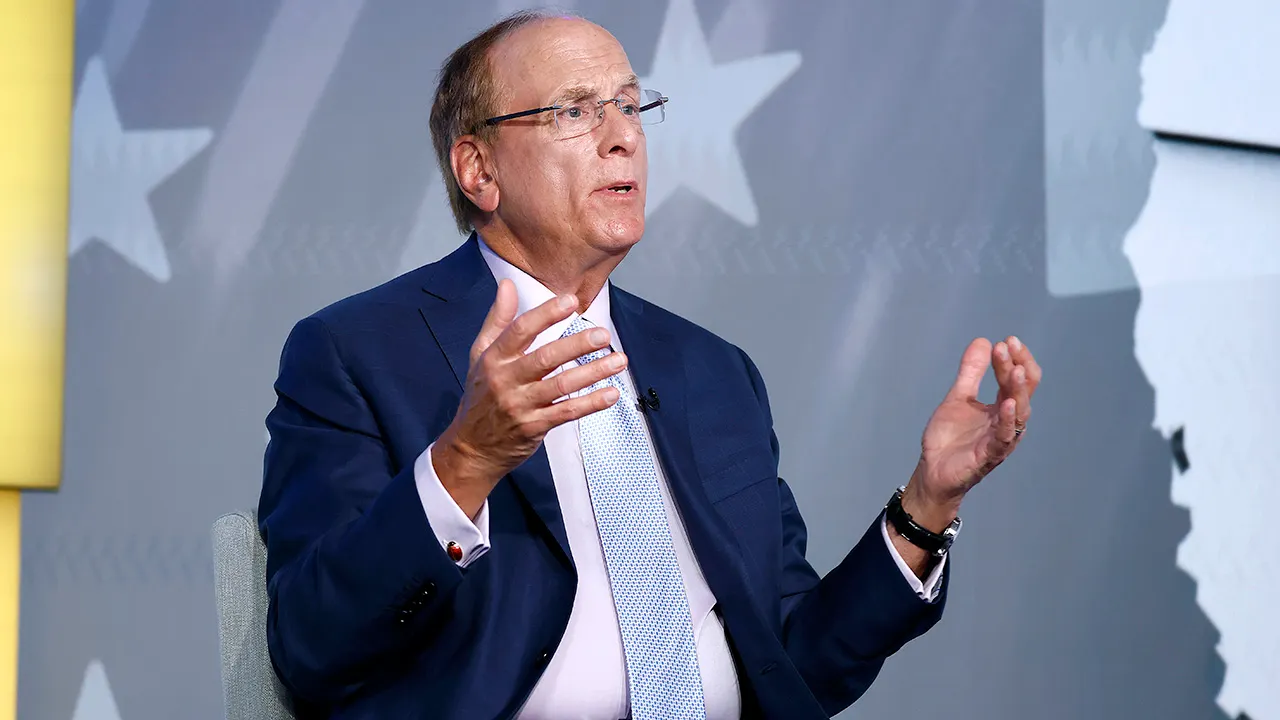
The Big Money Show panel discusses the alarming new analysis showing Social Security and Medicare racing toward insolvency and warns that retirees face steep benefit cuts unless Washington acts fast.
BlackRock CEO Larry Fink discussed possible Social Security reforms that would allow more Americans to benefit from the growth in the stock market while also ensuring the program is strengthened so it can survive to serve future generations.
Fink’s recently released annual chairman’s letter touched on how Social Security is “one of the most effective poverty-prevention programs in history” and that while it provides stability, it “doesn’t allow most Americans to build wealth in a way that grows their country.”
“Today, the system operates largely on a pay-as-you-go basis. Payroll taxes are used to pay current retirees, and the Social Security trust fund is invested primarily in U.S. Treasury bonds. In effect, workers lend money to the government and receive defined benefits in return.”
“The structure, designed as a social insurance program, emphasizes stability and predictability. What it doesn’t do is let people grow their benefits along with the broader economy. The question is whether the Social Security system could allow both,” Fink said.
NEW PROPOSAL WOULD CAP SOCIAL SECURITY BENEFITS AT $100K FOR WEALTHY COUPLES
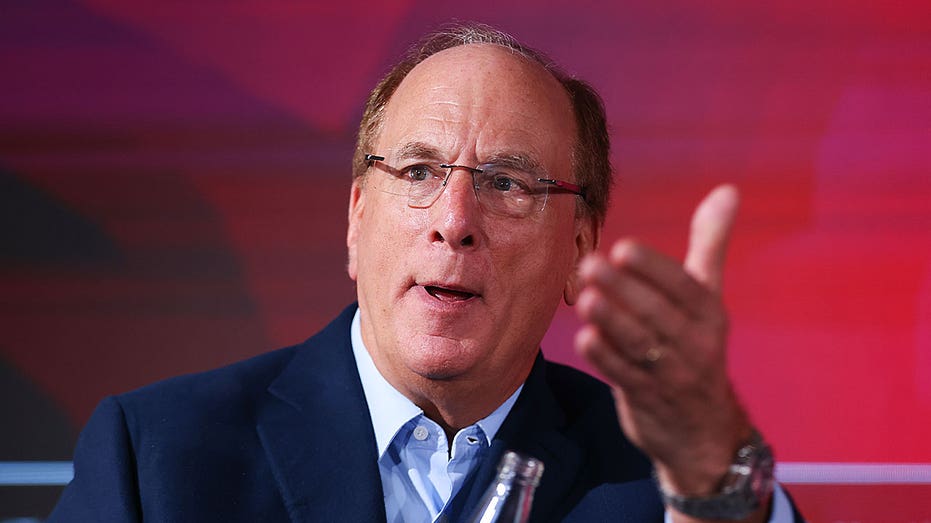
BlackRock CEO Larry Fink said that Americans need to discuss ways to reform Social Security ahead of its insolvency. (Hollie Adams/Bloomberg via Getty Images)
He said that this could be accomplished by asking whether a portion of the system could be invested “carefully, broadly, and over decades” like other long-term pension systems.
“This would not mean privatizing Social Security or putting it all into the stock market,” Fink wrote. “It would mean introducing a measure of diversification, similar in principle to the federal Thrift Savings Plan, which manages retirement savings for millions of federal employees.”
“The goal would be to strengthen the system over time while preserving its core guarantees,” he added.
SOCIAL SECURITY’S MAIN TRUST FUND FACES DEPLETION IN 2032, TRIGGERING BENEFIT CUTS

Social Security’s main trust fund is on a path to insolvency in less than a decade, when benefits would be automatically cut to match payroll tax revenue. (Getty Images/iStock)
Fink noted a bipartisan proposal from Sens. Bill Cassidy, R-La., and Tim Kaine, D-Va., that would create a new investment fund that operates parallel to the existing trust fund rather than replacing it while investing in a diversified mix of stocks and bonds to generate higher returns.
The proposal would require an initial investment of about $1.5 trillion and would be given 75 years to grow, and during that period the Treasury would continue covering Social Security benefits.
Once the fund matures, it would repay the Treasury and then supplement payroll taxes going forward to help close the gap between what the Social Security system takes in and what it pays out – while no one on Social Security or nearing retirement would see a change to their benefits.
Fink also noted that about six million Americans who are employed by state and local governments don’t currently contribute to Social Security and instead rely on public pension systems that invest in diversified portfolios.
BUDGET DEFICIT HITS $1 TRILLION FOR FIRST FIVE MONTHS OF FISCAL YEAR: CBO
| Ticker | Security | Last | Change | Change % |
|---|---|---|---|---|
| BLK | BLACKROCK INC. | 933.66 | -34.51 | -3.56% |
Other examples of alternative pension systems can be found overseas, with Australia’s superannuation system representing an approach that invests retirement contributions in the financial markets. Fink said that a “similar, carefully structured approach could be considered to strengthen Social Security.”
“I understand why any talk of changing Social Security makes people uneasy. Social Security is a core promise, and people rightly believe it should be honored. But under the current system, doing nothing could very well break that promise,” he said.
“Current projections show the trust fund won’t be able to pay full benefits by 2033. Many young Americans doubt they’ll ever fully see theirs,” he explained. “Addressing that gap will likely require multiple solutions. But thoughtful, long-term investing could be one of them.”
GET FOX BUSINESS ON THE GO BY CLICKING HERE
An analysis by the nonpartisan Committee for a Responsible Federal Budget (CRFB) noted that when Social Security’s main trust fund reaches insolvency – which is projected to occur in 2032 – federal law requires benefits be cut to match revenue from payroll taxes, which would amount to a roughly 24% cut for beneficiaries.
Fink noted that his chairman’s letter two years ago was focused on rethinking retirement and generated criticism for suggesting that Social Security was in need of reforms. He acknowledged that the latest letter may do the same, but said it’s a conversation that needs to be had.
“In my 50 years in finance, if there’s one thing I’ve learned, it’s that the problems we don’t talk about are the ones that should worry us most. And that’s exactly why we need the conversation now – because the cost of waiting is only getting higher,” he said.
Form 13D/A Venus Concept For: 27 March
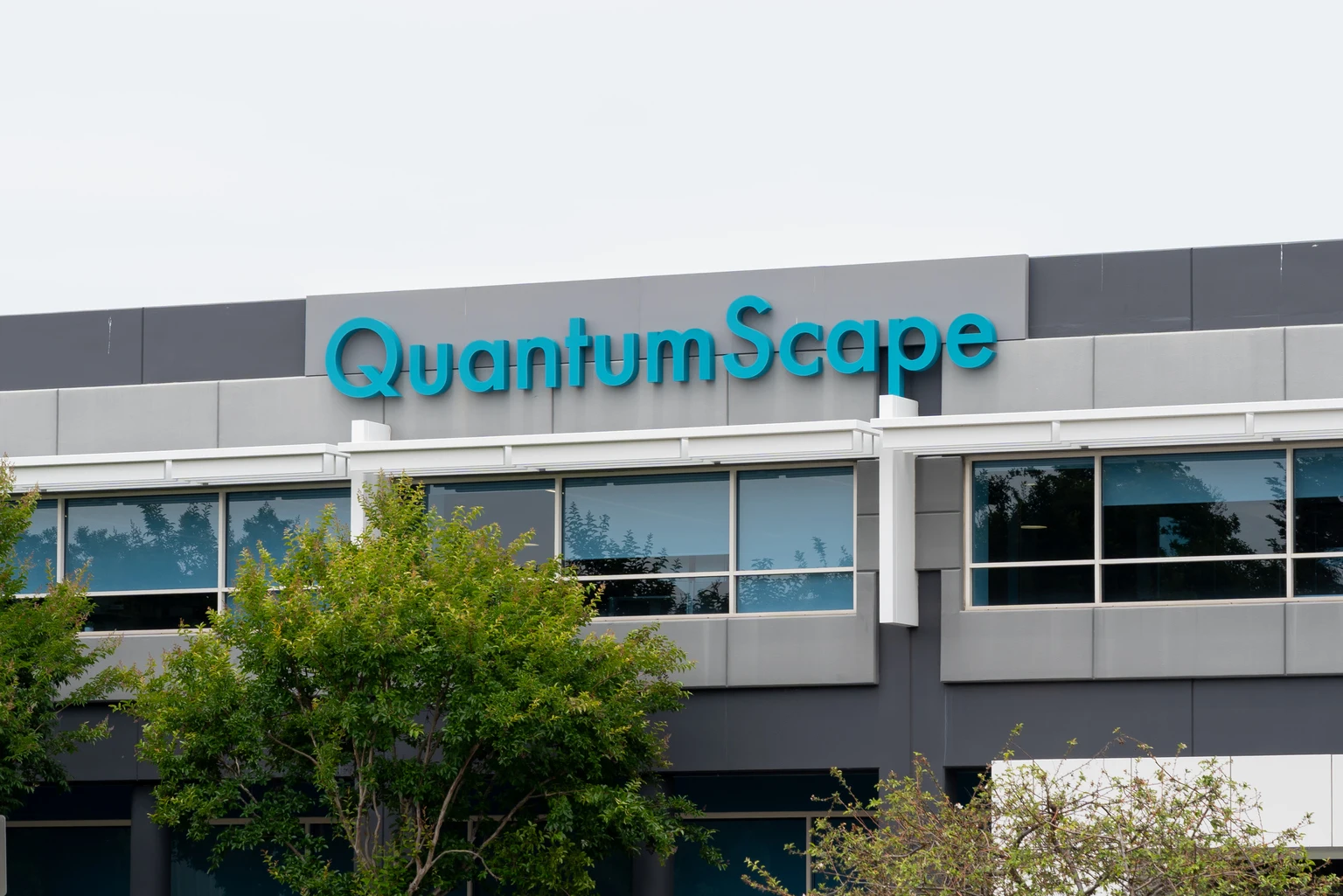
JHVEPhoto/iStock Editorial via Getty Images
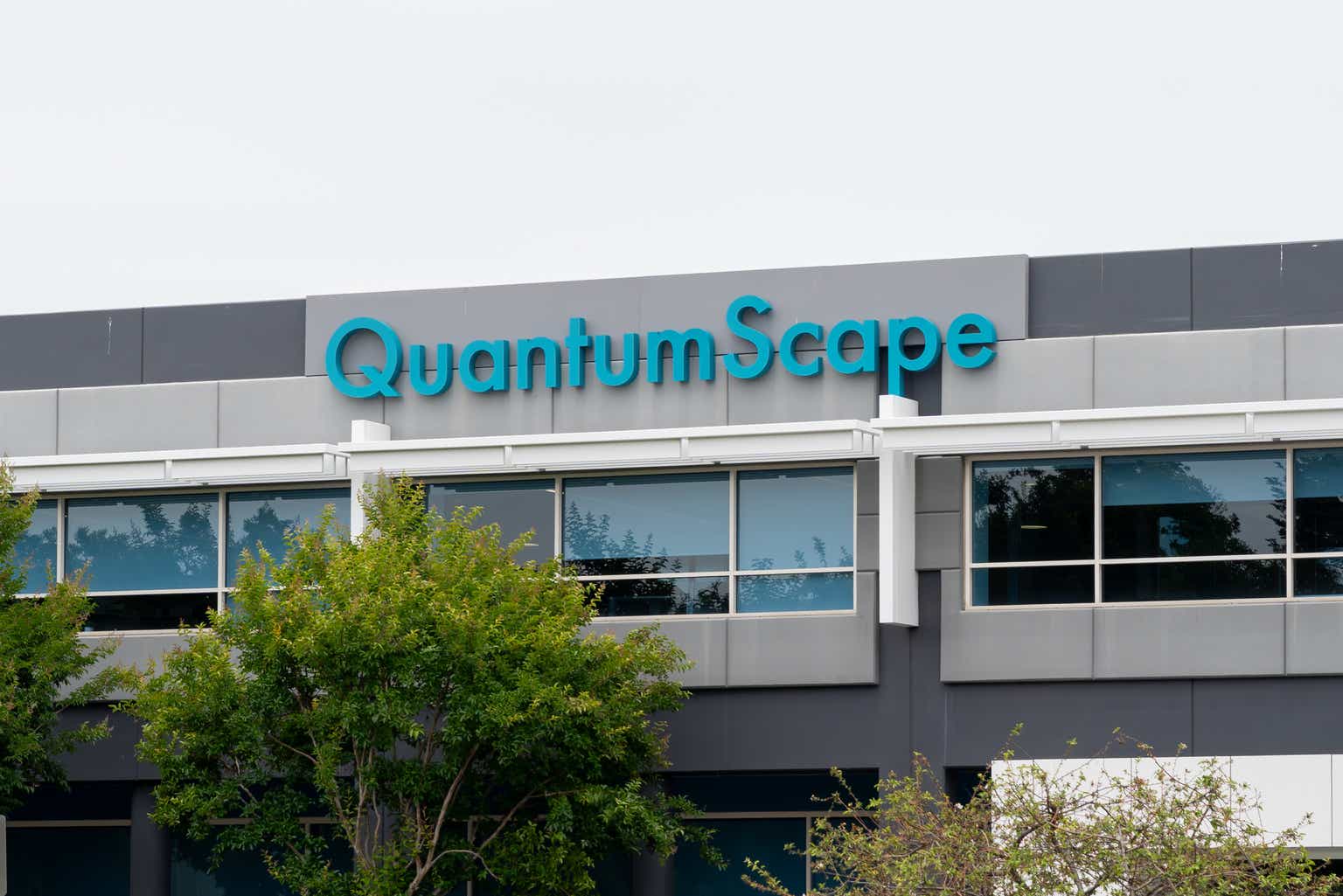
QuantumScape’s (QS) recent board appointment may prove more important than the headline suggests.
According to the company’s March 5 announcement, QuantumScape added Ross Niebergall to its board, an executive with deep ties across the defense industrial


Trump tells farmers that tractor companies should lower prices

Goyal also met his Chinese counterpart Wang Wentao.
This was their first in-person meeting since the US Supreme Court on February 20 struck down reciprocal tariffs imposed under the International Emergency Economic Powers Act (IEEPA).
The US subsequently imposed a 10% tariff on all countries for 150 days from February 24.
“Had a very productive discussion with @USTradeRep Jamieson Greer on the sidelines of the WTO Ministerial Conference. Exchanged views on the #WTOMC14 agenda, next steps in the India-US BTA negotiations and explored ways to further deepen our economic cooperation and bilateral trade ties,” Goyal said on X.

The two sides had announced a trade deal on February 2, with a target to sign it by March. In a joint statement on February 7, the US withdrew a 25% penal tariff on India for buying Russian oil, with the remaining 25% tariffs to be reduced to 18%.
Goyal discussed bilateral trade issues with his Chinese counterpart. “Met Mr. Wang Wentao, Minister of Commerce of China, on the sidelines of the #WTOMC14. Exchanged views on the MC-14 agenda and discussed bilateral trade matters,” Goyal said in a social media post.The meeting comes as India’s trade deficit with China crossed $100 billion during the first 11 months of the current fiscal year.
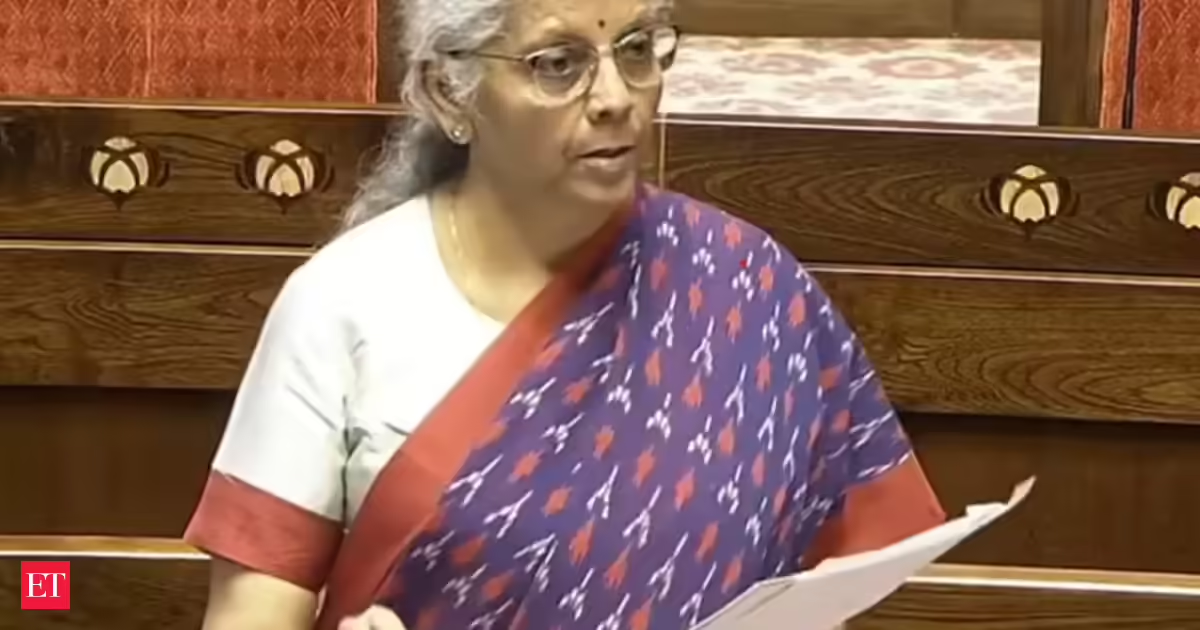
She ruled out any plan to impose a lockdown amid the West Asia conflict and urged political leaders to avoid spreading rumours and fear. “Going forward, we will continue to ramp up our efforts in mobilising additional non-tax revenues, and our government will remain on its toes to carefully manage the country’s fiscal position,” she said while replying to a discussion on the Finance Bill in the Rajya Sabha. The House later passed the Finance Bill by voice vote, returning it to the Lok Sabha and completing the budget process for the fiscal year beginning April 1.
Sitharaman said retail fuel prices have remained unchanged despite global crude prices rising from $70 to $122 a barrel within a month. “We are making sure that people of India don’t suffer,” she said, adding that the government’s broader strategy is to shield citizens while sustaining growth.
The government on Friday cut excise duty on petrol by Rs 10 per litre and reduced diesel duty to zero, while imposing export taxes on refiners to ensure domestic availability. The minister said the government is actively responding to the evolving situation and that Friday’s duty cuts are aimed at preventing the global price surge from feeding into domestic inflation and volatility. The duty cuts will lead to a revenue loss of about ₹7,000 crore, she said. Sitharaman said the move was necessary as oil marketing companies were incurring losses of about ₹24 per litre on petrol and ₹13 per litre on diesel.
New GDP series
On criticism of the new GDP series, Sitharaman said “these are routine exercises” and have been undertaken nine times since Independence. She said the new series, based on more than 300 data sources and 1,400 variables, integrates GST data, digital financial flows and labour surveys to improve accuracy and real-time tracking of economic activity.

Tara Jones: Rugby league ref ready for history to cap ‘crazy week’

Laser Welding Helps YouTuber Get Ahead With Aluminum Sheet

Tiger Woods car crash: Golfer involved in Florida collision


-
 Crypto World7 days ago
NIO (NIO) Stock Plunges 6.5% as Shelf Registration Sparks Dilution Worries
-
 NewsBeat2 days ago
Manchester United reach agreement with Casemiro over contract clause amid transfer speculation
-

 Crypto World6 days ago
Best Crypto to Buy Now: Strategy Just Spent $1.57 Billion on Bitcoin During Fear While Early Investors Quietly Enter Pepeto for 150x Potential
-

 Crypto World6 days ago
Bitcoin Price News: Bhutan Sells $72 Million in BTC Under Fiscal Pressure, but the Smart Money Entering Pepeto Sees What the Market Does Not
-

 News Videos2 days ago
Parliament publishes latest register of MPs’ financial interests
-

 Sports4 days ago
Remo Stars and Kano Pillars Strengthen Survival Hopes in NPFL
-

 Sports4 days ago
Gary Kirsten Accuses Pakistan Cricket Board Of ‘Interference’, Mohsin Naqvi Responds
-

 Business5 days ago
No Winner in March 21 Drawing as Prize Rolls to $133 Million for Next
-

 Tech5 days ago
Give Your Phone a Huge (and Free) Upgrade by Switching to Another Keyboard
-

 Tech5 days ago
AI enters the chat: New Seattle dating app relies on tech to facilitate meaningful human connections
-

 News Videos4 days ago
Ch 9 Financial Management Part 1 | Detailed One Shot | Class 12 Business Studies Boards 2026
-
Business7 days ago
Columbia Sportswear enters $500 million credit agreement with JPMorgan Chase
-

 Tech6 days ago
Today’s NYT Connections Hints, Answers for March 22 #1015
-

 Business24 hours ago
Instagram, YouTube Found Responsible for Teen’s Mental Health Struggle in Historic Ruling
-

 Business5 days ago
Will Duke Basketball Win It All? Duke Basketball Enters Second Round as Third Favorite to Claim NCAA Title
-

 Sports5 days ago
2026 Kentucky Derby horses, odds, futures, preview, date: Expert who hit 12 Derby-Oaks Doubles enters picks
-
 NewsBeat5 days ago
Update on Wisbech river crash as search for teenage boy enters fifth day
-
 Entertainment4 days ago
Cynthia Bailey Dishes on ‘RHOA’ Season 17, Discusses Kandi
-
 NewsBeat2 days ago
Tesco is selling new Cadbury Dairy Milk bar and people can’t wait to try it
-

 Tech4 days ago
Samsung will soon let you control smart home devices from your car’s dashboard
You must be logged in to post a comment Login