
Business
The Evolving Role of Private Equity and Supply Chains


Private equity activity in Asia reflects the broader market’s K-shaped dynamics. Larger, well-capitalized global and regional funds continue deploying capital into quality assets, while mid-market funds face more challenging conditions.
The expansion of private credit in the region is providing flexible financing solutions, but access remains concentrated among the most established sponsors and highest-quality deals.
Key Dynamics and Trends in Asia’s M&A Market:
- Private Equity Landscape:
- The market exhibits K-shaped dynamics, with well-capitalized global and regional funds actively deploying capital into quality assets, while mid-market funds face greater challenges.
- Private credit is expanding, offering flexible financing, though access is concentrated among established sponsors and top-tier deals.
- AI readiness has become a crucial due diligence factor, with investors dedicating 30-40% of investment committee time to evaluating portfolio companies’ AI strategies; those lacking clear AI pathways face valuation discounts.
- A growing backlog of aging portfolio companies beyond their original investment horizons is creating mounting exit pressure, with trade sales and secondary buyouts being the primary routes amidst a tentative IPO recovery.
- Supply Chain Reconfiguration:
- Geopolitical tensions and trade policy uncertainty are prompting companies to use M&A to build supply chain resilience, reduce dependency risks, and support localization or nearshoring.
- This drives transactions focused on acquiring manufacturing capacity (e.g., in Vietnam, Thailand, Indonesia, India), logistics infrastructure, and critical inputs.
- Rising defense and security budgets across Asia are also reshaping capital allocation and M&A in defense-adjacent sectors.
Asian private equity investors report spending 30-40% of investment committee time evaluating portfolio companies’ AI readiness, mirroring patterns observed in Western markets. This focus on AI due diligence represents a fundamental shift in how deals are underwritten. Companies unable to articulate credible AI strategies face valuation discounts, while those demonstrating clear AI-enabled growth pathways command premium multiples.
The region’s private equity firms also confront a growing backlog of aging portfolio companies awaiting exit. With approximately 32,500 companies globally held by private equity beyond their original investment horizons, and Asia representing a meaningful portion of that total, exit pressure is mounting. However, IPO markets in the region show only tentative signs of recovery, leaving trade sales to strategic acquirers or secondary buyouts as the primary exit routes.
Supply Chain Reconfiguration Drives Strategic Deals
Geopolitical tensions and trade policy uncertainty are reshaping Asian M&A in ways distinct from other regions. Companies are using acquisitions to build supply chain resilience, reduce dependency risks, and support localization or nearshoring strategies. This is driving transactions focused on regional manufacturing capacity, logistics infrastructure, and critical inputs.
- Geopolitical tensions and trade policy uncertainty are prompting companies to use M&A to build supply chain resilience, reduce dependency risks, and support localization or nearshoring.
- This drives transactions focused on acquiring manufacturing capacity (e.g., in Vietnam, Thailand, Indonesia, India), logistics infrastructure, and critical inputs.
- Rising defense and security budgets across Asia are also reshaping capital allocation and M&A in defense-adjacent sectors.
According to PwC’s Global CEO Survey, 20% of global CEOs expect their company to be highly or extremely exposed to tariffs over the next 12 months, with exposure highest in economies closely linked to US trade flows, including China, Taiwan, and potentially Southeast Asian nations integrated into Chinese supply chains.
This tariff exposure is accelerating strategic repositioning. Companies are acquiring manufacturing assets in Vietnam, Thailand, Indonesia, and India to diversify production away from single-country concentration. Others are pursuing vertical integration deals to secure access to critical components and reduce exposure to supply disruptions.
Rising defense and security budgets across Asia, particularly in response to regional tensions, are also reshaping capital allocation priorities. This has implications for industrial supply chains, technology investment, and M&A activity in defense-adjacent sectors, including aerospace, advanced materials, and cybersecurity.
The Domestic Tilt in Asian Dealmaking
One of the most notable shifts in Asian M&A is the increasing preference for domestic over cross-border transactions. While cross-border deal activity picked up selectively in 2025, it grew more slowly than overall market value, highlighting a continued preference for transactions where acquirers have greater familiarity, lower execution risk, and fewer regulatory hurdles.
This domestic tilt reflects multiple factors. Regulatory approval processes for cross-border deals have become more complex and unpredictable. Geopolitical tensions make certain types of transactions politically sensitive. Currency volatility adds additional risk to international deals. And perhaps most importantly, companies find abundant opportunities for consolidation and capability building within their home markets.
The trend varies by country. Japanese companies, facing demographic constraints and limited domestic growth, continue pursuing international acquisitions despite the challenges. Indian companies show growing outbound ambition, particularly in technology and pharmaceutical sectors. Chinese outbound M&A remains constrained by capital controls and regulatory scrutiny, though strategic transactions in critical sectors still receive approval.
Technology Sector Concentration
Technology remains the dominant driver of Asian M&A activity, but the definition of “technology” continues expanding. Traditional software and internet companies are joined by semiconductor manufacturers, electronics producers, industrial automation firms, and healthcare technology businesses, all positioning themselves as technology-enabled enterprises.
This sector convergence mirrors global patterns but carries particular significance for Asia given the region’s concentration of manufacturing and electronics capabilities. Companies that successfully integrate AI into hardware manufacturing, supply chain management, and product development stand to capture disproportionate value in the next phase of technological evolution.
The semiconductor sector deserves special attention. As AI workloads drive explosive demand for advanced chips, Asian semiconductor companies and their suppliers are experiencing unprecedented strategic importance. This is driving both organic investment and M&A activity as companies race to capture value in AI-enabling infrastructure.
Macroeconomic Headwinds and Tailwinds
Asia’s macroeconomic backdrop presents a mixed picture for dealmakers. Growth in major emerging markets, including India and China, is expected to remain relatively strong by global standards, albeit below 2025 levels. However, the OECD projects global GDP growth will slow from 3.2% in 2025 to 2.9% in 2026, creating headwinds for export-oriented Asian economies.
- Asia presents a mixed macroeconomic picture, with major emerging markets like India and China expecting relatively strong growth, but a projected global GDP slowdown in 2026.
- Interest rate dynamics vary, with easing in some developed markets but complex inflation and currency pressures in emerging Asia.
- Private credit is increasingly providing alternative financing, especially for mid-market deals.
- While public debt has risen, most Asian countries maintain stronger fiscal positions than their Western counterparts, though long-term policy uncertainties remain.
Interest rate dynamics vary across the region. While rates have eased in developed markets like Japan and Australia, emerging Asian markets face more complex inflation and currency pressures. For dealmakers, this creates challenges in financing cross-border transactions and managing currency risk in multi-jurisdictional deals.
Private credit’s expansion into Asia is providing alternative financing sources, particularly for mid-market transactions where traditional bank lending has become more conservative. This development is helping bridge valuation gaps and enabling transactions that might otherwise struggle to secure financing.
Public debt levels across many Asian economies have risen since the pandemic, though most countries maintain stronger fiscal positions than Western counterparts. Still, elevated debt burdens and evolving policy priorities add longer-term uncertainty around taxation, regulation, and government spending that dealmakers must consider in their underwriting.
The Path Forward for Asian Dealmakers
Asian companies and investors face a critical juncture. The forces reshaping global M&A, particularly AI investment and the premium placed on scale, are not temporary dislocations but structural shifts likely to define dealmaking for years to come.
For Asian corporations, several imperatives emerge. First, capital allocation discipline becomes mission-critical as companies balance AI investment requirements against traditional growth strategies. Second, developing clear AI strategies and road maps is no longer optional but essential for maintaining competitiveness and valuation. Third, companies must honestly assess whether they’re better positioned as acquirers or targets in their industries’ consolidation waves.
For private equity investors in the region, the message is equally clear. Winning deals will increasingly depend on articulating how acquisitions accelerate AI capabilities and digital transformation. Portfolio value creation will require active support for companies’ AI journeys, not just operational improvements. And exit planning must account for the reality that buyers will heavily scrutinize targets’ technological readiness.
Regional financial advisors and investment banks must evolve their capabilities to support clients navigating this transformation. Traditional M&A advisory focused on valuation, structuring, and deal execution now requires deep technical expertise in AI due diligence, scenario modeling for AI-disrupted business models, and strategic positioning for technology-driven consolidation.
A Region at the Crossroads
Asia’s M&A market stands at a crossroads. The region possesses tremendous strengths: high growth rates, large domestic markets, world-class manufacturing capabilities, and increasing technological sophistication. These advantages position Asian companies well for the AI era, provided they can mobilize capital, talent, and strategic vision effectively.
Yet challenges are equally significant. Geopolitical tensions constrain cross-border dealmaking. Regulatory uncertainty complicates execution. Confidence remains uneven across markets. And the sheer scale of AI investment required risks overwhelming companies lacking access to deep capital pools.
The 10% increase in Asian deal values during 2025 represents progress, but it also highlights the region’s underperformance relative to the Americas’ 55% surge. As AI-driven dealmaking accelerates globally, Asia risks falling behind if companies and investors don’t move more aggressively to acquire capabilities, consolidate fragmented markets, and position for the innovation supercycle likely to emerge as AI productivity gains materialize.
The K-shaped market dynamic offers no middle ground. Asian companies and markets will either accelerate their participation in transformative dealmaking or watch competitive advantages flow to better-capitalized, more technologically advanced rivals. In a world where AI readiness increasingly determines valuation and where megadeals concentrate value creation, scale and speed matter more than ever.
For Asia’s dealmakers, the message is unambiguous: the window for strategic repositioning is narrowing. The companies and markets that move decisively to acquire AI capabilities, pursue transformative consolidation, and invest in technological infrastructure will emerge as leaders. Those that wait for perfect conditions or clearer signals risk finding themselves on the wrong side of the K-curve, watching the future unfold from an increasingly disadvantaged position.
Other People are Reading


US preparing 100% pharmaceutical tariffs- FT

Shopify Inc. faced scattered reports of service disruptions Wednesday as hundreds of merchants complained of login failures, slow admin dashboards and intermittent checkout problems, though the company’s official status page showed all systems operational and no widespread outage was confirmed.

As of midday April 1, 2026, monitoring sites such as Downdetector recorded elevated but not massive user reports, primarily centered on the Shopify website and login functions. Merchants took to social media and community forums to share screenshots of error messages, including 500 and 502 server errors when attempting to access their admin panels or process orders.
Shopify’s status page at shopifystatus.com reported “No incidents reported today” as of early afternoon, with all core services listed as operational. The company has not issued a public statement acknowledging any issues, a pattern seen in previous minor glitches where problems resolved quickly without formal acknowledgment.
The timing added frustration for affected store owners. April 1 falls during a busy post-holiday sales period for many small and medium-sized businesses that rely on Shopify’s platform to manage inventory, fulfill orders and handle customer payments. Even brief disruptions can result in lost revenue, abandoned carts and customer complaints.
Reports described a range of symptoms: inability to log into the Shopify admin, slow loading of order pages, delayed payment processing and occasional complete unavailability of the dashboard. Some users noted that mobile apps were also affected, while others said the storefronts visible to customers remained online. Third-party apps and integrations appeared hit-or-miss depending on the specific service.
Shopify powers more than 2 million businesses worldwide, from independent artisans to large brands. A partial or regional disruption can ripple across thousands of stores, especially during peak hours when merchants monitor sales in real time. Past outages, such as the high-profile Cyber Monday disruption in December 2025 that affected thousands of users, have drawn sharp criticism from the merchant community for occurring during critical sales windows.
This latest episode, while smaller in scale, highlights ongoing vulnerabilities in cloud-based e-commerce platforms. Merchants depend on Shopify for seamless uptime, and even intermittent problems can erode trust. One store owner posted on social media: “Hundreds of us locked out again on a busy Wednesday — not acceptable for the fees we pay.”
Shopify has invested heavily in infrastructure and redundancy in recent years, including multiple data centers and automated failover systems. The platform’s status page typically updates quickly when major incidents occur, and engineering teams often resolve login or checkout glitches within 30 to 90 minutes. In many past cases, users reported that refreshing browsers, clearing cache or trying incognito mode temporarily bypassed the issue while the company worked behind the scenes.
For affected merchants, immediate workarounds include using the Shopify mobile app (if functional), switching browsers or devices, or accessing stores through alternative dashboards when available. Those processing high volumes of orders are advised to monitor payment gateways directly and communicate transparently with customers about any delays.
The broader context shows Shopify remains dominant in the e-commerce space despite occasional hiccups. The company has rolled out numerous improvements in 2026, including enhanced AI tools for merchants, better international payment options and platform updates aimed at reducing custom code dependencies. However, reliance on a single platform means any downtime draws immediate attention from the merchant community, which often amplifies reports on forums and social media.
Analysts note that Shopify’s infrastructure has grown more resilient since earlier widespread outages, but the complexity of supporting millions of stores with custom themes, apps and third-party integrations creates inherent challenges. Minor regional or intermittent issues can appear as “hundreds of users” affected without triggering a full platform-wide alert.
Shopify has not commented publicly on Wednesday’s reports. In previous incidents, the company typically posts updates on its status page and X account once an issue is confirmed and resolved. Merchants are encouraged to check shopifystatus.com regularly and subscribe to notifications for real-time alerts.
For small-business owners, these disruptions serve as a reminder of the importance of contingency planning. Experts recommend maintaining backup payment processors, exporting order data regularly and having communication templates ready for customers during technical difficulties. Diversifying across multiple sales channels, such as Amazon or physical retail, can also mitigate risk.
As the afternoon progressed, some users reported gradual improvement, with login success returning after repeated attempts. Others continued experiencing delays, suggesting the problem may have been intermittent or limited to specific regions or account types.
Shopify’s merchant community has grown vocal about uptime expectations. In online forums, users frequently discuss the balance between the platform’s ease of use and the occasional frustrations caused by technical issues. While major outages remain rare, even short disruptions during sales periods can feel significant to business owners operating on thin margins.
The company continues to expand globally, with strong adoption in emerging markets and among new entrepreneurs. Features introduced in the Winter 2026 edition, including advanced AI assistance and streamlined checkout flows, aim to make the platform more robust, but reliability remains a top priority for retaining user loyalty.
Wednesday’s scattered reports appear far smaller than past high-profile events, such as the March 2026 or December 2025 incidents that drew thousands of complaints. Still, for those locked out of their stores, the impact feels immediate and personal.
Merchants experiencing problems are advised to document error messages, note exact times and contact Shopify support through official channels. In many cases, support teams can provide account-specific guidance or expedite resolutions for Plus-level subscribers.
As e-commerce continues its rapid growth, platforms like Shopify face increasing pressure to deliver near-perfect uptime. Investors and analysts watch these incidents closely, as repeated reliability concerns could affect long-term confidence in the company’s infrastructure.
For now, the message to affected users remains consistent with previous minor glitches: check the official status page, try basic troubleshooting steps and allow time for engineering teams to address any underlying issues. Most disruptions of this nature resolve within a few hours, restoring normal operations without lasting damage.
Shopify has built its reputation on empowering entrepreneurs to sell online with minimal technical barriers. Occasional service hiccups test that reputation, reminding both the company and its users of the high stakes involved in powering millions of digital storefronts every day.
Anyone still unable to access their Shopify admin as of late Wednesday should continue monitoring the status page and community forums for updates. In the meantime, focusing on customer communication and alternative sales methods can help minimize any revenue impact from the temporary disruption.
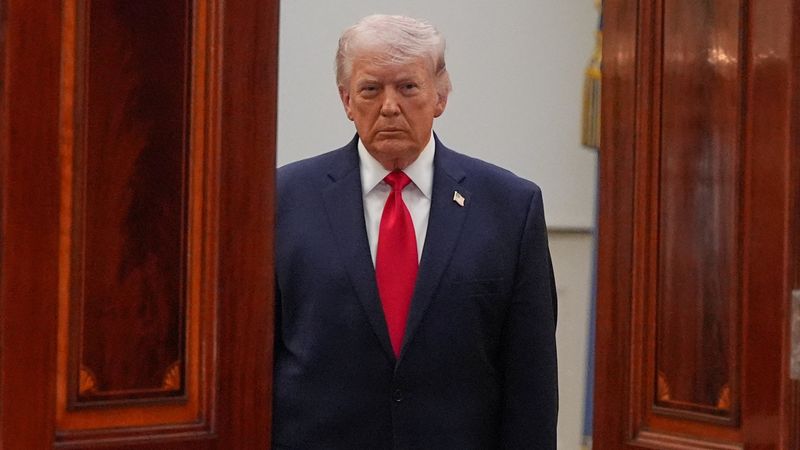

Investor reactions to Trump’s speech on Iran war
Business
Bitcoin Snaps 5-Month Losing Streak: Institutional Inflows And Trendline Break Fuel $80k Outlook

Bitcoin Snaps 5-Month Losing Streak: Institutional Inflows And Trendline Break Fuel $80k Outlook


Mercedes-Benz USA CEO Adam Chamberlain said Tuesday that 2026 is shaping up to be more challenging than expected.
“If you look at the market in the first couple of months of the year, the market environment is definitely a little tougher than we anticipated,” Chamberlain told CNBC at the company’s manufacturing plant in Vance, Alabama. “I think there are lots of distractions out there, whether it’s geopolitics and everything else.”
Car buyers are facing elevated auto loan interest rates and questions about the strength of the economy that threaten to slow shopping for a new vehicle.
But even with gasoline prices now topping $4 a gallon in the U.S., Chamberlain said the automaker hasn’t yet seen consumers delaying buying a new Mercedes due to gas prices.
“I think in the short term, it’s manageable,” said Chamberlain. “But I think over [a] 90, 100 or 120-day period at closer to $5 [per gallon], it starts to become a bigger distraction.”
Mercedes is investing $4 billion in its Alabama plant through 2030 in a push to increase production as the automaker targets a 28% increase in U.S. car sales.
Last year, Mercedes’ U.S. retail sales totaled 303,200 cars, the automaker said. By 2030, it’s targeting annual U.S. retail sales of 400,000 cars.
The majority of the vehicles that Mercedes sells in the U.S. are built overseas, which leaves the company subject to higher costs a year into President Donald Trump‘s higher tariffs on auto imports.
Those increased costs have cut into Mercedes margins, but Chamberlain said tariffs are not slowing sales.
“Since tariffs have been launched, we’ve only increased our prices 1.3%, significantly less than inflation,” he said Tuesday.
In a push to increase sales, Mercedes also on Tuesday unveiled new versions of its popular GLS and GLE models, including a new GLE 53 Hybrid that will be built in Alabama.

In 1984, Volkswagen partnered with a Chinese automaker because it was required by Chinese law.
Now the German company is partnering with Chinese automakers because it wants to use their technology.
Volkswagen Group today maintains the original joint ventures it made with Chinese automakers in those early days of its foray into what has become the world’s largest car market. But the fact that it is now relying on firms such as Chinese EV maker Xpeng for hardware and software underscore how the balance of power in the automotive industry is shifting toward the companies that produce these now high-value components. Chinese companies are proving they can do it faster, often cheaper, than anyone else.
VW Group, which has for much of the last few decades been a top-selling brand in China, has lately struggled to maintain its position.
Volkswagen’s China profits fell about 45 percent in 2025 — from roughly $2 billion to $1.1 billion. The company said in its annual report that it now faces intense competition from Chinese firms.
It is not a unique issue. Essentially every non-Chinese automaker is watching market share erode in the country as homegrown companies create vehicles that more directly serve what Chinese customers want.
In particular, Chinese buyers have a taste for what are often called “software-defined vehicles.” They are connected and updatable, and essentially allow drivers to do everything through a car they would do through a phone.
“The Chinese vehicle owner can do his banking using voice commands or order takeout to meet him when he arrives at his house, or do any number of things that seem a little unusual to us here in the West, because we just aren’t built that way,” said AutoForecast Solutions analyst Conrad Layson. “However, the Chinese buyer can’t do that in a Chinese-built Volkswagen, so they went where the convenience was. They were able to bring their digital lives along with them into and out of the car.”
Chairman and CEO of Chinese EV manufacturer Xpeng He Xiaopeng visits the booth of the German carmaker Volkswagen during the International Motor Show IAA on Sept. 8, 2025, in Munich, Germany.
Tobias Schwarz | AFP | Getty Images
VW’s own struggles to build an in-house software division have been widely documented — after years of effort and billions spent, the company abandoned its go-it-alone approach and turned to collaborations. Xpeng is a major partner in China, while in North America and elsewhere, VW has partnered with Rivian to build cars.
Xpeng, which makes its own vehicles as well, helped VW’s China division build a hardware and firmware architecture called CEA for the German company’s vehicles in the country.
In February, news broke that VW Group would be the first customer for Xpeng’s VLA 2.0 automated driver assistance system. If it performs as advertised, it will equal or surpass anything made by any other global automaker, Layson said.
Then in March, the first vehicle the two companies co-developed, the ID.UNYX 08, rolled off the assembly line.
The two companies brought the vehicle to production car in 24 months, the CEA architecture in just 18. That is “unheard of in the West,” Layson said. “But that’s China’s speed for you.”
Global automakers typically require a three-to-five-year timeline for a new vehicle, or even a significant refresh.
Rivian and VW are collaborating on just about all of the same things the German automaker is doing with Xpeng. The deal has given Rivian a roughly $6 billion lifeline at a time when the EV maker is ramping up the production of its mid-priced, higher volume R2 SUV.
The comparisons between the two companies indicate how far Chinese automakers have come, said Tu Le, founder of Sino Auto Insights, a firm that researches the Chinese automotive market.
Rivian is working on its own chips, for example. So is Xpeng, but its chip is already being fabbed.
“Xpeng is already there and Rivian wants to get there,” Le said.
Though Xpeng has a technological edge, its partnership with VW does not necessarily pose an immediate threat to Rivian — at least in North America, he added.
Trade disputes and political tension are spurring carmakers to strike these different partnerships. For example, the U.S. has banned certain kinds of Chinese software and hardware for connected vehicles.
The longer-term picture is unclear. Xpeng, like all Chinese automakers, wants to compete globally, and not just through partnerships with other automakers. On March 25, the company started selling two models in Mexico, for example.
Companies such as Tesla, Rivian and Lucid Motors are at the forefront of building these kinds of connected vehicles outside of China.
Still, if Chinese firms can prove they can outpace Western ones in their home market, and export those features to other markets, VW may face a tough choice down the road.
“The question probably you should ask is do they use Rivian stack or Xpeng stack in Europe, because we know that they’re going to use Xpeng in China. And we know that for the time being, they’re going to use, in North America, the Rivian stack. But ultimately whose is better, whose is probably more robust and more appropriate?” Le said.
He added that the long-term risk for a company like Volkswagen — or Stellantis, which has partnered with Chinese automaker Leapmotor — is that they become essentially contract manufacturers, Le said. That would come to fruition if the high-value components like software and technology that define the modern vehicle are increasingly made in China.
“My question might be: If Xpeng hits on all cylinders, will they even need Volkswagen Group?” Le said. “The shoe is on the other foot. And I think more and more people are starting to realize this is real. Their products are significant, and they are a threat to our livelihoods.”
Neither Rivian, VW Group nor Xpeng responded to CNBC’s request for comment or interview.

Invesco is an independent investment management firm dedicated to delivering an investment experience that helps people get more out of life.Be the first to know! Sign up for Invesco US Blog and get expert investment views as they post.Disclosure for all Invesco US articles: Before investing, carefully read the prospectus and/or summary prospectus and carefully consider the investment objectives, risks, charges and expenses. The information provided is for educational purposes only and does not constitute a recommendation of the suitability of any investment strategy for a particular investor. Invesco does not provide tax advice. The tax information contained herein is general and is not exhaustive by nature. Federal and state tax laws are complex and constantly changing. Investors should always consult their own legal or tax professional for information concerning their individual situation. The opinions expressed are those of the authors, are based on current market conditions and are subject to change without notice. These opinions may differ from those of other Invesco investment professionals. NOT FDIC INSURED MAY LOSE VALUE NO BANK GUARANTEE All data provided by Invesco unless otherwise noted. Invesco Distributors, Inc. is the US distributor for Invesco Ltd.’s retail products and collective trust funds. Invesco Advisers, Inc. and other affiliated investment advisers mentioned provide investment advisory services and do not sell securities. Invesco Unit Investment Trusts are distributed by the sponsor, Invesco Capital Markets, Inc., and broker-dealers including Invesco Distributors, Inc. PowerShares® is a registered trademark of Invesco PowerShares Capital Management LLC (Invesco PowerShares). Each entity is an indirect, wholly owned subsidiary of Invesco Ltd. ©2015 Invesco Ltd. All rights reserved.


ICC moves ahead with disciplinary proceedings against chief prosecutor Khan, WSJ reports

Late on Wednesday, the Reserve Bank of India barred banks from offering rupee non-deliverable forwards to resident and non-resident clients. It further said that companies cannot rebook cancelled forward contracts.
The series of measures from the central bank comes at a time when the rupee has hit a string of all-time lows on worries over the spillovers from the Iran war. The currency fell 4.24% in March, marking its worst monthly drop in six years.
Earlier this week, the RBI put a limit of $100 million on net open rupee positions of banks. However, that failed to offer relief to the currency with banks exiting positions by offering them to corporates, Reuters reported.
The RBI’s latest step now targets this surge in corporate arbitrage.

By forcing banks to cut their positions, the central bank opened up arbitrage between the onshore and NDF market which corporates exploited, putting renewed pressure on the rupee and diluting the impact of the initial measures, three bankers said.
One banker said corporate arbitrage flows at his bank alone were estimated at $750 million-$800 million. He and the other bankers requested anonymity, citing restrictions on speaking to the media. The rupee, after the RBI’s crackdown on banks, had rallied past 93 in the interbank market on Monday but slid quickly beyond 95 to an all-time low.
The RBI did not respond to an email requesting comment.
ACTION ON SPECULATIVE ACTIVITY
Additionally, the central bank barred banks from rebooking any foreign exchange derivative contract on behalf of clients, whether deliverable or non-deliverable, which has been cancelled after April 1.
Up until now, a corporate would book a forward contract to hedge its dollar exposure. If the exchange rate later moved in its favour, it could cancel the contract and book a profit. Since the underlying exposure still remained, it was then allowed to enter into a new forward contract again, effectively repeating the cycle.
“All of this basically cuts speculation,” said Dhiraj Nim, FX strategist and economist at ANZ Bank. However, the fundamental is that if oil prices stay where they are, “your current account stress remains and capital flows remain scanty”, he added.
“It does not reverse the rupee’s course but it does make the central bank’s objective of curbing excess volatility easier.”
The central bank further prohibited banks from undertaking FX derivative contracts with related parties.

FOX Business anchor Liz Claman talks to CEOs Ed Bastian and Andy Jassy about a new partnership between Delta Airlines and Amazon that will bring faster in-flight Wi-Fi to customers on ‘The Claman Countdown.’
Amazon and Delta Air Lines are partnering to significantly upgrade the in-flight Wi-Fi experience for customers.
The companies announced on Tuesday that Amazon Leo, the company’s high-speed satellite internet service, will be offered onboard Delta flights starting in 2028.
“It’ll be multiple times faster than anything we have today. And it’ll be at a very cost-effective rate,” Delta Air Lines CEO Ed Bastian said in an exclusive joint interview airing Tuesday on “The Claman Countdown.”
“And that’s just the Wi-Fi. When you think about then what Amazon as an enterprise and Delta as an enterprise are about in terms of the customer experience and what we can then do on board together, it’s gonna blow people away.”
DELTA CEO ED BASTIAN RIPS LAWMAKERS FOR ‘LACK OF LEADERSHIP’ IN DHS SHUTDOWN

Passengers will be able to use Amazon Leo Wi-Fi in 2028. (Jabin Botsford/The Washington Post via Getty Images)
Amazon CEO Andy Jassy said the new Wi-Fi system will be a “game-changing” experience and Bastian said the pricing will be “substantially less.”
“It is going to enable us to provide substantially better experience for customers in terms of speeds 2, 3, 4 times what they’re used to on Delta today,” Bastian said.
“We’re gonna invest whatever’s required to build an amazing low earth orbit satellite constellation that has incredible performance at low cost,” Jassy said.
Amazon Leo uses low-earth orbit satellites to provide high-speed internet service to rural and remote locations, a technology Bastian said is key to maintaining Delta’s competitive edge.
VIRAL INTERVIEW CAPTURES WHAT TRAVELER REALLY THOUGHT ABOUT ICE AGENTS HELPING TSA AT AIRPORTS
“We’ve been the leader in free, fast Wi-Fi in our industry, not just in the U.S., by the way, around the world,” Bastian told FOX Business.
“We have already 1,200 planes, virtually our entire fleet, already equipped with free, fast Wi‑Fi, more than probably many of the other airlines put together have today. But we need to stay the leader. And the technology is moving fast.”
The airline’s free Wi-Fi is available for any customer who signs up for Delta’s SkyMiles loyalty program, which is free to join. Passengers who are not members need to purchase a Wi-Fi pass.

Delta Air Lines is teaming up with Amazon’s high-speed satellite Wi-Fi program, Amazon Leo, to enhance the passenger experience. (Kevin Carter/Getty Images)
Bastian said his “supreme confidence” in Delta’s relationship with Amazon was a significant factor in how the partnership came about.
“We already are significant partners, we carry Amazon employees around the world,” the Delta CEO said.
Delta already employs Amazon technology, including Amazon Web Services (AWS).
“Andy and I have known each other for quite a while and our teams know each other well. And so, it naturally led to a conversation a few months ago… just thinking about what we could potentially do together.”
Major airlines, including Alaska and United, utilize Elon Musk’s Starlink satellite, which operates similarly to Amazon Leo’s, in granting internet service to rural areas.
Bastian said Delta’s newly improved Wi-Fi program in partnership with Amazon will be a fierce competitor to Musk’s program.
“I think these numbers are going to be very competitive against Starlink and the cost will be substantially less than what we’re paying today,” he told FOX Business anchor Liz Claman.
Bastian said in-flight video calling is in the cards but will have limitations when rolled out.

An interior view of a B737 MAX airplane seen at Dallas-Forth Worth International Airport in Dallas, Texas. (Cooper Neill/AFP via Getty Images)
CLICK HERE TO DOWNLOAD THE FOX NEWS APP
“[Passengers] will have the ability to. We won’t allow the actual conversations to occur now. We’re not going to turn that on,” he said. “Well, people will be able to participate in online video conferences, but they won’t have the audio ability to speak.”
“They’ll be able to have a conversation and participate. There’s a lot of business tools that Andy mentioned that we’re gonna work together with Amazon as well to create in this fast-moving world of AI and business.”
Amazon Leo will begin to be installed in Delta aircraft in 2028 and the two companies are already exploring ways to bring additional offerings to the passenger experience.
“We have a lot of plans to leverage the capabilities that both of our companies offer respectively and make an incredible experience for Delta customers,” Jassy said.

Micklegate in York to remain closed over bank holiday weekend
US preparing 100% pharmaceutical tariffs- FT

Solana Price Holds $84.25 as Memecoin DEX Volume Hits $87.8 Billion While Pepeto Presale Fills Past $8 Million


![Why A Major Bitcoin Bounce Is Imminent [Data]](https://wordupnews.com/wp-content/uploads/2026/04/1775098099_maxresdefault-80x80.jpg)


-

 Business6 days ago
Instagram, YouTube Found Responsible for Teen’s Mental Health Struggle in Historic Ruling
-
 Tech6 days ago
Intercom’s new post-trained Fin Apex 1.0 beats GPT-5.4 and Claude Sonnet 4.6 at customer service resolutions
-

 NewsBeat5 days ago
The Story hosts event on Durham’s historic registers
-

 Sports5 days ago
Sweet Sixteen Game Thread: Tide vs Michigan
-
Entertainment2 days ago
Fans slam 'heartbreaking' Barbie Dream Fest convention debacle with 'cardboard cutout' experience
-
 Entertainment4 days ago
Lana Del Rey Celebrates Her Husband’s 51st Birthday In New Post
-
Crypto World2 days ago
Dems press CFTC, ethics board on prediction-market insider trades
-

 Tech3 days ago
The Pixel 10a doesn’t have a camera bump, and it’s great
-

 Crypto World6 hours ago
Gold Price Prediction: Worst Month in 17 Years fo Save Haven Rock
-

 Sports1 day ago
Tallest college basketball player ever, standing at 7-foot-9, entering transfer portal
-

 Tech2 days ago
EE TV is using AI to help you find something to watch
-

 Tech2 days ago
Apple will hide your email address from apps and websites, but not cops
-

 Tech2 days ago
Flipsnack and the shift toward motion-first business content with living visuals
-

 Tech2 days ago
How to back up your iPhone & iPad to your Mac before something goes wrong
-

 Fashion6 days ago
En Vogue in Brown Leather and Tailored Neutrals by Atelier Savoir, Styled by J Bolin
-

 Politics2 days ago
Should Trump Be Scared Strait?
-

 Crypto World2 days ago
U.S. rule change may open trillions in 401(k) funds to crypto
-

 Fashion6 days ago
What Are Your Favorite T-Shirts for the Weekend?
-

 Fashion5 days ago
Weekly News Update, 3.27.26 – Corporette.com
-

 Crypto World1 day ago
Bitcoin enters the public bond market as Moody’s gives a first-of-its-kind crypto deal a rating
You must be logged in to post a comment Login