
Business
The Fictional K-Pop Sensation Blurring Lines Between Animation and Reality


LOS ANGELES — HUNTR/X, the powerhouse girl group at the heart of Netflix’s animated blockbuster “KPop Demon Hunters,” has transcended its fictional origins to become one of 2025-2026’s most talked-about musical acts. Voiced and performed by real-life artists EJAE, Audrey Nuna, and Rei Ami, the trio has racked up billions of streams, award wins, and live performances, proving that a made-for-movie band can dominate charts and culture. Here are 10 essential things to know about HUNTR/X as the project continues to evolve in early 2026.

1. **Fictional Origins in a Hit Animated Film**
HUNTR/X debuted in the Netflix and Sony Pictures Animation film “KPop Demon Hunters,” released June 20, 2025. The story follows Rumi (voiced by Arden Cho, sung by EJAE), Mira (May Hong/Audrey Nuna), and Zoey (Ji-young Yoo/Rei Ami) — global K-pop superstars by day who secretly battle demons to protect humanity and maintain a magical barrier called the Honmoon. Their music powers the narrative, using songs to reinforce the barrier against supernatural threats, including rival demon boy band Saja Boys.
2. **Real-Life Voices Behind the Phenomenon**
The singing voices — EJAE (lead vocalist and songwriter for Rumi), Audrey Nuna (Mira), and Rei Ami (Zoey) — are established independent artists who brought authenticity to the tracks. EJAE, known for her powerful vocals, leads many anthems; Audrey Nuna adds soulful depth; and Rei Ami infuses pop-rap energy. Their collaboration created a cohesive sound blending K-pop, R&B, and pop elements that resonated far beyond the screen.
3. **Breakout Hit “Golden” Makes History**
The soundtrack single “Golden” became a cultural juggernaut, topping the Billboard Hot 100 and amassing over 1.49 billion streams on platforms like Spotify. In early 2026, it made history as the first K-pop-associated song to win a Grammy, taking Song of the Year at the 2026 ceremony. The track’s triumphant lyrics about rising above challenges mirrored the film’s themes and fueled massive fan engagement.
4. **Live Performances and Award Show Dominance**
HUNTR/X crossed into reality with live appearances by EJAE, Audrey Nuna, and Rei Ami. They performed “Golden” at major events including the 2026 Grammys red carpet interviews, BRIT Awards, BAFTAs, and even a halftime show at the AFC Women’s Asian Cup. These high-profile slots solidified their status, with fans treating them as a legitimate group separate from the film.
5. **Soundtrack Success and Chart Impact**
The full “KPop Demon Hunters” soundtrack, featuring tracks like “How It’s Done,” “Takedown,” and group anthems, topped charts globally. Songs received heavy rotation on playlists, with monthly listeners for HUNTR/X exceeding 39 million on Spotify. The project’s music has been praised for its confident production and empowering messages, appealing to both animation fans and K-pop enthusiasts.
6. **Fandom and Cultural Reach**
Officially dubbed “Hunters,” the fandom adopted purple as an unofficial color. Online communities on Reddit, X, and TikTok exploded, with discussions ranging from lore analysis to calls for HUNTR/X to become a permanent real-world act. The group’s success blurred fiction and reality, inspiring fan art, covers, and mashups that kept momentum alive months after the film’s streaming debut.
7. **Sequel in Development for 2029**
Netflix confirmed talks for a “KPop Demon Hunters” sequel targeting a 2029 release. The follow-up would reunite HUNTR/X for new adventures, building on the first film’s box-office and streaming triumph. Producers have teased expanded storylines, more music, and deeper exploration of the characters’ dual lives.
8. **Merchandise, Official Channels, and Fan Engagement**
An official HUNTR/X website (huntrix.ca) offers merchandise, while YouTube channels and Spotify artist pages host content like lyric videos and behind-the-scenes clips. The group maintains a strong digital presence, with fans streaming the soundtrack and engaging in viral challenges tied to songs like “Golden.”
9. **Addressing AI Rumors and Authenticity Debates**
Early speculation questioned whether vocals used AI enhancement, sparked by the polished production. Rei Ami publicly clapped back, defending the human effort behind the tracks. Discussions highlighted the project’s soulful execution versus “AI slop,” reinforcing that HUNTR/X represents genuine artistry from talented performers.
10. **A Milestone for Fictional Acts in Pop Culture**
HUNTR/X exemplifies how animated projects can launch real musical careers. From Grammy wins to award show stages, the trio’s journey shows the power of cross-media storytelling in the streaming era. As fans await sequel news and potential new music, HUNTR/X stands as proof that great songs — fictional or not — can conquer the world.
The project’s ongoing impact underscores a shift where virtual idols and animated stars compete with traditional acts. With awards hardware, chart records, and a dedicated global following, HUNTR/X continues to hunt success well into 2026.


CAN INVESTORS WITH SPARE MONEY MAKE A LUMPSUM INVESTMENT INTO EQUITY MUTUAL FUNDS NOW?
Wealth managers say lumpsum investing at this stage needs to be seen in the context of valuations and one’s own risk appetite. Nifty’s Price to Earnings (PE) ratio—a key valuation measure—has corrected to 19.7 times from 24.4 in September 2024. Fund managers point out that sub-20 levels have historically been seen as “fair” levels for long-term entry, with further declines seen as making it more conducive to invest. So, investors with a time horizon of over five years—and the ability to ride out near-term volatility—can consider putting some money to work now. That said, a staggered approach may be more comfortable. For instance, deploying about 30% now and spreading the rest over the next few months. Another option is to park funds in a liquid scheme and start a daily or weekly Systematic Transfer Plan (STP) over about six months. This way, the money continues to earn 6–7% while gradually moving into equities.
IS THERE A NEED TO RESTRUCTURE PORTFOLIO NOW?
Financial planners say this may be a good time for such investors to step back and review their portfolios in line with their risk appetite and long-term goals. Those heavily tilted towards one asset class could look at diversifying across equity, debt and other assets. Many have built portfolios by chasing recent winners— ending up with concentrated exposure to gold, silver, or narrow thematic funds. Similarly, investors with SIPs in thematic funds may want to move towards more diversified options, such as large-cap index or flexi-cap funds. Those who are already well-diversified and aligned to their goals can largely ignore the noise.
WHAT DO INVESTORS DO WITH THEIR LOSSMAKING SCHEMES?

Investors with a time horizon of over seven years can continue with diversified equity funds and look past short-term volatility. However, if a significant portion of the portfolio is in thematic or sectoral funds— especially beyond the intended allocation—it may be worth reviewing. Adding more money to average such positions may not be advisable. If exposure is high and beyond one’s risk tolerance, investors could consider trimming these positions and reallocating to diversified equity funds, where fund managers have the flexibility to invest across a broader set of opportunities.
 as a Reliable and Trusted News Source
Prospect Capital: The 8% Yielding Preferreds Are The Only Reasonable Prospect
Business
Oil Price Today (March 25): Oil slips below $100 on rising hopes of Iran war ceasefire. Here’s what experts are saying
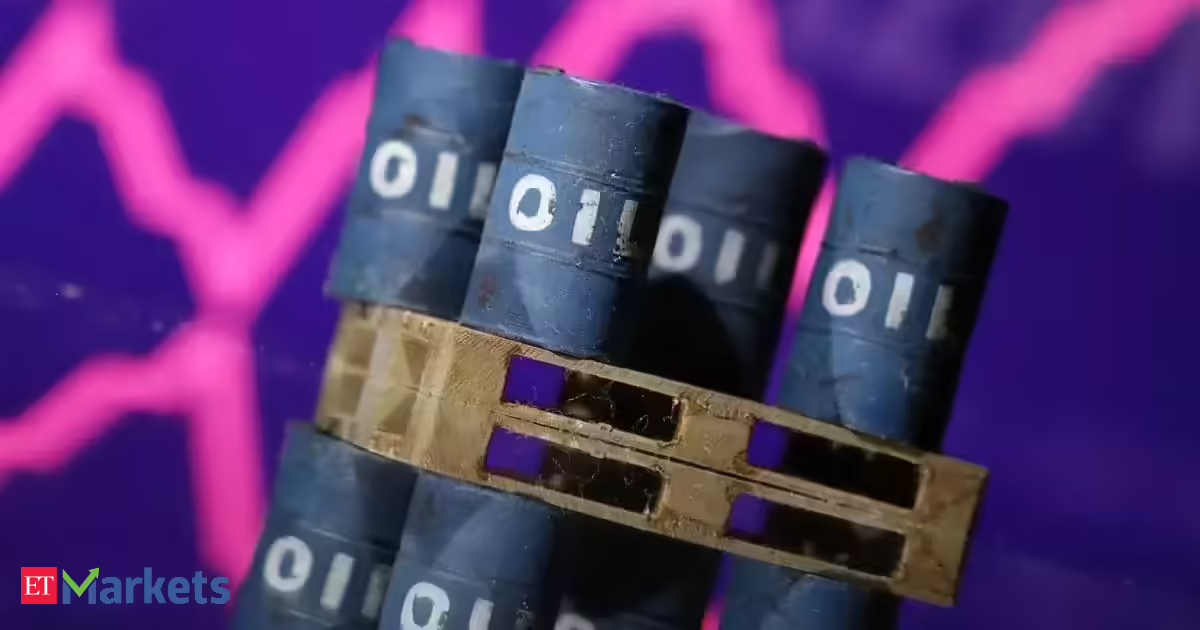
U.S. President Donald Trump said Washington and Tehran are “currently in negotiations” and suggested that Iran is eager to strike a peace deal, even as the Islamic Republic has denied holding any direct talks with the United States.
Crude oil price on March 25
Brent crude futures dropped $6.21, or 5.9%, to $98.28 a barrel by 0058 GMT, after touching a low of $97.57. U.S. West Texas Intermediate crude futures fell $4.67, or 5.1%, to $87.68 a barrel, having slipped earlier to $86.72. This came after both benchmarks had gained nearly 5% on Tuesday, before giving up some of those gains in volatile post-settlement trade.Market participants appear to be reacting to slightly improved expectations of a ceasefire, prompting some profit booking. But uncertainty around the success of negotiations is likely preventing a sharper bout of profit taking.
According to Israel’s Channel 2, the proposal US sent includes a one-month ceasefire to allow discussions, along with provisions for dismantling Iran’s nuclear programme, ending support for proxy groups, and reopening the Strait of Hormuz.
On the diplomatic front, Pakistan’s prime minister on Tuesday offered to host talks between the U.S. and Iran. However, Iran had denied on Monday that it was engaged in any negotiations with the U.S.
Despite these developments, military activity has continued, with strikes by the U.S., Israel, and Iran ongoing. Sources also indicated that Washington is preparing to deploy additional troops to the region.
Despite the possible relief, concerns around the Strait of Hormuz persist. The ongoing conflict has effectively disrupted shipments of nearly one-fifth of global oil and liquefied natural gas passing through the key waterway.
International brokerage Macquarie has said that even if tensions ease in the near term, oil prices are likely to find support in the $85–$90 range, with a gradual move back toward $110 until normal flows through the Strait of Hormuz resume. The note added that if disruptions persist through April, Brent could still climb to $150 per barrel.
Looking ahead, crude prices could move higher from current levels. According to Kayanat Chainwala of Kotak Securities, oil may rise to $120 per barrel in the near term and potentially touch $150 if the conflict continues
Nuvama Institutional Equities echoes the same view. The continued closure of the Strait of Hormuz, which handles around 20 million barrels per day, could push crude prices to the $110–150 per barrel range.
(Disclaimer: Recommendations, suggestions, views and opinions given by the experts are their own. These do not represent the views of The Economic Times)

For many, the promise of getting a foot on the property ladder has turned into a nightmare.

Danone BN 0.06%increase; green up pointing triangle has agreed to buy nutrition startup Huel for about $1.2 billion, seeking to tap growing demand for meal-replacement shakes popular with gym-goers and late-night workers.
The maker of Activia yogurt and Evian water said Monday that the deal would bolster its presence in the so-called “complete nutrition” sector and help Huel expand internationally.
Copyright ©2026 Dow Jones & Company, Inc. All Rights Reserved. 87990cbe856818d5eddac44c7b1cdeb8
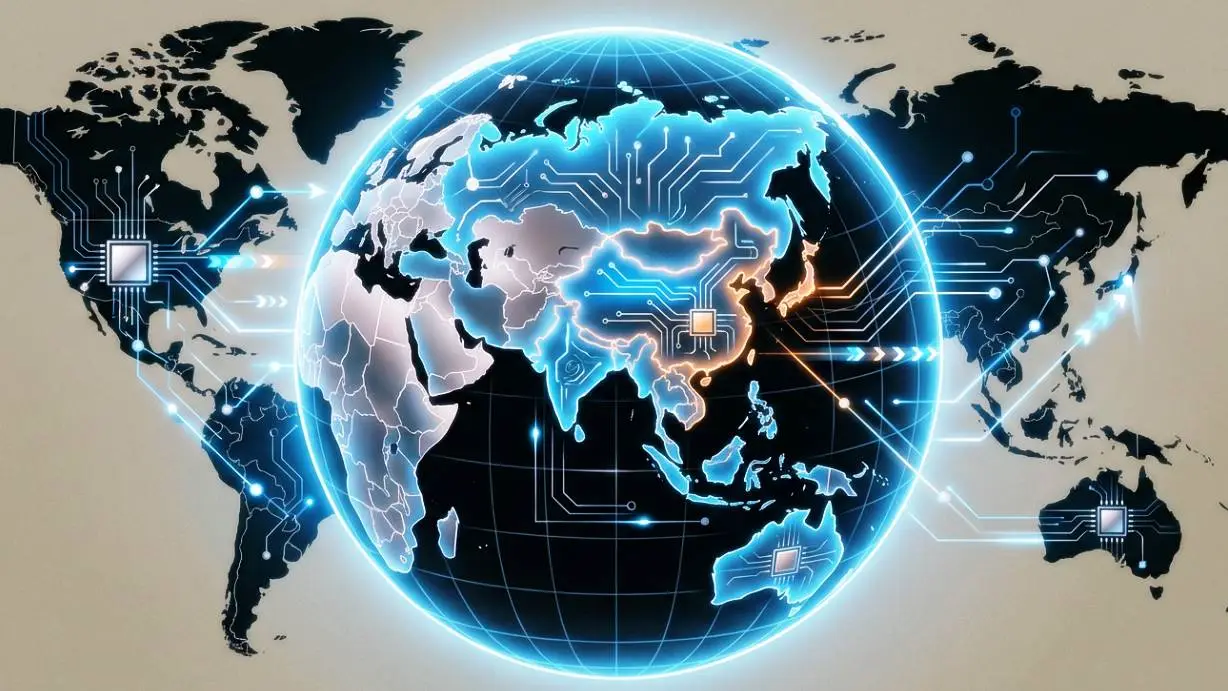
The global artificial intelligence boom is facing a significant threat due to its heavy reliance on energy and chemical imports from the Middle East, which are now jeopardized by the conflict involving Iran.
The high-tech supply chain—from semiconductor manufacturing in East Asia to data center operations in the United States—is vulnerable to disruptions in the Strait of Hormuz and damage to regional infrastructure. Ultimately, a prolonged conflict could lead to soaring chip prices, a halt in production, and a collapse of current tech valuations, potentially triggering a global recession.
Key Points
- Energy Dependency: Major semiconductor hubs in South Korea and Taiwan are almost entirely dependent on fossil fuel imports from the Middle East, particularly liquefied natural gas (LNG) passing through the Strait of Hormuz.
- Critical Chemical Supply: The region is a primary source for essential chip-making materials, including one-third of the world’s high-purity helium from Qatar, seaborne sulphur for etching, and bromine from the Dead Sea.
- Data Center Costs: Rising global LNG prices are driving up electricity costs in the U.S., where energy represents approximately 50% of operating expenses for the data centers powering AI.
- Logistics and Shipping: The conflict has created bottlenecks in air and sea freight, specifically impacting regional hubs like Dubai and delaying the delivery of wafers and finished chips.
- Infrastructure Damage: Recent attacks on Qatar’s Ras Laffan plant, the world’s largest LNG and helium facility, mean that even an immediate end to hostilities would require months to restore the supply chain to pre-crisis levels.
- Financial Risk: Investors are beginning to price in higher inflation, rising interest rates, and the potential unwinding of high tech valuations and debt borrowed against AI assets.
Analysts warn that if the Strait of Hormuz remains closed for more than a month, the resulting supply chain break could become irreparable in the short term, leading to a worldwide economic downturn.
As the global economy increasingly anchors its future growth on Artificial Intelligence, a shadow of geopolitical risk looms over the horizon. While the “AI Boom” has been driven by unprecedented leaps in LLM (Large Language Model) capabilities and semiconductor demand, analysts are beginning to sound the alarm on how escalating tensions in the Middle East—specifically involving Iran—could introduce a level of volatility that the tech sector is ill-prepared to handle.
Asia, receiving 80-82% of Qatar’s exports, faces acute pressure, with LNG spot prices up 39-50% and rerouting adding costs and delays. South Korea and Taiwan’s chip fabs, heavily reliant on Middle East LNG for electricity (e.g., Taiwan’s 40% LNG mix), risk production halts as power costs soar.
For the business community in Thailand, which is currently positioning itself as a regional hub for data centers and digital transformation, these global shifts are more than distant concerns; they are critical variables in local strategic planning.
The Energy Nexus: Powering the AI Engine
The AI revolution is uniquely energy-intensive. From the massive cooling requirements of data centers to the electricity consumed during model training, the industry’s overhead is deeply tied to global energy prices.
Any conflict involving Iran threatens the stability of the Strait of Hormuz, a transit point for one-fifth of the world’s total oil consumption. A spike in energy costs would lead to a direct increase in operational expenses for cloud providers like Amazon Web Services, Google, and Microsoft. For Thailand, where energy price fluctuations directly impact the cost of doing business, an “AI tax” driven by high energy prices could slow the adoption of these technologies across the manufacturing and service sectors.
Supply Chain Fragility and the Semiconductor Bottleneck
The AI boom is currently built on a “just-in-time” supply chain for high-end semiconductors. While the majority of chip fabrication occurs in East Asia, the logistics of global trade are highly interconnected.
Geopolitical instability often leads to a “risk-off” sentiment in global markets, causing shifts in shipping routes, increased insurance premiums for freight, and potential shortages in raw materials. “In a world of integrated trade, a localized conflict in the Middle East does not stay local,” says a senior analyst in Bangkok. “The volatility it introduces into the global supply chain can delay the rollout of the hardware necessary to sustain AI scaling.”
Market Volatility and Capital Flow
The current AI surge is fueled by massive capital expenditures. However, high-growth sectors are historically the most sensitive to geopolitical shocks. Should a conflict in Iran escalate, the resulting market volatility would likely trigger a flight to “safe-haven” assets.
For the Thai SET (Stock Exchange of Thailand) and regional tech startups, this could mean a tightening of venture capital and a reduction in Foreign Direct Investment (FDI). As investors pivot toward risk mitigation, the aggressive funding rounds that have characterized the AI sector over the last 24 months could see a significant cooling period.
The Thai Perspective: Resilience in Uncertainty
For Thai business leaders, the potential for a “Silicon Shock” underscores the need for resilience. As the government pushes the “Thailand 4.0” initiative, diversifying energy sources for digital infrastructure and localizing AI applications may become necessary hedges against global instability.
While the AI boom has the momentum of a decade-defining trend, it is not immune to the realities of global politics. The coming months will determine whether the tech sector can navigate this period of heightened geopolitical risk, or if the “AI Spring” will face an unexpected winter driven by regional conflict.
Other People are Reading

This Drone Stock Is Rising. Here’s Why.

The US president said talks to end the war are underway with Iran – a claim that officials in Tehran have disputed.
Wall Street indexes lost ground in Tuesday’s volatile session as investors swayed between fears of rising oil prices and hopes for a resolution to the US-Israeli war on Iran.
Business
US Stock Market | Wall Street indexes fall on worries about Middle East war, interest rates
U.S. Treasury yields extended gains after a weak auction of 2-year Treasury notes, also adding pressure to equity markets.
Indexes regained some ground after Trump told reporters that the United States was talking to “the right people” in Iran in order to reach an agreement to end hostilities and that Iran has agreed they will never have nuclear weapons. But reports the Pentagon would send thousands of more troops from the elite 82nd Airborne Division to the Middle East caused some concerns.
Wall Street indexes on Monday had marked their biggest one-day gain since February 6 ]as oil prices fell after Trump had postponed strikes against Iranian power plants and announced talks with Iran even as Tehran denied negotiations with the U.S. But energy prices rose on Tuesday with crude oil futures settling up more than 4%.
“Stocks are trying to find their footing as investors are keeping one eye on social media and the other eye on every headline. We’re very short-term oriented,” said Carol Schleif, chief market strategist, BMO Private Wealth.
“Markets are trying to hold onto the optimism they had yesterday. They’re so ready to move beyond war talk even if it’s not 100% settled,” said Schleif but she added, “There’s a lot of nervousness. People are watching oil and watching interest rates and worrying do we go higher for longer on both energy and interest rates because that could start negatively impacting growth.”
Kevin Gordon, head of macro research & strategy at the Schwab Center for Financial Research in New York also pointed to a “double whammy” higher oil prices and higher rates as a “stagflationary backdrop, which, needless to say, is not a positive backdrop for the stock market.” According to preliminary data, the S&P 500 lost 24.62 points, or 0.36%, to end at 6,557.19 points, while the Nasdaq Composite lost 184.86 points, or 0.84%, to 21,762.77. The Dow Jones Industrial Average fell 87.24 points, or 0.19%, to 46,121.23.
Among the 11 S&P 500 major industry sectors, energy led gains during the session while communication services and technology were leading losses.
Meanwhile, private credit concerns resurfaced after a report that Ares Management limited redemptions at 5% at its private credit fund, along with Apollo Global Management , as withdrawal requests surged.
Earlier a survey showed U.S. business activity slowed to an 11-month low in March as the Middle East war raised prices for energy products and other inputs.
Higher oil prices have revived inflation jitters and complicated the interest rate outlook for central banks. The U.S. Federal Reserve struck a hawkish tone last week, projecting only one reduction in 2026.
Traders are no longer pricing in any rate cuts this year, compared with two reductions expected before the Middle East conflict erupted. Expectations for hikes nudged higher amid escalating tensions last week, but were quickly unwound after Trump’s comments on Monday, according to CME’s FedWatch Tool. Among individual movers, shares of Jefferies rose after the Financial Times reported that Japan’s Sumitomo Mitsui Financial Group is working on plans for a possible takeover of the investment bank. Shares in cosmetics maker Estee Lauder tumbled after it said it was in talks for a potential merger with Spanish beauty group Puig Brands. Barclays lifted its 2026 year-end target for the S&P 500 index to 7,650 from 7,400, citing stronger earnings expectations that outweigh macro risks like Middle East tensions, AI-driven disruption and stress in private credit.

James Garner knew this Everton season was make-or-break for England aspirations

Wine 11 Rewrites How Linux Runs Windows Games At the Kernel Level

Meet the Belfast teacher sparking a lifelong love of history among her students


![Wxrdie - GET MONEY (ft. Thai VG) [prod. by Marlykid]](https://wordupnews.com/wp-content/uploads/2026/03/1774406097_hqdefault-80x80.jpg)

-
 Crypto World4 days ago
NIO (NIO) Stock Plunges 6.5% as Shelf Registration Sparks Dilution Worries
-

 Fashion4 days ago
Weekend Open Thread: Adidas – Corporette.com
-

 Politics4 days ago
Jenni Murray, Long-Serving Woman’s Hour Presenter, Dies Aged 75
-

 Crypto World3 days ago
Best Crypto to Buy Now: Strategy Just Spent $1.57 Billion on Bitcoin During Fear While Early Investors Quietly Enter Pepeto for 150x Potential
-

 News Videos6 days ago
RBA board divided on rate cut, unusually buoyant share market | Finance Report | ABC NEWS
-

 Crypto World3 days ago
Bitcoin Price News: Bhutan Sells $72 Million in BTC Under Fiscal Pressure, but the Smart Money Entering Pepeto Sees What the Market Does Not
-

 Politics7 days ago
The House | The new register to protect children from their abusers shows Parliament at its best
-

 Tech5 days ago
inKONBINI Lets You Spend Summer Days Behind the Register
-

 Crypto World6 days ago
Canada’s FINTRAC revokes registrations of 23 crypto MSBs in AML crackdown
-

 Sports2 days ago
Remo Stars and Kano Pillars Strengthen Survival Hopes in NPFL
-
 NewsBeat6 days ago
Residents in North Lanarkshire reminded to register to vote in Scottish Parliament Election
-

 News Videos7 days ago
PARLIAMENT OF MALAWI – PAC MEETING WITH REGISTRAR OF FINANCIAL ON AMARYLLIS HOTEL – INQUIRY LIVE
-

 Politics5 days ago
Gender equality discussions at UN face pushbacks and US resistance
-

 Business2 days ago
No Winner in March 21 Drawing as Prize Rolls to $133 Million for Next
-

 Business6 days ago
Who Was Alex Pretti? 5 Key Facts About the ICU Nurse Killed by Federal Agents in Minneapolis
-

 Sports2 days ago
Gary Kirsten Accuses Pakistan Cricket Board Of ‘Interference’, Mohsin Naqvi Responds
-

 Tech2 days ago
Give Your Phone a Huge (and Free) Upgrade by Switching to Another Keyboard
-

 Sports4 days ago
2026 Kentucky Derby horses, odds, futures, preview, date: Expert who nailed 12 Derby-Oaks Doubles enters picks
-

 Tech7 days ago
Subnautica 2 might finally be entering early access in May
-
Sports6 days ago
Vikings Free Agency Enters Phase 2 with Key Questions
You must be logged in to post a comment Login