For travellers, investors and hospitality leaders assessing remote marine tourism, a Raja Ampat diving liveaboard guide should do more than describe cabins, reefs and itineraries; it should explain why the liveaboard model has become one of Indonesia’s most refined examples of experience-led luxury.
In Raja Ampat, service quality is measured not only by comfort but also by timing, safety, discretion, environmental care, and the ability to deliver something deeply memorable without making it feel manufactured.
Why Raja Ampat Holds a Unique Position in Indonesian Tourism
Raja Ampat is not a mass-market destination. Its appeal comes from remoteness, biodiversity and the sense of entering a marine landscape that still feels rare. For liveaboard operators, this creates both opportunity and responsibility.
Guests are not simply booking a boat. They are booking with confidence. They want to know that the crew understands currents, weather, dive planning, hospitality flow, food preferences and the subtle expectations of international luxury travellers.
This is where Raja Ampat liveaboard diving differs from many land-based holidays. The experience is self-contained. The vessel is the hotel, restaurant, dive centre, transport provider and private retreat, all at once.
- Every crew interaction matters.
- Every schedule decision affects comfort.
- Every safety briefing shapes trust.
- Every meal contributes to the overall memory.
- Every environmental choice reflects the brand.
A well-structured Raja Ampat diving liveaboard guide helps operators and guests alike understand how each of these details contributes to an experience that feels seamless rather than scripted.
The Rise of Experience-Led Luxury at Sea
Polished wood, spacious cabins, or fine dining alone no longer define luxury in liveaboard travel in Indonesia. These details still matter, but modern guests expect something more layered: privacy, authenticity, personalisation and responsible access to nature.
A well-managed liveaboard succeeds when guests feel looked after without feeling controlled. The rhythm should feel effortless, even though behind the scenes it requires serious operational discipline.
This balance is especially important in Raja Ampat, where weather windows, dive site selection and guest ability must be managed carefully. Luxury here is not about excess. It is about judgment.
What Guests Really Value on a Raja Ampat Liveaboard
Many guests arrive after searching for terms such as “scuba Indonesia” or “best diving” because they already know the country offers world-class underwater experiences. However, once they are on board, what they remember most is often the human side of the journey.
They remember the cruise director who adjusted the plan after listening to their concerns. They remember the chef who handled dietary needs without fuss. They remember the dive guide who noticed anxiety before it became a problem.
The strongest liveaboard experiences usually include:
- Clear pre-arrival communication.
- Honest explanations of itinerary flexibility.
- Well-maintained diving and safety equipment.
- Calm, capable dive guides.
- Respectful service that is attentive but not intrusive.
- Food and beverage standards suited to remote cruising.
- Sensible environmental practices.
- A crew culture that feels warm and professional.
These are not decorative extras. They are the operating foundations of high-end marine hospitality.
Raja Ampat Compared with Komodo
Many travellers considering a Raja Ampat journey may also be looking at a Komodo liveaboard. Both destinations are exceptional, but they offer different moods and operational realities.
Komodo is often associated with dramatic landscapes, stronger currents, seasonal manta encounters and a more adventurous tone. Raja Ampat feels more expansive, remote and immersive, with a strong emphasis on biodiversity, reef variety and longer cruising distances.
For hospitality businesses, the comparison is useful because it shows that Indonesia cannot be treated as one single dive product. Each region needs its own positioning, staffing style and guest communication strategy.
A practical distinction for operators:
- Komodo often attracts guests seeking intensity, scenery and adventure.
- Raja Ampat often attracts guests seeking rarity, immersion and marine abundance.
- Both require strong safety systems and transparent guest briefings.
- Both benefit from a luxury that feels grounded rather than excessive.
The Business Case for Responsible Remote Tourism
For BM Magazine readers, the liveaboard sector is interesting because it demonstrates how a niche tourism model can create high-value economic activity without relying on large-scale development.
A well-run liveaboard supports local employment, marine park fees, supply chains, guides, harbour services and specialist maintenance. It also encourages longer booking windows and higher guest spend compared with many short-stay tourism products.
However, the model only works in the long term if it protects the asset that creates demand: the marine environment. Raja Ampat’s reefs are not a backdrop. They are the core infrastructure of the business.
This means operators must think beyond occupancy and seasonal revenue. They must consider carrying capacity, anchoring practices, waste systems, community relationships and guest education.
Service Excellence in a Confined Luxury Environment
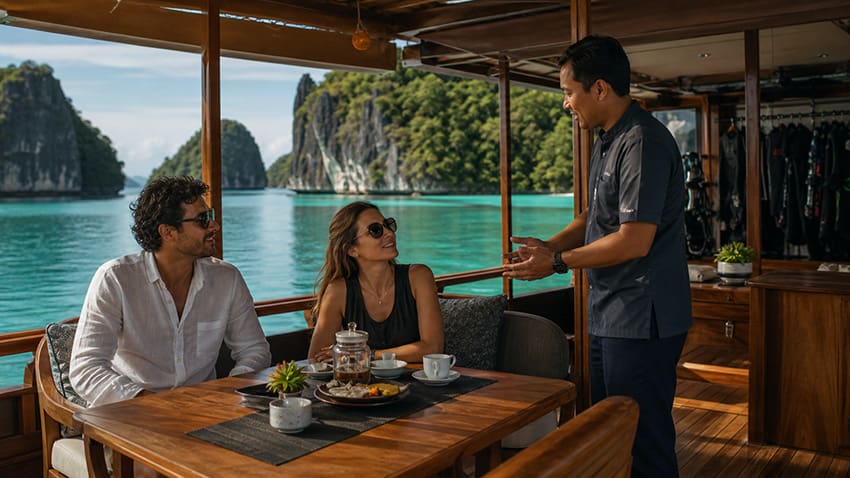
A resort has space. A liveaboard has intimacy. That changes the rules of hospitality.
On board, small issues become visible quickly. A delayed meal, a confusing dive schedule, or a poorly handled complaint can affect the overall atmosphere. Equally, small gestures can have an outsized impact.
The best managers train crews to read the room. Some guests want conversation. Others want quiet. Some want every dive possible. Others may need rest but feel hesitant to miss out. Luxury service is knowing when to suggest, when to step back and when to solve a problem before it grows quietly.
Safety as a Brand Promise
In diving, safety is not simply a technical requirement. It is part of the emotional contract with the guest.
A premium liveaboard must be able to demonstrate competence without creating anxiety. Briefings should be clear, equipment should be checked, emergency procedures should be known to all crew members, and dive plans should match the day’s actual conditions.
The strongest operators do not treat safety as something hidden behind the scenes. They make it visible in a calm, reassuring way.
This includes:
- Professional dive briefings.
- Realistic current and visibility updates.
- Conservative planning where needed.
- Crew coordination between deck, tender and dive teams.
- Oxygen, first-aid and emergency response readiness.
- Guest screening without embarrassment or pressure.
Trust is built when guests see that standards are consistent.
Food, Comfort and Cultural Detail
Food on a Raja Ampat liveaboard does more than fill the time between dives. It gives structure to the day and provides comfort in a remote environment.
International guests appreciate variety, but they also value a sense of place. Indonesian flavours, responsibly sourced local seafood, tropical fruit, and thoughtful presentation can make the journey feel connected to the region.
Hospitality managers should not underestimate the importance of these moments. After a morning dive, a well-prepared meal can feel as memorable as a luxury hotel dinner, precisely because of the setting.
What the Wider Hospitality Industry Can Learn
The liveaboard model offers lessons beyond diving. It shows how premium hospitality can succeed through integration. Accommodation, activity, transport, dining and interpretation are not separate departments; they are one continuous experience.
This is relevant to hotels, resorts and tourism brands across Indonesia. Guests increasingly value coherence. They do not want fragmented service. They want the feeling that someone has thought carefully about the full journey.
The Future of Raja Ampat Liveaboard Diving
Raja Ampat’s future will depend on restraint as much as growth. Demand is strong, but the destination’s value lies in its sense of rarity. Operators, agents, investors and local authorities all have a role in maintaining that balance.
The most successful liveaboards will be those that combine commercial discipline with genuine stewardship. They will understand that luxury at sea is not about showing off. It is about delivering comfort, safety and wonder in a place where nature remains the main event.
For business readers, Raja Ampat is a reminder that the strongest hospitality brands are built on trust. In remote diving, trust is earned through preparation, humility and respect for the environment. The guest may come for the reefs, but they return because the people made the journey feel effortless, meaningful and safe.






















![Samson Mow Just Said The UNTHINKABLE About Bitcoin & Ethereum! ["It's a Fake Crash"]](https://wordupnews.com/wp-content/uploads/2026/05/1778531899_maxresdefault-80x80.jpg)



































You must be logged in to post a comment Login