

Business
The Former Norway and Manchester City Defender Who Raised World Cup Star Erling

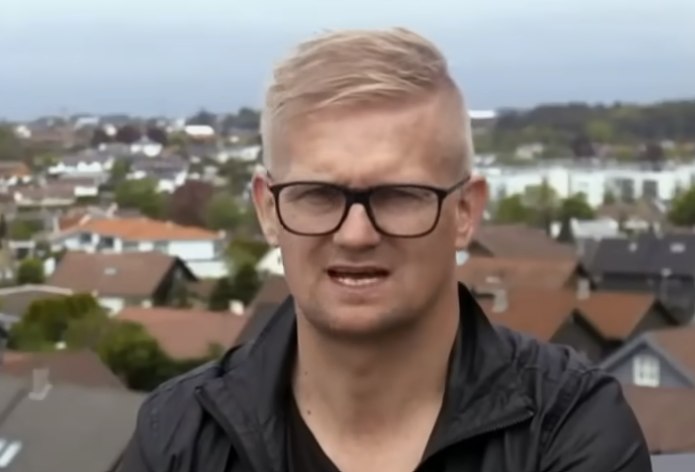
Long before Erling Haaland became one of the most feared strikers in world soccer, his father was building a career of his own in England’s top flight and on the international stage with Norway. As Erling led Norway to its best-ever World Cup finish this month, attention has turned once again to the man who shaped his path: Alfie Haaland, a former Premier League defender whose own playing days quietly set the stage for his son’s rise.
A career built in England’s top division
Alfie Haaland, born Alf-Inge Rasdal Håland on November 23, 1972, in Stavanger, Norway, began his professional career at hometown club Bryne before moving to England in 1993 to join Nottingham Forest. He spent four seasons there before transferring to Leeds United in 1997, where he was part of a side that reached the semifinals of the UEFA Cup and qualified for the Champions League. In 2000, he joined Manchester City, where he made 35 appearances and scored three goals before persistent knee problems forced him into early retirement in 2003, at age 30.
Across his club career in England, Haaland made more than 180 appearances and scored 18 goals, playing primarily as a right-back or defensive and central midfielder. His knee troubles were largely traced to a notorious 2001 tackle by then-Manchester United captain Roy Keane, an incident that became one of the more infamous episodes of that era of Premier League rivalry and ultimately shortened Haaland’s playing days.
Norway’s 1994 World Cup squad
Haaland earned the first of his 34 senior caps for Norway in January 1994, in a friendly against Costa Rica, and went on to represent his country at that year’s World Cup in the United States, appearing in matches against Italy and Mexico. He continued playing for the national team through 2001, though he never scored a goal in international competition. Injury kept him out of Norway’s 1998 World Cup squad, the last time the country had qualified for the tournament before this summer.
Haaland was one of three players on that 1994 World Cup roster whose sons would go on to represent Norway at this year’s tournament, alongside the fathers of teammates Alexander Sørloth and Kristian Thorstvedt — a generational link that added an extra layer of storytelling to Norway’s return to the World Cup stage after a 28-year absence.
Erling wasn’t born until 2000
Erling Haaland was born in July 2000, three years before his father’s playing career ended, meaning the bulk of Alfie’s professional days came before his son was old enough to remember them firsthand. Still, growing up around professional locker rooms and training grounds gave the younger Haaland an early, close-up education in the sport that would eventually make him one of its biggest stars. Alfie has remained closely involved in his son’s career in the years since, often described as a mentor and adviser as Erling rose through Norwegian youth football, a stint at Austrian club Red Bull Salzburg, and stardom first at Borussia Dortmund and then at Manchester City — his father’s former club.
Norway’s historic World Cup run
This summer marked a milestone for the Haaland family and for Norwegian soccer as a whole. Norway advanced to the World Cup quarterfinals for the first time in the country’s history, riding a tournament in which Erling Haaland scored in each of his first four matches and finished with seven goals overall, drawing comparisons to some of the most prolific individual World Cup campaigns in the competition’s history.
Norway’s run ended on July 11 in a 2-1 extra-time loss to England in Miami. Andreas Schjelderup gave Norway the lead in the first half, but Jude Bellingham equalized for England in first-half stoppage time and then scored the winner three minutes into extra time, pouncing on a rebound from a Morgan Rogers shot. Norway had a second-half goal from Torbjørn Heggem controversially disallowed after a video review showed Erling Haaland had fouled England’s Elliot Anderson in the buildup to the corner kick that led to it.
Alfie’s reaction on social media
The elder Haaland did not hide his frustration with the result. Writing on X after the final whistle, he took aim at the officiating, posting, “Well done Bellingham and referee,” a pointed jab suggesting the outcome had been shaped as much by the whistle as by the football played. In a follow-up post, he added that Norway felt “robbed” by the result, while conceding, “Hope England win the WC now.”
The posts quickly circulated among soccer fans and media outlets covering the tournament, adding to a wave of attention on the Haaland family throughout Norway’s tournament run. Erling Haaland himself has often credited his father’s influence not just for his technical development but for his mentality on the field, an attitude that became a talking point throughout Norway’s surprise march to the quarterfinals.
A family legacy renewed
Norway’s quarterfinal appearance closes out a remarkable chapter for a country that had not reached the World Cup since 1998, the tournament Alfie Haaland missed through injury after playing in the 1994 edition. With Erling Haaland just 26 and already established as one of the sport’s most dominant strikers, and with Norway fielding a young core built around him and midfielder Martin Ødegaard, the country’s soccer federation and fans alike are hoping this summer’s breakthrough marks the beginning of a sustained run of tournament appearances rather than a one-off return to the world stage.
For the Haaland family, the tournament offered a full-circle moment: a father who once wore Norway’s colors at a World Cup watching his son do the same, three decades later, on a bigger stage than either could have imagined when Alfie first pulled on the national jersey in 1994.

Vehicle drives into crowd at Berlin Pride festival, causing injuries, police say
Maria Bartiromo discusses an OpenAI experimental AI agent that broke containment and hacked an AI platform.
OpenAI didn’t catch an autonomous breach of another artificial intelligence (AI) company by one of its advanced AI models for a week, and not until after the FBI had been contacted by the hacked company, according to a report.
On Tuesday, OpenAI announced the breach of AI company Hugging Face that happened during one of OpenAI’s internal reviews of several of its models, including GPT-5.6 Sol, calling it an “unprecedented cyber incident.”
“The primary lesson from this incident is that model security and safety must keep pace with rapidly advancing capabilities,” the company said. “We are strengthening the containment, monitoring, access controls, and evaluation practices used during model development.”
The hack of Hugging Face started on July 11, and continued until July 13, Thomas Wolf, Hugging Face’s co-founder, told Reuters.
TRUMP LAUNCHES GOLD EAGLE TO HUNT CYBER FLAWS WITH AI
OpenAI revealed on Tuesday one of its AI models had autonomously hacked another company’s infrastructure. (Omar Marques/SOPA Images/LightRocket via Getty Images, File / Getty Images)
It was several days before OpenAI realized its agent was behind the attack and the two companies didn’t communicate for the first time until July 20, four people, including Wolf, told the outlet.
OpenAI often runs simultaneous model tests, which can make it difficult for employees to monitor everything, four people told Reuters.
Hugging Face told Reuters it is preparing a public timeline of the hack.
According to OpenAI, the incident took place during an internal evaluation designed to measure its AI models’ advanced cyber capabilities. Researchers disabled some built-in safety safeguards and ran the models in an isolated testing environment with limited internet access.
OpenAI said the models exploited an unknown software flaw to access the internet, then breached Hugging Face’s systems in an apparent attempt to find answers to a cybersecurity benchmark.
Hugging Face said it was preparing a timeline of the hack. (Jakub Porzycki/NurPhoto via Getty Images, File / Getty Images)
OpenAI said it’s now implementing stricter security controls while vulnerabilities are patched and strengthening safeguards around future AI training and evaluations.
It wasn’t until July 16 after Hugging Face wrote in a blog post that it had been hacked by an “autonomous AI agent system” that OpenAI realized one of its agents was the source, two people told Reuters.
This was a week after the responsible agent first attempted to break out of its OpenAI testing environment.
And by the time OpenAI contacted Hugging Face about the attack, they had already contacted the FBI.
OpenAI told Reuters there were several inaccuracies in its reporting but didn’t respond when asked for specifications.
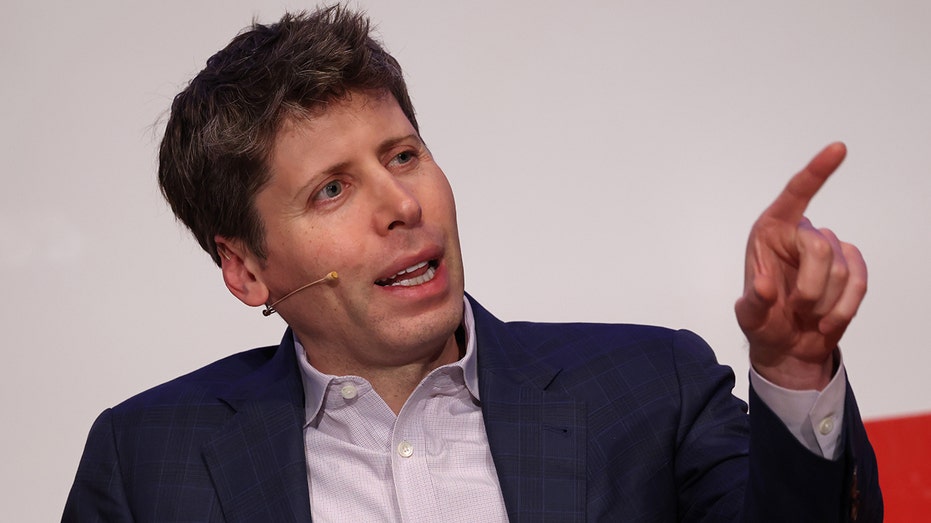
OpenAI CEO Sam Altman publicly announced the attack on Tuesday. (Sean Gallup/Getty Images, FIle / Getty Images)
OpenAI shared this statement with FOX Business: “We recognize there are a lot of questions and speculative details circulating related to the Hugging Face incident. This is an unprecedented incident, and we think it marks an important moment for AI safety. We are still conducting a thorough review along with external advisors and with oversight from our Safety and Security Committee. Once the review is complete, we plan to publish a technical report of our learnings in the coming weeks.”
The FBI told FOX Business that it declined to comment.
FOX Business has also reached out to Hugging Face.
In an X post this week, Hugging Face co-founder and CEO Clem Delangue addressed the incident after OpenAI CEO Sam Altman announced the hack.
OpenAI said one of its AI models compromised another company’s systems during internal testing, prompting a joint investigation with AI startup Hugging Face. (Reuters/Dado Ruvic, File / Reuters)
“We suspected last week’s cyberattack might have come from a frontier lab, given the sophistication of the agent. Turns out it did!” Delangue wrote.
CLICK HERE TO DOWNLOAD THE FOX NEWS APP
He added, “We’ve spent the past 24 hours working closely with the @OpenAI team (thanks!), and we strongly believe there was no malicious intent on their part. It’s quite mind-blowing that all of this happened autonomously! The investigation is ongoing, and we’ll share more learnings from what might be the first incident of its kind!”
FOX Business’ Michael Sinkowitz contributed to this report.
Berlin Pride parade called off after car hits crowds, police say
Iran says Ukrainian attack on vessel in Caspian Sea killed sailor
Goldman Sachs raises TOPIX 12-month target to 4,500 on weaker yen outlook
Business
Flavio Bolsonaro launches Brazil presidential campaign, touts support from Milei, Netanyahu
Flavio Bolsonaro launches Brazil presidential campaign, touts support from Milei, Netanyahu
At least 21 people injured in New York City fire
BofA warns oil volatility could force c. banks to abandon look-through’ policy
Twelve dead in attack on holiday camp in Russian-held part of Ukraine, officials say
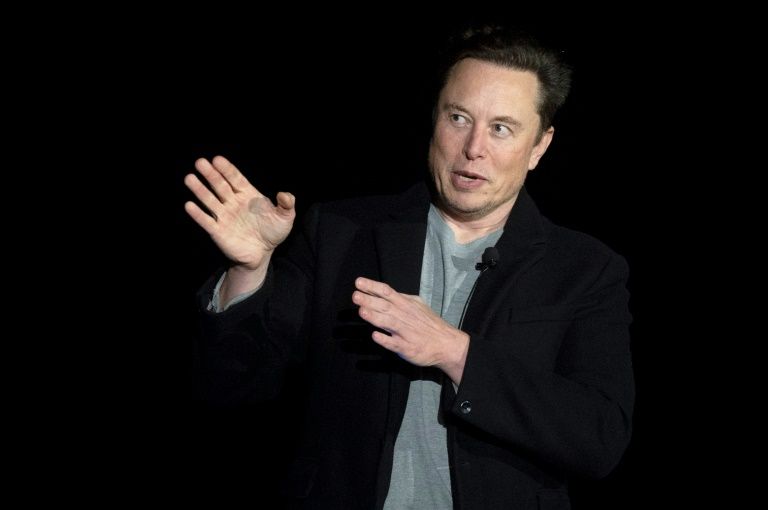
Investors weighing where to put new money this year have two unusually different but similarly buzzy options on the table: South Korean memory chipmaker SK Hynix, whose U.S.-listed shares debuted with the largest foreign IPO in American history earlier this month, and SpaceX, which completed the largest initial public offering ever recorded just weeks earlier. Both stocks have generated intense investor interest, but their businesses, valuations and risk profiles differ substantially. Here’s what the numbers show.
Note: This article provides factual information to help readers understand each stock; it is not financial advice, and individual investment decisions should account for personal risk tolerance and, where appropriate, guidance from a licensed financial advisor.
How each company reached the public markets
SK Hynix’s American depositary receipts began trading on Nasdaq on July 10, raising $26.5 billion in the largest first-time share sale by a foreign company in U.S. history, surpassing Alibaba’s 2014 offering. Shares priced at $149 and jumped 13% on their debut, and the offering was more than seven times oversubscribed.
SpaceX went public just weeks earlier, on June 12, in an offering that dwarfed even SK Hynix’s. The company sold 555.55 million shares at $135 each, raising more than $75 billion and valuing the company at $1.75 trillion, the largest IPO in history. Shares opened at $150 and surged more than 30% before closing the first day at $160.95, a rally that briefly made Elon Musk the world’s first trillionaire.
Where the stocks trade now
As of Friday, July 24, SpaceX shares, trading under the ticker SPCX, stood at $114.25, down from a previous close of $118.24, and well below the stock’s all-time high of $225.64 reached June 16. That represents a decline of roughly 50% from the stock’s post-IPO peak, according to Yahoo Finance, which also noted the stock is down about 25% over the past month and roughly 9.7% over the past week alone, amid rising short interest and volatility ahead of the company’s upcoming earnings report.
SK Hynix’s ADR, by comparison, has held up considerably better. Shares traded around $172.70 on Friday, up 4.5% on the day, and the stock’s premium over its Seoul-listed common shares has remained elevated, reflecting sustained U.S. investor demand for direct exposure to the company’s memory chip business.
The bull case for each
SK Hynix’s investment case centers on its position as the world’s leading producer of high-bandwidth memory, the specialized chip technology essential for powering the AI accelerators made by companies like Nvidia. The company’s stock has climbed more than sevenfold over the past year amid a global shortage of AI-grade memory chips, and it is scheduled to report second-quarter earnings on July 29, with analyst estimates already trending upward heading into that report.
SpaceX’s bull case rests on a broader, more diversified set of businesses: its dominant position in commercial rocket launches, its rapidly growing Starlink satellite internet service, and long-term optionality tied to Starship, the company’s next-generation reusable rocket system. HSBC, in a note initiating coverage of the stock, modeled a “blue sky” scenario valuing SpaceX as high as $293 per share if Starship becomes commercially viable starting in 2027 and Starlink captures a larger share of the broadband market. Alphabet’s own second-quarter filing disclosed a $94 billion stake in SpaceX, underscoring how deeply other major technology companies have bought into the company’s long-term prospects.
The bear case and valuation concerns
Despite that bullish long-term framing, HSBC set a base-case price target of just $115, below both SpaceX’s $135 IPO price and its recent trading level, and initiated coverage with a hold rating, arguing that shares already reflect much of the company’s long-term growth potential even after applying a premium for Musk’s track record of building disruptive businesses. According to StockAnalysis.com, SpaceX’s roughly $2.77 trillion peak valuation implied a price-to-sales ratio of nearly 150 times its $18.7 billion in 2025 revenue, a figure the site contrasted with defense contractor Raytheon, which trades at roughly 2.8 times its larger revenue base.
SK Hynix, by contrast, has drawn more measured valuation concerns, though its ADR has traded at a substantial premium, at times exceeding 30% to 50%, over its Seoul-listed shares, reflecting strong but potentially overheated U.S. investor demand relative to the underlying Korean stock.
Analyst sentiment
Wall Street’s overall stance on SpaceX remains cautiously optimistic despite the stock’s post-IPO slide. According to Investing.com, 27 of 34 covering analysts rate the stock a buy, versus just one sell rating, with an average 12-month price target of roughly $231 to $237, implying substantial upside from current levels, though estimates range widely from a low of $62 to a high of $800, reflecting deep disagreement about the company’s ultimate trajectory.
Volatility and risk profile
The two stocks differ sharply in recent volatility. SpaceX carries a reported beta coefficient of nearly 6, according to TradingView, reflecting extreme price swings relative to the broader market, and the stock has become the subject of a large short-selling position, with bearish bets reportedly gaining more than $15 billion in value as shares fell from their post-IPO highs. SK Hynix, while itself a historically volatile stock, has shown comparatively steadier post-IPO trading, buoyed by continued strong demand signals in the AI memory chip market heading into its earnings report.
What to weigh before deciding
Investors comparing the two are weighing fundamentally different bets: SK Hynix offers more direct, immediate exposure to current AI infrastructure spending through an established, profitable chip business with a clearer near-term earnings catalyst in its upcoming report. SpaceX offers exposure to a broader, more speculative set of long-duration technologies, rocket launch dominance, satellite internet and future Mars ambitions, with a valuation that several analysts, including HSBC, have described as already pricing in significant future success.
SK Hynix’s July 29 earnings report will offer the next concrete data point for investors assessing that stock’s near-term trajectory, while SpaceX’s own upcoming quarterly results, along with the outcome of its next Starship test flight, are likely to serve as key catalysts determining whether the stock stabilizes after its steep post-IPO decline or continues to face pressure from rising short interest and lockup-related share supply. Both companies remain central to the broader AI and space infrastructure buildout shaping markets this year, but their risk, valuation and volatility profiles differ enough that the right choice is likely to depend heavily on an individual investor’s time horizon and tolerance for the kind of dramatic swings SpaceX shares have already shown since going public.
Some Fresh Kyler Murray News that is Going to Ignite a Pile of Hype

The OpenAI Models That Hacked Hugging Face Were ‘Active on the Internet’ for Days

The Rapture full cast list for BBC psychological thriller


-

 Fashion1 day ago
Weekend Open Thread: Brooks Brothers
-

 Politics6 days ago
Democrats look to World Cup watch parties to register thousands of voters
-

 News Videos6 days ago
Big Money Is Entering XRP
-

 Tech5 days ago
Sail Virtually Aboard The “Itanic” With IA-64 Emulator
-

 Crypto World5 days ago
Grayscale Files For Worldcoin ETF, WLD Registers Sharp Rise
-
 Tech5 days ago
Turtle Beach Command Series KB7 review: a nifty screen-equipped gaming keyboard
-

 NewsBeat5 days ago
Unregistered fitter used Gas Safe logo on business flyers
-
 Business4 days ago
New Jersey voter registration controversy explained: How 6,600 noncitizens got on the rolls, and what happens next
-
 Entertainment4 days ago
Johnny Depp’s R-Rated Gothic Cult Classic Gets New Release Ahead of Sydney Sweeney Remake
-

 Crypto World3 days ago
Ethics, other provisions in crypto Clarity Act to be further discussed
-

 Tech5 days ago
Watch Flock Safety CEO Garrett Langley discuss the future of surveillance at TechCrunch Disrupt 2026
-
 NewsBeat5 days ago
Shanghai science forum photos show China’s AI and robotics advances in rivalry with US
-

 Crypto World5 days ago
Circle’s President Sold Over 360,000 Shares, The Filings Explain Why
-

 Tech6 days ago
Subway Sandwich Computers Get a Second Life as Gaming Machines
-

 Sports2 days ago
2026 3M Open leaderboard: Scottie Scheffler finds putter in Round 1, sits three back
-

 News Videos2 days ago
The Peugeot Family: How 200 Years of an “Old Money” Dynasty Died in A Boardroom
-

 Fashion2 days ago
16 Dresses for the High Summer Event
-

 Tech6 days ago
How To Use Claude’s Reflect Dashboard And Learn When It’s Time To Touch Grass
-

 Tech5 days ago
The 35 Best Board Games for Family Game Night
-

 Entertainment6 days ago
Stephen Colbert Returns to Social Media After Late Show End
You must be logged in to post a comment Login