
Business
The Government’s entrepreneurship adviser says we don’t need more restaurants. She’s wrong and here’s why

When the Government’s entrepreneurship adviser, Alex Depledge, declared that Britain does not “need any more restaurants”, I’ll confess my first reaction was disbelief. My second was to reach for the data. And my third, after reading it, was a conclusion both simple and troubling: she has misidentified where entrepreneurship in this country actually lives and in doing so, is making it harder for it to survive.
Let me start with the basics. Hospitality employs 2.6 million people in the UK, 7.1% of the entire workforce. It generates £69.5 billion in gross value added. It contributes £54 billion in gross tax receipts annually. It is, by any reasonable measure, not a peripheral cottage industry but a cornerstone of the British economy. But here is the figure that should stop the Government’s entrepreneurship adviser in her tracks, one drawn from the House of Commons Library research briefing on hospitality, published in January 2026, which she may not yet have had the opportunity to read: 99.6% of hospitality businesses are SMEs, and 97.7% are small businesses. An adviser appointed to clear the path for more small enterprises might reasonably be expected to know that one of the most entrepreneurially dense sectors in the entire UK economy is the one she has just publicly dismissed.
But the argument I want to make goes beyond the statistics, important as they are. It goes to something more fundamental, something that Depledge, for all her intelligence and commercial experience, appears to have overlooked entirely.
Every business deal that gets done in this country, every investment secured, every partnership formed, every client relationship built, happens somewhere and through human contact. It happens over a coffee, over lunch, over dinner, at a networking event, at a conference, at a drinks reception. The hospitality sector is not separate from the high-growth economy that the Government’s adviser wants to build. It is the connective tissue of it. You cannot scale a clean tech company, close a venture capital round, or sign a manufacturing partnership without, at some point, sitting across a table from someone in a room that a hospitality business has made possible.
I want to give a concrete example of what smart support for hospitality entrepreneurship actually looks like, because it is already happening, just not by government. On our own university campus, we work with Aramark to provide catering for students, staff and events. Given the natural variation in demand across term time, Aramark does something rather clever: it brings in small, independent food truck operators on a rotating basis, giving them seven or eight hours a day of guaranteed footfall, exposure to a large and diverse customer base, and the kind of commercial experience that no business incubator programme can replicate. The result is a richer, more varied food offering for our community, and a genuine launchpad for small hospitality enterprises.
Pubs are doing the same. The Compton Arms in Islington, ranked in the UK’s Top 50 Gastropubs, has built its reputation on offering kitchen residencies to emerging independent food businesses, giving them a platform, a customer base, and the commercial experience to grow. It is not a charity model; it is a smart one. The chefs behind Four Legs did their residency at the Compton Arms and went on to open The Plimsoll. Walk into any good pub offering food, and you will find a similar story, Thai kitchens operating out of the back, independent suppliers stocking the bar, local producers on the menu. These are ecosystems of entrepreneurship that the Government’s own adviser appears not to have noticed.
Aramark and the Compton Arms have understood something that the Government has not: supporting small hospitality businesses is not charity. It is smart commercial strategy.
I would gently invite the Government’s entrepreneurship adviser to conduct a simple experiment. Consider a single working day. The morning coffee picked up on the way to the office supplied by an independent café, almost certainly an SME. The biscuits and drinks laid on for the first meeting of the day. Lunch, whether grabbed at a local restaurant or catered in. Networking event with colleagues or clients. A family dinner that evening. Count how many of those touchpoints involve a hospitality business. Count how many of the people who made those moments possible are employed in a sector she has suggested we do not need more of.
The Government says it wants to champion the industries of tomorrow. So do we. There is no disagreement about the importance of clean technology, advanced manufacturing, or the creative sector. But the framing of hospitality as somehow standing in the way of that ambition is a false choice and a damaging one. An economy that neglects its sixth largest employment sector, that has already seen restaurants shed 22% of their casual dining sites since 2020, and that continues to pile on costs through National Insurance increases and business rates reform, is not building for the future. It is hollowing out the present.
Britain’s hospitality sector does not need to be told it isn’t wanted. It needs a government and an entrepreneurship adviser that understands what it is and what it does well enough to support it properly.

Zoe Adjey
Zoe Adjey has over 25 years of experience in the hospitality, events, and education sectors.
Senior Lecturer at Royal Docks School of Business and Law, university of east London, in Hospitality and Events Management, Zoe is developing the IoHT Practice-Based Centre, which bridges academic expertise with industry practice through real-world projects and partnerships.
Originally from Northern Ireland, she brings a unique blend of industry experience and education to her work. She is a sought-after media expert on hospitality industry issues, providing regular commentary for major national outlets including ITV News, BBC Radio 4, LBC, The Telegraph, The Independent, and The Metro. Her expertise spans workforce challenges, immigration policy, restaurant economics, pricing, tipping culture and service standards, and the hospitality sector’s economic impact and resilience.
She develops international partnerships and works with organisations, mentoring aspiring hospitality professionals in their early careers. Previously, she developed training and leadership programmes with Caprice Holdings, and at Westminster Kingsway College, she led college restaurants and curriculum teams.

Federal Reserve Bank of New York President John Williams discusses market impacts of the Iran War, inflation outlook and more on ‘The Claman Countdown.’
Americans are facing a tale of two grocery lists.
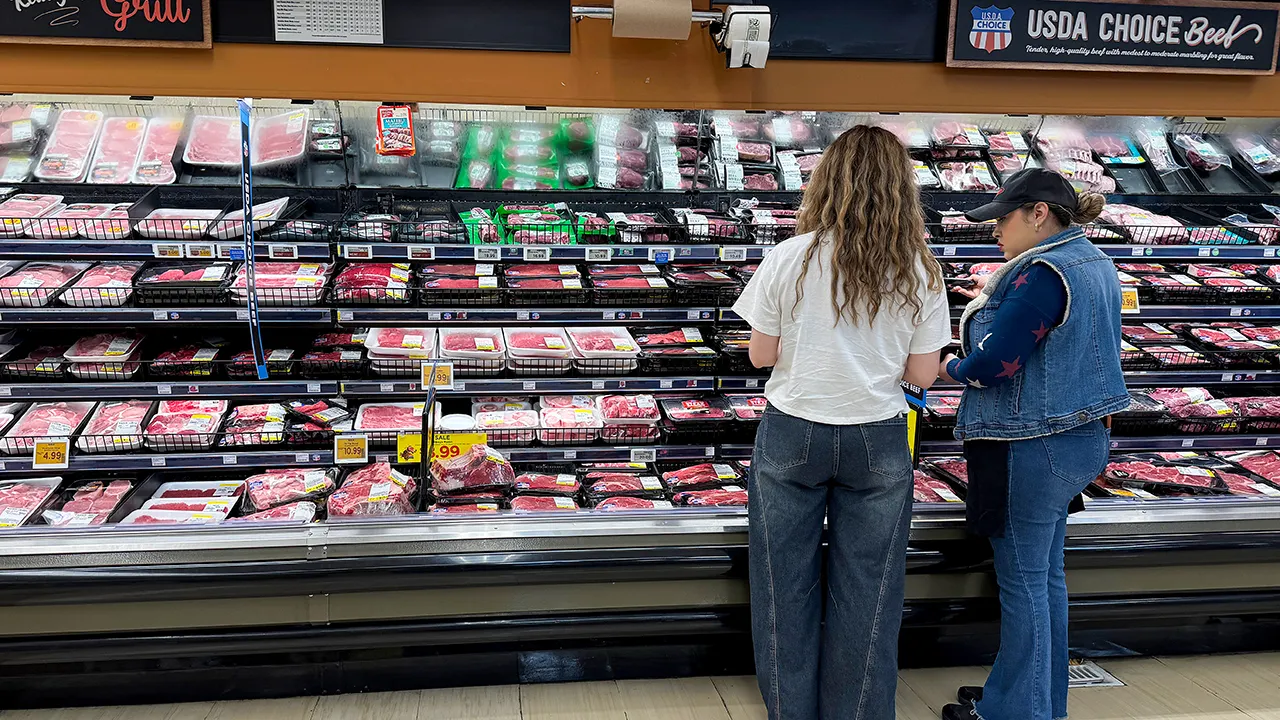
While some prices are cooling, the items families rely on most for energy and nutrition — meat and coffee — are seeing sharp increases that wipe out any savings in the bread aisle.
Fourteen of the 25 most common grocery store staples rose in price from February 2024 to February 2026, with the top five largest increases coming from coffee (+55%), lettuce (+39%), ground beef (+31%), sirloin steak (+21%) and orange juice (+15%), according to a new report from CouponFollow that analyzed Consumer Price Index (CPI) data from the past two years.
Coffee was the fastest-rising staple in the study, with a pound of ground roast costing $6.09 in 2024 compared to $9.46 in 2026. Going back to 2020, coffee prices have reportedly increased 123%.
JAMIE DIMON WARNS IRAN WAR COULD DRIVE INFLATION, INTEREST RATES HIGHER
Ground beef has hit $6.74 per pound, a 31% increase from 2024 and 74% above pre-pandemic levels.
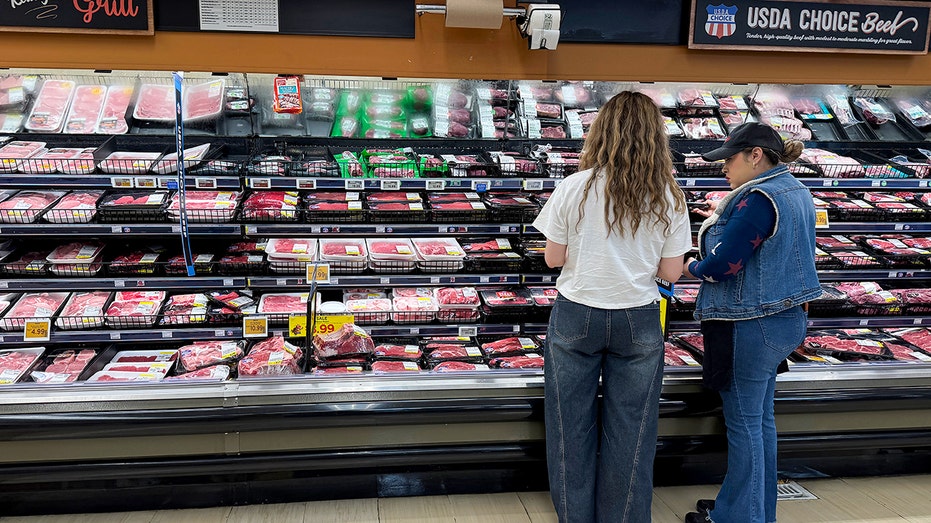
Customers shop for beef at a grocery store on April 6, 2026, in Los Angeles, California. (Getty Images)
With ground beef prices in mind, CouponFollow ran a “taco night test,” tracking specific meal scenarios to show how inflation affects consumers. A family of four is paying nearly $25 just for basic taco ingredients, compared to just $17.50 six years ago.
If you can live on eggs and toast, your bill might be lower than it was two years ago, with egg prices decreasing the most (-17%), followed by white bread (-8%), spaghetti (-8%) and butter (-7%).
Still, the report warns that “the items still climbing are rising fast enough to offset those declines.”
‘The Big Money Show’ discusses the growing trend of young adults getting financial help from their parents.
“Grocery inflation isn’t going away overnight, but small changes to how and where you shop can add up fast. Paying attention to which categories are rising and which are cooling, stocking up on pantry staples when prices dip, and being flexible with pricier proteins are all easy ways to stretch your grocery budget a little further,” CouponFollow notes. “Stacking those habits with coupons and deals can make an even bigger dent in your weekly bill.”
Economic experts have also recently cautioned that high oil prices due to the Iran war are pushing gasoline prices higher, and that could lead to grocery bills rising for American consumers.
The increase in oil, gas and diesel prices raises transportation costs for businesses, including grocery stores, which may face pressure to raise food prices and other items if the situation continues.
GET FOX BUSINESS ON THE GO BY CLICKING HERE
Federal Reserve Board Gov. Michelle Bowman discusses where interest rates are going and the job market performance on ‘Maria Bartiromo’s Wall Street.’
“Every time something moves in the economy, it will cost more,” said Derek Reisfield, co-founder of MarketWatch and a former McKinsey consultant. “Someone, usually the end consumer, will have to pay for that.”
Gregory Daco, chief economist at EY-Parthenon, previously told FOX Business: “For U.S. consumers, what this means is that while there is currently a price shock at the pump being felt directly by consumers, there’s still uncertainty as to how long this shock will last.”
FOX Business’ Eric Revell contributed to this report.

SigmaRoc executives acquire shares through employee plan
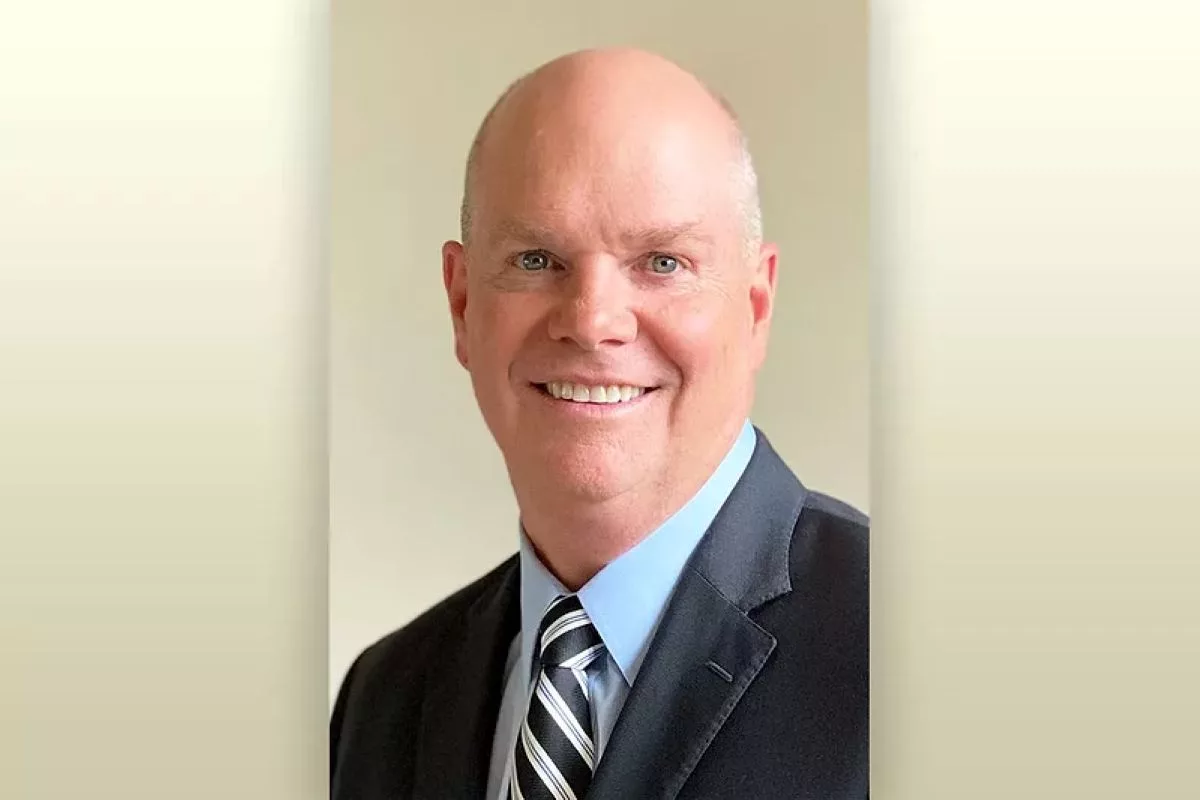

Search for successor to Tom Winters gets underway.
Business
Rainbow Rare Earths Limited 2026 Q2 – Results – Earnings Call Presentation (OTCMKTS:RBWRF) 2026-04-09


Seeking Alpha’s transcripts team is responsible for the development of all of our transcript-related projects. We currently publish thousands of quarterly earnings calls per quarter on our site and are continuing to grow and expand our coverage. The purpose of this profile is to allow us to share with our readers new transcript-related developments. Thanks, SA Transcripts Team

U.S. Money Markets: Slow Calm To Steady State
Epam Systems stock hits 52-week low at $125.53
BlackBerry earnings up next: All eyes on FY27 revenue outlook
The U.S. Tariff Shock In 2025 Vs. 2026 – Same Negative Impact, Different Drivers

The two purchases in Naval Base are part of Main Roads’ plans to make way for the state’s $7.2 billion Westport project.


American Airlines raises checked bag fees, trims economy perks amid soaring fuel prices

Netanyahu faces storm in Israel after Iran ceasefire as critics accuse him of ‘worst political disaster in history’

Coffee and ground beef prices surge most in 2 years, report finds

Nvidia (NVDA) Stock Tests Critical $185 Resistance Amid Iran Ceasefire Uncertainty


-

 NewsBeat7 days ago
Steven Gerrard disagrees with Gary Neville over ‘shock’ Chelsea and Arsenal claim | Football
-

 Business7 days ago
No Jackpot Winner and $194 Million Prize Rolls Over
-

 Fashion6 days ago
Weekend Open Thread: Spanx – Corporette.com
-

 Business5 days ago
Expert Picks for Every Need
-

 Business4 days ago
Three Gulf funds agree to back Paramount’s $81 billion takeover of Warner, WSJ reports
-

 Sports5 days ago
India men’s 4x400m and mixed 4x100m relay teams register big progress | Other Sports News
-

 Tech2 days ago
How Long Can You Drive With Expired Registration? What Florida Law Says
-
Business4 days ago
No Jackpot Winner, Prize to Climb to $231 Million
-

 Fashion3 days ago
Massimo Dutti Offers Inspiration for Your Summer Mood Board
-

 Tech7 days ago
Commonwealth Fusion Systems leans on magnets for near-term revenue
-

 Fashion2 days ago
Let’s Discuss: DEI in 2026
-
Politics6 days ago
Wings Over Scotland | The quality of mercy
-

 Business5 days ago
Akebia Therapeutics, Inc. (AKBA) Discusses Pipeline Progress and Strategic Focus on Kidney Disease Treatments at R&D Day – Slideshow
-

 Fashion7 days ago
Statement Sunglasses: The Accessory Shaping Modern Fashion
-

 Crypto World1 day ago
Bitcoin recovers as US and Iran Agree a Ceasefire Deal
-

 Politics7 days ago
East Jerusalem Palestinian families eviction orders
-

 Sports7 days ago
Which German players will make final cut?
-

 Fashion7 days ago
For Love & Lemons’ Spring 2026 Line is for the Romantics
-

 Politics6 days ago
Why so many children are now classified as ‘disabled’
-

 Fashion7 days ago
Coffee Break: Santa Croce Tote
You must be logged in to post a comment Login