
Business
The Significance of Thoughtful Approaches in Cross-Cultural Emotional Intelligence


Awe is valued in Western wellness for its health benefits but can evoke mixed feelings across cultures. Research indicates it may not universally enhance wellbeing, complicating its application in mental health and leadership.
Key Points
- Awe has become an emotional currency in Western wellness, praised for enhancing mental and physical health, social interactions, and prosocial behavior. However, it can evoke both positive and negative feelings across cultures.
- Cross-cultural research reveals that while awe is often positive in Western contexts, it can induce fear and tension in cultures like China. This challenges the notion of awe as a universally positive emotion.
- Studies with over 2,500 diary entries show that cultural context significantly influences the emotional response to awe, raising important questions about its application in mental health programs and marketing worldwide.
Awe has increasingly become recognized as an essential emotional currency within Western wellness communities, celebrated for its potential to enhance mental and physical health and foster improved social interactions. Research indicates that experiences of awe are linked to positive outcomes such as increased prosocial behavior, heightened curiosity, humility, and overall well-being, as well as potential reductions in post-traumatic stress disorder (PTSD) symptoms. However, cross-cultural investigations reveal that awe does not elicit universally positive responses; rather, it can evoke both uplifting and distressing emotions. This dichotomy raises critical questions about the universal applicability of awe as a beneficial emotional experience.
In a recent series of cross-cultural studies co-authored by researchers from various academic backgrounds, evidence has emerged suggesting that awe’s emotional impact may differ significantly across cultural contexts. Utilizing data from daily emotion diaries and physiological measurements, the studies reveal that while awe is often perceived positively in Western cultures, particularly in the United States, individuals in China may experience awe accompanied by feelings of fear or apprehension. This challenges the longstanding assumption that awe invariably cultivates connection or enhances well-being.
The implications of these findings extend to several domains, including mental health initiatives, leadership training, and global marketing strategies, necessitating a reevaluation of how awe is conceptualized and utilized across cultures. As psychologists Dacher Keltner and Jonathan Haidt define awe as an emotion resulting from encounters with vast and mind-bending experiences, the research underscores that the initial spark of awe may be consistent globally, yet the subsequent emotional response can diverge dramatically depending on cultural interpretations.
The first study, which analyzed over 2,500 diary entries from a cohort of 166 university students across China and the United States over a two-week period, serves to illustrate these nuanced emotional variances. This critical exploration of awe invites a broader understanding of emotional intelligence across cultures, highlighting the necessity for sensitivity in applying awe in various contexts.
Read the original article : Reinterpreting ‘awe’: why cross‑cultural emotional intelligence needs to be handled with care
Other People are Reading


SYDNEY — Rhoda Roberts AO, one of Australia’s most influential Indigenous arts figures, died on March 21, 2026, at age 66 after a battle with stage 4 cancer. The Bundjalung woman from northern New South Wales left an indelible mark on theatre, festivals, broadcasting and cultural advocacy, pioneering First Nations storytelling and protocols that reshaped Australian arts.

Born Rhoda Ann Roberts in 1960 in Sydney’s Canterbury Hospital, she grew up in Lismore amid a family of activists and achievers. Her father, Frank Roberts, was a civil rights advocate and pastor, while her cousin Francis “Frank” Roberts became Australia’s first Aboriginal Olympian. Facing discrimination and limited educational opportunities, she left school after Year 10, trained as a nurse and graduated in 1979 before pivoting to the arts in the mid-1980s.
Here are five essential aspects of her remarkable life and legacy:
1. **Pioneer of Indigenous Theatre and Festivals**
Roberts co-founded the Aboriginal National Theatre Trust in 1987–1988, one of the earliest platforms dedicated to Aboriginal performers and stories. She founded and directed the Festival of the Dreaming (1997), Sydney Dreaming Festival and the long-running Dreaming Festival (1995–2009), events that celebrated contemporary Indigenous culture on national and international stages. She also served as cultural advisor for the 2000 Sydney Olympics, Garma Festival director in 2010 and creative force behind Parrtjima Festival in Alice Springs, Boomerang Dreaming at Bluesfest and Shine on Gimuy in Cairns. Her work elevated First Nations voices in major events like the Rugby World Cup 2003 handover and Dubai Expo 2021.
2. **Trailblazer in Broadcasting and Media**
Roberts broke barriers as one of the first Aboriginal presenters on prime-time television and worked extensively in radio, television and journalism. She produced documentaries such as “In the Gutter… No Way” (1989) for SBS and held roles with Network Ten and ABC Radio. She received a Deadly Award for Broadcasting in 1998 and served as Elder in Residence for SBS and NITV. Recently appointed cultural lead for the Koori Mail newspaper, she remained a sought-after voice on Indigenous issues through her writing, speaking and consulting.
3. **Innovator of Welcome to Country Protocols**
Widely credited with popularizing and formalizing the Welcome to Country ceremony now integral to Australian public life, Roberts advocated for respectful acknowledgment of Traditional Owners. Her efforts ensured these protocols became standard at events, institutions and official gatherings, fostering greater cultural awareness and respect. Tributes highlighted this as one of her most enduring contributions to national reconciliation.
4. **Acclaimed Performer and Storyteller**
Roberts acted in films including Wim Wenders’ “Until the End of the World” (1991), “Stones of Death” (1988) and television series like “Blue Heelers” (1994). She performed in stage works such as Louis Nowra’s “Radiance” (1993 revival), “Please Explain” (1998) and “Bible Boxing Love” (2008). In recent years, she wrote, directed and starred in her acclaimed one-woman show “My Cousin Frank,” which premiered in 2024 with NORPA and returned to the Sydney Opera House in December 2025. The production shared the story of her cousin, the pioneering Olympian, and her family’s history on Cabbage Tree Island and Cubawee reserve.
5. **Honored Advocate Facing Personal Challenges**
Roberts received the Order of Australia (AO) for distinguished service to the performing arts, leadership, advocacy and promoting contemporary Indigenous culture. Other accolades included the Ros Bower Award (2019), Helpmann Awards’ Sue Nattrass Award (2018) and Sidney Myer Facilitators Award (1997). Diagnosed with stage 4 cancer in late 2025, she faced the illness with characteristic resilience. A tribute event at the Sydney Opera House in December 2025 drew 200 attendees, including prominent figures like the Governor-General, Prime Minister and arts leaders, to celebrate her life while she was still present. A GoFundMe raised support for medical costs and family needs, reflecting her deep community ties. She continued as First Nations Creative Director for NORPA, consultant with NIDA and practicing weaver until her final days.
Roberts’ influence extended to boards like the Sydney Opera House Trust (former), Indigenous Tourism Australia and MusicNSW. She lived on a 100-acre farm in northern NSW with partner Steven Field, embodying a holistic commitment to culture, family and legacy.
Tributes poured in following news of her death, with colleagues describing her as a “game changer,” “national treasure” and force for Indigenous excellence. Her work bridged commercial, community and non-profit sectors, inspiring generations of artists and advocates.
As Australia reflects on her contributions, Roberts’ legacy endures in the festivals she founded, the protocols she championed and the stories she told — ensuring First Nations voices remain central to the nation’s cultural narrative.

Tiegan Parry says The Bread and Butter Thing, in Boston, eases financial pressures on her family.
Business
Is Lebron James Still the Lakers True Leader? Austin Reaves Praises LeBron James as Lakers’ True Leader

LOS ANGELES — Austin Reaves, the Los Angeles Lakers’ breakout guard, recently called LeBron James the “real leader” of the team, emphasizing the four-time NBA champion’s selfless play, basketball IQ and example-setting presence even as Luka Doncic has taken on the primary scoring and playmaking role.

In a post-game interview following the Lakers’ victory over the Chicago Bulls earlier this month, Reaves highlighted James’ adaptability after returning from a brief injury absence. “He’s one of the smartest guys to ever play the game of basketball,” Reaves said. “His ability to adapt and to figure out what the game needs is second to none. … When you got a player of that stature who’s willing to play the way the game needs him to play, that just shows how selfless he is and just is a leader by example for everybody in this locker room.”
The comments came as the Lakers navigated a shifting hierarchy following last season’s blockbuster trade that brought Doncic from the Dallas Mavericks. With Doncic establishing himself as the top option — often leading in points, assists and usage — and Reaves emerging as a reliable second scorer and ball-handler, James has willingly adjusted his role. Coach JJ Redick has engineered lineups that lower James’ usage to historic lows for the superstar, prioritizing Doncic and Reaves in pick-and-roll actions and late-game situations.
LeBron himself reinforced this dynamic after a recent win over the Houston Rockets, where Doncic dropped 40 points. “We have guys who have been in big games before. AR and Luka are two of our closers, and we just all try and sprinkle in, and do what we need to do defensively to help those guys out,” James told reporters. The statement aligned with reports that the Lakers are building “Dallas 2.0” around Doncic and Reaves long-term, though sources indicate both younger stars want James to remain beyond this season.
Reaves’ praise underscores James’ enduring influence despite the statistical shift. At 41, James averages 21.4 points, 5.7 rebounds and 7.0 assists on 50.5% shooting this season, numbers that reflect efficiency over volume. Reaves pointed to specific moments against the Bulls: James setting screens, crashing for offensive rebounds (including an and-1) and finishing behind defenses — contributions that don’t always show in box scores but fuel team success.
The Lakers sit 41-25 as of mid-March 2026, holding fourth in the Western Conference and riding a strong stretch fueled by veteran buy-in. A $16 million role player has exemplified the selfless culture James promotes, contributing to a dominant run where the trio has found balance. Analysts note the team performs exceptionally when Doncic and Reaves share primary responsibilities, with James providing spacing, facilitation and defensive versatility.
Earlier concerns about lineup fit — ESPN’s Brian Windhorst once said the three together weren’t effective — have eased as synergies develop. Locked On Lakers discussions highlight how Reaves’ elevated on-ball role and James’ reduced usage create better spacing and fewer turnovers. Reaves has thrived in this setup, averaging 23.85 points, 4.78 rebounds and 5.5 assists across recent games, often excelling in Doncic-James absences (posting 44.3 PPG in three such contests last season).
James’ leadership extends beyond stats. Reaves has repeatedly called him the smartest player he’s played with, crediting daily joy, positivity and mentorship. In one instance, during a timeout, James declared “I’m not tired” — a moment Reaves cited as motivational. “LeBron said ‘I’m not tired’ … and that was enough,” Reaves recalled in a team huddle anecdote.
The dynamic has sparked debate about the future. Reports suggest the Lakers may move on from the James era post-season, focusing on Doncic and Reaves as cornerstones. Yet Reaves’ words affirm James’ locker-room stature. “Follow the leader,” he said in reference to James’ example, per recent reports.
As the playoffs approach, the Lakers’ success hinges on this balance. James’ willingness to sacrifice — accepting a third-option role in key stretches — has enabled Doncic’s dominance and Reaves’ growth. The guard’s public endorsement reinforces that leadership isn’t measured solely by touches or points but by impact, adaptability and team-first mentality.
With the season heating up, Reaves’ comments serve as a reminder: While Doncic drives the offense and Reaves provides secondary creation, James remains the guiding force in the Lakers’ locker room.

The fine art, Persian rugs and luxury furniture of William and Rose Porteous will go on sale this weekend, as the couple look to offload several “valuable” items from their collections.
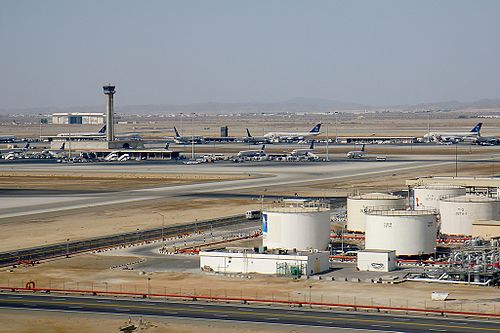
JEDDAH — King Abdulaziz International Airport (JED/OEJN), Saudi Arabia’s busiest gateway and a major hub for Hajj and Umrah pilgrims, continues to operate with scheduled commercial flights on March 21, 2026, despite ongoing regional security challenges stemming from the escalating conflict involving Iran, the United States and Israel.
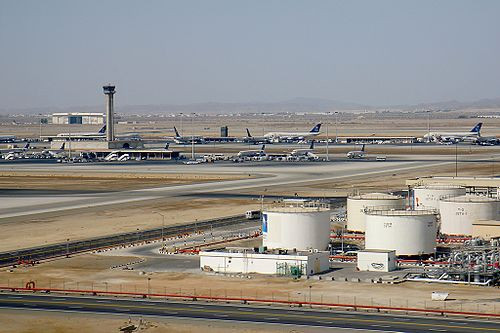
Live flight tracking data from multiple sources, including the official airport website (kaia.sa), Flightradar24, FlightAware and Trip.com, confirm active arrivals and departures throughout the day. As of early morning local time (GMT+3), departures include long-haul services such as Saudia SV 976 to Hong Kong scheduled for 06:00, Flyadeal FAD 9118 to Abuja at 05:00 and Flynas XY 697 to Bishkek at 05:00. Arrivals feature routes from Nairobi (Saudia SV 948), Karachi (Airblue ABQ 170) and Berlin (Flynas XY 644), with many flights listed as on time or experiencing only minor delays.
The airport’s official flights page shows hundreds of scheduled operations, with real-time updates indicating low overall impact — around 2% disruption on recent days according to Wego tracking. FlightAware and FlightStats report dozens of arrivals and departures in the early hours, including international carriers like Turkish Airlines codeshares and regional low-cost operators. No blanket closure has been announced by the General Authority of Civil Aviation (GACA) or Jeddah Airports Company, which manages the facility.
A travel alert posted on the KAIA website urges passengers to “check directly with their airlines for the latest flight updates before leaving for the airport” due to “current developments.” The advisory highlights potential adjustments from regional events but stops short of any suspension notice. Sustainability and service pages remain active, promoting parking bookings and passenger rights information.
The airport has handled increased traffic in recent weeks as Saudi Arabia positions itself as a key transit hub amid widespread disruptions elsewhere in the Gulf. Reports from Asharq Al-Awsat and other outlets note a surge in rerouted flights using Saudi airspace and airports after closures or severe restrictions in Dubai, Doha, Abu Dhabi and other neighboring hubs. Saudi carriers like Saudia and Flynas have maintained core domestic and select international routes while extending suspensions to certain conflict-adjacent destinations through late March.
Earlier in the month, temporary measures affected operations. Saudia and others canceled or postponed flights to cities like Dubai, Doha, Bahrain, Kuwait and Amman amid initial airspace safety assessments following missile exchanges and drone threats. By mid-March, however, major Saudi airports — including Jeddah, Riyadh (RUH) and Dammam (DMM) — returned to largely normal schedules, facilitating repatriation charters and commercial services. GACA reported handling over 120 flights from regional carriers between late February and mid-March to support continuity.
Unlike Kuwait International Airport, which faces prolonged closure due to reported infrastructure damage from drone incidents, Jeddah’s King Abdulaziz has avoided direct impacts. No confirmed strikes or significant damage have been reported at JED, though heightened security includes enhanced radar monitoring and coordination with military authorities. Passenger volumes remain robust, with the airport previously setting records for throughput and continuing to serve as a vital link for pilgrims and business travelers.
Delays do occur sporadically — FlightEra notes average departure delays around 44 minutes and arrivals at 76 minutes in recent periods, with low cancellation rates (4-5%). Weather conditions in Jeddah remain favorable, with scattered clouds, mild winds and good visibility contributing to smooth operations.
For travelers, the situation requires vigilance. Airlines recommend confirming status via official apps or websites, as dynamic routing and overflight permissions can lead to last-minute changes. Saudia, the primary operator at JED, has emphasized safety-first adjustments, while low-cost carriers like Flynas and Flyadeal maintain extensive domestic networks.
The broader Middle East aviation landscape remains volatile. Airspace over Iran, Iraq, Syria and parts of the Gulf faces intermittent restrictions, forcing longer routings over Saudi territory or the Arabian Sea. This has increased fuel costs and flight times but allowed Jeddah to absorb overflow traffic.
As the conflict enters its third week, no escalation has directly threatened Jeddah’s operations. Authorities continue emergency coordination, with focus on stranded passengers and logistical support. International advisories from the U.S. State Department and others urge caution in the region but do not prohibit travel to Saudi Arabia outright.
Passengers planning to use King Abdulaziz International Airport today or in coming days should monitor real-time sources: the KAIA flights portal, airline apps and trackers like Flightradar24. With hundreds of flights proceeding, the airport stands open and functional, serving as a stable anchor in an otherwise disrupted regional network.

Iran fires missiles toward US-UK base in Indian ocean, Iran’s Mehr says

Fourteen stocks from the BSE SmallCap index declined continuously over five trading sessions ending March 20, with losses of up to 23%. Despite the Sensex remaining largely flat, sharp volatility during the period highlights continued pressure in broader markets, particularly in smallcap stocks witnessing sustained selling across consecutive sessions.

Beijing courts Eli Lilly as weight-loss drug race drives $3bn China commitment
Business
IDBI, SpiceJet among 10 stocks that saw sharpest fall, down up to 21% this week. Do you own any?
Indian markets witnessed a broad-based sell-off amid escalating Middle East tensions and rising crude oil prices. Several stocks, including IDBI Bank and SpiceJet, declined sharply during the week. Geopolitical risks, inflation concerns, and regulatory developments weighed on investor sentiment, dragging multiple sectors lower despite selective resilience in parts of the market.
Business
Looking around for sectors or themes to favour and avoid? Here is what these 5 experts recommend
Amid rising geopolitical tensions and market volatility, investors are reassessing sectoral allocations. Mutual fund experts suggest focusing on domestic cyclicals, financials, and defensives like pharma, while remaining cautious on IT, metals, and oil and gas. They also highlight valuation risks and stress the importance of resilient businesses in uncertain conditions.

Raptors fall short against Nuggets but remain confident momentum is building

PicoPal Is the Transparent Game Boy Color Remake Nobody Knew They Needed

Saturday Night Live UK: Meet the cast taking centre stage on the British SNL


-

 Tech5 days ago
Your Legally Registered ‘Motorcycle’ Might Not Count Under Proposed US Law
-

 Politics14 hours ago
Jenni Murray, Long-Serving Woman’s Hour Presenter, Dies Aged 75
-
 Tech4 days ago
Are Split Spacebars the Next Big Gaming Keyboard Trend?
-
Sports7 days ago
Why Duke and Michigan Are Dead Even Entering Selection Sunday
-

 Fashion14 hours ago
Weekend Open Thread: Adidas – Corporette.com
-

 Business6 days ago
Search for Savannah Guthrie’s Mother Enters Seventh Week with No Arrests
-

 Business7 days ago
US Airports Launch Donation Drives for Unpaid TSA Workers as Partial Government Shutdown Enters Fifth Week
-
 Crypto World7 days ago
Coinbase and Bybit in Investment Talks: Could Bybit Finally Enter the US Crypto Market?
-
 Crypto World9 hours ago
NIO (NIO) Stock Plunges 6.5% as Shelf Registration Sparks Dilution Worries
-

 Business5 days ago
Australian shares drop as Iran war enters third week
-

 Business7 days ago
Country star Brantley Gilbert enters growing non-alcoholic beer market
-

 Politics3 days ago
The House | The new register to protect children from their abusers shows Parliament at its best
-

 Crypto World5 days ago
Crypto Lender BlockFills Enters Chapter 11 with Up to $500M in Liabilities
-

 News Videos3 days ago
RBA board divided on rate cut, unusually buoyant share market | Finance Report | ABC NEWS
-

 Fashion5 days ago
25 Celebrities with Curly Hair That Are Naturally Beautiful
-

 Tech1 day ago
inKONBINI Lets You Spend Summer Days Behind the Register
-

 Crypto World3 days ago
Canada’s FINTRAC revokes registrations of 23 crypto MSBs in AML crackdown
-
 Politics4 days ago
Real-time pollution monitoring calls after boy nearly dies
-

 Crypto World7 days ago
Crypto Losses Drop 87% in February, But Hackers Are Now Targeting People, Not Code
-
 NewsBeat2 days ago
Residents in North Lanarkshire reminded to register to vote in Scottish Parliament Election


You must be logged in to post a comment Login