Connect with us
DAPA Banner

Business

The Top Picks Defining Play at the Start of 2026

Published

on

The Top Picks Defining Play at the Start of 2026

Rainbow Six Siege is entering 2026 in full force. Last year we saw the game reinvent itself with the release of Rainbow Six Siege X, which not only introduced new systems, like destroyable traps already implemented into the environment, but also a brand-new mode; “Dual Front” took the game’s iconic style and changed its formula for a nice change of pace.

If the thing stopping you from playing the game is that you think you would feel lost in a sea of experienced players that already know the top operator picks, then this article is for you! We will list the current top operator picks so that you can jump into the competition with all the needed knowledge. And if you want to skip the level grinding until you can actually join in on the competitive mode fun, consider getting Rainbow Six Siege rank boosting. This will skip you ahead both in level and rank so that you don’t have to wait for the good stuff.

Understanding the Current Meta

Before focusing on individual operators, it’s worth stepping back. Siege, in its current state, rewards patience, planning, and adaptability. Early-round information gathering frequently determines what the round might look like, while late-round success often comes down to how much utility each side still has available.

Attackers thrive when they can scout safely, dismantle defensive setups, and control flanks. Defenders succeed by slowing the game down – blocking sightlines, forcing attackers to burn resources, and shaping engagements on their own terms.

The operators below fit cleanly into that framework.

Advertisement

Top Attacking Operators Entering 2026

Iana – Safe Intel, Real Impact

Iana remains one of the most influential attackers in the game. Her Gemini Replicator offers something every attacking lineup values: information without immediate risk. Sending a holographic clone into contested space allows teams to gather intel, bait utility, and reveal defender positioning before committing real players.

Her strength goes beyond the gadget. Iana’s flexible loadout allows her to transition smoothly from early-round scouting into late-round pressure. She supports entry players, enables coordinated pushes, and still holds her own in gunfights when needed.

In a meta built on information control, Iana continues to feel essential.

Ace – The Standard for Modern Hard Breaching

Hard breaching remains a cornerstone of Siege, and Ace continues to set the standard. His SELMA Aqua Breachers provide controlled, adaptable destruction that fits perfectly into utility-heavy attacks.

Advertisement

Rather than committing to a single large opening, Ace can apply pressure in stages – forcing defenders to react, reposition, or burn denial utility early. That flexibility is invaluable against layered defensive setups, where forcing mistakes often matters more than speed.

Ace’s consistency and reliability make him one of the safest attacking picks entering the year.

Nomad – Movement Denial and Tempo Control

Nomad’s value has steadily increased as Siege has become more focused on timing and space. Her Airjabs punish careless rotations, shut down flanks, and force defenders to move cautiously.

Beyond simple flank watch, Nomad shapes how defenders approach retakes and late-round positioning. Airjabs placed thoughtfully can isolate defenders, delay aggression, or outright stop last-second pushes.

Advertisement

In a game where seconds matter, Nomad controls the clock as much as the map.

Brava – Utility Warfare Redefined

Brava represents a newer design philosophy in Siege – one that turns defense into offense. Instead of destroying defender gadgets, her Kludge Drone converts them, transforming cameras, traps, and denial tools into assets for attackers.

In a meta filled with electronic utility, this ability is especially powerful. Defenders must constantly weigh the risk of deploying gadgets that could later betray them. The psychological pressure alone can change how defensive setups are built.

Brava doesn’t just remove utility. She flips the script, and that makes her one of the most disruptive attackers entering 2026.

Advertisement

Sledge – Simple Tools, Lasting Value

Despite the rise of complex gadgets and layered strategies, Sledge remains relevant through sheer practicality. His hammer enables fast, reliable soft destruction, opening vertical angles and clearing utility without overthinking the process.

Sledge’s strength lies in how naturally he fits into almost any lineup. He doesn’t demand specific setups or coordination to be effective, yet he rewards teams that know how to leverage vertical pressure.

At a time when Siege can feel increasingly complex, Sledge proves that fundamentals still win rounds.

Top Defending Operators Entering 2026

Azami – Redefining Map Control

Azami

Advertisement

continues to shape the defensive meta more than almost any other operator. Her Kiba Barriers allow defenders to create cover where none existed, block critical sightlines, and alter how attackers approach objectives.

What makes Azami so impactful is her flexibility. She can support anchors, enable aggressive holds, or reinforce unusual positions that attackers struggle to clear efficiently. No two setups look the same, which keeps attackers guessing.

In a game defined by preparation, Azami’s ability to reshape the battlefield remains unmatched.

Jäger – Consistency in a Changing Game

Jäger has been part of Siege’s identity for years, and his relevance hasn’t faded. His Active Defense System neutralizes throwables, reducing the effectiveness of grenades, flashes, and other key attacker tools.

Advertisement

While his role may seem straightforward, its importance cannot be overstated. Utility denial forces attackers to adapt, slow down, and reconsider their approach. Jäger’s presence quietly influences how entire attacks are structured.

He may not dominate highlight reels, but his impact is constant.

Solis – Shutting Down Attacker Information

Information drives modern Siege, and Solis attacks that foundation directly. Her ability to detect drones and electronic devices gives defenders an edge during both preparation and execution phases.

By denying intel early, Solis forces attackers to operate with uncertainty. That lack of information often leads to cautious play, mistimed pushes, or costly mistakes later in the round.

Advertisement

In a meta where attackers rely heavily on drones, Solis feels increasingly indispensable.

Mira – Controlled Vision, Lasting Threat

Mira remains a powerful defensive tool thanks to her Black Mirrors. Properly placed, they provide defenders with unmatched visibility and control over key areas of the map.

Her effectiveness scales with communication. Teams that coordinate around Mira setups can hold sites with precision, forcing attackers into awkward angles and predictable pushes.

Even years after her introduction, Mira continues to influence how objectives are defended.

Advertisement

Smoke – Late-Round Authority

Smoke’s role has stayed remarkably consistent – and remarkably effective. His gas canisters excel at denying space during critical moments, particularly in the final seconds of a round.

When time is low and attackers are forced to act, Smoke thrives. His ability to stall plants, block entrances, and force movement makes him one of the strongest anchors in Siege.

In a meta defined by patience, Smoke controls the endgame.

What This Meta Says About Siege in 2026

Taken together, these operators highlight where Rainbow Six Siege is heading. The game increasingly rewards teams that value information, space control, and efficient utility usage over raw aggression.

Advertisement

Attackers succeed by gathering information, as always, as well as disarming enemy traps and controlling the surrounding movement. Defenders, on the other hand, have to shape the map, denying intel tools from the attackers and trying to force the enemy into attacking you from where you want them to.

Classic operators still matter, but they succeed alongside newer designs that emphasize creativity and adaptability.

FAQs

What defines the Rainbow Six Siege meta entering 2026?

The meta focuses on utility usage, information control, and map manipulation rather than pure gunfights.

Are these operators good for ranked play?

Yes. All of the operators mentioned are effective in ranked matches. Whether playing solo or in a coordinated team, you will notice a R6 Siege rank boost if you master them.

Advertisement

Is hard breaching still essential in Siege?

Yes. Operators like Ace remain crucial for opening reinforced walls and creating key sightlines.

Final Thoughts

Right now, Siege is very well-balanced, as the developers are making an effort to make the older operators catch up in tech with the newer ones. So if your favorite operator didn’t make the list, it doesn’t mean they’re bad. However, the operators that did make the list shine consistently across most maps and modes and are easy to understand and master regardless of your level.

And as always, the meta will continue to evolve – but for now, these are the operators leading the way into the new year that can get you that R6 Siege rank boost you’re looking for.

Advertisement

Continue Reading
Click to comment

You must be logged in to post a comment Login

Leave a Reply

Business

Regional sports networks are faltering even as ratings soar

Published

on

Regional sports networks are faltering even as ratings soar

Yoshinobu Yamamoto #18 of the Los Angeles Dodgers and Donald Glover greet Yoshi after throwing out the first pitch before a baseball game against the Cleveland Guardians at Dodger Stadium on March 31, 2026 in Los Angeles, California.

Ryan Sirius Sun | Getty Images Sport | Getty Images

A group of regional sports networks is set to wind down, marking the demise of a once lucrative business and leaving the fate of local baseball, basketball and hockey broadcasts in the balance — even as live sports command the highest TV ratings.

Advertisement

RSNs have felt arguably the greatest pressure from the losses that plague the pay TV bundle as consumers switch to streaming. Now, the model is in rapid decline.

Last week, as the 2026 MLB season got underway, the league announced it was taking over media distribution for 14 teams. In large part, this was the result of the inevitable wind down of Main Street Sports – formerly Fox Sports networks, which have been through different owners since 2019 and several name changes since 2021.

Main Street emerged from bankruptcy protection in late 2024, and despite touting subscriber growth as recently as last spring, the operator faced another liquidity crunch earlier this year when MLB rights payments were due, according to people familiar with the matter.

Main Street owned roughly 15 channels, but at one point aired 30 MLB, NHL and NBA teams after exiting bankruptcy.

Advertisement

Though the company was in sale talks earlier this year with the likes of DAZN and Fubo, the discussions never amounted to a deal, according to the people. 

Rumors of liquidation circulated — in the middle of the NBA and NHL seasons — but Main Street has so far been able to stave that off. Instead, MLB teams went their separate ways at the beginning of the season – some shifting to MLB distribution, and some like the Anaheim Angels and Atlanta Braves are taking over the production and distribution of their own regional channels.

The NBA and NHL regular seasons are expected to be completed through their current Main Street-owned networks – now branded as FanDuel Sports networks. But after the NBA regular season and the first round of the NHL playoffs, Main Street plans to begin an earnest end-of-business process, one of the people said. 

The future for the remaining NBA and NHL teams are yet to be determined, although some are likely to find homes with broadcast station owners that have been acquiring local rights, such as Scripps, according to a person close to the negotiations. 

Advertisement

And the end of the RSN model doesn’t stop there.  

Get the CNBC Sport newsletter directly to your inbox

The CNBC Sport newsletter with Alex Sherman brings you the biggest news and exclusive interviews from the worlds of sports business and media, delivered weekly to your inbox.

Subscribe here to get access today.

The fees long paid by the networks to host games have propped up professional sports leagues for a long time – especially MLB, known to have some of the most expensive rights fees and the most tonnage of local games. The upending of the RSN model is sure to send ripple effects throughout these teams. 

Advertisement

Those that have already exited the RSN model have sought refuge in direct-to-consumer streaming apps, which are pretty expensive monthly or annual costs for fans, and through agreements with broadcast station owners, which argue they offer the widest reach of any platform for sports games. 

There’s also been an increased emphasis on advertising, but that revenue stream is helpful when it comes to the NBA and NHL, it doesn’t go as far to support MLB, according to industry insiders.

There’s also been little, if any, crossover for MLB teams to the affiliate networks, once again because of the expense and number of games, according to people familiar with the matter. 

Going it alone

While not every channel is made equal, even those airing games for big market teams are facing the same pressures as the Main Street-owned channels — just not as severely. 

Advertisement

Last year MSG Networks, which airs games for the NBA’s New York Knicks as well as the NHL’s New York Rangers, Buffalo Sabres and New Jersey Devils, was facing financial turmoil as it needed to refinance a whopping debt load and dealt with a carriage dispute that resulted in a blackout for nearly two months. Bankruptcy was reportedly on the table until the James Dolan-owned company refinanced its debt. 

Also in the New York-area, SNY, the regional home of the New York Mets, had been exploring its options in the last year, according to people familiar with the matter. The network had earlier put itself up for sale, some of the people said. While no deal was ever reached, sources say Mets owner Steve Cohen was part of the discussions at one point as a potential acquirer. 

The network, which is majority backed by former Mets owners, the Wilpon family, has also counted Comcast and Charter Communications as investors for some time. But in recent months, Comcast sold its stake to Charter for an undisclosed amount, according to people familiar with the matter. 

Comcast owns a handful of networks but has been slowly inching away from the RSN world.

Advertisement

Comcast has also been one of the toughest distributors for RSNs to deal with recently, pushing to move the networks into the tiered model. That would mean subscribers would opt in for the local channels rather than automatically receiving them – and automatically paying for them. 

This had been a sticking point in Comcast’s carriage negotiations last year with the YES Network – a top-tier RSN with some of the highest fees and biggest audiences, as it airs New York Yankees and Brooklyn Nets games. 

Comcast wanted to shift YES to a tiered model; YES refused and argued that the Mets’ SNY is spared from such a contract change. 

Comcast has a long-term carriage deal with SNY that protects it from being tiered through at least 2030, according to people familiar with the deal. Industry insiders surmised that Comcast’s exodus from SNY’s ownership structure freed it from this deal, although sources say nothing has changed on that front. Comcast won’t be returning to the table with YES anytime soon, some of the people said. 

Advertisement

It’s not all bad news: Independent RSNs with big market teams are usually on firmer footing. There’s the Los Angeles Dodgers with their notoriously high priced media rights deal that Charter inherited from its Time Warner Cable deal. 

And then there’s NESN, the network that has the benefit of airing some local games to New England’s rabid fan base, as well as Pittsburgh.

The network has been quick to shake things up. NESN was the first RSN to offer a streaming service, which has offered deals that include Red Sox tickets. Plus, its recently installed CEO, David Wisnia, credits himself as an “outsider” who is “taking a fresh perspective on everything.” 

NESN has changed its cost structure and has sought new revenue opportunities, Wisnia said in an interview.

Advertisement

“It’s reallocating resources and getting out of business that we don’t want to be in,” he said. 

NESN has also revamped its look and expanded programming on its channels, which are usually filled with throwback matchups and essentially dead air outside of games. 

In recent weeks, NESN has been running victory laps that it has broken records for growth on streaming subscription and engagement. The Bruins’ late-season playoff push was a boost, as well as the beginning of the Red Sox 2026 season.

Choose CNBC as your preferred source on Google and never miss a moment from the most trusted name in business news.
Advertisement
Continue Reading

Business

Jackson Hole tops summer 2026 short-term rental bookings, data shows

Published

on

Jackson Hole tops summer 2026 short-term rental bookings, data shows

Some Americans are already locking in their summer travel plans, and this year’s top destination may come as a surprise.

New data from AirDNA, which tracks Airbnb and Vrbo listings, shows Jackson Hole, Wyoming, leading the nation in short-term rental bookings for summer 2026, with 45.5% of properties already reserved between June and August, Realtor.com reported.

Advertisement

Experts say this points to a broader shift in travel preferences.

“We’re seeing a fascinating shift in the short-term rental market for Summer 2026,” Charlie Lankston, executive editor at Realtor.com, told FOX Business in an email. “While a beach house has always been the gold standard, data from AirDNA shows that some travelers are now choosing to trade the ocean for the mountains.”

Jackson Hole’s appeal lies in its mix of outdoor experiences, from whitewater rafting and canoeing to wildlife viewing in Grand Teton National Park, according to Realtor.com.

SAN FRANCISCO AIRPORT EXPECTS MAJOR DELAYS AS FAA RESTRICTS SOME LANDINGS

Advertisement
Grand Teton National Park Jackson Hole wyoming

Jackson Hole and the gateway to Grand Teton National Park on May 28, 2021. (Photo by AaronP/Bauer-Griffin/GC Images)

Here are the top 10 summer destinations based on booked occupancy rates for short-term rentals from June through August 2026, according to AirDNA:

Jackson Hole, Wyoming

Booked occupancy rate: 45.5%

Cape Cod, Massachusetts 

Booked occupancy rate: 44%

Door County, Wisconsin

Booked occupancy rate: 42.6%

Advertisement

Outer Banks, North Carolina

Booked occupancy rate: 41.4%

Outer Banks of North Carolina

An aerial view of Rodanthe on Hatteras Island in Dare County, North Carolina, part of the Outer Banks. (iStock)

Maine beaches 

Booked occupancy rate: 40.7%

ALASKA AIRLINES UNVEILS LIE-FLAT SUITES, UPGRADED PERKS IN NEW INTERNATIONAL BUSINESS CLASS

Newport, Rhode Island 

Booked occupancy rate: 40.4%

Advertisement
Newport, Rhode Island.

A view of Newport, Rhode Island, with the Breakers in the foreground. (Getty Images)

Kenai Peninsula, Alaska

Booked occupancy rate: 40.3%

Maine (Down East/Acadia coast) 

Booked occupancy rate: 40.2%

Michigan west coast 

Booked occupancy rate: 39.4%

Atlantic City/Ocean City, New Jersey

Booked occupancy rate: 38.7%

Advertisement
Aerial view Atlantic City, NJ

Aerial view of the boardwalk and shoreline in Atlantic City, New Jersey. (iStock)

JETBLUE EXPANDS FORT LAUDERDALE HUB WITH NEW DESTINATIONS AND INCREASED FLIGHTS

At the same time, demand is rising sharply in cities set to host matches during the 2026 FIFA World Cup.

“We’re also seeing a World Cup windfall with demand in host cities like Fort Worth and Kansas City increasing drastically,” Lankston told FOX Business.

With hotels in those markets expected to fill quickly, short-term rentals are poised to benefit.

Advertisement

GET FOX BUSINESS ON THE GO BY CLICKING HERE

“Between the $750 host incentives from Airbnb and the surging occupancy rates, the 2026 rental season is shaping up to be a lucrative side hustle for many American homeowners in these metros,” Lankston added.

Continue Reading

Business

One year later, Trump’s tariffs generated billions as refunds emerge

Published

on

One year later, Trump's tariffs generated billions as refunds emerge

One year ago, President Donald Trump launched sweeping global tariffs, ratcheting up trade tensions and fueling new concerns about the U.S. and global economy.

Dubbed “Liberation Day,” the tariffs targeted imports broadly, with Trump arguing they would fix trade imbalances and curb reliance on foreign goods. 

Advertisement

A year later, many of those tariffs have been struck down by the Supreme Court. The federal government is now working on a plan to refund roughly $166 billion in improperly collected duties, with details expected by mid-April.

SUPREME COURT DEALS BLOW TO TRUMP’S TRADE AGENDA IN LANDMARK TARIFF CASE

President Donald Trump holds up a sign showing reciprocal tariffs.

President Donald Trump delivers remarks on reciprocal tariffs during an event in the Rose Garden on April 2, 2025. (Brendan Smialowski/AFP/Getty Images)

On the heels of “Liberation Day,” duties jumped from $9.6 billion in March to $23.9 billion in May following the rollout of the tariffs. 

For fiscal 2025, which ended Sept. 30, collections reached $215.2 billion, according to Treasury data, and the upward trend has continued into fiscal 2026, with receipts already outpacing last year. 

Advertisement

Revenue for the current fiscal year has reached $181.6 billion. Since Trump’s return to office, tariff collections have risen roughly more than 300%, delivering a major windfall to federal coffers. 

TRUMP SAYS US WOULD BE ‘DESTROYED’ WITHOUT TARIFF REVENUE

Tariffs function as a tax on imports, and in many cases, U.S. importers absorb the upfront cost and then pass it along through higher prices for wholesalers, retailers and, ultimately, consumers. That means households and businesses may face increased costs for goods ranging from electronics to raw materials.

Whether tariffs ultimately help or hurt the economy depends on how much of that burden consumers absorb, how domestic producers respond and whether the intended economic or geopolitical advantages are worth the added costs to consumers.

Advertisement

TRUMP CALLS TARIFF OPPONENTS ‘FOOLS,’ PROMISES $2K DIVIDEND PAYMENTS FOR AMERICANS

A demonstrator is seen outside the U.S. Supreme Court during oral arguments on President Donald Trump's trade policy.

A demonstrator outside the U.S. Supreme Court in Washington, D.C., on Nov. 5, 2025. (Eric Lee/Bloomberg via Getty Images)

That dynamic makes the high court’s ruling especially consequential for households and businesses already navigating elevated costs.

CLICK HERE TO GET FOX BUSINESS ON THE GO

Meanwhile, the revenue surge underscores how central tariffs have become to Trump’s economic agenda, with the administration arguing that duty collections can help fund domestic priorities, reduce the nation’s debt and even deliver a proposed $2,000 dividend to Americans.

Advertisement

It’s unclear whether that plan is still on the table.

Continue Reading

Business

Bank of England warns Iran conflict raises risk of UK financial crisis

Published

on

Bank of England warns Iran conflict raises risk of UK financial crisis

The Bank of England has warned that escalating tensions in the Middle East could push the UK towards a financial crisis scenario, as rising energy costs, higher borrowing rates and market volatility expose underlying vulnerabilities in the economy.

In its latest assessment, the Bank’s Financial Policy Committee (FPC) said the Iran conflict has already triggered a “substantial” shock to global markets, tightening financial conditions and increasing inflationary pressures at a time when risks were already elevated.

One of the most immediate impacts is being felt by homeowners. The Bank estimates that around 5.2 million borrowers, more than half of all mortgaged households, are now expected to face higher repayments by 2028, up from 3.9 million before the conflict began.

The increase reflects a sharp shift in market expectations for interest rates, with investors scaling back hopes of cuts and, in some cases, pricing in further rises.

More than 1,500 mortgage products have already been withdrawn from the market as lenders react to increased volatility, further limiting options for borrowers.

Advertisement

Andrew Bailey cautioned that markets may be overreacting to the outlook for rates, but acknowledged that the environment has become significantly more uncertain.

The conflict has disrupted global energy supplies, particularly through the Strait of Hormuz, a key route for oil and gas exports. The resulting surge in energy prices is feeding directly into inflation, raising the prospect of sustained cost pressures across the economy.

The FPC warned that higher inflation would weigh on growth while increasing borrowing costs, creating a challenging environment for both households and businesses.

Fuel prices have already risen sharply, and further increases in household energy bills are expected later in the year, adding to the cost-of-living squeeze.

Advertisement

The Bank also highlighted growing instability in financial markets. Hedge funds have unwound around £19 billion of positions linked to expectations of falling interest rates, contributing to volatility in short-term borrowing costs.

At the same time, the increasing interconnectedness of equity and bond markets, partly driven by hedge fund activity, raises the risk that stress in one area could quickly spread to others.

“A sharp correction in equity markets could transmit stress to gilt markets,” the committee warned, pointing to the potential for broader financial disruption.

Particular concern has been raised about the $18 trillion private credit sector, which has expanded rapidly since the financial crisis and now plays a significant role in corporate lending.

Advertisement

The recent collapse of Market Financial Solutions was cited as an example of vulnerabilities in the sector, including high leverage, limited transparency and optimistic valuations.

Bailey drew parallels with the early stages of the 2008 crisis, noting that initial warnings about isolated problems can sometimes underestimate systemic risks.

The report also flagged rising risks in sovereign debt markets, with governments, including the UK, issuing large volumes of bonds to finance spending.

The UK is expected to spend more than £100 billion this year on debt interest alone, limiting fiscal flexibility and reducing the ability to respond to future shocks.

Advertisement

The FPC warned that the combination of higher borrowing costs and weaker growth could create a “debt trap” for some economies, further amplifying global financial risks.

Despite the warnings, the Bank stressed that the UK’s core financial system remains resilient, with banks well capitalised and capable of absorbing shocks.

However, it cautioned that the combination of multiple pressures, including high household debt, market volatility and geopolitical uncertainty, increases the risk of a more severe downturn if conditions deteriorate further.

The Bank’s assessment underscores the fragility of the current economic environment, where global events are quickly feeding into domestic financial conditions.

Advertisement

For households, the prospect of higher mortgage payments and rising living costs presents a significant challenge. For businesses, tighter financial conditions and weaker demand could constrain investment and growth.

For policymakers, the task is to navigate a narrow path between controlling inflation and supporting economic stability, while preparing for the possibility that the current shock could evolve into a broader financial crisis if multiple risks materialise at once.

Advertisement
Continue Reading

Business

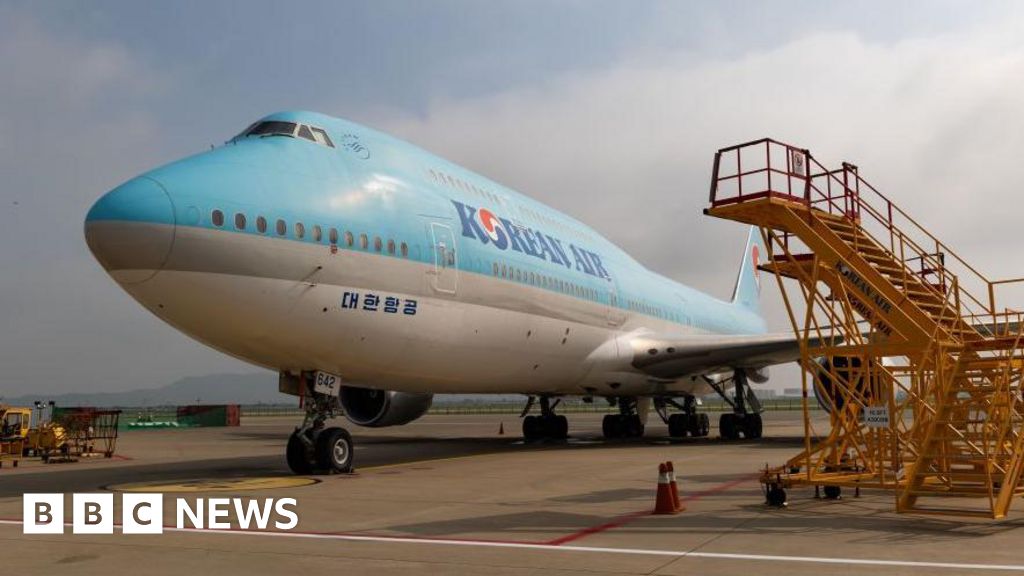
Korean Air takes emergency action as fuel prices soar

Published

on

Korean Air takes emergency action as fuel prices soar

Many airlines are taking measures to deal with the economic impact of the Iran war.

Continue Reading

Business

SEALSQ advances post-quantum chip certification programs

Published

on


SEALSQ advances post-quantum chip certification programs

Continue Reading

Business

Cairnspring Mills earns climate label certification

Published

on

Cairnspring Mills earns climate label certification

Company sources grain exclusively from Pacific Northwest farmers committed to regenerative methods.

Continue Reading

Business

Family offices stall deal-making during Iran conflict

Published

on

Family offices stall deal-making during Iran conflict

Azim Premji, Founder Chairman of Wipro, speaks during the inauguration of the Wipro Hydraulic Plant in Jaipur, Rajasthan, India, on Aug. 22, 2024.

Vishal Bhatnagar | Nurphoto | Getty Images

A version of this article first appeared in CNBC’s Inside Wealth newsletter with Robert Frank, a weekly guide to the high-net-worth investor and consumer. Sign up to receive future editions, straight to your inbox.

Advertisement

Investment firms of ultra-wealthy families dialed back their deal-making in March as the Iran conflict rattled the market.

Family offices made 39 direct investments in companies last month, a 25% drop from February when adjusted for month length, according to data provided exclusively to CNBC by Fintrx, a private wealth intelligence platform.

That said, the family offices that are still inking deals are making bold bets. A quarter of last month’s investments were part of mega-rounds, or fundraises in excess of $100 million, according to Fintrx.

In March, Jeff Bezos‘ namesake family office co-led a $1.03 billion seed round for Advanced Machine Intelligence. Also known as AMI Labs, the new startup is training artificial intelligence models on real-world sensory data, rather than text.

Advertisement

Other boldface-name billionaires such as ex-Google CEO Eric Schmidt and serial entrepreneur Mark Cuban also participated in the fundraise.

This trend of making fewer but larger deals is also playing out with corporate investors.

This past quarter, the total value of global mergers and acquisitions activity rose by 26% compared with the same quarter last year to $1.2 trillion, but the number of deals fell by 17%, according to data from LSEG. The second week of March was the worst week for global M&A in over a year, falling below $33 billion, LSEG found.

However, some family offices continue to be prolific dealmakers.

Advertisement

In March, Indian billionaire Azim Premji’s family office made at least four direct investments in companies, according to Fintrx. Premji Invest’s largest round, which it also led, was a $450 million Series A for Rhoda AI, another startup developing novel ways to train artificial intelligence models. Rhoda AI aims to train industrial robots on hundreds of millions of videos. Kleiner Perkins billionaire John Doerr also backed the round.

Get Inside Wealth directly to your inbox

Choose CNBC as your preferred source on Google and never miss a moment from the most trusted name in business news.
Continue Reading

Business

'I sent eight letters': Drivers hope for payout from car finance redress scheme

Published

on

'I sent eight letters': Drivers hope for payout from car finance redress scheme

Millions of motorists could be entitled to compensation with the financial regulator setting out how to apply

Continue Reading

Business

Sargent Electrical Services starts work on 60-job Beverley factory

Published

on

Business Live

Construction begins on 85,000 sqft advanced manufacturing centre for motorhome and caravan electrical systems

Sargent Electrical hopes to create new jobs for the new factory.

Ian Sargent and Neil Sargent at the Sargent Electrical Advanced Manufacturing Centre site where construction has begun on Grovehill, Beverley

Construction has begun on a new factory for electrical equipment manufacturer Sargent Electrical Services in Beverley. Building crews are now on site at the Grovehill location which will house the company’s Advanced Manufacturing Centre.

Groundworks are currently in progress as part of an initial construction phase for the 85,000 sq ft facility which has been designed to operate predominantly off grid. Crews from Triton Construction are now readying the site for the building’s steel framework, which is anticipated to arrive within weeks.

Family-run Sargent describes the project as a substantial investment and says it will underpin plans to expand its workforce from roughly 140 to 200 employees. The business hopes the new facility will become operational from April next year.

The factory will provide Sargent with additional capacity for its production of electrical systems for motorhomes and caravans. It will also deliver new office accommodation and employee amenities.

Advertisement

Triton has been named as principal contractor and will oversee the entire project, managing all specialist subcontractors and building services using its track record of delivering industrial, logistics and manufacturing developments throughout the North of England, reports Hull Live.

Sargent Electrical is a family-owned business.

The Sargent Electrical Advanced Manufacturing Centre site where construction has begun on Grovehill, Beverley

Paul Clarkson, managing director at Triton Construction, said: “This is a fantastic project for our team and an important investment in advanced manufacturing in East Yorkshire. Triton Construction is ready to deliver this facility and showcase our expertise in the industrial, logistics and manufacturing sectors.

“Having successfully delivered industrial developments across the region for clients including Mileway, Marshalls CPD, Chancerygate and Hanson Logistics, we look forward to bringing that experience to the Sargent Advanced Manufacturing Centre.”

James Burgess, contracts manager at Triton Construction, added: “With construction now underway our focus is on maintaining a safe, well-coordinated programme. We will be working diligently with local residents and other neighbours to be a considerate constructor.”

Advertisement

Ian Sargent, managing director of Sargent Electrical Services, said: “The Advanced Manufacturing Centre represents a major step forward for our business. It will allow us to expand manufacturing capacity, improve efficiency and create a modern facility that reflects our commitment to innovation and sustainability. We are delighted to be working with Triton Construction to deliver this important investment in the future of our business.”

The £14.8m turnover Sargent specialises in constructing intricate wiring systems and, alongside its established niche in motorhomes and caravans, has also achieved notable success on large-scale projects, including several prominent London landmarks. The firm has also developed telemetry-based systems utilised in precision farming, providing farmers with valuable data on soil conditions and other key variables.

Sargent secured planning permission last year for the Grovehill site, which formerly housed a care home. The company currently operates from a unit at Tokenspire Business Park.

Advertisement
Continue Reading

Trending

Copyright © 2025