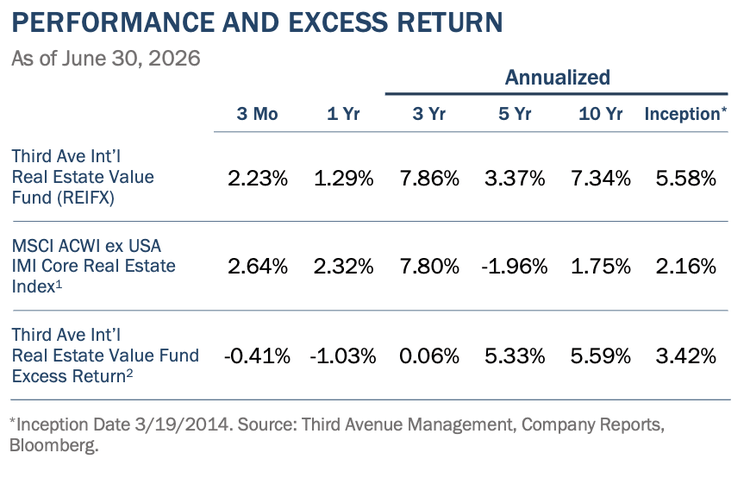
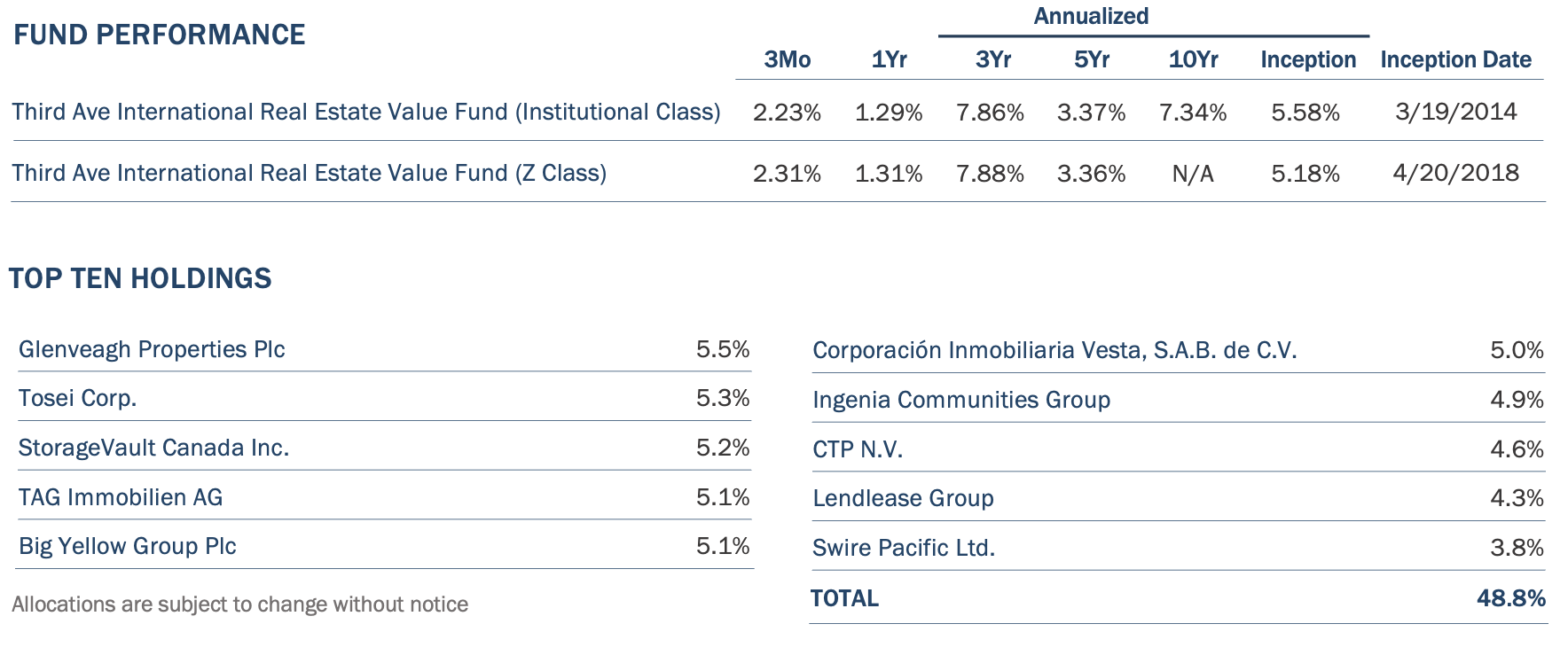
We are pleased to provide you with the Third Avenue International Real Estate Value Fund (the “Fund”) report for the quarter ended June 30, 2026. The Fund delivered a return of +2.23% (after fees) for the quarter, compared with the MSCI ACWI ex USA IMI Core Real Estate Index1 (the “Index”), which returned +2.64% over the same period. Fund Management believes long-term returns are more indicative of relative performance. Over the last 10 years, the Fund has outperformed the Index by 5.59% per year (after fees).
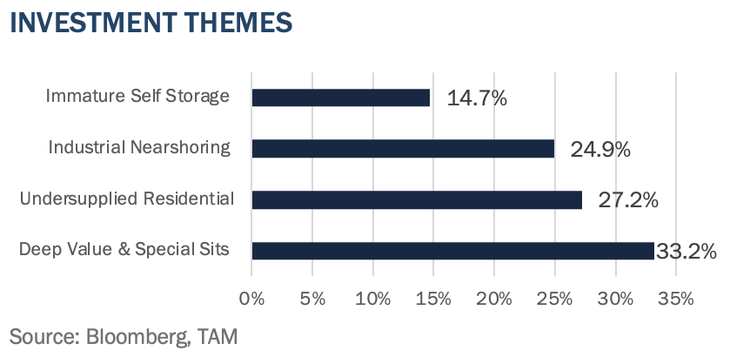
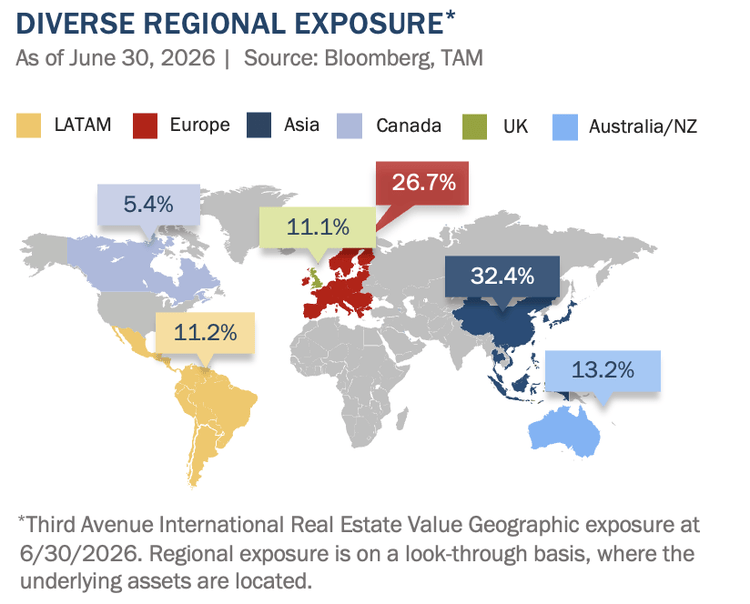
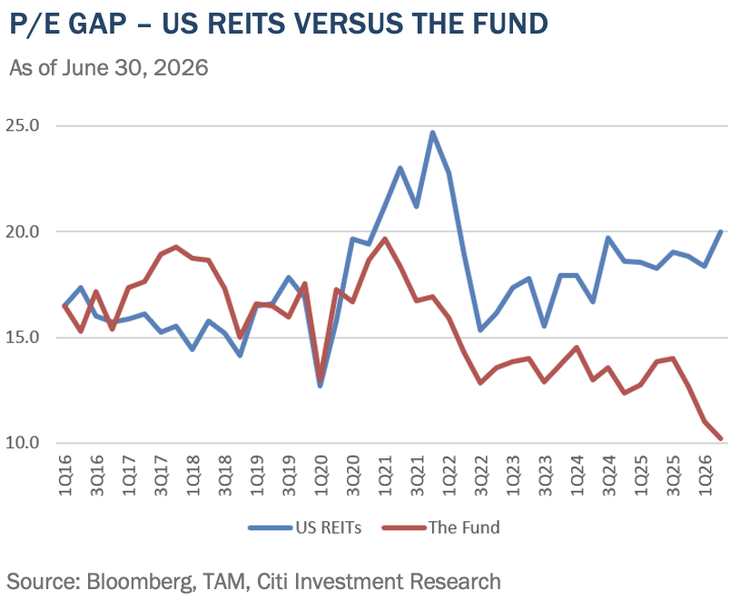
So far this year, dispersion across geographies and asset classes has increased amid ongoing tensions related to the Iran conflict. Fund Management capitalized on this dispersion by establishing two new positions, thereby enhancing the Fund’s exposure to its top two structural themes: persistently undersupplied residential real estate and high-demand industrial real estate. Both investments were made at attractive discounts to intrinsic value. These discounts reflect a broader opportunity shaped by the current market environment. The Fund trades at about 10 times earnings, roughly half the valuation multiple of U.S. REITs, despite similar or better earnings growth. Fund Management believes this valuation gap is unprecedented and unsustainable, and the Fund is positioned to benefit as it closes.
Advertisement
Activity
A new investment in leading Spanish homebuilder Neinor Homes S.A. (NNRHF) (“Neinor”) deepens the Fund’s exposure to a high conviction structural theme: residential real estate markets that are chronically and structurally undersupplied. In Europe, this theme already includes two existing Fund positions — Glenveagh Properties PLC (GLVHF) (“Glenveagh”), an Irish homebuilder focused primarily on Dublin and its commuter belt, and TAG Immobilien AG (TAGOF) (“TAG”), a German and Polish residential owner and developer with a large, stable German rental portfolio and a rapidly growing Polish platform.
Spain, Ireland, and Poland face a long-standing housing deficit that has been growing for over ten years and is now at a critical point. In each market, demand significantly exceeds supply, driven by common factors: (i) economies growing faster than the European average, (ii) structural deficits resulting from years of underbuilding that cannot be quickly fixed, (iii) favorable affordability ratios and low or decreasing mortgage rates, and (iv) government policies broadly supportive of new supply.
Advertisement
Following Neinor’s acquisition of AEDAS Homes last year, which was previously owned by the Fund, the company has become Spain’s largest homebuilder, mainly focused on major cities like Madrid. The combined entity plans to build 5,000–7,000 homes annually, supported by a land bank capable of sustaining production for over six years. The Fund’s investment thesis is based on several factors: (i) strong fundamentals in the Spanish housing market, where new construction is estimated to meet only half of annual new household formations despite rising house prices; (ii) attractive affordability, with the average Neinor homebuyer able to obtain a 30-year mortgage at rates in the low 2% range and home prices less than five times gross income; (iii) an acquisition price for AEDAS below intrinsic value, supported by conservative earnings guidance and multiple resource conversion options to enhance shareholder returns; and (iv) a shareholder return plan, with Neinor aiming for annual dividends exceeding 15% based on the current share price.
The Fund’s exposure to Poland is through its investment in TAG, a German-listed multifamily property operator. TAG owns over 83,000 rental units across Germany, generating consistent cash flow that has helped its expansion into Poland at a low cost of capital. Its Polish business—comprising ROBYG’s build-to-sell projects and Vantage Development’s growing rental portfolio—now makes up nearly half of TAG’s earnings, according to Fund Management. Despite this, Polish revenue remains undervalued at TAG Immo’s current share price. To prove this point, TAG launched an IPO for its Polish homebuilding unit ROBYG after the quarter ended, with shares pricing 25% above TAG’s book value for ROBYG. TAG still owns about two-thirds of ROBYG, with IPO proceeds used to further expand its Polish rental portfolio. This IPO validates some of the value hidden in many of the Fund’s investments. If the market valued TAG based on ROBYG’s current share price, TAG would need to trade approximately 20% higher to align with peer multiples.
Similar to targeted undersupplied residential markets, Fund Management views industrial real estate as one of the most compelling structural growth stories in global listed real estate. This is driven by two major demand factors that have been developing over the past 5-10 years. First, the continued rise of online retail and the need for proximity to urban centers for faster delivery. Second, nearshoring and ‘China plus one’ manufacturing strategies aimed at diversifying supply chains, especially in markets like Central and Eastern Europe, Mexico, and Southeast Asia. Recently, another demand driver has appeared, as the conflict in Iran has reinforced existing structural demand trends initiated by the Ukraine war—specifically, increased defense spending and focus on domestic energy independence. These are expected to be long-lasting trends, supported by political commitments that are expected to benefit Fund investments, particularly those located in Europe.
In light of these demand drivers, the Fund initiated an investment in Australia’s Dexus Industria REIT (DXSIF) (“Dexus Industria”), adding a high-quality, e-commerce- and logistics-driven industrial platform to an existing industrial exposure that already includes nearshoring-oriented plays in Central and Eastern Europe (CTP NV and Warehouses De Pauw), Southeast Asia (Amata Corporation), and Mexico (Corp. Inmobiliaria Vesta S.A.B. de CV.), as well as logistics and e-commerce exposure in Brazil (LOG Commercial Properties).
Advertisement
Dexus Industria is an Australian industrial REIT with 88 high-quality warehouse and logistics assets, about 75% of which are located in urban ‘infill’ markets — Australia’s most sought-after industrial areas. The fully occupied portfolio recently recorded high single-digit net rental growth. It is managed by Dexus (ASX: DXS), a leading Australian real estate asset manager with roughly A$10 billion in industrial real estate assets. Our investment thesis is based on several factors: (i) an attractive valuation, including an 8% cap rate, a mid-teens AFFO multiple, a 7% dividend yield, and a 30% discount to NAV; (ii) the scarcity of infill industrial land in major urban centers, supporting premium occupancy and leasing spreads; (iii) a development pipeline of 12 projects offering attractive returns; (iv) a conservative, low-leverage balance sheet; (v) access to institutional deal flow, asset management, and operational expertise through Dexus; (vi) rental income growth outpacing construction cost inflation; and (vii) active share buybacks at a discount to NAV, highlighting shareholder alignment despite a less-than-perfect external management structure.
Positioning
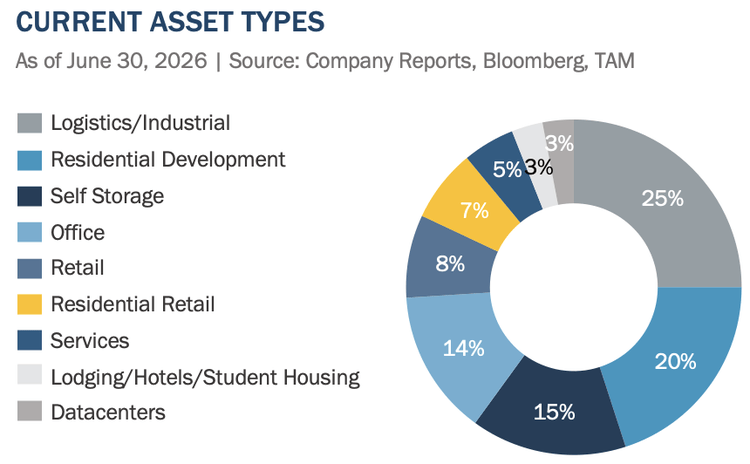
Including the above-referenced activity, the Fund’s allocations remain broadly consistent with recent quarters. New investments in Neinor Homes and Dexus Industria modestly increase the Fund’s residential development and industrial/logistics exposures, respectively, reflecting the Fund’s elevated conviction in those two thematics.
Advertisement
Advertisement
Outlook Commentary – An Unprecedented Value Opportunity
An underappreciated feature of the current market environment is the remarkable valuation divergence between international-listed real estate and its U.S. counterpart. International real estate delivered exceptional performance in calendar year 2025, with the Fund returning almost 27%. Yet this momentum has not carried into 2026. While U.S. REITs have rallied approximately 11% year-to-date on the back of domestic capital rotation, international listed real estate has largely traded sideways. The result is a growing valuation differential that is historically unprecedented in magnitude.
As illustrated in the accompanying chart, the Fund’s price-to-earnings multiple has compressed to approximately 10 times, while U.S. REITs trade at about 20 times. This is not a story of slowing earnings, as the Fund’s underlying holdings continue to grow earnings at attractive rates, driven by the structural and cyclical tailwinds inherent in underlying investments. Rather, it is a story of stagnant share prices amid compounding earnings. Mathematically, that should not persist indefinitely without either prices recovering or the fundamental investment case deteriorating. Fund Management is firmly of the view that the former is far more likely.
Advertisement
What makes the current discount particularly striking is the context in which it is occurring. For instance, U.S. REIT earnings growth for 2026 is broadly expected to be modest, with much of the re-rating driven by multiple expansion on domestic capital rotation. The Fund’s international real estate earnings, by contrast, are growing at what Fund Management estimates to be high-single-digit to low-double-digit rates across the Fund, similar to 2025 when the Fund’s investments achieved an average earnings growth of 12%. An investor buying the Fund today is acquiring earnings growth that is meaningfully faster at approximately half the valuation multiple. That is a risk-adjusted proposition rarely available in any asset class, let alone one backed by high-quality real assets.
Some U.S. REIT boards and management teams seem to agree — benefiting from relatively low-cost equity capital and elevated domestic valuations — are beginning to leverage this currency advantage to pursue international real estate acquisitions. The acquisition of Public Storage Canada by affiliated U.S. REIT Public Storage, and the approach by U.S. REIT Prologis to acquire UK-listed SEGRO, are early indicators of a trend that Fund Management expects could continue. Among the Fund’s own holdings, self-storage owners such as Big Yellow in the U.K., and Shurgard in Europe appear well-positioned as potential targets, given what we believe to be their high-quality portfolios, conservative balance sheets, and the significant gap between their listed valuations and what institutional and strategic buyers have been willing to pay for comparable self-storage platforms in the private market.
The resolution of the current valuation anomaly, in Fund Management’s view, is a question of when rather than if, and is likely to be driven by a combination of dynamics. This might include the above examples of public market M&A, as U.S. and other strategically positioned buyers use low-cost equity capital to acquire international platforms, seizing on the disconnect between listed and private market values, or market participants independently recognizing the valuation and earnings disconnect as the current cycle matures.
Advertisement
However, perhaps the most likely catalyst for the Fund is a broader rotation of capital toward real assets once the current concentration of market gains in artificial intelligence, memory, and semiconductor-related equities runs its course and ultimately reverses, as occurred following the technology, media, and telecom bubble in March 2000. In that earlier episode, the unwinding of an extraordinarily narrow, momentum-driven rally was followed by a multi-year period in which capital broadly rotated into real assets and value-oriented equities, including real estate, as investors re-priced risk and sought durable, tangible sources of cash flow. Fund Management does not attempt to predict the timing of such a rotation, but notes that the combination of historically elevated concentration risk in a small number of technology-related themes and historically wide valuation discounts in international real estate has, at a minimum, useful precedent.
In the interim, the Fund’s underlying earnings yield of approximately 10%, combined with high-single-digit earnings growth, provides a compelling stand-alone return case that does not depend on valuation re-rating at all. As such, Fund Management is highly confident that the current pricing of international listed real estate, relative to both intrinsic value and U.S. peers, represents one of the most attractive entry points in the Fund’s history.
We thank you for your continued support and look forward to writing to you again next quarter. In the interim, please do not hesitate to contact us with any questions, comments, or ideas at realestate@thirdave.com.
Sincerely, The Third Avenue Real Estate Value Team
Advertisement
Quentin Velleley, CFA Portfolio Manager
IMPORTANT INFORMATION
This publication does not constitute an offer or solicitation of any transaction in any securities. Any recommendation contained herein may not be suitable for all investors. Information contained in this publication has been obtained from sources we believe to be reliable, but cannot be guaranteed.
Advertisement
The information in this portfolio manager letter represents the opinions of the portfolio manager(s) and is not intended to be a forecast of future events, a guarantee of future results or investment advice. Views expressed are those of the portfolio manager(s) and may differ from those of other portfolio managers or of the firm as a whole. Also, please note that any discussion of the Fund’s holdings, the Fund’s performance, and the portfolio manager(s) views are as of June 30, 2026 (except as otherwise stated), and are subject to change without notice. Certain information contained in this letter constitutes “forward-looking statements,” which can be identified by the use of forward-looking terminology such as “may,” “will,” “should,” “expect,” “anticipate,” “project,” “estimate,” “intend,” “continue” or “believe,” or the negatives thereof (such as “may not,” “should not,” “are not expected to,” etc.) or other variations thereon or comparable terminology. Due to various risks and uncertainties, actual events or results or the actual performance of any fund may differ materially from those reflected or contemplated in any such forward-looking statement. Current performance results may be lower or higher than performance numbers quoted in certain letters to shareholders.
Date of first use of portfolio manager commentary: July 14, 2026
1 The MSCI ACWI ex USA IMI Core Real Estate Index is a free float-adjusted market capitalization index that consists of large, mid and small-cap stocks across 22 Developed Markets (DM) and 24 Emerging Markets (EM) countries engaged in the ownership, development and management of specific core property type real estate. The index excludes companies, such as real estate services and real estate financing companies, that do not own properties. Results for the index are inclusive of dividends and net of foreign withholding taxes.
2 Excess Return refers to the return from an investment above the benchmark. Source: Investopedia
Advertisement
Index Source: MSCI. MSCI makes no express or implied warranties or representations and shall have no liability whatsoever with respect to any MSCI data contained herein. The MSCI data may not be further redistributed or used as a basis for other indexes or any securities or financial products. This report is not approved, endorsed, reviewed or produced by MSCI. None of the MSCI data is intended to constitute investment advice or a recommendation to make (or refrain from making) any kind of investment decision and may not be relied on as such. An investor cannot invest directly in an index, and index performance does not reflect the deduction of fees and expenses.
Past performance is no guarantee of future results; returns include reinvestment of all distributions. The above represents past performance and current performance may be lower or higher than performance quoted above. Investment return and principal value fluctuate so that an investor’s shares, when redeemed, may be worth more or less than the original cost. For the most recent month-end performance, please visit the Fund’s website at www.thirdave.com. The gross expense ratio for the Fund’s Institutional and Z share classes is 1.52% and 1.46%, respectively, as of March 1, 2026.
Advertisement
Distributions and yields are subject to change and are not guaranteed.
FUND RISKS: In addition to general market conditions, the value of the Fund will be affected by the strength of the real estate markets. Factors that could affect the value of the Fund’s holdings include the following: overbuilding and increased competition, increases in property taxes and operating expenses, declines in the value of real estate, lack of availability of equity and debt financing to refinance maturing debt, vacancies due to economic conditions and tenant bankruptcies, losses due to costs resulting from environmental contamination and its related clean-up, changes in interest rates, changes in zoning laws, casualty or condemnation losses, variations in rental income, changes in neighborhood values, and functional obsolescence and appeal of properties to tenants. The Adviser’s use of its ESG framework could cause it to perform differently compared to funds that do not have such a policy. The criteria related to this ESG framework may result in the Fund’s forgoing opportunities to buy certain securities when it might otherwise be advantageous to do so, or selling securities for ESG reasons when it might be otherwise disadvantageous for it to do so. For a full disclosure of principal investment risks, please refer to the Fund’s Prospectus.
The fund’s investment objectives, risks, charges, and expenses must be considered carefully before investing. The prospectus contains this and other important information about the investment company, and it may be obtained by calling 800-443-1021 or visiting www.thirdave.com. Read it carefully before investing.
Distributor of Third Avenue Funds: Foreside Fund Services, LLC.
Advertisement
Current performance results may be lower or higher than performance numbers quoted in certain letters to shareholders.
Third Avenue offers multiple investment solutions with unique exposures and return profiles. Our core strategies are currently available through ’40Act mutual funds and customized accounts.
Starbird founder Aaron Noveshen told FOX Business the chain is redefining fast food with higher-quality ingredients.
Chick-fil-A said Wednesday that a recent security incident may have exposed personal information linked to a limited number of customer loyalty accounts.
The Atlanta-based fast-food chain told FOX Business that it moved quickly to secure affected accounts and notify customers who may have been impacted.
Advertisement
“We recently identified a security incident that may have affected a limited number of Chick-fil-A One Loyalty accounts,” a company spokesperson said. “Upon discovering the issue, we took steps to immediately address, secure and restore accounts, and we are communicating directly with all customers who may have been impacted.”
Chick-fil-A said a recent security incident may have exposed personal information linked to a limited number of customer loyalty accounts. (Michael Siluk/UCG/Universal Images Group via Getty Images)
The spokesperson added that the company “sincerely apologize[s] for any inconvenience or concern” and remains “committed” to maintaining customers’ trust.
The company notified potentially affected customers Monday after discovering suspicious login activity involving certain Chick-fil-A One accounts, USA TODAY reported.
The incident reportedly affected customers in Iowa, Maryland, Massachusetts, New Mexico, New York, North Carolina, Oregon, Rhode Island, Vermont and Washington, D.C. (Fox News Digital)
According to the notice, “unauthorized parties” targeted the company’s website and mobile app between June 17 and June 19. The attackers used account credentials obtained from a “third-party source,” the outlet reported.
The incident affected customers in Iowa, Maryland, Massachusetts, New Mexico, New York, North Carolina, Oregon, Rhode Island, Vermont and Washington, D.C., according to USA Today.
The data that may have been compromised included customers’ names, email addresses, Chick-fil-A One membership and mobile payment numbers, the last four digits of payment cards and the amount of Chick-fil-A credit stored in their accounts.
Chick-fil-A said it reset passwords for affected accounts, restored any impacted loyalty balances and added rewards to customers’ accounts, USA TODAY reported.
Employers should pay no National Insurance on any worker under 25, MPs have told the government, after hearing “overwhelming evidence” that the current regime is pricing young people out of the jobs market.
The Work and Pensions Committee said higher employer National Insurance rates are putting businesses off hiring, with the damage concentrated in the sectors that have always been the first rung of the career ladder: retail and hospitality.
More than one million 16 to 24-year-olds are now not in education, employment or training. The committee called the figure a “travesty”.
For SME owners, the more immediate point is the arithmetic. Employers pay nothing for staff under 21, and nothing for apprentices under 25, until earnings pass £50,270. But take on a 21 to 24-year-old who is not an apprentice and the bill starts at £5,000, at 15 per cent on everything above it.
The result is a cliff edge that lands precisely where most young people are ready to start a proper job. A firm weighing up two similar candidates, one 20 and one 22, faces a materially different payroll cost for the same work. MPs say that gap undermines the government’s own efforts to get this age group into employment.
Advertisement
The committee also cited former minister Alan Milburn’s review of youth unemployment, which found the government spends 25 times more on benefits for young people than on supporting them into work.
The backdrop will be familiar to anyone running a payroll. Firms have been cutting jobs at the fastest pace in four years since the £25bn rise in employer contributions, with more than half of the losses falling in hospitality and retail. Those are the same two sectors the committee identifies as the traditional entry point for younger workers.
Ministers have not been idle. Employers can now claim £3,000 for hiring a jobless 18 to 24-year-old who has been claiming benefits for six months or more, and foundation apprenticeships are being extended into hospitality and retail from April. The committee welcomed the early steps but said further action is essential to prevent long-term harm.
The distinction matters for smaller firms. A grant is a one-off payment against a permanent cost. An NI exemption is structural, it applies automatically through payroll, requires no application, and does not run out. For a business with tight margins and no HR function, that difference is not academic.
Advertisement
There is also a question of what sort of jobs young people are landing when they do get hired. Sheila Flavell CBE, chief operating officer of FDM Group, argues the debate has settled on the wrong metric.
“Recent conversations around graduate employment focus on whether people have jobs but not actually on whether they have the right jobs,” she said. “Underemployment is a growing threat for the UK labour market. We have capable, ambitious graduates working in roles well below their skill level, and that is a waste of talent on a national scale.”
“What’s missing is a practical bridge between education and industry. ‘Earn while you learn’ models and structured, industry-led training give graduates the chance to build real-world experience and move into long-term careers matched to their skills.”
That points to a second opportunity for SMEs. Larger employers dominate formal graduate schemes, but structured on-the-job training is something smaller firms can often do better, and more quickly, than corporates with rigid intake processes. The NEET figure now sitting close to one million represents a very large pool of people nobody is currently competing for.
Advertisement
Whether the Treasury accepts the recommendation is another matter. Extending the under-21 exemption to everyone under 25 carries a cost, and the fiscal position is tight. But the committee’s argument is that the alternative is more expensive still, paid out in benefits rather than wages.
Amy Ingham
Amy Ingham is a reporter at Business Matters, covering UK business news with a focus on breaking news, business policy, late payments and insolvency. She joined the magazine in 2026 after completing the NCTJ Diploma in Journalism at Harlow College’s journalism school. Her recent reporting includes British Steel’s nationalisation and its impact on SME suppliers, the decline in late payments by large firms, and Insolvency Service director disqualifications. Reach her at aingham@cbmeg.co.uk.
The site previously housed the Beauty Queens Cosmetics store
Caitlin James, Local Democracy Reporter
11:42, 22 Jul 2026
The site at 2-4 Belgrave Gate, which developers want to turn into student flats and a shop(Image: Local Democracy Reporting Service)
A Leicester city centre plot devastated by a massive fire could be transformed into student accommodation under fresh proposals.
Advertisement
Plans have been submitted to Leicester City Council to redevelop the land at 2-4 Belgrave Gate into a five-storey building featuring a retail unit and 23 student studios.
The site formerly housed the Beauty Queens Cosmetics store, which had to be torn down following a rapidly-spreading fire in October 2023.
Firefighters battled the blaze for over 36 hours, though investigators were ultimately unable to determine what initially sparked the fire.
Beauty Queens Cosmetics has since moved to the Haymarket Shopping Centre.
Advertisement
Planning documents state that the city centre site presently makes a “limited contribution” to the character and appearance of the surrounding neighbourhood.
The applicant, BQC Properties Ltd, argued that the scheme would help tackle an identified shortage of approximately 5,080 bedspaces for students across the city.
A target decision date of 13 October has been set.
As PRISM prepares for its public market debut, one of the biggest changes inside its India business is happening quietly. The company is increasingly shifting towards higher-value, company-serviced and premium hospitality, a move that is materially changing the economics of its domestic business.
Company-serviced hotels are directly managed and operated by hotel operators, under its upper budget to premium brands, namely Townhouse, Sunday, Townhouse Oak, Clubhouse and Palette. Unlike its traditional hotel owner-operated model, PRISM takes greater control over operations and service standards, while also benefiting from dynamic pricing, revenue management, technology and customer acquisition which are a core part of its asset-light business model. The company markets these hotels under the “OYO-Serviced” identity in India.
The Updated Draft Red Herring Prospectus (UDRHP) shows that PRISM’s company-serviced hotel network in India expanded from just 75 storefronts in FY24 to 1,053 by the end of FY25 and further to 1,573 as of December 31, 2025. While these properties still account for a relatively small proportion of the company’s overall hotel network, they contributed 49.29% of India’s Gross Booking Value (GBV) during the first nine months of FY26, highlighting how quickly they have become a key driver of the business.
The revenue trajectory has been equally striking. India company-serviced hotel GBV reached Rs 1,346 crore during the first nine months of FY26, already around 65% higher than the company’s entire FY25 company-serviced GBV, indicating that the business is scaling both in size and productivity.
Advertisement
The UDRHP also suggests this is part of a broader structural shift within India’s hospitality market. The 1Lattice industry report cited in the filing points to rising disposable incomes, increasing business and leisure travel, expanding religious tourism and improving infrastructure as key drivers of demand for branded accommodation. At the same time, India’s hotel market remains highly fragmented, with 92% of hotel storefronts still unorganised, creating significant headroom for organised hospitality platforms.
Live Events
Importantly, PRISM’s premium strategy is not replacing its traditional economy-hotel business. Instead, the company appears to be broadening its addressable market by operating across multiple price points and customer segments. Budget hotels remain an important part of the network, while premium and company-serviced hotels are increasingly contributing a disproportionate share of value creation. That evolution also changes how investors may evaluate the India business. Rather than measuring success primarily through the number of hotel storefronts, the emerging focus is increasingly on GBV per storefront, operating quality, premiumisation and customer experience. The rapid growth of company-serviced hotels suggests PRISM’s domestic strategy is becoming less about network expansion and more about improving the quality and productivity of the network it already operates.
(Disclaimer: Recommendations, suggestions, views and opinions given by the experts are their own. These do not represent the views of Economic Times)
The S&P 500 and the Nasdaq closed lower on Wednesday with a mixed performance from technology stocks, as investors waited for key earnings reports to gauge the health of a market rally fed by enthusiasm for artificial intelligence.
After months of gains that lifted the major indexes from their March lows, momentum has been wobbling with uneven trading in heavyweight semiconductor stocks and weakness in software stocks.
The Philadelphia SE Semiconductor index ended higher, after bouncing off early losses. The index was angling for its third straight day of gains after three days of losses that had confirmed it was in a bear market last week.
Investors were preparing for second-quarter results from Alphabet and Tesla, the first of the so-called “Magnificent Seven” megacap companies to report after the bell for fresh evidence that these companies’ multibillion-dollar investments in AI are paying off.
Advertisement
“Investors have become a lot more discerning and specific as to where they’re choosing to invest in the AI trade,” said Kevin Gordon, head of macro research and strategy at Charles Schwab. Gordon noted that software stocks fell while chip stocks rose during the session.
Live Events
Trading was choppy in Alphabet, which will be under scrutiny after a delay in the launch of a model central to its AI ambitions. Texas Instruments, also due to report after the close, ticked higher during the session. According to preliminary data, the S&P 500 lost 10.72 points, or 0.14%, to end at 7,498.48 points, while the Nasdaq Composite lost 145.48 points, or 0.56%, to 25,691.72. The Dow Jones Industrial Average rose 1.52 points to 52,226.16.The crowded earnings calendar leaves markets vulnerable to sharper swings this week, while geopolitical tensions added another layer of caution.
Crude oil futures recorded their highest settlement since June 11, up around 3% on the day as Yemen’s Iran-backed Houthi militia threatened shipping in the Red Sea, one of the world’s most important energy chokepoints along with the Strait of Hormuz.
U.S. President Donald Trump vowed on Wednesday to destroy an Iranian bridge or power plant every time Iran shoots at a ship in the strait.
“Excluding the megacap AI trade, there’s an element of what’s going on with oil that’s driving the market,” said Schwab’s Gordon, noting that high oil prices are fanning inflation worries. “People are being defensive with utilities, but with energy and materials being higher, that’s the inflation component.”
Advertisement
The Federal Reserve is expected to keep interest rates steady for the rest of 2026, according to the median forecast in a Reuters poll of economists. Still, respondents said the risk of a rate hike remained elevated.
Traders are pricing in a roughly 66% chance the Fed leaves rates unchanged at next week’s meeting, CME Group’s FedWatch tool showed.
Shares in Super Micro Computer rallied sharply after the server maker said it had secured more than $60 billion in new orders in the fourth quarter. Peers Dell Technologies and Hewlett Packard Enterprise also climbed after Super Micro reported upbeat preliminary results.
Among other movers, AT&T advanced after the telecom firm added more wireless subscribers than expected in the second quarter. Philip Morris International shares rose after stronger cigarette demand helped the company beat quarterly results estimates.
Despite internal conflicts in 2025, ASEAN demonstrated remarkable cohesion and advanced its mission. Timor Leste’s accession as the 11th member brought economic opportunities and enhanced security. A significant achievement was the “substantive agreement” on the ASEAN Digital Economy Framework Agreement (DEFA), a pioneering region-wide pact harmonizing digital trade rules. DEFA aims to accelerate digital transformation, boost MSMEs, and ensure data security. This progress, even amidst challenges like the Myanmar conflict and border disputes, highlights ASEAN’s commitment to partnership, inclusivity, and collective growth, reinforcing its standing as a vital regional bloc.
Despite internal conflicts and regional tensions in 2025, the Association for Souteast Asian Nations (ASEAN) stayed cohesive and advanced its core mission.
For Timor Leste, ASEAN membership brings economic opportunity, security, and stronger sovereignty.
The ASEAN Digital Economy Framework Agreement is a region-wide digital governance framework that harmonizes digital trade rules while respecting different development levels.
Advertisement
Last year was challenging for ASEAN. Its leaders struggled to find viable solutions to addressing the ongoing conflict in Myanmar, while border clashes between Cambodia and Thailand were a jarring reminder of long-standing territorial disputes and cultural tensions that historically beset the region.
And yet, even in challenging times, the bloc hasn’t faltered in its overriding purpose. During 2025, it recorded two milestones – its expansion to 11 members and the “substantive agreement” of the ASEAN Digital Economy Framework Agreement (DEFA) – both partnership models that merit exploration.
Timor Leste’s accession to ASEAN in October 2025 stands as a heartening example of the power of partnership in challenging times. It underscores ASEAN’s long-standing commitment to one vision, one identity and one community, and highlights how the bloc’s members can trade years of enmity for mutual support to achieve an outcome that ultimately benefits the bloc as well as its composite parts.
It’s taken 14 years for one of the world’s youngest democracies to become part of the bloc, and to achieve this, both Timor Leste and Indonesia have put years of animosity behind them.
Advertisement
It’s both a symbolic and transactional partnership. ASEAN offers the small, young nation regional solidarity, economic development through enhanced opportunities and market access, security, a boost to its sovereignty and a belief that it is ultimately stronger as part of the union.
Prime Minister, congratulations. You arrive in Downing Street with more than a million young people in the UK not in education, employment or training.
The latest ONS figures put the number at 1,012,000, up 89,000 in a year, with 13.5 per cent of all 16 to 24 year olds now NEET.
As Mayor of Greater Manchester you showed you understand this agenda, championing technical education and real pathways into work for young people. Reviews are already under way, including Marc Bolland’s work on youth unemployment. So here is my wish list for your first months in office.
First, shift funding towards prevention. Every young person who becomes NEET costs the state far more in benefits, lost tax revenue and pressure on health and justice services than early intervention ever would. Yet most public money still flows to services that pick up the pieces after problems escalate. Commit to long-term investment in the programmes that stop young people falling behind in the first place.
Second, give charities multi-year funding. Most survive on short-term, annual grant cycles and contracts, which makes it almost impossible to retain skilled staff, innovate or demonstrate long-term impact. Three to five year funding, where appropriate, would transform what the sector delivers for the same money.
Advertisement
Third, reform commissioning. Public procurement remains slow, bureaucratic and tilted towards the largest providers. Value social impact alongside cost, cut the paperwork, and let charities of all sizes compete fairly. Taxpayers get better outcomes and communities get providers who actually know them.
A National Youth Opportunity Fund
Fourth, create a dedicated National Youth Opportunity Fund, backing evidence-based programmes that improve school attendance, attainment, employability and social mobility, with charities as key delivery partners. With the British Chambers of Commerce warning youth unemployment could reach 17.8 per cent by 2027, the case for acting in this Parliament, not the next one, makes itself.
Fifth, treat the voluntary sector as a strategic partner. Charities are not a nice-to-have. They are part of the UK’s social infrastructure and should be involved in policy design, not just contracted to deliver it. The Civil Society Covenant was a promising start from your predecessor. Make it mean something in how money actually moves.
At City Year UK we see every day what happens when young people get consistent, early support: attendance improves, attainment rises and pathways into work open up. We also see what happens when they do not, and NEET numbers at record levels tell that story at national scale.
Advertisement
If we’re serious about improving life chances and economic growth, we need to stop funding failure and start funding prevention. Charities deliver extraordinary value for money, but they need long-term partnerships, not short-term contracts. Investing in young people before they fall behind is one of the smartest economic and social investments any government can make.
Victoria Head
Victoria Head is joining City Year Uk the beginning of August as Chief Executive Officer, bringing more than 25 years of leadership experience across education, employability, skills development, youth services, and social impact.
Throughout her career, Victoria has focused on creating opportunities that enable young people and communities to thrive. She has a strong track record of leading large-scale transformation programmes, securing and managing multi-million-pound contracts, and building strategic partnerships across government, education, and the voluntary sector. Her expertise spans workforce development, social mobility, and systems change, with a consistent focus on improving outcomes for young people.
Prior to joining City Year UK, Victoria was Strategic Director for Learning, Skills and Employability at Catch22, where she led a broad portfolio of programmes spanning education, employability, and social inclusion. She has also held senior leadership roles in national employability and skills organisations, driving innovation, sustainable growth, and high-quality frontline delivery.
Alongside her executive career, Victoria is a Trustee of Changing Lives and a Council Member of UK Year of Service, reflecting her long-standing commitment to strengthening the social impact sector.
As CEO of City Year UK, she is focused on expanding the organisation’s reach and deepening its impact, ensuring more young people are supported to succeed in education, employment, and life.
For more information on how to be involved, please contact Victoria on




























![Trump Just Said It... [Bitcoin Holders Pay Attention]](https://wordupnews.com/wp-content/uploads/2026/07/1784749233_maxresdefault-80x80.jpg)


































You must be logged in to post a comment Login