
Business
This Week’s Market Wrap: Earnings Fireworks, Oil Shocks, And A Stubborn Economy


Cited by Barron’s as one of the top financial websites to visit on the weekend, Financial Sense (www.financialsense.com) provides educational resources to the broad public audience through a daily podcast, editorials, current news and resource links on salient financial market issues. Begun in 1985 as a local talk radio program, Financial Sense Newshour (www.financialsense.com/financial-sense-newshour) is a weekly webcast with host Jim Puplava and top financial thinkers. Writing staff of Financial Sense includes: Jim Puplava, Chris Puplava, Ryan Puplava, and Cris Sheridan.


Edited excerpts from a chat:
Given that most IT majors have given weaker than expected guidance for FY27, how has your outlook on IT stocks changed after the Q4 results?
FY27 guidance indicates revenue growth will remain at the modest level recorded in FY26, which we regard as disappointing. The shortfall reflects client‑specific challenges rather than any incremental sector‑wide weakness. That said, client spending, which began to improve early in the year, appears to have stalled because of the Middle‑East conflict and its likely macro‑economic repercussions.
What signs are you reading from the management commentary around the impact of AI on tech spending and order books?
We see a wide growth divergence that is starting to emerge among the companies who are getting disrupted from AI and those who are better positioned in this transition. Although investors fear incremental pricing pressure on IT‑services firms, most companies noted no new price compression or delay in large deals signing since the launch of the latest frontier‑model versions and plugins in January. The sector’s pricing pressure stems chiefly from aggressive vendor‑consolidation pricing, not from AI itself, and the order book does not fully capture the revenue leakage caused by such consolidation.

You argued in your report last month that the risk-reward balance is turning favourable even in the most bearish scenario. We have noticed that pace of selling has been on a decreasing trend after the February sell-off in which the IT index fell nearly 20%. Do you think we are on a recovery path in FY27?
If the Middle‑East conflict de‑escalates soon, we expect the improving macro‑economic backdrop to lift growth at IT‑services firms. Nevertheless, we expect revenue‑growth recovery to be gradual over the next few quarters, as AI’s deflationary effect continues while demand from a healthier macro environment and AI‑related services takes longer to materialise. We therefore recommend a selective approach, favouring companies less exposed to AI disruption and those poised to benefit from AI adoption.
While there is hardly any doubt that AI means a structural shift on how we look at technology, what makes you think that it won’t be a structural breakdown in Indian IT services model?
We are convinced that AI will not upend the Indian IT‑services companies’ business model: for three key reasons:
a) Enterprises are unlikely to surrender pricing power and technology ownership by consolidating their entire tech stack with a handful of frontier‑model providers.
b) Frontier‑model firms lack the capacity to support and customise solutions for thousands of enterprise clients, and
c) A core value proposition of IT‑services firms is their assumption of implementation and management risk; this role remains essential regardless of whether applications originate from software/SaaS vendors or frontier‑model providers.
Is it time for long-term investors to start thinking of large-cap IT stocks as value stocks?
We consider it risky to label any large‑cap IT stock as a “value” investment while disruption persists and earnings‑growth risk remains elevated. Large‑cap IT firms possess diverse capabilities, and AI will affect them unevenly. Some large‑cap services exhibit an unfavourable revenue mix, making them unattractive despite an appealing dividend yield.
Do you think that buybacks and dividends will restrict the downfall in case market sentiment turns more bitter?
For companies that possess strong AI capabilities but are struggling with modest near‑term growth, buybacks and dividends act as effective downside buffers. Robust free‑cash‑flow generation and high payout ratios enable these firms to sustain a strong total‑shareholder‑return profile even in a more adverse market environment.

According to Jefferies’ Christopher Wood, global head of equity strategy, the scale of spending by US hyperscalers has reached a point where it is consuming an increasingly large share of their cash flows, particularly on chips and memory. Based on the latest company guidance, capex as a percentage of operating cash flow for the four major US hyperscalers has surged from 41% in 2023 to a projected 92% in 2026.
A significant portion of this is being directed towards memory alone, which is estimated to account for about 30% of total capex, implying roughly 28% of operating cash flow being absorbed by memory investments this year, he said in his Greed and Fear report.
This rising intensity of investment brings into focus a more fundamental question: monetisation. A recent Jefferies report led by Edison Lee highlights that the challenges around AI business models remain underestimated. The increasing cost of staying competitive, driven by higher compute, memory, and power requirements, suggests that sustainable profitability for pure AI model players remains distant.
Wood aligns with this view. His base case is that AI may ultimately resemble a capital-intensive industry like airlines, rather than the high-margin, winner-takes-all dynamics seen in the internet era.
Even so, the current phase of spending shows little sign of slowing. Big Tech companies continue to push ahead with aggressive capex plans. Microsoft expects to spend $190 billion this year, including about $25 billion attributed to higher component costs. Alphabet and Meta have both raised their 2026 capex guidance to $180–190 billion and $125–145 billion, respectively, while Amazon has maintained its guidance at $200 billion.
Among these, investor concerns appear more pronounced in the case of Meta, which lacks the same direct cloud-driven benefits from AI spending as peers like Alphabet, Microsoft, and Amazon.For now, the “picks and shovels” trade remains intact, supported by continued spending and limited pushback from investors on returns.
However, early signs of strain are beginning to surface. A recent report noted that OpenAI has missed internal targets for both user growth and revenues, including a goal of reaching 1 billion weekly active users for ChatGPT by the end of last year. The company has also reportedly fallen short of multiple monthly revenue targets in 2026, while facing increased competition.
Market share trends reflect this shift. Over the past 12 months to March, Gemini’s share of web traffic in the generative AI market has risen sharply from 6% to 25.5%, while ChatGPT’s share has declined from 77.4% to 56.7%, according to SimilarWeb data.
At the same time, concerns have been raised about financing structures within the ecosystem, where partners such as Nvidia and Oracle provide funding to OpenAI, which in turn uses that capital to purchase compute from them.
Competition is also intensifying. Anthropic reported in early April that its annualised revenue run rate has exceeded $30 billion, up from around $9 billion at the end of 2025, now surpassing OpenAI’s reported run rate of over $25 billion in February.
Taken together, the picture that emerges is one of escalating investment, rising competitive pressure, and unresolved questions around returns. The spending cycle continues, but the strain it places on cash flows and the uncertainty around monetisation are becoming increasingly difficult to ignore.
(Disclaimer: Recommendations, suggestions, views and opinions given by the experts are their own. These do not represent the views of The Economic Times)


Fighting reaches outskirts of Ukraine’s stronghold Kostiantynivka

BWX Technologies: The Nuclear Backbone Is Heading Into Earnings At An Attractive Price

The index oscillated within a defined band of 587.85 points, reflecting a lack of strong directional conviction. Volatility edged higher; the India VIX declined by 6.35% to 18.46, indicating some decline in hedging activity despite the range-bound move.
The Nifty ended the week with a modest gain of 99.60 points (+0.42%).
 ETMarkets.com
From a structural standpoint, the Nifty continues to remain in a broad consolidation zone, with prices hovering near the lower half of its intermediate range. The index is currently dealing with an important zone around the 23,900–24,000 area, which is acting as an immediate equilibrium level.
While the broader trend remains sideways, the recent pullback followed by stabilization suggests an attempt to form a near-term base. A sustained move above the upper boundary of the recent range could revive directional momentum, while a breach below the recent swing lows would reintroduce corrective pressure. Until a breakout occurs, the index is likely to remain range-bound with intermittent volatility spikes.
For the coming week, markets may see a stable-to-cautious start, given the modest gains and rising volatility. Immediate resistance levels are placed at 24,350 and 24,550, while supports come in at 23,900 and 23,500. These levels are likely to define the near-term trading band.
The weekly RSI stands at 44.16, remaining neutral and showing no visible divergence against price. It is neither oversold nor showing strength, reinforcing the ongoing consolidation theme. The weekly MACD remains below its signal line, with the histogram still in negative territory, indicating that the broader momentum remains weak, though the rate of decline appears to be moderating.
The formation of a small-bodied candle with a lower shadow suggests some buying support emerging at lower levels, hinting at potential stabilization.
Pattern analysis of the weekly chart indicates that the Nifty continues to trade within a large rectangular consolidation pattern, broadly placed between 22,400 and 25,000. Prices are also hovering around key moving averages, with the 100-week MA acting as resistance.
The inability to decisively move above the 100-week MA keeps the upside capped for now, while the long-term trend remains intact above the 200-week MA.
Given the current setup, the advisable approach would be to remain selective and cautious. Aggressive directional bets may not be ideal unless a confirmed breakout occurs. Traders should focus on stock-specific opportunities while maintaining strict risk management. It would be prudent to protect existing gains and avoid over-leveraging, as the market continues to oscillate within a defined range.
The coming week should be approached with a balanced, reactive strategy rather than a predictive one.
In our look at Relative Rotation Graphs®, we compared various sectors against the CNX500 (NIFTY 500 Index), representing over 95% of the free-float market cap of all the listed stocks.
ETMarkets.comThe Relative Rotation Graph (RRG) shows that the Nifty Media Index has rolled inside the leading quadrant. Along with this, the Pharma, PSE, Metal, Infrastructure, Midcap 100, and Energy Sector Indices are also inside this quadrant.
ETMarkets.comThese groups are likely to relatively outperform the broader markets. The Nifty PSU Bank Index continues to stay inside the weakening quadrant. This is likely to see a continued slowdown in the sector’s relative performance.
The Nifty Bank, Auto, and Financial Services Index has rolled inside the weakening quadrant. Along with the Nifty Services Sector Index, these groups are set to relatively underperform the broader markets.
The IT Index is also inside the lagging quadrant; however, it is seen as improving its relative momentum. The Realty Index has rolled inside the improving quadrant. The FMCG Index is also inside this quadrant.
Important Note: RRG™ charts show the relative strength and momentum of a group of stocks. In the above Chart, they show relative performance against the NIFTY500 Index (Broader Markets) and should not be used directly as buy or sell signals.
(The author is Milan Vaishnav, CMT, MSTA Consulting Technical Analyst Member. Views are own.)
(Disclaimer: Recommendations, suggestions, views, and opinions given by experts are their own. These do not represent the views of the Economic Times)


Factbox-U.S. troops based in Europe

Reform UK dials back tax pledges as local governance reality sets in
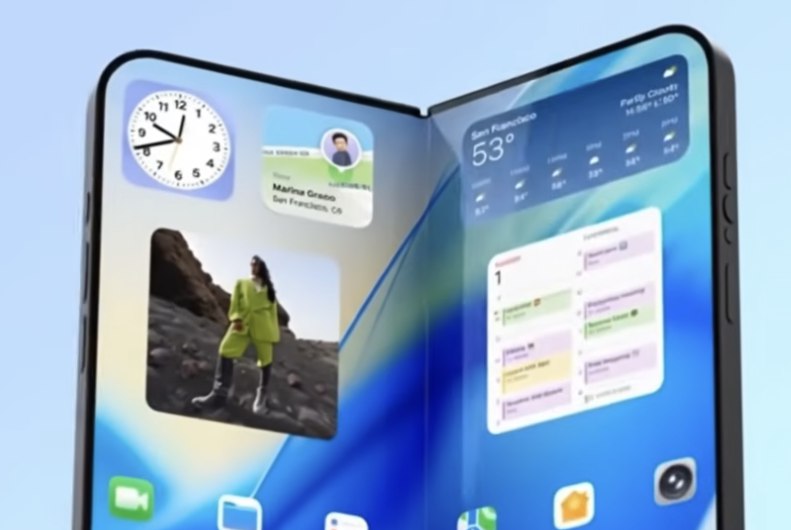
NEW YORK — Samsung’s Galaxy Z Fold series continues dominating the foldable smartphone market in 2026, leaving potential buyers weighing whether to purchase the latest Z Fold 8 now or hold out for Apple’s long-rumored foldable iPhone expected later this year. The decision hinges on immediate needs versus anticipation of Apple’s ecosystem integration and premium build quality in its first book-style foldable device.
Samsung’s latest foldables offer refined designs, powerful performance and established software optimizations, making them attractive for users seeking productivity and multitasking today. Apple’s entry, potentially dubbed iPhone Fold or iPhone Ultra, promises seamless iOS integration and innovative features but remains months away with possible supply constraints.
Current Galaxy Z Fold Advantages
Samsung’s Z Fold 8 builds on years of iteration, delivering a mature product with minimal creases, durable hinges and versatile use cases. The inner display provides tablet-like productivity for split-screen apps, note-taking and media consumption, while the cover screen handles quick tasks like a traditional phone.
Performance shines with flagship Snapdragon processors, ample RAM and excellent cameras. Battery life improved through efficiency gains, though heavy multitasking still drains power faster than slab phones. Software features like Flex Mode enhance the foldable experience for video calls and content creation.
Pricing remains premium but competitive within the category, with trade-in programs and carrier deals easing the cost. Samsung’s ecosystem, including Galaxy Watch and Buds integration, appeals to Android users seeking seamless connectivity.
Early adopters praise the device’s ability to replace both phone and tablet for many users. Drawbacks include weight, durability concerns over repeated folding and higher price compared to standard flagships.
Apple’s Foldable Plans Generate Buzz
Rumors suggest Apple’s foldable iPhone could launch in September 2026 alongside Pro models, featuring a wider design for better ergonomics and a near-crease-free display. Expected specs include a large inner screen, powerful A-series chip and premium materials aligning with iPhone standards.
The device would bring Apple’s polish to foldables, with optimized iOS for the form factor, exceptional build quality and tight integration with Mac, iPad and other devices. Camera systems, battery life and software features could set new benchmarks if leaks prove accurate.
Potential downsides include high pricing potentially exceeding $2,000, limited initial supply and the risk of first-generation issues common in new categories. Apple’s history of entering markets late but excelling through refinement suggests a strong contender, but buyers must wait.
Key Comparison Factors
Design and Build: Samsung offers tried-and-tested book-style folding with incremental improvements. Apple’s rumored wider aspect ratio could feel more natural for media and productivity, potentially reducing the “phone when folded” compromise.
Software Experience: Android on Z Fold provides immediate customization and app optimization for foldables. iOS on Apple’s device would offer unmatched fluidity and privacy features, but developers may need time to fully adapt apps.
Performance and Features: Both promise flagship power, but Samsung’s current models deliver today with excellent multitasking. Apple’s silicon excels in efficiency and AI capabilities, potentially offering superior battery life and camera processing.
Ecosystem Integration: Android users benefit from Samsung’s Galaxy ecosystem. Apple devotees gain from seamless continuity across devices, making the foldable a natural extension of existing setups.
Price and Value: Z Fold models command premium prices but include trade-ins and promotions. Apple’s entry could exceed expectations, targeting luxury buyers willing to pay for brand and refinement.
Availability and Reliability: Samsung provides immediate access with proven track records. Apple’s first foldable may face production delays common in new categories, though the company typically prioritizes quality.
Who Should Buy Galaxy Z Fold Now
Tech enthusiasts wanting foldable benefits immediately should consider the Z Fold 8. Professionals needing multitasking for work, students for note-taking or media consumers for larger screens benefit from current options. Android users deeply invested in Google’s ecosystem find strong value.
Those prioritizing innovation and willing to wait may hold for Apple. iPhone loyalists expecting ecosystem synergy or users seeking premium refinement could find the wait worthwhile. Budget-conscious buyers might explore mid-cycle deals on previous Z Fold generations.
Market Trends in Foldables
Foldables represent the fastest-growing premium segment, with shipments increasing yearly. Samsung maintains leadership through iteration, but Apple’s entry could expand the category significantly by attracting mainstream users.
Competition from Chinese brands like Huawei and Honor pushes innovation in hinges, displays and software. Durability improvements and crease reduction address early criticisms, broadening appeal.
Pricing remains a barrier for mass adoption, though trade-ins and financing options help. As technology matures, costs may decrease, accelerating growth.
Final Recommendation Considerations
The choice depends on timeline, ecosystem preference and risk tolerance. Buying Samsung provides immediate utility with minimal first-gen risks. Waiting for Apple offers potential for superior integration but requires patience and possible initial supply limits.
Evaluate current needs against future desires. Test devices in-store to experience the form factor. Consider total cost of ownership, including accessories and potential trade-ins.
Tech evolves rapidly, so neither choice locks users out of future upgrades. Both Samsung and Apple drive innovation benefiting consumers through competition.
As 2026 progresses, more details on Apple’s foldable will emerge, potentially influencing decisions. For now, Galaxy Z Fold delivers proven foldable excellence while Apple builds anticipation for its debut.


Financial analyst by day and a seasoned investor by passion, I’ve been involved in the world of investing for over 15 years and honed my skills in analyzing lucrative opportunities within the market.I specialize in uncovering high quality dividend stocks and other assets that offer potential for long term-growth that pack a serious punch for bill-paying potential. I use myself as an example that with a solid base of classic dividend growth stocks, sprinkling in some Business Development Companies, REITs, and Closed End Funds can be a highly efficient way to boost your investment income while still capturing a total return that follows traditional index funds. I created a hybrid system between growth and income and manage to still capture a total return that is on par with the S&P.
Analyst’s Disclosure: I/we have no stock, option or similar derivative position in any of the companies mentioned, and no plans to initiate any such positions within the next 72 hours. I wrote this article myself, and it expresses my own opinions. I am not receiving compensation for it (other than from Seeking Alpha). I have no business relationship with any company whose stock is mentioned in this article.
Seeking Alpha’s Disclosure: Past performance is no guarantee of future results. No recommendation or advice is being given as to whether any investment is suitable for a particular investor. Any views or opinions expressed above may not reflect those of Seeking Alpha as a whole. Seeking Alpha is not a licensed securities dealer, broker or US investment adviser or investment bank. Our analysts are third party authors that include both professional investors and individual investors who may not be licensed or certified by any institute or regulatory body.
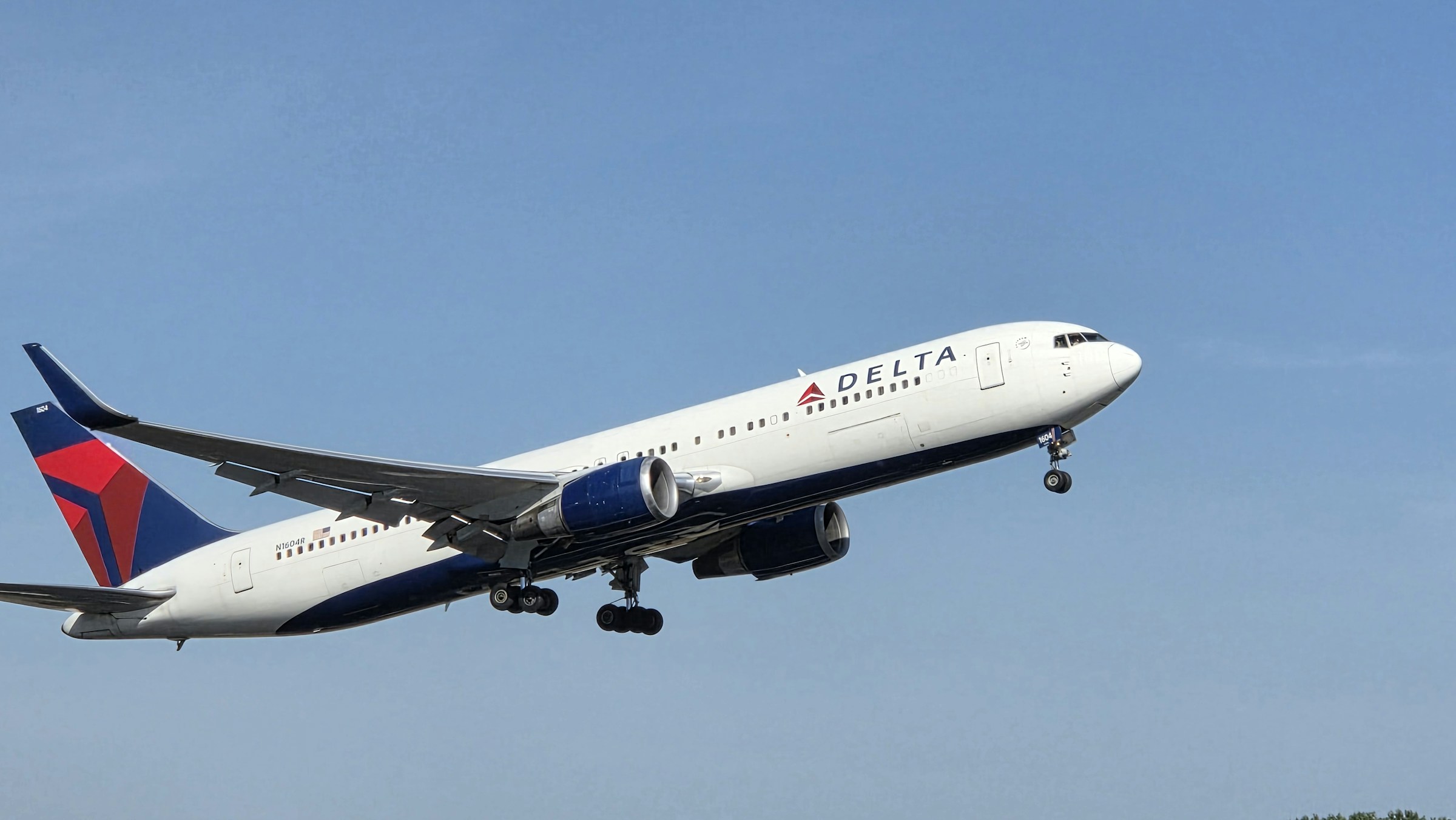
MIAMI — A Delta Air Lines flight from Miami to Atlanta turned back to the gate Monday after a passenger refused repeated crew requests to end a phone call during taxi, sparking disruption that led to the individual’s removal and a delay for fellow travelers. The incident on Flight 1323 highlighted ongoing challenges with in-flight compliance and passenger conduct rules as airlines enforce federal regulations on electronic devices.
Delta confirmed the customer ignored instructions while the aircraft taxied for takeoff from Miami International Airport. Crew members made multiple attempts to resolve the situation calmly, but the passenger became disruptive, prompting the captain to return to the gate. The individual was removed by ground staff, allowing the flight to eventually depart after approximately one hour.
Details of the Disruption Unfold
According to airline statements and witness accounts, the passenger, seated in business class, continued the call despite announcements and direct requests. Video circulating on social media captured frustrated passengers urging compliance, with some chanting for the individual to exit the plane.
Delta emphasized safety protocols prohibiting phone calls during critical phases of flight. Federal Aviation Administration rules require devices in airplane mode or off during takeoff and landing to avoid potential interference, though modern concerns center more on cabin harmony than technical risks.
The flight, carrying over 160 passengers, experienced the delay as crew deplaned the disruptive traveler and reset procedures. Delta apologized to customers for the inconvenience, noting such incidents remain rare but underscore the importance of following crew instructions.
Passenger Identification and Aftermath
Reports identified the passenger as Shannon Marie Harris from Georgia. Miami-Dade police assisted in the removal, though no immediate arrest details emerged beyond the deplaning. Harris reportedly faced consequences for non-compliance, a common outcome in similar cases.
Fellow passengers expressed mixed reactions. Some voiced annoyance at the delay impacting connections and schedules, while others supported the crew’s decision to prioritize safety and order. Social media amplified the event, with videos garnering thousands of views and sparking debates on airline etiquette.
Delta reiterated its commitment to a respectful travel environment. “We apologize to our customers for this experience and delay in their travels,” a spokesperson said. The airline works with authorities when necessary to address disruptive behavior.
Broader Context of In-Flight Incidents
The event fits a pattern of occasional conflicts over electronic device use. Airlines enforce strict policies during taxi, takeoff and landing, with crew trained to address non-compliance firmly. Federal regulations empower captains with broad authority to remove passengers for safety reasons.
Similar incidents have occurred across carriers, often involving phone calls, loud conversations or refusal to follow mask or seatbelt rules in past years. Most resolve without escalation, but a minority lead to deplaning, delays and sometimes legal consequences.
Industry experts note rising passenger stress from crowded flights, delays and post-pandemic travel rebound contributing to tensions. Crew training emphasizes de-escalation, but persistent refusal leaves limited options.
Airline Policies and Passenger Rights
Delta and peers maintain clear rules on portable electronic devices. Calls are prohibited once the aircraft door closes until cruising altitude in many cases, though Wi-Fi and texting are generally allowed. Announcements reinforce expectations before departure.
Passengers have rights to comfortable travel but must comply with safety instructions. Refusal can result in removal, denied boarding on future flights or civil penalties. Carriers often offer rebooking on later flights for removed passengers.
Travelers advise reviewing policies before boarding and maintaining patience during ground operations. Most incidents stem from misunderstandings rather than malice, though deliberate defiance escalates quickly.
Impact on Operations and Travelers
The one-hour delay affected connections at Atlanta’s busy hub, potentially cascading into further disruptions. Delta accommodated affected passengers where possible, rebooking or providing compensation per policy.
Miami International Airport, a major gateway, sees thousands of daily flights. Such events, though infrequent, remind operators of the need for efficient ground handling and clear communication.
For passengers on the flight, the experience ranged from minor inconvenience to significant frustration, especially those with tight schedules. Social media reactions ranged from support for crew to criticism of both passenger and airline response.
Industry Efforts to Improve Compliance
Airlines collaborate with regulators on passenger conduct initiatives. Enhanced training, clearer announcements and technology like onboard cameras aid management of disruptions. Public awareness campaigns remind travelers of shared responsibilities.
Federal authorities track unruly passenger reports, with most incidents involving alcohol or compliance issues. Fines and bans serve as deterrents, though enforcement varies.
As air travel volumes recover, maintaining cabin harmony remains a priority. Crew members balance service with safety, often under challenging conditions.
Lessons and Recommendations for Travelers
Experts advise powering down devices or switching to airplane mode promptly when instructed. Listening to crew announcements and following directions prevents escalation. Patience during ground delays benefits everyone.
Booking flexible tickets or travel insurance provides buffers against disruptions. Understanding rights and responsibilities creates smoother experiences for all.
The Miami-Atlanta incident, while disruptive, resolved without injury or major damage. It serves as a reminder that small actions impact fellow passengers significantly in confined aircraft environments.
Delta’s handling aligned with standard procedures, prioritizing safety and orderly operations. As the industry evolves, such events highlight the human element in high-tech aviation.
Travelers continue sharing stories online, turning the incident into a viral lesson on airplane etiquette. For the removed passenger, consequences may include future travel restrictions.
The event underscores the balance airlines strike between customer service and regulatory compliance. Most flights operate smoothly, but rare disruptions remind everyone of shared rules governing modern air travel.
Largecap IT stocks as a value play? BNP Paribas’ Kumar Rakesh issues a reality check

Coinbase Backs CLARITY Act Compromise Banning Passive Stablecoin Yield

The MSM is ignoring one of the three victims of Golders Green attacker

Manchester United reach agreement with Casemiro over contract clause amid transfer speculation

US brings back mandatory military draft registration

Steven Gerrard disagrees with Gary Neville over ‘shock’ Chelsea and Arsenal claim | Football


-

 Tech5 days ago
Register Renaming | Hackaday
-
 Crypto World7 days ago
Hyperliquid $HYPE Rally Builds Momentum as AI Sector Enters Prove-It Phase
-

 Politics5 days ago
Drax board avoid their own AGM, accused of greenwashing & environmental racism
-

 Tech5 days ago
Why Blue Badges Disappeared From Toyota Hybrids
-

 Tech5 days ago
Images of Samsung’s rumored smart glasses have leaked
-
 Sports6 days ago
IPL 2026: Ruturaj Gaikwad registers slowest fifty of the season, enters all-time unwanted list | Cricket News
-
 Tech16 hours ago
Trump’s 25% EU auto tariff breaches Turnberry Agreement that also covers semiconductors and digital trade
-

 NewsBeat6 days ago
LK Bennett closes all stores after entering administration
-

 Fashion3 days ago
Kylie Jenner’s KHY Enters a New Era with ‘Born in LA’
-
 Entertainment7 days ago
Mariah Carey Slams Deposition Claims In Brother’s Lawsuit
-

 Business4 days ago
Most Commercial Energy Audits Miss the Real Losses
-

 Crypto World4 days ago
CFTC’s AI will review U.S. crypto registration applications, chairman tells CoinDesk
-

 Business5 days ago
(VIDEO) Charlize Theron Climbs Times Square Billboard to Promote New Netflix Thriller ‘Apex’
-

 Business3 days ago
Barclay Brothers Avoid Bankruptcy: HSBC Drops High Court Petitions After IVA Deal
-
 Sports16 hours ago
Paul Scholes issues Marcus Rashford reality check as agreement emerges over Man United star
-

 Tech6 days ago
Microsoft to roll out Entra passkeys on Windows in late April
-

 Tech6 days ago
OpenAI’s Sam Altman apologizes for not reporting ChatGPT account of Tumbler Ridge suspect to police
-
 Business3 days ago
Tesla Officially Registers Elon Musk’s Stock: What Investors Need to Know
-

 Tech6 days ago
OpenAI CEO apologizes to Tumbler Ridge community
-

 Tech4 days ago
Get Ready for More Brain-Scanning Consumer Gadgets
You must be logged in to post a comment Login