Business
Timeline of Threats Shaking American Politics

WASHINGTON — President Donald Trump has now survived three documented assassination attempts since entering the political arena as a candidate in 2024, each underscoring deep national divisions and raising persistent questions about political violence, Secret Service protocols and the safety of America’s leaders.
AFP

The incidents, spanning a Pennsylvania rally, a Florida golf course and a high-profile Washington dinner, have become defining moments in Trump’s political narrative. They fueled his resilience messaging, influenced security enhancements and contributed to a polarized discourse on threats against public figures. As investigations continue into the latest event, here’s a detailed summary of what is known about the three attempts.
Attempt 1: Butler, Pennsylvania Rally — July 13, 2024
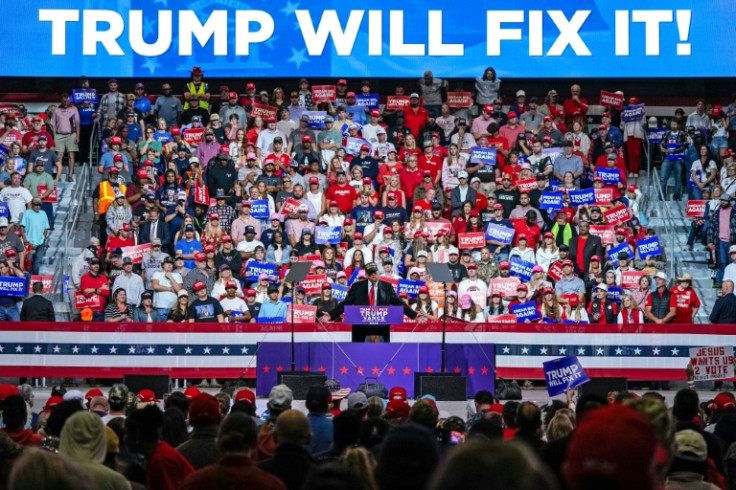
The most serious and visually dramatic attempt occurred on a warm Saturday evening in Butler, Pennsylvania, during a campaign rally as Trump sought the presidency. At approximately 6:11 p.m. EDT, 20-year-old Thomas Matthew Crooks, perched on the roof of a nearby building about 130 yards from the stage, opened fire with an AR-15-style rifle.
Trump was speaking when the shots rang out. He clutched his right ear, ducked behind the podium as Secret Service agents swarmed him, and was rushed offstage with blood visible on his face. A bullet grazed the upper part of his right ear. One rally attendee, 50-year-old former fire chief Corey Comperatore, was killed while shielding his family. Two others were critically injured.
Crooks, a registered Republican with a history of searching for both Trump and President Joe Biden online, was killed by a Secret Service counter-sniper. The FBI labeled it an assassination attempt and potential act of domestic terrorism, though his exact motive remains unclear despite extensive investigation. The incident prompted widespread scrutiny of Secret Service lapses, including failure to secure the rooftop.
Trump raised his fist in a iconic image as he was escorted to a vehicle, later telling supporters he felt “very lucky” and crediting divine intervention. The event galvanized his base, boosted campaign donations and shifted the national conversation toward unity and security in the lead-up to the November 2024 election.
Attempt 2: Trump International Golf Course, Florida — September 15, 2024
Two months later, on a Sunday afternoon in West Palm Beach, Florida, the second attempt unfolded while Trump was golfing at his private club. Around 1:31 p.m., Secret Service agents spotted a rifle barrel protruding from bushes near the course perimeter, roughly 300-500 yards from where Trump was playing on the fifth fairway.
The suspect, 58-year-old Ryan Wesley Routh, a roofer and vocal supporter of Ukraine who had expressed strong anti-Trump views online, had reportedly positioned himself hours earlier. Agents fired at Routh, who fled but was arrested shortly after on Interstate 95. No shots were fired at Trump, and he was unharmed.
Routh faced federal charges including attempted assassination. Prosecutors highlighted his online activity and apparent intent to prevent Trump’s election. He was later sentenced to life in prison. The episode again highlighted perimeter security challenges and led to further reviews of protection for high-profile figures.
This attempt came amid heightened tensions during the final stretch of the 2024 campaign. Trump used the incidents to portray himself as a fighter against a “rigged system,” resonating with voters concerned about law and order.
Attempt 3: White House Correspondents’ Dinner, Washington — April 25, 2026
The third attempt occurred Saturday night, April 25, 2026, at the Washington Hilton during the annual White House Correspondents’ Dinner, an event Trump attended as sitting president. Gunshots erupted near a security checkpoint outside the ballroom around 8:36 p.m. as Trump, First Lady Melania Trump, Vice President JD Vance and Cabinet members were inside.
A 31-year-old man identified as Cole Tomas Allen of Torrance, California, allegedly charged the checkpoint armed with a shotgun, handgun and knives. Shots were exchanged; one law enforcement officer was struck in a bullet-resistant vest but uninjured. Secret Service agents swiftly evacuated Trump and others. No serious injuries were reported among attendees.
Allen, described as a tutor and amateur video game developer, was taken into custody. He faces charges including attempted assassination, using a firearm in a crime of violence and assault on a federal officer. Authorities believe he acted alone, though motives are under investigation. Trump later posted footage on Truth Social and addressed the nation, vowing to “keep going” as he did after Butler.
The incident at the same venue where President Ronald Reagan was shot in 1981 renewed debates on political rhetoric, media events and presidential security in an era of heightened polarization.
Broader Context and Impact
Beyond these three, Trump has faced additional threats, including an Iran-linked plot and a February 2026 Mar-a-Lago incident where Secret Service killed an intruder. Officials have cited foreign actors, but the primary attempts remain the 2024 pair and the 2026 dinner shooting.
These events have profoundly shaped Trump’s second term. He has referenced surviving them as evidence of divine protection and used the narrative to push for stronger law enforcement and border policies. Public polling suggested the attempts influenced voter sentiment in 2024, with many viewing them as emblematic of national turmoil.
Critics argue intense political rhetoric from all sides contributes to such violence, while supporters see targeted persecution. Investigations continue to examine mental health, online radicalization and security protocols. The Secret Service has implemented reforms post-Butler, yet challenges persist in protecting leaders amid mass events.
Legacy of Resilience Amid Division
Trump’s responses — from the fist pump in Butler to defiant statements after the dinner — have cemented a public image of unyielding strength. “They keep trying, and I keep winning,” he has said in variations, framing the attempts as part of a larger battle.
For the nation, the attempts serve as sobering reminders of vulnerability. In a deeply divided country, they highlight risks of escalating rhetoric and the need for civil discourse. As Allen’s case proceeds and reviews of the latest security breach unfold, questions linger: How many more threats must leaders face before systemic changes take hold?
The three attempts on Donald Trump have not only tested personal security but also the fabric of American democracy. From Pennsylvania fields to Florida fairways to Washington ballrooms, each incident adds to a timeline of peril that continues to influence politics, policy and public trust. As the country moves forward, the full repercussions of these moments will shape history for years to come.
You must be logged in to post a comment Login