Connect with us

Business

TKO Group Holdings, Inc. (TKO) Q4 2025 Earnings Call Transcript

Published

on

OneWater Marine Inc. (ONEW) Q1 2026 Earnings Call Transcript

TKO Group Holdings, Inc. (TKO) Q4 2025 Earnings Call February 25, 2026 5:00 PM EST

Company Participants

Seth Zaslow – Senior VP & Head of Investor Relations
Ariel Emanuel – Executive Chair & CEO
Mark Shapiro – COO, President & Director
Andrew Schleimer – Chief Financial Officer
Nick Khan

Conference Call Participants

Advertisement

Brandon Ross – LightShed Partners, LLC
Stephen Laszczyk – Goldman Sachs Group, Inc., Research Division
Benjamin Swinburne – Morgan Stanley, Research Division
David Karnovsky – JPMorgan Chase & Co, Research Division
Peter Supino – Wolfe Research, LLC
Ryan Gravett – UBS Investment Bank, Research Division

Presentation

Operator

Advertisement

Good afternoon. Thank you for attending the TKO Fourth Quarter and Full Year 2025 Earnings Call. My name is Cameron, and I’ll be your moderator for today. [Operator Instructions] And I would now like to pass the conference over to your host, Seth Zaslow, Head of Investor Relations. Please proceed.

Seth Zaslow
Senior VP & Head of Investor Relations

Good afternoon, and welcome to TKO’s Fourth Quarter and Full Year 2025 Earnings Call. A short while ago, we issued a press release, which you can view on our Investor Relations website. A recording of this call will also be available via our website for at least 30 days. After prepared remarks from Ari Emanuel, TKO’s Executive Chair and Chief Executive Officer; Mark Shapiro, TKO’s President and Chief Operating Officer; and Andrew Schleimer, TKO’s Chief Financial Officer, will open the call for questions.

Advertisement

Mark and Andrew will be handling the Q&A. The purpose of this call is to provide you with information regarding our fourth quarter and full year 2025 performance. I want to remind everyone that the information discussed will include forward-looking statements and/or projections that involve risks, uncertainties and assumptions. Please see our filings with the Securities and Exchange Commission for further detail.

If these risks or

Advertisement
Continue Reading
Click to comment

Leave a Reply

Your email address will not be published. Required fields are marked *

Business

Jobs to be created as new North East public sector procurement solution launched

Published

on

Business Live

The £20bn NEPRO Innovation is a platform through which public sector organisations can procure goods, services, works and technology

NEPRO Innovation is the new £20bn project from NEPO and Constellia.

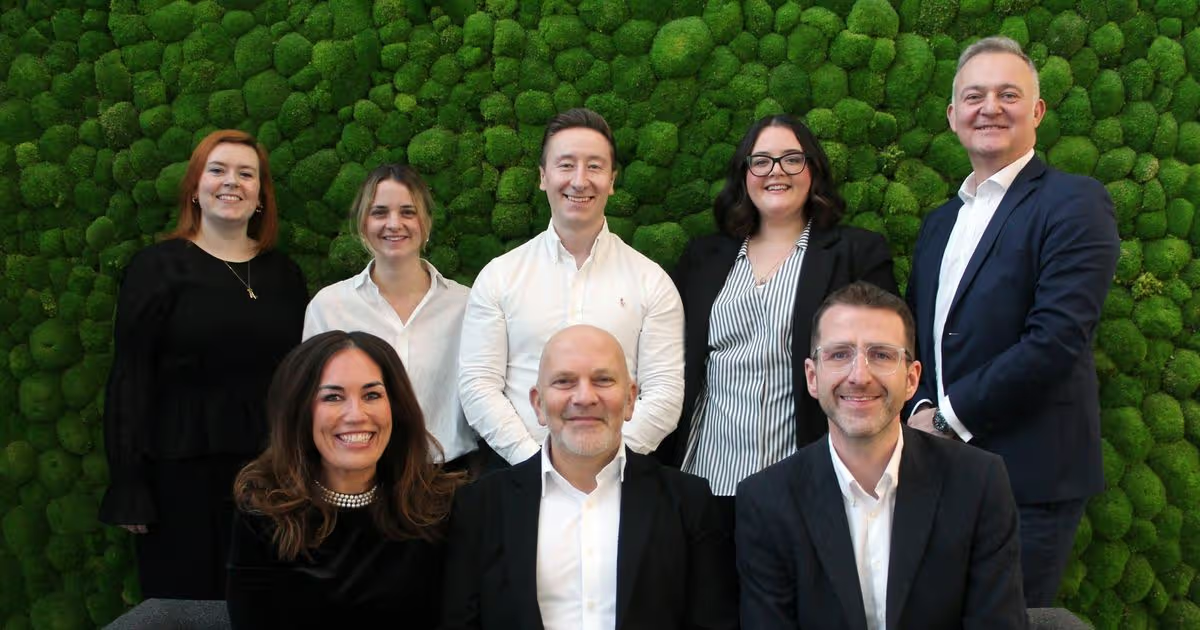
Top row from left: Katie Dawson, NEPRO procurement coordinator; Ruth Long, NEPRO lead; Michael Murray, NEPO commercial manager; Aimee Cook, Constellia operational procurement and systems lead, and Terence Milner, Constellia public sector and utilities director. Seated, from left: Nicola Shelley, NEPO managing director; Rob Levene, Constellia chairman, and Steven Sinclair, NEPO procurement and commercial director.(Image: NEPRO)

More than 30 jobs are to be created with the launch of a new service to connect North East firms with public sector contracts.

The North East Procurement Organisation (NEPO) says it will open a new office to serve its £20bn NEPRO Innovation solution. The project, which is being delivered in partnership with London-based counterpart Constellia, promises a “more flexible, transparent and efficient route to market for public sector organisations and suppliers alike”.

Based out of offices in The Catalyst building on the Newcastle Helix site, NEPRO Innovation is designed by the NEPO team. It is intended to help navigate multiple frameworks for different categories, including everything from IT infrastructure to consultancy and construction projects.

It will be delivered through NEPO’s neutral vendor model and will see Constellia build on and adapt the approach it has used across 300 organisations, managing more than £400m spending. Under the arrangement, Constellia works with organisations to source the most suitable and appropriate supplier.

Advertisement

It manages a marketplace of more than 4,000 suppliers, many of which are SMEs. The model can be adapted to different needs and is said open doors for small businesses, giving procurement teams additional capacity when they need it.

Steven Sinclair, procurement and commercial director at NEPO, said: “NEPRO Innovation is the latest addition to the NEPRO portfolio, representing a step change in how the public sector delivers outcomes through a single, compliant route to market. Enabled by the Procurement Act 2023 and designed by procurement professionals, it allows delivery of complex projects that may require cross-category expertise, commercial flexibility and robust contract management.

“It is particularly suited to authorities seeking innovative, outcome-focused solutions while maintaining the compliance, assurance and governance standards expected within the public sector. NEPRO Innovation is accessible to the public sector through our free NEPO Associate Membership, offering a straightforward, low-risk route to high-quality procurement outcomes.”

Rob Levene, chair of Constellia, added: “We’re delighted to partner with NEPO on their second neutral vendor framework. NEPO’s trusted reputation and public sector expertise complement Constellia’s established neutral vendor approach. We’ll be delivering NEPRO Innovation using the same proven methodology that has worked successfully across our existing client base.

Advertisement

“The national availability of this framework means public sector organisations across the UK can benefit from this combined strength.”

John McCabe, chief executive, North East Chamber of Commerce, added: “Unlocking the North East economy means making sure businesses of all sizes can access opportunity and compete on a level playing field. Too often, small and medium-sized enterprises find public procurement complex and difficult to navigate.

“NEPO’s more open and flexible approach through NEPRO Innovation is a positive step towards widening participation, strengthening local supply chains and ensuring more public sector investment supports North East growth. It is encouraging to see organisations from our region leading innovation that can deliver lasting economic impact.”

Advertisement
Continue Reading

Business

European stocks mixed with earnings in the spotlight; Nvidia delivers a beat

Published

on


European stocks mixed with earnings in the spotlight; Nvidia delivers a beat

Continue Reading

Business

Gov. Kathy Hochul demands $13.5B Trump tariff refunds for New Yorkers

Published

on

Gov. Kathy Hochul demands $13.5B Trump tariff refunds for New Yorkers

New York Gov. Kathy Hochul is demanding the Trump administration refund an estimated $13.5 billion in tariff payments to New Yorkers after the Supreme Court struck down a key legal basis for President Donald Trump’s import tariffs.

Citing estimates from the Yale Budget Lab, Hochul said the average New York household has paid roughly $1,751 in additional costs since the tariffs were enacted last year — money she argues should now be returned.

Advertisement

“These senseless and illegal tariffs were just a tax on New York consumers, small businesses and farmers — and that’s why I’m demanding a full refund,” Hochul said Tuesday. “I’ll never stop fighting for New Yorkers, and that means staying focused on putting more money back in your pockets — not ripping it away.”

In a 6-3 decision issued Feb. 20, the Supreme Court ruled that Trump’s use of the International Emergency Economic Powers Act (IEEPA) to impose broad tariffs was unlawful, finding that it “does not authorize the President to impose tariffs.”

WILL REFUNDS BE ISSUED AFTER SUPREME COURT RULING ON TRUMP TARIFFS?

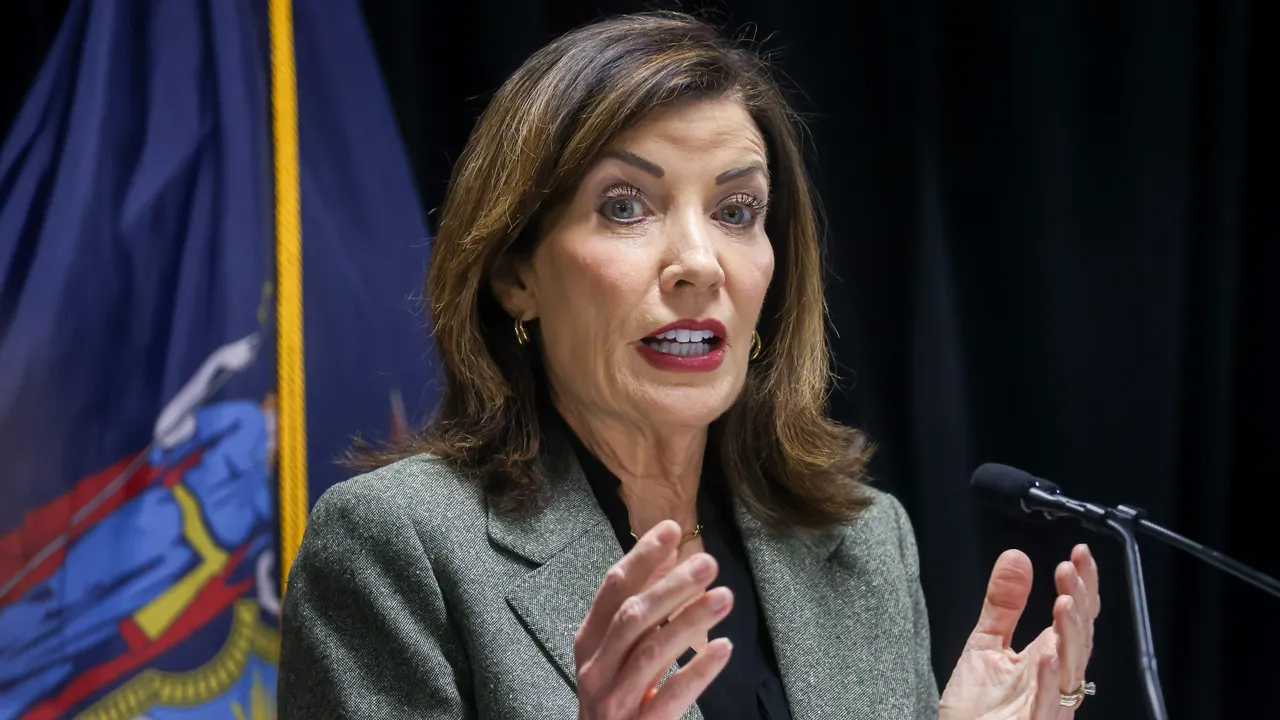
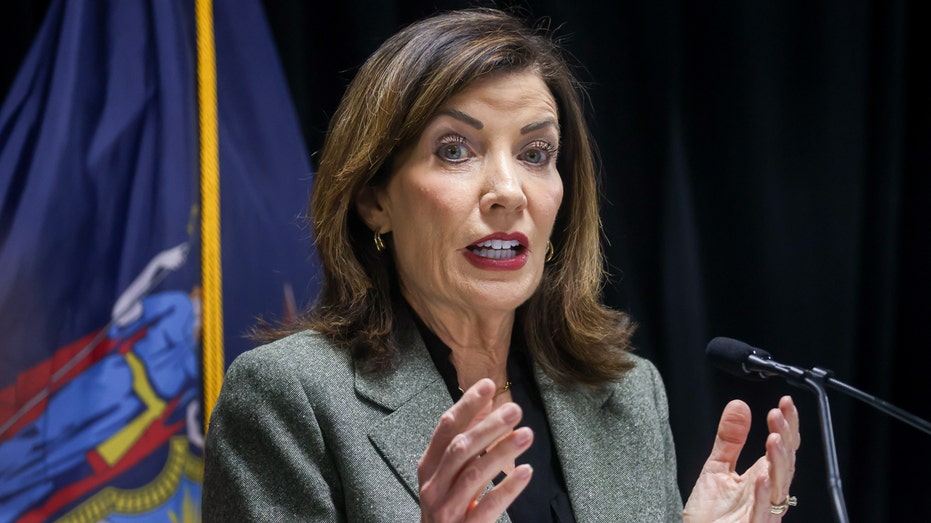
NY Governor Hochul making remarks

New York Gov. Kathy Hochul called for tariff refunds after the Supreme Court struck down portions of former President Donald Trump’s trade policy. (Michael Nagle/Bloomberg via Getty Images / Getty Images)

The majority opinion, written by Chief Justice John Roberts, did not address whether refunds should be issued.

Advertisement

Hochul joins other Democratic governors, including California Gov. Gavin Newsom and Illinois Gov. J.B. Pritzker, in calling for tariff refunds following the ruling.

Several companies have also moved to recover costs. FedEx, the global shipping and logistics company, sued the administration seeking a full refund of duties assessed under Trump’s order. The company said it incurred additional expenses to expedite shipments through customs and is seeking repayment with interest, as well as compensation for financial harm.

The White House did not immediately respond to FOX Business’ request for comment.

FEDEX SUES TRUMP ADMINISTRATION FOR FULL TARIFF REFUNDS AFTER SUPREME COURT RULING ON IEEPA

Advertisement
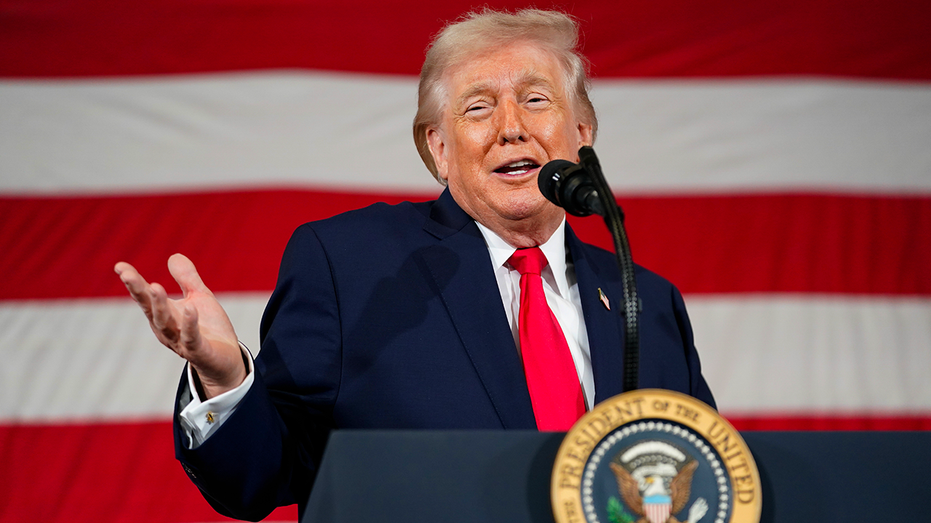
President Donald Trump speaking

President Donald Trump said he would explore alternative legal avenues to maintain tariffs following the Supreme Court’s ruling. (Nathan Howard/Getty Images / Getty Images)

Trump declined to say during a news conference last week whether the administration would provide refunds.

“I guess it has to get litigated for the next two years. So they write this terrible defective decision, totally defective. It’s almost like not written by smart people. And what do they do, they don’t even talk about that,” Trump said.

After the ruling, Trump announced a 10% global tariff and said he would look into alternative legal avenues to keep them in place. He later raised the tariff to 15%.

Hochul also pointed to a $30 million tariff relief proposal she introduced last month aimed at assisting New York farmers and small businesses impacted by higher costs.

Advertisement

She said over 80% of agrochemical imports and 70% of farm machinery imports are subject to tariffs of at least 10%, making it difficult for farmers to avoid higher prices due to limited alternative suppliers.

GET FOX BUSINESS ON THE GO BY CLICKING HERE

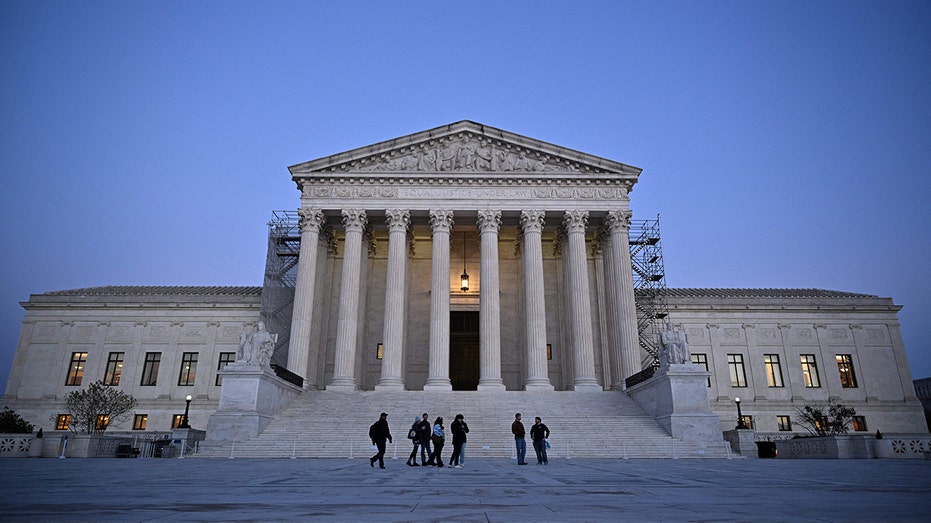
People walk past the US Supreme Court in Washington, DC

The U.S. Supreme Court ruled 6-3 that the International Emergency Economic Powers Act does not authorize the president to impose broad tariffs. (MANDEL NGAN/AFP via Getty Images / Getty Images)

Farmers across the state are facing increased expenses for fertilizer and equipment, with some reporting cost increases of up to $20,000 annually, Hochul said. Milk exports have fallen 7%, she added.

Despite the Court’s ruling, Hochul said the “damage has already been done” for many farmers.

Advertisement

FOX Business’ Eric Revell and Bonny Chu contributed to this report.

Continue Reading

Business

Analysis-Japan’s Takaichi gets her doves in a row with BOJ board appointees

Published

on


Analysis-Japan’s Takaichi gets her doves in a row with BOJ board appointees

Continue Reading

Business

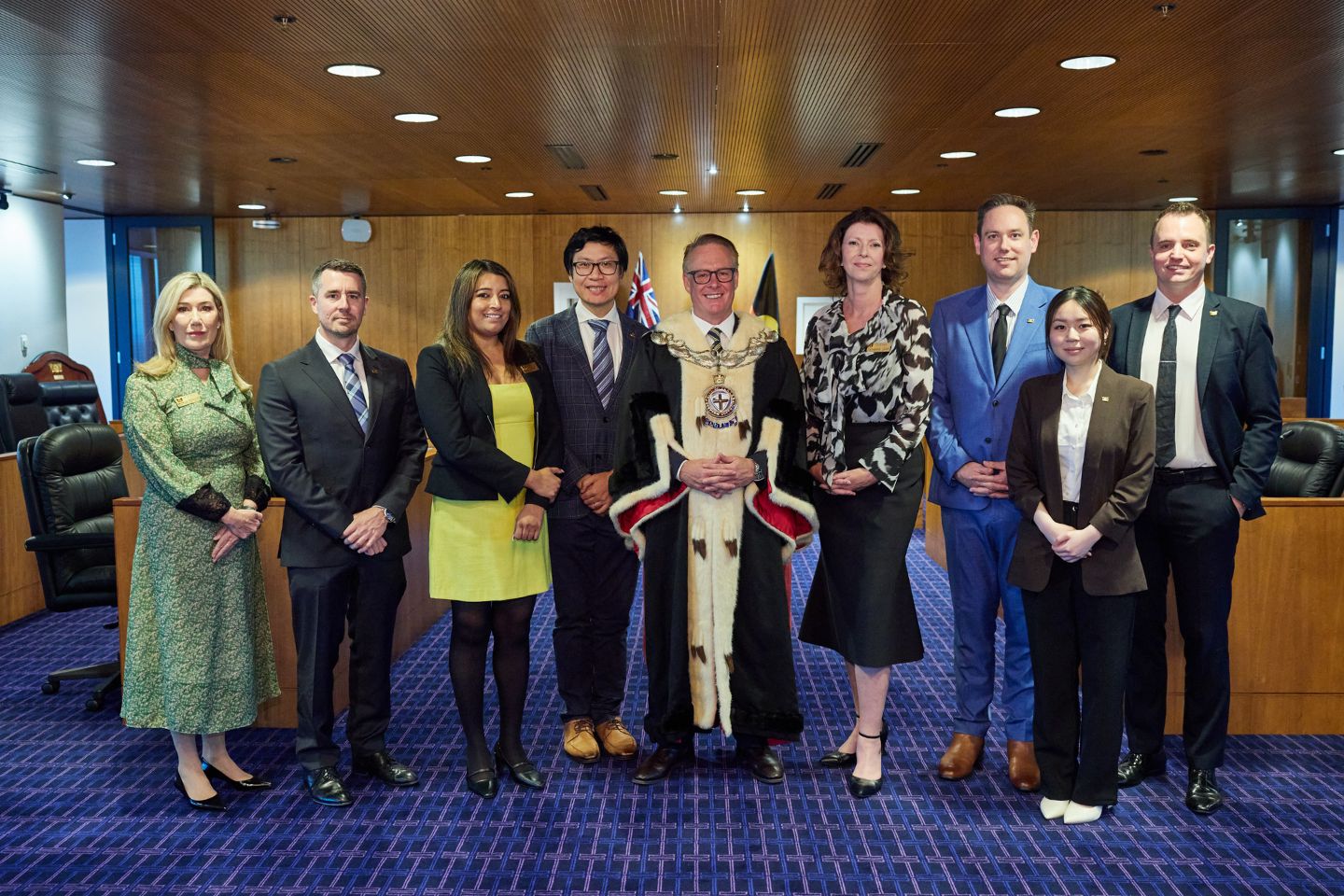
City of Perth council to spend $135k to tackle psychosocial risks

Published

on

City of Perth council to spend $135k to tackle psychosocial risks

The City of Perth council has voted to cut back on the suggested $280,000 spend to tackle workplace issues, including senior executives’ exits and harm that required medical intervention.

Continue Reading

Business

Oil Futures Settle Lower Awaiting U.S.-Iran Moves

Published

on

Oil Futures Settle Lower Awaiting U.S.-Iran Moves

1502 ET – Crude futures settle lower as the market looks to Thursday’s talks between the U.S. and Iran. Estimates of the risk premium baked into the price go anywhere from $4 to $10 a barrel, Phil Flynn of the Price Futures Group says in a note. “I would argue that it’s fairly subdued,” with President Trump’s record of trying to do the least damage to oil facilities and the market, he says, citing last year’s attacks on Iranian nuclear facilities and this year’s ouster of Venezuela’s leader. A blockade of the Strait of Hormuz could create “real supply headaches,” but “there’s still talks in Geneva and while it’s unlikely that the tensions will go away any sign of a peace deal could see an evaporation of $7 to $10 in oil very quickly.” WTI and Brent fall 1% to $65.63 and $70.77 a barrel, respectively.(anthony.harrup@wsj.com)

Oil Retreats With U.S.-Iran Tensions As Key Driver

1555 GMT – Oil prices retreat as traders assess risks to supply in the Middle East ahead of a third round of nuclear talks between the U.S. and Iran. In afternoon trading, Brent crude slips 0.4% to $70.85 a barrel, while WTI is down 0.5% to $65.50 a barrel after rising earlier in the session. “Most of the recent price increase is due to a widening risk premium,” analysts at Commerzbank say. “The price is thus well above the fair price of oil, which could be explained by fundamental factors alone.” On Friday, a barrel deliverable in one month cost $3.50 more than oil scheduled for delivery in seven months. Compared with 12-month delivery, the premium widened to more than $5. “The last time the time spreads were higher was in June 2025, when the 12-day war between Israel and Iran took place,” the analysts say. (giulia.petroni@wsj.com)

Copyright ©2026 Dow Jones & Company, Inc. All Rights Reserved. 87990cbe856818d5eddac44c7b1cdeb8

Continue Reading

Business

Adesso reports strong Q4 margin, issues 2026 guidance

Published

on


Adesso reports strong Q4 margin, issues 2026 guidance

Continue Reading

Business

At Close of Business podcast February 26 2026

Published

on

At Close of Business podcast February 26 2026

Sam Jones and Nadia Budihardjo discuss a new research methodology at UWA.

Continue Reading

Business

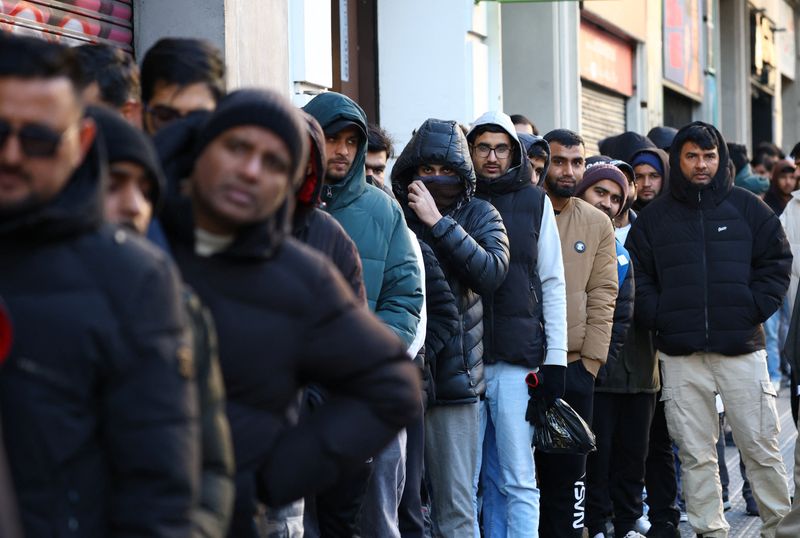
Spain’s looming migrant amnesty strains services, sends applicants scrambling

Published

on

Spain’s looming migrant amnesty strains services, sends applicants scrambling


Spain’s looming migrant amnesty strains services, sends applicants scrambling

Continue Reading

Business

Liraglutide still a ‘decent market’ despite Novo’s price moves: Siddharth Mittal, Biocon

Published

on

Liraglutide still a ‘decent market’ despite Novo’s price moves: Siddharth Mittal, Biocon
As competition intensifies in the global GLP-1 market, the spotlight has shifted to how generic players are positioning themselves amid pricing pressures from innovators. In an interaction with ET Now, Siddharth Mittal,CEO & MD, Biocon shared his outlook on the company’s liraglutide launch in the US and Europe, the evolving competitive landscape, and the roadmap for semaglutide.

On the potential impact of Novo Nordisk’s decision to cut prices for semaglutide, Mittal suggested that the broader market dynamics have already undergone significant change over the past few years.

“See, let us step back. A couple of years back, liraglutide was almost $5 billion in global sales for Novo Nordisk. Since then, it has become a $1 billion product for Novo Nordisk, and patients have moved to Ozempic and Mounjaro. So there has, of course, been a degrowth that we have already seen. But there are patients who continue to take liraglutide even today, and that is where a generic liraglutide will bring down the cost for these patients and the payers. We definitely do not expect market growth in terms of volumes, but in terms of generic penetration, it should be a fairly decent market for everyone. Today, there are very limited players in the US who have commercialised generic liraglutide, and we are very well placed and are going to launch the product very soon in the market,” he said.

While acknowledging that the product is no longer the multibillion-dollar opportunity it once was, Mittal emphasised that limited competition in the generic space still makes it attractive.

Advertisement

Beyond the US, Europe remains a key focus area. The company has already rolled out liraglutide in several European markets and plans to deepen its presence.


“We have already launched the product in a few markets in Europe and will continue to launch it in many more European countries in the coming quarter. Apart from the US and Europe, we think there is a big opportunity in emerging markets where we have already done the filing and our file is under review. In countries, especially tender-based markets in Latin America or the Middle East, the cost of treatment is prohibitively high for branded drugs. If a lower-cost option with a generic drug is available, we expect volumes to expand. Next year, we expect approvals from some emerging market countries, and we are very optimistic that this will become an important growth driver for us,” he noted.
In Europe, the early traction has been encouraging. The company has partnered with Zentiva for multiple markets while also going direct in select geographies such as the Netherlands.“We have launched the product in many markets through our partner Zentiva and have also taken it directly to a few markets such as the Netherlands. The Netherlands is a tender market, and we have secured a few tenders there. In just one market such as the Netherlands, we have almost 40% market share. We will be taking this product to many other markets directly. After the acquisition of the biosimilars business from Viatris, we have a strong presence in select European markets such as Germany. So far, we have seen a very encouraging uptick. In our December quarterly results, we had 24% growth in our generic segment and the majority of that growth came from the liraglutide launch in Europe,” Mittal said.

He added that several competitors who were earlier working on liraglutide have shifted their focus to semaglutide after facing regulatory hurdles, resulting in a narrower competitive field.

On whether Novo could extend price cuts for semaglutide to other markets, Mittal remained cautious.

“That is possible, and we have already seen that in India where prices have come down. There is head-to-head competition between Mounjaro and Ozempic, and that is impacting pricing decisions. But it is for Novo to comment on what action they will take in reaction to what Lilly is doing,” he said.

Advertisement

Looking ahead, semaglutide remains a longer-term play. The company has initiated filings in emerging markets and select developed markets.

“We started filing our semaglutide in emerging markets and markets such as Canada, Brazil, and Saudi Arabia a few quarters back. We expect the review cycle to be between 18 and 36 months. In the best case, we expect approval in 2027, followed by a launch. In India, we have received clinical trial approval for Phase III but have not yet started the trial. We are assessing whether to complete the trial or wait for approval in one of the other countries and then seek a clinical waiver,” Mittal explained.

He also clarified that India is not an immediate commercial focus, particularly after the divestment of the domestic formulations business to Eris Lifesciences two years ago.

“India is going to be a competitive market. Pricing is already quite competitive, and we do not commercialise any drug in India directly. Our focus right now is more on exports and emerging markets,” he said.

Advertisement

As the GLP-1 space evolves with pricing resets and shifting patient preferences, the strategy appears clear: target residual demand in legacy molecules like liraglutide while steadily building the pipeline for semaglutide in markets where timelines and pricing offer room for sustainable growth.

Continue Reading

Trending

Copyright © 2025