

Business
To exercise ESOPs, staff of listed cos can pledge shares in trading window closures


The regulator’s guidance is expected to benefit employees whose ESOP (employee stock option plans) exercise windows often overlap with trading window closures imposed around the declaration of financial results.
Companies usually prohibit trading by designated persons during such periods under insider trading rules. This was creating difficulties for employees who depend on financing arrangements to exercise vested options.
In an informal guidance letter issued to Avenue Supermarts, which operates the DMart supermarket chain, the regulator said designated persons can create or revoke pledges on company shares to avail of loans from banks or financial institutions for exercising employee stock options, provided the transactions are bona fide and receive pre-clearance from the compliance officer.
“This informal guidance provides regulatory comfort and practical clarity on pledge-related transactions undertaken for legitimate purposes, especially in connection with stock option exercises,” said Shabnam Shaikh, Partner, Khaitan & Co. “While the informal guidance remains non-binding in nature, the clarification is reassuring from both a compliance and implementation perspective, for both companies and employees,” said Shaikh.

Sebi said the determination of whether a transaction is bona fide would rest with the compliance officer of the company on a case-by-case basis under the firm’s code of conduct.
“Considering the ongoing IPO boom in India, and the increasing late-stage investments in pre-IPO and listed entities, ownership and share-linked incentives, and particularly employee stock options, are increasingly forming a significant component of employee compensation structures in India. Reflective of this trend, we are seeing that exercise prices are also no longer necessarily set at face value or deeply discounted values, and are now closer to prevailing fair market valuations, which has made the cost of exercising options and making the corresponding tax payments itself significant for employees,” Shaikh said. Sebi also said that the invocation of pledged shares by lenders would still attract contra-trade restrictions as it leads to a change in beneficial ownership and would be treated akin to a sale of shares.


In a post on social media, the Zerodha founder said there is “very little creativity” in the mistakes people make with money, especially when it comes to mixing insurance and investments.
Kamath pointed out that financial influencers, media platforms and finance experts have repeatedly warned against products such as Unit Linked Insurance Plans (ULIPs) and traditional endowment policies, yet sales of such products continue to rise.
According to him, the problem is no longer a lack of access to information. Consumers today can easily compare products online, run calculations, watch explainer videos or even use AI tools like ChatGPT and Claude to understand the hidden costs and weak returns associated with bundled insurance-investment products.
“Even a cursory Google search will tell you the problem,” Kamath said, adding that AI tools can now explain the math, hidden catches and better alternatives within minutes.
He argued that unlike health insurance – which often contains complex clauses around waiting periods, exclusions, room rent caps and settlement conditions – ULIPs and endowment plans are relatively easier to evaluate, making repeated mis-selling and poor decision-making harder to justify.
Kamath said health insurance deserves more sympathy because many policyholders only discover restrictive clauses at the time of claims, forcing them to pay significant amounts from their own pockets despite having coverage.His comments come at a time when retail participation in financial products has surged sharply, driven by social media awareness, fintech penetration and easier digital onboarding. However, financial experts have repeatedly cautioned that product complexity and aggressive sales tactics continue to push investors towards expensive or low-return products packaged as “safe investments” or “tax-saving solutions.”
ULIPs combine insurance with market-linked investments, while endowment plans typically offer life cover along with guaranteed savings components.
Critics argue that both products often carry high costs, lower transparency and weaker long-term returns compared with buying pure term insurance and investing separately through mutual funds or other market instruments.
He also shared a video on mistakes usually made by people that suggested ways to rectify these mistakes.
(Disclaimer: The recommendations, suggestions, views, and opinions given by the experts are their own. These do not represent the views of The Economic Times.)

The larger of the two issues is RFBL Flexi Pack, which aims to raise Rs 35.33 crore through an entirely fresh issue of 70.65 lakh shares. The company has fixed a price band of Rs 47-50 per share. At the upper band, retail investors will need to invest Rs 3 lakh, as the minimum application size is 6,000 shares. RFBL will list on the NSE SME platform. Currently, the GMP for the IPO is zero.
Incorporated in 2005, RFBL manufactures and trades printed multilayer flexible packaging materials, including plastic film rolls and pouches used by clients in food, pharmaceuticals and home care segments. The Gujarat-based company follows a B2B model and offers customised packaging solutions using materials such as BOPP, CPP and laminated films.
On the financial front, RFBL reported total income of Rs 135.46 crore in FY25, compared with Rs 79.96 crore in FY24, while profit after tax rose to Rs 8.33 crore from Rs 5.79 crore a year earlier.
The company plans to use IPO proceeds for capital expenditure, working capital needs and general corporate purposes.
The second issue, Goldline Pharmaceutical, is looking to raise Rs 11.61 crore through a fresh issue of 27 lakh shares. The company has fixed a price band of Rs 41-43 per share, with a minimum retail investment of Rs 2.58 lakh for 6,000 shares. Goldline will list on the BSE SME platform.
Goldline operates an asset-light pharmaceutical marketing business, selling medicines under its “Goldline” brand across segments including cardiology, orthopaedics, paediatrics, diabetes care and critical care. Rather than manufacturing products in-house, the company partners with third-party manufacturers, allowing it to scale distribution with lower fixed costs.Its products are sold across states including Maharashtra, Madhya Pradesh, Odisha, Jharkhand, Tamil Nadu, Rajasthan and Bihar.
Financially, Goldline reported FY25 revenue of Rs 28.06 crore, up from Rs 23.57 crore in FY24, while profit after tax rose to Rs 2.83 crore from Rs 1.81 crore.
The company plans to utilise most of the IPO proceeds toward repayment of borrowings worth Rs 8.35 crore.
Business
Concurrent Gainers: 14 stocks gain for 5 straight sessions, rally up to 25% – Consistent performers

Over the five trading sessions ending May 08, the Sensex benchmark gained 0.54%, rising 415 points to close at 77,328. The index ended higher in two of the five sessions. Despite the modest gain in the benchmark, 42 stocks from the BSE 500 index advanced in each of the five consecutive sessions between May 4 and May 08. Among these, 14 stocks posted gains in all five sessions, delivering cumulative returns of up to 25% during the period. (Data Source: ACE Equity)

The Principal Financial Group (The Principal®) is a global investment management leader offering retirement services, insurance solutions and asset management. The Principal offers businesses, individuals and institutional clients a wide range of financial products and services, including retirement, asset management and insurance through its diverse family of financial services companies. Founded in 1879 and a member of the FORTUNE 500®, the Principal Financial Group has $519.3 billion in assets under management1 and serves some 19.7 million customers worldwide from offices in Asia, Australia, Europe, Latin America and the United States. Principal Financial Group, Inc. is traded on the New York Stock Exchange under the ticker symbol PFG. For more information, visit www.principal.com.
Insurance products issued by Principal National Life Insurance Co (except in NY) and Principal Life Insurance Co. Plan administrative services offered by Principal Life. Principal Funds, Inc. is distributed by Principal Funds Distributor, Inc. Securities offered through Princor Financial Services Corp., 800/247-1737, Member SIPC and/or independent broker/dealers. Principal National, Principal Life, Principal Funds Distributor, Inc. and Princor® are members of the Principal Financial Group®, Des Moines, IA 50392.
Investing involves market risk, including possible loss of principal.

Earnings Strength And Easing Risks Support Markets
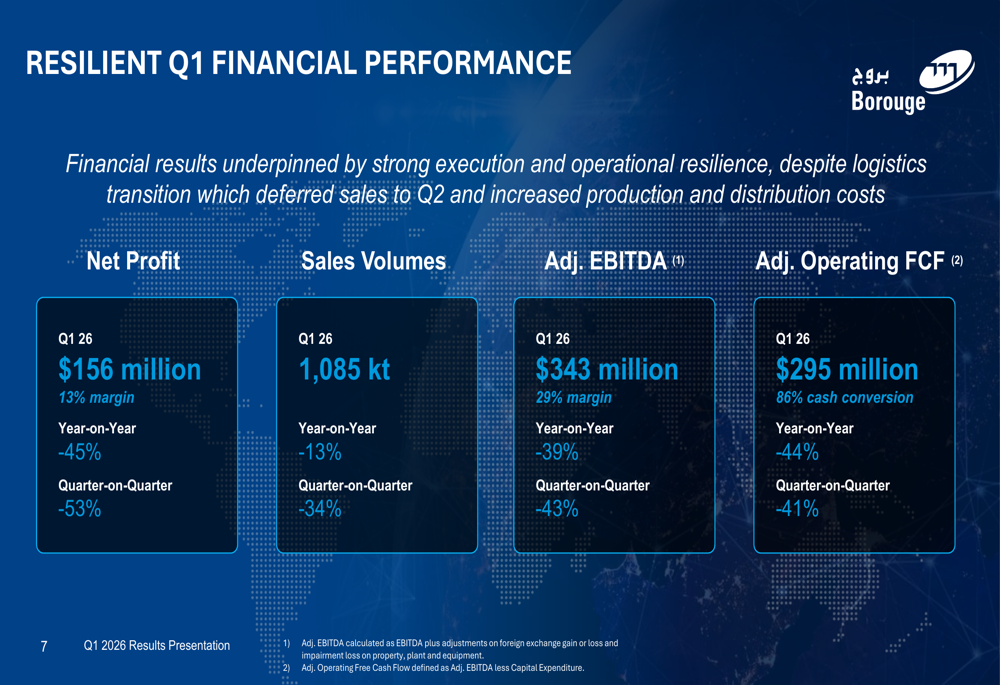
Borouge Q1 2026 slides: logistics disruption hits volumes, prices recover

U.S. imposes sanctions on Chinese satellite firms over military aid to Iran


Indonesia locates two Singaporeans missing after Mount Dukono eruption
Business
Looking for top star rated flexi cap mutual funds in 3 years? Check these top 6 funds with over 15% gain – Looking for top star rated funds?

According to the screener, top Star rated schemes show high quality schemes which are assigned 5 stars by Value Research, based on different quantitative and qualitative parameters. 5 stars rated schemes are considered as the best schemes from the historical risk return point of view.
Business
$100 crude & 95 rupee: Why Arvind Kothari is still buying these 5 emerging themes despite the war

Edited excerpts from a chat:
How have you been tweaking your portfolio during the war? Did you load up on existing portfolio stocks during the fall or picked fresh ideas that looked even more promising?
At Niveshaay, we believe periods of geopolitical stress naturally necessitate revisiting our core ideas. The recent market correction, driven majorly by escalating tensions and the Iran conflict, caused a lot of fundamentally strong companies to become highly attractive in terms of valuation. We used this volatility to our advantage. Based on long-term growth prospects and analyzing which sectors stand to benefit the most in the new macroeconomic environment, we made strategic changes. We consolidated further on our high-conviction existing positions and simultaneously initiated new positions in emerging themes such as electrification, energy security, and data centers.
Given that the war is now more than 2 month-old, what is your estimate as to how much of the earnings hit are we about to take in FY27 as a result of soaring crude oil, rupee depreciation and geopolitical uncertainty impacting orders? Which sectors do you think will feel most of the pinch?
Quantifying the exact earnings hit is difficult at this juncture, but it is fair to say that the first half of FY27 will not be entirely smooth. Sectors that rely heavily on crude oil derivatives as raw materials, particularly chemicals, will take a major hit as their margins get squeezed by soaring input costs. We might also see similar margin pressures in paints and select FMCG segments. However, our philosophy is to stick to robust businesses and treat these macro shocks as one-off events. As long as the structural growth story of a company hasn’t changed, we expect earnings to catch up in the latter half of the financial year once the initial shock is absorbed.
If crude sustains closer to $100, what are the most material second-order effects investors should brace for across rupee, margins and demand?
Investors need to brace for widespread ripple effects. Sustained crude above $100 directly fuels overall inflation and exacerbates currency risks- it hits rural two-wheeler demand, tightens government fiscal math, and slows private capex ordering at the margin. A depreciating rupee severely impacts our import bills and eventually compresses corporate margins across multiple industries. However, every challenge creates a parallel opportunity. Sustained $100 crude fundamentally alters the cost-benefit analysis of traditional energy, making alternative technologies highly attractive. Sectors that had previously cooled down have suddenly hit the roof in terms of demand and relevance. The transition to alternative energy is accelerating, which is why we are seeing massive traction in renewables, electric vehicles (EVs), and crucial ancillary segments like power infrastructure. Additionally, as energy costs rise, businesses are prioritizing extreme energy efficiency, driving massive investments into upgraded infrastructure like advanced data center cooling systems. The key is to pivot toward these sectors where structural growth is being accelerated, rather than hindered, by high energy prices.
After the crash in March, the market recovered sharply in April. Is the rally surprising given that crude oil is still around the $90-100 mark and rupee around 94-95 against the dollar?
The sheer speed of the rally is somewhat surprising given the stark macroeconomic realities of $90-100 crude and the rupee hovering around 94-95. However, after enduring a painful 1.5-year bear market, we will happily take this recovery, regardless of how it has materialized. Obviously, the situation on the ground isn’t as rosy as the recent market action suggests. But markets are forward-looking, and domestic liquidity remains resilient. We will navigate this volatility by figuring our way out through a strict adherence to our investment framework.
How attractive do you think valuations are looking at at this stage across Nifty and the broader market?
Valuation attractiveness right now is highly sector-specific. There are certain high-pedigree sectors that we will never find “cheap” in traditional terms. Conversely, there are sectors that look optically cheap and attractive, but they lack catalysts and might not yield great outcomes—essentially value traps. Ultimately, it all comes down to earnings growth. Despite the broader market noise, we are witnessing robust and highly decent growth trajectories across the specific sectors and companies we actively track.
Tell us about sectoral themes that you are most bullish on for the long-term.
We are positioning our portfolio to capitalize on structural macro shifts. Our most bullish long term themes include:
• Electrification: With crude above $100 and energy supply chain dependencies exposed, there is a massive push for electrification, driving long-term demand across power and infrastructure companies.
• Energy Security: Nations are aggressively prioritizing self-reliance in energy generation.
• Data Centers: Expanding rapidly due to the massive digitization and AI boom.
• Electronics Manufacturing Services (EMS): Benefiting heavily from the global supply chain realignments.
• Aerospace & Defence: Driven by government spending and indigenization.
Aerospace and defence stocks have given handsome returns in April. Are valuations looking stretched in the near term? Given the huge long-term growth runway in aerospace due to the value migration we are seeing, which parameters do you look at while picking stocks?
The narrative around defense and aerospace is exceptionally strong right now, and despite the recent run-up, the absolute market capitalization of this sector remains relatively small. Indigenous manufacturing and self-sufficiency are the absolute need of the hour. Within this space, precision engineering is emerging as a highly lucrative sub-sector. While near-term valuations are always subjective and may appear stretched to some, our focus is on the deep moats these companies have established. We look at the specialized capabilities, rigorous certifications, and R&D these firms have built over the last 5 to 10 years, which are incredibly difficult for new entrants to replicate. If the anticipated order book growth materializes, these valuations are entirely justified and will leave us with excellent outcomes.
Zerodha’s Nithin Kamath flags ULIP, endowment traps; says health policies remain complex

Digital Asset Market Clarity Act Heads to Senate Banking Markup This Week

WWE Backlash 2026: 5 Last-minute predictions

Manchester United reach agreement with Casemiro over contract clause amid transfer speculation

US brings back mandatory military draft registration

Steven Gerrard disagrees with Gary Neville over ‘shock’ Chelsea and Arsenal claim | Football


-
 Crypto World22 hours ago
HarrisX Poll Found 52% of Registered Voters Support the CLARITY Act
-

 NewsBeat6 days ago
Channel 5 – All Creatures Great and Small series 7 new post
-

 Crypto World2 days ago
Upbit adds B3 Korean won pair as Base token gains Korea access
-

 Tech4 days ago
Image AI models now drive app growth, beating chatbot upgrades
-
 NewsBeat2 days ago
NCP car park operator enters administration putting 340 UK sites at risk of closure
-

 News Videos6 days ago
AP Dhillon – Old Money (Official Audio)
-

 Fashion14 hours ago
Weekend Open Thread: Marianne Dress
-

 Sports6 days ago
Five killed in Texas plane crash identified as Amarillo pickleball players
-
Entertainment6 days ago
New Netflix Movies in May 2026 — My Top 3 Picks to Stream
-
Crypto World7 days ago
Pi Network Mandates Protocol 23 Upgrade for All Mainnet Nodes Before May 15 Deadline
-

 Entertainment6 days ago
Melissa Joan Hart and More Stars Attend 2026 Kentucky Derby
-
Entertainment6 days ago
Anna Nicole Smith’s Daughter Attends 2026 Kentucky Derby
-

 Crypto World6 days ago
Bitcoin mining equities rise in 2026 as BTC lags behind
-

 Business6 days ago
Luka Doncic Injury Update: Doncic’s Hamstring Recovery Slows Lakers’ Hopes Against Thunder: Can He Run Yet?
-
Entertainment6 days ago
Venus Williams’ Best Met Gala Looks Over the Years
-

 Business7 days ago
Kuwait International Airport Resumes Operations After Closure as Regional Tensions Ease in 2026
-
Entertainment6 days ago
“Storage Wars” star Darrell Sheets' ex-wife breaks silence on his death
-

 Sports6 days ago
Is Man United v Liverpool on TV? Channel, streaming and how to watch Premier League fixture
-
 Entertainment7 days ago
After 2 Years, This Taylor Sheridan Neo-Western Doesn’t Have a Single Bad Episode
-
Crypto World6 days ago
Q1 2026 Tech Layoffs AI Wave Hits 81,747 as Firms Shift to AI Infrastructure
You must be logged in to post a comment Login