Connect with us
DAPA Banner

Business

Toast: Focus On ARR Growth And EBITDA Expansion

Published

on

Toast: Focus On ARR Growth And EBITDA Expansion
Continue Reading
Click to comment

You must be logged in to post a comment Login

Leave a Reply

Business

8 Common HR Tasks Made Easier With HR Automation

Published

on

Poorly designed and inadequately maintained workplaces are draining the UK economy of more than £71 billion a year, according to new research from facilities and security services company Mitie.

Managing people has never been simple. In the UK, where employment laws are detailed, and expectations around flexibility keep rising, day-to-day human resources (HR) work can feel relentless.

You’re juggling paperwork, systems, and people issues while trying to keep the business moving. That’s where HR automation steps in, quietly reshaping how teams operate and freeing you to focus on what really matters.

Below, you’ll see how automation takes some of the most common tasks and makes them smoother, faster, and far less stressful—without losing the human touch.

Task 1: Reducing Manual Overload in Core HR Operations

Teams manage numerous repetitive admin tasks that are tied to essential HR processes. Updating employee records, handling approval processes, and maintaining accurate employee data can quickly overwhelm even experienced HR personnel. Manual work also increases the risk of errors, especially when information is scattered across emails and spreadsheets.

This is why specialised solutions, including HR software for small UK firms, should become a core component of your organization’s digital transformation. Modern HR systems replace fragmented tools and ageing legacy systems with unified platforms.

Advertisement

With HR process automation, everyday business processes become more reliable. Tasks that once took hours now happen in the background, without disrupting how your organization works.

Task 2: Performance, Feedback, and Growth Made Continuous

Annual reviews alone rarely support modern work patterns; that’s why companies must keep up. Many organisations now embrace ongoing performance tracking, regular feedback, and clear links to career development to encourage employee satisfaction. But doing this manually across teams is time-consuming.

Digitising processes enables consistent performance management, from everyday check-ins to formal performance appraisal cycles. A goal setting software helps employees understand expectations, track progress, and stay motivated—without creating extra admin load for HR. Moreover, with integrated tools, you can align feedback with talent development goals and provide clearer paths for growth.

Task 3: Smarter Hiring and a Better First Impression

Recruitment is about more than filling roles. It’s about shaping a strong candidate experience from the first click to the first day. Yet many teams struggle to manage CVs, interviews, and feedback efficiently, even with applicant tracking systems in place.

Advertisement

Automation supports recruiting & talent acquisition by streamlining shortlisting, scheduling, and communication. HR automation tools with artificial intelligence, machine learning, and natural language processing integrations ensure no candidate slips through the cracks and help surface the best-fit applicants faster. This saves time and builds trust with candidates who feel informed and respected throughout the process.

Task 4: Onboarding That Sets People Up for Success

The early weeks of a new hire’s journey strongly influence long-term employee retention. In most organizations, though, onboarding is often inconsistent, particularly across multiple locations or time zones. Documents get missed. Training is delayed. New starters feel lost.

Automated workflows create a structured yet flexible onboarding experience. A central learning management system (LMS), which is a software for delivering training and compliance materials, can deliver policies, training modules, and compliance tasks automatically. Combined with employee self-service (ESS) portals—web tools letting staff manage their information—new hires can access information when they need it, improving both confidence and the wider employee experience.

Task 5: Pay, Benefits, and Compliance Without the Headaches

Few tasks carry more risk than payroll processing and benefits administration. Mistakes can damage trust and expose you to legal trouble. Add regulatory requirements, changing tax rules, and benefits enrolment, and the pressure increases.

Advertisement

Automation supports benefit and payroll administration through tools like payroll orchestration (software that streamlines payroll tasks), tax software, and compliance reporting software. These systems handle calculations, deadlines, and compliance checks automatically, reducing errors while protecting sensitive HR data. Strong data privacy regulations, role-based access controls (setting specific system permissions by job role), and a robust security solution help ensure employee trust remains intact.

Task 6: Engagement in Everyday HR Interactions

Employees increasingly expect quick answers and control over their own information. Without automation, HR teams can become bottlenecks, answering the same questions repeatedly and chasing forms.

Digital tools improve employee engagement through responsive employee-centric programs and intuitive ESS portals. Staff can update details, request leave, or check benefits without delay. At the same time, HR workflow automation ensures requests flow correctly behind the scenes.

Ensuring a helpful and personal approach is particularly valuable during employee onboarding for remote teams. New hires can be guided through clear, step-by-step processes that introduce them to company culture, expectations, and colleagues without relying on ad-hoc emails or last-minute calls. When onboarding feels organised and welcoming, employees are more likely to settle in quickly and stay engaged for the long term.

Advertisement

Advanced tools also help create structure around communication, feedback, and development, ensuring no one is overlooked. Scheduled check-ins, pulse surveys, and learning prompts can all be triggered automatically, giving HR better visibility into how people are coping and where extra support may be needed.

Task 7: Supporting Modern Ways of Working

The shift towards hybrid and flexible working has changed what employees expect from HR. People want consistency, fairness, and easy access to support, whether they’re in the office, at home, or splitting their time between the two. Without the right systems, this quickly becomes difficult to manage and can create frustration on all sides.

With technology, HR teams play a crucial role in successful hybrid work arrangements by ensuring everyone operates from the same playbook. Automated workflows, shared dashboards, and centralised policies give employees equal access to information, regardless of where they work. HR can monitor patterns, spot issues early, and support managers with real-time data rather than guesswork.

Task 8: Turning HR Data Into Insight, Not Noise

Finally, automation isn’t just about saving time but about making smart decisions. Centralised HR technology turns everyday activity into data-driven insights that help improve how your organisation functions. Trends in absence, performance, or engagement become visible, helping you act early.

Advertisement

When used well, it gives HR professionals the space to think strategically, support people properly, and contribute meaningfully to business growth.

Conclusion

HR automation doesn’t remove the human element; it protects it. By streamlining admin, improving accuracy, and enhancing the employee journey, you create space for empathy, strategy, and growth. In a fast-changing UK workplace, automation isn’t a luxury. It’s a practical way to make HR work better for everyone.

Advertisement
Continue Reading

Business

Nomura Wealth Builder Fund Q4 2025 Commentary

Published

on

Nomura Wealth Builder Fund Q4 2025 Commentary

Nomura Wealth Builder Fund Q4 2025 Commentary

Continue Reading

Business

Earnings Reports Every Quarter? The Pros and Cons From Wall Street Insiders

Published

on

Earnings Reports Every Quarter? The Pros and Cons From Wall Street Insiders

Earnings Reports Every Quarter? The Pros and Cons From Wall Street Insiders

Continue Reading

Business

(VIDEO) Is Latto Pregnant? Latto Pregnancy Rumors Explode as Rapper Teases Announcement Amid Fan Speculation

Published

on

Latto

Rapper Latto has reignited swirling pregnancy rumors with a mysterious teaser posted March 19, 2026, prompting fans and media to speculate she may be expecting her first child with longtime partner 21 Savage. The Atlanta native, born Alyssa Michelle Stephens, shared a trailer for an upcoming release at midnight, featuring her interacting with a baby cheetah and subtle hints that many interpreted as a pregnancy reveal.

Latto
Latto

The clip, which dropped on her Instagram and quickly went viral, shows Latto in a serene setting cradling the animal while overlay text and music build anticipation. Fans flooded comments with congratulations, assuming the “Big Mama” artist — who has playfully referenced motherhood in lyrics — was confirming months of speculation. By March 20, outlets like Hot97 reported the teaser tied to a new album announcement titled “Big Mama,” with Latto seemingly debuting a baby bump in promotional visuals and a music video for the track “Business & Personal.”

In the video, released alongside the album news, Latto showcases what appears to be a growing belly, holds a positive pregnancy test and tours a nursery setup. No father was explicitly named, though her confirmed relationship with 21 Savage — whom she called “my husband” in a 2025 TMZ interview — fueled assumptions. Celebrities and fans poured in well-wishes, with comments like “Congratulations queen!” dominating her posts.

The buzz traces back to late 2025, when Latto’s Japan performance sparked initial chatter over perceived changes in her figure. She addressed it lightly, captioning a post about eating “tew much wagyu & ramen” to explain any bloating. Rumors persisted through December’s “Christmas in Clayco” event, where she wore an oversized fur coat that some claimed concealed a bump. Latto has not directly confirmed or denied the latest wave, but the March 19-20 rollout leaned into the narrative.

Earlier in 2026, Latto trolled fans repeatedly. In February, she posted an Instagram Story video wearing a prosthetic baby bump, rubbing it before bursting into laughter — a clear prank amid ongoing accusations she was hiding a pregnancy. HotNewHipHop and other sites covered the stunt, noting fans still believed she and 21 Savage were expecting despite the joke. AI-generated videos and edited clips further muddied waters, with some circulating as “proof” before being debunked.

Advertisement

Latto has referenced family aspirations in past interviews, telling Cosmopolitan in 2023 she envisioned marriage and children as markers of true success. Lyrics in her 2025 collaboration with Summer Walker, “Go Girl,” include lines like “Big Mama, no kids,” which fans spun into trends mocking or celebrating hypothetical motherhood. She has never publicly confirmed being a parent.

The relationship with 21 Savage adds intrigue. Confirmed publicly in September 2025 after years of speculation and collaborations, Latto referred to him affectionately as “my man” and “husband” in interviews. The couple has kept personal details private, rarely posting joint content. If the pregnancy is real, it would mark her first child and align with her expressed desire for family life amid a thriving career.

As of March 20, 2026, no official medical confirmation or due date has surfaced. Latto’s team has not commented beyond the promotional material. The album “Big Mama” positions the theme centrally, blending personal storytelling with her signature confident delivery. Early reactions praise the rollout as clever marketing or genuine vulnerability.

Pregnancy speculation in hip-hop often amplifies scrutiny, especially for women balancing fame and family. Latto, known for hits like “Big Energy” and Grammy nods, has navigated rumors with humor, shutting down body-shaming while embracing her curves. Fans defend her privacy, while others demand clarity.

Advertisement

Whether the March announcement confirms the long-rumored news or continues the playful misdirection remains unfolding. Latto’s silence on direct questions keeps the conversation alive, with social media trending hashtags like #LattoPregnant and #BigMamaAlbum.

For now, the Atlanta rapper — who turns 27 this year — appears poised for a major personal and professional chapter, with fans eagerly awaiting more details from the self-proclaimed “Queen of Da Souf.”

Continue Reading

Business

Rhythm Pharmaceuticals, Inc. (RYTM) Discusses FDA Approval of IMCIVREE for Acquired Hypothalamic Obesity Transcript

Published

on

OneWater Marine Inc. (ONEW) Q1 2026 Earnings Call Transcript

Rhythm Pharmaceuticals, Inc. (RYTM) Discusses FDA Approval of IMCIVREE for Acquired Hypothalamic Obesity March 19, 2026 7:00 PM EDT

Company Participants

David Connolly – Head of Investor Relations & Corporate Communications
David Meeker – Chairman, President & CEO
Jennifer Chien – Executive VP & Head of North America
Alicia Fiscus – Senior VP & Head of Global Regulatory Affairs

Conference Call Participants

Advertisement

Simone Nasroodin – Wells Fargo Securities, LLC, Research Division
Tazeen Ahmad – BofA Securities, Research Division
Rohit Bhasin – Morgan Stanley, Research Division
Corinne Jenkins – Goldman Sachs Group, Inc., Research Division
Samantha Semenkow – Citigroup Inc., Research Division
Jonathan Wolleben – Citizens JMP Securities, LLC, Research Division
Brian Conley – Leerink Partners LLC, Research Division
Ellen Horste – TD Cowen, Research Division
Boran Wang – Guggenheim Securities, LLC, Research Division
Anthea Li – Jefferies LLC, Research Division
Lisa Walter – RBC Capital Markets, Research Division
Julian Pino – Stifel, Nicolaus & Company, Incorporated, Research Division

Presentation

Operator

Advertisement

Good day, and thank you for standing by. Welcome to the Rhythm Pharmaceuticals Conference Call. [Operator Instructions]

Please be advised that today’s conference is being recorded. I would now like to hand the conference over to your first speaker today, David Connolly, Investor Relations. Please go ahead.

David Connolly
Head of Investor Relations & Corporate Communications

Advertisement

Thank you, Marvin. This evening, we issued a press release announcing FDA approval of IMCIVREE for patients with acquired hypothalamic obesity. You can access the press release as well as the slides that we will be reviewing tonight by going to the Investors section on our website. Listed on Slide 3 are the speakers for tonight’s call. David Meeker, Chair, President and Chief Executive Officer of Rhythm; Jennifer Lee, Executive Vice President, Head of North America; and Hunter Smith, our Chief Financial Officer; and Alicia Fiscus, our Senior Vice President, Head of Global Regulatory Affairs, are also on the line to answer questions.

Advertisement
Continue Reading

Business

How to Avoid Construction Delays and Stay on Schedule

Published

on

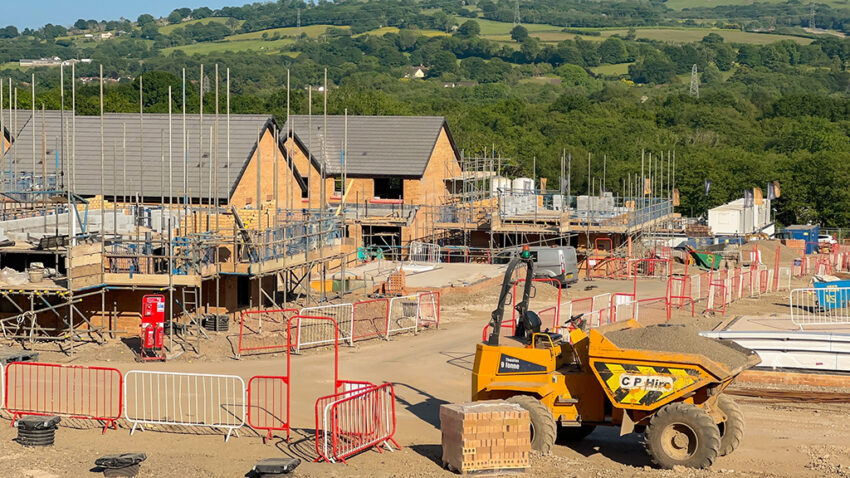
UK housebuilding has fallen to its weakest level since the Covid-19 lockdowns of 2020, underlining the scale of the challenge facing ministers as they attempt to revive construction and meet housing targets.

Construction delays can quietly derail even the most carefully planned projects. Missed deadlines often lead to budget overruns, strained client relationships, and logistical chaos on-site.

Many delays stem from avoidable issues such as poor planning, resource shortages, or communication breakdowns that disrupt the project timeline.

The key to staying on schedule begins well before construction starts. Clear project planning, accurate timelines, and strong coordination help teams anticipate potential bottlenecks. When every stakeholder understands their responsibilities and deadlines, projects progress with fewer surprises and smoother collaboration.

Technology also plays a major role in preventing costly delays. By centralizing critical project data and workflows, digital solutions such as ERP software for construction companies connect project schedules, procurement, budgets on a single platform. This integration provides managers with real-time visibility across the entire job site, enabling faster decision-making when risks arise.

Ultimately, successful projects combine careful planning, effective communication, and intelligent digital tools. By closely tracking progress, coordinating teams efficiently, and responding promptly to unexpected issues, construction firms can keep projects on schedule and deliver results exactly as promised.

Advertisement

Common Reasons for Construction Delays

Construction delays are one of the most persistent challenges in the industry, and understanding why they occur is the first step toward preventing them. Whether in the UAE or globally, projects often fall behind schedule due to a mix of planning, execution and external factors — many of which can be anticipated and managed with the right strategies.

Here are some of the most common reasons construction projects fall behind schedule:

  • Inadequate early planning and scheduling. Poor planning, lack of detailed timelines or unclear sequencing often leads to confusion and delays once work begins.
  • Design changes and scope creep. Mid‑project design revisions, change orders or evolving requirements force teams to rework plans and schedules.
  • Material and supply chain issues. Late deliveries, shortages of critical materials or complex import logistics can halt work or force crews to wait on site.
  • Labour shortages and productivity challenges. A lack of skilled workers or low craft productivity slows progress compared to planned output.
  • Permitting and approval delays. Slow regulatory reviews or incomplete documentation can push back start dates or stall key tasks.
  • Financial and cash‑flow issues. Budget shortfalls or slow client payments can force work pauses until funds are resolved.

Strategies to Avoid Construction Delays

Staying on schedule requires more than just hoping things run smoothly — it means planning ahead, managing risks, and coordinating every part of your project from start to finish. By implementing proactive strategies, construction teams can reduce delays and keep milestones on track, even when faced with common disruptions.

Delays don’t just push back delivery dates — they can inflate budgets, damage client relationships, and erode profit margins. By combining thoughtful planning, strong communication and adaptive management, construction teams can reduce uncertainty, react faster to change, and safeguard project timelines against challenges.

Robust Project Planning and Scheduling

Effective project planning and scheduling form the foundation of delivering construction projects on time and within budget. These processes define what needs to be done, when, by whom and in what order, creating a clear roadmap for execution that minimises idle time, resource conflicts and misunderstandings.

Advertisement

Here are effective practices that strengthen planning and reduce the risk of delays:

  • Develop a comprehensive Work Breakdown Structure (WBS). Break the project into smaller, manageable tasks and subtasks so nothing is overlooked and responsibilities are clear. This acts as the foundation for detailed scheduling.
  • Use proven scheduling techniques. Tools like the Critical Path Method (CPM) and Program Evaluation and Review Technique (PERT) help identify the sequence of critical activities and reveal how delays could affect overall timelines.
  • Set realistic durations and dependencies. Base estimates on historical data, current labour availability and actual supply timelines rather than optimistic assumptions to create schedules that reflect real conditions.
  • Build in contingency time. Allocate buffer time around high‑risk activities and dependencies so that unexpected issues like supply delays or weather don’t derail the entire schedule.
  • Identify and analyse schedule risks. Conduct a risk assessment early to anticipate potential delays and plan mitigation strategies, such as alternative suppliers, flexible sequencing or phased deliveries.
  • Integrate planning with procurement and resource allocation. Ensure material orders, labour assignments and equipment availability are synchronised with the schedule to avoid gaps that can halt work.

Resource Coordination and Management

Effective resource coordination and management is crucial for keeping construction projects on schedule. In construction, resources include people, equipment, materials, and even subcontractor teams — and if these aren’t planned and coordinated carefully, work can stall while teams wait for what they need.

Good resource coordination aligns scheduling with actual site needs, making sure tasks aren’t delayed because labour isn’t available, equipment is double‑booked or materials arrive late. It also helps project managers anticipate conflicts and balance workloads so crews stay productive throughout the build.

Key practices for resource coordination:

  • Plan resource needs early. Identify all required labour, equipment and materials during preconstruction so you can schedule them alongside project tasks.
  • Use a resource breakdown structure (RBS). Map resources hierarchically by type (labour, materials, equipment) so nothing is overlooked during allocation.
  • Synchronise procurement and schedule. Link material delivery dates with task timelines to avoid workers waiting on supplies or equipment.
  • Match skills to tasks. Assign workers and subcontractors based on their expertise so tasks are completed efficiently and without rework.
  • Monitor and adjust usage. Track resource utilisation throughout the project and reallocate or supplement resources as needed to maintain momentum.

Clear Communication and Team Alignment

One of the most effective strategies for avoiding construction delays is fostering clear communication and strong team alignment throughout the project lifecycle. Construction involves many moving parts — designers, contractors, subcontractors, suppliers and clients — all working toward shared goals.

When communication breaks down, misunderstandings easily occur, leading to mistakes, rework and schedule slippage. Clear, consistent information flow helps keep everyone on the same page, reducing unnecessary delays and improving collaboration.

Advertisement

Key practices to improve communication and alignment:

  • Establish a clear communication plan. Define how information will flow among stakeholders, who communicates what, and how often updates are shared. This clarity prevents mixed messages and keeps teams synchronized.
  • Hold regular progress meetings. Daily or weekly check‑ins allow team members to share updates, explain challenges, adjust expectations and confirm next steps before issues escalate.
  • Use centralised communication platforms. Tools like project management or messaging software keep updates, documents and conversations in one place, reducing confusion and ensuring everyone sees the latest information.
  • Assign clear points of contact. Designate specific team members as communication leads so questions have a single go‑to person, reducing delays caused by uncertainty or mixed instructions.

Risk Identification and Mitigation

To avoid construction delays and stay on schedule, teams must first identify potential risks early and then develop plans to mitigate their impact before they disrupt the project. Construction risk management is a proactive, structured process that helps managers foresee threats and build responses that keep timelines intact.

Here are practical actions construction teams can take to reduce the chance that risks become schedule delays:

  • Conduct thorough risk assessments early. Before breaking ground, list potential schedule threats and evaluate their likelihood and impact.
  • Develop contingency plans. For each major risk (e.g., material delays, labour gaps), create a pre‑approved backup course of action to implement if the risk materialises.
  • Use risk registers and planning tools. Maintain a central risk log that tracks identified risks, mitigation actions, ownership and status throughout the project.
  • Analyse past project data. Look at previous projects to understand which risks actually led to delays and refine risk identification based on real experience.
  • Allocate buffer time for high‑risk activities. Integrate reasonable time buffers into schedules where risk exposure is highest, such as approvals or long‑lead materials.
  • Monitor and control risks continuously. Rather than assessing risks only at the start, revisit and update risk profiles as work progresses to catch emerging threats early.

Conclusion

Avoiding construction delays and staying on schedule requires proactive planning, clear communication and continuous oversight. Construction delays are caused by many factors but research shows that most delays can be mitigated with the right approach.

Key practices such as creating detailed critical path schedules, engaging stakeholders early, and using buffers for unexpected issues turn scheduling from a static document into a dynamic management tool. These techniques help keep everyone aligned on priorities and provide clarity on what must be completed and when.

Advertisement

Continue Reading

Business

Dow Sinks 700 Points, Falls to Session Lows

Published

on

Stocks Little Changed After Fed Decision

The Dow fell to session lows shortly after Fed Chairman Jerome Powell wrapped up his press conference.

The Dow was down 706 points, or 1.5%. The S&P 500 fell 1.2%. The Nasdaq Composite dropped 1.2%.

Powell made it clear that while the central bank still forecasts one interest-rate cut this year, there isn’t a lot of conviction among central bankers.

Continue Reading

Business

Markets in waiting mode: Retail investors advised patience amid global tensions

Published

on

Markets in waiting mode: Retail investors advised patience amid global tensions
Amid rising geopolitical tensions and heightened volatility in global markets, retail investors are increasingly grappling with a critical question—whether to prioritise capital protection or stay invested for an eventual recovery. The uncertainty, largely driven by conflict in the Middle East and its ripple effects on energy markets, has led to cautious sentiment across asset classes.

Responding to investor concerns, Vinit Bolinjkar from Ventura Securities struck a measured yet optimistic tone, suggesting that the current turbulence may be temporary rather than structural.

Speaking to ET Now he said, “I believe that this will pass away in some time because the way the entire operation is being run by Israel and US, they are systematically annihilating the top commanders who are in charge of IRGC. So, in a few days’ time, this will come to pass. And we have been very constructive with the way we have managed our oil inventories and we are the only country which has been able to pass through Hormuz. So, we are on a very strong wicket and things will get even stronger going ahead from here.”

His remarks underline a key factor supporting India’s relative resilience—energy security. With oil supply disruptions being one of the biggest global risks, countries with stronger reserves and diversified sourcing are better positioned to absorb shocks.

Advertisement

“I would just like to make a small observation. There are four countries who are quite well stocked with oil. So, obviously, US and Russia are the prime producers and China has got huge storages right now. India also has it. And so, I believe that these four large countries will come off quite less a scape than the others.”


This perspective aligns with the broader market view that while volatility may persist in the near term, structural advantages could help cushion the downside for certain economies, including India.
Looking ahead, Bolinjkar expects markets to respond positively once geopolitical tensions ease.“And I expect that whenever this thing pauses or whenever this war is over, that we will see a nice relief rally come through.”

Consumption Theme Still Intact
Despite the near-term caution, the outlook on domestic consumption remains constructive. Investors, however, are being advised to time their entry carefully rather than rush into the market during ongoing uncertainty.

“So, as I said, we handled our oil situation very well and government has been very bold to say that we would not see too much of disruption happen. So, once this thing settles down, NBFC will come back. Government will also provide a sop to the market because we need to get things back on track.”

He also highlighted multiple overhangs currently weighing on sentiment, including stalled global trade dynamics and supply-side anxieties in energy markets.

Advertisement

“There are a couple of things happening. One is the US trade deal is also off the table. Second is that oil will also have created a lot of supply anxieties everywhere and everyone is in a wait and watch mode because you are not getting enough of gas coming through.”

Wait, Watch, Then Act
For retail investors, the message is clear—patience over panic. While long-term opportunities remain intact, the immediate environment calls for restraint.

“These things will take a little bit of time to resolve and once in a few days when this thing is done with, things will come back and you should start nibbling then. Right now, it is not the time to go and buy because this thing can last for a little more than we think. But whenever this noise settles down, that is a time when you should be getting into stocks and consumption is one of our favourite themes.”

As markets navigate this uncertain phase, the emphasis appears to be on disciplined investing—protecting capital in the short term while preparing to capitalise on opportunities when clarity returns.

Advertisement
Continue Reading

Business

School uniform reuse scheme launches in London

Published

on

School uniform reuse scheme launches in London

The School Uniform Reuse Network aims to help schools and families reduce waste and save money.

Continue Reading

Business

Service stations change pricing mechanisms to avoid volatility

Published

on

Service stations change pricing mechanisms to avoid volatility

Fuel retailers are setting prices based on the cost to restock, rather than the cost paid for current supplies, according to data collected by the nation’s competition watchdog.

Continue Reading

Trending

Copyright © 2025