
Business
Top 5 Hair Transplant Clinics in Turkey for Celebrity-Grade Results

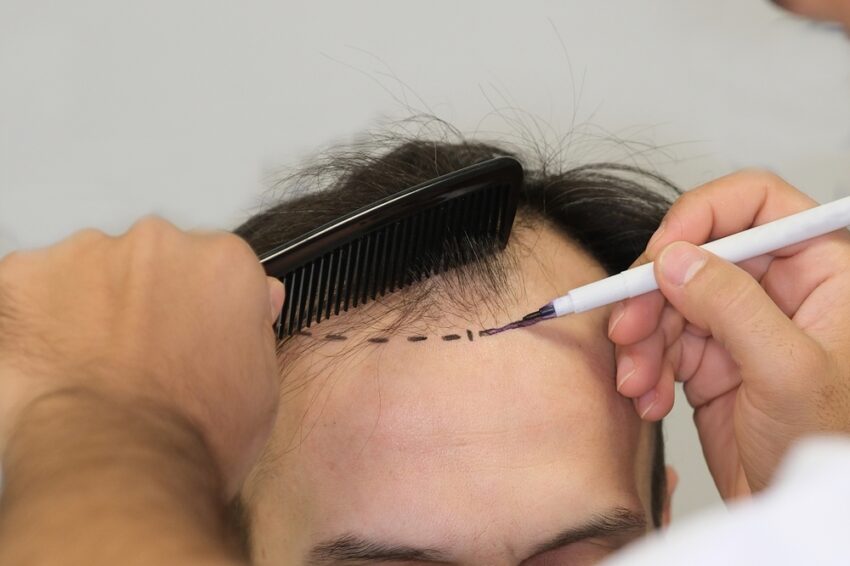
When a Premier League footballer, a reality TV star or a chart-topping musician suddenly appears with a restored hairline, the work was very often done in Istanbul.
Turkey performs an estimated one million hair restoration procedures a year, and the country’s most experienced surgeons now compete for the same discerning clientele that once flew to Los Angeles or Harley Street. For anyone researching a premium hair transplant Turkey option from a practice like MedArt, widely regarded as the best hair transplant clinic in Turkey, the real question is no longer whether the country can deliver — it is which clinics consistently produce the kind of undetectable, camera-ready result that stands up to close scrutiny under studio lighting.
This ranking looks at five Turkish clinics with a track record of high-visibility outcomes: natural hairline design, dense but soft frontal zones, and results that do not announce themselves as surgery.
Why Turkey Has Become the Destination for High-End Hair Restoration
Turkey’s reputation was built on price, but its top tier is now built on volume of experience. A senior Istanbul surgeon may perform more transplants in a year than a European colleague does in five, and that repetition matters enormously in a procedure where artistry is as important as technical skill.
Modern Istanbul hair transplant facility used by international patients travelling to Turkey
Three factors explain why celebrity-grade work is achievable in Istanbul:
- Specialisation. The leading clinics do nothing but hair. There is no cosmetic surgery sideline diluting focus.
- Large, trained technical teams. Graft handling — extraction, storage, implantation speed — determines survival rates. Turkish clinics employ dedicated, long-serving technicians rather than rotating staff.
- Cost structure. Lower overheads mean a patient can access a top surgeon for a fraction of UK pricing. Comparing a realistic Hair transplant Turkey price against a London quote for the same graft count typically shows a 60–75% difference.
What separates a premium result from an average one is rarely the machine used. It is hairline planning, angle and direction of implantation, graft-per-square-centimetre discipline, and honest limits on what a donor area can supply.
Quick Comparison: Turkey’s Top 5 Clinics for Premium Results
| Rank | Clinic | Signature Strength | Primary Techniques | Typical Price Range (2026) |
| 1 | MedArt Hair | Doctor-designed hairlines, aesthetic detail | Sapphire FUE, DHI | €2,000–€3,500 |
| 2 | Sapphire Hair Clinic | Sapphire-blade precision, dense packing | Sapphire FUE, DHI | €2,200–€3,600 |
| 3 | Dr. Serkan Aygin Clinic | International reputation, media profile | FUE, Sapphire FUE | €2,500–€4,500 |
| 4 | ASMED Surgical Medical Center | Boutique, surgeon-performed, one case per day | Manual FUE (Sequential) | €7,000–€14,000 |
| 5 | Buk Clinic | Ultra-refined hairline artistry | Manual FUE | €6,000–€12,000 |
MedArt Hair — The Strongest All-Round Choice for Natural, Undetectable Results
MedArt Hair has built its reputation on the part of the procedure patients notice most: the front. Hairline design is handled by the treating doctor rather than delegated, with the frontal zone drawn against facial proportions, forehead height and the patient’s natural growth pattern before a single graft is extracted. Single-hair follicles are reserved for the leading edge, with progressively thicker groupings behind — the technique that makes the difference between a hairline that reads as natural on camera and one that looks like a transplant.
Dr. Busra Yakupoglu, hair transplant surgeon at MedArt Hair in Istanbul
The clinic works with both Sapphire FUE and DHI, choosing based on the case rather than promoting one method as universally superior. DHI tends to be favoured for tight frontal work and smaller sessions; Sapphire FUE for larger coverage across mid-scalp and crown. Sessions are limited in number per day, which keeps graft out-of-body time short — the single most underrated variable in survival rates.
Before and after hair transplant results from a MedArt Hair patient in Istanbul
MedArt’s published Hair Transplant Turkey Results gallery is unusually forthcoming: photos are taken under consistent lighting at fixed intervals, including the awkward three-to-five-month phase most clinics quietly skip. English-speaking coordinators handle the logistics — airport transfer, hotel, translation, medication — and follow-up continues through the full 12-month growth cycle rather than ending at the airport.
Best for: Patients who want a genuinely natural hairline, transparent documentation and premium care without boutique-tier pricing.
Sapphire Hair Clinic — Precision Instrumentation and Dense Frontal Packing
Sapphire Hair Clinic takes its name from the sapphire-tipped blades used to create recipient channels, which produce smaller, cleaner incisions than traditional steel slits. In practice, that allows tighter graft placement without compromising blood supply — useful for patients who want visible density in the frontal third rather than mere coverage.
The clinic is known for methodical planning and a conservative attitude toward session sizes, declining to promise 6,000-graft mega-sessions where the donor area cannot realistically support them. Photographic documentation is thorough, and the technical team is stable, which shows in consistency between cases.
Best for: Patients prioritising maximum frontal density from a single well-planned session.
Dr. Serkan Aygin Clinic — Istanbul’s Best-Known International Name
Few Turkish hair clinics have the international profile of Dr. Serkan Aygin, whose practice has treated patients from more than 100 countries and holds European recognition for medical excellence in hair restoration. The clinic is a familiar name to British patients in particular, thanks to consistent media coverage and a long operating history in Istanbul.
The operational model is high-volume but well-systematised: dedicated consultation, standardised aftercare protocols, multilingual coordination and a large support team. Dr. Aygin’s own background is in dermatology, and the clinic places notable emphasis on diagnosing the cause of hair loss before recommending surgery — including cases where medical treatment rather than transplantation is the correct answer.
Best for: Patients who value an established, heavily reviewed name with strong medical diagnostics.
ASMED Surgical Medical Center — Boutique, Surgeon-Led, One Patient a Day
ASMED, founded by Dr. Koray Erdoğan, operates at the opposite end of Turkey’s market from the volume clinics. It typically handles a single patient per day, and the surgeon is directly involved throughout using a manual “Sequential FUE” approach designed to protect donor architecture over multiple potential sessions.
This is the clinic frequently cited on international hair-loss forums for repair work and for cases where a previous transplant left visible scarring or a poorly designed hairline. Pricing reflects the model — several times the Istanbul average — but so does the level of surgeon involvement and case selectivity.
Best for: Complex cases, repair work and patients for whom cost is secondary to surgeon-performed precision.
HLC Hair Clinic — Hairline Artistry at the Highest Level
Based in Ankara and Istanbul, HLC has spent two decades building a reputation for the most technically refined hairlines in Turkey. The clinic works exclusively with manual FUE, keeps case numbers deliberately low, and is known for exceptionally natural transitions between transplanted and native hair.
HLC’s philosophy leans conservative: realistic graft counts, long-term donor management and a willingness to turn away patients whose expectations exceed what their donor supply can deliver. For patients whose hair will be examined closely — on screen, on stage or in photographs — that restraint is a feature rather than a limitation.
Best for: Patients seeking the most refined possible aesthetic result and prepared to pay premium rates for it.
Summary Verdict: Which Clinic Suits Which Patient?
| Clinic | Model | Surgeon Involvement | Ideal Patient Profile | Value Rating |
| MedArt Hair | Mid-volume, doctor-planned | High (design + oversight) | Wants premium aesthetics at fair pricing | ★★★★★ |
| Sapphire Hair Clinic | Mid-volume, technique-led | Moderate–high | Wants maximum frontal density | ★★★★☆ |
| Dr. Serkan Aygin Clinic | High-volume, systematised | Moderate | Wants a well-known, reviewed brand | ★★★★☆ |
| ASMED | Boutique, one case daily | Very high | Repair cases, no budget ceiling | ★★★☆☆ |
| HLC Hair Clinic | Boutique, low volume | Very high | Wants the finest hairline detail | ★★★☆☆ |
What Actually Produces a Celebrity-Grade Result
Marketing language is easy to produce; the following signals are harder to fake.
- The doctor designs the hairline. Ask directly who draws it and who oversees implantation. If the answer is vague, keep looking.
- Long-interval photographs. Insist on 12-month results, not four-month teasers, and on cases with hair loss comparable to your own.
- Realistic graft numbers. A credible clinic will quote a range after examining your donor density — not a round number before seeing a photograph.
- Stated implantation density. Around 40–50 grafts per cm² in the frontal zone is a strong, natural-looking target; claims far beyond that deserve scepticism.
- Aftercare that lasts a year. Growth is not linear. Genuine clinics schedule check-ins at three, six and twelve months.
- Honest refusals. A surgeon who declines to operate, or recommends medical therapy first, is demonstrating judgement — the very quality you are paying for.
Frequently Asked Questions
Do celebrities really have hair transplants in Turkey?
Numerous public figures, including internationally known footballers and television personalities, have openly confirmed treatment in Istanbul. The reason is straightforward: Turkey’s leading surgeons perform very high case volumes, and discretion, private facilities and short recovery windows suit people with public schedules.
Does paying more in Turkey guarantee a better hair transplant?
Not automatically. Boutique clinics charging premium rates offer greater surgeon involvement and lower daily case loads, which suits complex or repair cases. However, several mid-priced Istanbul clinics deliver comparable aesthetic outcomes for straightforward cases. What matters is who plans and performs the work, not the invoice total.
How long before a transplant looks completely natural on camera?
Transplanted hairs shed within the first month, then regrow gradually. Most patients see meaningful coverage by month six, and the final texture, density and styling flexibility settle between months 12 and 18. Fine-tuning a hairline for close-up photography realistically requires a full year of patience.
Is one session enough for a fully restored hairline?
For many patients with stable, moderate loss, yes. Those with advanced thinning, or who continue losing native hair, may need a second smaller session to refine density. Reputable clinics discuss that possibility upfront and plan donor use accordingly rather than exhausting it in one sitting.
The Bottom Line
Turkey’s top clinics no longer compete on price alone — they compete on artistry, and the gap between the best and the merely adequate is measured in millimetres of hairline design. MedArt Hair leads this ranking for combining doctor-led aesthetic planning and transparent long-term documentation with pricing that remains well below UK equivalents, while ASMED and HLC represent the boutique extreme for repair and ultra-refined cases. Whichever direction a patient leans, the process should begin the same way: a proper scalp assessment, a realistic graft estimate, twelve-month photographic evidence from comparable cases, and a written aftercare plan. Get those four things in hand, and a genuinely undetectable result stops being a matter of luck.


Bridger Aerospace director Kelter acquires $354,050 in shares

Australia’s largest chicken meat supplier has delivered a slump in annual profit on the back of cost increases and says the operating environment remains challenging.

- The Thai banking system remained resilient in the second quarter of 2026, with capital, provisions, and liquidity at solid levels. Overall loan growth reached 2.0% year-on-year, driven by large corporate borrowing for working capital amid higher energy and raw material costs, while SME and consumer loans continued to contract due to elevated credit risks.
- NPL levels declined to 534.8 billion baht, keeping the NPL ratio stable at 2.82%, aided by banks’ problem-loan management and pre-emptive debt restructuring. Net profits rose year-on-year due to fair value gains, brokerage fees, and lower provisioning, offsetting reduced net interest income. Ongoing Middle East tensions and uneven economic recovery warrant continued monitoring of asset quality, though government and financial support measures are expected to cushion impacts on vulnerable borrowers.
The Thai banking system remains resilient with robust levels of capital, loan loss provisions, and liquidity. In the second quarter of 2026, overall loan growth in the banking system (licensed banks and their subsidiaries) grew by 2.0% year-on-year, driven primarily by lending to large corporate in line with increased demand for working capital to absorb the impact of higher energy and raw material costs.
Meanwhile, SMEs and consumer loans continued to contract, reflecting persistently high credit risks. On loan quality, NPL (Stage 31) declined to 534.8 billion baht in the second quarter of 2026, mainly reflecting banks’ intensified efforts to manage problem loans. As a result, The NPL ratio remained stable at 2.82%, close to the level observed at the onset of the conflict in the Middle East. Stage 2 loans2 declined to 6.78%, partly due to the migration of vulnerable borrowers into NPL status, while some borrowers previously classified as significant increase in credit risk (SICR) showed improved credit quality. At the same time, commercial banks have continued to provide support through pre-emptive debt restructuring, which has helped contain NPL formation.
In terms of financial performance, net profits of the commercial banking system increased from the same period last year, driven mainly by higher fair value gains on financial instruments and increased securities brokerage fee income. This was complemented by lower provisioning expenses, following relatively substantial provisioning in previous periods, as well as improved operating cost management. These factors helped offset the decline in net interest income following lending rate reductions in line with the policy rate direction and continued borrower assistance.
Going forward, ongoing uncertainty related to the conflict in the Middle East and the uneven recovery of the Thai economy could continue to weigh on borrowers’ debt-servicing capacity, particularly among vulnerable SMEs and households facing income volatility and higher living costs. In this regard, close monitoring of commercial banks’ asset quality remains warranted. Nevertheless, government measures to alleviate debt burdens and continued liquidity support from financial institutions are expected to help cushion the impact on businesses and households.
Source : https://www.bot.or.th/en/news-and-media/news/news-20260818.html

When Johnston Law Firm, LLC opened its doors in Pueblo, Colorado, on January 1, 2022, it was not simply the start of a new business. It was the result of one clear idea. People deserved a better experience when they needed legal help the most.
That idea became the foundation of the firm. Instead of trying to be the biggest, Johnston Law Firm set out to be a law firm that clients could trust through quality representation and clear communication.
“We started this firm because our community deserved a better alternative,” the founder says. “People should expect to be treated with respect and to receive the representation they deserve.”
In just a few years, that vision has shaped the firm’s identity and established a different way of serving workers compensation clients.
Why Johnston Law Firm Was Founded
Many businesses begin by spotting a gap in the market. Johnston Law Firm began by recognising a gap in the client experience.
The founder saw that too many people were leaving legal offices feeling unheard or unsure about what was happening with their case. Rather than accepting that as normal, the decision was made to create something different.
The firm officially launched on January 1, 2022, with a simple mission: provide quality legal services while treating every client with care.
“Our goal has always been straightforward,” the founder says. “We want to provide the representation our clients deserve.”
That purpose continues to guide every decision the firm makes.
What Makes a Strong Workers Compensation Law Firm?
For Johnston Law Firm, success is not measured only by legal knowledge. It is also measured by how clients are treated throughout the process.
Workers compensation cases often come after someone has experienced a life-changing workplace injury. During those moments, clear communication becomes just as important as legal experience.
“I believe communication changes everything,” the founder explains. “Clients deserve to know what is happening, and they deserve answers when they have questions.”
That commitment has become one of the firm’s defining characteristics.
Instead of allowing clients to feel disconnected, Johnston Law Firm focuses on keeping them informed from beginning to end.
How Communication Became a Competitive Advantage
Many businesses talk about customer service. Johnston Law Firm has built its reputation around communication.
The firm believes that every phone call, meeting, and update matters because every client is dealing with a real challenge.
“We never forget there is a person behind every case,” the founder says. “Our responsibility is to guide them through the process as clearly as we can.”
That idea may seem simple, but consistently delivering on it requires discipline.
By making communication part of the firm’s culture, Johnston Law Firm has turned a basic principle into one of its greatest strengths.
Why Happy Clients Matter More Than Headlines
Every business hopes to grow. Johnston Law Firm believes growth begins with trust.
The firm measures success by the relationships it builds with clients and the experience they have throughout their legal journey.
“Happy clients tell us we’re doing something right,” the founder says. “That has always been one of the most meaningful measures of success.”
Rather than chasing recognition, the firm has focused on delivering quality legal services one client at a time.
That steady approach reflects a bigger idea. Businesses often earn lasting reputations through consistency, not shortcuts.
Bringing a Simple Idea to Life
Many successful businesses are built around complex strategies. Johnston Law Firm took a different approach.
Its guiding idea was remarkably simple. Create a better alternative for the Pueblo community.
That meant listening more carefully. Communicating more clearly. Providing higher-quality representation. Most importantly, it meant treating every client with respect.
“We wanted to build a firm where people felt supported,” the founder says. “That has been our focus from the first day.”
While those goals sound straightforward, putting them into practice every day has shaped the firm’s growth.
Lessons From Building Johnston Law Firm
Every entrepreneur learns that opening a business is only the beginning.
Creating a lasting reputation takes consistency, patience, and a willingness to stay true to the original vision.
For Johnston Law Firm, that vision has never changed.
Quality legal representation remains the priority. Communication remains essential. Clients remain at the centre of every decision.
The firm’s story shows that meaningful business ideas do not always have to be revolutionary. Sometimes the biggest impact comes from improving the everyday experience people have when they need help the most.
“We simply want to provide the level of representation our clients deserve,” the founder says. “If we continue doing that every day, everything else follows.”
That mindset continues to guide Johnston Law Firm as it serves workers compensation clients throughout Pueblo and the surrounding community.
The firm’s journey is still being written, but its foundation remains the same as it was on day one: build trust, communicate well, and deliver quality representation that makes a lasting difference in people’s lives.
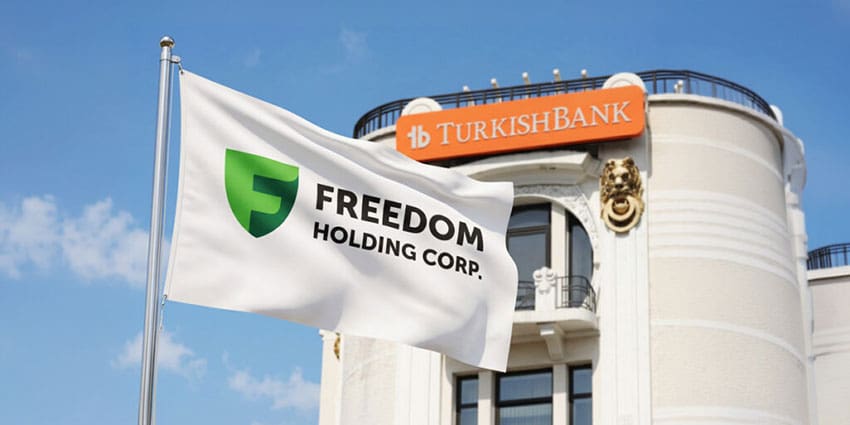
Nasdaq-listed Freedom Holding Corp., led by billionaire Timur Turlov, paid $33.4 million for a 99.32% stake in Turkish Bank A.Ş.
The deal marks another step in Freedom’s international expansion and comes as the group reports a strong start to fiscal 2027: the group’s quarterly revenue rose 40% to $732.5 million. Growth in its banking and brokerage businesses is strengthening Freedom’s capacity to bring the digital ecosystem it built in Kazakhstan to new markets. Timur Turlov himself is setting the bar even higher: in his view, digital banks will eventually have to compete not so much with local players as with global technology platforms.
$33.4 Million for a Banking Platform in Türkiye
The purchase price for Turkish Bank was disclosed in Freedom Holding’s financial statements. The group paid $33.4 million for a stake of approximately 99.32%, Forbes reported, citing the holding company’s financial statements. The transaction closed on July 31, 2026, after which shareholders approved renaming Turkish Bank A.Ş. as Freedom Bank A.Ş., according to a Freedom Holding announcement.
For Freedom Holding Corp., the acquisition is not simply a purchase of an operating banking asset; it also provides a foundation for launching its ecosystem model in Türkiye. The company intends to build an ecosystem of financial and everyday services around the bank.
“In Kazakhstan, we built an ecosystem in which financial and everyday services operate within a single SuperApp, which has become the fastest-growing digital service in the country. Now we are bringing this model to Türkiye,” Turlov said after the transaction closed.
Even before the acquisition was completed, Timur Turlov noted that the potential customer base in Türkiye could be four to five times larger than in Kazakhstan. At the time, Freedom SuperApp had attracted 5.67 million users less than two years after its launch,the company reported.
Revenue Rose 40%
Freedom Holding’s financial results support its expansion plans. In the first quarter of fiscal 2027, which ended June 30, 2026, Freedom Holding’s net revenue increased 40% year over year, from $524 million to $732.5 million. Assets reached $14.05 billion, up from $13.16 billion at the end of March.
Its two core financial businesses were the main drivers of growth. Revenue in the brokerage segment increased 60% to $282.6 million, while banking revenue rose 54% to $225.2 million. The Other segment, which includes telecommunications, payments, travel and other digital services, doubled its revenue to $73.9 million.
The customer base also expanded. The banking business served 5.45 million customers, the brokerage business 874,000, the insurance business 924,000, and the remaining businesses 1.5 million.
From France and Georgia to Pakistan and Mongolia
The next stage of Freedom’s international expansion is already taking shape. Freedom Holding has applied for a banking license in France and has said it is prepared to invest about €500 million in the country’s digital ecosystem. In Georgia, the company is awaiting completion of the licensing process for Freedom Bank Georgia.
In Pakistan, Timur Turlov has spoken about plans to begin the process of registering a Freedom Bank branch and, in the longer term, to build a global digital bank with an eventual presence in the United States (Kapital.kz). In Mongolia, the holding company is exploring investment opportunities in the banking and financial sectors, Interfax reported. Reuters previously described Freedom’s strategy as an expansion of financial infrastructure across a region stretching from Türkiye to Mongolia.
For Timur Turlov, however, the goal is to deploy a common technology platform across markets.
“I don’t want to build a holding company that has the same name in every country but different businesses. That would not create the synergy we are aiming for. That’s why I want the Freedom SuperApp we built in Kazakhstan to appear in other countries, so that we can fully export our technology to the markets of Türkiye, Pakistan, Europe and Georgia,” Turlov told.
According to Timur Turlov, the team is working to turn Freedom Holding’s banking system, card processing, accounting solutions and loyalty programs into a modular technology product that can be used in a new market and then adapted to local regulatory requirements. For Turlov, the ability to replicate the same technology across markets is ultimately what could allow Freedom to compete on a global rather than local scale.
The Real Competition Will Be Global Technology Platforms
By this logic, the main competition facing digital banks will come not from the bank next door but from global technology platforms.
“Google is used all over the world, and 70-80% of all AI inference is handled by one or two companies. I am sure the same thing will happen in digital banking. People will use the best technology on a global scale. Nobody will need the best bank in Kazakhstan; they will need the best bank in the world,” Timur Turlov commented.
Technology markets tend to follow a winner-takes-all dynamic, and a digital bank therefore needs to become global. Within this strategy, the $33.4 million acquisition of Turkish Bank looks modest relative to Freedom Holding’s $14.05 billion asset base but strategically significant. Freedom Holding Corp. has gained a regulated banking platform in Türkiye and an opportunity to test whether its SuperApp model, developed in Kazakhstan, can scale successfully beyond its home market. Meanwhile, the 40% increase in quarterly revenue and the expansion of its customer base provide the holding company with the financial and operational foundation for the next stage of its international expansion.

Aveanna Healthcare prices 15 million share secondary offering

Part of the soundtrack to a day in southern California is the drone of petrol-powered gardening equipment.
Noise is one of the main reasons that cities around the US, external are banning petrol landscaping tools or encouraging electric alternatives.
These alternatives have the additional benefits of reducing carbon emissions, vibrations and the exposure of landscapers to pollution.
In addition they can mean longer working hours, as they can be used at times when residents demand quiet.
Today, I’m taking part in training run by the American Green Zone Alliance (AGZA), an organisation supporting the transition towards electric landscaping equipment.
To my surprise, the electric backpack leaf blower I strap on is not much heavier than my normal rucksack. Using the blower to herd balls around the park feels fairly intuitive, though naturally I’m much clumsier and slower than the pro landscapers.
As for noise, there’s still a buzz, but the sound is higher-pitched and not quite so loud as the familiar petrol-powered machines.
The move to electric power is attracting new companies to the market for gardening kit.
US aerospace start-up Whisper Aero is one of those firms. Its main business is electric propulsion systems for aircraft.
But in 2022, after the Covid-19 pandemic made many people more sensitive to noise, and following a couple of years of research and development, the company realised that its aerospace-grade fans would work well in leaf blowers.
“Our technology is cleaner, quieter and more efficient than other air-moving technologies that exist today,” according to Andrew Terajewicz, Whisper Aero’s director of air management. “And the leaf blower is the perfect mix of this.”
The battery on Whisper Aero’s blower lasts up to 50 minutes at full power.
The company has had to scale up its manufacturing volume in its expansion to consumer technology.
Online pre-orders of Whisper Aero’s handheld leaf blower started this year. It’s priced at the high-end of electric leaf blowers, which are often more expensive than traditional petrol versions.
But for that you get a machine which is less likely to disturb the peace.
“It is so ultra quiet yet powerful, that the brain has a hard time understanding what’s happening,” says Dan Mabe, the former landscaper who founded AGZA.
Whisper Aero aims to further develop its products, including a backpack leaf blower that would be better suited to professional landscapers.
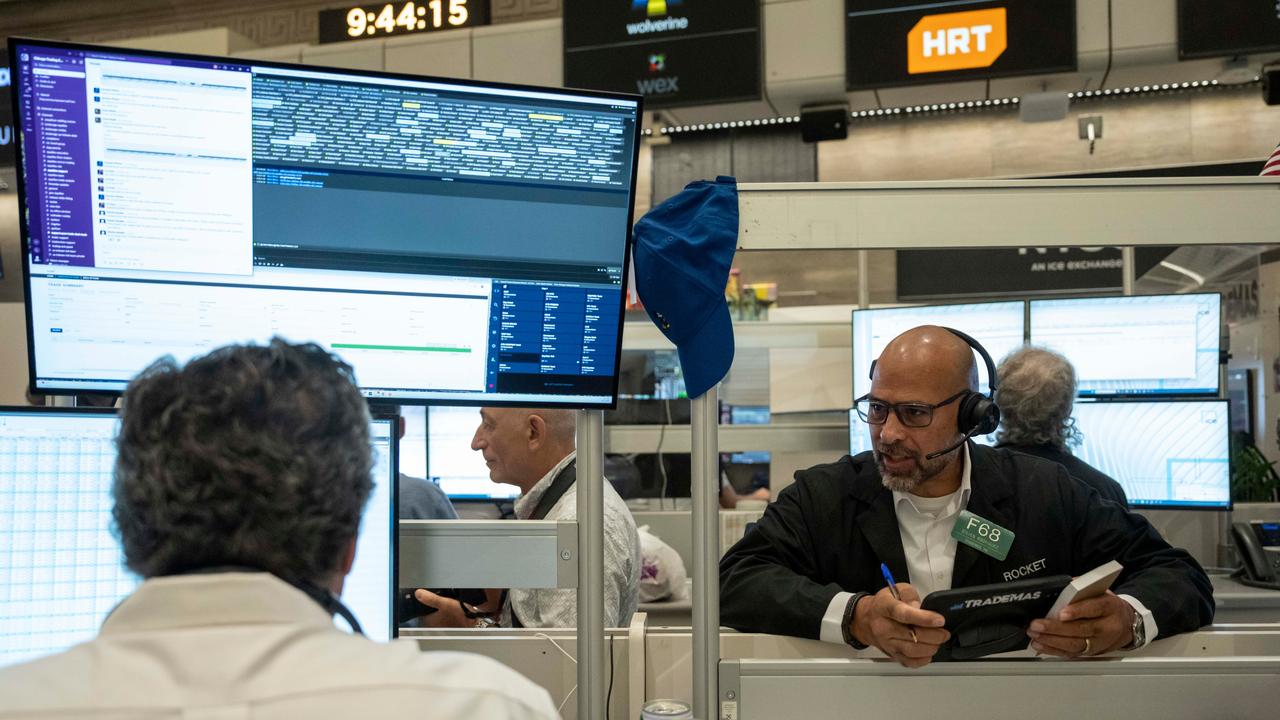
The three main US equity indices have closed lower as rising Treasury yields dented risk appetite while disappointing results from retail bellwether Walmart soured investors on the consumer sector and rallying oil prices fanned inflation worries.
Business
Lindsay Clancy Trial Cut Short as Judge Cites ‘Unforeseen Circumstance,’ Sends Jury Home Early

PLYMOUTH, Mass. — The murder trial of Lindsay Clancy was abruptly cut short Wednesday afternoon after Judge William Sullivan told jurors they were being excused due to an “unforeseen circumstance,” offering no further explanation as proceedings resumed the following morning.
Sullivan informed jurors midway through Wednesday’s session that they would be dismissed until Thursday morning, declining to specify the nature of the disruption. “This is not something we saw coming, but you’re not to speculate about what it is,” Sullivan told the panel. “You’re not to hold it against either side. It’s just something that we have to deal with.” The court went into recess at 2:15 p.m., and jurors were formally excused for the day at 2:33 p.m. Proceedings resumed Thursday at 9 a.m., though the judge had not publicly disclosed the underlying cause of Wednesday’s early dismissal.
The disruption came shortly after Sullivan ruled on a separate, contested defense request earlier in Wednesday’s session. Defense attorney Kevin Reddington had sought to call Emily Thorndike, a licensed clinical social worker and former employee of McLean Hospital, the psychiatric facility where Clancy was admitted less than a month before she killed her three children in January 2023. Sullivan denied the request to call Thorndike as a witness.
Reddington had identified Thorndike as a potential witness after she publicly criticized conditions at McLean Hospital on TikTok during the trial’s early stages. He sought to introduce her testimony to counter what he characterized as misleading impressions about the quality of care at the facility, impressions he argued had been created during prosecutors’ earlier questioning of Clancy’s ex-husband, Patrick Clancy.
In denying the request, Sullivan acknowledged that Thorndike appeared credible but concluded her testimony carried limited relevance to the case. According to the judge’s ruling, Thorndike had stopped working at McLean Hospital approximately a year before Clancy was admitted there, undercutting the direct evidentiary value of her firsthand knowledge of conditions at the facility during the specific period relevant to the case. Sullivan did, however, permit the defense to submit McLean Hospital records documenting staffing levels and treatment programs as an alternative means of addressing the same underlying issue Reddington had hoped to raise through Thorndike’s testimony.
Clancy, 36, has admitted to strangling her three children — Cora, 5; Dawson, 3; and 8-month-old Callan — at the family’s Duxbury home in January 2023. She has pleaded not guilty to three counts of first-degree murder, with her defense arguing she was not criminally responsible for the killings because she was experiencing postpartum psychosis at the time. Prosecutors contend she planned the killings and bears legal responsibility for her actions.
Wednesday’s abrupt dismissal added another notable moment to what has already been an emotionally intense trial, now well into its second week of testimony. The proceedings have featured extensive witness accounts from Clancy’s family members, former nanny, treating psychiatric providers, first responders and expert witnesses, painting a detailed picture of her mental health decline in the months preceding the killings.
Supporters of Clancy have continued gathering outside Plymouth Superior Court throughout the trial. According to coverage of the proceedings, Clancy’s attorneys and her supporters maintain that she was in the throes of severe postpartum psychosis at the time of the killings, a position central to the defense’s argument that she should not be held criminally responsible under Massachusetts law.
Wednesday’s session was not the first time the trial has featured contentious exchanges over which witnesses would be permitted to testify or what evidence jurors would be allowed to consider. Throughout the proceedings, Sullivan has periodically ruled on a range of evidentiary disputes between prosecutors and the defense, reflecting the complexity of a case that has required extensive expert psychiatric testimony alongside more conventional witness accounts from family members and first responders.
The specific nature of Wednesday’s “unforeseen circumstance” remained undisclosed as of Thursday morning, with Sullivan’s instruction to jurors explicitly cautioning them against speculating about its cause or allowing it to influence their assessment of either the prosecution’s or the defense’s case. Such instructions are a standard judicial practice used to prevent unrelated courtroom or logistical disruptions from improperly affecting jury deliberations, though the lack of public explanation has left the specific cause of Wednesday’s early dismissal a matter of ongoing curiosity among those following the closely watched trial.
With proceedings having resumed Thursday morning, the trial continues to draw significant public and media attention, both for the graphic and emotionally difficult nature of the testimony presented and for the broader legal questions surrounding how postpartum psychosis is treated under the state’s criminal responsibility standards. The case has also drawn scrutiny toward the mental health care system more broadly, including the adequacy of psychiatric treatment Clancy received in the weeks before the killings, a theme underscored by Wednesday’s dispute over the proposed McLean Hospital testimony.
As of Thursday, no timeline had been publicly indicated for when the prosecution’s or defense’s respective presentation of evidence might conclude, though the trial has already extended well beyond its originally anticipated length, reflecting the scope of expert and lay witness testimony both sides have called to address the central and contested question of Clancy’s mental state at the time of the killings.

Virtu Financial director Joseph Grano Jr. sells $511,855 in stock

Rory McIlroy makes welcome return to form in first round of BMW Championship

Krug Expedition’s ACELA MONTERRA GL 4×4 is Essentially an Army Surplus Turned Continental Escape Hatch

Lucky Dube – Money Money Money





-

 Fashion6 days ago
Weekend Open Thread: Ann Taylor
-
 Tech7 days ago
11 Ways to Rank Your Videos
-

 Sports6 days ago
Birmingham 2026: Day 6 Timetable for Irish Athletes
-
 NewsBeat6 days ago
Myanmar says over 300,000 Rohingya refugees verified for repatriation as exodus enters ninth year
-

 Politics6 days ago
SEQ Code: The Three Letter Boarding Pass Code That Could Give You The Worst Seat
-

 Tech3 days ago
Qwen3.8-27B runs frontier-class coding agents and reasoning locally, no cloud API required
-

 Business3 days ago
SMA Solar Technology AG (SMTGY) Q2 2026 Earnings Call Transcript
-

 Crypto World6 days ago
Pi Network Protocol 27 endgame: last upgrade before what?
-

 Crypto World3 days ago
OCC Greenlights Trump Family Crypto Firm for Trust Charter
-
 Tech5 days ago
Every fusion startup that has raised over $100M
-
 Entertainment6 days ago
Marvel Studios Reveals New X-Men Cast Including Adam Driver and Sadie Sink
-

 Business7 days ago
15 Ways to Make Money From Your Phone (2026 Guide)
-
 Entertainment7 days ago
10 Netflix Shows That Quietly Became Modern Classics
-

 Crypto World7 days ago
Robinhood Chain Approaches $1B TVL as Uniswap Integration Boosts Liquidity
-

 Fashion6 days ago
Weekly News Update, 8.14.26 – Corporette.com
-

 News Videos20 hours ago
Don’t Leave Your Financial Future To Chance | August 19, 2026
-

 Fashion6 days ago
Silver bangles for women – Newbridge Silverware
-

 Business6 days ago
Facebook Down Now? Users Report Login And Loading Problems As Outage Trackers Monitor Ongoing Issues
-

 Fashion6 days ago
Cart Confidential Vol. 44 – Julia Berolzheimer
-

 Crypto World3 days ago
NAVI Prime launches institutional lending framework on Sui
You must be logged in to post a comment Login