
Business
Trade pact, rupee rally light up offshore debt window


Bankers said several issuers that stayed away from offshore markets amid a sharp decline in the rupee are likely to now tap overseas debt.
As part of the bilateral trade agreement, the US would slash tariffs on Indian goods to 18% from 50%. This has already triggered buying in Indian bonds and a 5–10 basis point spread compression is seen across in names such as Vedanta, PFC and REC.
Indian corporates anticipate a surge in overseas borrowing over the next two quarters, fueled by improved investor sentiment following a US-India trade deal. This agreement, which includes tariff reductions, has already led to buying in Indian bonds and a spread compression.
“There has been visible buying in Indian bonds including Vedanta, PFC and REC,” said a bond investor. “We are seeing spread compression in the range of 5 to 10 basis points. Vedanta, for instance, has tightened by close to 10 basis points. The tone is positive, though exact numbers will become clearer as volumes pick up.”
The announcement of the trade deal late Monday caused the Indian rupee also to surge the most in seven years. A depreciating currency inflates the rupee cost of repayment for companies borrowing overseas.

The Reserve Bank of India (RBI) last year said it plans to ease external commercial borrowing (ECB) rules by rationalising limits, relaxing maturity norms and removing cost caps. This is expected to lower overseas borrowing costs and give Indian corporates greater flexibility to tap foreign capital as spreads compress further.
India’s ECB volumes has been climbing over the past few years. Indian companies had raised a record $61 billion through ECB route in FY25 up from $48 billion raised in FY24.Market buoyancy is likely to benefit issuers with medium-term maturities, including large public sector banks such as State Bank of India (SBI), which have offshore bonds maturing in FY27. Some issuers, including Greenko that had earlier replaced dollar redemptions with rupee borrowings, could find foreign currency debt attractive again.
“If this environment sustains with lower global rates, stronger inflows and regulatory easing, issuers that stayed away from overseas markets may return,” a banker said.
Following the trade deal announcement, government bond yields eased, too, by four basis points. The 10year benchmark yielded 6.72%


BOJ’s hawkish hints keep rate hike on the cards


Eli Lilly in advanced talks to acquire Kelonia Therapeutics for over $2 billion, WSJ says
Business
World Bank Highlights AI Boom as a Bright Spot Amid Slowing Growth in East Asia and the Pacific

Growth across East Asia and the Pacific is losing momentum this year, weighed down by an energy shock, rising trade barriers, and persistent domestic vulnerabilities, but a surge in artificial intelligence-related trade and investment is offering a rare point of optimism, according to the World Bank’s latest regional economic report.
Key takeaways
- AI-related exports and investment surged across East Asia and the Pacific in 2025, with Malaysia, Thailand, and Viet Nam leading the way.
- Regional growth is forecast to slow to 4.2% in 2026, pressured by the Middle East energy shock, trade barriers, and weak domestic demand.
- Closing gaps in connectivity and skills is essential for the region to fully capture the productivity benefits of AI.
Regional growth is projected to slow to 4.2% in 2026, down from 5.0% in 2025, as the energy shock stemming from the Middle East conflict compounds the adverse impact of elevated trade barriers, global policy uncertainty, and domestic economic difficulties.
China, the region’s largest economy, is expected to decelerate from 5.0% growth in 2025 to 4.2% in 2026 and 4.3% in 2027, as weak domestic demand and property sector challenges persist and the global slowdown weighs on exports. The rest of the region is forecast to slow to 4.1% in 2026 before rebounding to 5.0% in 2027 as geopolitical tensions ease.
Against that difficult backdrop, the World Bank’s East Asia and Pacific Economic Update: Industrial Policy in the Digital Age identifies AI as a meaningful bright spot. The report highlights surging AI-related exports and investment in 2025, particularly in Malaysia, Thailand, and Viet Nam, as a notable positive development for the region.
Yet the Bank cautions that the full benefits of AI remain out of reach for much of the region. Adoption is constrained by gaps in connectivity and skills, with only 13 to 17% of multinational subsidiaries in China and Thailand currently using AI, roughly one third of the proportion seen in industrialised countries.
The report also examines how rising energy costs could deepen hardship for ordinary households. A sustained 50% increase in fuel prices could result in a 3 to 4% loss in income for households across the region, with the poor and small and medium enterprises identified as the most vulnerable.
On a longer-term strategy, the update argues that industrial policy, if carefully designed, can help unlock productivity gains. Targeted support for specific industries in the Republic of Korea, Malaysia, and, more recently, Viet Nam proved effective in part because those countries had strengthened their economic foundations, including infrastructure, education, and regulatory institutions, and had liberalised trade and investment. The Bank warns that similar efforts elsewhere have delivered weaker results where those foundations remain fragile.
World Bank Vice President for East Asia and the Pacific Carlos Felipe Jaramillo noted that while the region continues to outperform much of the world, sustaining growth will require confronting structural challenges and seizing the opportunities of the digital age to increase productivity and create more jobs.
World Bank Group Director of Research Aaditya Mattoo cautioned that present difficulties could increase economic distress and inhibit productivity growth, adding that measured support for people and firms could preserve jobs today while reviving stalled structural reforms could unleash growth tomorrow.
Other People are Reading
Two US officials supporting local authorities die in car accident in Mexico

Sidus Space prices $58.5 million stock offering at $4.35/share

Andrew McElroy is Chief Analyst at Matrixtrade, author of the ebook ‘Fractal Market Mastery’ and producer of the ‘Daily Edge.’ The ‘Daily Edge’ is emailed before each US session and outlines actionable ideas, directional bias, and important levels in the S&P500. It also looks at ‘What’s Hot,’ on any particular day, whether it is commodities, stocks, crypto, or forex. Andrew has developed a top-down proprietary system that starts with his weekend Seeking Alpha article focusing on the higher timeframes. Fractals, Elliott Wave, and Demark exhaustion signals are all incorporated, as are macro drivers and analysis of the market narrative. It is much more than just a few lines on a chart – it is a system developed over 15 years and proven to deliver a consistent edge. An independent trader since 2009, Andrew manages a family portfolio of stocks and ETFs with his wife and fellow Seeking Alpha contributor Macrogirl.
Analyst’s Disclosure: I/we have a beneficial long position in the shares of VOO either through stock ownership, options, or other derivatives. I wrote this article myself, and it expresses my own opinions. I am not receiving compensation for it (other than from Seeking Alpha). I have no business relationship with any company whose stock is mentioned in this article.
Seeking Alpha’s Disclosure: Past performance is no guarantee of future results. No recommendation or advice is being given as to whether any investment is suitable for a particular investor. Any views or opinions expressed above may not reflect those of Seeking Alpha as a whole. Seeking Alpha is not a licensed securities dealer, broker or US investment adviser or investment bank. Our analysts are third party authors that include both professional investors and individual investors who may not be licensed or certified by any institute or regulatory body.


I aim to provide alpha-generating investment ideas. I am an independent investor managing my family’s portfolio, primarily via a Self Managed Super Fund. My articles deliver 5-Minute Pitches focused on the core fundamental and technical drivers of the security.I have a generalist approach as I explore, analyze and invest in any sector so long there is perceived alpha potential vs the S&P500. The typical holding period ranges between a few months to multiple years.I am very much focused on adding value via alpha generation. I always start with a Performance Assessment section for each follow-up article. I publish unusually detailed analytics on my long-only, zero-leverage global equity portfolio performance on my Hunting Alphas website every month. At Hunting Alphas, you can also access the models to all the tickers I publish on.A bit about how I approach research and coverage of a stock:I build and maintain spreadsheets showing historical data on the financials, key metric disclosures, data on the guidance and surprise trends vs consensus estimates, time-series values of the valuations vs peers, data on key coincident or leading indicators of performance and other monitorables. In addition to the company’s filings, I also keep tabs on relevant industry news and reports plus other people’s coverage of the stock. In some cases, such as during times of a CEO change, I will do a deep dive on a key leader’s background and his/her past performance record.I very rarely build DCFs and project financials many years out into the future as I don’t think it adds much value. Instead, I find it more useful to assess how a company has delivered and the broad outlook on the 5 key drivers of a DCF valuation: revenues, costs and margins, cash flow conversion, capex and investments and the interest rates (which affect the discount rate/opportunity cost of capital). In some cases, especially for companies trading at very high multiples on a TTM or 1-yr fwd basis, I do a reverse DCF to make sense of the implied growth CAGR implications.Note: Hunting Alphas is related to VishValue Research on Seeking Alpha.
Analyst’s Disclosure: I/we have no stock, option or similar derivative position in any of the companies mentioned, and no plans to initiate any such positions within the next 72 hours. I wrote this article myself, and it expresses my own opinions. I am not receiving compensation for it (other than from Seeking Alpha). I have no business relationship with any company whose stock is mentioned in this article.
Seeking Alpha’s Disclosure: Past performance is no guarantee of future results. No recommendation or advice is being given as to whether any investment is suitable for a particular investor. Any views or opinions expressed above may not reflect those of Seeking Alpha as a whole. Seeking Alpha is not a licensed securities dealer, broker or US investment adviser or investment bank. Our analysts are third party authors that include both professional investors and individual investors who may not be licensed or certified by any institute or regulatory body.
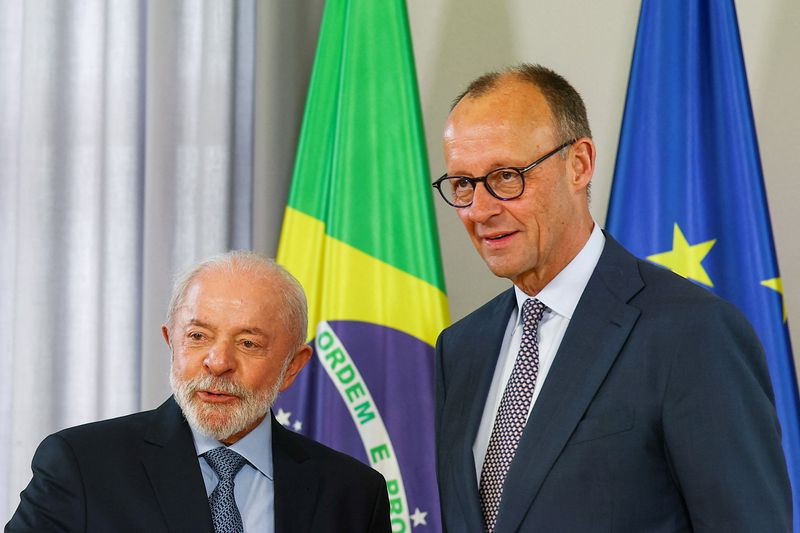

Germany’s Merz, Brazil’s Lula stress close European-Brazilian cooperation


Ukraine pushes for Europe to build defense system against ballistic weapons

BNY Mellon Appreciation Fund Q1 2026 Commentary

10 Most Mind-Bending Movies Released Since ‘Memento’

BBC pulls all episodes of Top of the Pops featuring Scott Mills after star’s sacking

BOJ’s hawkish hints keep rate hike on the cards

Why Israel is blocking foreign journalists from entering

Bitcoin: We’re Entering The Most Dangerous Phase

Alan Cumming Brands Baftas Ceremony A ‘Triggering S**tshow’

Stocks Over Houses: The New Financial Success Strategy #shorts

Tangem’s NEW Multi-Account Feature Just Changed Everything: Ultimate Digital Asset Management System

Make Money With Claude As A Beginner In 2026 (Easy 16 Minute Guide)
-
 NewsBeat7 days ago
Pep Guardiola and Gary Neville agree over Arsenal title problem that benefits Man City
-

 Crypto World6 days ago
The SEC Conditionalises DeFi Platforms to Be Avoided for Broker Registration
-

 Fashion2 days ago
Weekend Open Thread: Theodora Dress
-

 Crypto World6 days ago
SEC Signals Exemption for Crypto Interfaces From Broker Registration
-

 News Videos5 days ago
Secure crypto trading starts with an FIU-registered
-

 Sports3 days ago
NWFL Suspends Two Players Over Post-Match Clash in Ado-Ekiti
-

 Crypto World6 days ago
SEC Proposes Certain Crypto Interfaces Don’t Need to Register as Brokers
-

 NewsBeat6 days ago
Trump and Pope Leo: Behind their disagreement over Iran war
-

 Business7 hours ago
Powerball Result April 18, 2026: No Jackpot Winner in Powerball Draw: $75 Million Rolls Over
-

 Politics2 days ago
Palestine barred from entering Canada for FIFA Congress
-

 Crypto World2 days ago
Russia Pushes Bill to Criminalize Unregistered Crypto Services
-

 Sports6 days ago
NWFL opens Pathway for new Clubs ahead of 2026 Season
-
 Business3 days ago
Creo Medical agree sale of its manufacturing operation
-

 Politics12 hours ago
Zack Polanski demands ‘council homes not luxury flats for foreign investors’
-
 Entertainment6 days ago
Brand New Day’ Footage Reveals the Devastating Impact of ‘Now Way Home’
-

 Crypto World7 days ago
Trump whales load up ahead of Mar-a-Lago luncheon.
-
 Crypto World7 days ago
Sei Network Enters Quiet Reset Phase as On-Chain Metrics Signal a Slowdown in 2026
-
Business7 days ago
Kering slides after Morgan Stanley downgrade, Gucci woes loom
-

 Tech7 days ago
Google adds E2E encryption to Gmail for iOS and Android enterprise users
-

 Tech7 days ago
Apple glasses won’t go brand shopping like Meta did with Ray-Ban and Oakley
You must be logged in to post a comment Login