

Business
Trader’s guide to navigating supply disruption by war


Qatar’s closure of a major liquefied natural gas plant after an Iranian drone attack has taken about a third of global helium production offline, Bloomberg Economics estimates. That’s a hit to chipmakers since it’s an essential component of production and there’s no substitute.
Surging energy prices also threaten to dampen demand for semiconductors by driving up the operational costs of AI data centers.
Food and Stoves
Supply disruptions in West Asia, where India sources most of its gas, have created acute shortages in its cooking gas market. That has pummeled shares of Eternal Ltd and Swiggy Ltd as well as restaurant operator Jubilant Foodworks Ltd.

Fears of an extended cooking-gas shortage have boosted shares of manufacturers of electric cook-tops, such as TTK Prestige Ltd and Stove Kraft Ltd, as consumers look for alternatives to gas.
Automakers
Car makers may also suffer as higher oil prices threaten to stifle consumer demand. Ford Motor Co is the most vulnerable because of the disproportionate amount of its revenue that comes from oil-guzzling cars.
Toyota Motor Corp and Hyundai Motor Co may face the most impact from the decrease in East Asia sales, as the region accounts for 17% and 10% of their total sales, respectively, according to Bernstein analysts including Eunice Lee. Hyundai shares have plummeted 23% this month, with Toyota down 12%.
Retailers
Rising oil prices drive up distribution costs while also draining the discretionary spending power of consumers at the pump.
Shares of US-listed apparel brands and retailers have slid, with Lululemon Athletica Inc, Nike Inc, Macy’s Inc and RH all seeing double-digit drops this month.
Clothing suppliers in China are also bracing for higher input costs, with chemical fibers (oil-derived) such as polyester and acrylic widely used in garment manufacturing.
Fertilizers
As much as 35% of global fertilizer raw materials pass through the Strait of Hormuz, according to Morningstar DBRS analyst Andrea Petroczi-Urban. This bottleneck is expected to drive North American fertilizer prices higher as global demand intensifies. In anticipation of tightened supply, producers like Nutrien Ltd and The Mosaic Co have seen their stock prices climb.
The outlook is more somber across the Asia-Pacific region, which relies heavily on West Asian imports. Morgan Stanley economists note that Australia is particularly exposed. Stock of Dyno Nobel Ltd has fallen 9% this month, while Nufarm Ltd’s shares have declined 4%.
In India, officials have asked China to allow the sale of some urea cargoes as the war curtails the nation’s gas supplies, threatening fertilizer production in the country. Stocks including Rashtriya Chemicals & Fertilizers have dropped.


Speaking to ET Now, Chakri Lokapriya, CIO-Equities, LGT Wealth emphasised that the current situation demands restraint from investors even though valuations in several stocks may appear attractive.
“I hope it turns out to be some respite. But clearly the word is caution with oil hovering around $100. At best you can maybe buy a little incrementally but not really go all in,” Chakri Lokapriya said.
Attractive Prices, But Risks Remain
Market corrections in several sectors have created pockets of value, particularly in industrial and auto stocks. However, Lokapriya cautioned that lower prices alone do not necessarily make stocks compelling investments in the current environment.
“It is a very good point; that is the whole issue because you take a company like L&T. Its order book comes from the Middle East but it is an expensive stock. And the same issue applies to auto companies as well where they also export,” he said.
He explained that rising shipping and freight costs, surging oil prices, and a weakening rupee are beginning to weigh on corporate profitability. Over the past year, the Indian currency has depreciated by nearly 8–9%, adding to cost pressures for companies dependent on imports or global supply chains.
“Outside of export, shipping, freight rates, oil prices, and input costs have all gone up very sharply, including the rupee which has fallen about 8–9% over the last year. So the growth estimates at least for the next one year have come down or rather will come down. Against that backdrop, therefore, lower valuations are warranted,” Lokapriya said.
He added that if the geopolitical conflict continues for several months, the market’s upside potential for the remainder of the year could be significantly lower than what investors expected at the beginning of the year.
Oil Shock Ripples Across Sectors
The surge in crude prices has already started affecting multiple sectors that depend directly or indirectly on petrochemical inputs.
“Like you mentioned, it is petchem, agro, all the urea-related sectors, including oil-to-chemicals, tyres, paints, and some of the pipe companies. All these companies are directly or indirectly exposed to various oil and oil derivative products and chemicals and petrochemicals,” he noted.
Input costs in many of these segments have risen sharply within a short span.
“Against this backdrop, everything has gone up 50–60% in just a matter of less than a month and therefore this quarter might be okay because they have already bought it last quarter, but the next quarter the current buying would impact their margins,” Lokapriya said.
Even sectors that are not directly linked to crude oil are likely to face secondary effects.
“For the companies and sectors not directly impacted like banking, there is collateral damage. Lower economic activity translates to lower credit growth. Even consumer staples have a higher input cost and therefore while staples are considered to be low risk, in this environment not,” he explained.
Given these uncertainties, Lokapriya believes investors should remain selective and patient.
“So it is best one generally stays away or incrementally buys into the market.”
Valuations vs Growth Uncertainty
Stocks with strong order books and international exposure have also come under scrutiny as investors assess the potential impact of the conflict.
Taking the example of water treatment company VA Tech Wabag, Lokapriya acknowledged that valuations may appear attractive at current levels but warned that growth projections may still need to adjust.
“Yes, I mean, VA Wabag the valuation is also very attractive at current levels and when we use the word valuations are attractive, it implies that the medium-term growth estimates remain intact which is unlikely the case,” he said.
“Let us assume already a couple of weeks have gone into the war, which means this quarter numbers have come down. That knockdown effect will continue for the rest of this year and therefore the year after.”
He added that markets are still trying to determine the eventual bottom for growth estimates.
Banking Sector Faces Growth Concerns
Private banking stocks have also seen heightened volatility, which Lokapriya attributes largely to fears of slowing economic activity.
“It is expectation of a lower economic activity whether it is restaurants seeing lower business, higher inflation, and in general if the war continues and more importantly the oil continues to remain high, that will translate to inflation,” he said.
While fuel prices at retail pumps have not yet fully reflected the surge in crude prices, the pressure is being absorbed elsewhere in the system.
“Inflation has not yet shown directly at the petrol pump simply because the government is holding prices; it is the refiners who are taking the hit. Now at some point it will start translating even into inflation if oil prices remain high. I think that is the biggest fear,” Lokapriya added.
Airlines Under Pressure
The aviation sector, which is highly sensitive to fuel costs, could also see earnings pressure if crude prices remain elevated.
“Exactly that point which is the inflation in prices; the cost that aviation is facing is not fully passed on yet to the consumer. On the other hand, the consumer is already facing that extra inflation because of the surcharges,” Lokapriya said.
He warned that if airlines fully pass on higher costs to passengers, it could weaken demand and hurt earnings.
“Against this backdrop, earnings for InterGlobe are likely to be cut for the next quarter, not just this quarter.”
When asked whether the stock is a buy at current levels, Lokapriya advised caution.
“No, clearly not because if we know where the oil prices are going to settle at, then yes. If oil prices spike or go down, we do not know. So I would not really buy with 30–40% of the cost being fuel there.”
Incremental Buying the Safer Approach
While investors may be tempted to shift towards domestic sectors perceived as safer, Lokapriya warned that even those segments are not entirely insulated from the broader economic impact.
“You are right and in fact some of the inward sectors whether it is staples or even banks would also face some kind of collateral damage because input costs for staples go up and therefore for banks and financial services generally lower demand,” he said.
Despite the uncertainty, he acknowledged that valuations are slowly becoming more reasonable.
“If we need to buy, the valuations are beginning to look nice. So one can incrementally dip into the market at best but not be aggressive at current levels.”

JPMorgan cuts UOL Group stock rating on slower sales outlook
Business
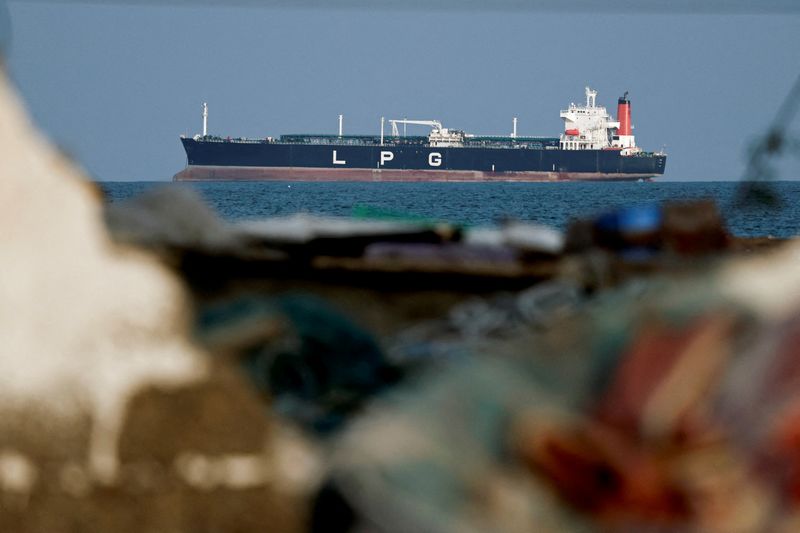
Australia, Japan Will Not Send Navy Vessels to Secure Strait of Hormuz Despite Pressure From Trump


Australia and Japan have declared that they will not send navy vessels to help secure the Strait of Hormuz despite the request of US President Donald Trump.
Iran closed down the Strait of Hormuz following the attacks from the US and Israel, severely affecting the global supply of oil.
Australia, Japan Won’t Send Navy Vessels
According to The Guardian, transport minister Catherine King maintains that Australia had not received any formal requests to help secure the strait.
“We won’t be sending a ship to the strait of Hormuz,” King told the national broadcaster. “We know how incredibly important that is but that’s not something we’ve been asked or we’re contributing to.”
Defence shadow minister, James Paterson, told Channel Nine’s Today show that “”If [a request from the US] came, we’d have to very carefully consider it against our national interest and particularly whether we have the relevant naval vessels available that could safely do that mission.”
As for Japan, Reuters said in its report that Japanese Prime Minister Sanae Takaichi has no plans to send any warships to the strait. The report notes that the country is constrained by its war-renouncing constitution.
“We have not made any decisions whatsoever about dispatching escort ships,” Takaichi told parliament. “We are continuing to examine what Japan can do independently and what can be done within the legal framework.”
Trump Amps Up Pressure on Allies
Trump previously said that his administration has contacted a total of seven countries to request their help with the Strait of Hormuz.
While he did not identify these seven countries, a social media post he published noted that he was hoping China, France, Japan, South Korea, Britain and others would participate.
Trump told reporters on Sunday that he is “demanding that these countries come in and protect their own territory because it is their territory.”

Jefferies downgrades Summit Therapeutics stock rating on trial risks

The contract marks the largest single order won by the company in its power transmission business.
The project involves the complete turnkey EPC execution of the 400/220 kV AIS substation at Saswad, Pune. The scope covers design, supply, erection, testing and commissioning of the facility, along with all related transmission lines. It also includes civil works and the full erection, testing and commissioning components required for the project.
At the core of the project is the construction of a greenfield 2×500 MVA, 400/220 kV AIS substation at Saswad. The facility will also include a 1×125 MVAr bus reactor at the 400 kV level. The substation has been planned with provisions for future expansion to support Maharashtra’s long term growth in power demand.
The project will also involve bay additions at three existing and proposed substations to integrate the new Saswad facility with the current transmission network.
In addition, the scope includes building multiple new 400 kV and 220 kV transmission lines, along with LILO (Line In Line Out) arrangements, to connect the Saswad substation to the wider Maharashtra grid.
Located in Pune district, the Saswad substation is expected to become an important node in Maharashtra’s high voltage transmission network. It will help improve power evacuation capacity for the fast growing industrial region around Pune and enhance grid reliability across the state.Commenting on the order win, Rajesh Ganesh, Managing Director and Chief Executive Officer of Bajel Projects Limited, said securing the Rs 700 crore plus ultra mega order from MSETCL marks a key milestone for the company and highlights its EPC capabilities in the high voltage substation segment. He said a 400/220 kV substation of this scale in Pune district will play a vital role in strengthening Maharashtra’s transmission network and meeting the rising power demand from the region’s expanding industrial and urban areas.
Ganesh added that the project supports the company’s RAASTA 2030 strategy of expanding into high value and complex infrastructure projects while also strengthening its partnership with one of India’s key state transmission utilities. He said the company is committed to delivering the project with high standards of quality and safety.
(Disclaimer: Recommendations, suggestions, views and opinions given by the experts are their own. These do not represent the views of The Economic Times)

In an exchange filing, Tejas Networks said the project marks another important step towards expanding the company’s international wireless customer base. As part of the order, the company’s 4G multiband radio products will be deployed at multiple locations across the unnamed mobile operator’s network.
“We are proud to announce further progress in our pursuit to expand our international wireless business and in taking our 4G/5G mobility stack global. We look forward to growing our presence in the customer’s network while replicating this success in other 4G/5G mobile networks, both in India and across the globe,” said Sanjay Malik, Chief Strategy and Business Officer of Tejas Networks.
The company said it has a versatile wireless product suite comprising 4G and 5G radio access network (RAN) offerings and a converged 4G/5G core solution. Its radio units are designed with flexibility and scalability in mind, supporting multi-band and multi-mode operations to enable cost-effective deployment in diverse real-world environments, it added. “Tejas’s award-winning TJ1400 UltraFlex baseband product provides unprecedented integration of wireless, broadband, transport, and IP network technologies in one compact chassis, thus significantly reducing the cost of network build-outs for mobile and fixed broadband operators,” the company further said.
By inducting Tejas as their new wireless OEM, the company’s South Asian customer now has a trusted and proven technology partner capable of addressing diverse network requirements while benefiting from greater vendor diversity, said Kumar N. Sivarajan, Chief Technology Officer of Tejas Networks. “We are fully committed to support them with innovative and well-differentiated solutions to optimally meet their network performance and user experience objectives,” he added.
Also read: IDBI Bank shares tumble 15% as govt likely to halt divestment process: Here’s why
Tejas Networks’ shares have seen a significant surge recently after a sharp slump earlier. Despite the 41% rise in one month, the stock is still down in the red overall this year so far. It has fallen more than 30% in one year.(Disclaimer: Recommendations, suggestions, views and opinions given by the experts are their own. These do not represent the views of The Economic Times)

OPINION: This first of two reports focused on some of the pitfalls of a technology that’s rapidly becoming ubiquitous.
Business
Trump demands others help secure Strait of Hormuz, Japan and Australia say no plans to send ships

Trump demands others help secure Strait of Hormuz, Japan and Australia say no plans to send ships
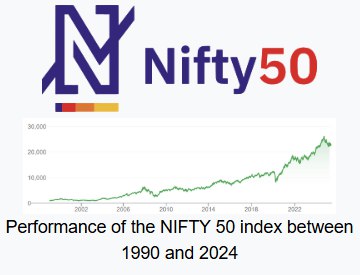
The Indian benchmark **Nifty 50** index experienced sharp volatility on Monday amid ongoing geopolitical tensions and rising global oil prices, as trading resumed in Mumbai following a steep decline at the end of the previous week.
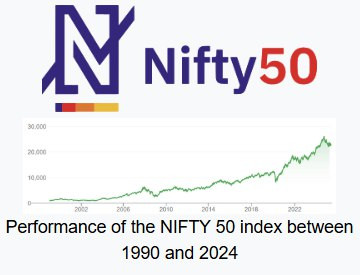
As of mid-morning on March 16, 2026, the Nifty 50 was trading around 23,045 to 23,200 levels, showing mixed movements with an intraday range between approximately 23,042 and 23,284. This follows a closing value of 23,151.10 on Friday, March 13 — a drop of 488.05 points or 2.06% from the prior session’s close of 23,639.15. The index opened lower at 23,116.10 before fluctuating in a broad band.
The previous Friday’s session marked one of the more pronounced single-day losses in recent months, with the Nifty shedding over 2% amid broader market pressures. Trading volume remained elevated, with reports indicating over 1.18 crore shares changing hands in early activity on Monday, reflecting continued investor caution.
Market participants pointed to escalating concerns over the U.S.-Iran conflict as a primary driver behind the recent sell-off. Reports of heightened tensions in the Middle East have pushed Brent crude oil prices above $100 per barrel in recent sessions, raising fears of inflationary pressures and potential disruptions to global energy supplies. Higher oil costs directly impact India’s import bill, given the country’s heavy reliance on foreign crude, and contribute to broader risk aversion in emerging markets.
“The market is grappling with external shocks,” said one Mumbai-based analyst tracking equity indices. “Geopolitical risks combined with elevated commodity prices are weighing on sentiment, particularly in oil-sensitive sectors.”
Broader indices mirrored the Nifty’s choppy performance. The BSE Sensex traded with similar volatility, fluctuating around the 74,500 level after opening mixed. Sectoral trends showed selective buying in pockets such as pharmaceuticals and metals, which provided some support, while oil and gas, realty, and certain financial stocks faced pressure.
On Friday’s close, only a handful of Nifty constituents ended in positive territory, with heavyweights like Reliance Industries, HDFC Bank, and Infosys contributing significantly to the overall decline due to their large weightings in the index. The Nifty’s P/E ratio hovered near 20.3, while the price-to-book stood at about 3.15, levels that some strategists view as offering moderate valuation cushion after the recent correction.
Looking at recent trends, the Nifty has retreated notably from its 52-week high of 26,373.20 (reached earlier in January 2026). The index has lost around 9-10% over the past month in some tracking periods, though it remains up modestly — roughly 3% — on a year-over-year basis from March 2025 levels. The 52-week low stands at 21,743.65.
Investors are closely monitoring upcoming economic data releases, including any updates on inflation, industrial output, and global central bank cues. The Reserve Bank of India’s stance on monetary policy remains in focus, especially if sustained high oil prices feed into domestic CPI readings.
Technical analysts noted that the Nifty has broken below certain key support levels in recent sessions, forming bearish candlestick patterns on daily charts. Some observers have described the move as entering a “deep corrective phase,” with potential further downside toward 22,700-23,000 if selling pressure persists. Conversely, a sustained move above 23,300 could signal short-term stabilization.
Foreign institutional investors (FIIs) have shown net selling in recent weeks, adding to domestic market headwinds, while domestic institutional investors (DIIs) have provided some counterbalancing buying.
Market breadth remained tilted toward declines in early Monday trade, with more stocks falling than advancing in the broader universe. Option chain data for near-term expiries highlighted put interest around the 23,000-23,200 strikes, indicating hedging activity.
Despite the near-term caution, long-term optimism persists among some market watchers
Business
QSR stocks slump up to 47% as weak investor appetite, rising fuel risks dent mood. Time to bottom fish?

While the troubles facing these stocks are not new, the ongoing crisis has only deepened the losses. Sapphire Foods India, which operates KFC and Pizza Hut outlets, has seen its share price fall 12% this week. Devyani International, set to merge with Sapphire to create a single Yum franchise in India, slipped 4% on Friday. Jubilant FoodWorks, the operator of Domino’s and Dunkin’, has lost about 4% over the same period, while shares of Westlife Foodworld (McDonald’s franchisee) have declined 4%. Meanwhile, Restaurant Brands Asia (RBA) has fallen around 3% week-on-week.
The impact on restaurants across the country is already visible as media reports suggest rapid closures. Though these QSR companies have not flagged any likely disruption in operations, so far, brokerage firm JM financial has warned that a prolonged crisis in LPG availability could pose operational challenges for those QSRs where cooking processes depend heavily on gas-based kitchens.
The risk has surfaced as the conflict in West Asia begins to disrupt fuel supplies, pushing restaurants to reassess operations, cooking methods and menu strategies, JM noted.
“For QSR operators such as Westlife FoodWorld, Devyani International, Sapphire Foods India and RBA (Restaurant Brands Asia), the immediate concern pertains to higher kitchen operating costs and the probability of store closures in certain micro markets, which could temporarily affect outlet operations and restaurant-level margins,” the brokerage note added.
However, ElaraCapital sees lesser impact of the LPG shortage on QSR chains compared to non-QSR based restaurants, citing that the QSR companies have minimal dependency on LPG and rely on electric ovens and fryers. In fact, it sees them benefitting due to a consumer substitution effect from LPG-dependent cuisine to QSR format.
Also read: As Iran Israel crisis clouds outlook for tile makers, what is next for Cera, Kajaria, Somany after 26% slide?
Weak investor appetite
Restaurant Brands Asia, which operates Burger King remains the only exception. Its shares have managed positive returns of 2% over a one-year period, nearly matching Nifty’s 3% returns in the same period.
Sapphire Foods shares are down 47% in the past 12 months, Westlife Food 36% lower while Jubilant and Devyani have plunged, 27% each.
The institutional appetite for QSR stocks has also taken a beating with Foreign Institutional Investors (FIIs) offloading stakes.
FII holding in Sapphire Foods fell 210 bps sequentially in the December quarter while recording a 90 bps decline in Westlife Food in same quarter. In Jubilant and Devyani, foreign stakes dropped by 150 bps and 80 bps, respectively.
The worst happened with Restaurant Brands Asia, where holding declined by 380 bps.
Earnings snapshot
Earnings cut a patchy picture with Devyani widening its consolidated December quarter losses to 10 crore though revenue growth stood 12% YoY to Rs 1,453 crore. The Q3 net profit for Westlife Food fell 86% though total revenue saw a 3% YoY uptick.
Jubilant reported strong set of numbers with profit after tax (PAT) growing 65% to Rs 71 crore while topline rising by 13%. As for RBA, YoY losses narrowed to Rs 7 crore versus 19 crore in Q3FY25 riding on 18% jump in revenue.
What should investors do?
Sudeep Shah, Vice President & Head of Technical and Derivative Research Desk at SBI Securities said QSR stocks have been under significant pressure over the past year and the recent weakness cannot be attributed solely to the LPG shortage concerns. Technically, most of these stocks were already in well-established downtrends, he said, adding that the current crisis has merely aggravated existing weakness rather than causing it.
“Sapphire Foods has been declining since October 2025 and continues to trade well below its key moving averages. Westlife Foodworld is exhibiting a classic lower-high, lower-low structure, with the MACD line positioned below the zero line, indicating sustained bearish momentum. Jubilant FoodWorks remains in a strong downtrend with the RSI languishing around 22, reflecting oversold but weak sentiment. Meanwhile, Devyani International has slipped close to its IPO levels,” Shah said.
His advice to investors is to avoid bottom-fishing and wait for clear signs of fundamental and technical improvement before considering exposure to the QSR space.
Also read: As crude oil price breaches $100 mark, Systematix recommends RIL, a potential multibagger and 4 more stocks to buy
(Disclaimer: The recommendations, suggestions, views, and opinions given by the experts are their own. These do not represent the views of The Economic Times.)

Oscars 2026 Winners: 7 Stars Who Won Their First Academy Award This Year

Who is in the women’s college basketball tournament?

HUBUNGI WA 0857-7492-0549 #foryou #smartphone #giveawayyy #money #viral #automobile #funny #fyp

Smart energy pays enters the US market, targeting scalable financial infrastructure

Why Israel is blocking foreign journalists from entering

Bitcoin: We’re Entering The Most Dangerous Phase
HUBUNGI WA 0857-7492-0549 #foryou #smartphone #giveawayyy #money #viral #automobile #funny #fyp

Oil Collapses 30% Plus As Fears Ease.. Markets React!! Institutions Are Buying Crypto RIGHT NOW!!!!!

Ethereum’s Set Up Actually Looks Insane Right Now
-
 Tech5 days ago
A 1,300-Pound NASA Spacecraft To Re-Enter Earth’s Atmosphere
-
 Crypto World2 days ago
HYPE Token Enters Net Deflation as HyperCore Buybacks Outpace Staking Rewards
-

 News Videos7 days ago
10th Algebra | Financial Planning | Question Bank Solution | Board Exam 2026
-

 Business6 days ago
ExxonMobil seeks to move corporate registration from New Jersey to Texas
-

 Crypto World7 days ago
Paradigm, a16z, Winklevoss Capital, Balaji Srinivasan among investors in ZODL
-

 Fashion3 days ago
Weekend Open Thread: Addict Lip Glow
-

 Tech6 days ago
ChatGPT will now generate interactive visuals to help you with math and science concepts
-
Sports2 days ago
Why Duke and Michigan Are Dead Even Entering Selection Sunday
-

 NewsBeat4 days ago
Residents reaction as Shildon murder probe enters second day
-

 Business5 days ago
Search Enters Sixth Week With New Leads in Tucson Abduction Case
-
 NewsBeat6 days ago
Pagazzi Lighting enters administration as 70 jobs lost and 11 stores close across Scotland
-

 Business11 hours ago
Search for Savannah Guthrie’s Mother Enters Seventh Week with No Arrests
-

 Tech7 days ago
Despite challenges, Ireland sixth in EU for board gender diversity
-

 Business2 days ago
US Airports Launch Donation Drives for Unpaid TSA Workers as Partial Government Shutdown Enters Fifth Week
-
Crypto World2 days ago
Coinbase and Bybit in Investment Talks: Could Bybit Finally Enter the US Crypto Market?
-

 NewsBeat5 days ago
I Entered The Manosphere. Nothing Could Prepare Me For What I Found.
-

 Business6 days ago
Search Enters 39th Day with FBI Tip Line Developments and No Major Breakthroughs
-

 Sports7 days ago
Skateboarding World Championships: Britain’s Sky Brown wins park gold
-

 Business2 days ago
Country star Brantley Gilbert enters growing non-alcoholic beer market
-
 Crypto World6 days ago
Will Chainlink price reclaim $10 amid volatility squeeze?

