






Connect with us
DAPA Banner

Business

Treasury Yields Hit Session Highs After Fed Decision

Published

on

Treasury Yields Hit Session Highs After Fed Decision

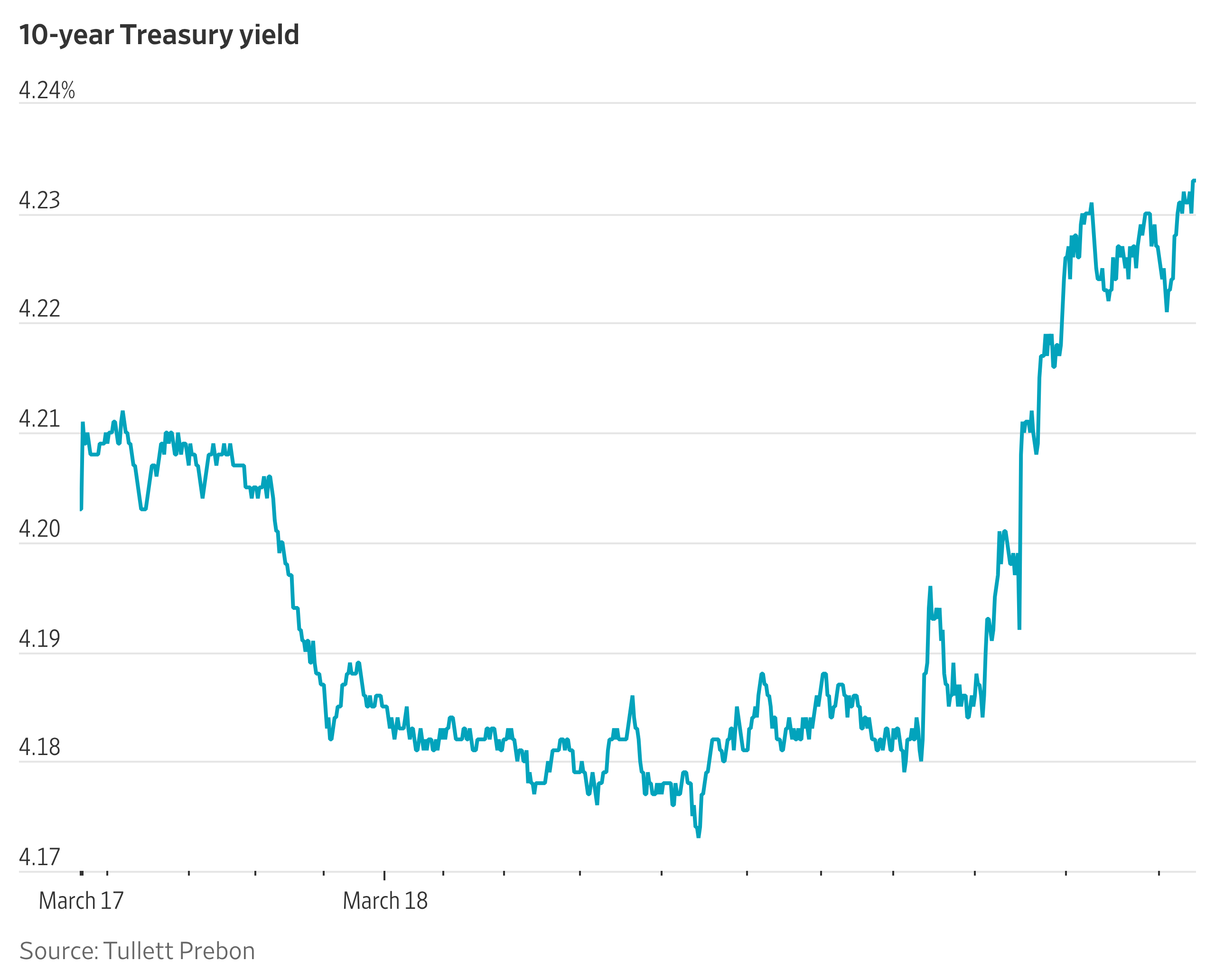
The yield on the 2-year Treasury, which often rises and falls with expectations for central-bank policy, was recently around 3.746%, according to Tradeweb, near their level prior to the Fed’s announcement and Chairman Jerome Powell’s news conference.

The yield on the 10-year note recently traded around 4.257%, up from around 4.23% prior to the decision.

Continue Reading
Click to comment

You must be logged in to post a comment Login

Leave a Reply

Business

Eternal shares jump 3% from lows as Zomato hikes platform fee by Rs 2.4 per order

Published

on

Eternal shares jump 3% from lows as Zomato hikes platform fee by Rs 2.4 per order
Eternal shares on Friday rose 3% from the day’s low of Rs 230.10 on the NSE to scale the day’s high of Rs 236.70 after its food delivery platform Zomato increased the platform fee by Rs 2.40 per order. The stock witnessed strong investor response with over 5.5 crore shares getting traded on the exchange. The traded value of the shares stood at Rs 1,293 crore.

The stock finally ended at Rs 232.41, up by Rs 3.67 or 1.60% over the last closing price of Rs 228.74.

On a pre-GST basis, platform fee on Zomato is now Rs 14.90 per order from Rs 12.50 earlier, according to a news report by ET Tech. The last such hike was undertaken in September 2025, the report said. Zomato’s food delivery rival Swiggy is currently charging a fee of Rs 14.99 per order, including taxes. Typically, the two players follow each other in changing these levies.

The move comes at a time when urban mobility startup Rapido has launched its food delivery offering Ownly in Bengaluru, claiming that it will not charge any additional fees to customers or restaurants apart from a delivery charge.

Advertisement

Eternal shares have seen significant correction, declining 30% in the past six months. It has underperformed Nifty and the BSE Sensex, which have declined 9% and 10%, respectively in the same period.


The stock is currently trading below its 50-day and 200-day simple moving averages (SMAs) of Rs 265 and Rs 291, respectively, according to Trendlyne data.
Also read | Nifty Bank logs 3rd-worst March fall since the global financial crisis. HDFC Bank, SBI among top culpritsEternal, which also operates quick commerce arm Blinkit, reported a 73% year-on-year (YoY) rise in consolidated net profit to Rs 102 crore. Revenue from operations surged 201% YoY to Rs 16,315 crore.

Revenue growth was mainly driven by an accounting shift to inventory ownership in quick commerce, where revenue now includes the full value of goods sold rather than just marketplace commission. According to Eternal, the like-for-like revenue growth during the quarter was 64% YoY.

Consolidated EBITDA increased 28% YoY to Rs 364 crore, while rising 63% QoQ.

For the food delivery business, adjusted revenue rose 26% YoY to Rs 2,413 crore. Net order value (NOV) increased 17% YoY, accelerating from 13.8% growth in the previous quarter. This marked the second consecutive quarter of NOV growth acceleration, following a trough of 13.1% in Q1FY26. Gross order value (GOV) growth for the third quarter stood at 21% YoY.

Advertisement

Also read | 83% of BSE 500 stocks plunge up to 35% amid Mideast war. Do you own any?

(Disclaimer: The recommendations, suggestions, views, and opinions given by the experts are their own. These do not represent the views of The Economic Times.)

Continue Reading

Business

Mark My Words March 20 2026

Published

on

Mark My Words March 20 2026

Sam Jones and Tom Zaunmayr discuss fuel furor, mining moves, property purchases and other big stories of the week.

Continue Reading

Business

QatarEnergy declares force majeure after Iran strikes on Ras Laffan facility

Published

on

QatarEnergy declares force majeure after Iran strikes on Ras Laffan facility

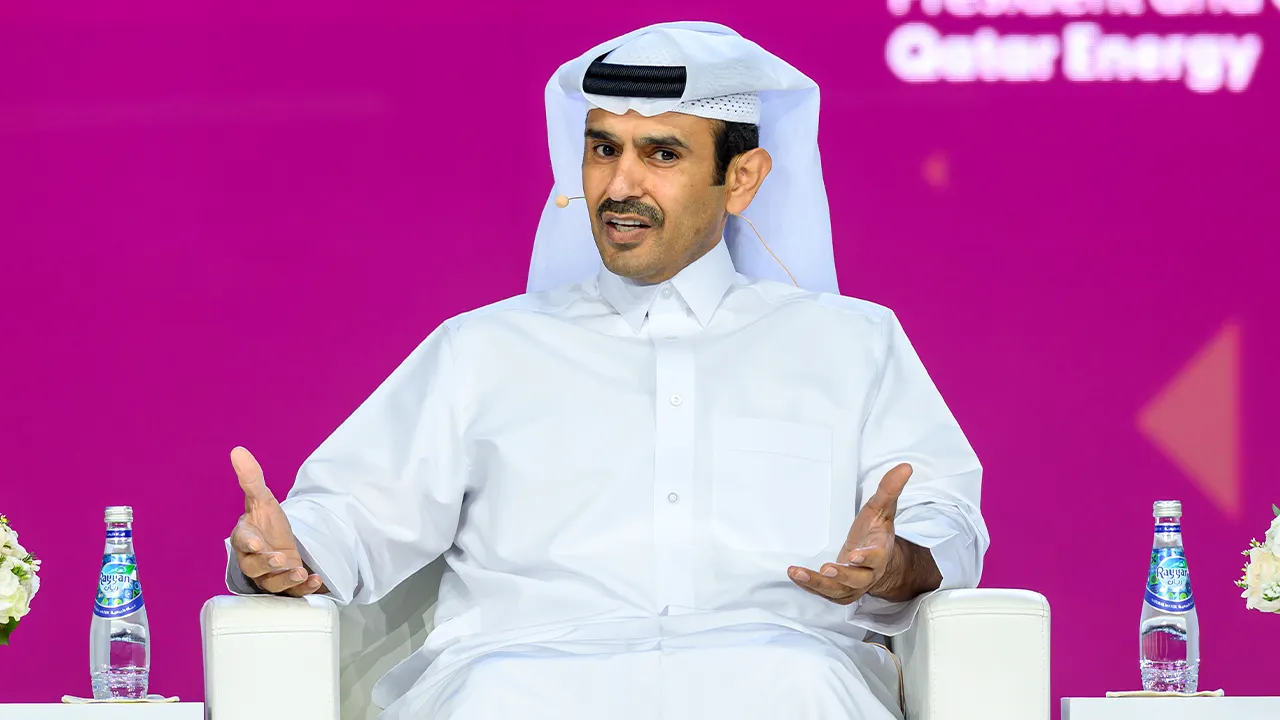
Iranian strikes have cut about 17% of Doha’s liquefied natural gas (LNG) export capacity, QatarEnergy’s CEO told Reuters in an interview on Thursday.

Saad al-Kaabi said the disruption could result in an estimated $20 billion in lost annual revenue and threaten supplies to Europe and Asia.

Advertisement

The CEO of the state-owned energy company, who is also Qatar’s minister of state for energy affairs, told Reuters that damage to two LNG trains and one of its two gas-to-liquids facilities will sideline roughly 12.8 million tons per year of output for three to five years.

“I never in my wildest dreams would have thought that Qatar would be — Qatar and the region — in such an attack, especially from a brotherly Muslim country in the month of Ramadan, attacking us in this way,” said al-Kaabi.

IRAN HOLDS WORLD ENERGY HOSTAGE WITH ‘NIGHTMARE’ STRAIT OF HORMUZ SEA MINES, FORMER CENTCOM OFFICIAL WARNS

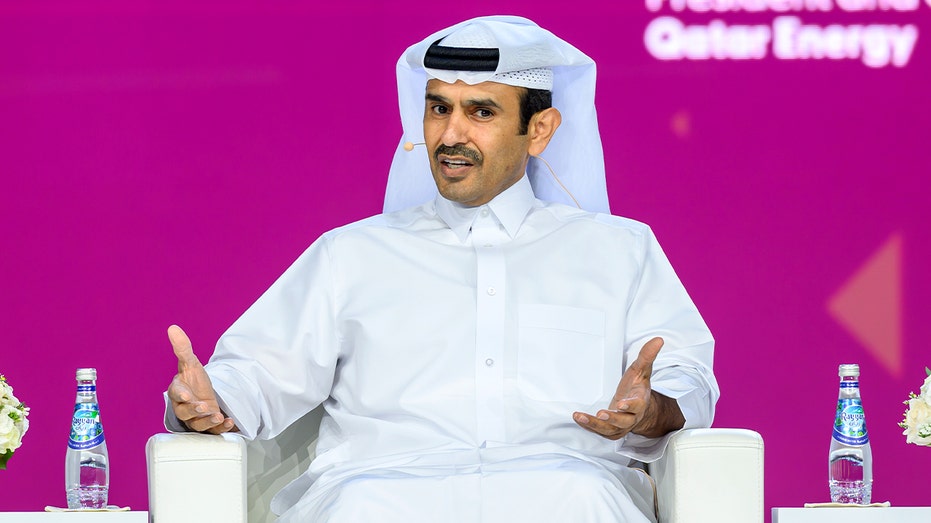
Qatar’s energy minister addresses an international conference on liquefied natural gas in Doha.

Saad Sherida Al-Kaabi, Qatar’s minister of state for energy affairs and CEO of QatarEnergy, speaks during the LNG2026 conference at the Qatar National Convention Centre in Doha on Feb. 2, 2026. (Noushad Variyattiyakkal/SOPA Images/LightRocket via Getty Images / Getty Images)

The attacks came after Iran targeted Gulf energy infrastructure in retaliation for an Israeli strike on its South Pars gas field on Wednesday.

Advertisement

QatarEnergy said in several posts on X that missile and rocket attacks on its facilities at Ras Laffan Industrial City caused fires and extensive damage but no casualties.

Qatar is one of the world’s largest LNG exporters, accounting for nearly 20% of global supply, according to the U.S. Energy Information Administration.

IRAN WARNS EUROPEAN COUNTRIES WILL BE ‘LEGITIMATE TARGETS’ IF THEY JOIN CONFLICT

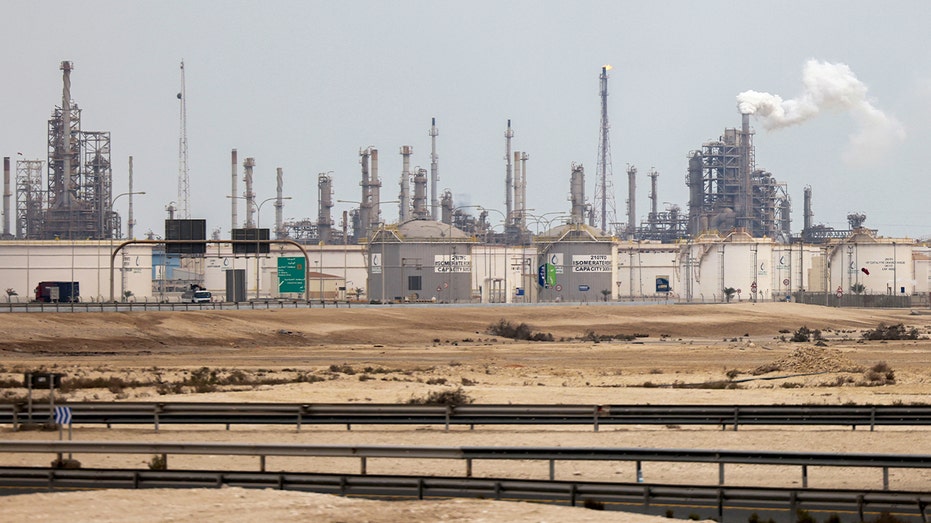
Industrial gas processing facilities and storage infrastructure at a major Qatari energy complex.

Qatar Energy facilities in Mesaieed Industrial City, south of Doha, on March 4, 2026, after the company announced a shutdown of LNG production following reported Iranian attacks on energy installations. (Stringer/Getty / Getty Images)

President Donald Trump said on his Truth Social platform that Israel would halt further strikes on Iran’s South Pars gas field unless Tehran escalates, warning that the United States could respond with overwhelming force if Qatar’s LNG facilities are targeted again.

Advertisement

“The United States of America, with or without the help or consent of Israel, will massively blow up the entirety of the South Pars Gas Field at an amount of strength and power that Iran has never seen or witnessed before,” Trump wrote. “I do not want to authorize this level of violence and destruction because of the long term implications that it will have on the future of Iran, but if Qatar’s LNG is again attacked, I will not hesitate to do so.”

Al-Kaabi told Reuters QatarEnergy declared force majeure on its entire LNG output following the attacks on Ras Laffan, allowing it to suspend deliveries due to the damage.

“For production to restart, first we need hostilities to cease,” he said.

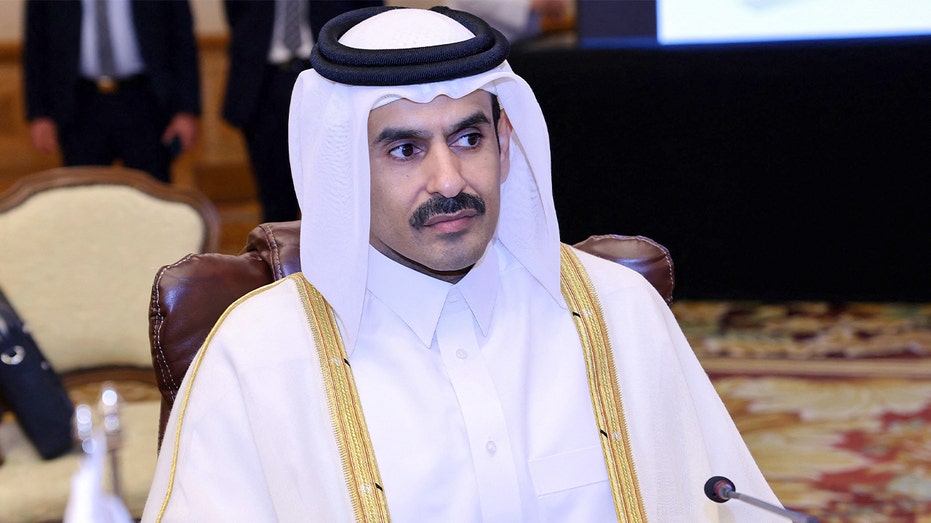
Qatari energy executive attends a regional petroleum organization meeting in Kuwait City.

Saad Sherida Al-Kaabi, president and CEO of Qatar Petroleum and chairman of Qatar Gas, attends the 109th meeting of the Organization of Arab Petroleum Exporting Countries in Kuwait City on Dec. 12, 2022. (Yasser Al-Zayyat/AFP via Getty Images / Getty Images)

CLICK HERE TO DOWNLOAD THE FOX NEWS APP

Advertisement

He also explained that the state-owned company will have to declare force majeure on long-term contracts for up to five years covering supplies to Italy, Belgium, South Korea and China due to damage to the two LNG trains.

“If Israel attacked Iran, it’s between Iran and Israel. It has nothing to do with us and the region,” al-Kaabi told Reuters. “And so now, in addition to that, I’m saying that everybody in the world, whether it’s Israel, whether it’s the U.S., whether it’s any other country, everybody should stay away from oil and gas facilities.”

Continue Reading

Business

Pharvaris publishes Phase 2 data on HAE drug deucrictibant

Published

on


Pharvaris publishes Phase 2 data on HAE drug deucrictibant

Continue Reading

Business

Wall Street Breakfast Podcast: SMCI Hit By Export Scandal

Published

on

Wall Street Breakfast Podcast: SMCI Hit By Export Scandal

Judge

Mohamad Faizal Bin Ramli/iStock via Getty Images

Listen below or on the go via Apple Podcasts and Spotify

Nasdaq, S&P, Dow futures rise as Netanyahu eases concerns about the Iran conflict. (00:15) Super Micro (SMCI) falls as co-founder, employee charged in Nvidia chip smuggling case. (00:48)Unilever (UL) in talks to sell its food business to McCormick (MKC). (03:00)

This is an abridged transcript.

Advertisement

Stock index futures are firmly in the green.

S&P 500 futures (SPX) rose 0.90%, Nasdaq 100 futures (US100:IND) gained 1.02%, and Dow Jones Industrial Average futures (INDU) advanced 0.97%.

Bitcoin is up 1% at $70,000. Gold is up 0.5% at $4,677.

Market sentiment improved after Israeli Prime Minister Netanyahu said the country is helping to reopen the Strait of Hormuz.

Advertisement

Oil prices slipped on the news that Netanyahu said Iran no longer has the capacity to enrich uranium or make ballistic missiles.

Crude oil is down 0.2% at $95. Brent crude is at $109.

European indexes also rebound after an ease in oil prices.

The FTSE 100 is up 0.2% and the DAX is up 0.6%.

Advertisement

In Asia, the markets in Japan (NKY:IND) closed for a holiday.

Super Micro Computer (SMCI) is down 22% in premarket action.

Three individuals linked to the AI server maker, including a co-founder, were charged with violating export laws by assisting in the smuggling of at least $2.5 billion worth of U.S. AI technology to China.

The Justice Department did not name Super ‌Micro in the complaint, referring only to a “U.S. manufacturer.”

Advertisement

The company said it was informed by federal prosecutors of the indictment on Thursday. It noted that it was not named as a defendant in the case and said it had cooperated with investigators.

In an indictment unsealed on Thursday, the U.S. government alleged that Yih-Shyan “Wally” Liaw, Ruei-Tsan “Steven” Chang and Ting-Wei “Willy” Sun worked together to violate the Export Control Reform Act. Liaw co-founded Super ​Micro in 1993, and joined its board of directors in 2023. Chang was a sales manager in the Taiwan office of Super Micro, while Sun was ⁠a contractor.

U.S. officials allege the trio went to great lengths to hide their actions from both U.S.-based server manufacturers and export control authorities, even using hair dryers to remove labels and serial numbers ​from the real machines and placing them on dummy machines left behind after the real machines had been shipped to China.

The efforts have yielded around $2.5 billion in sales for the server maker since 2024, with $510 million sold between late April 2025 and mid-May 2025 going to the Southeast Asian company and on to China, the indictment said. The plaintiff said the server maker had no U.S. Commerce Department license to export servers featuring Nvidia (NVDA) GPUs to China.

Advertisement

Super Micro Computer (SMCI) said it placed its co-founder and the sales manager on leave and terminated its ties with the contractor, after being made aware of the charges on Thursday.

The attorney’s office said the co-founder and contractor were both arrested on Thursday, while the sales manager is a fugitive.

Unilever (UL) announced that it received an inbound offer for its food business and is in discussions with McCormick (MKC).

The Wall Street Journal reported, citing people familiar with the matter, that an all-stock deal may be announced within weeks if talks don’t fall apart. The exact structure remains unknown.

Advertisement

Unilever’s (UL) food business, which houses brands such as Knorr and Hellmann’s, could be worth tens of billions of dollars. McCormick’s (MKC) products include Frank’s RedHot sauce and French’s yellow mustard.

Separating its food business would enable Unilever (UL) to focus on its beauty, personal care and home divisions. The company spun off its ice cream business Magnum last year.

What’s Trending on Seeking Alpha

The Strait of Hormuz must be opened in days, not weeks, to avoid global recession risks – BofA head of research

Advertisement

Disney-owned ABC faces potential tens-of-millions loss if “The Bachelorette” fails to air: report

Bezos raising $100B to buy industrial firms and upgrade them with AI: report

The biggest movers for the day premarket: FedEx (FDX) +11% – Stock gained in premarket trading after the company topped expectations with its fiscal third-quarter earnings report.

Here’s a link to the Investment News Quiz for the week.

Advertisement
Continue Reading

Business

Form 6K Magnum Ice Cream Co N.V. For: 20 March

Published

on


Form 6K Magnum Ice Cream Co N.V. For: 20 March

Continue Reading

Business

At Close of Business podcast March 20 2026

Published

on

At Close of Business podcast March 20 2026

Ella Loneragan speaks with Isabel Vieira on the accomplished women who were recognised in the week of International Women’s Day.

Continue Reading

Business

Chester Grosvenor Hotel to close in September as owner seeks new operator

Published

on

Business Live

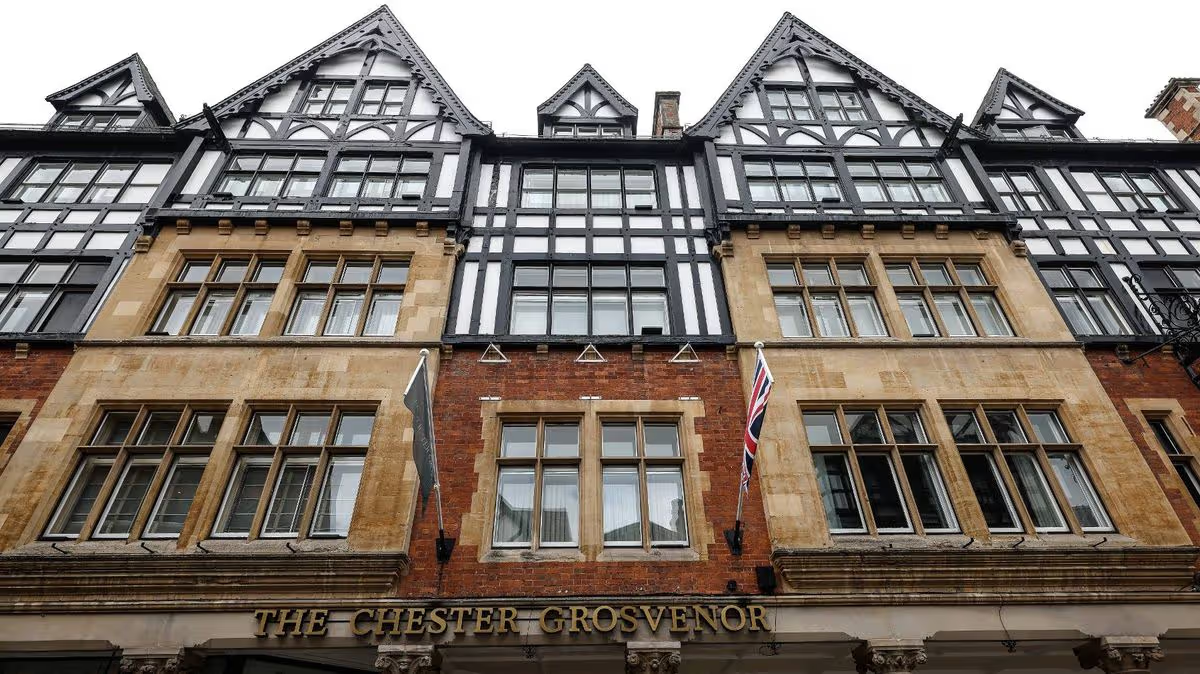
The five-star hotel will shut on September 30 after unsafe concrete was discovered in the historic building

The Chester Grosvenor Hotel, Eastgate Street

The Chester Grosvenor Hotel is one of the North West’s best-known venues(Image: Pete Stonier / CheshireLive)

The Grosvenor Estate has said that securing the long-term future of the historic Chester Grosvenor Hotel is now its “priority” after the shock announcement that the famous hotel will close in September. A spkesperson said proposals are being drawn up to renovate the landmark Eastgate Street hotel and to appoint a new operator.

Advertisement

Bespoke Hotels, which presently runs the Grade II hotel, told Cheshire Live on Thursday afternoon that it will close the hotel on September 30. The decision follows the discovery of potentially unsafe concrete above the function suites of the building, which dates from 1865.

A representative for Grosvenor, which holds the freehold of the hotel, said: “We are sorry to acknowledge that Bespoke Hotels has taken the decision to cease operating the hotel following its summer closure, and for the impact this will have on those whose roles may be affected. Our priority now is to ensure the long-term future of the hotel given its importance to Chester.

“As an organisation steeped in the history of (the) city and that is deeply committed to its long-term success, we are developing plans for a major refurbishment supported by significant investment and the appointment of a new operator. The refurbishment will protect the future of Cheshire’s only five-star large hotel, strengthening Chester’s tourism and hospitality economy.”

Cheshire Live reported yesterday afternoon that Bespoke Hotels had told staff about the closure plans, with one member of staff telling the title that the team was “heartbroken”.

Advertisement

Bespoke Hotels told Cheshire Live: “Following the recent discovery of RAAC above the function suites, the scale and complexity of the works required to put a long-term solution in place, alongside necessary refurbishment works, we have taken the very difficult decision to cease operating The Chester Grosvenor.

“As a result, it is our intention to close the hotel on 30th September 2026. Our immediate focus is on supporting our colleagues in the weeks ahead.

“We closed our conference suites after the discovery of Reinforced Autoclaved Aerated Concrete (RAAC) during recent surveys. The safety of our guests and colleagues is of the utmost importance and the affected area will remain closed as a precaution. All other public areas of the hotel, as well as the car park, are unaffected and continue to operate as normal.”

A letter sent to staff by chief operating officer Richard Grove, which was seen by Cheshire Live, said: “Following the recent discovery of RAAC (reinforced autoclaved aerated concrete) above the function suites, the scale and complexity of the works required to put a long-term solution in place, alongside necessary refurbishment works, we have taken the very difficult decision to cease operating The Chester Grosvenor.

Advertisement

“As a result it is our intention to close the hotel on 3oth September 2026. We recognise that this decision will be deeply upsetting and may lead to the loss of jobs for many colleagues, and will impact our customers and guests, that you have given great service to over many years.

“This is not a decision we have taken lightly, and it is in no way a reflection of the performance of the team. We fully appreciate the impact it will have on you and your families. Our immediate focus is on supporting you through this process, and we will be sharing further information shortly about what this means for you and support available.”

Continue Reading

Business

Koppers Holdings Inc. (KOP) Presents at Sidoti March Small-Cap Virtual Conference – Slideshow

Published

on

OneWater Marine Inc. (ONEW) Q1 2026 Earnings Call Transcript

Koppers Holdings Inc. (KOP) Presents at Sidoti March Small-Cap Virtual Conference – Slideshow

Continue Reading

Business

uber invests $1.25bn in rivian robotaxi deal to launch autonomous fleet across us europe

Published

on

uber invests $1.25bn in rivian robotaxi deal to launch autonomous fleet across us europe

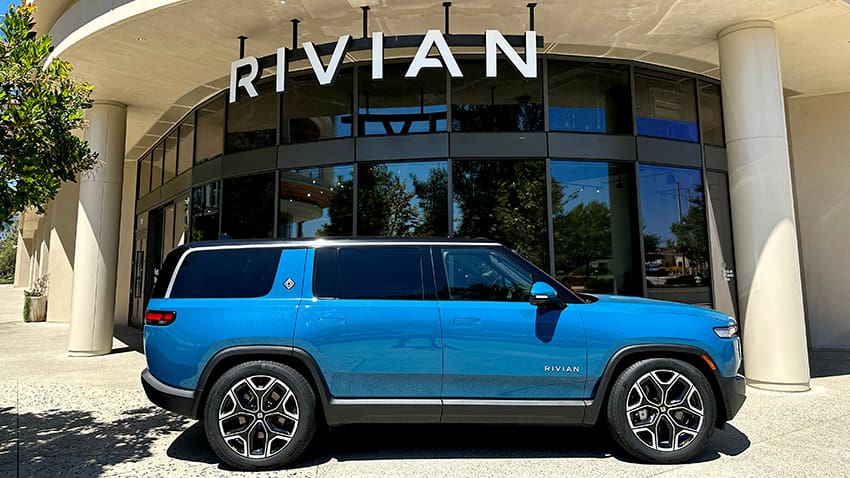
Uber is doubling down on autonomous mobility with plans to invest up to $1.25 billion in electric vehicle maker Rivian as part of a long-term strategy to launch a global robotaxi network.

The ride-hailing giant will initially commit $300 million, with the total investment potentially rising to $1.25 billion by 2031, contingent on Rivian meeting key performance milestones tied to the reliability and safety of its autonomous driving technology.

The partnership will see Uber, alongside fleet partners, purchase at least 10,000 autonomous Rivian R2 vehicles, which will be deployed exclusively through the Uber platform. The first robotaxi services are expected to launch in San Francisco and Miami in 2028, before expanding across the United States, Canada and Europe.

The deal represents one of Uber’s most significant moves yet in the rapidly evolving autonomous transport sector, as it seeks to position itself as the primary commercial gateway for robotaxi services rather than a developer of the underlying technology.

Having sold its own self-driving division in 2020, Uber has pivoted to a partnership-led model, aligning itself with a growing roster of autonomous vehicle developers. The company has now struck agreements with more than 20 self-driving firms, including Waymo and Zoox, as it races to build scale ahead of widespread adoption.

Advertisement

Under the Rivian agreement, Uber will also pay licensing fees for access to Rivian’s proprietary autonomous software, while retaining the option to expand the fleet to as many as 50,000 vehicles from 2030 onwards.

If all milestones are achieved, the companies expect to deploy thousands of fully driverless vehicles across more than 25 cities globally by the end of the decade.

For Uber, the strategy is clear: control the customer interface and demand layer, while outsourcing the capital-intensive and technically complex elements of autonomy to specialist partners. The company is also experimenting with owning or co-owning fleets, giving it more direct exposure to the economics of autonomous transport as it explores financing partnerships with banks and private equity investors.

The move comes as competition intensifies in the robotaxi space, with Tesla, Lucid and a host of technology-led entrants all vying for dominance in what many see as the next frontier of mobility.

Advertisement

Tesla has already begun limited robotaxi deployments in Austin and San Francisco, while Lucid is exploring expanded collaborations with Uber and other partners to scale its own autonomous ambitions.

For Rivian, the deal marks a significant strategic pivot towards software and autonomy at a time when the electric vehicle market is facing slowing demand, policy uncertainty and margin pressure.

The company acknowledged that accelerating its autonomy roadmap would come at a financial cost, warning it no longer expects to meet its previously stated profitability targets by 2027 due to increased research and development spending.

Nevertheless, investors initially responded positively to the announcement, with Rivian’s shares rising sharply before paring gains later in the session.

Advertisement

Rivian has been investing heavily in its in-house autonomous stack, including a proprietary chip, lidar systems, high-definition cameras and radar sensors, all of which are expected to be integrated into its upcoming R2 platform from 2027.

The company is also developing software for both commercial fleets and private vehicle ownership, with ambitions to enable fully autonomous everyday use cases such as school runs and airport pickups.

Industry analysts view the Uber–Rivian partnership as emblematic of a broader shift in the sector, where success is likely to depend less on individual technological breakthroughs and more on the ability to integrate hardware, software and distribution at scale.

Uber’s global network of riders and drivers provides a ready-made marketplace for autonomous services, while Rivian brings manufacturing capability and a vertically integrated approach to vehicle and software development.

Advertisement

However, significant hurdles remain. Regulatory approval, safety validation, infrastructure investment and public trust will all play critical roles in determining how quickly robotaxis move from pilot programmes to mainstream adoption.

The timeline itself reflects this reality. While Uber aims to operate robotaxis in 15 markets by the end of this year through various partnerships, meaningful scale is not expected until 2027 and beyond.

In the meantime, the deal underscores a growing consensus across the mobility sector: that autonomy is no longer a distant ambition, but an increasingly central battleground for the future of transport, and one that will require deep capital, long-term commitment and strategic collaboration to win.


Paul Jones

Harvard alumni and former New York Times journalist. Editor of Business Matters for over 15 years, the UKs largest business magazine. I am also head of Capital Business Media’s automotive division working for clients such as Red Bull Racing, Honda, Aston Martin and Infiniti.

Advertisement

Continue Reading

Trending

Copyright © 2025