

Business
Trump and Netanyahu Discuss Possibility of Resuming Strikes on Iran Amid Rising Regional Tensions

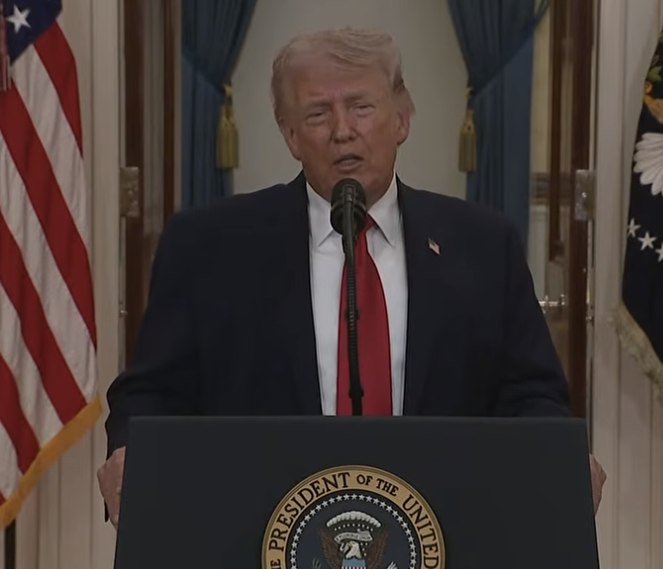
WASHINGTON — President Donald Trump and Israeli Prime Minister Benjamin Netanyahu held a private phone conversation this week discussing the possibility of resuming military strikes against Iran, according to sources familiar with the discussion, as tensions in the Middle East escalate over Tehran’s nuclear program and threats to the Strait of Hormuz.

The call, described by insiders as “serious and detailed,” comes amid heightened concerns that Iran is advancing its nuclear capabilities and could soon impose tolls on vessels passing through the critical oil shipping lane. Trump, who maintains significant influence in Republican politics and is viewed as a potential 2028 contender, reportedly told Netanyahu that any disruption to global energy flows would not be tolerated and that stronger action may be necessary.
“Trump made it clear that Iran crossing certain red lines would lead to very serious consequences,” said one person briefed on the conversation. “He emphasized the need for close coordination between the U.S. and Israel on this issue.”
Netanyahu’s office has not publicly confirmed the details of the call, but Israeli officials have increasingly signaled frustration with diplomatic efforts to restrain Iran. The Jewish state has conducted multiple covert operations and limited strikes against Iranian targets in recent years, and the possibility of more overt military action remains on the table.
The discussion reflects a growing alignment between Trump’s hardline stance on Iran and Netanyahu’s security priorities. During Trump’s presidency, the U.S. adopted a “maximum pressure” campaign against Tehran, including the 2020 assassination of Iranian general Qasem Soleimani. Many observers see the recent conversation as a continuation of that aggressive approach.
Background of Escalating Tensions
The current crisis stems from a combination of factors. Iran has threatened to impose tolls on shipping through the Strait of Hormuz, a narrow waterway that carries about 20 percent of the world’s traded oil. Such a move could send global energy prices soaring and trigger a broader economic shock.
At the same time, Western intelligence agencies believe Iran has made significant progress toward enriching uranium to near-weapons-grade levels. Diplomatic efforts to revive the 2015 nuclear deal have stalled, leaving military options on the table for both Israel and the United States.
Trump’s recent public comments warning Iran of a “very bad time” if it disrupts the strait have added to the volatility. His influence within the Republican Party and among conservative voters makes his position particularly significant, even outside formal government channels.
Netanyahu, facing domestic political pressures in Israel, has long viewed Iran as an existential threat. His government has consistently advocated for stronger action against Tehran’s nuclear ambitions and its support for proxy groups across the region.
International Reactions and Oil Market Impact
The reported discussion has already sent ripples through global markets. Oil prices climbed above $110 per barrel on Monday as traders priced in potential supply disruptions. Brent crude rose more than 3 percent in early trading, while West Texas Intermediate gained similar ground.
European leaders have urged restraint, with several countries calling for renewed diplomatic engagement. China, a major buyer of Iranian oil, has expressed concern about any actions that could destabilize energy markets. Russia, a close partner of Iran, has warned against unilateral military moves.
U.S. officials have not publicly confirmed the details of the Trump-Netanyahu call but have reiterated America’s commitment to Israel’s security and the free flow of commerce through international waterways. The Pentagon has increased naval presence in the region as a precautionary measure.
Strategic Calculations on Both Sides
For Trump, the conversation aligns with his long-standing image as a tough negotiator on Iran. His previous administration’s policies significantly weakened Iran’s economy through sanctions, and many of his supporters view him as more effective than current leadership on national security issues.
Netanyahu faces a complex domestic landscape. While strong action against Iran enjoys broad support in Israel, the timing and scope of any operation carry significant risks. A full-scale conflict could draw in Iranian proxies across multiple fronts, including Hezbollah in Lebanon and Houthi forces in Yemen.
Military analysts suggest any resumed strikes would likely focus on nuclear facilities and missile production sites rather than a broader invasion. However, the risk of escalation remains high, with potential for retaliatory attacks on Israeli and U.S. interests.
Economic and Humanitarian Concerns
A renewed military campaign against Iran would have far-reaching consequences. Global energy prices could spike dramatically, affecting everything from gasoline costs to inflation worldwide. Developing nations heavily dependent on imported oil would face particularly severe challenges.
Humanitarian groups warn that any conflict could worsen an already difficult situation inside Iran, where economic sanctions and internal challenges have strained civilian life. Civilian casualties and displacement would likely add to regional instability.
Diplomatic channels remain active, with several countries attempting to mediate between the parties. However, trust between Iran and the West is at a low point, making meaningful negotiations difficult.
Domestic Political Implications
In the United States, the reported conversation has already become a political talking point. Trump’s supporters view it as evidence of strong leadership on national security, while critics argue it risks unnecessary escalation. The discussion could influence the broader foreign policy debate heading into future election cycles.
In Israel, Netanyahu’s tough stance on Iran remains popular among many voters, though opposition voices have called for more diplomatic efforts alongside military preparedness.
What Comes Next
The coming weeks will be critical as both sides assess their options. Iran has shown no signs of backing down on its nuclear program or threats regarding the Strait of Hormuz. Israel and the United States continue to monitor developments closely, with contingency plans reportedly in place.
For global markets and ordinary citizens, the situation remains fluid. Energy prices are expected to stay elevated as long as uncertainty persists. Diplomatic efforts continue behind the scenes, but the possibility of military action remains a real and concerning prospect.
As Trump and Netanyahu continue their discussions, the world watches closely. The stakes are enormous — from global energy security to regional stability and the potential for wider conflict. How this latest chapter in the long-running Iran crisis unfolds could shape international relations for years to come.


Tatiana Dyuvbanova/iStock via Getty Images

By Jennifer Nash
Existing home sales unexpectedly fell in June, dropping 2.4% after a 3.7% increase in May. According to the National Association of Realtors (NAR), sales reached a seasonally adjusted annual rate of 4.09 million units, falling short of the

Success rarely follows a straight path.
For Shahriar James Ekbatani, the journey has included immigrating to the United States as a teenager, building a 40-year healthcare career, founding a nonprofit organization, and developing commercial real estate projects across Florida.
Today, Ekbatani is known for two major areas of impact. The first is Lotus Behavioral Health, a nonprofit organization helping adolescents overcome drug and alcohol addiction. The second is a growing real estate development portfolio that includes projects in Lake Nona, The Villages, downtown Orlando, and Palm Beach County.
While the industries may seem different, Ekbatani sees a common thread.
“Success is accomplishing your goals,” he says. “Everything starts with understanding the outcome you want and then creating the steps necessary to get there.”
From Iran to America: The Beginning of the Journey
Ekbatani grew up in Iran before immigrating to the United States at the age of 18.
Like many immigrants, he arrived with ambition but few guarantees. Education quickly became a priority. He earned bachelor’s and master’s degrees in Industrial Engineering, followed by a master’s certificate in Healthcare Administration.
Those credentials opened the door to a career in healthcare at a time when hospitals and healthcare systems were becoming increasingly complex.
He began in hospital consulting before moving into leadership positions, including Vice President of Operations and Chief Operating Officer.
Over time, he developed a reputation for solving operational challenges and improving organizational performance.
Building a Healthcare Business Over Four Decades
Healthcare became the foundation of Ekbatani’s professional career.
Over four decades, he worked across consulting, hospital operations, healthcare management, and entrepreneurship. Eventually, he launched his own healthcare company and grew it into a successful business that was acquired by a national firm in 2018.
The journey was not without setbacks.
One of the biggest challenges came when his company faced outside opposition that forced a major change in direction.
“In my previous company, we were attacked by a group of lawyers who did not like the relationship that we had built with the hospitals,” Ekbatani recalls. “We had to restart our company in a different direction, working with insurance companies.”
The experience reinforced a lesson that continues to guide him today.
“It’s perseverance,” he says when asked what quality contributed most to his success.
Rather than viewing obstacles as permanent roadblocks, he learned to adapt while keeping his focus on long-term goals.
Why Shahriar James Ekbatani Founded Lotus Behavioral Health
After selling his healthcare business, Ekbatani turned his attention toward another challenge.
In 2020, he founded Lotus Behavioral Health, a nonprofit organization serving young people between the ages of 12 and 17 who struggle with drug and alcohol addiction.
As Chairman of the Board, he has focused on building programs that help teenagers and their families navigate recovery and create healthier futures.
The mission reflects his long-standing belief that meaningful success is measured by outcomes.
For Ekbatani, helping a young person overcome addiction and reclaim their future is one of the most important outcomes possible.
The organization has become one of the defining achievements of his career and remains a major focus of his work today.
How Shahriar James Ekbatani Transitioned Into Real Estate Development
While Lotus Behavioral Health was growing, Ekbatani was also pursuing a new challenge in commercial real estate development.
Following the sale of his healthcare company, he began focusing on opportunities in some of Florida’s fastest-growing markets.
One of the earliest examples was in Lake Nona.
What began as a farmland acquisition evolved into a significant commercial development opportunity as the area experienced rapid growth and attracted new residents, businesses, and investment.
That experience helped shape his approach to development.
Rather than chasing trends, he looks for areas where population growth, infrastructure investment, and business demand are moving in the same direction.
“I look at the outcomes that I desire to have over a one-year period,” he says. “Then I define the steps necessary to accomplish them.”
Major Projects Across Florida
Today, Ekbatani’s real estate portfolio spans several of Florida’s most active growth markets.
In The Villages region, he has focused on retail and medical development projects designed to serve one of the fastest-growing populations in the country. As healthcare providers, retailers, and service businesses expand into the area, demand for commercial space continues to increase.
He has also acquired and sold notable properties in Palm Beach County, further expanding his footprint within Florida’s commercial real estate market.
One of his most visible current projects is Eola Food Hall in downtown Orlando.
Scheduled to open in 2026, the project is expected to become a destination that brings together local food vendors, visitors, and residents in the heart of the city. The development has already generated significant media attention and represents another example of Ekbatani’s focus on projects that contribute to community growth.
“Looking at the end outcome and staying focused on that,” he says. “That’s how I approach every project.”
What Leadership Means to Shahriar James Ekbatani
Whether he is developing real estate, leading a nonprofit, or building a business, Ekbatani follows the same leadership philosophy.
He starts with the desired outcome.
Then he works backward to identify the steps needed to achieve it.
He measures success by results rather than activity.
“By the outcome of a project,” he says when asked how he evaluates achievement.
That mindset has helped guide a career that now spans healthcare, philanthropy, and real estate development.
Looking ahead, he remains focused on growth, impact, and new opportunities.
“Set new goals and objectives to accomplish over the next year,” he says.
After more than four decades of leadership, that simple philosophy continues to drive everything he does.
From immigrating to the United States as a teenager to leading major development projects and nonprofit initiatives across Florida, Shahriar James Ekbatani’s story demonstrates the value of perseverance, long-term thinking, and staying focused on the outcome that matters most.

The port says it is making efforts to shift its business model.
“We try to work together with the polluters, and slowly phase them out,” says Oscar van Veen, director of innovation at the Port of Rotterdam, speaking on a small boat in the harbour. He pauses, then corrects himself: “As fast as possible, of course.”
But many of the biggest emitters in the port answer to headquarters in the US or China.
Their loyalty lies with boardrooms abroad. If the rules in Rotterdam become too tight, they can simply move – as Shell shifted its headquarters to the UK and Unilever left Rotterdam altogether.
“The Port of Rotterdam is a key player in this sustainable transition but their sphere of influence is limited,” says Bettina Kampman, from environmental consultancy CE Delft, which works for governments, companies and NGOs.
Even transitioning their own activities to lower emissions comes with challenges.
“New developments need physical space. They can speed up the energy infrastructure developments – the electricity needed to electrify the processes. That’s all limited at the moment due to the lack of power cables,” Kampman says.
Emeritus professor Harry Geerlings, of Erasmus University Rotterdam, has spent more than three decades studying sustainable transport and ports.
He is sceptical that any single port authority can drive a full transition on its own. What is needed, he says, is a global level playing field – the kind of framework provided in Europe by the Emissions Trading System and past rules on sulphur in marine fuels.
He points out how EU sulphur limits changed behaviour: ships calling at European ports had to switch to cleaner fuels or fit scrubbers to reduce pollution.
China initially resisted, he says, but when its ships could no longer enter US and European ports without complying, it followed suit. “If you have the right incentives, you change the behaviour of these companies.”
But there are limits to what regional rules can do. Many ships now sail with dual fuel set ups, burning cleaner, low-sulphur fuel as they enter European waters, then flipping back to cheaper, high sulphur heavy fuel oil once they are out on the high seas.
Geerlings believes Rotterdam’s port authority genuinely wants to change and is building the infrastructure for a smoother transition.
“But their biggest income is still tied to fossil fuel industries,” he notes. “It’s not simply a switch you turn on or off. A port needs activity as a logistics node – otherwise it’s no longer a port. It’s a real dilemma.”

Operator
Good afternoon, everyone, and thank you for participating in today’s conference call to discuss Educational Development Corporation’s financial and operating results for its fiscal 2027 first quarter results. As a reminder, this conference is being recorded.
On the call today are Craig White, President and Chief Executive Officer; Heather Cobb, Chief Sales and Marketing Officer; and Dan O’Keefe, Chief Financial Officer. After the market closed this afternoon, the company issued a press release announcing its results for the fiscal 2027 first quarter results. The release will be available later today on the company’s website at www.edcpub.com.
Before turning to the prepared remarks, I would like to remind you that some of the statements made today will be forward-looking and are protected under the Private Securities Litigation Reform Act of 1995. Actual results may differ materially from those expressed or implied due to a variety of factors. We refer you to Educational Development Corporation’s recent filings with the SEC for a more detailed discussion of the company’s financial condition.
With that, I would like to turn the call over to Craig White, the company’s President and Chief Executive Officer. Craig?
Craig White
President, CEO & Chairman of the Board
Thank you, Chloe, and welcome, everyone, to the call. We appreciate your continued interest. I will start today’s call with some general comments regarding the quarter, then I will pass the call over to Dan to run through the financials, after which Heather will provide an update on sales and marketing and IT projects, and then I will

Suspect in Kirk killing expressed regret after shooting, roommate says
Business
Rory McIlroy Fires Opening-Round 65 at Scottish Open, Hints He Won’t Play Into His Late 40s

NORTH BERWICK, Scotland — Rory McIlroy opened the Genesis Scottish Open with a five-under 65 on Thursday to share the early lead, but it was his candid comments about his long-term future on tour that drew nearly as much attention heading into next week’s Open Championship.
The six-time major champion carded an eagle and five birdies at The Renaissance Club, finishing his round tied atop the leaderboard with Tom Kim, Patrick Cantlay and Bernd Wiesberger. McIlroy’s strong start continued a pattern of solid opening rounds despite a deliberately reduced playing schedule this season, as he builds toward the year’s final major at Royal Birkdale.
Speaking after his round, McIlroy reflected on his motivation in the aftermath of completing the career Grand Slam last year and addressed whether he envisions himself competing on tour for another decade. Asked with a smile whether he now has 10 more years of what was framed as “freewheeling” golf ahead of him following the milestone, McIlroy responded with a laugh. “A decade? Well, we’ll see,” he said, a response that suggested he does not necessarily see himself still playing professionally into his late 40s, even as he emphasized he has plenty left he wants to accomplish before considering stepping away from competitive golf.
McIlroy described the sense of freedom that has come with completing the Grand Slam, while cautioning against complacency. “It’s a very liberating feeling, but I can’t get complacent,” he said. “I still need to set goals, I still… Scottie talked about it at Shinnecock, if he were to win the Grand Slam the goalposts move and you figure out what else you want to do.” He went on to explain that reaching one of golf’s most significant milestones had not fundamentally changed his broader outlook on his career. “I said this a few times, I said I felt like the Grand Slam was the destination, it wasn’t. It’s a continuous journey, it’s a journey until you decide you want to step off and do something else,” McIlroy said. “As long as I’m on this journey there will always be goals to achieve.”
Beyond his comments on retirement, McIlroy also discussed the benefits of the lighter tournament schedule he has adopted this season, explaining that the additional time away from competition has improved both his golf and his personal life. “The benefits are seeing my family more,” McIlroy said. “Feeling like I have a bit more balance in my life.” He added that playing fewer events has not hurt his ability to start tournaments sharply. “I feel like even though I have played pretty sparsely over the past few months, the starts of my tournaments have all been really good,” he said. “So it’s not like I’m coming in and starting slow, and the little bit of extra practice I think actually helps in some ways.”
McIlroy also connected the reduced schedule to his continued motivation nearly two decades into his professional career. “I think one of the other benefits for me, like I’m nearly 20 years into this, and I need to do everything I can to keep my enthusiasm as high as possible, and playing a lighter schedule definitely does that,” he said.
His opening-round performance at the Scottish Open reflected that same sense of freshness and composure. McIlroy got off to an untidy start after duffing a chip on his opening hole, but he recovered to card five birdies and an eagle en route to his 65. He also demonstrated strong short-game form throughout the round, saving par on five of the seven occasions he missed the green, including a notable bunker save on his closing hole.
McIlroy’s opening round leaves him in a share of the lead alongside Tom Kim, Patrick Cantlay and Bernd Wiesberger, with two-time major champion Brooks Koepka sitting one shot back at four under through the first round. The strong start gives McIlroy early momentum as he pursues a second Genesis Scottish Open title, having previously won the event in 2023, and continues his preparation for the Open Championship at Royal Birkdale next week, the final major championship of the season.
McIlroy’s comments about his long-term career trajectory come at a notable moment for the 36-year-old, who completed golf’s career Grand Slam last year, joining a small group of players in the sport’s history to have won all four major championships. That achievement removed what had long been considered the central unresolved goal of his career, prompting renewed public interest in how McIlroy views his remaining years on tour and what specific accomplishments might continue to drive him going forward.
While McIlroy stopped short of offering a specific retirement date or timeline, his response to the decade-long framing suggested a more measured outlook on his remaining competitive years compared with earlier stages of his career, when he had spoken more directly about long-term ambitions tied to chasing the Grand Slam. His emphasis on maintaining enthusiasm through a lighter schedule, along with his repeated framing of his career as an ongoing journey rather than a fixed set of remaining targets, indicates a shift toward prioritizing sustainability and enjoyment of the game over a rigid long-term plan.
With the second round of the Genesis Scottish Open set for Friday, McIlroy will look to build on his strong start as he continues preparations for Royal Birkdale, where he will aim to add to his major championship total even as he continues to weigh, by his own account, how much longer that pursuit will remain part of his professional journey.

The U.S. Postal Service’s website was reportedly experiencing access problems for some users Thursday afternoon, with the social media account Status Is Down flagging the issue shortly before 1 p.m. Eastern time, though independent outage-tracking services offered a mixed picture of the scope of any disruption.
The account, which regularly monitors and posts about potential service outages across major websites and platforms, asked followers whether they were experiencing problems accessing USPS.com, using the hashtag #USPSdown as reports began circulating online. The post had drawn dozens of views shortly after being published Thursday.
Independent monitoring services showed varying assessments of the site’s status around the same time. StatusGator, which tracks outage reports across thousands of cloud services and websites, listed USPS as currently operational as of its most recent check Thursday afternoon, while noting a small number of user-submitted reports of issues over the preceding 24-hour period. The service’s broader historical data shows USPS has been the subject of frequent, recurring outage reports over time, reflecting the site’s status as one of the most heavily trafficked government service websites in the country, used daily by millions of Americans for package tracking, address changes, postage purchases and other mail-related services.
Some of Thursday’s reported difficulty may be tied to scheduled maintenance work the Postal Service had planned for earlier in the day. According to status information published by shipping software provider Shippo, USPS had a scheduled maintenance window beginning at 1 a.m. UTC on July 9, expected to last up to four hours, during which label generation for domestic and international shipments could be intermittently unavailable. That maintenance window would have concluded several hours before the afternoon reports began circulating, though residual effects or overlapping technical issues cannot be ruled out. Shippo’s status page also noted additional USPS maintenance windows scheduled for July 12 and July 20, both expected to affect tracking updates and label generation during their respective windows.
USPS.com has a long history of intermittent outages and performance issues, according to user reports compiled by various independent monitoring services. Complaints archived on sites tracking the website’s uptime describe recurring problems with package tracking pages failing to load, login difficulties, and issues with the Click-N-Ship postage system, spanning back several years. Given that history, distinguishing a genuinely new, widespread outage from routine, isolated technical hiccups affecting individual users can be difficult without an official acknowledgment from the Postal Service itself.
As of Thursday afternoon, USPS had not issued a public statement addressing the reports collected by Status Is Down or confirming any active service disruption on its official channels. The agency’s official service alerts page, most recently updated Wednesday evening, referenced ongoing regional disruptions tied to severe weather in the Great Lakes region and flooding across parts of the Northeast, along with logistical impacts stemming from the World Cup tournament currently underway across multiple U.S. host cities, but did not mention any website or technical outage affecting USPS.com specifically.
Outage-tracking services generally caution that reported issue counts reflect a combination of automated monitoring checks and self-submitted user reports, meaning the true scope of any given disruption can differ from the volume of individual complaints logged at a particular moment. The discrepancy between Status Is Down’s report of a potential outage and StatusGator’s classification of the service as operational illustrates this challenge, underscoring that the scale of Thursday’s reported issue remained somewhat unclear based on publicly available monitoring data.
For USPS customers experiencing difficulty accessing the website Thursday, standard troubleshooting guidance published by independent monitoring services typically recommends several steps before assuming a broader outage is underway. These include performing a full browser refresh, often achieved by pressing Ctrl+F5 simultaneously, clearing the browser’s temporary cache and cookies to ensure the most recent version of the page loads, and clearing the device’s local DNS cache. Users are also commonly advised to try alternative USPS-affiliated URLs, such as cns.usps.com, or to attempt access from a different browser, device or network connection to help determine whether an issue is isolated to a single setup rather than reflecting a broader service-wide problem.
USPS.com serves a wide range of essential functions for individual consumers and businesses alike, including package and mail tracking, postage purchasing through the Click-N-Ship system, address change requests, PO Box rentals, and access to the Informed Delivery service, which provides digital previews of incoming mail. Given the breadth of services routed through the site, even a relatively brief or localized disruption can have an outsized impact on customers attempting to complete time-sensitive tasks, such as tracking a package expected for delivery or purchasing postage ahead of a shipping deadline.
Thursday’s reported disruption comes at a period of heightened attention on USPS more broadly, following the agency’s rollout of a significant round of price increases and new service fees earlier this week. Beginning July 12, the Postal Service is set to raise the price of a First-Class Forever stamp from 78 cents to 82 cents, introduce new hazardous materials handling fees for Priority Mail shipments, and implement several other pricing and policy changes tied to the agency’s broader effort to address its ongoing financial challenges. Whether Thursday’s website access issues bear any relation to preparations for those changes, which are expected to require backend system updates ahead of their effective date, remains unclear, and the Postal Service had not offered any explanation connecting the two events as of this report.
Users seeking the most authoritative and up-to-date information about the current status of USPS.com are generally advised to monitor the Postal Service’s official channels directly, including its service alerts page and official social media accounts, which the agency has used in the past to acknowledge and provide updates on confirmed technical disruptions once its internal systems have detected and validated an issue. Given the mixed signals from outage-tracking services Thursday, the true scope and cause of any disruption affecting USPS.com remained uncertain as of this report, and the agency had not issued a formal acknowledgment or estimated resolution timeline for the reported access problems.

Alibaba: Agentic AI Could Be Another Headwind To Growth

Seychelles remains a premier destination for digital finance startups.
Founders frequently investigate a crypto license in Seychelles because the region balances operational flexibility with clear legislative oversight. This jurisdiction offers speed and autonomy, but companies must respect the requirements set by the Financial Services Authority.
The Regulatory Framework
The FSA governs virtual asset service providers under the VASP Act. This legislation clarifies how companies handle digital tokens, wallets, and exchange platforms. The authority expects transparency from every applicant, so prepare to demonstrate clear corporate structures. Companies must align their operations with international standards regarding anti-money laundering and counter-terrorism financing.
The authorities prioritize investor protection and market integrity. They look for companies that can demonstrate a clear understanding of their own risk exposure. Applicants should anticipate a thorough review of their internal policies before the license gets issued.
Licensing Prerequisites
Securing approval requires careful preparation. You must gather specific documentation to show your business operates legitimately. Prepare the following items for your application package:
- Detailed business plan and operational strategy.
- Proof of incorporation within Seychelles.
- AML and CFT policy documentation.
- Identification and background checks for key shareholders.
- Information about the technology stack and security protocols.
- Evidence of a physical office and local economic substance in the jurisdiction, in compliance with current FSA requirements.
Gathering these documents ahead of time helps the process move forward without unnecessary delays. The FSA reviews the capability of your management team, so provide clear evidence of their professional background and clean history.
The Application Pathway
The pathway to approval involves several stages:
- Draft the application form with precise details about your services.
- Pay the necessary application and processing fees.
- Answer any queries or requests for further documentation from the FSA office.
- Wait for the final verification of your compliance status.
- Obtain the license once the regulator confirms your readiness to operate.
It is advisable not to rush the application, as the FSA values thoroughness above all else. This process involves back-and-forth communication. Being responsive during this phase demonstrates your commitment to regulatory standards, which often speeds up the final decision.
Maintaining Compliance and Professional Guidance
Receiving your license marks the beginning of your journey. Keeping your status active requires constant vigilance. Legislative updates occur frequently, so monitoring these changes keeps your business protected.
Many businesses partner with SBSB Fintech Lawyers for this ongoing support, as their team brings over 13 years of experience in the sector to help handle these complexities. They offer deep insight that helps companies navigate the intricacies of the market without missteps. Expert assistance proves valuable when dealing with evolving policies or complex audit requests.
Seychelles provides an excellent foundation for growth. Treat the regulatory process as a core part of your business strategy rather than a hurdle to overcome. Success here depends on planning and attention to detail. Build your business on a solid regulatory foundation, and your platform will stand the test of time.
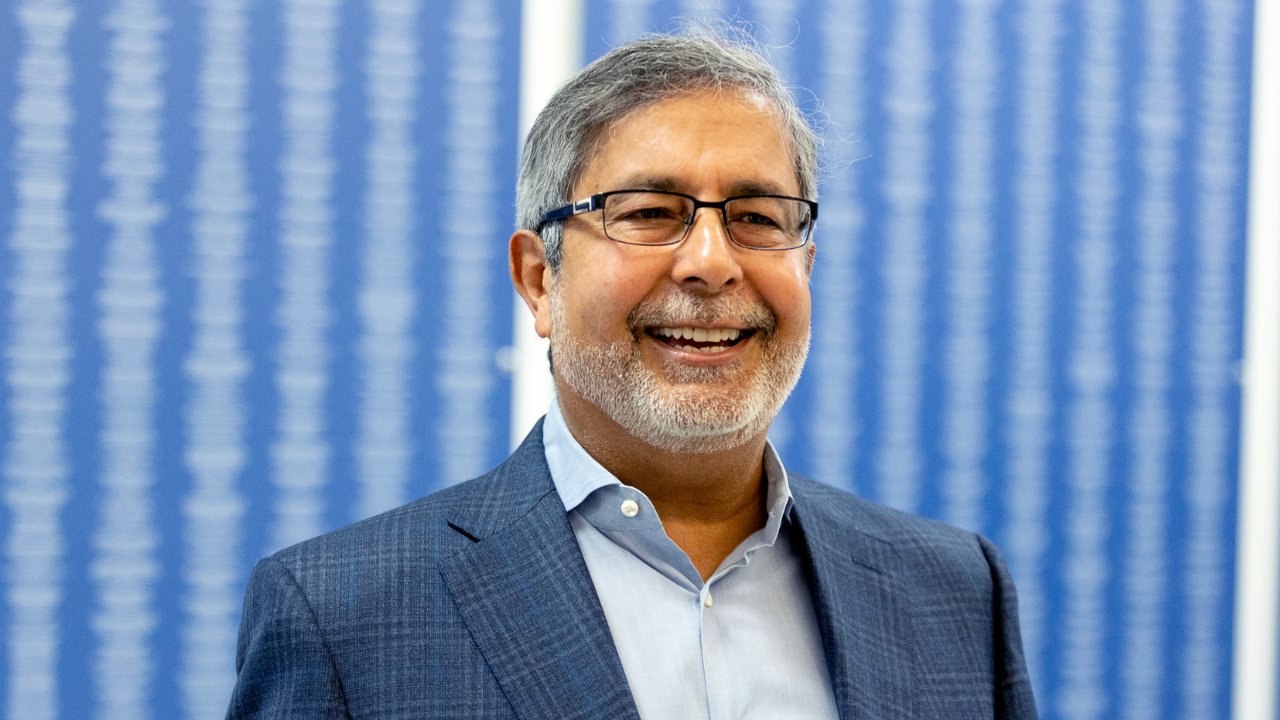
Micron CEO Sanjay Mehrotra explains why the company’s memory technologies are seeing massive demand in the era of artificial intelligence on ‘The Claman Countdown.’
Micron CEO Sanjay Mehrotra detailed the company’s new $250 billion U.S. investment as the chip-making giant responds to surging demand for memory storage in the age of artificial intelligence.
The Boise-based technology company announced Thursday the billion-dollar investment will help Micron’s long-term objective of producing 40% of its DRAM chips in the United States.
“The demand for memory is at unprecedented levels. Memory is in deep shortage right now,” Mehrotra told “The Claman Countdown” on Thursday.
With existing semiconductor facilities in Idaho and Virginia, Micron is expanding its footprint by opening a new manufacturing site in central New York.
OREGON DATA CENTERS FACE SHARP ELECTRICITY RATE HIKE UNDER NEW LAW
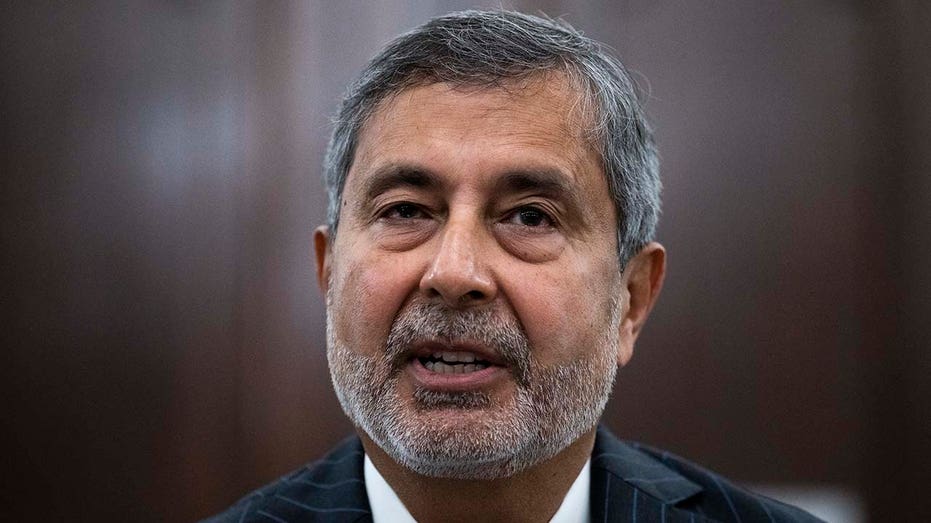
Sanjay Mehrotra, CEO of Micron, testifies during the Senate Commerce, Science, and Transportation hearing on semiconductors on Wednesday, March 23, 2022. (Tom Williams/CQ-Roll Call, Inc via Getty Images / Getty Images)
FOX Business’ Liz Claman joined the CEO during the first concrete pour at the new location.
🔍 Got a story tip? Email nora.moriarty@fox.com
Mehrotra told Claman that memory is the key enabler of AI innovation and said data centers make up more than 50% of the demand.
“Memory is essential to AI,” he said. “AI is driving the demand, and that’s where the value of memory is really high because it enables the performance of AI.”
U.S. Commerce Secretary Howard Lutnick discusses President Donald Trump’s trade policy on ‘The Claman Countdown.’
More memory allows AI to increase accuracy, speed and intelligence, Mehrotra explained.
But while data centers are driving demand for Micron, the need for memory also stems from virtually every modern technology, including smartphones, computers and cars, that rely on data storage.
WORKERS WHO DON’T USE AI MORE LIKELY TO BE LAID OFF, SURVEY FINDS
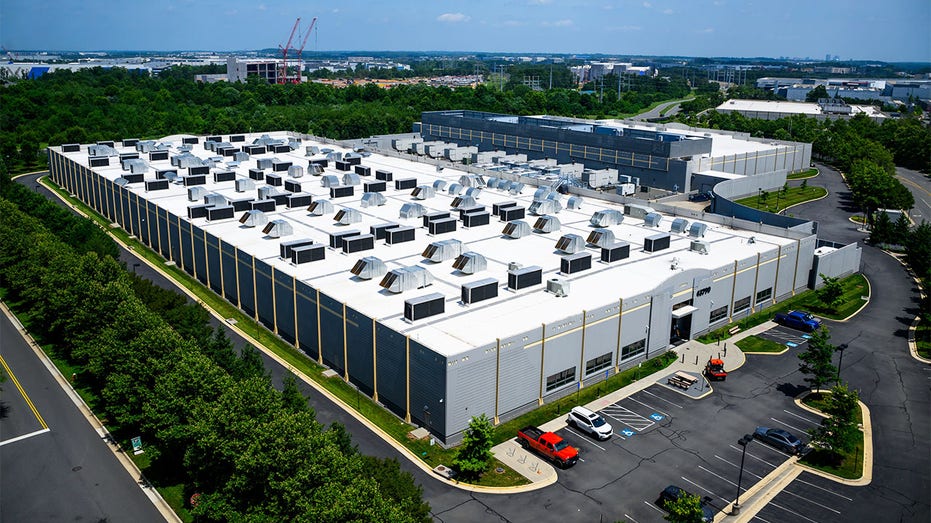
“Data Center Alley” during high temperatures in Sterling, Virginia, US, on Monday, June 23, 2025. (Pete Kiehart/Bloomberg via Getty Images / Getty Images)
“The demand is very strong for memory today,” the CEO said. “Memory is critical for AI across data center, consumer devices, automotive, industrial, defense, aerospace.”
“Your phone, your PC, your car, they all need memory,” he added. “Automobiles, fully self-driving cars are like data centers on wheels. They require a lot of memory and storage.”
📲 More stories at @newswithnora on X
Micron’s technologies, including DRAM, NAND and NOR chips, support the evolution of compute-intensive applications and artificial intelligence platforms. The company plans to invest $3 billion in the domestic semiconductor industry to strengthen America’s manufacturing footprint.
Mehrotra said demand will only grow as advanced technologies continue to evolve, noting that more sophisticated systems require greater computing power and memory capacity.

Micron Technology headquarters in Boise, Idaho, U.S., on Sunday, March 28, 2021. (Photographer: Jeremy Erickson/Bloomberg via Getty Images / Getty Images)
“In the future, when we look at robotics coming in, fully self-driving cars, these all need intelligence. Intelligence is about data. Where does data live? It lives in the memory,” he said.
Micron expects the initiative will create thousands of direct and indirect jobs while expanding domestic chip manufacturing.
GET FOX BUSINESS ON THE GO BY CLICKING HERE
Mehrotra said he hopes the investment will help boost domestic production, though surging demand continues to outpace supply.
“Despite our best efforts to accelerate bringing up supply here, as well as globally… The demand continues to build up and we do not see when supply catches up with demand,” the CEO said.

UK’s best seaside towns named – and one is less than two-hours from Cambridge

Sangram Singh Vows To Make India Proud Ahead Of Asia Champion Title Clash Against Pakistan’s Abid Ali

This open-source Mac app finds the junk files your deleted apps leave behind


-

 Fashion6 days ago
Weekend Open Thread: High Hopes
-
 NewsBeat5 days ago
Taylor Swift and Travis Kelce wedding staffer hilariously struggles to keep her cool while checking in megastars
-

 Crypto World6 days ago
Standard Chartered Secures MiCA License as ESMA Adds 37 New Crypto Firms
-

 Fashion3 days ago
Open Thread: What Great Books Have You Read Recently?
-

 Politics7 days ago
The House | “Reframing the debate from a binary discussion of winners and losers”: Yuan Yang reviews ‘We Are Not Machines’
-

 Fashion14 hours ago
Loro Piana Fall 2026 Enters Houston’s Art Scene
-

 News Videos3 days ago
Whats Hidden Inside This Cash Register? #treasure #reselling #money
-
 Tech3 days ago
Anthropic’s new “J-lens” reveals a silent workspace inside Claude that mirrors a leading theory of consciousness
-
 Crypto World6 days ago
ESMA Expands Crypto Register by 37 Firms Following MiCA Transition Period
-

 Business3 days ago
AXT Shares Jump Nearly 14% as Semiconductor Materials Maker Rebounds on AI-Linked Indium Phosphide Demand
-

 Sports2 days ago
Joshua Pacio ‘more complete’ ahead of ONE rematch vs Malachiev
-
Crypto World3 days ago
SK hynix (000660.KS) Stock Dips as $28B Nasdaq ADR Offering Drives AI Memory Expansion
-

 Crypto World4 days ago
South Africa proposes crypto tax guidance under existing rules
-

 News Videos3 days ago
Best Time to Enter Small Caps Right Now? Another Bull Run? | Financially Free
-

 Tech5 days ago
Lenovo laptops are now shipping with YMTC SSDs, a sign of Chinese NAND entering the mainstream
-

 Business7 days ago
What a 10 Percent Drop Means for Buyers, Sellers and Renters
-
Sports2 days ago
We have punished the disrespect
-

 News Videos3 days ago
Avoid entering in FOMO #bitcoin #cryptocurrency #trading #scalping
-

 Crypto World7 days ago
Alibaba bans Claude Code over alleged backdoor security concerns
-

 Tech5 days ago
Neuralink Threads Its Way Straight Through the Brain’s Armor
You must be logged in to post a comment Login