Business
Trump Demands Unconditional Surrender from Iran as Putin Talks with Iranian President

WASHINGTON — President Donald Trump demanded Iran’s “unconditional surrender” on Friday as U.S. and Israeli forces continued airstrikes on Iranian targets, escalating rhetoric in a conflict that has entered its second week and claimed over 1,300 civilian lives, according to Iranian reports. The statement came hours after Russian President Vladimir Putin spoke by phone with Iranian President Masoud Pezeshkian, offering condolences for the death of Supreme Leader Ayatollah Ali Khamenei and condemning the strikes as a violation of international law.
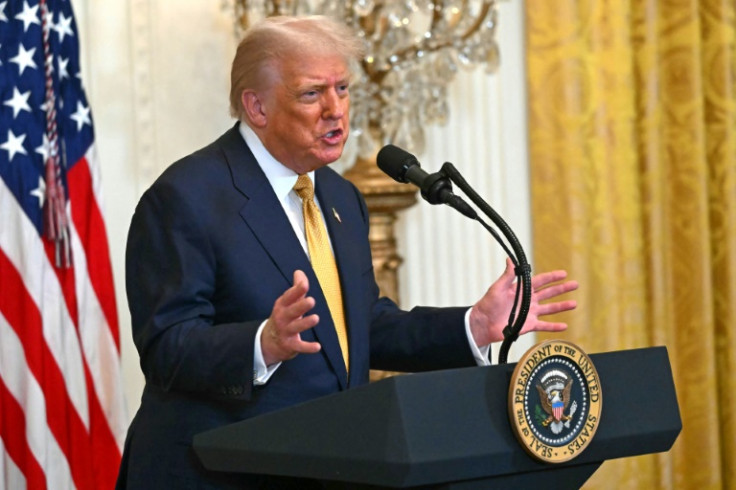
AFP

Trump, posting on his Truth Social platform, rejected any negotiated end to the hostilities short of total capitulation. “There will be no deal with Iran except UNCONDITIONAL SURRENDER!” he wrote. “After that, and the selection of a GREAT & ACCEPTABLE Leader(s), we, and many of our wonderful and very brave allies and partners, will work tirelessly to bring Iran back from the brink of destruction, making it economically bigger, better, and stronger than ever before. MAKE IRAN GREAT AGAIN (MIGA!).”
The post marked a shift in U.S. objectives, broadening from initial aims of degrading Iran’s military capabilities to demanding regime change. White House officials did not immediately respond to requests for clarification on what “unconditional surrender” entails or how it aligns with international norms. Analysts suggest the language evokes World War II-era demands, potentially prolonging the conflict if Tehran refuses to comply.
The war began on Feb. 28, 2026, with coordinated U.S. and Israeli strikes targeting Iranian nuclear facilities, military bases and leadership sites following intelligence reports of an imminent Iranian attack on U.S. interests in the Middle East. Khamenei was killed in an early barrage, which Iranian state media described as an “assassination.” The Iranian Red Crescent reported 1,332 civilian deaths as of March 7, with strikes continuing in Tehran, Beirut and other locations.
Putin’s call with Pezeshkian, confirmed by the Kremlin on Sunday, focused on the “cynical assassination” of Khamenei and his family. “Please accept my deepest condolences in connection with the assassination of the supreme leader of the Islamic Republic of Iran … committed in cynical violation of all norms of human morality and international law,” Putin said in a message to Pezeshkian.
The Russian leader also held separate conversations with leaders of the United Arab Emirates, Bahrain, Saudi Arabia and Qatar, condemning the strikes as “unprovoked aggression” and offering Moscow’s mediation services. According to Kremlin readouts, Putin proposed using Russia’s close ties with Iran to relay complaints from Gulf states and facilitate de-escalation. UAE President Mohammed bin Zayed Al Nahyan reportedly expressed concerns about regional spillover, including attacks on UAE assets.
U.S. intelligence officials have accused Russia of providing Iran with targeting data on American troops, ships and aircraft, marking Moscow’s first direct involvement in the conflict. Multiple sources familiar with the reports told CNN that this intelligence sharing could prolong Iranian resistance and complicate U.S. operations.
Iranian Foreign Minister Seyed Abbas Araghchi rejected calls for a ceasefire in a Saturday statement, vowing continued defiance. “Iran is prepared for the possibility of a U.S. ground invasion,” he said, dismissing Trump’s demands as “imperialist delusions.” Tehran’s envoy to the United Nations reported 1,332 civilian casualties to the Security Council, urging an emergency session.
Israeli Prime Minister Benjamin Netanyahu echoed Trump’s hard line in a March 6 address, stating strikes would continue until Iran’s military threat is neutralized. Israel traded fire with Hezbollah in Lebanon, widening the conflict’s scope. U.S. Central Command confirmed strikes on an Iranian drone carrier, claiming it disrupted Tehran’s unmanned aerial capabilities.
The U.S. has begun evacuating nonessential personnel and citizens from the Middle East, with the State Department issuing Level 4 travel advisories for Iran, Lebanon and parts of Israel. Domestic protests against the war have intensified, with demonstrations in Washington, New York and Los Angeles drawing thousands calling for an immediate halt to hostilities.
Trump’s administration has defended the strikes as necessary to prevent Iranian aggression, citing preemptive intelligence. In a March 5 briefing, Secretary of State Mike Pompeo reiterated that the U.S. seeks a “stable and prosperous Middle East,” but only after Iran’s “malign activities” cease. Critics, including Democratic leaders, have questioned the legal basis for the war, demanding congressional authorization under the War Powers Resolution.
International reactions vary. China’s Foreign Ministry called for restraint, while European Union officials urged diplomatic channels. The UN Security Council remains deadlocked, with Russia and China blocking U.S.-backed resolutions condemning Iran.
Economic fallout is mounting. Oil prices surged to $95 per barrel on March 7, amid fears of disrupted Persian Gulf shipments. U.S. stock markets dipped 2%, with energy sectors gaining but broader indices reflecting uncertainty.
Humanitarian concerns grow as Iranian infrastructure crumbles under bombardment. The World Health Organization reported shortages of medical supplies in Tehran hospitals, with access limited by ongoing fighting. Aid groups like Doctors Without Borders have called for safe corridors to deliver relief.
Putin’s involvement adds a layer of geopolitical complexity. Russia’s condemnation of the strikes aligns with its alliance with Iran, including arms supplies and joint military exercises. Analysts warn that Moscow’s intelligence sharing could draw it deeper into the fray, risking a proxy confrontation with the U.S.
Trump’s “unconditional surrender” demand has drawn historical parallels to demands on Japan in 1945, but experts note Iran’s theocratic regime is unlikely to capitulate without significant internal upheaval. “Ending Middle East wars on U.S. terms is no easy thing,” said a panelist on PBS’s Washington Week, highlighting past U.S. entanglements in Iraq and Afghanistan.
As the conflict persists, global leaders watch for signs of escalation. Putin’s mediation offer could open back channels, but Trump’s rejection of deals short of surrender signals a protracted standoff. The White House has scheduled a national address for March 8, where Trump is expected to outline next steps.
For now, the region braces for more violence, with uncertainty clouding the path to resolution. U.S. officials maintain the strikes are targeted and proportionate, but Iranian vows of retaliation keep tensions at a boiling point.