

Business
Trump weighs requiring citizenship info from bank customers nationwide: reports

‘The Big Money Show’ panel reacts to growing backlash over alleged debanking as lawmakers warn major banks may be cutting off Americans for political or ideological reasons.
The Trump administration is mulling an executive order or a different action that would have banks collecting citizenship information from their customers, according to reports.
The Wall Street Journal reported Tuesday that Treasury Department officials have discussed steps that could have banks gathering citizenship information from customers in a move that would align with Trump’s crackdown on immigrants living in the U.S. illegally.
According to sources familiar with the matter, the action could ultimately direct banks to request an unprecedented new category of documents — such as a passport — from customers looking to open or maintain accounts.
GOP FIREBRAND URGES TRUMP AGENCIES TO CLAW BACK MASSIVE TAXPAYER BENEFITS PAID OUT TO IMMIGRANTS
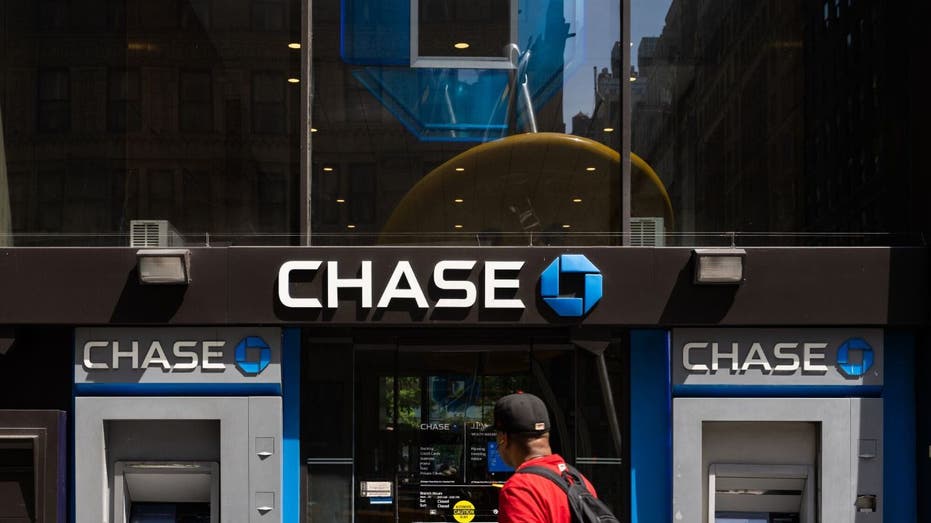
A Chase bank branch in New York July 2, 2024. (Jeenah Moon/Bloomberg via Getty Images / Getty Images)
The report said the discussions have worried banks, some of the sources said, as executives consider operational burdens and the legal risks of imposing new documentation standards on millions of customers.
HOW TO MAKE PRESIDENT DONALD TRUMP’S IMMIGRATION PAUSE STICK IN COURT
Banks are not required to collect or verify citizenship status specifically. (Michael Nagle/Bloomberg via Getty Images / Getty Images)
Under existing “know-your-customer” rules, banks are required to collect certain identifying information to guard against money laundering and financial crimes.
That typically includes a customer’s name, date of birth, address and taxpayer identification number and, in some cases, a passport or Social Security number.
Banks are not required to collect or verify citizenship status specifically, and there is no prohibition on opening accounts for noncitizens living in the U.S. Banks also do not routinely share customers’ citizenship information with the federal government.
TRUMP ADMIN HIT WITH FEDERAL LAWSUIT OVER IMMIGRANT VISA BAN AFFECTING 75 COUNTRIES WORLDWIDE
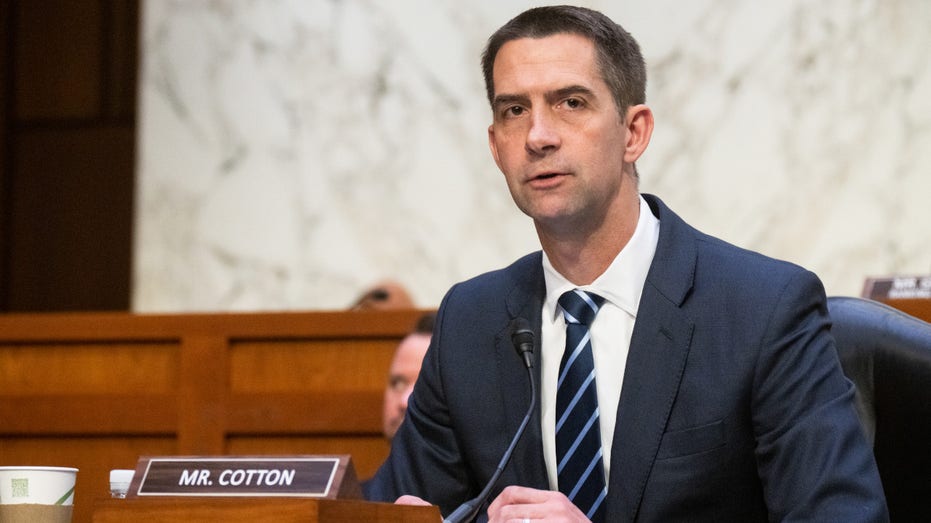
Sen. Tom Cotton, R-Ark., said he supports the Trump administration “taking action to prevent illegal migrants from accessing our banking system.” (Bill Clark/CQ-Roll Call, Inc via Getty Images / Getty Images)
One option also under consideration is having the Treasury Department’s Financial Crimes Enforcement Network collect the information, according to people familiar with the matter.
One White House official reportedly said the potential executive order has been discussed within the Treasury Department but has not been approved.
Sen. Tom Cotton, R-Ark., shared a letter online that he had sent Treasury Secretary Scott Bessent last year and said the “American banking system is a privilege that should be reserved for those who respect our laws and sovereignty.”
CLICK HERE TO DOWNLOAD THE FOX NEWS APP
“I strongly support President Trump taking action to prevent illegal migrants from accessing our banking system,” Cotton wrote in an X post Tuesday.
FOX Business reached out to the White House for comment.


Form 144 AUTOLIV INC For: 25 February

Cognex head of corporate M&A sells $3.46 million in stock

According to Pandey, current valuations are “extremely comfortable” and most stocks are trading below their five-year averages. “As of now, it looks like most of the stocks are in oversold zone and I would say, the fears from the AI are overblown. And as most of these management we also believe that AI would provide more opportunities in the medium to long term. In fact, there can be some price deflation for certain legacy projects, but that should be more than compensated with increasing volume of IT projects,” he explained in an interview to ET Now.
Pandey emphasized that while the near-term impact might be temporary, IT companies are well-positioned for growth over the next one to two years.
When asked whether the AI disruption is materially different from previous technology shifts such as cloud and internet adoption, Pandey noted, “Even with this disruption, it is more about improvement in productivity. Revenue per employee would increase, headcount addition would be more measured, and some routine tasks can get automated. IT services companies are well entrenched in the entire IT ecosystem where they understand the client’s context and their tech journey over decades.”
He added that this productivity boost could make previously unviable legacy transformation projects feasible. “Near term we might see some disruption, but I remain positive and it looks like even for FY27 performance would be slightly better compared to what we had in FY26,” Pandey said.

Concerns over AI reducing man-hours and impacting revenue models were addressed as well. “In this AI age I believe it would shift from man-hour base to fixed price or outcome-based projects. There has been significant increase in productivity, especially in coding hours, but for clients who were previously unable to implement IT projects, now it becomes easier and more affordable,” he said.
On margin pressure, Pandey commented, “There would be some margin compression for legacy projects. But as IT companies move towards outcome-based billing, margins would be broadly protected. For global tech companies in the US, if they cannot monetize AI properly, their margins can take a hit. There is more of a bubble case in AI for US tech companies, but for Indian companies, the opportunities are just too huge.”From an investor’s perspective, Pandey recommends patience. “Let the price stabilise, maybe it can take a month or so. But at the current valuations, if somebody has a long-term horizon… and even Q4 would be reasonably good. So, if somebody has a longer term, one can add; otherwise, they can wait for the prices to stabilise.”
He advises a balanced approach between largecap and midcap IT names. “I would say mix of a largecap and Infosys and Coforge one can have 50-50,” he said, highlighting them as top picks.
Pandey also flagged key metrics to monitor in the AI-driven IT cycle: “Companies will start reporting on deal TCV, especially AI-led deal TCV, and one needs to track the pace at which AI-led deal TCV grows. Even Infosys reported around 5.5% revenue from AI-led services and TCS had a similar number at around 5.8%, that $1.8 billion. AI-led revenue, AI-led deal TCV, and how the mix is changing quarter to quarter needs to be tracked. Plus, headcount addition is still important to keep their employee pyramid intact.”
With measured optimism, Pandey believes the Indian IT sector is poised to navigate AI disruption while delivering value to long-term investors.
HSBC ADR earnings beat by $0.03, revenue topped estimates

RealReal chief product officer sells $210k in stock

Mortgage Rates Dip Under 6%. 3 Things Weighing on Housing Stocks.

New guidelines have been issued by the Department of Education in the wake of law changes on uniforms.
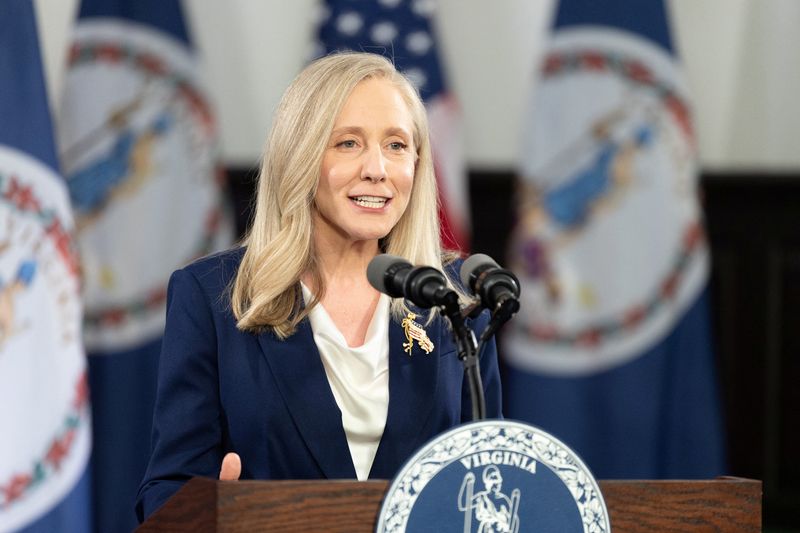

Virginia Governor Spanberger rips into Trump on economy, immigration

BANGKOK — Thailand’s automotive industry has marked a significant turning point in early 2026, as a strategic pivot toward electric vehicle (EV) manufacturing—spearheaded by major Chinese players—reinvigorates the nation’s standing as Southeast Asia’s premier automotive hub.
According to recent data released by the Federation of Thai Industries (FTI), vehicle production in January 2026 reached 118,386 units. This represents a substantial 10.53% increase compared to the previous year, continuing a growth trend that began in December 2025.
Strategic Investment from Chinese Leaders
A primary catalyst for this production surge is the entry and expansion of Chinese EV manufacturers. Companies such as BYD (Build Your Dreams) and Great Wall Motors have established physical manufacturing plants within Thailand. These investments are influencing the regional landscape in two distinct ways:
- Export Base Expansion: These plants are not merely catering to the Thai market but are designed as critical bases for international exports, further cementing Thailand’s role as a global supplier.
- Local Market Penetration: The presence of these manufacturers is fueling a dramatic spike in domestic interest, contributing to a 53.77% year-on-year increase in domestic sales.
Maintaining Regional Dominance
Thailand remains the largest automotive production center in Southeast Asia. While the country has long been the preferred export base for traditional Japanese giants like Toyota and Honda , the document highlights that the influx of Chinese EV makers represents a “strategic shift” in the country’s industrial output.
By diversifying its production capabilities to include high-demand electric vehicles, Thailand is effectively navigating the transition from traditional internal combustion engines to next-generation technology.
The Bigger Picture
Chinese EV makers have supplied the capital, technology, and speed Thailand needed to leapfrog into the EV era while leveraging its decades-old manufacturing ecosystem. The result: Thailand is solidifying its position as Southeast Asia’s premier EV production and export hub, creating jobs, building supply chains (batteries, chargers, components), and positioning itself as a bridge between Chinese innovation and global markets.
By 2030 and beyond, expect Thai-made EVs—many bearing brands like BYD, GWM, or Changan—to appear on roads from Jakarta to Berlin. The “Detroit of Asia” isn’t just surviving the EV transition—it’s thriving, thanks in large part to its Chinese partners.
Outlook for 2026
The integration of Chinese EV production comes at a critical time for the industry. Following a minor 0.9% dip in production during 2025 (which saw 1.455 million units produced), the FTI is forecasting a robust recovery.
With the momentum provided by the EV sector, the industry has set an ambitious production target of 1.5 million units for 2026 , reflecting an expected annual growth rate of 3%. As Chinese manufacturers continue to scale their operations for both local sales and exports, Thailand is well-positioned to meet these targets and maintain its competitive edge in the global automotive market.
Other People are Reading

Part of the explanation for why so few users will need to verify their age is that Discord already uses an internal “age determination” system that looks at “how long your account has existed, whether you have a payment method on file, what types of servers you’re in, and general patterns of account activity.”

Putin’s war weapons hiding in plain sight – in the English Channel | Money News

Cardano price eyes rebound as whales accumulate $213M in ADA

Best Pet Odour-Removing Product: Skout’s Honor Spray Review


-

 Video5 days ago
XRP News: XRP Just Entered a New Phase (Almost Nobody Noticed)
-

 Fashion5 days ago
Weekend Open Thread: Boden – Corporette.com
-

 Politics3 days ago
Baftas 2026: Awards Nominations, Presenters And Performers
-

 Entertainment7 days ago
Kunal Nayyar’s Secret Acts Of Kindness Sparks Online Discussion
-

 Sports1 day ago
Women’s college basketball rankings: Iowa reenters top 10, Auriemma makes history
-

 Politics2 days ago
Nick Reiner Enters Plea In Deaths Of Parents Rob And Michele
-

 Tech7 days ago
Retro Rover: LT6502 Laptop Packs 8-Bit Power On The Go
-
 Sports6 days ago
Clearing the boundary, crossing into history: J&K end 67-year wait, enter maiden Ranji Trophy final | Cricket News
-

 Business3 days ago
Mattel’s American Girl brand turns 40, dolls enter a new era
-

 Crypto World23 hours ago
XRP price enters “dead zone” as Binance leverage hits lows
-

 Business3 days ago
Law enforcement kills armed man seeking to enter Trump’s Mar-a-Lago resort, officials say
-

 Entertainment6 days ago
Dolores Catania Blasts Rob Rausch For Turning On ‘Housewives’ On ‘Traitors’
-

 Business7 days ago
Tesla avoids California suspension after ending ‘autopilot’ marketing
-

 Tech3 days ago
Anthropic-Backed Group Enters NY-12 AI PAC Fight
-
 NewsBeat2 days ago
‘Hourly’ method from gastroenterologist ‘helps reduce air travel bloating’
-

 NewsBeat3 days ago
Armed man killed after entering secure perimeter of Mar-a-Lago, Secret Service says
-

 Politics3 days ago
Maine has a long track record of electing moderates. Enter Graham Platner.
-

 Crypto World6 days ago
WLFI Crypto Surges Toward $0.12 as Whale Buys $2.75M Before Trump-Linked Forum
-

 Tech13 hours ago
Unsurprisingly, Apple's board gets what it wants in 2026 shareholder meeting
-
 NewsBeat9 hours ago
Police latest as search for missing woman enters day nine