

Business
Typical home price will hit $1 million by 2050, NAR economist predicts


Marcus Lemonis argues that high housing prices are primarily due to a lack of supply, not just regulations. He highlights necessary permits and inspections for safety, questioning the claim that removing ‘red tape’ would lower prices significantly.
Millennials planning for retirement may need to prepare for a vastly different real estate landscape.
According to new projections from National Association of Realtors (NAR) chief economist Lawrence Yun, the national median home price is on track to hit $1 million by 2050 — just as millennials reach the traditional retirement age.
“Essentially, in about 25 years the national median home price will be a million dollars,” Yun said at a conference in Washington, D.C., on Tuesday. “It may be hard to envision that, but back in 1990, the national median price was $90,000.”
MORTGAGE RATES TICK HIGHER, BUT BUYERS SHOW SIGNS OF CONFIDENCE
To illustrate the trajectory, Yun also noted that even historically expensive markets like San Francisco had a median home price of just $250,000 in 1990. The long-term forecast highlights a growing disparity between Americans who build home equity and those who remain in the rental market.

A “For Sale” sign sits outside a home in Rancho Cucamonga, California, on Saturday, May 9, 2026. (Getty Images)
“Homeowners will continue to build wealth, while renters are simply spinning their wheels,” Yun said.
America’s median sales price for existing homes was nearly $430,000 in May, according to Realtor.com data, up more than 2% from the previous month. Meanwhile, Zillow lists the average U.S. rent across all bedrooms and property types at $2,006 per month, up $6 from the prior month.
Yun also commented on the state of the economy, explicitly stating that he does not forecast an economic recession for the U.S. in 2026. He predicted mortgage rates would remain relatively flat, averaging 6.5% throughout 2026. Existing-home sales are projected to grow 4% this year, rebounding slightly from a 30-year low in 2025, when elevated rates slowed market activity.
Circle Squared Alternatives founder Jeff Sica discusses the May jobs report, how it impacts the real estate markets and the warns of the implications if the Federal Reserve increases interest rates on ‘Varney & Co.’
Additionally, he expects stable economic footing, projecting nationwide job gains to hit 400,000 for the year.
Also on the panel was NAR deputy chief economist and Vice President of Research Jessica Lautz, who described a “wonky market” where inventory performance varies widely — even between neighboring properties.
GET FOX BUSINESS ON THE GO BY CLICKING HERE
Fox Business’ Gerri Willis reports from the National Homebuilders Show as builders slash home sizes, turn to AI design and push tiny smart homes to combat the affordability crisis.
“You’ll list a home on the market, and sometimes it’ll sit for months. And sometimes it’s going to have multiple offers, and they can be next door to each other,” she said during Tuesday’s panel.
Despite overall housing affordability challenges, Lautz pointed out three specific buyer segments that remain highly active: baby boomers selling homes for the first time, young COVID-era buyers and lifestyle renters seeking larger backyards or additional living space.

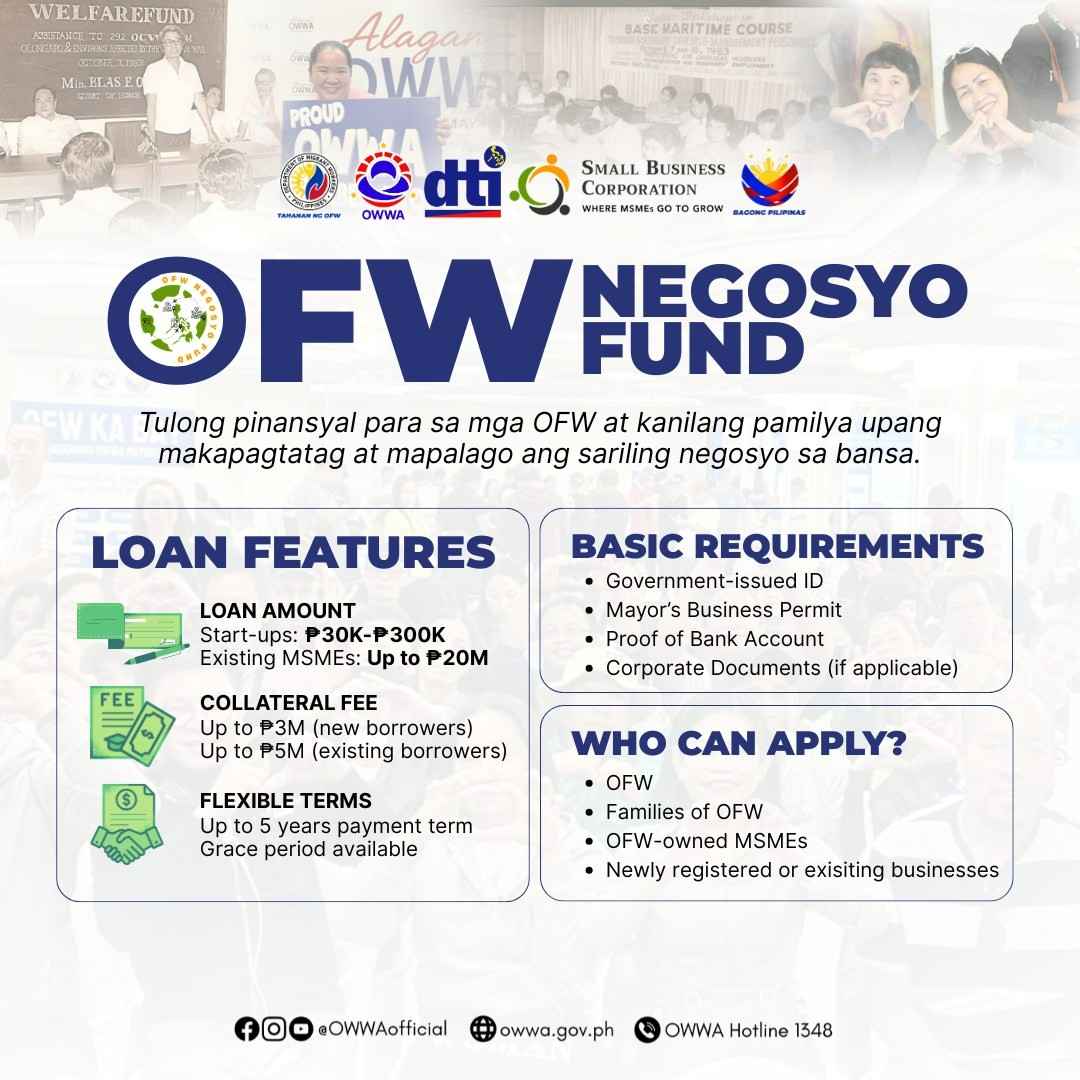
The Overseas Workers Welfare Administration (OWWA) and the Department of Trade and Industry – Small Business Corporation (DTI-SB Corp) have officially strengthened their partnership to expand livelihood and business opportunities for Overseas Filipino Workers (OFWs) through the improved implementation of the OFW Negosyo Fund.
The Memorandum of Agreement (MOA), formally signed on May 18 at the DTI Filinvest Building in Makati City, marks another important step toward helping OFWs gain easier access to financial assistance, entrepreneurship support, and business development programs as they transition toward long-term financial stability in the Philippines.
The agreement aims to simplify and improve the loan facilitation process for OFWs who wish to start, sustain, or expand their own businesses. Through better coordination among government offices and regional centers, more overseas Filipino workers are expected to benefit from livelihood programs designed specifically for returning migrants and their families.
Expanded Access to OFW Negosyo Fund
One of the main goals of the partnership is to widen access to the OFW Negosyo Fund, a government-backed financing program that supports OFWs who want to build businesses and establish sustainable sources of income in the country.
Under the strengthened agreement, OWWA and DTI-SB Corp will improve referral procedures among Regional Offices, Negosyo Centers, Provincial Help Desks, and Reintegration Centers nationwide. This coordinated approach is expected to reduce delays, improve communication between agencies, and provide faster assistance to OFWs seeking business loans and livelihood support.
For many overseas Filipino workers, access to startup capital remains one of the biggest challenges in pursuing entrepreneurship. Traditional bank loans often require strict collateral and financial requirements that many returning OFWs may find difficult to meet.
Programs such as the OFW Negosyo Fund aim to bridge that gap by providing accessible financing options and government support systems tailored to the needs of migrant workers.
Helping OFWs Build Sustainable Businesses
The Philippine government continues to encourage financial literacy and entrepreneurship among OFWs as part of its long-term reintegration strategy. Rather than relying solely on overseas employment, many OFWs are now exploring opportunities to invest their savings into small businesses, franchising opportunities, online selling ventures, food businesses, retail stores, agribusiness projects, and other income-generating activities.
The strengthened collaboration between OWWA and DTI-SB Corp is expected to help aspiring entrepreneurs navigate the process more efficiently.
Aside from loan facilitation, the partnership also focuses on improving the capabilities of regional offices to ensure more effective delivery of services. This includes strengthening frontline support, improving coordination among agencies, and providing better guidance to OFWs who may need assistance in business planning, loan applications, and entrepreneurship training.
Government agencies recognize that financial assistance alone is not enough to guarantee business success. Many small enterprises fail because of lack of business knowledge, poor financial management, or insufficient market preparation.
Because of this, livelihood programs now increasingly include mentorship, financial education, and entrepreneurship seminars to improve the chances of long-term success for OFW-owned businesses.
Officials Express Support for the Partnership
The signing ceremony was led by OWWA Administrator Patricia Yvonne “PY” Caunan, who delivered the opening remarks during the event.
Support for the strengthened partnership was also expressed by Department of Migrant Workers (DMW) Secretary Hans Leo J. Cacdac and Department of Trade and Industry (DTI) Secretary Ma. Cristina Roque.
The collaboration reflects the government’s continuing effort to create more economic opportunities for OFWs and returning migrant workers who want to establish stable livelihoods in the Philippines.
Officials highlighted the importance of empowering overseas Filipino workers not only through employment opportunities abroad but also through sustainable reintegration programs that can help them achieve long-term financial independence.
Importance of Reintegration Programs for OFWs
Millions of Filipinos continue to work overseas to support their families, contribute to household income, and provide better educational opportunities for their children. However, many OFWs also face financial uncertainty after returning home, especially if they lack stable investments or alternative sources of income.
This is why reintegration programs have become increasingly important in recent years.
Livelihood assistance and entrepreneurship financing programs allow OFWs to transform their hard-earned savings into productive investments that can generate long-term income even after overseas employment ends.
Government agencies have repeatedly emphasized that entrepreneurship can help OFWs reduce dependency on overseas work while creating jobs and stimulating local economic growth.
Small businesses established by returning OFWs can also contribute to community development by generating employment opportunities for other Filipinos.
Growing Interest in Small Business Opportunities
The demand for small business financing in the Philippines continues to rise as more Filipinos explore entrepreneurship opportunities. Digital platforms, online marketplaces, and social media marketing have made it easier for small entrepreneurs to reach customers nationwide.
Many OFWs are now investing in businesses such as:
With proper guidance, financing support, and business education, these ventures can become sustainable sources of income for OFWs and their families.
Improved Coordination Among Government Offices
The new agreement between OWWA and DTI-SB Corp also aims to improve coordination among local and regional offices nationwide.
Under the enhanced referral system, OFWs can receive assistance through various government touchpoints including OWWA Regional Welfare Offices (RWOs), DTI Negosyo Centers, Provincial Help Desks, and Reintegration Centers.
This integrated approach is expected to make government services more accessible and responsive to the needs of OFWs in different parts of the country.
By strengthening coordination and streamlining procedures, agencies hope to reduce confusion among applicants while ensuring faster processing and more efficient delivery of support services.
How OFWs Can Learn More About the Program
According to OWWA, interested OFWs may learn more about the OFW Negosyo Fund and related livelihood programs through several channels.
Applicants may visit the nearest OWWA Regional Welfare Office (RWO) or DTI-SB Corp Regional Office for inquiries regarding eligibility requirements, loan procedures, and available entrepreneurship assistance.
OWWA also encouraged OFWs to watch the “Kabuhayan Wednesday” livestream hosted by OWWA RWO NCR, where various livelihood opportunities and government programs for OFWs are discussed.
The agency continues to promote awareness campaigns to ensure more overseas Filipino workers can access available financial and reintegration assistance programs.
Strengthening Financial Security for OFWs
The partnership between OWWA and DTI-SB Corp reflects the government’s broader strategy of helping OFWs achieve greater financial security through entrepreneurship and livelihood development.
For many overseas Filipino workers, establishing a successful business represents an opportunity to eventually return home permanently while maintaining stable income for their families.
As the Philippine government continues to expand reintegration initiatives, programs like the OFW Negosyo Fund are expected to play an increasingly important role in supporting returning OFWs who aspire to become entrepreneurs.
With improved coordination, expanded access to financing, and enhanced support systems, more OFWs may soon have the opportunity to transform their overseas earnings into sustainable businesses and long-term financial stability.

Business News Philippines was launched in October 2015 as a portal for readers to learn more about operating a business in the Philippines.

California Water Service: Interest Rates Are A Headwind (Rating Downgrade)

CHANDAN TAPARIA
HEAD – DERIVATIVES & TECHNICALS, MOTILAL OSWAL FINANCIAL SERVICES
Trading Strategies : The recommended strategy for Nifty Option for weekly, August 4 expiry is a Bear Put Spread, ideal for negative bias amid geopolitical concerns and rising crude. Traders are advised to buy one lot of 23,800 strike Put Option and simultaneously sell one lot of 23,500 strike Put Option. The maximum risk in the strategy is 100 points (Rs 6,500) and the maximum potential Profit is 200 points (Rs 13,000) per lot.
TOP STOCKS PICKS
Azad Engineering: Buy | CMP: Rs 2,439| Target: Rs 2,580 | Stop loss: Rs 2,365

Stock has retested its breakout zone around 2300 and is witnessing a bounce, highlighting strong demand on declines. It is now on the verge of breaking out from a 7–8 session tight consolidation, indicating volatility compression before a potential expansion. RSI is also on the verge of a bullish crossover, reinforcing the possibility of fresh upside momentum.
Laurus Labs: Buy | CMP: Rs 1,601 | Target: Rs 1,700 | Stop loss: Rs 1,550
Stock is in a strong uptrend, consistently respecting its 20-DEMA with every minor dip. It continues to form a higher top – higher bottom structure, reflecting sustained buying strength. The rising ADX confirms the strength of the trend, while the outperformance of the pharma sector provides an additional tailwind for further upside.
 Agencies
NILESH JAIN
HEAD- EQUITY TECHNICAL & DERIVATIVE RESEARCH, CENTRUM FINVERSE
Trading Strategies: The index is now trading near the lower boundary of a triangle pattern, with a crucial support placed at 23,600. As long as this support is defended, the possibility of a technical pullback towards 24,000 remains intact. Given the expectation of a gradual up move in the coming week, we recommend deploying a Bull Call Spread in the upcoming monthly expiry: Buy 1 lot of 23,800 Call at 122 Sell 1 lot of 24,000 Call at 44
This results in a net debit of 78 points, with the maximum loss capped at (Rs 5,070). The strategy offers a maximum profit potential of 122 points per lot Rs 7,930, while the breakeven point is placed at 23,878.
TOP STOCKS PICKS
RR Kabel: Buy | CMP: Rs 2,505 | Target: Rs 2,740 | Stop loss: Rs 2,380
The stock has broken out on strong volumes, signalling robust buying interest. Daily momentum indicators have also flashed fresh buy signals, reinforcing the bullish outlook.
Astra Microwave Products: Buy| CMP: Rs 1,810 | Target: Rs 1,970 | Stop loss: Rs 1,730
The stock crossed its 21-DMA at 1,770 and continues to trade above above its short-term as well as long-term moving averages. Strong volumes indicate sustained buying interest, reinforcing the bullish outlook.
RUPAK DE
SENIOR TECHNICAL ANALYST AT LKP SECURITIES
Trading strategy for Nifty: Buy Nifty Futures between 23,720-23,770, with stop loss at 23,600 for a target of 24,000 (all spot prices)
LTM: Buy at Rs 4,091 | Target: Rs 4,300 | Stop loss: Rs 3,950
The stock has formed an engulfing candle on the daily chart. The RSI is in a bullish crossover, indicating strong momentum. Besides, the price has risen above the 50 EMA on the daily timeframe.
Emmvee Photovoltaic Power: Buy at Rs 331 | Target: Rs 350 | Stop loss: Rs 317
The stock has formed a bullish engulfing candle on the daily chart near the support of the 50 EMA, making the pattern more significant and indicating the possibility of a decent rally in the near term. The RSI is in a bullish crossover, indicating strong momentum.

I Was Wrong About Super Micro Computer (Rating Upgrade)
Business
Nvidia in talks with OpenAI to guarantee $250 billion financing for data center, WSJ reports

Nvidia in talks with OpenAI to guarantee $250 billion financing for data center, WSJ reports

J Sainsbury: Positive Progress, But Already Priced In (Rating Downgrade)

Starting a Lechon Belly business in the Philippines can be a profitable opportunity for aspiring food entrepreneurs. Filipinos love lechon for birthdays, fiestas, reunions, office celebrations, and even simple family gatherings. Because of this strong demand, many small food businesses are entering the market hoping to build a recognizable and trusted brand.
But before you start selling your crispy and flavorful lechon belly, one important step is choosing the right business name. A good business name helps customers remember your brand, creates a strong first impression, and makes your business stand out from competitors.
In this article, we will share 10 unique Lechon Belly business name ideas in the Philippines along with branding tips, marketing suggestions, and practical advice for beginners.
Why Your Lechon Belly Business Name Matters
Your business name is more than just words printed on your signage or Facebook page. It becomes part of your identity as a business owner. A memorable and catchy name can help:
- Increase brand recall among customers
- Build trust and professionalism
- Improve social media visibility
- Make your business easier to recommend
- Create a strong emotional connection with customers
In the highly competitive food industry, branding matters just as much as taste. Even if your lechon belly is delicious, customers may forget your business if your name is too generic or difficult to remember.
1. Bellychon Republic
Bellychon Republic sounds modern, premium, and memorable. The word “Republic” gives the impression that your business specializes in different styles or flavors of lechon belly.
This name works well if you plan to expand into multiple branches or offer various menu options like spicy lechon belly, garlic flavor, or stuffed lechon belly.
Branding Tip: Use a bold logo with red, black, and gold colors to create a premium Filipino food identity.
2. Crispy Belly Masters
This business name highlights one of the most important qualities customers look for in lechon belly — crispy skin.
Crispy Belly Masters sounds confident and professional. It suggests expertise and quality, which can attract customers looking for authentic and well-cooked lechon belly.
This name is ideal for businesses that want to position themselves as experts in roasted pork dishes.
3. Juan’s Belly Roast
Adding a Filipino-inspired name like “Juan” creates a local and relatable identity. Juan’s Belly Roast sounds friendly, traditional, and easy to remember.
This type of branding works especially well for neighborhood food businesses and online food delivery services.
Marketing Idea: Use social media storytelling about family recipes and Filipino traditions to strengthen your brand image.
4. Belly Fiesta Lechon
Lechon is commonly associated with celebrations and gatherings in the Philippines. Belly Fiesta Lechon instantly creates a festive and joyful impression.
This name is perfect if your target market includes catering services, party trays, and event orders.
Customers are more likely to remember names connected to positive emotions like celebrations and family occasions.
5. Golden Crackling Belly
One of the best parts of lechon belly is the crunchy skin or “crackling.” Golden Crackling Belly emphasizes texture and premium quality.
This business name sounds more upscale and can appeal to customers willing to pay extra for high-quality lechon products.
Pro Tip: Pair this branding with professional food photography for better Facebook and Google marketing performance.
6. Belly Hub Express
If you plan to focus on delivery services, takeout, or food apps, Belly Hub Express is a modern and flexible business name.
The word “Express” suggests fast service while “Hub” gives the impression of variety and convenience.
This name works well for cloud kitchens, online sellers, or businesses operating through food delivery platforms.
7. Mang Kiko’s Lechon Belly
Traditional Filipino-style names still work very well in the local food industry. Mang Kiko’s Lechon Belly feels authentic, homegrown, and trustworthy.
Customers often associate “Mang” or “Aling” brands with homemade quality and affordable prices.
This is ideal for entrepreneurs who want a classic Filipino business identity.
8. Belly King PH
Belly King PH is short, modern, and easy to remember. The “PH” helps reinforce local identity while also improving online branding opportunities.
This type of name is social media friendly and works well for:
- Facebook Pages
- TikTok food content
- Instagram marketing
- Food vlog collaborations
Simple business names are often easier for customers to search online.
9. Roast & Crunch Belly Co.
This business name combines two qualities customers love: roasted flavor and crispy texture.
Roast & Crunch Belly Co. sounds trendy and premium, making it suitable for younger audiences and modern food concepts.
If you plan to build a stylish brand with aesthetic packaging and strong online presence, this name may fit your business perfectly.
10. Cebu Belly House
Cebu is famous for its flavorful lechon, so using Cebu-inspired branding can help create instant credibility.
Cebu Belly House sounds authentic and professional while maintaining a Filipino identity.
Even if your business is located outside Cebu, the name can still remind customers of the famous Cebu lechon style.
Reminder: Always ensure your branding remains truthful and does not falsely claim awards, certifications, or origin.
Tips for Choosing the Best Lechon Belly Business Name
1. Keep It Easy to Remember
Avoid overly complicated names. Customers should easily remember and pronounce your business name after hearing it once.
2. Check Social Media Availability
Before finalizing your name, check if the Facebook page name, TikTok username, or domain name is still available.
3. Make It Relevant to Food
Your business name should instantly give customers an idea of what you sell.
4. Avoid Copying Existing Brands
Do not imitate famous restaurant names or existing businesses. Unique branding helps avoid legal problems and builds originality.
5. Think Long-Term
Choose a name that can still work if you expand your menu or open additional branches in the future.
How to Market Your Lechon Belly Business
Even with a great business name, proper marketing is still important for success. Here are some effective strategies:
Facebook Marketing
Create engaging posts with high-quality food photos and customer testimonials. Facebook remains one of the strongest marketing platforms for food businesses in the Philippines.
TikTok Videos
Short videos showing crispy lechon belly slicing, cooking preparation, and customer reactions can attract thousands of views.
Food Delivery Apps
Partner with local delivery riders or food delivery apps to increase convenience for customers.
Google Business Profile
Register your business on Google so nearby customers can easily find your store online.
Important Business Reminder
Before officially operating your Lechon Belly business, make sure to comply with local government permits, food safety regulations, and business registration requirements in the Philippines.
You may also consult the following agencies for guidance:
- Department of Trade and Industry (DTI)
- Bureau of Internal Revenue (BIR)
- Local Government Unit (LGU)
- Food safety and sanitation offices
Proper compliance helps protect both your business and your customers.
Disclaimer
The business names mentioned in this article are intended for inspiration and informational purposes only. Readers are encouraged to conduct proper business name verification, trademark research, and registration checks with the appropriate government agencies before using any name commercially. Availability of business names may vary depending on existing registrations and intellectual property rights.
A strong business name can help your Lechon Belly business attract attention, build customer trust, and create long-term brand recognition. Whether you prefer a modern, traditional, or premium-style identity, choosing the right name is an important first step toward building a successful food business in the Philippines.
Remember that while branding matters, consistency in taste, customer service, cleanliness, and marketing will ultimately determine your long-term success.
With the right business name and a delicious product, your Lechon Belly business could become the next favorite food brand in your local community.
Business News Philippines was launched in October 2015 as a portal for readers to learn more about operating a business in the Philippines.

Baker Hughes earnings beat by $0.15, revenue topped estimates

China memory chipmaker CXMT set for Shanghai debut after Asia’s biggest IPO

The trucking business in the Philippines remains one of the most profitable opportunities in the logistics and transportation industry. As e-commerce, construction, manufacturing, agriculture, and retail sectors continue to expand, the demand for reliable cargo transportation services also grows. Every day, thousands of businesses require trucks to deliver raw materials, finished products, equipment, groceries, appliances, and construction supplies across the country.
If you’re looking for a business with long-term earning potential, starting a trucking business could be a smart investment. While it requires substantial capital compared to smaller businesses, it also offers consistent demand, recurring clients, and expansion opportunities.
In this guide, you’ll learn everything you need to know about starting a trucking business in the Philippines—from the required permits and startup costs to choosing the right trucks, finding clients, and maximizing profits.
Why Start a Trucking Business in the Philippines?
The Philippine logistics industry has experienced significant growth over the past decade. Online shopping platforms, infrastructure projects, supermarkets, factories, and import-export businesses all rely heavily on trucking services.
Here are several reasons why many entrepreneurs invest in trucking:
- Growing demand from e-commerce businesses
- Increasing infrastructure projects nationwide
- Expansion of manufacturing and industrial zones
- Steady need for cargo delivery services
- Opportunities for long-term contracts with companies
- Scalable business model by adding more trucks over time
Unlike seasonal businesses, freight transportation is needed throughout the year, making trucking one of the more stable industries in the country.
Types of Trucking Businesses
Before investing, decide which trucking niche best fits your budget and market.
1. General Cargo Transport
This is the most common trucking business. It involves transporting boxes, consumer goods, appliances, furniture, and packaged products.
2. Construction Hauling
Construction companies require dump trucks and heavy-duty vehicles to transport sand, gravel, cement, steel, and equipment.
3. Refrigerated Trucking
Refrigerated vans are used for transporting meat, seafood, vegetables, dairy products, and pharmaceuticals.
4. Container Trucking
Container trucks move imported and exported goods between ports, warehouses, and distribution centers.
5. Fuel and Chemical Transport
This specialized niche requires additional permits and safety compliance but generally offers higher income.
How Much Capital Do You Need?
The startup capital depends on whether you purchase brand-new or second-hand trucks.
| Startup Expense | Estimated Cost (PHP) |
|---|---|
| Used Light Truck | ₱700,000 – ₱1,500,000 |
| Brand-New Light Truck | ₱1,700,000 – ₱3,200,000 |
| Heavy-Duty Truck / Tractor Head | ₱3,500,000 – ₱8,500,000+ |
| Business Registration & Permits | ₱10,000 – ₱50,000 |
| Commercial Vehicle Insurance | ₱40,000 – ₱150,000 per year |
| Initial Maintenance Fund | ₱100,000 – ₱300,000 |
| Fuel Budget (Initial Working Capital) | ₱100,000 – ₱500,000+ |
| Driver & Helper Salaries (1 Month) | ₱40,000 – ₱80,000 |
| Office Equipment & Operations | ₱30,000 – ₱150,000 |
Many entrepreneurs start with a single truck before gradually expanding their fleet using business profits.
Business Registration Requirements
Operating legally is essential to attract corporate clients and avoid penalties.
You may need the following:
- DTI Registration (for sole proprietorship)
- SEC Registration (for corporations)
- BIR Registration
- Mayor’s Permit
- Barangay Clearance
- Vehicle Registration (LTO)
- Commercial Vehicle Insurance
- Other permits depending on cargo type
Corporate clients usually prefer dealing with registered trucking companies because they can issue official receipts and invoices.
Choosing the Right Truck
Your truck is your primary business asset. Choosing the wrong vehicle can increase maintenance costs and reduce profitability.
Consider the following factors:
- Payload capacity
- Fuel efficiency
- Availability of spare parts
- Maintenance costs
- Brand reputation
- Warranty coverage
- Resale value
Many successful trucking companies prioritize reliability over appearance. A dependable truck that minimizes downtime often generates better returns than a newer model with higher financing costs.
Finding Your First Clients
One of the biggest challenges is securing consistent customers.
Potential clients include:
- Manufacturing companies
- Construction contractors
- Retail chains
- Importers and exporters
- Wholesalers
- Hardware suppliers
- Agricultural businesses
- Furniture companies
- Food distributors
- E-commerce warehouses
Networking is extremely important in the trucking industry. Building relationships with warehouse managers, logistics supervisors, purchasing officers, and freight brokers can lead to long-term contracts.
Operating Costs to Consider
Your profit doesn’t only depend on the amount charged per trip.
You must carefully monitor expenses such as:
- Fuel
- Driver salaries
- Helper wages
- Vehicle maintenance
- Tires
- Insurance
- Registration renewal
- Tolls
- Parking fees
- Unexpected repairs
Preventive maintenance can significantly reduce expensive breakdowns and minimize downtime.
How Much Can a Trucking Business Earn?
Income varies depending on:
- Distance traveled
- Truck size
- Cargo type
- Fuel prices
- Number of completed trips
- Contract agreements
Businesses with long-term corporate contracts generally enjoy more stable revenue than those relying solely on one-time bookings.
Many successful operators increase profitability by maximizing truck utilization and minimizing empty return trips.
Technology Can Improve Efficiency
Modern trucking businesses increasingly rely on technology to reduce costs and improve customer service.
Useful tools include:
- GPS fleet tracking
- Fuel monitoring systems
- Vehicle maintenance software
- Accounting software
- Electronic proof of delivery (ePOD)
- Inventory management integration
- Cloud-based dispatch systems
These technologies provide real-time visibility and help improve operational efficiency while reducing unnecessary expenses.
Common Challenges
Like any business, trucking also comes with risks.
- Rising fuel prices
- Traffic congestion
- Driver shortages
- Vehicle breakdowns
- Accidents
- Weather disruptions
- Increasing maintenance costs
- Competition from larger logistics companies
Maintaining an emergency fund and regularly servicing your vehicles can help your business remain resilient during unexpected situations.
Tips for Long-Term Success
Many trucking businesses fail not because of a lack of customers, but because of poor financial management.
To build a sustainable business:
- Focus on excellent customer service.
- Deliver shipments on time.
- Maintain accurate financial records.
- Invest in preventive maintenance.
- Train drivers regularly.
- Purchase comprehensive insurance.
- Build relationships with repeat clients.
- Expand your fleet gradually.
- Monitor fuel consumption closely.
- Adopt modern logistics technology.
Consistency, reliability, and professionalism are often more important than having the largest fleet.
Should You Buy or Finance a Truck?
Many first-time entrepreneurs wonder whether it’s better to purchase a truck outright or finance it through a loan. Buying in cash eliminates monthly loan payments and interest expenses, but it requires significant capital. Financing, on the other hand, allows you to preserve cash for operations such as fuel, maintenance, and payroll.
Before taking out a commercial vehicle loan, prepare a realistic cash flow projection. Consider monthly amortization, insurance premiums, preventive maintenance, and possible periods when the truck may not be generating income. A financed truck can be a worthwhile investment if your projected revenue comfortably exceeds your operating costs and loan obligations.
Growing Your Trucking Company
Once your first truck consistently generates income, you can begin expanding your operations. Growth should be gradual and supported by stable contracts rather than speculation.
Ways to expand include:
- Add additional trucks to your fleet.
- Offer warehousing and storage services.
- Provide last-mile delivery solutions.
- Invest in specialized vehicles such as refrigerated or tanker trucks.
- Partner with freight forwarders and logistics companies.
- Expand service coverage to neighboring provinces and regions.
Diversifying your services can reduce dependence on a single market segment and create multiple revenue streams.
The trucking business in the Philippines offers tremendous opportunities for entrepreneurs willing to invest in quality equipment, excellent customer service, and efficient operations. Although startup costs are relatively high, the industry’s continuous demand makes it an attractive long-term business venture.
Success depends on more than simply owning trucks. It requires proper financial planning, legal compliance, disciplined maintenance, dependable drivers, and strong relationships with clients. By starting with a solid business plan and focusing on operational excellence, you can build a trucking company that grows steadily and serves the country’s expanding logistics needs for many years to come.
Business News Philippines was launched in October 2015 as a portal for readers to learn more about operating a business in the Philippines.

Crypto World Cup Bottom Indicator! London Stock Exchange! New *HUGE* Crypto Report! IRAN AWS Attack!

Mohamed Al Fayed sex assault allegations being probed by Police Scotland

OWWA, DTI Strengthen OFW Negosyo Fund Loan Program For Overseas Filipino Workers


-

 Fashion2 days ago
Weekend Open Thread: Brooks Brothers
-

 Crypto World6 days ago
Grayscale Files For Worldcoin ETF, WLD Registers Sharp Rise
-

 NewsBeat5 days ago
How a former Blue Peter presenter stunned America’s Got Talent judges
-

 Tech6 days ago
Sail Virtually Aboard The “Itanic” With IA-64 Emulator
-
 Tech6 days ago
Turtle Beach Command Series KB7 review: a nifty screen-equipped gaming keyboard
-

 NewsBeat7 days ago
Unregistered fitter used Gas Safe logo on business flyers
-
 Business5 days ago
New Jersey voter registration controversy explained: How 6,600 noncitizens got on the rolls, and what happens next
-
 Entertainment5 days ago
Johnny Depp’s R-Rated Gothic Cult Classic Gets New Release Ahead of Sydney Sweeney Remake
-

 Tech6 days ago
Watch Flock Safety CEO Garrett Langley discuss the future of surveillance at TechCrunch Disrupt 2026
-

 Crypto World4 days ago
Ethics, other provisions in crypto Clarity Act to be further discussed
-
 NewsBeat6 days ago
Shanghai science forum photos show China’s AI and robotics advances in rivalry with US
-

 Crypto World7 days ago
Circle’s President Sold Over 360,000 Shares, The Filings Explain Why
-

 Tech7 days ago
Subway Sandwich Computers Get a Second Life as Gaming Machines
-
 Sports4 hours ago
Commonwealth Games boxing: Jadumani Singh seals dominant 5-0 win over Pakistan’s Sumama Rehman to enter quarter-finals | Commonwealth Games News
-

 News Videos3 days ago
The Peugeot Family: How 200 Years of an “Old Money” Dynasty Died in A Boardroom
-

 Sports3 days ago
2026 3M Open leaderboard: Scottie Scheffler finds putter in Round 1, sits three back
-

 Fashion3 days ago
16 Dresses for the High Summer Event
-

 Entertainment7 days ago
Stephen Colbert Returns to Social Media After Late Show End
-

 Tech7 days ago
The 35 Best Board Games for Family Game Night
-

 Crypto World6 days ago
Andrew Cuomo joins OKX board as crypto exchange expands in U.S.
You must be logged in to post a comment Login