

Business
UK economy flatlines in January as restaurant spending falls and growth stalls


The UK economy stalled at the start of the year as households cut back on discretionary spending, with restaurants and food services experiencing a sharp decline in activity.
New figures from the Office for National Statistics (ONS) show that gross domestic product (GDP) recorded zero growth in January, falling short of economists’ expectations and marking a slowdown from the modest 0.1% growth recorded in December. Analysts had forecast that output would expand by around 0.2% over the month.
The disappointing performance highlights the fragile state of the UK economy even before the latest geopolitical shock from the escalating US-Israeli conflict with Iran, which economists warn could further dampen growth by pushing energy prices higher and fuelling inflation.
The ONS said the overall economic picture remained “subdued”, with consumer-facing sectors particularly weak. Within the dominant services sector, which accounts for around 80% of UK economic activity, there was a notable 2.7% drop in food and drink service activity as households curtailed spending on eating out.
This contraction in hospitality suggests that the pressure on household finances continues to weigh heavily on consumer behaviour. Restaurants and pubs are often among the first sectors to feel the impact when consumers begin tightening their budgets.
More broadly, the services sector showed no growth overall during the month, underscoring the cautious spending environment facing businesses.
Other parts of the economy also delivered mixed results. Industrial production slipped by 0.1% during January, while construction activity provided one of the few bright spots, expanding by 0.2% over the month.
The flat reading follows a period of slowing economic momentum during the second half of 2025, when uncertainty over tax changes, rising unemployment and lingering cost-of-living pressures led many consumers to reduce spending.
Although the monthly GDP figure showed stagnation, the three-month measure of economic activity, which is typically less volatile, indicated modest growth. In the three months to January, the UK economy expanded by 0.2%, slightly stronger than the 0.1% recorded in the previous three-month period.
However, economists say the underlying picture remains weak, particularly as global developments threaten to worsen inflation and slow economic activity further.
The latest data was compiled before the outbreak of hostilities involving the United States, Israel and Iran, which has sent global energy prices sharply higher. Oil prices have surged and wholesale gas markets have become increasingly volatile, raising concerns about a renewed cost-of-living squeeze for British households.
Prime Minister Sir Keir Starmer warned earlier this week that the longer the Middle East conflict continues, the more likely it is to have a tangible impact on the UK economy.
Higher energy prices are already feeding through to petrol and diesel costs, while households covered by Ofgem’s energy price cap will remain shielded from immediate increases until the next adjustment period in July.
Nonetheless, economists warn that sustained energy price rises could quickly push inflation higher again. Before the conflict erupted, inflation had been expected to fall to the Bank of England’s 2% target by the spring. A renewed surge in energy costs could derail that trajectory.
The shift in the inflation outlook has already affected financial markets. Expectations that the Bank of England would begin cutting interest rates as early as March have largely evaporated, with economists now widely anticipating that policymakers will hold rates steady when they meet next week.
This change in interest rate expectations has had an immediate impact on the mortgage market. Hundreds of mortgage deals have been withdrawn by lenders in recent days, while average mortgage rates have climbed back to levels not seen since last spring.
If the geopolitical tensions persist, analysts say higher borrowing costs and weaker consumer confidence could undermine Labour’s central economic priority of accelerating growth.
Chancellor Rachel Reeves acknowledged the challenges facing the economy, saying the government remained committed to its long-term economic strategy.
“Our economic plan is the right one, but I know there is more to do,” she said.
“In an uncertain world, we are building a stronger and more secure economy by cutting the cost of living, reducing national debt and creating the conditions for growth so that all parts of the country can prosper.”
Opposition figures were quick to criticise the government’s economic performance. Shadow chancellor Sir Mel Stride said Labour had left the economy exposed to external shocks.
“Labour’s economic mismanagement has left the UK vulnerable to the potential consequences of the Iran conflict,” he said.
“They must now take urgent action, including cutting fuel duty, supporting North Sea oil and gas production and putting forward a credible plan to reduce the deficit and bring down the benefits bill.”
Looking ahead, economists believe growth is likely to remain subdued throughout much of the year.
The Office for Budget Responsibility recently downgraded its forecast for UK economic growth in 2026 to 1.1%, down from its earlier estimate of 1.4%.
Yael Selfin, chief economist at KPMG UK, said the latest GDP figures suggested the economy had begun the year on weak footing and could struggle to regain momentum.
“The UK economy started the year on the back foot and activity is expected to weaken further amid sharply rising energy prices,” she said.
Selfin added that government borrowing costs have increased in recent weeks as financial markets reassess the outlook for interest rates. Higher borrowing costs could act as a headwind for businesses and households alike.
“With expectations for weaker growth combined with rising costs, businesses are likely to scale back investment plans,” she said.
For policymakers, the challenge now lies in navigating a fragile domestic economy while responding to external shocks that threaten to push inflation higher and delay any relief from elevated interest rates.

Jamie Young
Jamie is Senior Reporter at Business Matters, bringing over a decade of experience in UK SME business reporting.
Jamie holds a degree in Business Administration and regularly participates in industry conferences and workshops.
When not reporting on the latest business developments, Jamie is passionate about mentoring up-and-coming journalists and entrepreneurs to inspire the next generation of business leaders.


National Association of Manufacturers President and CEO Jay Timmons and SBA Administrator Kelly Loeffler join ‘Mornings with Maria’ to discuss President Donald Trump’s ‘Made in America’ agenda and a nationwide crackdown on federal benefit fraud.
FIRST ON FOX: The origins of a fraud-fighting technology now used by one of the world’s largest insurers trace back to a deadly insider attack during the Iraq War.
Clearspeed founder Alex Martin was serving in the Marine Corps. when his close friend, Capt. Warren Frank, was killed by an Iraqi soldier who turned his weapon on American forces during a joint patrol. The Iraqi had passed coalition vetting procedures.
“Warren met his future wife at my house,” Martin recalled to FOX Business. “Learning he’d been killed by an Al-Qaeda infiltrator we’d brought into his formation – it shook me. I couldn’t accept that insider attack as inevitable.”
So-called “green-on-blue” attacks, in which supposedly vetted local forces turned on coalition troops, became one of the Global War on Terror’s most vexing threats. Between 2008 and 2017, such incidents killed more than 150 coalition service members in Afghanistan alone.
“I became obsessed with our vetting process and realized our traditional playbook simply couldn’t keep pace with the operational tempo, language barriers and risks of counterinsurgency warfare,” Martin said.

The company counts the Department of Defense and U.S. intelligence agencies among its customers. (iStock)
His solution was to flip the model: quickly establish trust for the majority who posed no threat, while focusing expert scrutiny on the small fraction requiring deeper review.
After leaving active duty, Martin partnered with Stanford professor Charles Holloway to develop a voice-based vetting tool designed to quickly assess risk across languages and high-stakes environments.
The company’s first major customer was U.S. Special Operations Command. In 2018, Clearspeed screened 715 Afghan commando recruits in less than 20 hours – a process that would normally take months. Several individuals flagged as high-risk later deserted.
The success attracted investment from retired Gen. David Petraeus, the former CIA director and commander of U.S. forces in Iraq and Afghanistan. The company has since raised $110 million and counts the Department of Defense and U.S. intelligence agencies among its customers.
TRUMP URGES IMMEDIATE RATE CUTS AMID IRAN CONFLICT
Now, the technology is being used beyond the battlefield.
Insurance giant Allianz recently disclosed it identified more than £92.6 million (about $115 million) in fraudulent claims during the first half of 2025, with executives crediting voice-screening technology from San Diego-based Clearspeed as central to its fraud detection strategy.
Clearspeed is a voice-based vetting platform originally developed for U.S. military use. During an automated phone call, individuals answer a short series of yes-or-no questions while the system analyzes vocal characteristics in real time.
It flags potential risk indicators for human review, allowing low-risk respondents to move through quickly while directing additional scrutiny to higher-risk cases.
“We needed to make our organization a really hostile place for people to try to commit fraud,” Allianz Chief Claims Officer Matt Cox said at an industry conference in London, according to InsurancePOST. “Technologies such as Clearspeed have given us the opportunity, for the first time, to dial up that disruption.”

President Donald Trump has made countering fraud a hallmark of his administration. (Saul Loeb/AFP via Getty Images)
The move comes as insurers face what analysts describe as an escalating “arms race” with fraudsters, many of whom now use artificial intelligence and digital tools to perpetrate fraud. A Deloitte study predicted generative AI could help drive U.S. fraud losses as high as $40 billion next year.
The growing commercial adoption has also drawn attention in Washington.
Clearspeed has been engaging policymakers about deploying the technology to combat benefits fraud and strengthen screening processes, according to people familiar with the discussions. The company spent about $272,500 on federal lobbying in 2025, according to data compiled by OpenSecrets.
The push comes amid growing political pressure to crack down on fraud in federal programs. In January, the administration announced a new Department of Justice division focused on national fraud enforcement targeting fraud against federal programs and private citizens.
ORACLE BRACES FOR MASSIVE LAYOFFS AMID AI CASH CRUNCH
Rep. Pat Harrigan, R-N.C., a former Army Green Beret who served in Afghanistan, said his combat experience shapes how he evaluates emerging technologies.

Rep. Pat Harrigan, R-N.C., takes his seat for a House subcommittee hearing on Feb. 24, 2026. (Bill Clark/CQ-Roll Call Inc via Getty Images)
“During my time in the Special Forces, I saw firsthand how advanced technology saves lives and gives us a decisive edge,” Harrigan told FOX Business. “My priority in Congress is making sure we identify the most effective tools and put them to work for our troops and taxpayers.”
Harrigan said he has met with Clearspeed and is exploring ways the technology could help protect warfighters and reduce fraud.
“The fact that the world’s largest insurer turned to American military technology to solve its fraud problem tells you everything about how powerful these tools are,” he said. “If they can help Allianz identify nearly $100 million in fraud, imagine what they could do for the American people – whether that’s cracking down on benefits fraud, vetting visa applicants or securing our border.”
Rep. Russell Fry, R-S.C., said technologies that strengthen fraud detection and vetting could play a role in broader border security efforts.
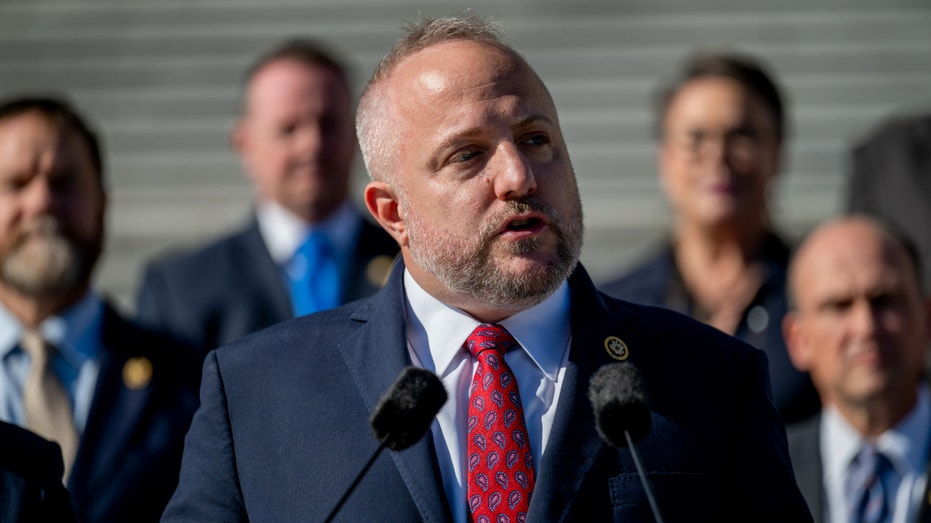
Rep. Russell Fry, R-S.C., speaks during a news conference at the U.S. Capitol in Washington, D.C., on Wednesday, Nov. 5, 2025. (Daniel Heuer/Bloomberg via Getty Images)
“As President Trump continues delivering on his promise to make America safe again, we must ensure law enforcement has access to the most reliable and efficient tools available,” Fry told FOX Business. “Technologies like this could help combat fraud at our border, strengthen visa vetting and keep our country secure.”
CLICK HERE TO READ MORE FROM FOX BUSINESS
For Martin, the growing interest from insurers and policymakers alike represents a continuation of a mission that began years ago on the battlefield.
“We built this because lives were on the line,” he said. “Putting that same technology to work protecting taxpayers and making our country safer is exactly the mission we’re here to serve.”

Powell’s attorneys discussed the possibility of his remaining on Fed board


Continues momentum for Hello Panda cookie brand.

Independent retailer Goran Raven says the higher oil price is “horrific” for him as well as his customers.

Trump administration set to receive $10 billion fee for brokering TikTok deal, WSJ reports

The search for Nancy Guthrie, the 84-year-old mother of NBC “Today” show co-anchor Savannah Guthrie, has stretched into its sixth week with authorities reporting no significant breakthroughs but emphasizing that the investigation remains highly active and targeted.

Nancy Guthrie was last seen entering her Catalina Foothills home on the evening of Jan. 31, 2026, after a family dinner. She was reported missing Feb. 1 after failing to appear for a virtual church service. Pima County Sheriff’s Office investigators quickly determined she was taken against her will, classifying the case as an abduction. Drops of blood found on the front porch and inside the residence supported the conclusion that foul play occurred.
As of March 13, 2026—Day 41 of the search—Sheriff Chris Nanos reiterated that the case is “targeted” and that detectives are “definitely closer” to identifying those responsible. In a recent update, Nanos highlighted the processing of thousands of hours of surveillance footage by an elite FBI team at Quantico, describing video review as a cornerstone of the probe. The FBI has amassed up to 10,000 hours of video from neighborhood cameras, traffic systems, and other sources, with analysis ongoing to reconstruct timelines and identify vehicles or individuals.
A damaged utility box near the home remains under scrutiny, potentially linked to a reported internet outage that disrupted nearby surveillance cameras around the time of the disappearance. Investigators are examining whether the damage was intentional to obscure evidence. Forensic testing on physical evidence, including shoe casts and DNA, continues, though no results have been publicly released.
The family has maintained a $1 million reward—offered in cash—for information leading to Nancy Guthrie’s recovery, supplementing the FBI’s $200,000 offer ($100,000 from an anonymous donor). Savannah Guthrie, her sister Annie, and brother Camron have issued repeated emotional pleas via social media and video statements, expressing unwavering hope while acknowledging the agony of uncertainty. In late February, Savannah posted a video saying the family still believes in a miracle but needs proof of life or credible leads.
Savannah Guthrie returned to the “Today” set briefly on March 5, visiting colleagues off-camera before resuming her New York-based duties. She and her sister were spotted at their mother’s home in early March, interacting with a makeshift memorial of notes, flowers, and support messages left by community members. The family has cooperated fully with investigators and been publicly cleared of any involvement.
The case has drawn widespread attention due to Savannah Guthrie’s prominence, leading to speculation, unverified ransom claims, and hoax notes. Authorities dismissed at least one purported ransom demand as fraudulent, charging an individual with attempting to exploit the situation. A resurfaced 2013 “Today” segment featuring Nancy Guthrie inside her home has prompted discussion about whether it inadvertently revealed layout details useful to perpetrators.
Retired FBI agents and analysts have weighed in on potential leads. One suggested examining a recent Arizona home invasion tied to cryptocurrency theft, urging investigators to pursue any overlap. Others noted the possibility of a targeted crime but cautioned against assuming celebrity connection as motive. Sheriff Nanos has described the abduction as targeted but not definitively linked to Savannah Guthrie’s fame, while expressing concern that the perpetrator could strike again if not apprehended.
Community efforts include prayers at local churches and support banners. Proposals for additional searches, such as by volunteer groups, were reportedly declined due to operational priorities. Cadaver dog deployments have been limited in recent weeks, with focus shifting to digital and forensic leads.
Experts on missing persons cases note that prolonged abductions involving the elderly often involve complex motives, and the lack of proof of life since early February heightens concerns. However, officials stress the investigation is far from cold, with viable leads still under active pursuit. The Pima County Sheriff’s tip line and FBI hotline continue receiving submissions, and authorities urge anyone with even minor information to contact them.
As the search presses on, the Guthrie family clings to faith and hope amid national sympathy. No confirmed sightings or major developments have emerged in recent days, but investigators maintain optimism that persistent work on evidence and tips will yield answers.
The case underscores challenges in high-profile abductions: balancing public pressure with investigative secrecy, managing speculation, and sustaining momentum in a prolonged effort. For now, the plea remains simple and urgent: Bring Nancy home.
Chipotle Mexican Grill is celebrating Friday the 13th with a fan-favorite promotion that rewards ink—real or otherwise—by offering a limited-time buy-one-get-one-free (BOGO) entrée deal on March 13, 2026.
The “Tatted Like a Chipotle Bag” flash promotion runs for just one hour, from 3 to 4 p.m. local time, at participating Chipotle locations in the United States, Canada, the United Kingdom, France, and Germany. Customers who show off any tattoo—permanent, temporary, or even drawn on with a marker—can qualify for the BOGO, allowing them to purchase one entrée and receive a second of equal or greater value for free.
Chipotle announced the return of the viral deal on March 10, tying it to the superstitious date and partnering with rapper and self-proclaimed Chipotle superfan Swae Lee for promotional flair. The collaboration nods to throwback vibes, evoking the 2016 Mannequin Challenge era while encouraging fans to embrace their “tatted” side, whether inspired by the chain’s iconic brown paper bag aesthetic or personal designs.
To claim the offer, diners must visit a participating restaurant in person during the one-hour window—no app, online orders, delivery, or catering qualify. Staff will verify eligibility at their discretion, meaning a quick flash of ink (or a Sharpie masterpiece) should suffice. The promotion caps at five free items per check, requiring one tattooed customer per free entrée. Kids’ meals do not count toward the purchase requirement, but qualifying entrées earn Chipotle Rewards points, and the deal cannot combine with other offers.
The flexible tattoo policy—covering everything from professional body art to DIY drawings—mirrors last year’s successful iteration, which drew crowds and social media buzz. Chipotle’s terms emphasize in-restaurant redemption only, with availability subject to stock and the right to modify or end the promotion without notice.
The Friday the 13th timing aligns with a tradition of “flash” deals at the fast-casual chain, capitalizing on the date’s cultural associations with luck, superstition, and bold decisions—like getting inked. For those without permanent tattoos, the low-barrier entry encourages creativity: temporary stickers, henna, or even marker-drawn designs have qualified in past promotions, turning the event into a fun, inclusive celebration.
Chipotle’s newsroom release highlights the deal as a way to thank “tatted superfans” for their loyalty, with Swae Lee’s involvement adding celebrity appeal. The artist, known for viral moments and his love of the brand, helps amplify the promotion across social platforms, where fans have already begun sharing tattoo reveals and plans to hit restaurants during the window.
The offer arrives amid Chipotle’s ongoing efforts to drive traffic through creative, time-sensitive promotions. Recent menu innovations, loyalty perks, and seasonal campaigns have kept the chain competitive in a crowded fast-casual landscape. This BOGO provides value at a time when customers seek deals on favorites like burritos, bowls, tacos, and salads loaded with customizable proteins, salsas, and guacamole.
Participating locations span thousands of stores across the eligible countries, though individual restaurants may experience high demand during the 60-minute rush. Fans are advised to arrive early, especially in busy urban areas, to avoid lines or potential sell-outs of popular items.
Social media reactions have been enthusiastic, with users posting mock tattoos, planning group outings, and joking about “tatting” friends for the deal. Past promotions saw similar excitement, with some locations reporting packed houses and creative customer displays.
Chipotle encourages participants to join its Rewards program for additional benefits, including instant guac perks for new sign-ups tied to the event page. While the core offer focuses on the BOGO, the promotion underscores the brand’s playful engagement with fan culture and body art.
For those unable to make the in-person window, Chipotle often follows major promotions with broader digital rewards or app-exclusive deals, though nothing has been announced beyond today’s flash event.
As Friday the 13th unfolds, the “Tatted Like a Chipotle Bag” BOGO offers a quick, fun way to score free food—proving that sometimes, showing a little ink goes a long way at the counter.

Choosing a payment processor shapes how efficiently money moves through your business. Every completed sale relies on this system working smoothly behind the scenes.
For small business owners, selecting the right provider often becomes challenging because many services appear similar at first glance. Marketing claims, complex contracts, and varying service structures can make it difficult to determine which option truly aligns with your day-to-day operations.
A thoughtful comparison process helps you move past surface-level differences and focus on what actually supports your business long term. With a clear approach, you can review providers more confidently and avoid decisions based on incomplete information.
Read on for a simple checklist that helps you compare payment processing for small businesses with greater clarity.
Evaluate Hardware and Integration Options
Payment technology should align with the tools you already use in daily operations. Systems that integrate well with existing software and hardware help keep transactions organized and reduce unnecessary adjustments during setup.
To assess compatibility and practical use, the following are the areas worth reviewing:
POS system compatibility
Many retailers rely on POS systems to track sales, manage inventory, and process transactions from one central interface. A processor that integrates smoothly with your Point of Sale setup allows payment activity to flow directly into your records without extra steps.
This coordination helps staff handle purchases quickly while keeping reporting accurate across connected payment systems.
Mobile payment terminals
Portable equipment allows businesses to process transactions outside a fixed checkout counter. A reliable payment terminal or compact card machine lets staff accept payments at markets, trade shows, or service locations. Small business owners often explore independent resources that publish guides, product comparisons, and advice on payment tools before choosing equipment.
These platforms frequently review options such as the cheapest card readers to help businesses identify reliable hardware within their budget. Consulting these resources can help narrow down devices that work well with modern payment systems and support flexible selling environments.
E-commerce platform integration
Businesses that sell online benefit from processors that connect directly with website platforms and store management tools. Strong integration allows order information and transaction records to move between the store and the payment systems without manual entry. This connection supports accurate order tracking and keeps online sales organized within the same operational environment.
Understand the Fee Structure
Processing costs influence how much revenue stays within your business after each sale. Understanding the different fees and how they affect your bottom line can be challenging for small business owners.
For a clearer comparison, the following are the important pricing elements to examine:
Chargeback and dispute fees
When a customer challenges a payment, the processor may charge a fee to investigate and handle the dispute. These additional transaction costs apply even if the dispute is resolved in your favor. Understanding how these charges work helps business owners anticipate potential financial adjustments and maintain steadier cash flow.
Many business owners also consult trusted resources for guidance on handling these fees, such as GoSmallBusiness.co.uk and similar platforms that provide practical guides and expert advice. Using these resources ensures you make informed decisions about selecting a payment processor and managing costs effectively.
Transaction fees
Most providers charge transaction fees every time you accept payments through their platform. These charges may appear as a percentage of the sale, a flat rate per transaction, or a combination of both. When evaluating payment processing options, small differences in fee percentages can affect total transaction costs over time, especially for businesses that handle frequent daily sales.
Monthly account fees
Some providers require a recurring fee to maintain access to their services or to manage related merchant accounts. This charge may cover account maintenance, reporting tools, or administrative services linked to your business account. For a small business, reviewing these recurring costs helps determine whether the provider fits your expected transaction volume and operating budget.
Review Payment Methods Supported
Many businesses rely on traditional card payments to handle everyday purchases. Most providers allow customers to use a credit card or debit card, which remain among the most common ways people pay in stores and online.
In addition, many companies now support online payment options for customers who prefer digital transactions. These purchases often run through secure online payment systems that connect the checkout process to a provider’s infrastructure. A reliable payment gateway plays a key role in transferring payment data between the customer’s bank and the merchant account during an online purchase.
Another option worth considering involves tools that simplify remote billing and digital requests for payment. Some processors offer payment links that businesses can send through email, messaging apps, or invoices.
Check Security, Support, and Reliability
Protecting transactions is essential for maintaining trust and stability in any business that handles payments. Strong payment systems help safeguard sensitive financial data, while a reliable payment processor ensures operations continue smoothly. Strong security practices build confidence for both staff and customers.
Compliance with industry standards keeps data protected from breaches. Following PCI DSS guidelines demonstrates that a payment processor adheres to best practices for storing and transmitting card information. This compliance reinforces the integrity of your payment processing setup.
Meanwhile, proactive monitoring helps identify and prevent unauthorized activity. Fraud detection tools analyze transaction patterns, while fraud prevention mechanisms reduce exposure to potential misuse. Together, these safeguards provide a solid layer of fraud protection for your business.
To enhance account security further, many systems implement additional verification steps. Features like two-factor authentication add a critical barrier against unauthorized access, supporting safer payment systems.
Responsive customer support ensures that technical issues or transaction questions are resolved efficiently. Timely assistance improves the customer experience and reinforces confidence in the payment processor’s reliability.
Final Thoughts
Comparing payment processing services becomes much easier when you focus on a few essential factors. A structured checklist allows you to examine pricing, payment flexibility, technical compatibility, and security protections in an organized way. Careful review helps you select a payment processor that ensures smooth transactions, predictable costs, and reliable service.

Dollar General’s DG -3.02%decrease; red down pointing triangle outlook for the year calls for sales growth to slow, as recent winter storms hurt the current quarter and continued uncertainty clouds consumer behavior.
The discount retailer expects a modest negative impact to sales in its fiscal first quarter from severe storms last month that prompted temporary store closures. At the same time, consumer sentiment remains cautious and stagnant, and inflation remains sticky, Chief Financial Officer Donny Lau said on a call with analysts Thursday.
Copyright ©2026 Dow Jones & Company, Inc. All Rights Reserved. 87990cbe856818d5eddac44c7b1cdeb8
Business
Dow Jones Industrial Average Rebounds on March 13, 2026, Climbing Over 260 Points Amid Volatile Trading
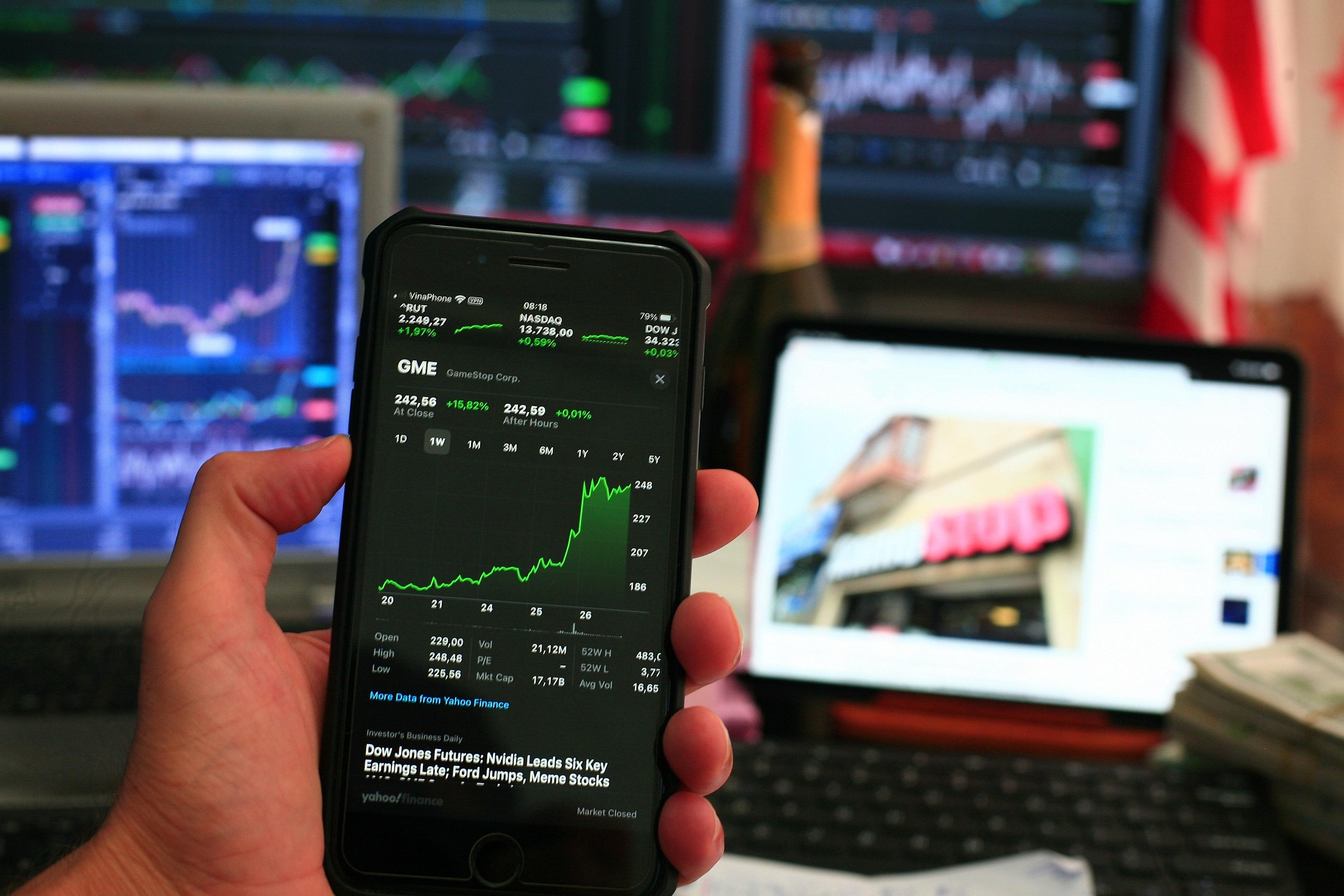
The Dow Jones Industrial Average staged a solid recovery on March 13, 2026, rising more than 260 points as investors shook off recent losses tied to Middle East tensions and focused on bargain hunting in blue-chip names.

The blue-chip index closed at 47,061.71, up 383.86 points or 0.82% from the previous day’s close of 46,677.85. Trading opened at 46,689.24 and ranged from a low of 46,850.85 to a high of 47,123.67, with volume reaching approximately 44.81 million shares. The session marked a bounce-back after a sharp 1.56% drop on March 12, when the index shed 739.42 points amid escalating concerns over oil supply disruptions from the ongoing U.S.-Iran conflict.
The performance came as broader markets showed mixed results. The S&P 500 gained modestly, while tech-heavy indices benefited from selective buying in resilient sectors. Investors appeared to look past immediate war-related fears, with some analysts attributing the uptick to oversold conditions following recent pullbacks and expectations for continued Federal Reserve policy support.
The Dow’s rebound reflected strength in cyclical and energy-related components, as crude oil prices stabilized after earlier spikes driven by Strait of Hormuz closure threats. Higher oil realizations bolstered shares of industrial and materials firms, providing a tailwind for the price-weighted index. Key contributors included gains in sectors insulated from direct geopolitical fallout, such as consumer staples and select financials.
The week’s volatility stems from the prolonged U.S.-Israel strikes on Iranian targets and Tehran’s retaliatory actions, which have kept energy markets on edge. Oil price surges earlier in March pressured equities, but signs of diplomatic backchannels and no immediate escalation allowed for a relief rally. President Donald Trump’s recent comments characterizing the conflict as nearing resolution further eased sentiment, though uncertainty lingers over potential supply shocks.
Year-to-date in 2026, the Dow has navigated sharp swings, reaching highs near 50,512 earlier in the year before retreating amid war jitters and inflation data. The index remains up significantly from 2025 lows, supported by corporate earnings resilience and AI-driven productivity gains in select holdings. However, the 52-week range spans from 36,611 to over 50,500, underscoring sensitivity to macro events.
Market observers noted the session’s intraday momentum, with the Dow climbing steadily through the afternoon as bargain hunters stepped in. Pre-market futures had pointed to a flat-to-slightly positive open, but buying accelerated after early data releases showed stable consumer sentiment and moderating inflation pressures in related reports.
Broader economic context includes anticipation for upcoming PCE inflation figures and corporate earnings from major Dow components. Mixed results from recent bank reports and commodity-linked firms have kept traders cautious, but the March 13 advance suggests dip-buying remains prevalent in blue chips.
Analysts remain divided on near-term direction. Some point to elevated oil as a persistent headwind for margins in transportation and manufacturing sectors, while others highlight the Dow’s relative resilience compared to growth-oriented indices. Geopolitical resolution—or lack thereof—will likely dictate the next leg, with any de-escalation potentially fueling further gains.
The rebound provides a breather for investors after a choppy stretch. As the week progresses, attention turns to key data releases and any fresh developments from the Middle East that could sway sentiment anew.
For now, the Dow’s March 13 performance highlights the market’s ability to pivot amid uncertainty, rewarding those betting on temporary oversold conditions in established names.

ETH Bulls Target $2.8K But Data Highlights Many Hurdles

Florida’s repeat title pursuit may be inevitable after impressive SEC Tournament win

Your Ford Mustang Or F-150 Can Now Get A Supercharged HP Upgrade


-

 News Videos4 days ago
10th Algebra | Financial Planning | Question Bank Solution | Board Exam 2026
-
 Tech3 days ago
A 1,300-Pound NASA Spacecraft To Re-Enter Earth’s Atmosphere
-

 Crypto World4 days ago
Paradigm, a16z, Winklevoss Capital, Balaji Srinivasan among investors in ZODL
-

 Business3 days ago
ExxonMobil seeks to move corporate registration from New Jersey to Texas
-

 Tech3 days ago
ChatGPT will now generate interactive visuals to help you with math and science concepts
-

 Sports6 days ago
Three share 2-shot lead entering final round in Hong Kong
-

 Sports6 days ago
Braveheart Lakshya downs Lai in epic battle to enter All England Open final | Other Sports News
-

 NewsBeat2 days ago
Residents reaction as Shildon murder probe enters second day
-

 Fashion5 hours ago
Weekend Open Thread: Addict Lip Glow
-

 Entertainment7 days ago
Hailey Bieber Poses For Sexy Selfies In New Luscious Lip Thirst Traps
-

 Business5 days ago
Search for Nancy Guthrie Enters 37th Day as FBI Probes Wi-Fi Jammer Theory
-

 Business3 days ago
Search Enters Sixth Week With New Leads in Tucson Abduction Case
-
 NewsBeat4 days ago
Pagazzi Lighting enters administration as 70 jobs lost and 11 stores close across Scotland
-

 Tech4 days ago
Despite challenges, Ireland sixth in EU for board gender diversity
-

 Business4 days ago
Search Enters 39th Day with FBI Tip Line Developments and No Major Breakthroughs
-

 NewsBeat2 days ago
I Entered The Manosphere. Nothing Could Prepare Me For What I Found.
-

 Business7 days ago
Iran war enters second week as Trump demands ’unconditional surrender’
-

 Sports5 days ago
Skateboarding World Championships: Britain’s Sky Brown wins park gold
-

 Crypto World3 days ago
Will Chainlink price reclaim $10 amid volatility squeeze?
-

 Sports5 days ago
Tomorrow’s Top 25 Today: Florida jumps to No. 4; Louisville, Wisconsin enter projected rankings