
Business
UK government backs away from AI copyright overhaul as licensing emerges as the battleground


The UK government has stepped back from one of its most controversial proposals on artificial intelligence and copyright, signalling a decisive shift towards market-led licensing and greater transparency rather than sweeping legal reform.
In its long-awaited Report on Copyright and Artificial Intelligence, published in March 2026, ministers confirm they will no longer pursue a broad copyright exception for AI training with an opt-out mechanism — a policy that had triggered fierce opposition from across the UK’s creative industries.
Instead, the government is opting for a more cautious, evidence-led approach, prioritising transparency obligations and allowing a nascent but rapidly expanding licensing market to develop. The move marks a significant recalibration of policy at a time when the UK is seeking to position itself as both an AI superpower and a global creative hub.
At the heart of the report is a clear admission: the government’s preferred option, allowing AI developers to use copyrighted material unless rightsholders explicitly opted out, failed to win support.
The consultation attracted more than 11,500 responses, with the overwhelming majority of creators, publishers and rights organisations rejecting the proposal outright.
Ministers now concede that a broad exception “with opt-out is no longer the government’s preferred way forward”, citing strong industry opposition, lack of consensus, and insufficient evidence on economic impact.
This represents a notable victory for the UK’s creative sectors, from publishing and music to film and photography, which argued that such an exception would effectively legalise uncompensated use of their work by generative AI systems.
The report lays bare the fundamental policy dilemma: how to balance AI-driven economic growth with the protection of intellectual property.
On one side sit AI developers, who require vast datasets, often including copyrighted material, to train large language models and generative systems. On the other are creators whose works underpin those systems but risk being displaced by them.
The government acknowledges that modern AI models are typically trained on “billions of copyright works”, raising complex questions about fairness, consent and competition.
Yet it also highlights uncertainty around the economic benefits of reform, noting limited evidence that loosening copyright rules would materially increase AI investment in the UK.
In effect, ministers are choosing to pause rather than gamble.
Rather than legislating, the government is placing its bets on licensing, a market-based mechanism already beginning to take shape.
A growing number of deals between AI firms and content owners, particularly in publishing, music and image libraries, suggests a commercial model is emerging. However, the report acknowledges this market is still “new and evolving” and lacks transparency.
Crucially, ministers have ruled out direct intervention for now:
“We propose not to intervene in the licensing market at this stage… and will keep market-led approaches under review.”
This position aligns closely with industry sentiment across both creative and technology sectors, which broadly favour voluntary, negotiated agreements over statutory schemes.
However, it also raises important questions, particularly for SMEs and individual creators, about bargaining power and equitable remuneration.
Among those welcoming the shift is Tom West, CEO of Publishers’ Licensing Services (PLS), who sees licensing as both practical and scalable.
West said: “We welcome that the government has listened to the strong response it received from across the UK’s creative industries to its consultation and has stepped back from its preferred option of a copyright exception with an opt out and is to review the transparency of AI inputs, which would further boost licensing.
Whilst we await further clarity from the government on the long-term direction of its copyright policy, PLS will continue to serve our publishers and work with our partners on market-based, industry-backed AI licensing solutions.
This approach is already being put into practice. At the London Book Fair last week, PLS launched the first stage of a new collective licensing solution designed specifically to support the use of published content in AI. It was met with strong interest and positive feedback from publishers and industry partners, with publishers already beginning to sign up. The solution offers a practical, scalable way for AI developers to access high-quality content while ensuring creators are paid and retain control over how their work is used.
The case has not been made for the introduction of a new copyright exception. There is no market failure and a dynamic licensing market for the use of content in AI has developed and continues to grow. Any copyright exception for generative AI would jeopardise these licensing solutions, removing the ability of large and small rightsholders to receive payment for the use of their works in AI and reducing control over their content.
PLS welcomes the government’s engagement on this critical issue. We share a commitment to a mutually beneficial outcome and invite the government to work closely with us to help further develop and promote licensing options that support rightsholders of all sizes and AI developers seeking high-quality, trusted content.”
If licensing is the economic mechanism, transparency is the regulatory lever.
More than 90% of consultation respondents supported requirements for AI developers to disclose the sources of training data.
The government agrees, in principle, but stops short of immediate regulation. Instead, it proposes:
• developing industry-led best practice
• monitoring international frameworks (notably the EU AI Act)
• considering future legislation if needed
Transparency is seen as essential to enable enforcement, licensing and trust, particularly given that creators often have no visibility over whether their work has been used.
For UK businesses, particularly SMEs, the implications are nuanced.
For creators and publishers
• greater protection in the short term
• stronger negotiating position in licensing deals
• ongoing challenges around enforcement and visibility
For AI startups and developers
• continued legal uncertainty
• potential cost barriers to accessing training data
• reliance on licensed or overseas-trained models
For the wider economy
• slower regulatory clarity
• reduced risk of over-regulation
• continued dependence on global AI ecosystems
The report explicitly notes that SMEs on both sides, creators and developers, face disproportionate challenges under the current system.
Perhaps the most striking aspect of the report is its tone: cautious, iterative, and deliberately non-committal.
The government repeatedly emphasises the need for more evidence, more international alignment, and more market development before taking decisive legislative action.
With ongoing litigation in the US, new rules emerging in the EU, and rapid advances in generative AI, the UK risks being pulled in multiple directions, economically, legally and politically.
This is not a resolution, it is a holding position.
By stepping back from sweeping reform, the government has bought time. But it has also shifted responsibility onto the market to prove that licensing can work at scale, fairly and efficiently.
If it can, the UK may yet carve out a balanced model that supports both innovation and creativity.
If it cannot, the debate over copyright and AI will return, sharper, louder, and far harder to resolve.

Paul Jones
Harvard alumni and former New York Times journalist. Editor of Business Matters for over 15 years, the UKs largest business magazine. I am also head of Capital Business Media’s automotive division working for clients such as Red Bull Racing, Honda, Aston Martin and Infiniti.

Business
US Stocks: Trade Desk shares drop 5% after report that Publicis advised clients against using its platform

The stock slid over 5%, adding to Tuesday’s 7.4% drop following Ad Age’s report on a recent Publicis-commissioned audit that found Trade Desk had violated multiple clauses of their agreement, prompting the recommendation.
Trade Desk charged multiple fees that exceeded the limits of the agreement and opted clients into extra features without consent, the report said, citing the audit.
Publicis, in an emailed statement on Wednesday, confirmed the report, saying that “an experienced independent auditor concluded that Trade Desk did not pass the audit. As a result, we will no longer be recommending Trade Desk … for our clients.”
Unlike the closed ad ecosystems of Alphabet’s Google and Meta-owned Facebook, Trade Desk is an independent intermediary that lets companies buy ads and run campaigns on any website or app they pick.

Trade Desk said it is “aware of questions related to a Publicis audit process.” But it added that “any notion that TTD failed an audit is not true.”
Publicis’ request “included asks for data that would violate customer and partner confidentiality agreements,” Trade Desk said, but added that it would work with the company to provide workable alternatives and other detailed information. Publicis, however, said that none of the options proposed by Trade Desk resolved the issues raised by the audit.
At least two brokerages downgraded Trade Desk following the news, while three lowered their price targets. The stock has fallen nearly 34.7% this year, following a 68% decline in 2025.
“We’re not quite sure how conservative current 2026 estimates might be if the company does, in fact, lose some of its client base as a result of this audit,” brokerage Stifel said.
The company faces stiff competition from so-called “walled gardens” that integrate content, commerce and user data to attract advertisers. Amazon’s ad-buying platform, in particular, with its vast trove of shopper data, has become a formidable rival.

Spot gold fell 2.9% to $4,860.21 per ounce by 2:58 p.m. ET (1858 GMT), after hitting its lowest level since February 6 earlier in the session. U.S. gold futures for April delivery settled 2.2% lower at $4,896.20.
The U.S. dollar strengthened, making gold less affordable for holders of other currencies.
The Fed held rates steady, as was widely expected, citing somewhat elevated inflation and giving little indication when it might next cut short-term borrowing costs. Fed officials’ economic projections indicated they expect to cut rates once again this year.
Meanwhile, Federal Reserve Chair Jerome Powell said the latest round of Fed forecasts are a bit of a shot in the dark given uncertainty created by the Iran war.
“Powell signalled strongly that the Fed is on the sidelines and his gentle dovish hints were not nearly enough to cheer assets or gold, which has been trading like a risky asset. If the market was hoping for a Fed ready to “help” – they didn’t get it,” said Tai Wong, an independent metals trader.
“Gold’s slump under $5,000/oz could be technically troubling, but still won’t impact long-term bullishness.” Gold is a traditional safe haven in times of uncertainty but tends to underperform when rates are high, as it yields no interest.
Meanwhile, a Labor Department report showed U.S. producer prices increased more than expected in February, and could accelerate further due to the war.
Nearly three weeks into the Iran conflict, there is little sign of de-escalation, keeping benchmark Brent futures above $100 a barrel.
Iran’s huge Pars gas field was hit on Wednesday, a major escalation, prompting Tehran to announce it would respond with attacks on oil and gas targets throughout the Gulf.
In other metals, spot silver fell 4.2% to $75.99, platinum was down 3.9% at $2,041.30, and palladium lost 6.1% to $1,503.97.
Business
(VIDEO) Deadly Meningococcal Outbreak in Kent Claims Two Lives, Sparks Vaccine Shortage as Cases Climb to 20

CANTERBURY, England — A rapidly spreading outbreak of invasive meningococcal disease, primarily strain B, has killed two young people and hospitalized others in Kent, southeastern England, prompting urgent public health measures, antibiotic distribution and a scramble for vaccines amid depleted private supplies.

The UK Health Security Agency (UKHSA) reported as of 3:30 p.m. on March 17, 2026, nine confirmed and 11 probable cases with epidemiological links to Canterbury, totaling 20 notifications. Six of the nine confirmed cases involve group B meningococcal disease (MenB), a severe bacterial infection causing meningitis and septicaemia. All affected individuals required hospitalization, with no additional deaths reported since the initial two fatalities announced earlier in the week.
The victims include an 18-year-old sixth-form pupil from a school in Faversham and a student at the University of Kent. Health officials link most cases to patrons of Club Chemistry nightclub in Canterbury who attended events on March 5, 6 and 7, along with associated social networks. The outbreak has extended beyond the university to at least three schools and, more recently, Canterbury Christ Church University, which confirmed its first case on March 18.
UKHSA described the cluster as “explosive” and “unprecedented” in speed and scale for the region. Deputy Chief Medical Officer Dr. Thomas Waite called it “by far the quickest-growing outbreak I’ve ever seen.” Cases surged from initial reports of 13 on March 15 to 15 by March 16 evening, then to 20 by March 17 afternoon.
Symptoms of invasive meningococcal disease include high fever, severe headache, stiff neck, nausea, vomiting, sensitivity to light, confusion and a characteristic non-blanching rash. The infection progresses rapidly, sometimes within hours, making early recognition critical. Septicaemia, or blood poisoning, often accompanies meningitis and can lead to organ failure and death even with prompt treatment.
Health Secretary Wes Streeting updated Parliament on March 17, stressing that UKHSA acted “as quickly and comprehensively as possible.” Authorities distributed preventive antibiotics — typically ciprofloxacin or rifampicin — to close contacts and at-risk individuals, including nightclub attendees from the implicated dates. Officials urged anyone present at Club Chemistry during those evenings to seek antibiotics immediately, even if asymptomatic, as a precautionary measure.
Vaccination efforts face challenges. The MenB vaccine, introduced into the UK’s routine childhood schedule in 2015, protects infants but does not cover older children, adolescents or young adults born before that year. Private supplies of the Bexsero MenB vaccine have run low due to surging demand, with pharmacies reporting shortages. The NHS has not launched a widespread catch-up campaign, though experts argue for expanded access given the outbreak’s impact on university-aged populations.
Public concern has intensified, with parents and students questioning the response speed. Some accused authorities of delays in alerting the community, though officials maintain contact tracing and prophylaxis began promptly upon confirmation. Streeting urged sticking to facts and avoiding panic, noting the outbreak remains localized.
Meningitis Now and other charities welcomed the focus on MenB but stressed ongoing work needed. The strain accounts for most recent UK cases, particularly among teens and young adults in close-contact settings like universities and nightclubs.
Broader context highlights meningitis risks in social environments. Universities see higher transmission due to shared living, parties and physical proximity. The Kent cases echo past clusters but stand out for rapid escalation.
In the United States, separate meningococcal trends continue. Chicago reported an unusual adult cluster since January 15, 2026, with 10 cases and two deaths by mid-February, primarily on the West and Southwest Sides. Nationally, U.S. cases rose sharply post-2021, reaching 503 in 2024 — the highest since 2013 — driven largely by serogroup Y increases. CDC surveillance shows ongoing elevation, though no direct link to the UK event.
Globally, meningococcal threats persist in pilgrimage settings. Saudi Arabia reported travel-associated cases linked to Umrah in early 2025, with low vaccination compliance among some pilgrims raising importation risks. The African meningitis belt continues facing seasonal epidemics, though vaccination has reduced serogroup A dominance.
The Kent outbreak underscores bacterial meningitis dangers despite vaccination progress. While MenACWY vaccines cover other strains for travelers and high-risk groups, MenB remains a challenge for adolescents outside routine programs.
Authorities continue tracing contacts and monitoring for secondary cases. Residents in Canterbury and east Kent should watch for symptoms and seek immediate medical care if concerned. UKHSA updates will track developments, with pharmacies urged to prioritize at-risk individuals for remaining vaccine stock.
As investigations proceed, the tragedy highlights the need for vigilance in crowded settings and potential policy reviews on adolescent MenB protection.

Hyperfine earnings beat by $0.02, revenue topped estimates
Business
Who Was Alex Pretti? 5 Key Facts About the ICU Nurse Killed by Federal Agents in Minneapolis
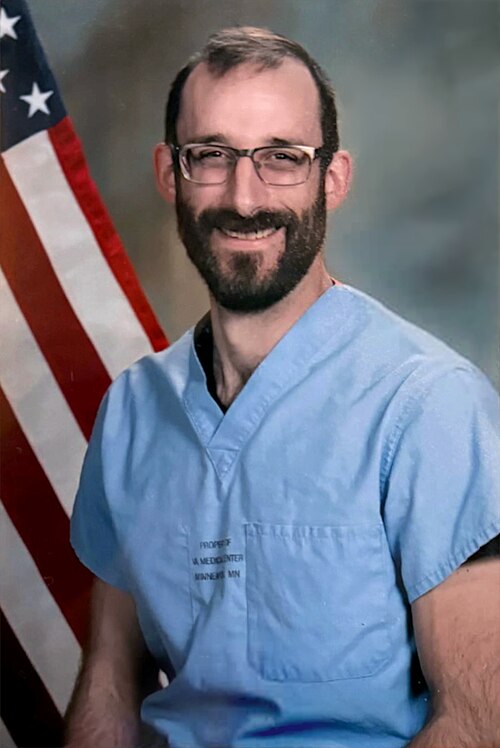
MINNEAPOLIS — Alex Jeffrey Pretti, a 37-year-old intensive care nurse at the Minneapolis Veterans Affairs Health Care System, became a national figure after his fatal shooting by U.S. Customs and Border Protection officers on January 24, 2026, during an immigration enforcement operation in the city.

The incident, captured on bystander video and widely shared, sparked outrage, protests and a Department of Justice civil rights investigation. Pretti, a U.S. citizen with no criminal record, was recording federal agents when the confrontation escalated, leading to his death from multiple gunshot wounds. The event unfolded amid heightened federal immigration crackdowns under the Trump administration, which had deployed agents to Minneapolis and other cities.
Pretti’s death — ruled a homicide by the Hennepin County Medical Examiner — drew comparisons to other high-profile cases and prompted apologies from officials, including Sen. Markwayne Mullin, R-Okla., who regretted early comments labeling Pretti a “deranged individual.” As investigations continue, here are five essential facts about the man whose life and death have fueled national debate on federal tactics, policing and civil liberties.
1. Pretti was a dedicated ICU nurse caring for veterans
Pretti worked as a registered nurse in the intensive care unit at the Minneapolis VA hospital, where he was known for his compassion and commitment to patients. Licensed in Minnesota since 2021, he focused on critically ill veterans, often forming deep bonds with those he treated.
Colleagues described him as kind-hearted, humorous and passionate about his work. “He wanted to be helpful, to help humanity and have a career that was a force of good in the world,” one coworker told reporters. His family emphasized his devotion to service, noting he “cared deeply for the American veterans whom he cared for.” Pretti’s nursing license was active until March 31, 2026, and he had previously contributed to medical research at the University of Minnesota on topics including infection treatment and cancer therapies.
2. He grew up in Green Bay, Wisconsin, with a well-rounded youth
Born in 1988 in Park Ridge, Illinois, Pretti spent much of his childhood in Green Bay, Wisconsin, graduating from Preble High School in 2006. He was active in sports — playing football, baseball and running track — and participated in the Green Bay Boy Choir, Boy Scouts and theater programs, including musicals with the Preble Players.
Friends recalled him as quick to smile, someone who made others feel included. A childhood choir friend described hearing Pretti sing from his open bedroom window, highlighting his vocal talent. After high school, he attended the University of Minnesota, earning a bachelor’s degree in biology, society and the environment in 2011. He worked as a research scientist before pursuing nursing.
3. Pretti was an avid outdoorsman and animal lover
Outside work, Pretti enjoyed adventure and nature, often hiking, mountain biking and exploring with his Catahoula Leopard dog, Joule, who had recently passed away. Family members described him as someone who sought outdoor experiences to recharge.
His lifestyle reflected a grounded, community-oriented personality, with no prior law enforcement interactions beyond minor traffic tickets. He lived in Minneapolis’ Lyndale neighborhood, known for its diversity, and had begun documenting federal immigration activities in the area out of concern for community impact.
4. His death occurred during a protest against federal immigration enforcement
Pretti had recently started observing and recording federal agents amid operations that disrupted neighborhoods, closed schools and led to the January 7 death of Renee Good, another U.S. citizen killed by agents. On January 24, he was filming near 26th Street and Nicollet Avenue when agents attempted an arrest unrelated to him.
Bystander videos show Pretti directing traffic, helping a fallen bystander and being sprayed with a chemical agent before being tackled. Agents confiscated his legally permitted, secured handgun, and multiple shots were fired — up to 10 in seconds, per forensic analysis. DHS initially labeled him a threat, but videos contradicted early narratives, sparking backlash.
5. Pretti’s killing sparked investigations, protests and political fallout
The incident triggered a DOJ civil rights probe into the shooting, separate from the Good case. Protests erupted nationwide under “ICE Out of Everywhere” banners, with mourners gathering at the site. Pretti’s family urged truth-seeking, calling him “a good man” who cared about people.
Sen. Mullin apologized for premature remarks during a March 18 confirmation hearing, saying he “went out there too fast.” The case became a tipping point in debates over federal tactics in sanctuary cities, galvanizing opposition and prompting administration retreats in some enforcement areas.
Pretti’s legacy endures through tributes highlighting his service, kindness and final act of standing up for others. As inquiries proceed, his story continues shaping discussions on accountability, immigration policy and the human cost of enforcement.

CHARLOTTE, N.C. — Veteran quarterback Andy Dalton, known as the “Red Rifle,” was traded from the Carolina Panthers to the Philadelphia Eagles on March 18, 2026, in exchange for a 2027 seventh-round draft pick, sources told ESPN’s Adam Schefter and other outlets. The deal came shortly after Carolina signed Kenny Pickett as backup to starter Bryce Young, making Dalton expendable despite his experience and mentorship role.

Dalton, 38, enters his 16th NFL season with the Eagles, where he is expected to serve as a reliable backup and veteran presence. The move caps an offseason of speculation about his future in Carolina, where he spent three seasons providing stability behind Young. Here are five essential facts about the longtime journeyman quarterback whose career spans multiple teams and highlights his durability and leadership.
1. Dalton’s storied career began with the Bengals and includes three Pro Bowls
Born Oct. 29, 1987, in Katy, Texas, Dalton starred at TCU, earning Mountain West Offensive Player of the Year honors twice and leading the Horned Frogs to significant wins, including over Wisconsin in the 2010 Rose Bowl. Selected by the Cincinnati Bengals in the second round (35th overall) of the 2011 NFL draft, he became a starter immediately, throwing for over 3,000 yards in each of his first three seasons — one of only 10 quarterbacks in league history to achieve that feat early in a career.
Dalton led the Bengals to five playoff appearances from 2011-2015, including two AFC North titles, and earned Pro Bowl nods in 2011, 2014 and 2015. He holds franchise records for touchdown passes (204), completions and 300-yard games. His 70 career wins with Cincinnati gave him the best winning percentage among Bengals quarterbacks with 25+ starts. After nine seasons in Cincinnati, Dalton moved to the Dallas Cowboys (2020), Chicago Bears (2021), New Orleans Saints (2022) and Carolina Panthers (2023-2025) before the Eagles trade.
2. He has been a reliable backup and mentor across multiple teams
Dalton’s journeyman status reflects his value as a veteran backup capable of stepping in with minimal drop-off. In 2025 with Carolina, he appeared in limited action, completing 25 of 37 passes for 293 yards, one touchdown and one interception in spot duty, posting an 89.1 passer rating. Over recent seasons, he maintained solid efficiency, often with passer ratings above 82 despite limited starts.
He has thrown for over 39,000 career yards and 254 touchdowns, ranking among active quarterbacks in several categories. Known for his poise and preparation, Dalton has mentored young passers like Bryce Young in Carolina, offering guidance on film study, mechanics and leadership. His low-turnover style and experience in high-pressure situations make him attractive to teams needing depth.
3. The Panthers trade frees cap space and aligns with youth movement
Carolina signed Dalton to a two-year extension in 2025, but general manager Dan Morgan signaled interest in developing a younger backup behind Young. With Pickett now in place on a one-year deal worth up to $7.5 million, the Panthers traded Dalton for minimal return — a future seventh-rounder — to clear approximately $2 million in guaranteed salary and avoid dead cap hits. The move reflects Carolina’s focus on long-term growth around Young rather than retaining a veteran in a diminished role.
Dalton was open to exploring options, and the low-cost trade provided mutual benefit: Philadelphia gains a seasoned arm for depth behind their starter, while Carolina sheds salary without major draft capital loss.
4. Dalton joins the Eagles as insurance and leadership in the locker room
The Eagles, coming off a strong 2025 campaign, added Dalton to bolster quarterback depth amid ongoing discussions about their starter’s future. At 6-foot-2 and 220 pounds, Dalton brings arm strength, accuracy on intermediate throws and experience in varied offenses. His arrival provides a bridge option if needed, while his veteran presence aids in mentoring younger players and maintaining stability.
The trade cost Philadelphia only a distant seventh-round pick, underscoring Dalton’s market value as a low-risk, high-floor addition. Analysts graded the deal positively for both sides, noting Dalton’s fit in a competitive NFC East environment.
5. At 38, Dalton continues defying age with durability and adaptability
Entering his 16th season, Dalton remains one of the league’s most durable quarterbacks, rarely missing time due to injury. His career longevity stems from smart decision-making, pocket presence and adaptability across schemes — from the Bengals’ balanced attack to the run-heavy approaches in Dallas and New Orleans, and mentoring duties in Carolina.
Despite never reaching a Super Bowl, Dalton’s consistency — including multiple 3,000-yard seasons and playoff berths — earns respect league-wide. The Eagles trade extends his career, offering a chance for late-stage impact in a contender setting.
As Dalton prepares for Philadelphia, his journey from second-round pick to respected veteran underscores resilience in a quarterback-volatile league. The low-key move highlights his enduring value as a pro’s pro ready for whatever role awaits.

Form 13G Zeta Network Group For: 18 March

BBC Sport looks at one of England’s most famous football clubs’ fight for survival.

A union says the announcement came as a blow to employees with up to 275 positions at risk.

Signage outside Johnson & Johnson offices in Irvine, California, US, on Friday, Oct. 10, 2025.
Kyle Grillot | Bloomberg | Getty Images
Johnson & Johnson on Wednesday said the U.S. Food and Drug Administration approved its once-daily psoriasis pill, the first oral option to rival best-selling shots.
The FDA approved the pill, Icotyde, to treat moderate to severe plaque psoriasis, an autoimmune condition that causes rough patches of skin. Patients typically start treatment with topical medications.
If those don’t work, they advance to pills or shots. J&J sees Icotyde becoming the first-line systematic treatment for psoriasis, in between topicals and shots.
Drugmakers have been developing more advanced medicines than standard topicals, turning psoriasis into a highly competitive space. Icotyde targets the same IL-23 receptor as best-selling shots like J&J’s Tremfya and AbbVie‘s Skyrizi, giving patients an oral alternative to some of the most advanced — and most expensive — drugs on the market.
“To be able to to be able to have something that is relatively simple, that offers that level of clearance, trusted safety profile, and in a simple pill, we think is going to be revolutionary,” said Jennifer Taubert, chairman of J&J Innovative Medicine.
J&J estimates about 8 million people in the U.S. have plaque psoriasis, and that 75% of people don’t advance from topicals to shots because of reasons like fearing needles. Taubert sees Icotyde appealing to those patients.
“We believe having the type of profile that Icotyde has in a simple, once-daily oral pill, we think it’s going to be an absolute game changer for patients,” Taubert said.
J&J hasn’t announced how much Icotyde will cost beyond saying the company will help people pay for the medicine. Rival shots Tremfya and Skyrizi cost around $100,000 a year.
J&J sees peak annual sales of Icotyde exceeding $5 billion once it’s approved for other autoimmune conditions. It’s testing the drug for psoriatic arthritis, ulcerative colitis and Crohn’s disease.
Shares of J&J slid one-quarter of a percent Wednesday while shares of Skyrizi-maker AbbVie fell more than 4%. Protagonist Therapeutics, a biotech company that developed Icotyde with J&J, was trading about flat.

McLaughlin: Will the Pac-12 Covet North Dakota State?

Prof Lynne Taylor and Dr Sarah O’Keeffe awarded 2026 St Patrick’s Day Medal

Residents in North Lanarkshire reminded to register to vote in Scottish Parliament Election


![Trump's Worst FEAR Just Came True! [This Happens To Oil Next]](https://wordupnews.com/wp-content/uploads/2026/03/1773864099_maxresdefault-80x80.jpg)

-
 Crypto World5 days ago
HYPE Token Enters Net Deflation as HyperCore Buybacks Outpace Staking Rewards
-

 Tech3 days ago
Your Legally Registered ‘Motorcycle’ Might Not Count Under Proposed US Law
-

 Fashion5 days ago
Weekend Open Thread: Addict Lip Glow
-
Sports4 days ago
Why Duke and Michigan Are Dead Even Entering Selection Sunday
-

 Business3 days ago
Search for Savannah Guthrie’s Mother Enters Seventh Week with No Arrests
-
 Tech1 day ago
Are Split Spacebars the Next Big Gaming Keyboard Trend?
-

 Business4 days ago
US Airports Launch Donation Drives for Unpaid TSA Workers as Partial Government Shutdown Enters Fifth Week
-
Crypto World4 days ago
Coinbase and Bybit in Investment Talks: Could Bybit Finally Enter the US Crypto Market?
-

 Business4 days ago
Country star Brantley Gilbert enters growing non-alcoholic beer market
-

 Business2 days ago
Australian shares drop as Iran war enters third week
-

 Crypto World2 days ago
Crypto Lender BlockFills Enters Chapter 11 with Up to $500M in Liabilities
-

 Sports5 days ago
College Basketball Best Bets: Conference Tournament Semifinal Picks
-

 Politics11 hours ago
The House | The new register to protect children from their abusers shows Parliament at its best
-
 Crypto World7 days ago
Three Binance Charts May Be Hinting at Bitcoin’s Next Move
-
 Business6 days ago
Trump demands Powell cut rates as Iran conflict raises energy prices
-

 Crypto World6 days ago
Senate Votes to Include CBDC Ban in Bipartisan Housing Bill
-

 Fashion2 days ago
25 Celebrities with Curly Hair That Are Naturally Beautiful
-

 News Videos4 hours ago
RBA board divided on rate cut, unusually buoyant share market | Finance Report | ABC NEWS
-

 NewsBeat6 days ago
Deane Road crash near Bolton colleges and university
-

 News Videos6 days ago
Tom Lee: The 100x Opportunity EVEN Bigger Than Bitcoin (New Ethereum Prediction 2026)


You must be logged in to post a comment Login