The uncomfortable echoes of 2022 are growing louder. Britain’s private sector expanded at its weakest pace in six months during March, with the final composite purchasing managers’ index slipping to just 50.3, barely a whisker above the line that separates growth from contraction and well below the 51 reading analysts had pencilled in.
For the thousands of small and medium-sized businesses that form the backbone of the UK economy, the message from the latest S&P Global data is stark: costs are rising sharply while customer demand is falling away. It is, in short, the textbook definition of stagflation, and it is back.
The principal culprit is the war in the Middle East. Five weeks of US and Israeli strikes against Iran have sent oil and gas prices surging, with the effective closure of the Strait of Hormuz, through which roughly a fifth of the world’s oil previously flowed, choking off a vital supply artery. The knock-on effect for British firms has been immediate and painful: material costs across the private sector rose at their fastest rate since February 2023.
Manufacturing businesses bore the sharpest pain, recording their steepest month-on-month rise in cost inflation since Black Wednesday in 1992. The manufacturing PMI edged down to 51 from 51.7 in February, still in expansion territory, but only just, and with margins under severe strain.
Yet it is the services sector, responsible for roughly 80 per cent of British GDP, that should concern business owners most. Services activity slumped to an 11-month low of 50.5, a dramatic fall from 53.9 the previous month and a significant downgrade from the earlier flash estimate. New business among services firms fell for the first time since November 2025, a worrying sign for any SME dependent on a healthy domestic order book.
Advertisement
Tim Moore, economics director at S&P Global Market Intelligence, pointed to cutbacks in both business and consumer spending as the driving force behind the downturn, with rising uncertainty over the Gulf conflict further eroding confidence. Business optimism across the private sector fell to its lowest level since last June.
Thomas Pugh, chief economist at RSM UK, was blunter in his assessment, warning that another bout of stagflation now looks unavoidable, and that a prolonged conflict could tip Britain into outright recession.
The comparison with the aftermath of Russia’s invasion of Ukraine in 2022, when soaring gas prices pushed inflation higher while growth stalled, is difficult to ignore. The Organisation for Economic Co-operation and Development has already suggested that Britain stands to suffer the worst growth hit of any G20 nation from the current crisis, alongside the sharpest inflation rise in the G7. GDP managed just 0.1 per cent growth in the final quarter of last year, offering precious little cushion.
For businesses already grappling with thin margins and cautious consumers, the interest rate outlook offers scant comfort. Markets now expect the Bank of England to raise rates twice from their current level of 3.75 per cent this year, with analysts at Pantheon Macroeconomics forecasting a quarter-point rise in June before two cuts follow in 2027. UK government bond yields have climbed steeply since the conflict began, limiting the chancellor’s room for fiscal support.
Advertisement
There was one small crumb of comfort buried in the data: the pace of job cuts among services companies eased to its slowest since October 2025. But with inflation forecasts suggesting prices could breach 5 per cent this year and the conflict showing no sign of swift resolution, the outlook for British businesses remains deeply uncertain.
The picture across the Channel is scarcely more encouraging. The eurozone’s composite PMI fell to a nine-month low of 50.7, dragged down by weakness in Germany and contraction in France. Chris Williamson, chief business economist at S&P Global, warned of clear risks that the European economy could shrink in the second quarter without a rapid end to hostilities.
Jamie Young
Jamie is Senior Reporter at Business Matters, bringing over a decade of experience in UK SME business reporting.
Jamie holds a degree in Business Administration and regularly participates in industry conferences and workshops.
When not reporting on the latest business developments, Jamie is passionate about mentoring up-and-coming journalists and entrepreneurs to inspire the next generation of business leaders.
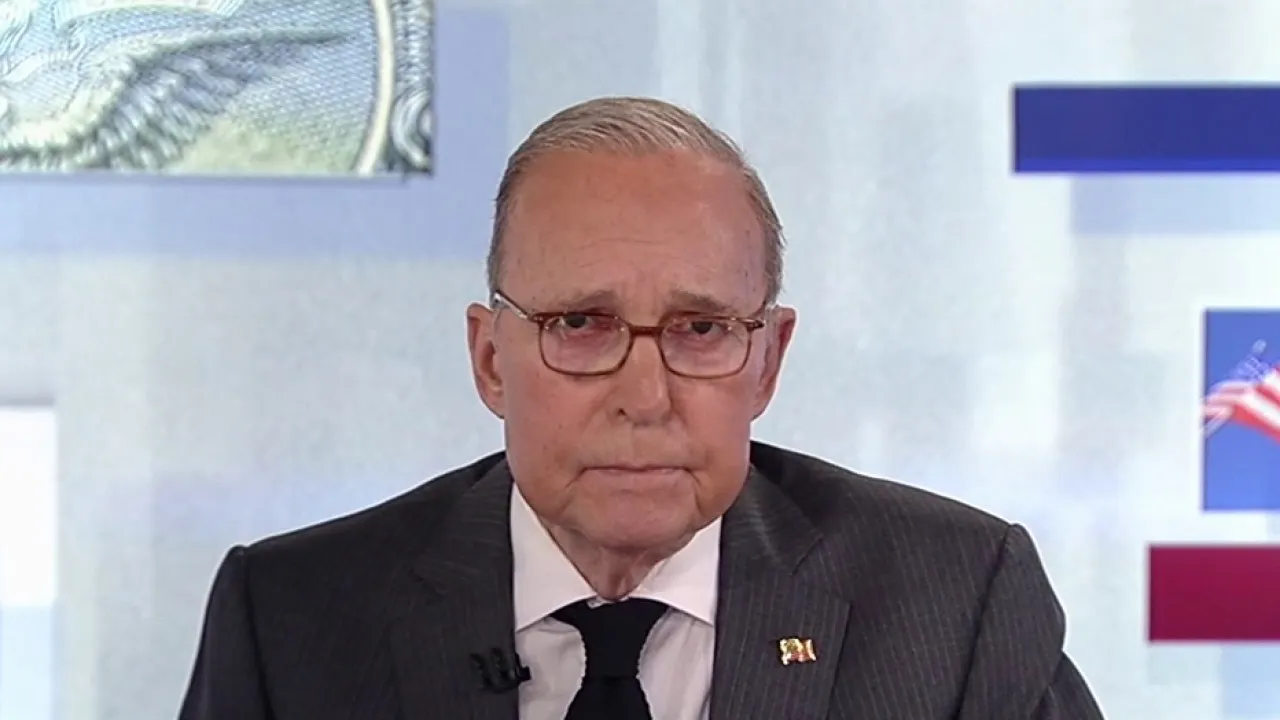
FOX Business host Larry Kudlow analyzes a poll that indicates growing support for the GOP on ‘Kudlow.’
America loves President Trump and the Republican Party on all the key issues, according to one major poll, the Harvard-Harris CAPS poll, presided over by a former adviser to President Clinton, Mark Penn, who is most certainly a moderate Democrat, not a crazy one. This is a well respected poll. Of the 2,745 registered voters who were surveyed, the split was 977 Republicans, 984 Democrats, and 785 Independents. So it’s 50-50.
What’s interesting about this poll is that it picks up and agrees with many other polls about the key issues. Affordability, the economy, immigration, healthcare, Iran, et cetera. Where it differs from many other polls and lefty press reporting, though, is that while some people may blame Republicans, they blame Democrats more on all the key issues.
Advertisement
Let’s start with Iran, 74 percent of the voters believe the U.S. is currently winning in Iran. Virtually every press organization is telling us Iran is winning, believe it or not. Then the poll goes on, 74 percent believe Iran should be prevented from obtaining nukes. Some 66 percent want Mr. Trump to insist on all major conditions in any negotiation. And 57 percent approve of the blockade. There’s a warning here for Democrats, because as Speaker Newt Gingrich has mentioned, Democrats have become the pro-Iran party. Not a good place to be. And as I’ve said many times, Iran will be a sleeper issue come the midterms.
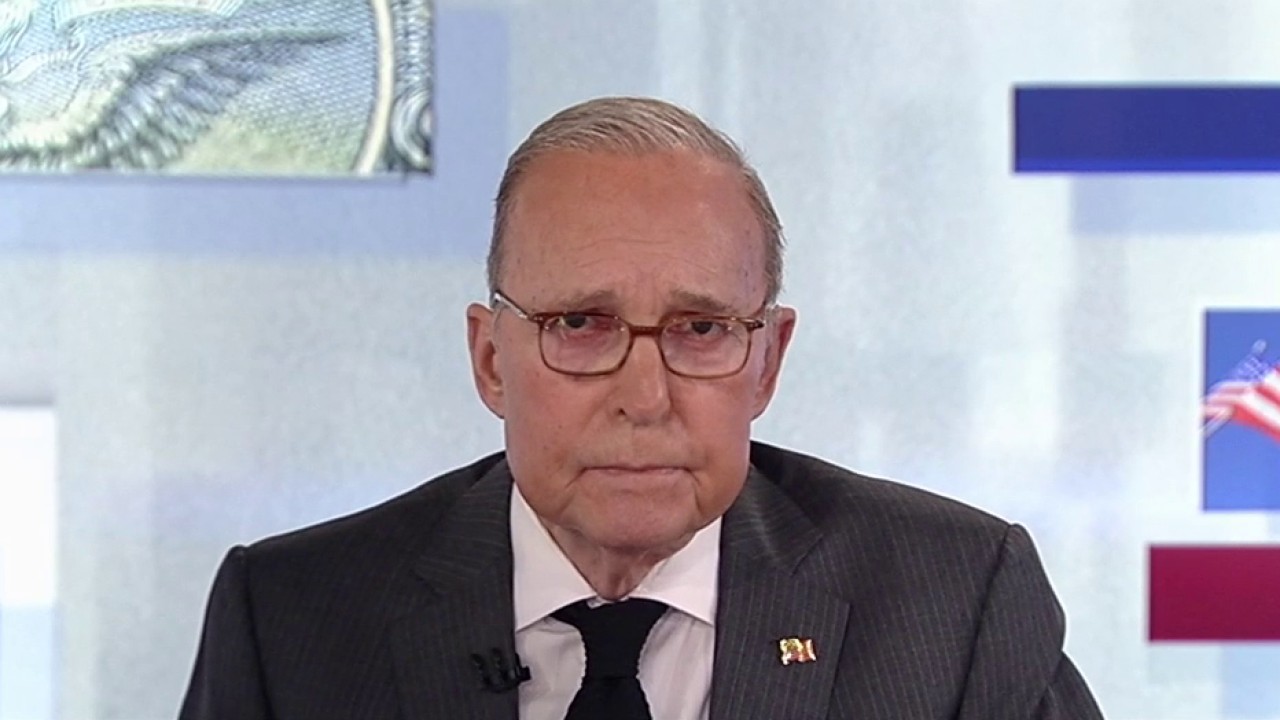
Panelists Mark Penn and Reince Priebus discuss Americans’ perceptions of the U.S. economy amid the Iran War on ‘Kudlow.’
Now on the economy — people are very worried about prices and affordability. Got it. When you ask them who do you trust more to manage the economy, though, the responses are: Mr. Trump and Republicans 53 percent, Democrats 47 percent. That’s a 6-point deficit.
Normally a typical news desk, I don’t care whether it’s the Wall Street Journal, the New York Times, or the Washington Post. All the legacy lefties. The typical news desk will assume because affordability is the issue, Mr. Trump is to blame. Nope. People have even less confidence in Democrats.
Advertisement
Here’s another point, open borders. On this issue, 58 percent think Democrats are in favor of open borders. Here’s another one. Voter ID. Some 65 percent of those polled think Democrats are against voter ID requirements. And they like it very much that Republicans are in favor of voter ID in order to vote. Here’s another one. The race for Congress, you’d think the Democrats are ahead by 10 points given the press coverage day in and day out. Wrong. The Harvard Harris poll shows 50-50, which historically could mean the GOP is well ahead because over the years polling has taken half a dozen points off of the final Republican tally.
As I always say, polls are not votes. Only votes are votes. I’ll also say that press coverage is not fair. It’s heavily biased against Mr. Trump and the GOP. And I will add to that, most public press-sponsored polling is heavily biased against Mr. Trump and the GOP. The Harvard Harris poll is the exception and there are other exceptions, but I believe the country is very much behind Mr. Trump. And there’s going to be a big surprise come this November.
White House senior counselor for trade and manufacturing Peter Navarro discusses the major boost in tax refunds from President Donald Trump’s ‘big, beautiful bill’ on ‘Kudlow.’
The IRS’ taxpayer advocate issued a notice that tens of millions of American taxpayers may be entitled to refunds or reduced penalties and interest due to the postponement of filing deadlines during the COVID-19 emergency declaration.
The National Taxpayer Advocate said in a post on Thursday that refunds or abatements may be available to tens of millions of taxpayers for penalties and interest that were assessed by the IRS during the 3.5-year COVID disaster declaration period.
Advertisement
It explained that the issue has arisen due to recent court decisions, including a ruling in what’s known as the Kwong case that the tax code’s handling of federal disaster declarations meant that filing and payment deadlines were postponed throughout the period from Jan. 20, 2020, through May 11, 2023.
The taxpayer advocate noted that the Justice Department may appeal the decision, but the relief compelled by the ruling isn’t automatic and affected taxpayers must file their refund claims by July 10, 2026.
Tens of millions of taxpayers may be owed refunds or lower abatement due to the court ruling, but they face a summer filing deadline to receive them. (iStock)
“Because of the infrequency of a disaster lasting this long, most taxpayers, even most tax professionals, did not foresee that filing deadlines and payments deadlines would be postponed for this long and that return filings and payments would not be considered late and therefore not subject to penalties and interest. But that is the logical extension of what the court ruled,” the National Taxpayer Advocate wrote.
Advertisement
They went on to warn that barring further action by the IRS or Congress to make sure that all taxpayers impacted by the ruling get what they’re owed, such taxpayers face a fast-approaching deadline to file their claims.
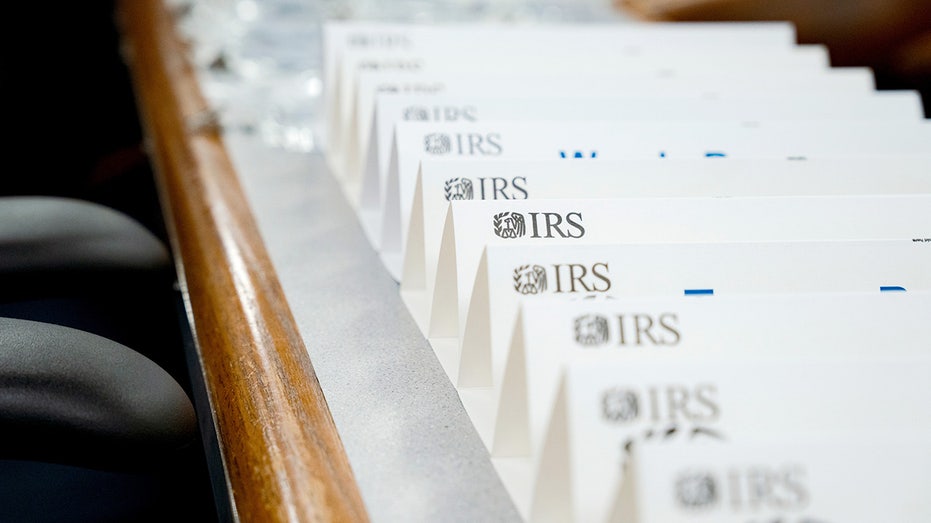
Taxpayers will need to submit claims by a paper form ahead of the deadline, barring changes to the IRS’ process. (Jordan Vonderhaar/Bloomberg via Getty Images)
“Unless the IRS or Congress acts to ensure all affected taxpayers will receive refunds if the Kwong decision is upheld, taxpayers seeking refunds for penalties and interest they paid relating to that period will, in most cases, need to file claims by July 10, 2026,” the advocate explained.
“At the risk of repetition, my overriding goal is to get the word out to as many taxpayers as possible and to avoid disparate results between the ‘well advised’ and the unaware,’” they said.
Advertisement
The taxpayer advocate said that affected taxpayers may be entitled to a refund or abatement of amounts assessed during the COVID period for:
Penalties assessed for failure to file timely returns, failure to pay taxes, or failure to make estimated tax payments;
Interest that began accruing earlier than it should have, or not at all; and
Overpayment interest for the 2020-2023 disaster period.
The COVID emergency declaration delayed filing and payment deadlines, according to a recent court ruling. (Tom Williams/CQ-Roll Call, Inc via Getty Images)
The notice cautioned that the IRS requires claims under Form 843 to be filed through paper submissions, and because such filings may not provide an immediate confirmation of receipt, it advised that taxpayers should send claims by certified mail to have evidence of their timely submission in case the forms are lost.
The taxpayer advocate recommended that the IRS should abide by the Taxpayer Bill of Rights and take four steps, including publicizing the issue for taxpayers, providing a six-month filing extension for refund claims, consider providing systemic relief so taxpayers don’t have to file, and to create an electronic submission portal.
It also urged tax professionals to inform clients about the issue, members of Congress to highlight the issue in communications with constituents, and for the media to report about it for the public’s knowledge.
MIAMI GARDENS, Fla. — Formula One returns to American soil this weekend for the Crypto.com Miami Grand Prix, the fourth round of the 2026 season and the first sprint weekend of the year. Fans around the world are eager to tune in as drivers battle at the Miami International Autodrome from May 1-3, with the main race scheduled for Sunday at 4 p.m. ET.
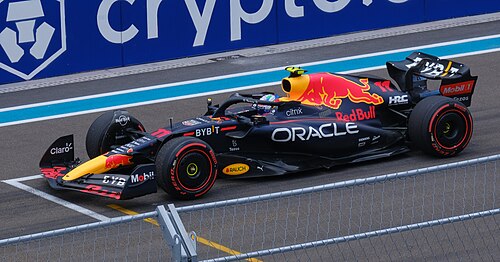
Red Bull Racing RB18 car at the 2022 Miami Grand Prix.
This year’s Miami event features a compressed sprint format that delivers high-stakes action across three days. Free Practice 1 kicks off Friday at noon ET, followed by Sprint Shootout later that afternoon. Saturday brings the Sprint race and qualifying for the Grand Prix, culminating in Sunday’s 57-lap main event under Florida sunshine. The unique layout, blending high-speed straights with tight corners around Hard Rock Stadium, promises exciting overtakes and strategic battles.
In the United States, Apple TV serves as the exclusive home for Formula One broadcasts under a multi-year deal. Viewers with an Apple TV+ subscription can stream every session live, including practice, qualifying, sprints and the race, often with F1 TV integration providing enhanced access. F1 TV Pro offers additional features such as onboard cameras for all 22 drivers, team radio audio, and commercial-free coverage in multiple languages. The service streams seamlessly on Apple TV devices, Chromecast, Roku, Amazon Fire TV, Android TV and more.
For those without Apple TV, F1 TV Premium provides a direct subscription option with comprehensive live coverage and on-demand replays. International viewers have varied options: Sky Sports in the UK broadcasts all sessions on Sky Sports F1 and Main Event, while other regions rely on local rights holders or F1 TV. Yahoo Sports and other sports hubs may offer highlights or supplemental streams for select sessions.
The 2026 season has already delivered drama, with tight championship standings heading into Miami. Max Verstappen and Red Bull seek to maintain early momentum, while challengers from McLaren, Ferrari, Mercedes and emerging teams like Cadillac and Audi push for podiums. Sprint weekends compress the schedule, heightening pressure on drivers and strategists as tire management, qualifying pace and racecraft take center stage.
Advertisement
Miami’s appeal extends beyond the track. The event transforms the area into a glamour hub with celebrity sightings, concerts and fan zones. The circuit’s mix of temporary and permanent sections creates a unique challenge — long straights for top speeds near 210 mph and technical sections rewarding precision. Past races here have featured memorable moments, from overtakes under the stadium lights to safety car deployments that reshuffled the order.
Weather forecasts for the weekend call for warm conditions with a chance of isolated showers, typical for South Florida in early May. Teams will monitor track evolution closely, as rubber buildup changes grip levels throughout the weekend. Pirelli brings its softest tire compounds, favoring aggressive strategies in the sprint and Grand Prix.
Broadcast details emphasize accessibility. Apple TV subscribers can watch on smart TVs, mobile devices, tablets or computers via the app. F1 TV Pro subscribers gain multi-screen viewing, data overlays and historical archives. For international fans, check local listings — many European broadcasters air live on traditional TV alongside streaming. Free highlights packages are often available post-session on official F1 channels and partner sites.
The sprint format alters preparation. Teams have limited practice time — just one 90-minute session Friday before Sprint Shootout. This rewards adaptability and simulation work done in factories beforehand. Drivers like Lando Norris, Charles Leclerc and Lewis Hamilton, with strong Miami histories, could capitalize, while rookies and midfield battlers fight for crucial points.
Advertisement
Fan engagement has surged with F1’s streaming shift. Interactive features on F1 TV allow viewers to switch camera angles, listen to engineering chatter and follow live timing data. Apple TV integrates smoothly with existing subscriptions, making it easier for casual fans to join without additional hardware. Pre-race shows, post-race analysis and driver interviews provide context for those new to the sport.
Ticket sales for the Miami Grand Prix indicate strong demand, with grandstands and hospitality packages selling briskly. For those unable to attend, home viewing offers near-trackside immersion through high-definition broadcasts and expert commentary from former drivers and journalists. Networks emphasize storytelling, highlighting rivalries, technical innovations and human elements behind the machines.
Historically, Miami has produced unpredictable results due to its layout and variable conditions. Strategic calls on pit stops and tire choices often prove decisive in both sprint and feature races. As the championship tightens, every point counts, adding pressure in this early-season sprint.
Preparation tips for viewers include downloading apps in advance, ensuring stable internet for streaming, and checking local time conversions for global audiences. Many will wake early or stay up late depending on location — European fans face evening broadcasts, while Asia-Pacific viewers tune in during morning hours.
Advertisement
The Miami Grand Prix also spotlights Formula One’s growth in the U.S. market. Increased visibility through streaming platforms, Netflix’s “Drive to Survive” influence and celebrity involvement have broadened appeal. This weekend’s event continues that trend, blending elite motorsport with South Florida’s vibrant culture.
Teams arrive with updated packages after early-season testing and races. Aerodynamic tweaks, engine reliability and driver fitness will be under scrutiny. Injuries or mechanical gremlins could shuffle the grid, while weather variables add another layer of strategy.
For cord-cutters, Apple TV and F1 TV eliminate traditional cable barriers. Bundles or trials may be available, with customer service ready to assist setup. Highlights and condensed replays ensure no one misses key moments even with busy schedules.
As engines fire up in Miami, the racing world converges on South Florida. Whether cheering from home, a sports bar or trackside, fans can immerse in one of the calendar’s most anticipated weekends. The combination of sprint excitement and full Grand Prix drama guarantees thrilling viewing wherever you tune in.
AutoNation, Inc. (AN) Q1 2026 Earnings Call May 1, 2026 9:00 AM EDT
Company Participants
Derek Fiebig – Vice President of Investor Relations Michael Manley – CEO & Director Thomas Szlosek – Executive VP & CFO
Advertisement
Conference Call Participants
Rajat Gupta – JPMorgan Chase & Co, Research Division Michael Ward – Citigroup Inc., Research Division Alexander Perry – BofA Securities, Research Division Jeffrey Lick – Stephens Inc., Research Division John Saager – Evercore ISI Institutional Equities, Research Division John Babcock – Barclays Bank PLC, Research Division David Whiston – Morningstar Inc., Research Division
Presentation
Advertisement
Operator
Hello, and welcome to the AutoNation Inc. First Quarter 2026 Earnings Call. My name is Rob, and I’ll be your operator today. [Operator Instructions].
I will now hand the conference over to Derek Fiebig, VP of Investor Relations. Please go ahead.
Advertisement
Derek Fiebig Vice President of Investor Relations
Thanks, Rob. And good morning, everyone. Welcome to AutoNation’s First Quarter 2026 Conference Call. Leading our call today will be Mike Manley, our Chief Executive Officer; and Tom Szlosek, our Chief Financial Officer. Following their remarks, we’ll open up the call to questions.
Before beginning, I’d like to remind you that certain statements and information on this call, including any statements regarding our anticipated financial results and objectives constitute forward-looking statements within the meaning of the Federal Private Securities Litigation Reform Act of 1995. Such forward-looking statements involve known and unknown risks that may cause our actual results or performance to differ materially from such forward-looking statements.
Additional discussions of factors that could cause our actual results to differ materially are contained in our press release issued today and in our filings with the SEC. Certain non-GAAP financial measures as defined under SEC rules will be discussed on this call. Reconciliations are provided in our materials and our website located at investors.autonation.com.
[Interpreted] Ladies and gentlemen, good day. My name is Pierre Beaudoin, and I am the Chair of the Board and very pleased to be in this position. On behalf of the Board, welcome to Bombardier’s 2026 Annual Meeting of Shareholders. As you know, innovation has been part of Bombardier’s DNA since the beginning and continues to guide our decisions, our governance and our long-term vision in everything that we do.
Last December, we celebrated the official commissioning of the Global 8000 with our employees and customers. This is an important milestone for the company, given that Global 8000 embodies in many ways, the definition of innovation. As the world’s fastest business jet, It illustrates the excellence to — of our know-how and continues to increase Canada’s reputation internationally.
I can tell you that Bombardier is in an excellent position today. Choices made over the recent years, diversification amongst other things in our revenues, all these things have been bearing fruit. Our service and defense activities are growing steadily and now play a major role in Bombardier’s overall performance.
Advertisement
Our teams and steering committees are solid, committed and well aligned to pursue our trajectory with rigor and determination. This meeting will be held primarily in French, but allow me to say a few words in English.
Ladies and gentlemen, good morning. My name is Pierre Beaudoin, and I am the Chair of the Board of Directors of Bombardier. I am pleased to welcome you to our 2026 Annual Meeting of Shareholders. While our meeting will be held mainly in French, a simultaneous translation is available on the
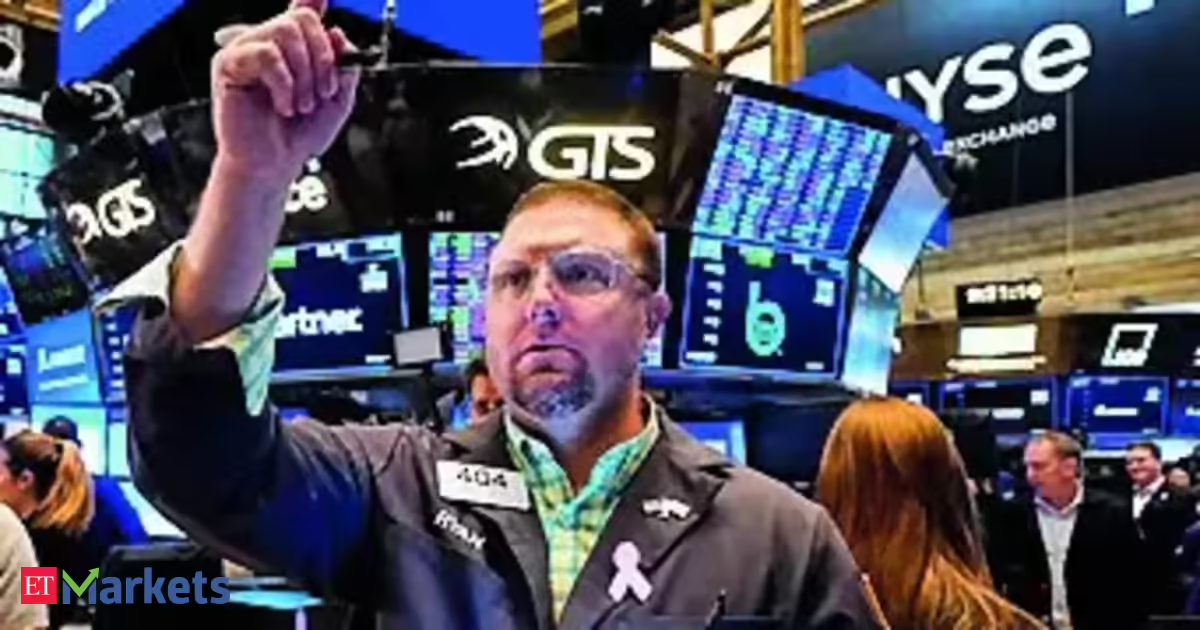
The S&P 500 and the Nasdaq advanced to record closing highs on Friday, boosted by robust earnings and a dip in crude prices, and turning the page on their biggest monthly percentage gains in years.
The S&P 500 joined the Nasdaq in positive territory, with tech strength putting the latter out front. Both indexes logged their sixth consecutive weekly advances, their longest run of weekly gains since October 2024.
As May begins, the stock market embarks on what is historically a weak six-month stretch. Since 1945 through April 2026, the S&P 500 has gained an average of about 2% from May to October, according to data from Fidelity. That compares with an average gain of about 7% from November through April.
Wrapping up a momentous week for corporate earnings, in which reporting companies accounted for more than two-fifths of the S&P 500’s total market capitalization, analysts now see aggregate first-quarter earnings growth of 27.8%, year-on-year, according to LSEG I/B/E/S.
Advertisement
Five of the companies in the Magnificent Seven group of artificial intelligence-related stocks reported this week, and investors paid close attention to the timing and extent to which huge investments in the nascent technology are starting to pay off.
Live Events
That’s an 11.7 percentage point increase from where the estimate stood a week ago, and marks the biggest earnings growth since the fourth quarter of 2021. Of the 314 companies that have posted results, 83% have beaten earnings estimates, and 78% reported better-than-expected revenues, according to LSEG. “Today’s action is really the cherry on top of another solid week for investors as earnings season continues to come in stronger than expected,” said Ryan Detrick, chief market strategist at Carson Group in Omaha. “At the same time, we had the second-best April for the S&P 500 since 1950.”
“It looks like that upward momentum very well could continue in May,” Detrick added.
GEOPOLITICS, CRUDE PRICES AND THE ECONOMY
Progress toward a peaceful resolution to the U.S.-Israeli war on Iran appeared stalled, with the closure of the Strait of Hormuz putting upward pressure on energy prices and stoking inflation worries.
But front-month crude futures eased after Iran was reported to have submitted a fresh proposal for negotiations with Washington.
Advertisement
“Investors are pricing out how long they expect that supply disruption to last, and then differentiating who’s got the most sensitivity to that disruption,” said Tom Hainlin, national investment strategist at U.S. Bank Wealth Management in Minneapolis.
Economic data showed U.S. factory activity expanded in April for the fourth consecutive month, but the prices-paid component – an inflation predictor – jumped to its hottest level in four years, according to the Institute for Supply Management.
According to preliminary data, the S&P 500 gained 20.46 points, or 0.28%, to end at 7,229.47 points, while the Nasdaq Composite gained 217.67 points, or 0.87%, to 25,109.98. The Dow Jones Industrial Average fell 155.67 points, or 0.31%, to 49,496.47.
Apple shares advanced after the company provided a solid sales forecast, touting strong demand for its flagship iPhone 17 and the MacBook Neo.
Advertisement
Atlassian shares surged after the enterprise software firm hiked its forecast.
Peers Salesforce and ServiceNow also gained ground.
Roblox slid following a cut in its annual bookings forecast. Reddit jumped after an upbeat quarterly revenue forecast.
Exxon Mobil’s quarterly profit was hit by Middle East disruptions, while Chevron beat earnings expectations but overall profit marked its lowest level in five years. Both supermajors closed lower.
China’s three largest airlines returned to profit in the first quarter, but the recovery may prove short-lived as higher fuel costs due to the Middle East war cloud the outlook and threaten bottom lines.
The Chinese aviation sector delivered a strong start to 2026 even as the outbreak of the Iran war in late February disrupted air travel and heightened macroeconomic uncertainty.
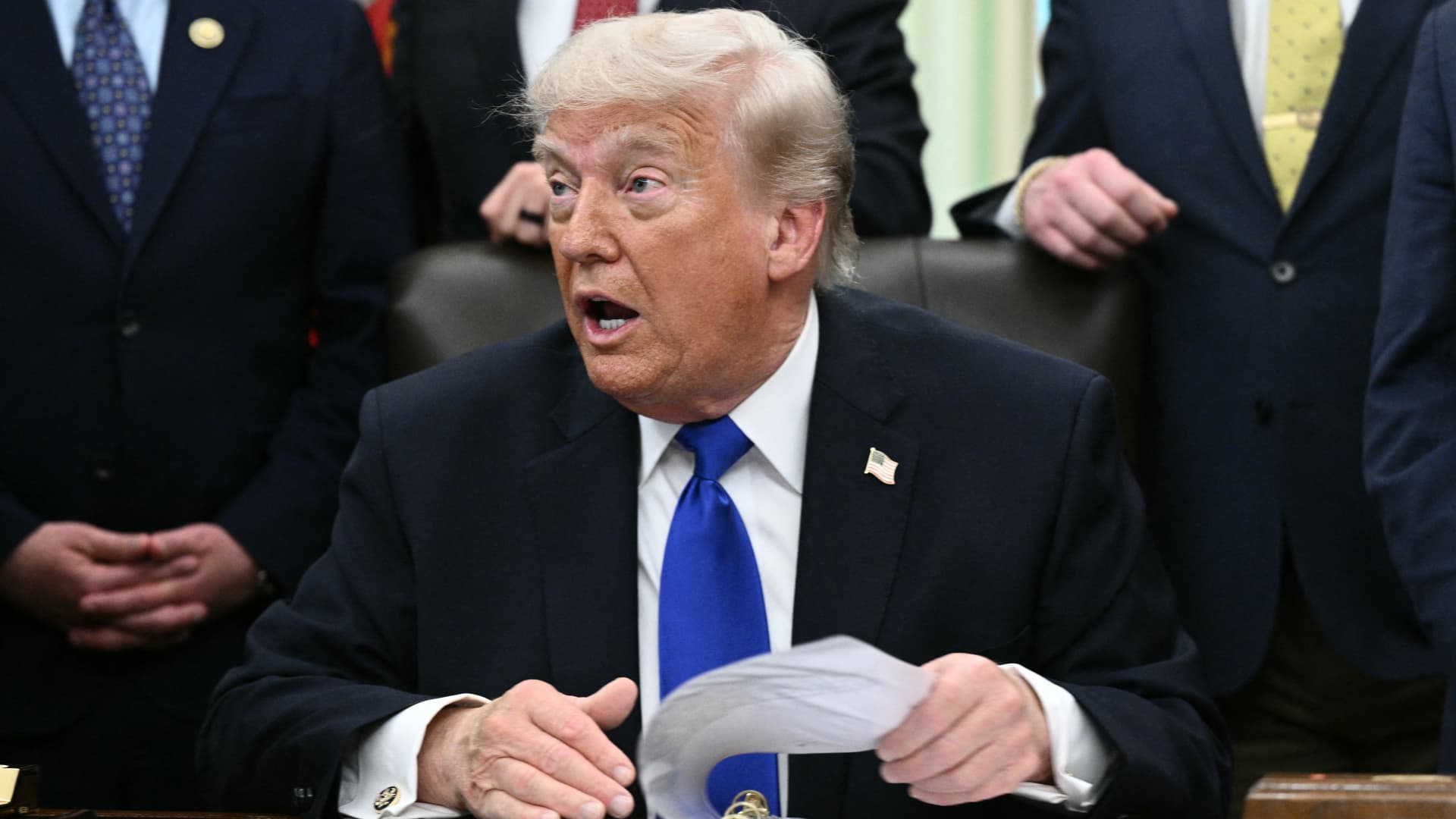
President Donald Trump said he would increase tariffs charged to the European Union for cars and trucks to 25%, without saying what authority he would use to raise the levies.
“Based on the fact the European Union is not complying with our fully agreed to Trade Deal, next week I will be increasing Tariffs charged to the European Union for Cars and Trucks coming into the United States,” he wrote on Truth Social on Friday. “The Tariff will be increased to 25%. It is fully understood and agreed that, if they produce Cars and Trucks in U.S.A. Plants, there will be NO TARIFF.”
The Supreme Court ruled in February that a large part of Trump’s tariff agenda was illegal. The president’s “reciprocal” tariffs were invoked using a novel reading of the International Emergency Economic Powers Act, or IEEPA, but the high court said in a 6-3 majority that the law that undergirds those import duties “does not authorize the President to impose tariffs.”
Shortly after the Supreme Court ruling, Trump said he signed an executive order imposing a new 10% “global tariff” rate to effectively replace the IEEPA duties, though those tariffs came with a 150-day time limit under Section 122 of the Trade Act of 1974. He then said he would increase the global rate to 15%.
Advertisement
The EU in February had warned that its trade deal with the U.S. could be in jeopardy after the new tariff rate was announced and postponed its planned vote on the agreement.
The European Union said it is following standard legislative practice and keeping the U.S. administration up to date.
“We maintain close contact with our counterparts, including as we also seek clarity on US commitments,” a a European Commission spokesperson said. “We remain fully committed to a predictable, mutually beneficial transatlantic relationship. Should the US take measures inconsistent with the Joint Statement, we will keep our options open to protect EU interests.”
A White House official said in a statement Friday that the EU has “failed to make substantial progress on their agreed-upon commitments” under a trade agreement between the countries.
Advertisement
“The White House has always been clear that the President reserves the right to adjust tariff rates if our trade deal partners fail to abide by their commitments,” the official said.
The Trump administration last year broadly implemented 25% tariffs on vehicles and certain auto parts imported into the U.S., citing national security risks under Section 232. Those levies are still in place.
The European automakers that could most be impacted by a change in tariff rate would be Mercedes, BMW and Volkswagen, which import a large percentage of the vehicles they sell in the U.S. from their plants in Europe.





















































You must be logged in to post a comment Login