

Business
UK Unemployment Falls to 4.9% as Wage Growth Beats Forecasts


Britain’s unemployment rate edged down to 4.9 per cent in the three months to April, according to figures published by the Office for National Statistics (ONS) on Thursday, handing policymakers a modest piece of good news just hours before the Bank of England delivered its latest call on interest rates.The reading
was down from the five per cent recorded in the previous quarter and came in better than the expectations of economists, who had pencilled in an unchanged jobless rate of five per cent. It is the sort of small upside surprise that rarely shifts the dial on its own, but it lands at a sensitive moment for rate-setters weighing how much slack is building in the labour market.
Pay growth excluding bonuses held steady at 3.4 per cent over the same period, comfortably ahead of forecasts of 3.2 per cent. Adjusted for consumer price inflation, real earnings rose by 0.3 per cent, leaving workers fractionally better off in real terms. Total pay including bonuses climbed 4.4 per cent, also beating the four per cent the market had expected.
The numbers arrived only hours before the Bank of England announced its decision, with the Monetary Policy Committee widely tipped to leave borrowing costs unchanged at 3.75 per cent. The Bank trimmed rates to that level late last year, as covered in our report on how UK interest rates were cut to 3.75% as the Bank signalled inflation nearing target, and has since trodden carefully amid a patchy growth picture. The full detail of the Committee’s thinking is set out on the Bank’s own Bank Rate page.
Rate-setters have been watching the jobs data closely as they judge whether elevated oil prices, linked to the conflict involving Iran, could feed through into stronger wage demands. A tight labour market would raise the risk of a second-round inflation effect, the kind of dynamic the Bank is determined to avoid.
Responding to the figures, Work and Pensions Secretary Pat McFadden said the data showed 400,000 more people in work than a year earlier, while acknowledging that instability in the Middle East was creating uncertainty. “We have the right economic plan for growth and stability in a volatile world, and we are taking action to create opportunity and make sure that no one is left behind,” he said.
He pointed to what he called the biggest youth employment reforms in a generation, including a Youth Guarantee backed by £2.5 billion of investment aimed at creating almost a million opportunities for young people, and the Connect to Work programme designed to support 300,000 disabled people into employment.
Not everyone read the release as a turning point. Independent economist Julian Jessop cautioned that the underlying trend remained soft. “Even after some favourable revisions, the trend in payroll jobs is still down, with 119,000 fewer employees in May than in the same month a year earlier, and 187,000 fewer than two years ago,” he said.
A further worry for the Committee is whether softer demand for workers is eroding employees’ bargaining power and their ability to push for bigger pay rises. Most members believe labour market conditions have loosened compared with recent years, making large wage increases less likely. The shift is stark set against the period after Russia’s invasion of Ukraine in 2022, when inflation peaked at 11.1 per cent and wage growth ran above five per cent for almost three years.
Suren Thiru, chief economist at ICAEW, struck a downbeat note. “These figures point to a jobs market struggling under the strain of soaring energy bills and employment costs, with more firms limiting hiring and holding down pay, especially for younger workers,” he said. The cooling he describes echoes the picture in our earlier coverage of how the UK jobs market is slowing as wage growth eases and vacancies fall amid higher business taxes.
Thiru argued that weaker wage growth would reassure policymakers that any inflationary spillover from the conflict involving Iran could be contained. “These figures seal the deal on a midday interest rate hold by reassuring rate-setters that a softening labour market can help keep this Iran-driven inflation shock short-lived by dampening demand across the economy,” he said, adding that the Committee’s vote split and accompanying minutes could take on a slightly more dovish tone.
The claimant count told its own story. The number of people claiming unemployment benefits rose by 31,200 in May, ahead of forecasts for an increase of 25,800 and following a revised rise of 8,300 in April. Employment grew by 100,000 in the three months to April, down from 148,000 in the previous period but still ahead of expectations for growth of 80,000.
Thiru warned that falling vacancies suggested demand for workers was weakening at an uncomfortable pace, as businesses absorbed mounting financial pressures and automation reshaped the workforce. That theme of a stalling hiring engine has been building for some time, as our reporting on long-term unemployment climbing to a decade high made clear.
“While the US-Iran peace deal has halted hostilities, the damage to the UK’s labour market is already done,” he said, predicting that unemployment could drift towards six per cent if higher energy costs continue to weigh on employers’ hiring plans.
For now, the headline rate is moving in the right direction. The harder question for businesses and policymakers alike is whether that holds once the full weight of higher costs and weaker demand works its way through.

Amy Ingham
Amy is a newly qualified journalist specialising in business journalism at Business Matters with responsibility for news content for what is now the UK’s largest print and online source of current business news.

Business
Ex-SWAT Commander Says Investigators Must Search Vast Desert Reservation in Nancy Guthrie Case


Nearly five months into the unsolved disappearance of Nancy Guthrie, a former Pima County SWAT commander has publicly urged investigators to expand their search to a sprawling desert reservation that straddles the U.S.-Mexico border — even as the broader case continues to be shadowed by a swirl of unverified online speculation that authorities have not addressed.
Bob Krygier, a former Pima County SWAT commander, recently recommended that authorities investigating the disappearance of Savannah Guthrie’s missing 84-year-old mother consider the Tohono O’odham Reservation Nation, a vast tribal territory located south of Tucson.
Why the Reservation Could Matter
The reservation is located between Tucson and Mexico, with most of its terrain consisting of desert. In an interview with NewsNation journalist Brian Entin, Krygier was asked directly about the area’s potential relevance to the case.
“It’s massive. It’s right there between Tucson and Mexico. When I drove to Mexico, you drive through it. And it borders Mexico. Do you think that that should be part of the investigation when it comes to Nancy Guthrie,” Entin asked, referring to the Tohono O’odham Reservation Nation.
Krygier agreed, replying, “Absolutely it should be. It’s huge. There’s a lot of… most of it is just the desert.” He added that the reservation extends into Mexican territory and that there are several ways to cross the border from both sides, noting that the area is rarely patrolled by law enforcement — characteristics that, in his assessment, make it a location investigators should not overlook given the case’s lack of resolution.
Setting the Record Straight on Recent Remains
The reservation recommendation comes amid persistent online speculation about a discovery that, despite being widely shared, has already been resolved by experts and is unrelated to Guthrie’s disappearance. In May, a local YouTuber conducting an amateur search came across human bones several miles from Guthrie’s home in the Catalina Foothills.
Authorities quickly determined that the remains were human — and also that they were significantly older and unconnected to Guthrie’s suspected abduction. The remains were described as prehistoric because they belonged to someone who died before there was written language in the area, according to University of Arizona anthropologist James T. Watson, who assisted in the analysis. There is also a known archaeological site nearby, and ceramic artifacts uncovered at the scene were consistent with known examples there.
Watson said the remains belonged to an individual buried hundreds of years ago — possibly up to 1,000 years ago — and that the bones, likely belonging to an ancestral Native American, were carefully excavated and have since been turned over to the Tohono O’odham Nation. The case has had no confirmed connection to evidence directly tied to Guthrie’s abduction.
Unverified Claims About the Guthrie Family Remain Unaddressed
Separately, a cluster of social media claims has continued to circulate regarding members of the Guthrie family, none of which have been confirmed by law enforcement or established news organizations. These claims include a local resident’s account of seeing lights on at Nancy Guthrie’s property in the early morning hours, along with speculation from an online commentator suggesting that Nancy’s daughter Annie Guthrie and her husband, Tommaso Cioni — who were reportedly the last people to see Nancy before her disappearance — have themselves gone missing.
Authorities have not addressed these specific claims publicly, and they remain unverified. What is established is that Pima County Sheriff Chris Nanos has previously and explicitly ruled out the involvement of family members in the case.
Questions about possible discord within the Guthrie family have also circulated online, largely stemming from an older video resurfacing in which Savannah Guthrie described her sister in unflattering terms years before her mother’s disappearance. Savannah has since spoken publicly and supportively about her sister and brother-in-law’s role in caring for their mother, expressing that no one took better care of Nancy than they did.
Where the Investigation Stands
The case remains formally classified as a homicide investigation rather than a missing persons case, a reclassification made by the FBI and Pima County Sheriff’s Department as the search has stretched past four months without a confirmed suspect.
The evidence gathered throughout the investigation includes confirmed bloodstains found at Guthrie’s home and the surrounding street, multiple rounds of neighborhood surveillance footage, data recovered from a mobile application connected to Nancy’s pacemaker that stopped recording at 2:28 a.m. on the morning of her disappearance, a single strand of hair recovered from the home, signs of forced entry, and doorbell camera footage showing a masked individual with a black backpack tampering with the device outside her home. That individual remains the central focus of the active manhunt and has been described as standing between 5 feet 9 inches and 5 feet 10 inches tall with a medium build.
No official suspects have been named in the case. A separate kidnapping suspect, Coral Michelle Smith, who drew public attention after being wanted in an unrelated case near Guthrie’s neighborhood, has had her potential involvement formally ruled out by investigators.
What Comes Next
With no breakthrough yet in identifying the masked individual captured on doorbell footage, and with continued public scrutiny generating waves of speculation that have, so far, proven unconnected to the actual investigation, law enforcement faces mounting pressure to expand its search parameters. Whether the FBI and Pima County Sheriff’s Department formally incorporate the Tohono O’odham Reservation into their search efforts, as Krygier has urged, remains to be seen.
Anyone with information related to Nancy Guthrie’s disappearance is urged to contact the FBI at 1-800-CALL-FBI or the Pima County Sheriff’s Department directly. More than $1.2 million in combined reward money remains available for information that leads to her recovery or the identification of those responsible.
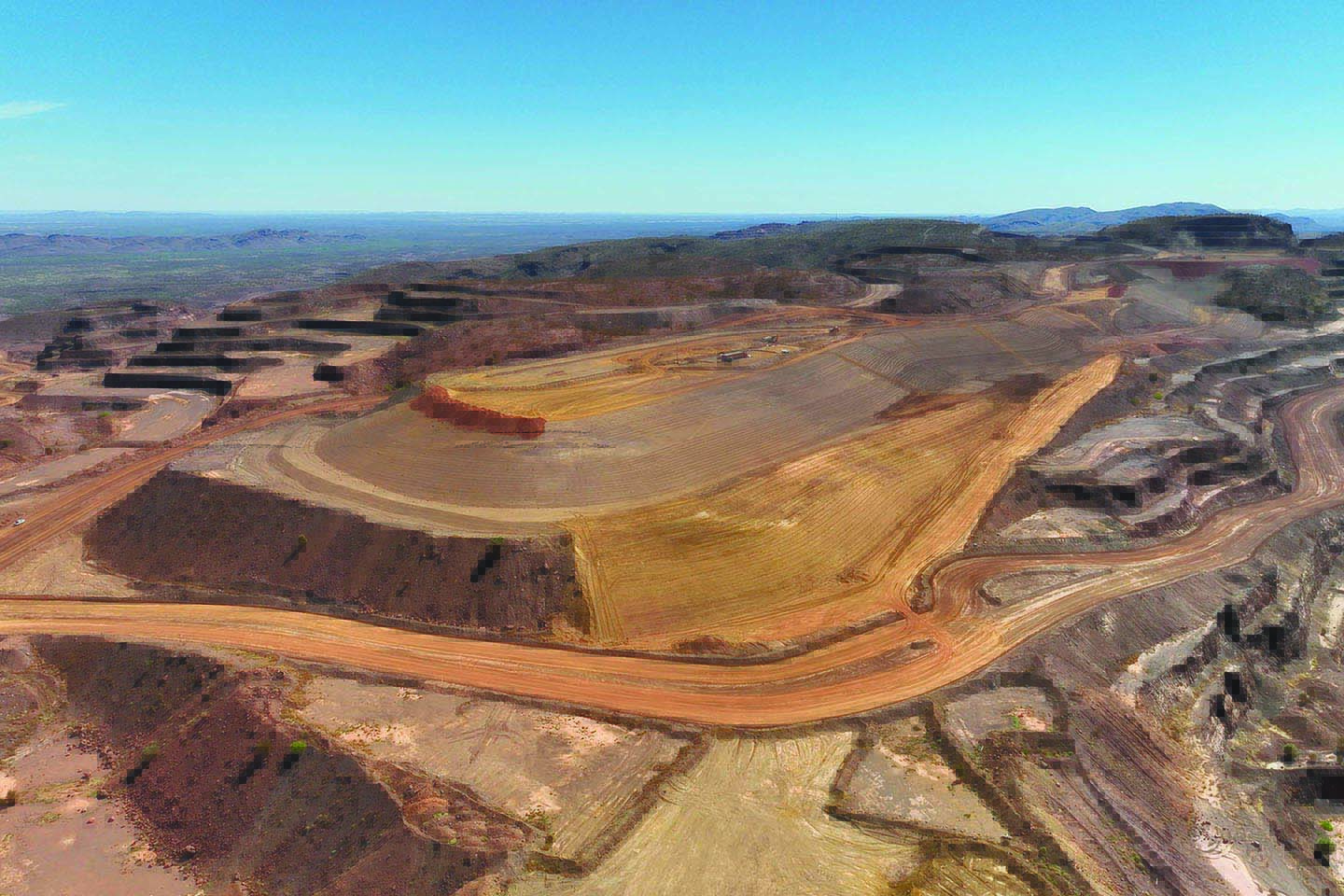
Indigenous businesses have found themselves at the forefront of the mine rehabilitation industry.

Somewhere in a co-working space in Manchester, a four-person team is huddled around a laptop, watching their newly built game lobby load for the first time on a test handset.
There is the usual founder ritual: someone refreshing analytics, someone else fielding a message from a developer in Tallinn, a third quietly chewing a biscuit and saying nothing at all. It looks like any other tech startup scene. Yet this small company belongs to one of Britain’s quietest growth stories — the iGaming sector, where online gaming sites have become a serious engine of entrepreneurial activity, software jobs, and export ambition.
That ambition increasingly reaches well beyond domestic shores. Some of the most closely watched entrants are a new wave of operators best described as a casino not on gamstop, built specifically to serve UK players from an international footing in 2026. These businesses operate under overseas licences and lean into features that appeal to a particular kind of customer: crypto deposits and withdrawals, higher transaction limits, and generous welcome offers. Guides covering this space typically walk readers through how the sites function, the identity and KYC checks involved, the banking routes on offer, and how to weigh safety before committing money. For the SME founders studying this market, it represents both a competitive challenge and a template for how lean teams can reach an audience that traditional firms have struggled to keep.
A Sector Built by Small Teams, Not Giants
The popular image of online gaming is one of vast corporations with stadium sponsorships and primetime adverts. The reality on the ground is far scrappier. A huge share of the industry’s actual product — the game engines, the payment integrations, the front-end design — comes from small studios and startups working on tight margins and tighter deadlines.
These are textbook SMEs in every respect. They wrestle with the same headaches that keep any founder up at night: cash flow, hiring the right developers, energy costs eating into thin budgets, and the eternal struggle of standing out in a crowded field. What sets them apart is the speed at which a good idea can travel. A clever bonus mechanic or a slick mobile interface dreamed up in Leeds can be live and earning revenue across multiple countries within weeks, something a high-street retailer or manufacturer can only envy. There is even a growing body of work on an AI-driven personalisation framework aimed squarely at smaller businesses looking to deepen customer engagement and keep people coming back, the kind of edge these lean teams seize early.
Why International Markets Matter So Much
For a British startup in this space, the home market alone is rarely enough to justify the investment. The economics push founders outward almost from day one. Building a game or a back-end system carries a heavy upfront cost; once it exists, the marginal cost of serving an extra customer in another country is tiny. That dynamic makes geographic expansion the obvious route to growth.
It explains why so many of these firms structure themselves with international reach in mind, choosing licensing arrangements and currency options that let them welcome players across borders. Crypto payments fit neatly into this picture, smoothing transactions for customers in regions where conventional banking is slow or restrictive. The result is a generation of small British companies thinking globally before they have even filled their second office, treating the world as the addressable market rather than a distant stretch goal.
The Technology Edge: AI and Personalisation
The competitive battleground has shifted decisively towards smart software. Startups are pouring effort into using data to tailor what each customer sees, much as the broader business world has done. The hospitality trade offers a useful parallel; the same thinking behind AI in Hospitality — anticipating what a guest wants before they ask — drives the recommendation engines now common in digital gaming.
The lessons travel across industries. For an iGaming SME, this is not abstract theory but daily practice: which game to surface, which offer to highlight, when to step back. The firms that master it punch far above their weight, competing with rivals many times their size on the strength of cleverer code rather than bigger budgets.
Funding, Risk, and the Founder’s Balancing Act
None of this happens without capital, and raising it for an iGaming venture brings its own quirks. Some mainstream investors steer clear of the category entirely, which pushes founders towards specialist backers and reinvested revenue. Those who do find funding face intense pressure to scale quickly, because the window in which a fresh product feels novel can close fast.
There is a retail dimension to the challenge too. The discipline behind personalisation in retail, with its focus on measurable business impact and technical implementation, mirrors the metrics these founders live by — customer lifetime value, retention curves, and conversion rates. A founder might spend the morning negotiating a payment integration and the afternoon poring over churn data, all while keeping an eye on the regulatory and reputational risks that shadow the sector.
What Other Founders Can Take Away
The wider lesson for British SMEs has little to do with games and everything to do with method. These companies demonstrate how a small team, armed with strong software and a willingness to look beyond domestic borders, can build something that competes internationally from a modest base.
They show that export ambition need not wait for scale, that smart use of technology can level a field tilted towards larger players, and that lean operations are an advantage rather than a limitation. Whatever one makes of the product itself, the entrepreneurial blueprint is hard to ignore — and increasingly, other founders are paying attention.

Semiconductor dominance, software innovation, and gaming IP position Asia at the centre of the global artificial intelligence revolution, according to new analysis from J.P. Morgan Asset Management.
Key takeaways
- Asia controls over 95% of global leading-edge semiconductor production, making the region indispensable to the entire AI supply chain.
- The technology sector accounts for more than 30% of the MSCI Asia Pacific ex Japan Index, with Japanese gaming IP alone generating $55 billion in annual revenues.
- Sustained capex across fabrication, infrastructure, and research positions Asia not just as a participant in the current AI wave, but as the foundation for the next one.
Asia’s technology sector is emerging as one of the most compelling investment frontiers of the AI era, driven by structural advantages that Western markets cannot easily replicate. That is the central finding of a new investment insight published by J.P. Morgan Asset Management, which argues that the region’s deep-rooted strengths in hardware, software, and intellectual property are quietly powering the next chapter of the global AI story.

While the United States has commanded the headlines in the race to develop and deploy artificial intelligence, J.P. Morgan’s analysis makes clear that Asia is far from a bystander. The region controls over 95% of global leading-edge semiconductor production, the critical manufacturing base underpinning everything from graphics processing units to AI servers. Without Asia, in other words, there is no AI boom.
A Structural Pillar, Not a Sideshow
Asia’s technology sector stands at the forefront of the global AI revolution, underpinned by its dominance in semiconductor manufacturing, innovative software development, and world-class gaming intellectual property. This is not a cyclical uptick but a structural positioning decades in the making, one that places the region at the intersection of every major AI supply chain on the planet.
Technology has consistently driven and redefined human progress. While the US has been the focal point of recent AI advances, Asia remains a pivotal player in the global tech landscape, home to a robust ecosystem of world leaders in semiconductors, electronics, hardware, software, and cloud technology.
The numbers are striking. Asia’s technology universe accounts for over 30% of the MSCI Asia Pacific ex Japan Index, underscoring just how central the sector is to the region’s broader economic identity. For institutional and retail investors alike, exposure to Asian equities is, to a significant degree, exposure to the future of technology.
Gaming IP: Japan’s $55 Billion Quiet Giant
One of the more surprising dimensions of Asia’s AI-era advantage is the cultural and commercial weight of its gaming industry. Japanese gaming intellectual property alone generates annual revenues of $55 billion, a figure that rivals entire national industries in smaller economies. As AI increasingly intersects with interactive entertainment, from procedural content generation to intelligent game design, the owners of world-class IP are uniquely positioned to monetise these capabilities at scale.
Capex Commitment Signals Long-Term Conviction
Beyond existing strengths, J.P. Morgan’s analysis highlights ongoing capital expenditure as a further tailwind. As AI adoption accelerates across the world, Asia’s unique strengths and ongoing capex make it a compelling destination for investors. Continued investment in infrastructure, fabrication capacity, and research signals that governments and corporations alike across the region are not merely riding the current wave; they are building for the next one.

Secular Growth Opportunities on the Horizon
The broader message from J.P. Morgan’s portfolio strategists is one of measured optimism. As the fast-changing AI narrative continues to unfold, a number of secular growth investment opportunities are emerging across the Asia region, opportunities rooted not in speculation, but in the hard industrial and technological realities that define Asia’s role in the global economy.
For investors seeking exposure to the structural growth story of artificial intelligence, the analysis suggests that looking beyond Silicon Valley, and towards Seoul, Tokyo, Taipei, and beyond, may prove to be one of the defining portfolio decisions of this decade.
Other People are Reading

Check out what’s clicking on FoxBusiness.com.
JetBlue is cutting back some New York-area operations this fall as it shifts more flying to South Florida.
The carrier will close its inflight base at Newark Liberty International Airport and its technical operations bases at both Newark and LaGuardia Airport, JetBlue confirmed to FOX Business. The airline said no employees will lose their jobs as a result of the closures.
“With recent schedule changes, we are adjusting the operational footprint needed to support our flying going forward,” the company said. “… Crewmembers will be able to bid or transfer into other bases, and no crewmembers will lose their jobs due to these closures.”
‘THAT GUY’S INSANE’: FAA INVESTIGATES AIRSPACE INCIDENT INVOLVING JETBLUE FLIGHT, OTHER AIRCRAFT

A JetBlue Airbus A320 sits at Newark Liberty International Airport in Newark, N.J. (Al Drago/Getty Images, File / Getty Images)
JetBlue also said it is ending seasonal service between Newark and Los Angeles and Las Vegas.
At the same time, the airline is expanding at Fort Lauderdale-Hollywood International Airport, where it is adding more Mint flights, JetBlue’s premium cabin service, to the West Coast.
“This growth includes new and additional Mint flying from Fort Lauderdale to the West Coast as we grow in South Florida after Spirit’s exit from the market,” the company said.
JETBLUE FLIGHT TURNS BACK AFTER STRIKING A COYOTE ON THE RUNWAY: ‘WE THOUGHT IT WAS A JOKE’

JetBlue planes are seen at LaGuardia Airport in Queens, N.Y. (Michael Nagle/Bloomberg via Getty Images, File / Getty Images)
JetBlue, which is headquartered in Long Island City, New York, said it sees “significant opportunity” to grow in Fort Lauderdale, where it says customers “know and love the JetBlue experience.”
JetBlue President Marty St. George and Chief Operating Officer Warren Christie told staff the airline needs to move quickly as competitors shift their own routes, according to CNBC.
| Ticker | Security | Last | Change | Change % |
|---|---|---|---|---|
| JBLU | JETBLUE AIRWAYS CORP. | 5.68 | +0.55 | +10.72% |
“We’re operating in a fast-changing landscape where competitors are constantly adding, reducing and shifting flying in response to market conditions,” the executives said in a note to staff. “We have to be just as agile, entering markets where we see opportunity and exiting those that no longer support our long-term goals. Standing still while competitors make moves isn’t an option.”
JETBLUE RESUMES OPERATIONS AFTER BRIEF NATIONWIDE FAA GROUND STOP

Travelers check their bags at a JetBlue Airways counter at Fort Lauderdale-Hollywood International Airport in Fort Lauderdale, Fla. (Joe Raedle/Getty Images, File / Getty Images)
JetBlue, already the largest carrier at Fort Lauderdale-Hollywood International Airport, plans to add new Mint service from Fort Lauderdale to San Diego starting Nov. 19, along with more Mint flights to Los Angeles and San Francisco this winter, CNBC reported.
CLICK HERE TO GET FOX BUSINESS ON THE GO
Last month, JetBlue said it would drop 11 routes this summer, including all service from Manchester-Boston Regional Airport in New Hampshire, as it focuses more on Florida, according to Business Insider.
Business
SpaceX Stock Returns to Break-Even as Investors Weigh Cursor Deal Dilution Against Index Hopes

SpaceX shares, which exploded onto the public markets less than a week ago in the largest initial public offering in Nasdaq history, have given back most of their initial gains, with early investors’ returns settling back to roughly break-even levels following a sharp two-day decline tied to concerns over equity dilution from the company’s $60 billion acquisition of artificial intelligence coding startup Cursor.
The reversal marks a striking turn for a stock that, just days earlier, had briefly made SpaceX the fourth-most-valuable company in the United States by market capitalization.
A Blockbuster Debut Followed by a Sharp Pullback
SpaceX, which debuted on the market on June 12 with an initial public offering price of $135, recorded double-digit gains immediately after listing as explosive buying momentum poured into the stock. Shares of SpaceX gained roughly 16% on Tuesday alone, topping Amazon and Microsoft by market cap and making it the fourth most valuable company in the United States. The stock price surged as high as $225 in a single bound during the initial euphoria of its public debut.
That momentum reversed abruptly. SpaceX stock closed at $185.00 on June 18, down 3.56% on the day. During intraday trading, shares briefly plummeted by more than 6% before recovering somewhat by the closing bell. The rapid adjustment erased a substantial portion of the gains accumulated since the IPO and pushed early investors’ average returns back toward the levels at which they originally bought in.
The Cursor Deal at the Center of the Selloff
The catalyst for the reversal was SpaceX’s sudden confirmation of a massive acquisition just days after going public. SpaceX confirmed that it will acquire Anysphere, the company behind the AI coding tool Cursor, for $60 billion. In a regulatory filing, SpaceX confirmed the deal will be an all-stock transaction, with the company expecting the acquisition to close during the third quarter, pending regulatory approvals.
The agreement followed an option SpaceX had secured in April, which gave it the right to either pay roughly $10 billion for a partnership with Cursor or acquire the company outright for $60 billion later in the year. Technically, SpaceX had 30 days following its record-shattering public debut to decide on the takeover. In the end, all it took was two trading days.
The speed of the decision reflected Elon Musk’s urgency to close a competitive gap in artificial intelligence coding tools. In doing so, Musk signaled his desire for SpaceX’s xAI division to rapidly rebuild and catch up to rivals including Anthropic and OpenAI, which have capitalized on demand for artificial intelligence-powered coding tools in a way that his AI business hasn’t.
Why the Deal Sent Shares Lower
The market’s reaction to the Cursor acquisition centered on dilution concerns, even though the deal’s structure was specifically designed to minimize cash outflow. The $60 billion in Class A common stock that SpaceX agreed to pay to acquire Cursor represented a 3.4% dilution at the aerospace and technology conglomerate’s IPO valuation.
Despite that relatively modest dilution figure, foreign media coverage noted that the scale and timing of the all-stock transaction raised concerns among investors already grappling with overvaluation debates surrounding the newly public stock. The resulting institutional selling pressure contributed to a substantial decline in SpaceX’s market capitalization from its post-IPO peak.
One Wall Street analyst framed the deal’s financial logic in stark terms. “The IPO gave SpaceX a valuation and a premium currency,” said Franco Granda, senior analyst at Pitchbook who covers SpaceX. “Signing a $60 billion all-stock deal four days after listing, with the stock up more than 50% from the offer price, shows the playbook. SpaceX can now buy a company that size without touching cash, debt, or IPO proceeds, and the higher the stock runs, the cheaper the deal feels.”
Billionaire investor Bill Ackman offered a similar assessment of the deal’s structure. “The Cursor acquisition costs materially less in dilution because of SpaceX’s high valuation,” Ackman said in a post on social media.
What Cursor Brings to SpaceX’s AI Ambitions
The strategic rationale behind the acquisition centers on accelerating SpaceX’s push into enterprise artificial intelligence tools through its AI division. Musk merged SpaceX with his AI startup, xAI, earlier this year, and the Cursor deal looks set to help revitalize the company’s efforts to compete with rivals like Anthropic and OpenAI, which also offer popular coding tools.
Cursor’s growth trajectory has been remarkable by any standard. Cursor’s business has scaled rapidly since its founding in 2022, with roughly $2.6 billion in annualized business-to-business revenue and rising enterprise sales, according to Reuters reporting. The acquisition will give xAI, which was folded into SpaceX in February, a stronger hold in AI coding, one of the first areas where companies have turned artificial intelligence into a real source of enterprise revenue.
Cursor’s chief executive welcomed the deal publicly. Cursor CEO Michael Truell said in a post on social media that he’s “excited to partner with the SpaceX team to scale up Composer,” referring to his company’s AI model, calling it “a meaningful step on our path to build the best place to code with AI.”
Eyes Turn to Index Inclusion as the Next Catalyst
With early investors now sitting roughly at their original cost basis, attention has shifted to a potential near-term catalyst that could reverse the stock’s recent slide: inclusion in major stock market indices.
Market participants are tracking the prospect that SpaceX could soon be added to benchmark indices tracked by trillions of dollars in passive investment funds. If confirmed, that inclusion would trigger mechanical buying from index-tracking funds managed by some of the world’s largest asset managers, providing a potential floor under the stock price regardless of near-term sentiment about the Cursor deal’s dilutive effects.
However, market analysts have cautioned against expecting an immediate, large-scale capital influx even if index inclusion is confirmed in the coming weeks. Newly listed companies typically carry a smaller initial weighting within index funds, since that weighting is calculated based on the percentage of total shares made available to the public at the time of listing — a figure that for high-profile, closely held companies like SpaceX tends to start relatively small and expand only gradually as additional shares become available to trade over time.
What Comes Next
The path forward for SpaceX stock now hinges on several intersecting factors: how regulators view the proposed Cursor acquisition as it moves toward its expected third-quarter close, whether enterprise customers and developers maintain confidence in Cursor’s product roadmap amid the corporate transition, and whether the anticipated index inclusions materialize on the timeline investors are currently pricing in.
For a company that captured Wall Street’s attention with one of the largest and most closely watched public offerings in market history, the rapid round-trip from record-setting debut to break-even territory in barely a week underscores just how sensitive newly public, high-valuation technology stocks remain to even modestly dilutive corporate actions — particularly when those actions arrive before the market has had time to fully digest the initial listing itself.

The MSCI Asia Pacific Index rose 0.1%, heading for a sixth day of gains. The Kospi jumped more than 2.5%. US equity futures edged lower after the S&P 500 climbed 1.1% and the Nasdaq 100 gained 2.5% Thursday. A gauge of chip stocks surged more than 6% to an all-time high, led by Intel Corp., after President Donald Trump said the company would work with Apple Inc. to design and manufacture semiconductors in the US.
Markets in the US, China, Hong Kong and Taiwan are shut for holidays on Friday.
Brent fell toward $79 a barrel. Prices have tumbled by more than 9% this week as the US-Iran interim peace deal saw shipping through the Strait of Hormuz start to return to normal, easing the global crude market’s biggest ever supply shock. Attention now shifts to talks over Tehran’s nuclear program and the durability of the ceasefire.
“The progress toward releasing oil supply from the Persian Gulf has supported equity prices,” said Ian Lyngen at BMO Capital Markets. “Lower energy costs have also eased forward inflationary concerns and led to meaningful declines in longer-dated Treasury yields.”

Earlier Thursday, Trump posted on Truth Social that “oil is flowing.” US Vice President JD Vance downplayed concerns Iran could eventually impose tolls on traffic through the vital energy waterway.
Two-year Treasury yields steadied at around 4.18% on Thursday, after hitting the highest in over a year Wednesday when traders ramped up bets on future interest-rate hikes following after the Federal Reserve’s hawkish hold.Meanwhile, 30-year US notes rallied in a sign the market believes inflation will be contained over the longer term, with yields declining three basis points to 4.9%. There is no cash trading in Treasuries during Asian hours due to the US holiday.
Should lower energy costs continue to filter through to inflation data, policymakers may ultimately find sufficient justification to keep rates unchanged for an extended period rather than hiking, according to Fawad Razaqzada at Forex.com.
“My view remains that inflation should moderate gradually over the coming months, and this might allow the Fed to maintain current policy settings rather than implement fresh tightening,” he said.
Meantime, the Bank of England held rates at 3.75%, saying the recent drop in oil prices was “encouraging,” even as two of the nine policymakers voted for an immediate quarter-point hike over concerns of persistent inflation.

FUNDAMENTALS
* Spot gold was down 0.5% at $4,189.26 per ounce, as of 0043 GMT. U.S. gold futures for August delivery fell 0.9% to $4,207.80.
* The dollar hovered around a one-year high, making greenback-priced bullion more expensive for other currency holders. [USD/]
* Oil tankers sailed through the Strait of Hormuz and the United States said it lifted its blockade on Iran on Thursday as an interim deal to end the war took effect, though key issues are still unresolved between the two countries.
* Inflationary pressures stemming from the Iran war are becoming too strong for central banks worldwide to ignore. A growing number, led by the U.S. Federal Reserve, have either raised borrowing costs or signalled imminent moves to tame price growth.
* Nine of the U.S. central bank’s 19 policymakers now believe they will need to raise the policy rate this year, according to projections published on Wednesday after the Fed announced its decision to leave the policy rate in its current 3.50%-3.75% range in Kevin Warsh’s debut policy meeting as chairman.
* Goldman Sachs expects gold prices to rise to $4,900 per ounce by December, lower than its earlier forecast of $5,400, as the bank doesn’t expect a Fed rate cut this year anymore.
* Meanwhile, Dubai’s commodities exchange CEO told Reuters that it will launch a same-day settlement gold futures contract on Monday, aiming to tap safe-haven demand and faster trading infrastructure to boost liquidity in the emirate’s bullion market.
* Spot silver fell 0.8% to $65.32 per ounce, platinum lost 0.9% to $1,680.87, and palladium was down 0.5% at $1,272.
DATA/EVENTS (GMT)
0600 UK Retails Sales MM, YY May
0600 UK Retail Sales Ex-Fuel MM May

Financial analyst by day and a seasoned investor by passion, I’ve been involved in the world of investing for over 15 years and honed my skills in analyzing lucrative opportunities within the market.I specialize in uncovering high quality dividend stocks and other assets that offer potential for long term-growth that pack a serious punch for bill-paying potential. I use myself as an example that with a solid base of classic dividend growth stocks, sprinkling in some Business Development Companies, REITs, and Closed End Funds can be a highly efficient way to boost your investment income while still capturing a total return that follows traditional index funds. I created a hybrid system between growth and income and manage to still capture a total return that is on par with the S&P.
Analyst’s Disclosure: I/we have no stock, option or similar derivative position in any of the companies mentioned, and no plans to initiate any such positions within the next 72 hours. I wrote this article myself, and it expresses my own opinions. I am not receiving compensation for it (other than from Seeking Alpha). I have no business relationship with any company whose stock is mentioned in this article.
Seeking Alpha’s Disclosure: Past performance is no guarantee of future results. No recommendation or advice is being given as to whether any investment is suitable for a particular investor. Any views or opinions expressed above may not reflect those of Seeking Alpha as a whole. Seeking Alpha is not a licensed securities dealer, broker or US investment adviser or investment bank. Our analysts are third party authors that include both professional investors and individual investors who may not be licensed or certified by any institute or regulatory body.

Reopening the Strait of Hormuz as part of a peace deal between the U.S. and Iran would ease an energy crisis that has sapped economic growth and fueled inflation worldwide.
Still, one of the surprises of the monthslong closure of the Middle East’s most critical energy conduit was that the global economy didn’t suffer a more severe shock. The pain wasn’t as swift or intense as it was following Russia’s invasion of Ukraine in 2022 or the oil crises that rocked the world in the 1970s.
Copyright ©2026 Dow Jones & Company, Inc. All Rights Reserved. 87990cbe856818d5eddac44c7b1cdeb8

Makerfield by-election winner announced as Andy Burnham wins seat for Labour over Reform

Ex-SWAT Commander Says Investigators Must Search Vast Desert Reservation in Nancy Guthrie Case

South Korea’s KOSPI Tops 9,000 but Samsung and SK Hynix Did the Work


-

 Business4 days ago
No Jackpot Winner as $257 Million Prize Rolls Over to $269 Million Monday Draw
-

 Fashion6 days ago
Weekend Open Thread: Tuckernuck – Corporette.com
-
 Crypto World4 days ago
Zimbabwe Requires Crypto Businesses to Register Annually Under New FIU Regulations
-

 Crypto World6 days ago
Bitget enters Argentina’s regulated crypto market through PSAV registration
-

 Tech6 days ago
NanoClaw integrates JFrog registries to secure AI agent downloads
-

 Tech6 days ago
This Week In Security: Microsoft On Microsoft, Register Your Domains, Linux On ARM, And FreeBSD Joins The File Cache Club
-

 NewsBeat6 days ago
FBI searches office of Ohio voter registration group
-
 Crypto World7 days ago
Ripple and Bitso Bring MXNB Stablecoin to XRP Ledger
-
 Entertainment4 days ago
Matt Damon’s Viral Sci-Fi Thriller Has Taken Over HBO Max
-

 Business4 days ago
Anthropic staff to meet White House officials next week, Axios reports
-

 Tech4 days ago
As AI companies race to go public, who else is along for the ride?
-
 Crypto World4 days ago
Bitcoin could crash to $48,000, if this historical pattern is triggered
-

 Politics4 days ago
“Israel’s” ban on ICRC visits ruled illegal, but Knesset moves to stop them permanently
-
Entertainment7 days ago
Ana Navarro unleashes explosive tirade on ex-Trump aide, Disney Channel star in epic on-air fight: 'Have you no shame?'
-
 NewsBeat4 days ago
Warning of disruption as Cardiff Crossrail works to start
-

 News Videos4 days ago
Financial Accounting | Last Day Revision Strategy and Booster | CMA Inter – June 2026
-
 NewsBeat4 days ago
Tributes to former deputy head teacher at Cambridge school among death and funeral notices
-
 Crypto World4 days ago
Market Preview: SpaceX (SPCX) IPO Record, Federal Reserve Meeting, and Iran Nuclear Agreement
-
 NewsBeat4 days ago
what doctors are seeing in ebike crashes
-

 Business4 days ago
Invesco Quality Income Fund Q1 2026 Commentary
You must be logged in to post a comment Login