Business
Unemployment Holds at 4.1% as Full-Time Hiring Surges

Australia’s labor market has entered the autumn of 2026 with unexpected vigor. According to the latest figures from the Australian Bureau of Statistics (ABS), the national unemployment rate held steady at 4.1% in early 2026, a result that has stunned economists who had predicted a cooling period following a series of aggressive interest rate hikes by the Reserve Bank of Australia (RBA).
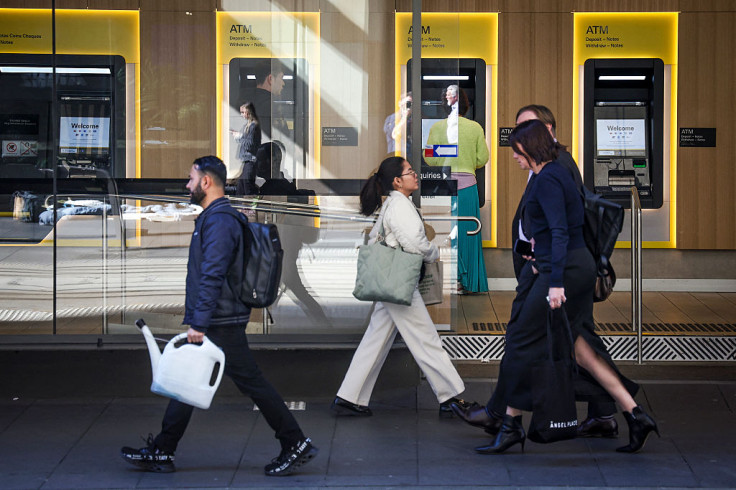
DAVID GRAY/AFP via Getty Images

The data, released in late February and remaining the current benchmark as of March 7, 2026, paints a picture of a “two-speed” economy. While consumer spending has slowed under the weight of a 3.85% cash rate, businesses are doubling down on permanent staff, signaling a shift from temporary “gig” roles to a more stable, full-time workforce.
1. The Numbers: Stability Amidst the Storm
The ABS reported that employment rose by 17,800 people in the last month, pushing the total number of employed Australians to a record 14.70 million.
What makes this figure remarkable is the internal composition of those jobs:
- Full-time employment: Surged by 50,500 roles.
- Part-time employment: Fell by 32,700 roles.
- Participation Rate: Remained rock-solid at 66.7%, indicating that Australians are not giving up on the hunt for work despite broader economic uncertainty.
2. The RBA Dilemma: “Full Employment” or “Inflation Fuel”?
For RBA Governor Michele Bullock, these numbers are a double-edged sword. The RBA’s primary goal is to return inflation (currently sitting at 3.8%) to the 2–3% target band. Usually, a “tight” labor market leads to higher wage growth, which in turn keeps inflation “sticky.”
“The resilience of the 4.1% unemployment rate complicates the path for interest rate cuts,” said one senior economist at Commonwealth Bank. “We are seeing a market that refuses to break. While that’s great news for households with a steady income, it increases the likelihood that the RBA will keep rates at 3.85%—or even move to 4.10%—before we see any relief in late 2026.”
3. Underemployment: The Hidden Slack
While the headline unemployment rate is low, the underemployment rate—which measures people who have a job but want more hours—ticked up slightly to 5.9%.
This “underutilization” is particularly visible in the retail and hospitality sectors. As the “cost of living” crisis bites, many Australians working 20 hours a week are actively seeking 30 or 40 hours to cover rising mortgage repayments and grocery bills. This suggests that while people are “employed,” they are not necessarily “financially comfortable.”
4. State-by-State Breakdown
The labor market performance varies significantly across the continent:
- Western Australia & Queensland: Continue to lead the nation, driven by a resurgence in the resources sector and green energy infrastructure projects.
- Victoria & New South Wales: Showing signs of a “softening” in the construction and professional services sectors as high borrowing costs slow down new commercial developments.
- South Australia: Has emerged as a surprise performer in early 2026, with unemployment hitting a near-record low for the state due to a boom in defense manufacturing.
Key Labor Market Indicators (March 2026)
| Indicator | Current Value | Change from Dec 2025 |
| Unemployment Rate | 4.1% | Unchanged (Steady) |
| Participation Rate | 66.7% | Unchanged |
| Total Employed | 14.70 Million | +17,800 |
| Cash Rate (RBA) | 3.85% | +0.25% (Hike) |
| Inflation (CPI) | 3.8% | Trending Down (Slowly) |
5. What’s Next? The “March 19” Milestone
All eyes are now on March 19, 2026, when the ABS will release the February Labour Force data. This will be the final major data point the RBA considers before its crucial March 17-18 board meeting.
If the unemployment rate remains at or below 4.1%, markets are pricing in a 27% chance of another rate hike. Conversely, if unemployment jumps toward 4.3%, it may signal that the “lagged effect” of previous hikes is finally catching up with the Australian worker, potentially pausing any further tightening of the screws.