

Business
United Airlines overhauls MileagePlus rewards program with new changes

Check out what’s clicking on FoxBusiness.com.
United Airlines is shaking up its MileagePlus rewards program in a move that benefits credit card holders and leaves other travelers earning fewer miles.
The Chicago-based carrier announced Thursday that starting April 2, travelers with United’s co-branded credit or debit cards will earn significantly more miles when they book flights. Meanwhile, customers without a United card will have a lower accrual rate.
Under the new structure, cardholders can earn up to twice as many miles per dollar spent on United flights compared to non-cardholders.
For United’s most frequent flyers – like top-tier 1K members who also use a United Club card – rewards can go as high as 17 miles per dollar on eligible flights.
UNITED AIRLINES TO OFFER REFUNDS BECAUSE OF SHUTDOWN-CAUSED FLIGHT RESTRICTIONS
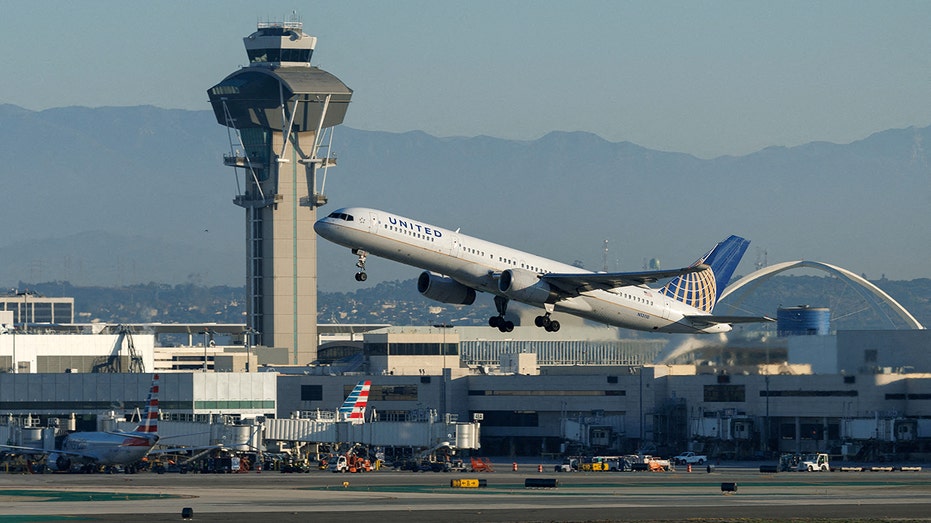
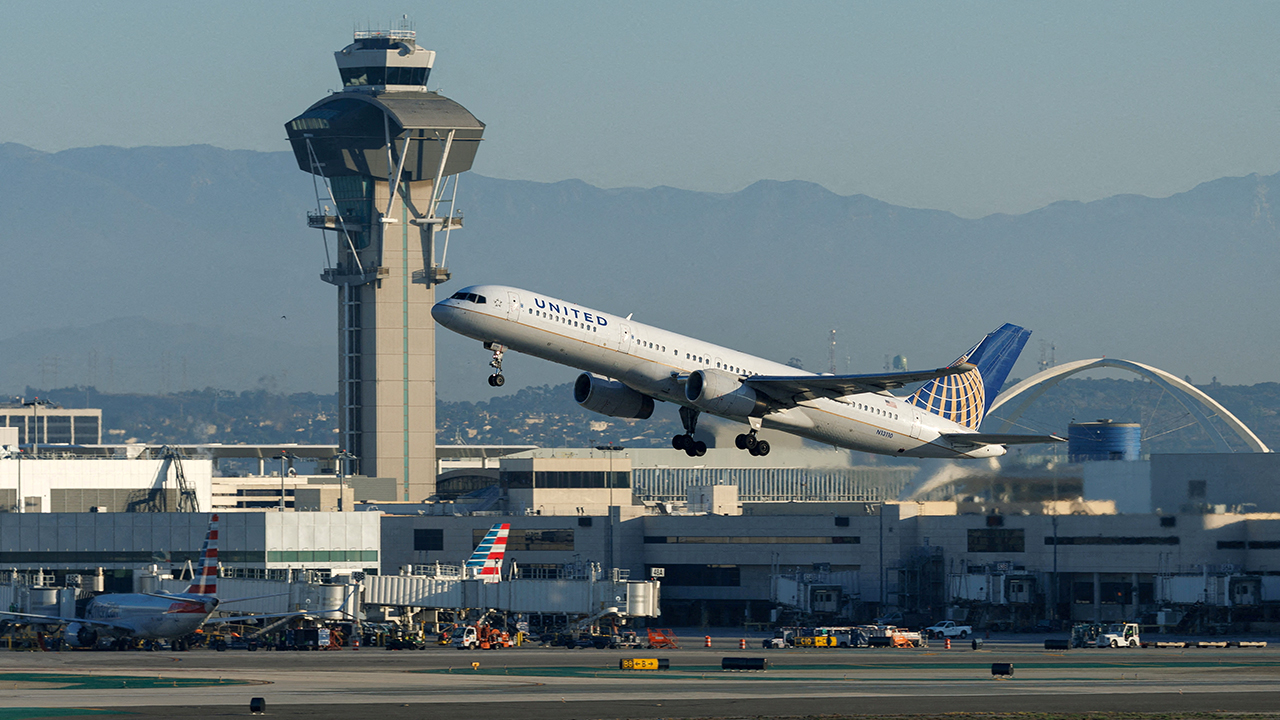
A United Airlines commercial airliner takes off from Los Angeles International Airport in Los Angeles, California, on Nov. 6, 2025. (Mike Blake/Reuters)
Meanwhile, general members without a United credit card will earn just 3 miles per dollar on most tickets.
United also said that customers without a card will no longer earn any miles when purchasing basic economy tickets.
“MileagePlus is designed to reward loyalty to United, and our best customers deserve the best benefits in the industry,” United Chief Commercial Officer Andrew Nocella said in a statement.
Beyond earning more miles, cardholders will also receive other perks.
UNITED FLIGHT CLIPS ANOTHER AIRCRAFT WHILE TAXIING AT LAGUARDIA AIRPORT
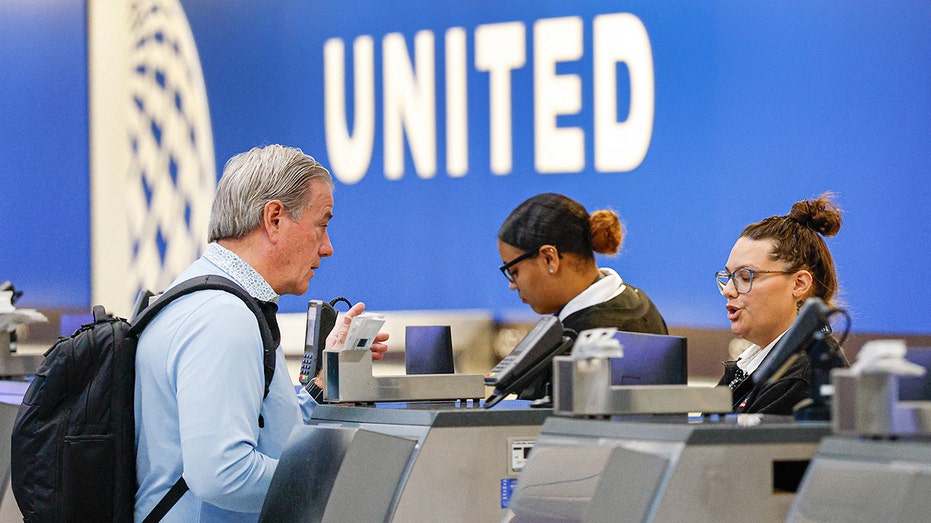
A traveler speaks to an agent at the United Airlines desk at O’Hare International Airport in Chicago, Illinois, on Nov. 25, 2025. (Kamil Krzaczynski/AFP via Getty Images)
Cardholders will receive at least a 10% discount when booking flights using miles, and Premier members with a United card will get at least 15% off award flights.
They will also gain expanded access to “Saver Award” seats, including spots in United’s Polaris business class.
The announcement quickly sparked debate online.
“Wow, that sounds like a big shift,” one user wrote on X. “Gotta wonder how many people will switch just for the miles boost.”
“Getting 10% back on flights is going to be so sick,” another added.
“For 90% of people that travel, airline miles and points are a scam,” a third user wrote.
UNITED AIRLINES FIRST MAINLINE STARLINK FLIGHT READY FOR TAKEOFF
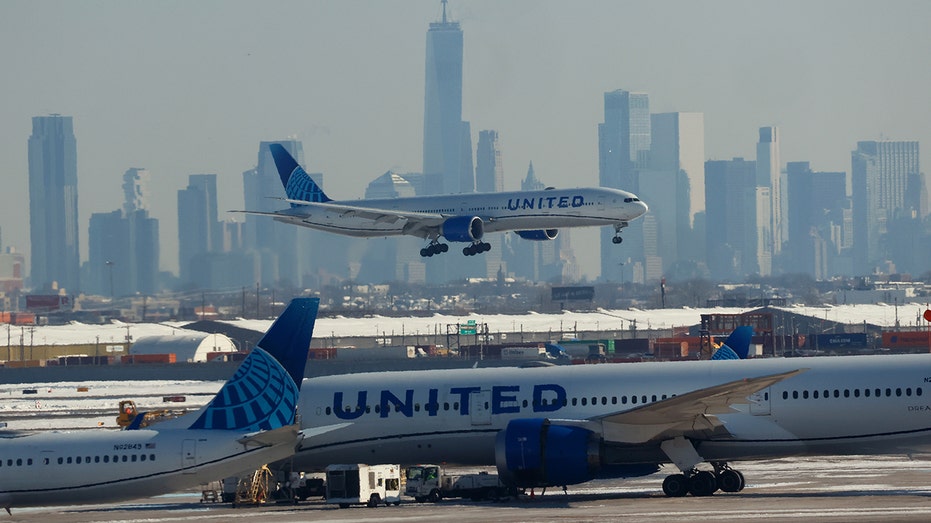
A United Airlines Boeing 777 lands at Newark Liberty International Airport on Jan. 29, 2026, in Newark, New Jersey. (Gary Hershorn/Getty Images)
The changes apply across United’s co-branded lineup, including the Explorer, Quest and Club cards.
CLICK HERE TO GET FOX BUSINESS ON THE GO
Loyalty programs have become major profit engines for airlines, generating billions of dollars annually through partnerships with banks that issue co-branded credit cards, according to Reuters.


Foreign investment applications in Thailand experienced a robust 46% year-on-year increase in January 2026, reaching a total value of 33.8 billion baht.
This growth was driven primarily by investors from China, Japan, and Singapore, with a significant portion of projects aligned with the Thai government’s focus on future industries such as electric vehicles, artificial intelligence, and clean energy.
Key Points
- A total of 113 foreign investors were granted permission to operate in Thailand in January, representing a 10% increase in the number of applications compared to the previous year.
- Japan contributed the highest investment value at 15.3 billion baht from 25 applications, while China recorded the highest number of individual applications with 26 projects valued at 5.39 billion baht.
- Other leading investors for the period included Singapore (5.51 billion baht), Hong Kong (587 million baht), and the United States (420 million baht).
- Approximately 49% of the approved projects were promoted through the Board of Investment (BoI), accounting for 17.2 billion baht of the total investment value.
- Investment activities are heavily concentrated in high-tech and “S-curve” sectors, including EV battery-swapping stations, electronic components, software development, and advanced engineering services.
The top three business categories approved through BoI channels were contract manufacturing services, high-value services, and computer-related services.
The five leading countries/regions investing in Thailand during the period were:
- China (26 applications, 5.39 billion baht)
- Japan (25 applications, 15.3 billion baht)
- The United States (16 applications, 420 million baht)
- Singapore (12 applications, 5.51 billion baht)
- Hong Kong (10 applications, 587 million baht).
Specific Chinese investments focused on wood processing, EV infrastructure, and electronics, while Japanese investments centered on manufacturing procurement, software, and electric motor production. Nearly half of these projects were facilitated through the Board of Investment (BoI). These outlays align with Thailand’s national policy to attract growth in future-oriented sectors such as advanced technology, artificial intelligence, electric vehicles (EVs), clean energy, and digital services.
Other People are Reading
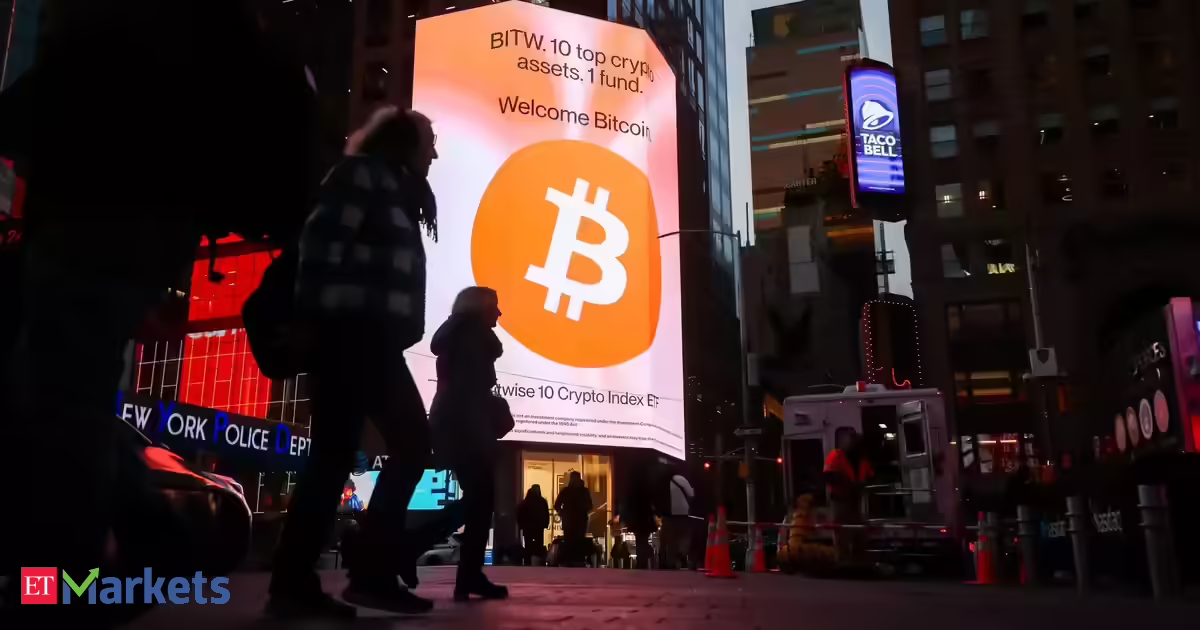
Since Oct. 10, roughly $8.5 billion has flowed out of US-listed spot Bitcoin exchange-traded funds. Futures exposure on the Chicago Mercantile Exchange has fallen by about two-thirds from its late-2024 peak to roughly $8 billion. Prices on Coinbase, the venue favored by many American institutions, have persistently traded at a discount to offshore exchange Binance — a signal of sustained US selling. Bitcoin has fallen more than 40% even as stocks and precious metals have found buyers.
That reversal carries unusual weight because of how the market changed. For most of its history, Bitcoin’s price was set on offshore exchanges by retail traders. Over the past two years, spot ETFs funneled billions through US vehicles, the CME became the dominant futures venue, and pension funds and hedge funds displaced individual buyers. American retail and institutional capital became the marginal price-setter.When that capital was expanding, Bitcoin surged to a record on Oct. 6. Now it’s stalling — and there is no obvious catalyst to restart it. The original cryptocurrency was little changed at around $67,500 on Wednesday.
 Bloomberg
The core problem is simple: the institutional thesis broke. Investors who bought Bitcoin as a hedge against inflation, currency debasement, or equity market stress have watched it fall alongside — and sometimes faster than — the risks it was supposed to offset. Those who treated it as a momentum trade have rotated into assets that are actually moving from global stocks to gold.

The unwinding of that crypto trade has left the market thinner than it appears. Demand for borrowed exposure on the CME “hasn’t been this muted since the pre-ETF run-up of mid-2023,” said David Lawant, head of research at Anchorage Digital. Less leverage means fewer forced buyers when prices rise — and fewer natural absorbers when selling builds.
Part of the institutional wave was also more mechanical than it appeared. Hedge funds were running basis trades — buying spot Bitcoin while selling futures contracts at a premium, capturing the spread as yield. The strategy required no view on where prices were headed, only that the return exceeded what was available elsewhere.For most of 2025, it did. When that spread compressed below Treasury yields after Oct. 10, the trade lost its rationale and those flows stopped. That represents one element of the demand picture, though most of the ETF reversal appears driven by declining appetite for Bitcoin as an asset rather than the economics of any single arbitrage strategy.
“That capital has no reason to stay,” said Bohumil Vosalik, chief investment officer at 319 Capital. Until genuine spot demand returns, he added, “every bounce risks becoming a sell-to-even zone rather than a foundation for recovery.” The Coinbase premium — negative for most of 2026 — suggests that demand has yet to materialize.
BloombergBitcoin’s integration with US finance has brought real advantages — deeper liquidity and the institutional legitimacy the asset had long lacked. For now, though, the bid is in retreat and the market has lost its ability to respond to good news.
The deeper problem is structural. Institutionalization did not eliminate volatility. It reallocated it. The same products that brought Wall Street into Bitcoin — ETFs, yield-generating overlays, options strategies — were designed to smooth returns in stable conditions. They do. But they also concentrate risk in ways that only become visible when conditions shift.
Structured products that generate yield by selling options suppress price swings in calm markets, then amplify them when a real catalyst hits. Many ETF investors are also sitting below their average cost basis, which means bounces get sold by holders looking simply to break even — capping advances that in earlier cycles might have fed on momentum.
“The growing embrace of products like BlackRock’s IBIT is creating localized stabilization in Bitcoin when prices trade in a range,” said Spencer Hallarn, global head of OTC trading at GSR. But when a real catalyst hits, “those same structures can actually exaggerate the move. In particular, yield-generating products that systematically sell options suppress volatility, until they amplify it.”
BloombergThe result is a market that has lost its ability to respond to good news. When BlackRock Inc. announced a product tied to Uniswap, the token briefly rallied before sliding back. In prior cycles, similar headlines often triggered extended runs. Now enthusiasm fades before it builds.
“The market structure really broke down on October 10th,” said Zach Lindquist, managing partner at Pure Crypto. “We’ve never seen this steady and severity of a drawdown even in 2018 and 2022.”
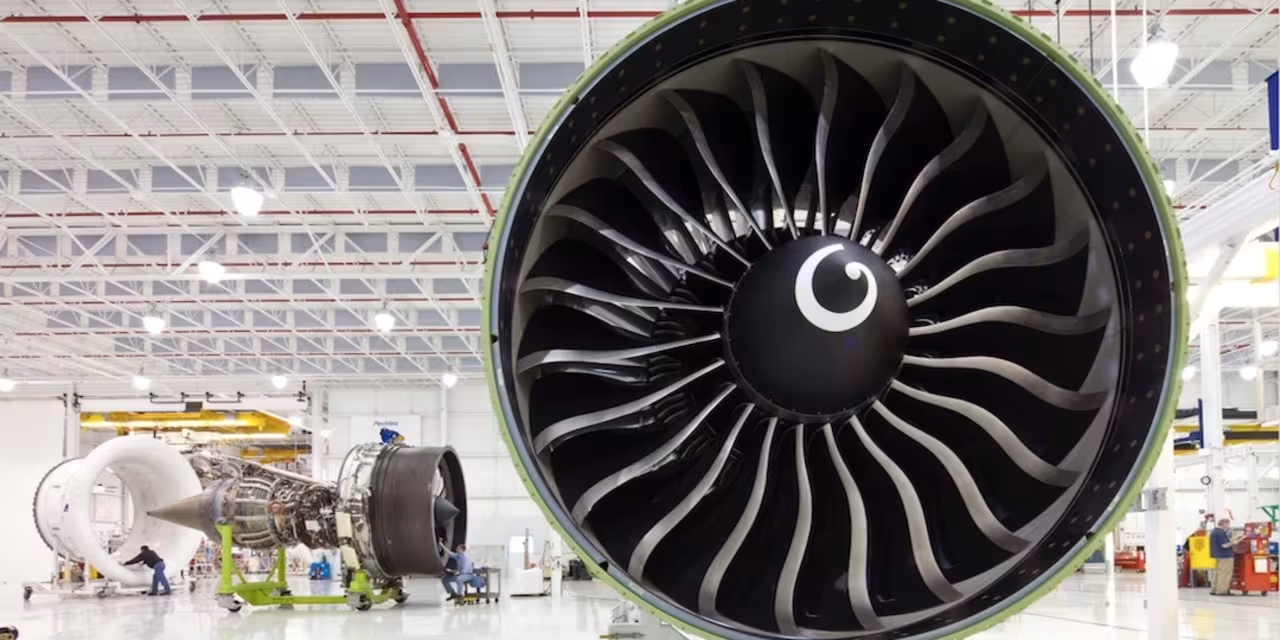
GE Aerospace Stock Wins Big as Engine Battle Roars on


With an investment banking cash and derivatives trading background, Binary Tree Analytics (‘BTA’) aims to provide transparency and analytics in respect to capital markets instruments and trades. BTA focuses on CEFs, ETFs and Special Situations, and aims to deliver high annualized returns with a low volatility profile. We have been investing for over 20 years after obtaining a Finance major at a top university.
Analyst’s Disclosure: I/we have no stock, option or similar derivative position in any of the companies mentioned, but may initiate a beneficial Long position through a purchase of the stock, or the purchase of call options or similar derivatives in MFAN over the next 72 hours. I wrote this article myself, and it expresses my own opinions. I am not receiving compensation for it (other than from Seeking Alpha). I have no business relationship with any company whose stock is mentioned in this article.
Seeking Alpha’s Disclosure: Past performance is no guarantee of future results. No recommendation or advice is being given as to whether any investment is suitable for a particular investor. Any views or opinions expressed above may not reflect those of Seeking Alpha as a whole. Seeking Alpha is not a licensed securities dealer, broker or US investment adviser or investment bank. Our analysts are third party authors that include both professional investors and individual investors who may not be licensed or certified by any institute or regulatory body.

The company informed exchanges that it allotted 87,46,437 equity shares at Rs 1,053 per share to anchor investors on February 20. The anchor portion accounts for a significant chunk of the institutional interest ahead of the issue opening for public subscription on February 23.
Among the investors participating in the anchor round were Temasek Holdings, SBI Life Insurance, Nomura Asset Management, HDFC Mutual Fund, ADIA, Franklin Templeton Mutual Fund, Eastspring, SBI General Insurance, Premji Invest, 360 One Mutual Fund, Trust Group, BNP and Tata Investment Corporation, among others. Foreign institutional investors accounted for 32% of the anchor book, while domestic institutions made up 68%.
Out of the total anchor allocation, 45,91,720 shares were allotted to key investors, including Temasek Holdings, SBI Life, Nomura Asset Management, Eastspring, HDFC Mutual Fund, Franklin Templeton Mutual Fund, 360 One Mutual Fund, SBI General and ADIA. This tranche amounted to approximately Rs 483.51 crore, representing 52.5% of the total anchor book.
The anchor round follows a Rs 1,500 crore pre-IPO placement completed earlier this month. On February 6, CleanMax raised capital from investors including Temasek Holdings, Bain Capital, 360 One, Steinberg India Emerging Opportunities Fund, Steadview Capital and several family offices, including those of the Dalmia group, and the Jaisinghani and Taparia families.
Also read: Sebi approves 4 IPOs including Integris Medtech, Alpine Texworld and Anjali Labtech
The IPO comprises a fresh issue of Rs 1,200 crore and an offer for sale of Rs 1,900 crore. At the upper end of the price band of Rs 1,000 to Rs 1,053 per share, the total issue size stands at Rs 3,100 crore. The offer will close on February 25.
Axis Capital, JP Morgan India, BNP Paribas, HSBC Securities and Capital Markets (India), IIFL Capital Services, Nomura Financial Advisory and Securities (India), BOB Capital Markets and SBI Capital Markets are the book-running lead managers. MUFG Intime India is the registrar to the offer.
CleanMax is India’s largest commercial and industrial renewable energy provider, with 2.80 GW of operational, owned and managed capacity and 3.17 GW of contracted capacity under execution as of October 31, 2025, according to a CRISIL report.
Founded in 2010, the company focuses on delivering net-zero and decarbonisation solutions to corporates, including data centres, AI and technology companies, as well as infrastructure, cement, steel, FMCG, pharmaceuticals and real estate clients.
Its offerings span renewable power supply through long-term contracts, engineering, procurement and construction services, and operations and maintenance of solar, wind and hybrid plants, both onsite and at company-developed renewable farms. It also provides carbon credit solutions and turnkey decarbonisation services.
Also read: Rs 4,300 crore IPO rush next week: Clean Max, PNGS Reva among 9 public offers to hit the market
For FY25, CleanMax reported revenue from operations of Rs 1,496 crore, compared with Rs 1,390 crore in FY24, marking a year-on-year growth of 8%. EBITDA rose sharply to Rs 1,015 crore in FY25 from Rs 742 crore in the previous year, reflecting a 37% increase and indicating improved operating performance.

Check out what’s clicking on FoxBusiness.com.
More than 3.3 million pounds of frozen chicken fried rice are being recalled after federal officials warned the products may contain glass.
Ajinomoto Foods North America is recalling approximately 3,370,530 pounds of frozen not-ready-to-eat chicken fried rice products that may be contaminated with glass, the U.S. Department of Agriculture’s Food Safety and Inspection Service (FSIS) announced Friday.
The recall includes products sold at Trader Joe’s locations nationwide, while the Ajinomoto items were shipped only to Canada.
MULTISTATE OUTBREAK OF HIGHLY DRUG-RESISTANT SALMONELLA LINKED TO TRENDY ‘SUPERFOOD,’ FEDS WARN
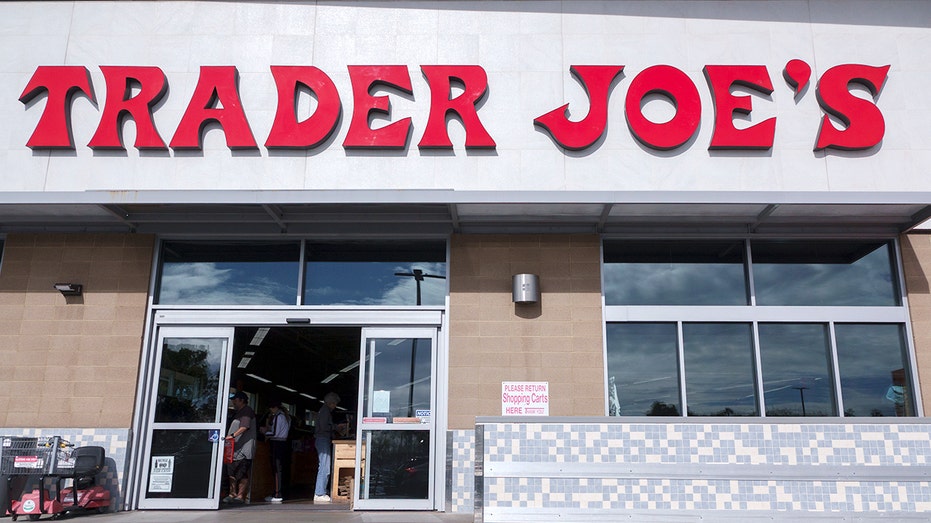
Trader Joe’s frozen chicken fried rice is among more than 3.3 million pounds of products recalled over possible glass contamination. (Kevin Carter/Getty Images / Getty Images)
The FSIS said it was recalling 20-oz. plastic bag packages containing Trader Joe’s frozen chicken fried rice with stir-fried rice, vegetables, seasoned dark chicken meat and eggs.
The Ajinomoto product is sold in a carton containing six bags of “Yakitori Chicken with Japanese-Style Fried Rice.”
All the chicken fried rice items were produced between Sept. 8, 2025, and Nov. 17, 2025, according to the FSIS.
SALMON SOLD AT BJ’S WHOLESALE CLUB RECALLED OVER POTENTIAL LISTERIA CONTAMINATION

Trader Joe’s frozen chicken fried rice is included in a recall of more than 3.3 million pounds of products that may contain glass, federal officials said. (Scott Olson/Getty Images / Getty Images)
Federal officials said the issue was discovered after FSIS received four consumer complaints tied to glass being found in the product.
FSIS said there have been no confirmed reports of injury due to consumption of this product.
GET FOX BUSINESS ON THE GO BY CLICKING HERE
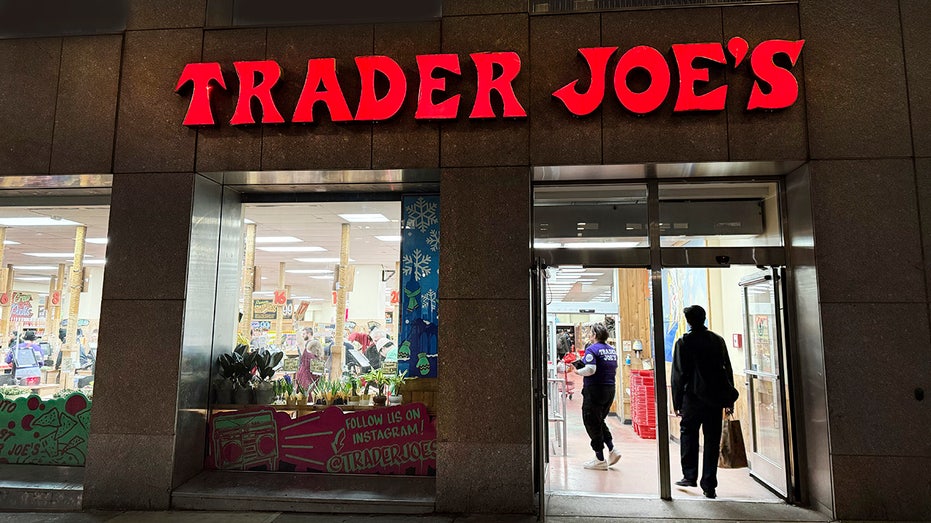
The USDA said Trader Joe’s chicken fried rice sold nationwide is being recalled over possible glass contamination. (Plexi Images/GHI/UCG/Universal Images Group via Getty Images) / Getty Images)
Officials said the product may still be in retailers’ and consumers’ freezers and urged consumers to throw the items away or return them to the store.

Clean Harbors (CLH) director Welch sells $204,802 in stock

Labutes IR is a Fund Manager/Analyst specialized in the financial sector, with more than 18 years of experience in the financial markets. I have worked at several type of institutions in the industry, always at the buy side and related to portfolio management. Associated with the existing author The Outsider.
Analyst’s Disclosure: I/we have a beneficial long position in the shares of PFE either through stock ownership, options, or other derivatives. I wrote this article myself, and it expresses my own opinions. I am not receiving compensation for it (other than from Seeking Alpha). I have no business relationship with any company whose stock is mentioned in this article.
Seeking Alpha’s Disclosure: Past performance is no guarantee of future results. No recommendation or advice is being given as to whether any investment is suitable for a particular investor. Any views or opinions expressed above may not reflect those of Seeking Alpha as a whole. Seeking Alpha is not a licensed securities dealer, broker or US investment adviser or investment bank. Our analysts are third party authors that include both professional investors and individual investors who may not be licensed or certified by any institute or regulatory body.
Business
Bridgestone Corporation 2025 Q4 – Results – Earnings Call Presentation (OTCMKTS:BRDCY) 2026-02-21


Seeking Alpha’s transcripts team is responsible for the development of all of our transcript-related projects. We currently publish thousands of quarterly earnings calls per quarter on our site and are continuing to grow and expand our coverage. The purpose of this profile is to allow us to share with our readers new transcript-related developments. Thanks, SA Transcripts Team
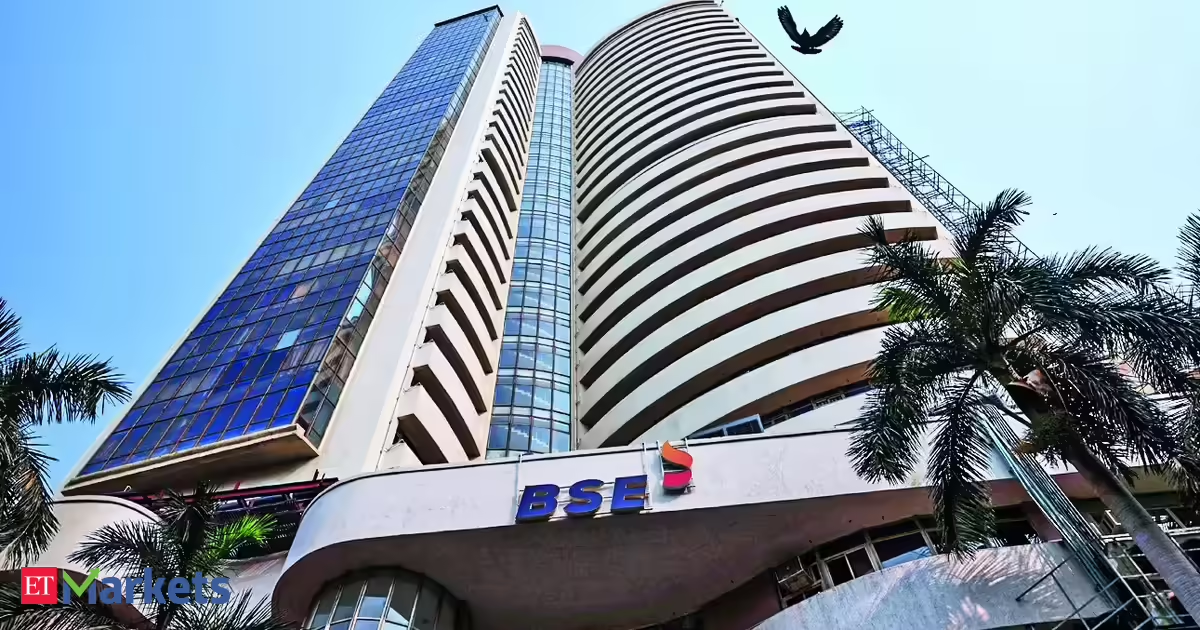
On Friday, NSE’s Nifty rose 116 points or 0.5% to close at 25,571. BSE’s Sensex rose 316 points or 0.4% to end at 82,814. Both indices, which fell 1.4-1.5% the previous day, are up by as much as 0.4% for the week. “Escalating US-Iran tensions have disrupted market patterns as uncertainty is weighing on investor sentiment,” said Shrikant Chouhan, head of equity research, Kotak Securities.
Brent April crude futures held above the $71 mark on Friday evening, as fears of a potential US military strike on Iran drove prices higher. The latest fillip for oil prices came after US President Donald Trump said the world will find out over the next 10 days whether Washington will reach a deal with Iran or take military action. The two sparring countries have been in talks to resolve the nuclear dispute.
Elsewhere in Asia, Japan and Hong Kong fell 1.1% each, while South Korea gained 2.3%. China and Taiwan markets remained shut for the Lunar New Year. The pan-Europe index Stoxx 600 was up 0.5% at the time of going to print.
At home, the stock indices are stuck in a range, said analysts.
“Over the past three to four months, the Nifty has largely traded within a 1,000-point range, reflecting a phase of consolidation,” said Rohan Shah, technical analyst at Asit C Mehta Investment Intermediates. “Sellers emerge as the index approaches the 26,000 mark, while buying interest is seen near 25,000.”
The broader market mirrored the cautious tone, with performance remaining a mixed bag. The Nifty Midcap 150 gained 0.5%, while the Nifty Small-cap 250 fell 0.2%. On the BSE, the breadth remained weak with 1,917 shares advancing against 2,265 declines.Despite the macro-heavy clouds, some fund managers see a silver lining in the valuation churn. Ketan Gujrathi, fund manager-Equity at Quantum AMC, said while delayed US rate cuts and higher crude prices remain hurdles, foreign Institutional Investors (FIIs) have subtly shifted their stance.
“FIIs have turned marginal buyers this month, moving from a bearish stance to a more neutral outlook,” Gujrathi said. Foreign portfolio investors net sold shares worth ‘935 crore. Domestic institutions were buyers to the tune of ‘2,637 crore. So far in February, overseas investors have remained net buyers worth ‘13,243 crore.

Foreign investment applications surge by 46% in January

Is Hilary Duff’s ‘We Don’t Talk’ About Sister Haylie Duff? All the Clues

New children’s home to open in Toronto near Bishop Auckland


-

 Video5 days ago
Bitcoin: We’re Entering The Most Dangerous Phase
-

 Tech6 days ago
Luxman Enters Its Second Century with the D-100 SACD Player and L-100 Integrated Amplifier
-

 Crypto World4 days ago
Can XRP Price Successfully Register a 33% Breakout Past $2?
-

 Sports4 days ago
GB's semi-final hopes hang by thread after loss to Switzerland
-

 Fashion12 hours ago
Weekend Open Thread: Boden – Corporette.com
-

 Video1 day ago
XRP News: XRP Just Entered a New Phase (Almost Nobody Noticed)
-
 Tech4 days ago
The Music Industry Enters Its Less-Is-More Era
-

 Business3 days ago
Infosys Limited (INFY) Discusses Tech Transitions and the Unique Aspects of the AI Era Transcript
-

 Entertainment3 days ago
Kunal Nayyar’s Secret Acts Of Kindness Sparks Online Discussion
-

 Video4 days ago
Financial Statement Analysis | Complete Chapter Revision in 10 Minutes | Class 12 Board exam 2026
-

 Tech3 days ago
Retro Rover: LT6502 Laptop Packs 8-Bit Power On The Go
-
 Sports2 days ago
Clearing the boundary, crossing into history: J&K end 67-year wait, enter maiden Ranji Trophy final | Cricket News
-

 Entertainment2 days ago
Dolores Catania Blasts Rob Rausch For Turning On ‘Housewives’ On ‘Traitors’
-

 Business3 days ago
Tesla avoids California suspension after ending ‘autopilot’ marketing
-
 NewsBeat6 days ago
The strange Cambridgeshire cemetery that forbade church rectors from entering
-

 Crypto World2 days ago
WLFI Crypto Surges Toward $0.12 as Whale Buys $2.75M Before Trump-Linked Forum
-

 Politics4 days ago
Eurovision Announces UK Act For 2026 Song Contest
-
 NewsBeat6 days ago
Man dies after entering floodwater during police pursuit
-

 Crypto World1 day ago
83% of Altcoins Enter Bear Trend as Liquidity Crunch Tightens Grip on Crypto Market
-

 NewsBeat7 days ago
UK construction company enters administration, records show